Article
Cordless Stick Vacuum Buying Guide: What Actually Matters Before You Choose One
Quick Answer
Cordless Stick Vacuum Buying Guide: What Actually Matters Before You Choose One: quick answer
A cordless stick vacuum looks like a simple purchase until you start comparing models. One product page talks about suction in KPa. Another uses air...
- Topic: Appliances.
- Related product category: home-garden.
- This article uses one relevant product insertion and keeps the main answer in the article copy.
Why Cordless Vacuums Are Easy To Buy Wrong
A cordless stick vacuum looks like a simple purchase until you start comparing models. One product page talks about suction in KPa. Another uses air watts. Another leads with battery minutes, but the fine print says that number applies only to the lowest power mode. Some vacuums look powerful but feel heavy after five minutes. Some include six attachments, but only two of them are useful. Some are excellent on hard floors and disappointing on carpet. Some pick up crumbs well but wrap long hair around the brush roll after one week.
That is why a good cordless vacuum buying guide should not begin with the biggest number on the box. It should begin with the way the vacuum will be used. A small apartment with hard floors does not need the same machine as a two-story home with carpeted stairs and a shedding dog. A vacuum that works for quick kitchen crumbs may not be the right choice for deep carpet. A vacuum that looks impressive in a product photo may be annoying if the dustbin is hard to empty or the charging dock is awkward to place.
Cordless vacuums became popular because they reduce friction. You do not have to pull out a heavy machine, find an outlet, unwind a cord, and move furniture just to clean a small mess. A stick vacuum can sit on a wall mount, in a laundry room, near the kitchen, or beside the entry. That convenience matters. If the vacuum is easy to grab, people use it for small cleanups before dirt spreads through the house.
The tradeoff is that cordless vacuums ask you to balance power, runtime, weight, filtration, dustbin size, attachments, and storage. There is no perfect model for every home. The best choice is the one that matches your floor types, mess types, and cleaning habits.
This guide focuses on the buying factors that affect daily satisfaction. It also explains where the 28KPa Cordless Stick Vacuum Cleaner 6-in-1 Lightweight Rechargeable (#1795555) fits as a practical example. The goal is not to rank every vacuum on the market. The goal is to help you understand what matters before you choose one.
Start With Your Floors, Not The Vacuum Specs
Before comparing suction numbers, write down what the vacuum actually has to clean. Floor type changes everything.
Hard floors need a vacuum that can pick up crumbs, grit, dust, pet hair, and small debris without scattering it forward. A soft or well-designed roller head is useful because it makes better contact with flat surfaces. LED lights can help because dust and hair often hide along baseboards, under cabinets, and near furniture legs. On hard floors, extreme suction is less important than good pickup, brush design, and maneuverability.
Low-pile carpet needs more agitation. The vacuum has to loosen debris from the fibers, not just pull loose dust from the top. A motorized brush head matters here. If the brush roll is weak, the vacuum may look like it is working while embedded dirt stays behind. Medium-pile carpet requires more power and a brush head that does not bog down. Thick, high-pile carpet can be difficult for many cordless stick vacuums, especially lighter models.
Stairs create a different requirement. Weight, handheld conversion, and attachment design matter more than maximum suction. A heavy vacuum is frustrating on stairs because you have to carry the body, control the wand, and avoid bumping walls. If your home has stairs, look carefully at handheld mode, crevice tools, mini brush attachments, and whether the main unit feels balanced.
Pet homes need a vacuum that can handle hair without constant tangling. Pet hair is not only a suction problem. It is a brush-roll problem, a dustbin problem, and a filter problem. Long hair and pet fur can wrap around rollers, clog narrow air paths, and fill the dustbin faster than crumbs. If you have pets, prioritize a motorized brush, easy dustbin emptying, accessible brush-roll cleaning, and washable or replaceable filters.
Your floors decide the buying shortlist. A vacuum that is perfect for tile and kitchen crumbs may not be enough for thick carpet. A heavier high-power model may be unnecessary if your home is mostly hardwood and area rugs. Match the tool to the house first.
Suction Numbers Matter Less Than Pickup Behavior
Suction is important, but vacuum marketing makes it more confusing than it should be. Product pages may list KPa, air watts, motor watts, or airflow. These numbers are not always measured in the same way, and they do not tell the whole story. A vacuum with a strong motor can still clean poorly if the floor head leaks air, the brush roll is weak, the bin clogs easily, or the filter is dirty.
Think of suction as one part of a system. The vacuum must lift debris from the floor, guide it into the airflow path, carry it through the tube, separate it in the dustbin, and exhaust air through the filter. If any part of that path is poorly designed, the headline suction number will not save the product.
For hard floors, look for real-world pickup across different debris sizes. Fine dust, rice, crumbs, cereal, and pet hair behave differently. A vacuum that handles fine dust but pushes larger crumbs forward can be annoying in the kitchen. A vacuum that picks up large debris but leaves fine dust in corners may not make floors feel clean.
For carpets, look for agitation and repeated-pass performance. A cordless vacuum may pick up surface hair quickly but leave embedded grit behind. If you have carpet, the brush head should make steady contact and the vacuum should not stall easily. Adjustable modes can help because carpet may need more power than hard floors.
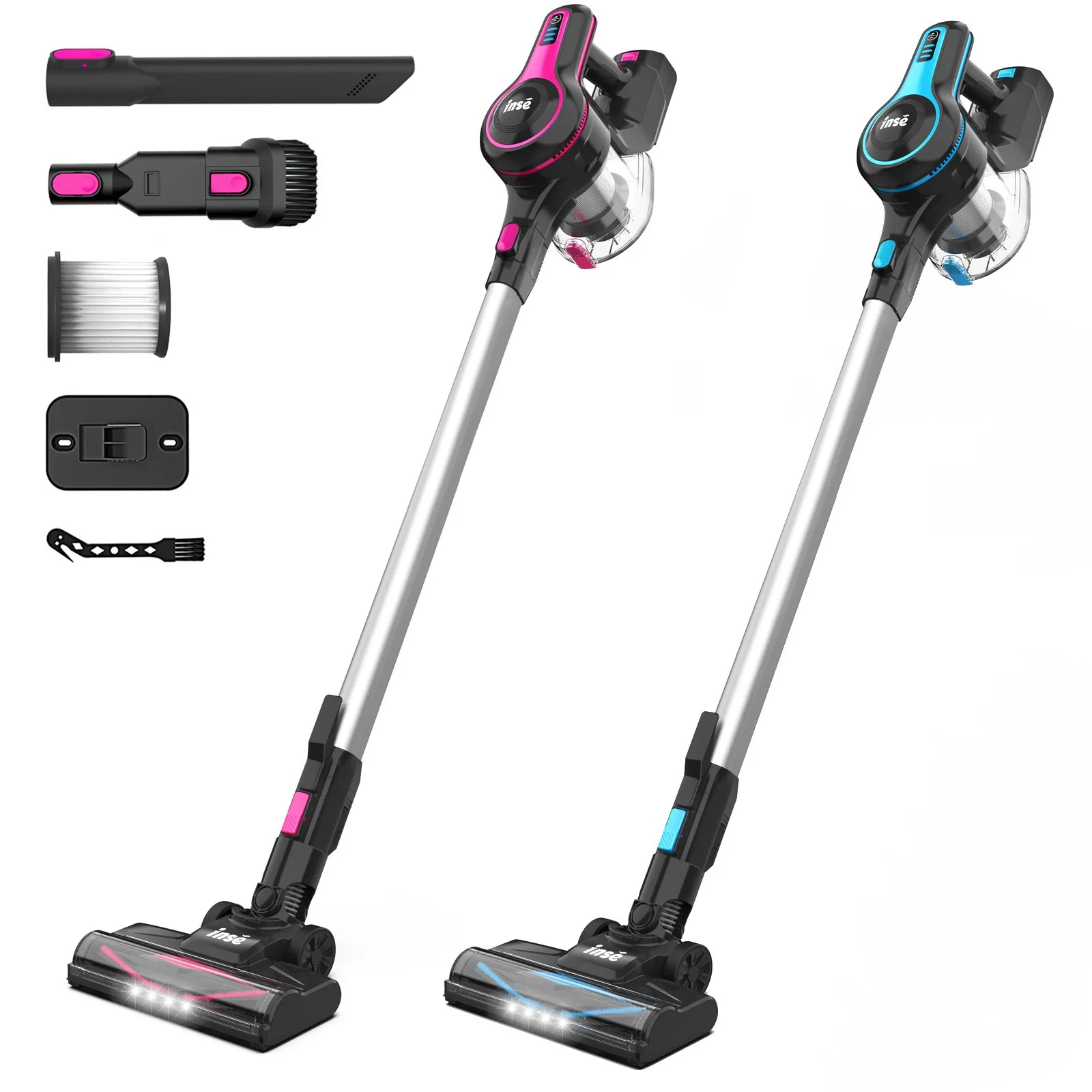
The 28KPa Cordless Stick Vacuum Cleaner (#1795555) lists up to 28KPa suction. That is a useful spec to note, but it should not be read alone. Its value depends on the rest of the design: lightweight body, motorized swivel brush, LED lights, multi-use attachments, and filtration. For a buyer, the right question is not only "How much suction does it claim?" The better question is "Does this combination fit my floors and messes?"
Runtime Should Be Judged By Cleaning Style
Battery life is one of the most misunderstood cordless vacuum specs. The longest advertised runtime usually reflects the lowest power mode under favorable conditions. In real cleaning, runtime changes based on power mode, brush-head use, floor resistance, battery age, and how often the vacuum is used on carpet.
This does not mean runtime claims are useless. It means you should judge them with your cleaning style in mind. If you mostly do quick kitchen, entryway, and spot cleanups, a shorter high-power runtime may be fine. The vacuum may run for three to ten minutes at a time and return to the charger. If you expect to clean the whole home in one session, runtime matters much more.
A small apartment may need only fifteen to twenty minutes of real-use runtime. A larger one-floor home may need twenty-five to forty minutes, depending on floor type and how much furniture has to be cleaned around. A two-story home may need either a longer-lasting battery, a swappable battery, or a habit of cleaning in zones rather than trying to do everything at once.
The #1795555 product details list up to 48 minutes of runtime. Treat that as a best-case figure, not a guarantee for every mode. If you use higher suction, a motorized brush, or carpet-heavy cleaning, expect less. That is normal for cordless vacuums. The practical question is whether the vacuum can complete your normal cleaning session, not whether it reaches the maximum number in the listing every time.
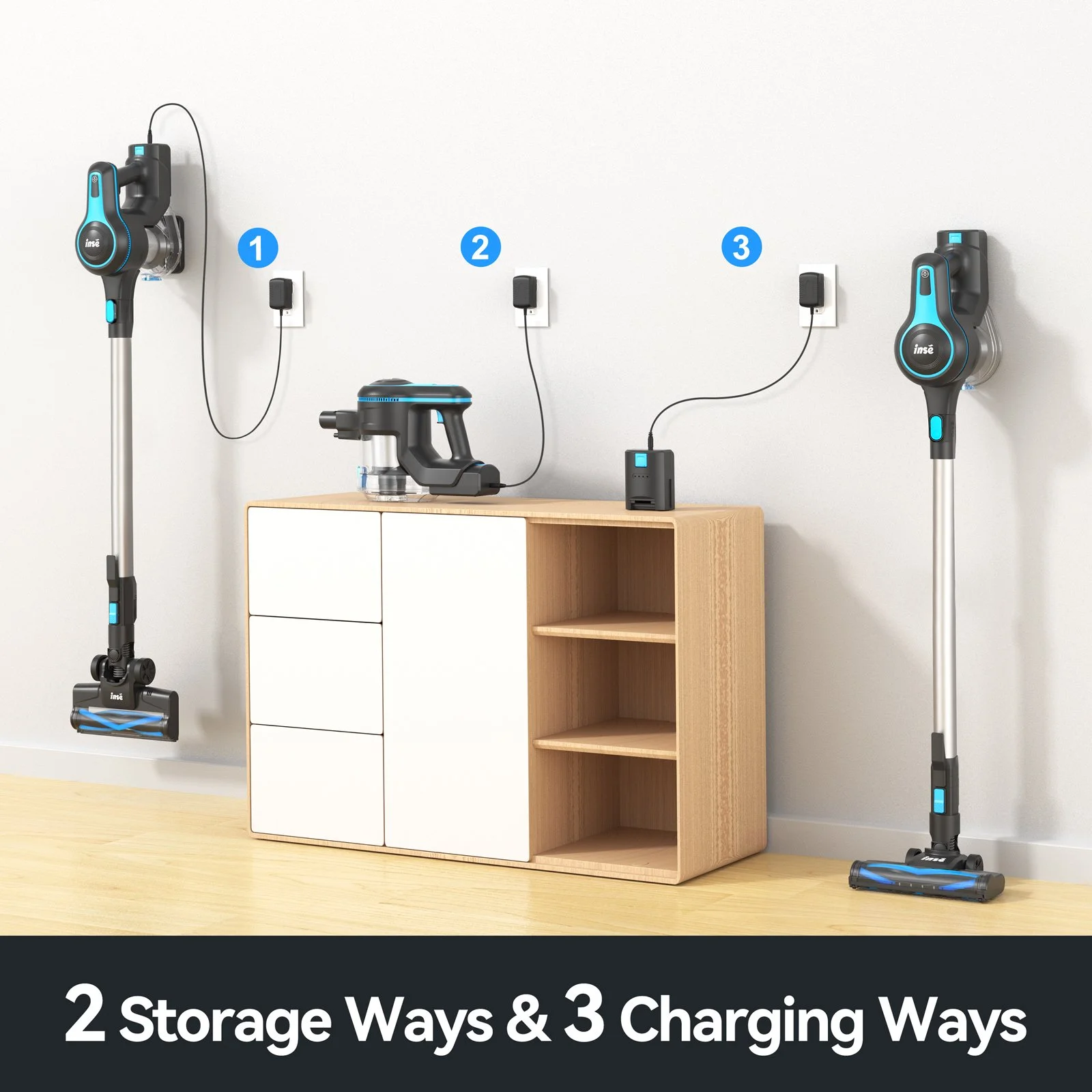
Charging behavior also matters. A vacuum that returns to a wall mount after each use is more likely to be ready for the next mess. A vacuum that has to be plugged in manually may end up dead when you need it. Before buying, think about where the vacuum will charge and whether your household will actually return it there.
Weight Decides Whether You Use It Often
Weight is easy to ignore online and hard to ignore after the vacuum arrives. A few pounds can make the difference between a tool you grab daily and one you avoid.
Cordless stick vacuums place much of the weight near the hand. That can make them feel heavier than the number suggests, especially when cleaning stairs, ceiling corners, shelves, curtain edges, or car interiors. A vacuum that feels fine for a one-minute test may feel tiring during a fifteen-minute session.
If you have wrist, shoulder, or back discomfort, prioritize weight and balance. A lightweight vacuum may encourage more frequent quick cleaning, which can keep floors cleaner overall even if the machine is not the most powerful model available. A heavy vacuum with stronger specs does not help if it stays in the closet.
For stairs, weight is especially important. You may need to hold the vacuum body in one hand and clean with the other. Handheld conversion should feel stable. The attachments should lock securely. The dustbin should not bump every stair edge. If stair cleaning is a major use case, choose a vacuum that is comfortable in handheld mode, not just as a full-length stick.
The #1795555 listing describes an approximately 3 lb main unit. That is a meaningful point for buyers who want a quick-grab vacuum for everyday messes, stairs, furniture, and car interiors. Lightweight design does not replace cleaning performance, but it strongly affects how often the vacuum will be used.
The Floor Head Is More Important Than It Looks
The floor head is where the vacuum meets the mess. It deserves more attention than many buyers give it.
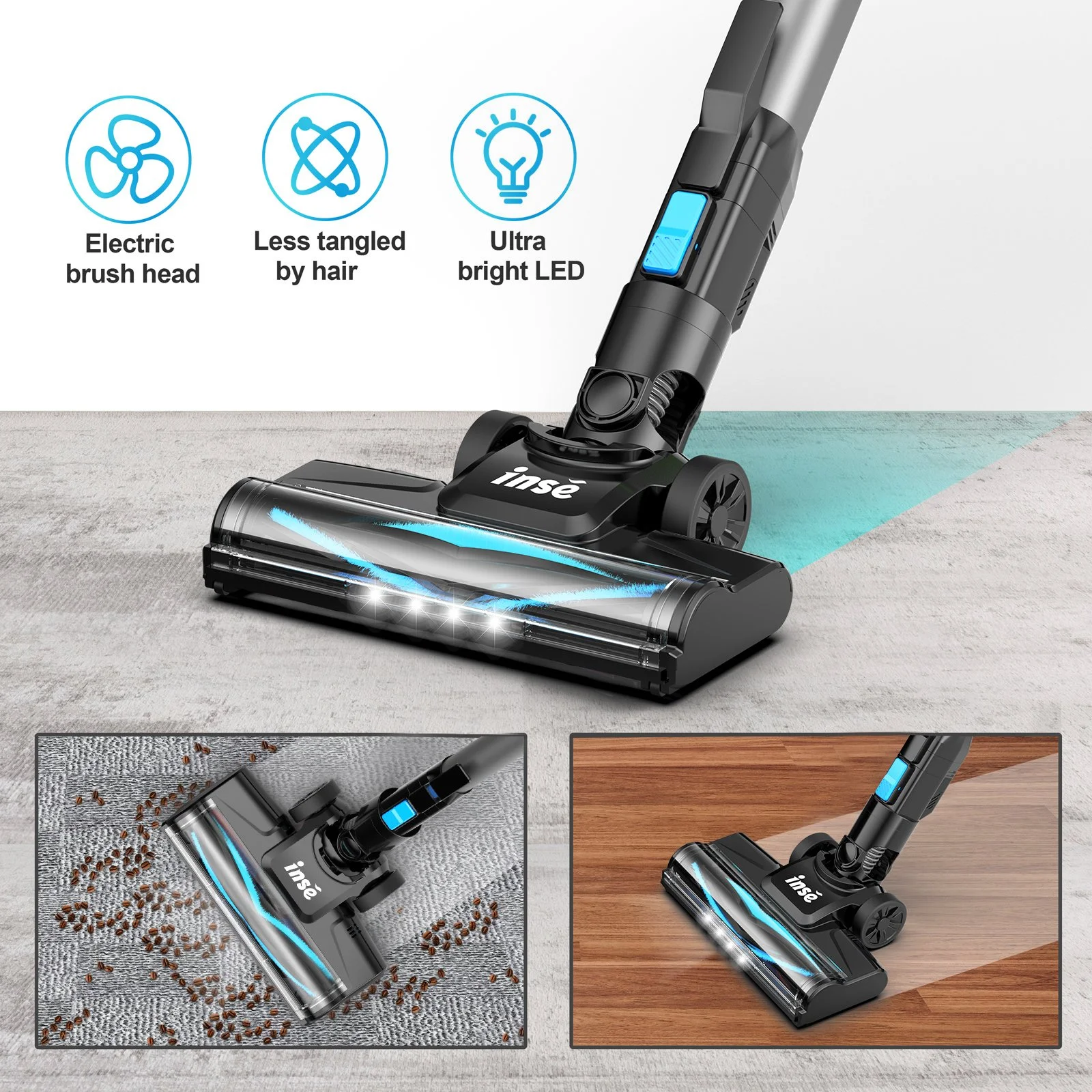
A good floor head should steer smoothly around chair legs, reach under cabinets and beds, and keep contact with the floor without fighting your hand. Swivel movement matters because real homes are full of table legs, rugs, corners, stools, pet bowls, and narrow pathways. A stiff head makes quick cleaning feel clumsy.
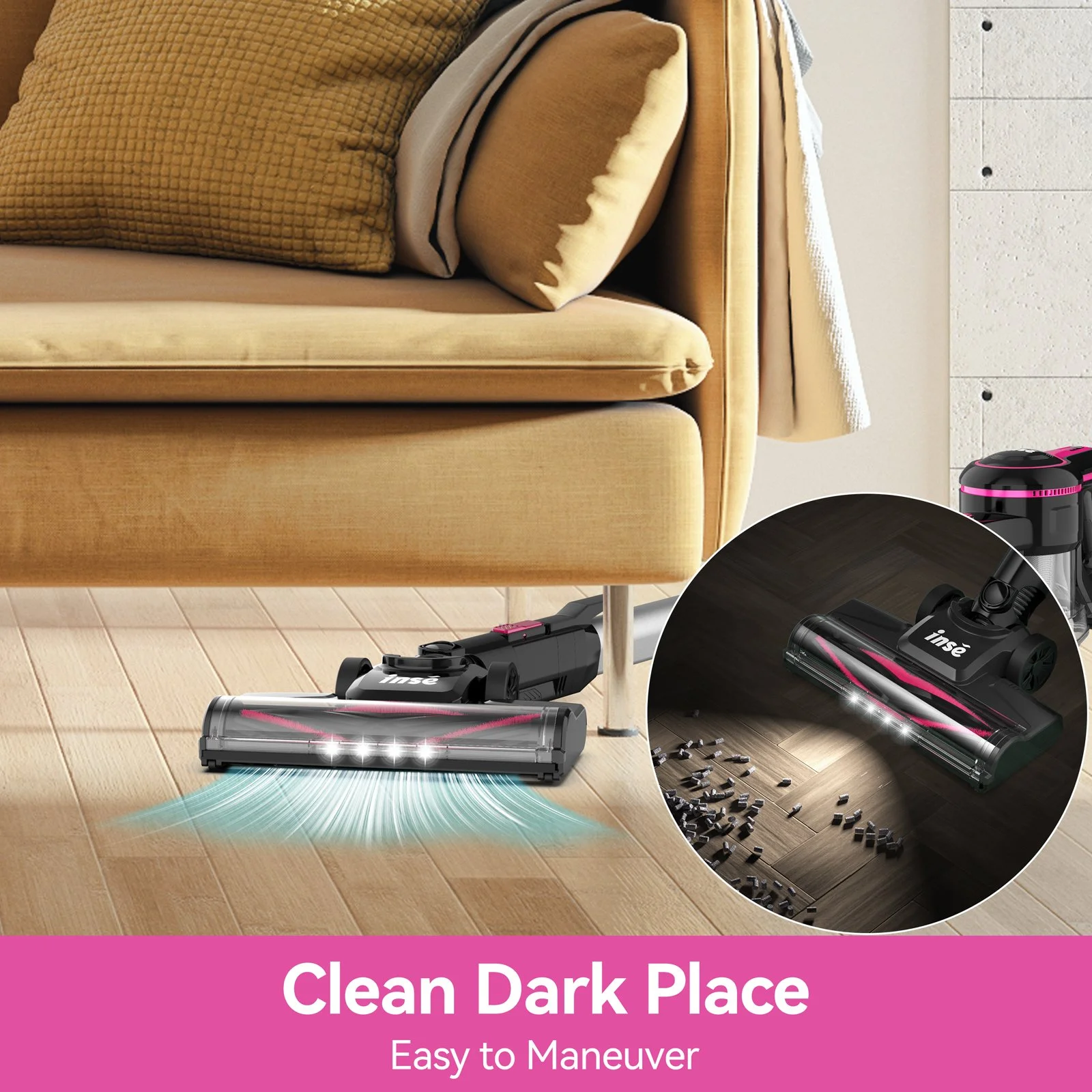
LED lights are not just a gimmick if you have hard floors, pets, or low furniture. They make dust, hair, crumbs, and grit visible in areas that look clean under normal room light. This is useful around kitchen toe kicks, hallway edges, under sofas, and behind doors. If you see dirt, you clean more accurately and waste fewer passes.
Brush-roll design affects both pickup and maintenance. A brush that grabs hair well may also wrap hair around itself. Some brush rolls are easier to remove and clean than others. If your household has long hair or pets, this maintenance point matters. A vacuum that requires tools and patience every week will become annoying quickly.
The #1795555 product details describe a motorized brush that swivels sideways and up/down, plus LED lights. Those features match what a general cordless buyer should look for: not only suction, but a head that can move through real rooms and reveal hidden debris.
Filtration Matters For More Than Allergy Households
Filtration decides what happens to fine dust after the vacuum pulls it from the floor. A weak filtration system can leak fine particles back into the room. That does not mean every buyer needs the most expensive sealed system, but filtration should not be ignored.
If anyone in the home has allergies, asthma, dust sensitivity, pets, or frequent indoor dust problems, look for HEPA or high-efficiency filtration and a design that seals well around the bin and filter. A good filter is less useful if dusty air escapes around loose seams. Also check whether replacement filters are available and whether washable filters are truly washable according to the product instructions.
Washable filters are convenient, but they need to dry fully before being reinstalled. Putting a damp filter back into a vacuum can cause odor and may affect performance. Many households benefit from having a spare filter so one can dry completely while the other is in use.
The #1795555 listing mentions 5-stage filtration and washable filters. It also lists a particle-capture claim in the product details. For the article, the practical takeaway is simple: filtration should be considered alongside suction and dustbin design. A vacuum that picks up dirt but is difficult to maintain will lose performance over time.
Even if allergies are not a concern, filter care affects suction. Clogged filters reduce airflow. Reduced airflow makes the vacuum feel weak. Many complaints about cordless vacuums begin after weeks or months of use, when the real issue is a full bin, clogged pre-filter, wrapped brush, or dirty filter. Buying the vacuum is only the first half. Maintaining airflow is the second.
Dustbin Size And Emptying Can Make Or Break Daily Use
The dustbin is not exciting, but it affects satisfaction every time you clean. A bin that is too small fills quickly. A bin that is hard to empty makes users avoid emptying it. A bin with corners that trap hair and dust becomes unpleasant.
For quick cleanups, a smaller bin may be fine. For pet hair, rugs, large rooms, or whole-home cleaning, a larger bin helps. But capacity is only one part of the question. The emptying mechanism should be simple, controlled, and easy to use over a trash can. If the user has to reach inside and pull out compacted dust, the design will feel worse over time.
Hair is the real test. Long human hair and pet hair can form mats inside the bin or around the entry point. Check whether the bin opens wide enough, whether clumps fall out easily, and whether the filter area is easy to access. If you have pets, you will empty the bin often. That process should not feel like a punishment.
The #1795555 product details list a lightweight rechargeable design and washable filters. The important buying advice is to judge dustbin design before purchase, not after the first messy emptying.
Make a habit of emptying the bin before it is packed full. A cordless vacuum does not perform well when airflow is restricted. Emptying after each larger session, or whenever debris reaches the fill line, protects performance.
Attachments Decide How Versatile The Vacuum Really Is
Many cordless vacuums are sold as multi-function tools, but the attachments decide whether that promise is real. A 6-in-1 vacuum can be very useful if the included tools match your cleaning needs. It can also be a marketing phrase if the attachments are awkward or redundant.
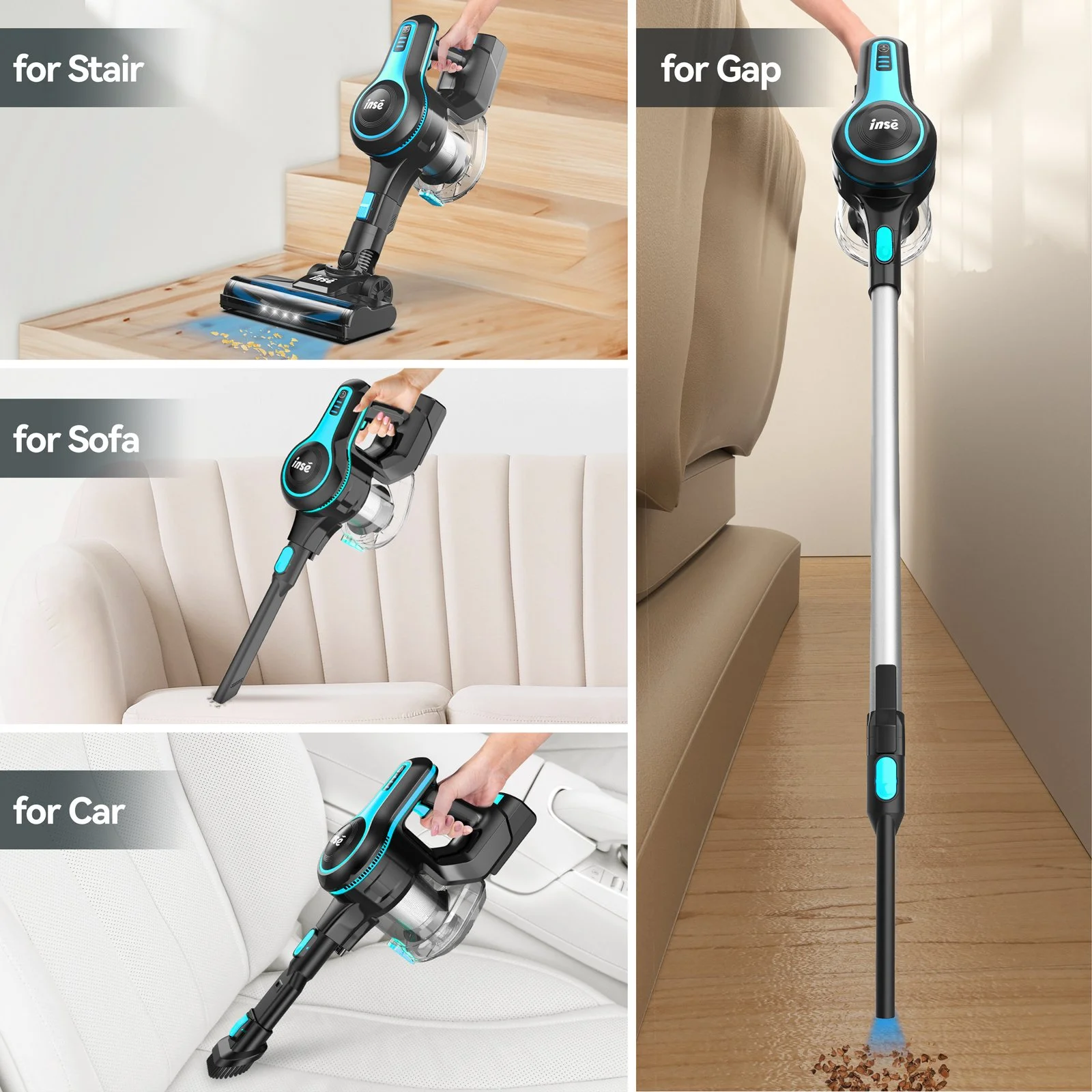
A crevice tool is essential for corners, sofa cushions, baseboards, car seats, and the gap between appliances. It should be narrow enough to fit into tight spaces and long enough to reach without forcing your wrist into a bad angle.
A brush tool is useful for shelves, vents, lampshades, blinds, keyboards, upholstery edges, and delicate surfaces. The bristles should loosen dust without scratching the surface.
A motorized mini tool can be valuable for pet hair on upholstery and stairs, but not every vacuum includes one. If pet hair is a major problem, check the attachment list carefully.
Handheld mode is important for cars, furniture, stairs, window tracks, and quick counter-adjacent messes. The vacuum should convert easily. If detaching the wand is awkward, people will avoid handheld mode and lose much of the cordless benefit.
The #1795555 product title includes 6-in-1, which is a good fit for a general buying guide. The buyer should still ask what the six functions actually are. Count useful tasks, not just pieces in the box. A vacuum with fewer but better attachments can outperform a product with many accessories that never leave the drawer.
Storage And Charging Are Part Of The Product
Storage is not an afterthought. It determines whether the vacuum is available when messes happen.
A wall-mount storage setup can make a cordless vacuum much more useful because the vacuum has a visible home and charges between uses. If the vacuum lives in a closet without a convenient charger, it may be used less often. If it sits loose on the floor, it can look messy and may not charge consistently.
Before buying, choose the charging location. Look for a spot near an outlet, away from heavy traffic, and close enough to the messes you clean most often. The laundry room, pantry wall, mudroom, kitchen entry, or utility closet may work. If the vacuum is mainly for kitchen crumbs and entryway dirt, a far bedroom closet is a poor location.
Renters should think about mounting rules. If drilling is not allowed, check whether the vacuum can stand or store safely without wall mounting. Some wall docks are mostly for charging and tool storage, while others are needed for stability. Know this before purchase.
The #1795555 product details mention wall-mount storage. That is useful because it supports the real advantage of cordless cleaning: low-friction access. A vacuum that is charged, visible, and easy to grab is more likely to handle small messes before they become full-room cleaning jobs.
Noise Is Worth Considering
Noise does not always appear at the top of buying guides, but it affects daily use. A loud vacuum may be avoided early in the morning, late at night, during work calls, around babies, or near noise-sensitive pets. A quieter model may get used more often for small cleanups simply because it is less disruptive.
Noise specs can be inconsistent, so treat listed numbers carefully. Still, if a product emphasizes quieter operation and reviewers agree, that can be a practical advantage. The #1795555 listing mentions 58 dB quiet operation. That should be read as a product claim, but it points to a useful buying factor: cleaning tools that are less irritating tend to be used more consistently.
Sound quality matters too. A high-pitched whine can feel more annoying than a lower, steadier sound at a similar volume. If possible, watch or listen to independent demos before buying. Pay attention to how the vacuum sounds on hard floors, carpet, and max mode.
If you have pets, introduce the vacuum gradually. A cordless stick vacuum may be less intimidating than a large upright, but some animals still react strongly. Frequent short cleaning sessions may be easier for the household than one long loud session.
What To Prioritize For Pet Hair
Pet hair changes the buying standard. A vacuum that handles crumbs beautifully may struggle with fur on rugs, upholstery, and corners.
For pet homes, prioritize brush-roll access. Hair will wrap eventually. The question is whether you can remove it quickly. A brush roll that pops out or exposes the wrapped hair is easier to maintain than one that requires several screws. Also look for a crevice tool and upholstery tool. Pet hair collects along baseboards, under furniture edges, on stairs, inside car upholstery, and in sofa seams.
Dustbin capacity matters because pet hair is bulky. It can fill a bin fast even when the actual weight of debris is small. Empty often so airflow stays strong. Filters may also need more frequent cleaning because dander and fine dust can load them quickly.
Runtime matters less for quick fur pickup and more for whole-home maintenance. Many pet owners do better with frequent short vacuuming rather than one long weekly session. A lightweight cordless vacuum can support that habit because it is easy to grab after brushing a pet, opening the door on a windy day, or seeing hair collect near a favorite chair.
The #1795555 model is presented as good for furniture and car interiors, which can matter for pet households. It should still be judged by the user's pet type, hair length, floor type, and tolerance for brush-roll cleaning.
What To Prioritize For Hard Floors
Hard floors show dust and grit quickly. They also expose a weak floor head because debris can scatter across the surface instead of entering the vacuum.
For hard floors, look for a head that seals well enough to pick up fine dust but does not push large crumbs forward. LED lights are useful because they reveal dust near baseboards and under cabinets. Swivel steering matters because hard-floor cleaning often involves chairs, table legs, kitchen islands, and narrow paths.
Weight is also important because hard-floor owners often use cordless vacuums for quick frequent cleanups. A light vacuum that is easy to grab after cooking may be more valuable than a heavier model with higher maximum power.
Attachments matter for hard-floor homes too. A crevice tool can clean between the refrigerator and cabinet, around baseboards, under low furniture, and along sliding-door tracks. A dusting brush can handle shelves and vents before debris falls to the floor.
If your home is mostly hard floors with a few low rugs, a balanced lightweight cordless model can be a smart fit. If your rugs are thick or shed heavily, make sure the brush head has enough agitation and the power mode can handle the extra resistance.
What To Prioritize For Carpet
Carpet requires more caution. Cordless stick vacuums can work well on low and medium carpet, but they are not all equal. Thick carpet, deep pile, and heavy embedded dirt can challenge lighter machines.
Look for a motorized brush head, strong airflow, and a power mode that does not drain the battery too quickly for your home size. The vacuum should move smoothly without feeling like it is sticking to the carpet or skipping across the top. If carpet is your main floor type, do not buy based only on hard-floor demos.
For homes with mostly carpet, runtime and bin size matter more. Carpet pulls up more debris than hard floors, and the vacuum may need higher power. That means the battery drains faster and the bin fills sooner. A product that works well for a small apartment may feel limited in a carpeted family home.
If you already own a strong upright vacuum, a cordless stick vacuum can still be useful as a daily maintenance tool. Use it for visible debris, stairs, under tables, and quick pet-hair passes. Then use the larger vacuum for deeper weekly or monthly cleaning. Not every cordless vacuum has to replace every other vacuum in the house.
The right expectation prevents disappointment. Cordless convenience is real, but deep carpet cleaning is one of the hardest vacuum tasks.
Maintenance Determines Long-Term Performance
Many cordless vacuums perform well at first and then decline because maintenance is ignored. That decline is often blamed on the battery or motor, but the cause may be airflow restriction.
Empty the dustbin before it is packed. Clean or replace filters according to the product instructions. Remove wrapped hair from the brush roll. Check the tube for blockages if suction drops suddenly. Let washable parts dry fully before reassembly. Keep the charging contacts clean. Store attachments where they do not get lost.
Filter maintenance is especially important. A dirty filter makes the vacuum work harder and can reduce suction. If the filter is washable, rinse it gently and dry it completely. Depending on the design, drying may take longer than expected. A damp filter can create odor and may restrict airflow.
Brush-roll maintenance is the other big habit. Long hair, thread, string, and pet hair can wrap tightly around the roller. If left there, it can reduce pickup and strain the motorized head. Check the roller regularly, especially if the home has long hair or pets.
The #1795555 product details mention washable filters. That is convenient, but only if the user follows through. A washable filter is not maintenance-free. It simply makes filter care easier and may reduce the need for frequent replacements.
Features That Are Nice But Not Essential
Some cordless vacuum features are useful, but not every buyer needs them. A touch screen can look modern, but it does not clean the floor by itself. Automatic suction adjustment can be helpful, but a simple low/medium/high mode may be enough. App control is rarely necessary for a stick vacuum. Decorative lighting on the body matters less than practical LED lights on the floor head.
Do not pay extra for features that do not match your habits. If you clean small messes every day, lightweight handling, easy charging, and fast emptying may matter more than a screen. If you clean pet hair from upholstery, the attachment set matters more than the color. If you live in a small apartment, compact storage matters more than maximum runtime.
The best features remove friction. They make the vacuum easier to grab, easier to steer, easier to empty, easier to maintain, and easier to store. Features that only make the product look more advanced are less important.
This is why a product like #1795555 should be evaluated as a full system: light main unit, 6-in-1 use, runtime claim, swivel head, LED lights, filtration, washable filters, and wall-mount storage. Any one feature alone is not enough. The value is in how the features work together for normal cleaning.
A Simple Decision Framework
Use this framework before choosing a cordless vacuum.
First, identify the main floor type. Mostly hard floors, mostly carpet, mixed floors, stairs, pet areas, or car interiors will lead to different priorities.
Second, decide whether the vacuum is a primary cleaner or a convenience cleaner. A primary cleaner needs more runtime, stronger carpet performance, and easier maintenance. A convenience cleaner can prioritize lightweight design and quick access.
Third, judge weight and storage. If the vacuum is too heavy or awkward to store, it will not be used often. Decide where the charger will go before buying.
Fourth, check the dustbin and filter system. Make sure the bin is easy to empty and filters are accessible. If allergies or pet dander matter, filtration deserves extra attention.
Fifth, review attachments by task. Do not count attachments by number. Count the jobs they solve: crevices, upholstery, stairs, cars, shelves, vents, and pet hair.
Sixth, set realistic expectations for runtime. If the listed maximum is 48 minutes, understand that higher power modes and motorized tools can reduce that. Buy for your actual cleaning session, not the biggest number.
Seventh, consider maintenance. If brush-roll cleaning, filter washing, or bin emptying looks difficult, the vacuum may become frustrating after the first month.
This framework will eliminate many bad matches before budget or brand even enters the conversation.
Where The Matched Product Fits
The 28KPa Cordless Stick Vacuum Cleaner 6-in-1 Lightweight Rechargeable (#1795555) fits best for buyers who want a practical everyday cordless vacuum for hard floors, stairs, furniture, car interiors, and routine mixed-surface cleaning. Its product details list up to 28KPa suction, up to 48 minutes of runtime, a lightweight main unit, swivel motorized brush, LED lights, 5-stage filtration, washable filters, and wall-mount storage.
The strongest match is convenience cleaning. A lightweight main unit and wall-mount storage support frequent small cleanups. The 6-in-1 design makes sense for homes that need one tool to move from floors to stairs to furniture to car seats. LED lights are useful for hard-floor dust and debris under low furniture. Washable filters are useful if the owner is willing to maintain them properly.
The product should not be oversold as the perfect answer for every home. If a buyer has mostly thick carpet, heavy embedded debris, or very large cleaning areas, they should compare runtime, brush performance, and battery behavior carefully. If a buyer has allergies or pets, they should pay attention to filter maintenance and dustbin emptying. If a buyer wants a single machine for every deep-cleaning task, they should compare it against heavier cordless or corded options.
For the article's purpose, #1795555 is a good example of a balanced cordless stick vacuum: light enough to encourage use, versatile enough for common home tasks, and feature-rich enough to explain the buying factors that matter.
Final Recommendation
The best cordless stick vacuum is not the one with the loudest claim. It is the one that matches your home and stays easy to use after the first week. Start with floors and messes. Then compare suction behavior, runtime, weight, floor-head design, filtration, dustbin emptying, attachments, storage, and maintenance.
If your home is mostly hard floors, low rugs, stairs, furniture, and everyday debris, a lightweight 6-in-1 cordless vacuum can be a very practical choice. If your home has thick carpet, multiple shedding pets, or large whole-home cleaning sessions, be more demanding about brush performance, runtime, bin capacity, and maintenance access.
For this guide, the best matched product is the 28KPa Cordless Stick Vacuum Cleaner 6-in-1 Lightweight Rechargeable (#1795555). It supports the buying advice because it combines the features that matter most for everyday cordless cleaning: manageable weight, multi-use attachments, wall-mount storage, LED floor visibility, washable filtration, and enough runtime for many routine cleaning sessions.
Buy the vacuum that removes friction from your real cleaning routine. A cordless vacuum earns its place when it is easy to grab, easy to steer, easy to empty, easy to charge, and easy to maintain. Those details matter more than a spec sheet that looks impressive but does not fit the way your home actually gets dirty.