Article
Kitchen Soap Dispenser Review: Is A Pump Dispenser With Sponge Holder Worth Using?
Quick Answer
Kitchen Soap Dispenser Review: Is A Pump Dispenser With Sponge Holder Worth Using?: quick answer
A kitchen soap dispenser looks like a small accessory, but it affects one of the most-used work zones in the home. Dish soap is touched during cooking,...
- Topic: Kitchen Accessories.
- Related product category: home-garden.
- This article uses one relevant product insertion and keeps the main answer in the article copy.
Why A Soap Dispenser Can Change The Sink Area More Than Expected
A kitchen soap dispenser looks like a small accessory, but it affects one of the most-used work zones in the home. Dish soap is touched during cooking, after meals, while washing hands, while rinsing tools, and when cleaning the sink itself. If the soap bottle is awkward, sticky, unstable, or visually messy, that frustration repeats many times a day.
Most kitchens start with the bottle the dish soap came in. That bottle is usually designed for shipping, shelf display, and brand visibility, not for a clean sink setup. It may be tall, slippery, brightly labeled, hard to pump with wet hands, or easy to knock over. When it sits beside a sponge, brush, drying cloth, and water spots, the sink area starts to look cluttered even if the rest of the counter is clean.
A dedicated pump dispenser can improve the area in three ways. First, it creates a fixed home for dish soap. Second, it can make soap easier to use with one hand. Third, if it includes a sponge holder, it can reduce the loose cluster of wet items around the faucet. Those are practical benefits, not just aesthetic ones.
That does not mean every soap dispenser is worth buying. Some pumps clog. Some containers are too small. Some look nice but tip easily. Some hold soap but create a wet tray with no airflow. Some are difficult to refill. Some are better for bathrooms than kitchens. A useful kitchen dispenser has to survive wet hands, frequent pumping, refills, sponge storage, and daily wiping.
This review-style guide looks at what matters before choosing one. The matched product is the 420ml/14oz Dish Soap Pump Dispenser with Sponge Holder for Kitchen Sink (#1790725). Its product details describe a 420ml capacity, pump dispenser, built-in sponge holder, compact design, and use for streamlining dishwashing and reducing countertop clutter. That makes it a more honest match for a kitchen sink article than a decorative bathroom-only bottle.
What A Kitchen Soap Dispenser Needs To Do
A kitchen soap dispenser has one obvious job: dispense soap. But in daily use, it has several hidden jobs.
It must stay stable when pressed. A dispenser that slides, wobbles, or tips creates more annoyance than the original soap bottle. Wet hands do not apply perfect pressure. People press quickly while holding a plate, sponge, pan, or utensil. The dispenser should tolerate that without moving across the counter.
It must dispense a reasonable amount. Too little soap forces repeated pumps. Too much soap wastes product and makes rinsing harder. The pump should feel predictable so the user learns how much pressure to apply.
It must be easy to refill. If refilling is messy, people delay it or leave a backup bottle on the counter. That defeats the purpose. A wide opening or simple top removal makes the product easier to live with.
It must handle kitchen residue. Soap, water, food splatter, and sponge moisture all collect around the sink. Smooth surfaces are easier to wipe. Crevices, sharp corners, rough finishes, and removable parts that trap residue make cleaning harder.
It must fit the sink layout. A large dispenser can crowd a small sink. A tiny dispenser may need constant refills in a busy kitchen. A dispenser with a sponge holder should place the sponge where it can dry rather than trapping it in a puddle.
The #1790725 product is built around these daily needs rather than only visual style. The integrated sponge holder is especially relevant because many sink areas look messy not because of soap alone, but because soap and sponge are separated and both end up wandering around the counter.
First Impression: Function Before Decoration
The most useful thing about a pump dispenser with sponge holder is that it turns two loose items into one defined station. Dish soap and sponge belong together because they are used together. When they live separately, the sink area often becomes a small mess: bottle on one side, sponge near the faucet, water under both, and a brush leaning somewhere else.
A combined dispenser changes the cue. The sponge has a place to return after use. The soap has a fixed pump location. The counter looks more intentional because the items are grouped by task. This is the same reason restaurant and utility spaces use stations: tools that support the same action should be near each other.
The #1790725 dispenser is described as compact, which matters. A kitchen sink organizer should not dominate the counter. If an accessory takes too much space, people start working around it, then eventually move it, then stop using it. Compact design is not only about looks. It protects the working area around the sink.
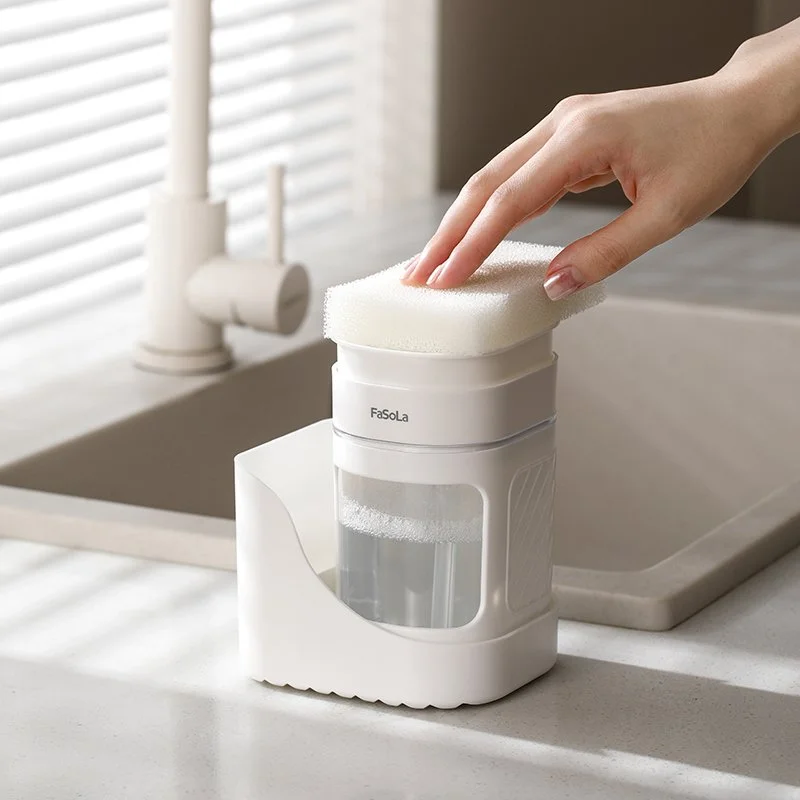
The white color listed in the product details should fit many kitchens because it is visually quiet. It may not be as decorative as ceramic, glass, or metal dispensers, but a kitchen accessory used many times a day should be judged first on whether it reduces friction. A simple object that works cleanly can be better than a beautiful object that is annoying.
The key first impression is practical: this product is less about making a dramatic decor statement and more about simplifying the dishwashing zone.
Pump Feel Matters More Than People Expect
The pump is the part you interact with every day, so it deserves attention. A dispenser can look good and still fail if the pump sticks, leaks, clogs, or dispenses unevenly.
Good pump feel has three qualities: stable press, predictable output, and clean return. Stable press means the container does not move when you push. Predictable output means one press gives a useful amount of soap. Clean return means the pump comes back up smoothly without dripping down the side.
Dish soap is thicker than some hand soaps, so pump compatibility matters. A pump that works with thin soap may struggle with thicker dish liquid. If the soap is very concentrated, it may need dilution only if the product instructions allow it. Do not force a pump that is not moving properly. That can damage the mechanism or create leaks.
Foaming pumps are different from standard liquid pumps. They are designed to mix air with diluted soap to create foam. A regular dish soap dispenser is usually not a foaming dispenser unless stated. The #1790725 product is described as a dish soap pump dispenser, so the expectation should be liquid soap dispensing rather than mousse-style foam.
Pump maintenance is simple but important. Wipe the nozzle when residue builds up. If soap dries around the opening, rinse the pump head with warm water. If the pump will not be used for a long time, empty and clean it. These small habits keep the dispenser from becoming sticky.
Capacity: Why 420ml Is A Practical Size
Capacity affects how often a dispenser needs refilling and how bulky it feels. Too small, and it becomes a chore. Too large, and it occupies too much counter space or becomes heavy and awkward.
The #1790725 product lists 420ml, or 14oz, capacity. For many kitchens, that is a practical middle size. It holds enough soap to avoid constant refills, but it does not need to be the size of a bulk bottle. A family that washes dishes often may still refill it regularly, but it should last longer than a small decorative bottle.
Capacity also changes household behavior. If a dispenser runs empty too often, someone may leave the refill bottle beside the sink "just for now." That backup bottle then becomes permanent clutter. A larger usable capacity helps prevent that pattern.
At the same time, bigger is not always better. A very large dispenser may be harder to clean, harder to move, and more likely to dominate a small counter. The 420ml range is sensible because it supports daily use without turning the dispenser into a storage jug.
The best refill habit is to top off the dispenser before it is fully empty. If you wait until the pump sputters, the sink routine breaks. If you refill during a weekly kitchen reset, the dispenser becomes part of normal maintenance.
The Sponge Holder Is The Real Feature
Many soap dispensers can hold soap. The integrated sponge holder is what makes this product more specific to kitchen organization.
A sponge needs three things after use: rinsing, squeezing, and drying. If it is left flat on the counter, water collects underneath. If it is tossed in the sink, it stays wet and gets in the way. If it sits on top of the soap bottle, it looks messy and may drip down the sides. A defined sponge holder can make the sink area cleaner by giving the sponge a predictable home.
The holder should be easy to access. If the sponge area is too tight, people will stop using it. If it is too shallow, the sponge may fall out. If it traps water, it becomes another thing to clean. The ideal sponge holder keeps the sponge visible, contained, and able to dry between uses.
The #1790725 details describe a built-in sponge holder, but the article should avoid making claims beyond the product information. It can be presented as a useful organization feature, with the practical advice that the sponge still needs rinsing and squeezing before being placed back.
The sponge holder also prevents the "floating sponge" problem. When a sponge has no home, each person leaves it somewhere different. One person places it on the faucet. Another drops it in the sink. Another leaves it on the counter edge. A holder makes the expected location obvious without needing reminders.
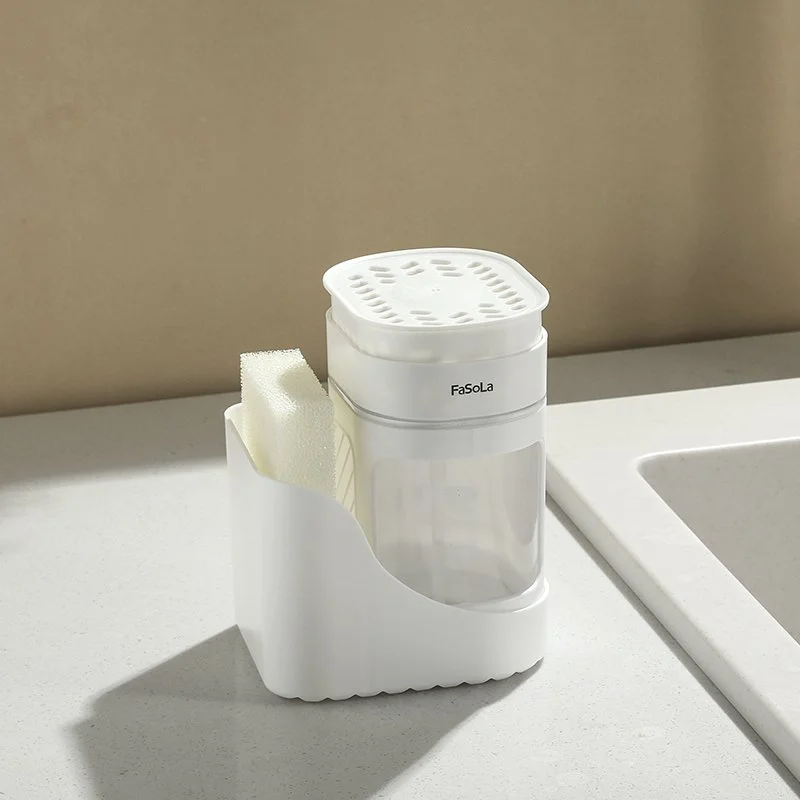
This is the strongest reason to choose this product over a plain decorative dispenser. It solves soap dispensing and sponge storage together.
Countertop Clutter: What This Product Can Fix
A pump dispenser with sponge holder can fix a specific type of clutter: loose dish soap and sponge clutter. It can make the sink area look more organized and reduce the number of separate objects sitting near the faucet.
It cannot fix every kind of sink clutter. If the counter is crowded with drying racks, cleaning sprays, dish towels, cups, bottle brushes, extra sponges, and hand soap, one dispenser will not solve the whole system. It may help, but the larger organization problem still needs editing.
Use this product as the center of a smaller daily kit. Dish soap goes in the dispenser. The active sponge goes in the holder. Everything else must earn its spot. The brush may need a separate holder if used daily. Hand soap may need its own pump if your household requires it. Backup soap and extra sponges should go under the sink, not beside the dispenser.
The visual improvement comes from reducing scatter. One compact station looks cleaner than two or three loose items. But if you surround that station with unrelated supplies, the benefit disappears.
The best setup is simple: dispenser and sponge holder near the sink, towel drying somewhere else, backup supplies stored away, and counter space left open for actual dishwashing.
Hygiene Depends On The Routine, Not Just The Product
The original promise of many kitchen accessories is that they make the sink cleaner. That can be true, but only if the routine supports it.
A sponge holder helps because it gives the sponge a defined place to dry. But if the sponge is never rinsed, never squeezed, and never replaced, the holder cannot make it clean. A soap dispenser looks better than a branded bottle, but if soap residue builds around the pump and base, it still needs wiping.
The routine should be simple. After washing dishes, rinse the sponge, squeeze out excess water, place it in the holder, wipe any soap drips, and leave the area where air can circulate. During a nightly reset, lift the dispenser if needed and wipe underneath. During a weekly reset, refill soap and rinse the holder area.
Do not make unsupported claims about ceramic, plastic, stainless steel, or any material being automatically hygienic. Smooth surfaces are easier to wipe. Draining and drying help. Replacement habits matter. Cleaning habits matter. Material matters, but it does not replace maintenance.
The #1790725 product should be judged by whether it supports a cleaner routine. Its built-in holder and compact shape can support better habits. The household still has to follow through.
Who This Type Of Dispenser Is Best For
A pump dispenser with sponge holder is best for people who want the sink area to feel more controlled without building a large organizer system. It is especially useful in kitchens where the sponge and soap bottle are always moving around.
It fits small kitchens because it combines two daily items into one station. It fits rentals because it does not require drilling or permanent installation. It fits busy households because the sponge location becomes obvious. It fits people who buy dish soap refills and prefer not to keep branded bottles on the counter.
It can also fit minimalist kitchens if the user wants only the essential dishwashing tools visible. A compact dispenser can replace a bottle plus separate sponge tray. That reduces visual clutter without adding a decorative tray or basket.
It is a good choice for someone who hand-washes dishes often, cleans the sink daily, or wants a more consistent kitchen reset. If dishwashing is a frequent task, small improvements in pump access and sponge storage are felt many times per week.
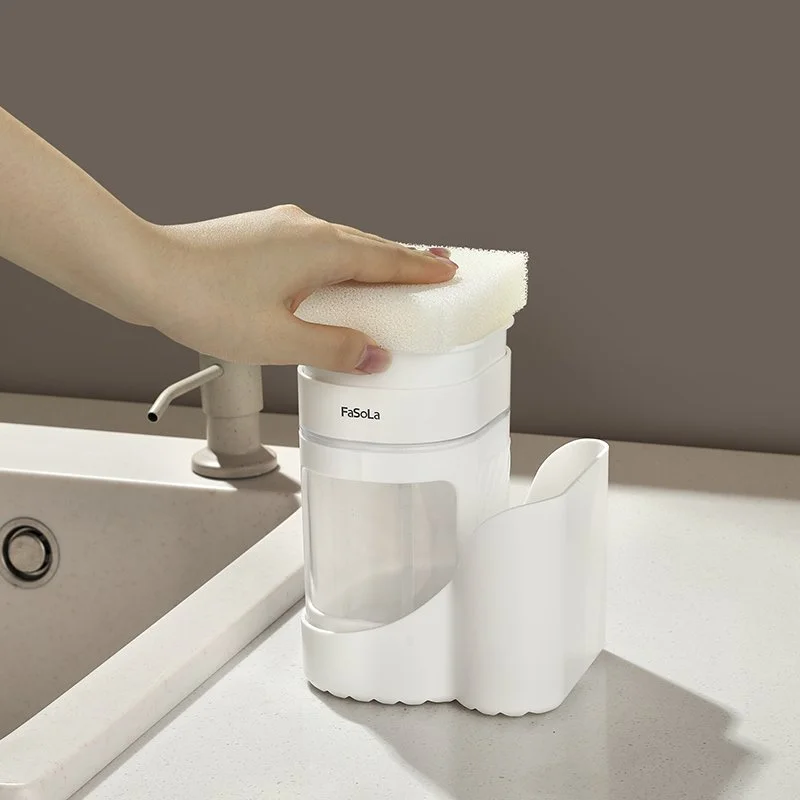
The product is less about luxury and more about removing an everyday annoyance. That makes it a practical kitchen accessory rather than a purely decorative one.
Who Should Skip It
This type of dispenser is not ideal for every kitchen.
Skip it if you already have a built-in sink soap dispenser that works well. In that case, a separate countertop pump may duplicate what you already have. You may only need a sponge holder.
Skip it if you prefer bar dish soap or a brush-based soap system. A liquid pump dispenser is useful only if it matches the products you actually use.
Skip it if your kitchen sponge is unusually large or if you use multiple scrubbers at once. A built-in sponge holder is best for one active sponge. If you need a brush, chainmail scrubber, bottle brush, and sponge all visible, you may need a larger sink caddy instead.
Skip it if you are unwilling to clean around the pump and holder. A dispenser reduces clutter, but it still needs wiping. If soap residue is ignored, any dispenser can become sticky.
Skip it if the sink area is already crowded with too many tools. Edit first. If you add a dispenser before removing unnecessary items, it may become one more object in the clutter.
What To Compare Before Buying
When comparing kitchen soap dispensers, start with the pump. Is it suitable for liquid dish soap? Does it look easy to press with wet hands? Is the nozzle positioned so soap lands where the sponge or hand naturally goes? Is the pump head likely to be easy to wipe?
Next, compare capacity. A smaller dispenser can look cleaner but may need frequent refilling. A larger dispenser reduces refills but may take more counter space. The #1790725 size of 420ml is a practical middle option for many households.
Then compare footprint. Measure the area beside your sink. A dispenser that fits in a product photo may crowd your real counter. Leave room for plates, pans, faucet movement, and wiping around the base.
Look at sponge storage. Does the holder fit your normal sponge? Can the sponge dry? Is it easy to remove with one hand? Does water have somewhere to go? The holder should make sponge use easier, not create a wet pocket.
Check refill access. If the top is hard to open, the refill process will become annoying. If the opening is narrow, spills may happen. If the container is opaque, you may not know when soap is low, so a weekly refill check helps.
Finally, compare cleaning. Smooth shapes are easier to wipe. Fewer seams usually mean less residue buildup. A kitchen dispenser should tolerate being cleaned often because it lives in a wet zone.
How To Set It Up Correctly
Start by clearing the sink area. Remove the old soap bottle, sponge tray, loose scrubbers, extra sponges, and any cleaning products that do not need to live on the counter. Wipe the counter, faucet base, and sink edge before placing the new dispenser.
Choose the side based on how you wash dishes. If you naturally hold the sponge in your right hand, place the dispenser where your right hand can press it without crossing over dirty dishes. If the dirty dish landing zone is on one side, keep the dispenser on the other side so it does not block the workflow.
Fill the dispenser with the dish soap you actually use. Do not overfill it. Leave enough space for the pump assembly to go back in without causing overflow. If the product instructions recommend a certain type of soap or dilution, follow that rather than guessing.
Place one active sponge in the holder. Do not add backup sponges, brushes, caps, or random small tools unless the product is designed for them. The purpose is to reduce clutter, not create a mini junk tray.
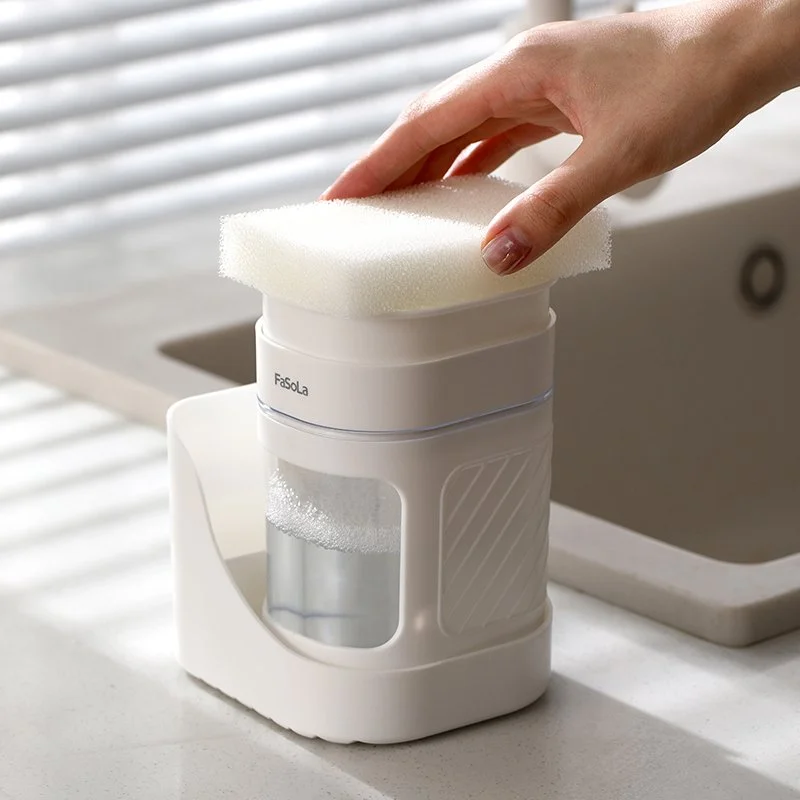
Use it for a week and watch behavior. If people return the sponge naturally, the location is good. If the sponge keeps appearing elsewhere, move the dispenser. The best setup is the one your household follows without reminders.
How To Maintain It
Maintenance should be quick. Wipe the pump and top surface when soap drips. Rinse the sponge holder area when residue builds. Lift the dispenser during a weekly counter wipe so water and soap do not sit underneath.
If the pump starts to feel sticky, remove it and rinse the pump head with warm water if the product instructions allow it. Dried soap can clog the nozzle or make the pump return slowly. Avoid using sharp tools that may damage the pump opening.
Refill before the dispenser is empty. If it runs dry during dishwashing, someone may pull out the refill bottle and leave it on the counter. A regular refill habit keeps the clean setup intact.
Replace the sponge when it smells, breaks down, or no longer rinses clean. A holder cannot make an old sponge fresh. The dispenser supports organization, but sponge hygiene depends on replacement and drying.
If the dispenser will not be used for a while, empty and clean it. Soap left sitting for long periods can thicken or dry around the pump. A quick clean before storage prevents problems later.
Common Problems And Fixes
If the pump dispenses too much soap, press more gently or use a shorter press. Some pumps deliver more per stroke than the original bottle. Users often adjust after a few days.
If the pump dispenses too little, check whether the soap is too thick, the nozzle has residue, or the pump tube is not seated properly. Rinse the pump if needed and refill carefully.
If the sponge holder stays wet, make sure the sponge is being squeezed before storage. The holder is not a dryer by itself. It works best when the sponge is not dripping.
If the dispenser slides, clean and dry the counter underneath. Soap residue can make the base move more easily. If the counter is uneven or very wet, try a different position.
If the sink still looks cluttered, the issue may not be the dispenser. Remove backup bottles, extra sponges, cleaning sprays, drying mats, and random dishes from the area. A dispenser can organize the active soap-and-sponge pair, but it cannot control unrelated items.
If the product does not fit your sponge, change the sponge size or choose a different holder. A tool should fit the routine, not force an awkward routine.
Countertop Dispenser vs Built-In Dispenser
Some kitchens have a built-in soap dispenser installed through the sink or countertop. Others use countertop pumps. Each approach has advantages.
A built-in dispenser keeps the counter clearer and can look integrated. It is useful when the pump works well and the refill bottle below the sink is easy to access. But built-in units can be annoying if refilling is difficult, if the pump clogs, or if the bottle under the sink is hard to reach.
A countertop dispenser is easier to refill, move, clean, and replace. It does not require installation. It is rental-friendly. It also allows the soap and sponge to stay together if the design includes a holder. The tradeoff is that it occupies counter space.
The #1790725 product belongs to the countertop category. Its advantage is flexibility and combined sponge storage. It is not trying to disappear into the sink. It is trying to create a small functional station.
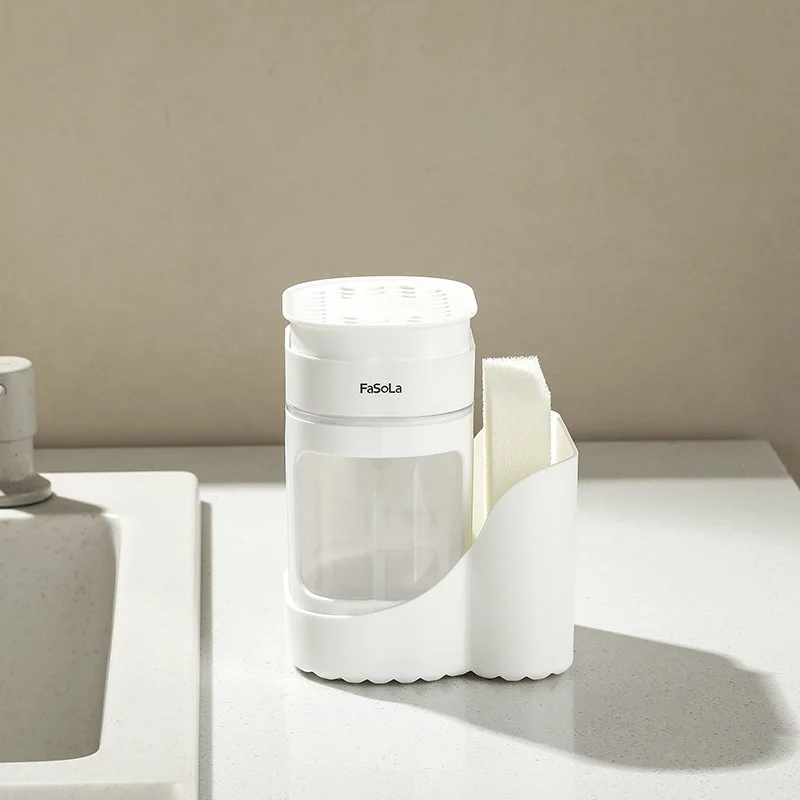
For renters, countertop dispensers are usually simpler. For custom kitchens, built-in dispensers may look cleaner. For households that want soap and sponge paired in one place, a countertop dispenser with holder can be more practical than a built-in pump alone.
Material And Style Considerations
The #1790725 details do not specify the material beyond durable construction, so the article should not invent a material story. Instead, judge the product by the details available: capacity, pump use, sponge holder, compact design, and intended kitchen function.
In general, soap dispenser material affects weight, feel, cleaning, and appearance. Ceramic can look elevated but may break if dropped. Glass can look clean but may show residue and can break. Stainless steel can look durable but may show fingerprints or water spots. Plastic can be lightweight and practical but may look less polished depending on design. Resin and coated materials vary widely.
Style should match the sink area, but function should come first. A dispenser that fits the color palette but pumps poorly is not a good kitchen tool. A plain dispenser that works cleanly may be the better choice for a busy kitchen.
White is a flexible color for many counters because it tends to visually recede. It can also show grime if not wiped, which can be a good reminder to clean it. If your sink area uses warm metals, natural wood, or bright colors, a white dispenser can keep the wet zone calm rather than adding more visual noise.
Do not choose only by product photo. Measure the space, think about soap type, and decide whether the sponge holder will fit your actual sponge.
Where The Matched Product Fits
The 420ml/14oz Dish Soap Pump Dispenser with Sponge Holder for Kitchen Sink (#1790725) fits best in kitchens where dish soap and sponge clutter are the main sink problem. It combines a pump dispenser and sponge holder in one compact station, which can make the counter look cleaner and the dishwashing routine more predictable.
Its strongest use case is everyday dishwashing. The soap is easy to keep near the sponge. The active sponge has a return point. The 420ml capacity reduces refill frequency compared with very small decorative bottles. The compact design helps it work in smaller sink areas where a large caddy would feel excessive.
It is not the best choice for someone who needs to store multiple brushes, gloves, scrub pads, and cleaning bottles at the sink. That person may need a larger organizer. It is also not necessary for a kitchen that already has a working built-in soap pump and separate sponge drainage.
Presented honestly, #1790725 is a practical sink accessory. It is not a luxury statement piece and it does not need exaggerated claims. Its value is in grouping two daily dishwashing tools so the sink area is easier to maintain.
Final Recommendation
A kitchen soap dispenser with a sponge holder is worth using when it solves a real sink problem: loose soap bottle, wandering sponge, sticky counter, and no clear home for the daily dishwashing tools. It is especially useful for renters, small kitchens, busy households, and anyone trying to reduce visual clutter around the faucet.
The best dispenser is not simply the prettiest one. It should pump smoothly, hold enough soap, fit the counter, support sponge drying, clean easily, and match the way your household washes dishes. If it does those things, it can make the sink area feel cleaner every day.
For this article, the best matched product is the 420ml/14oz Dish Soap Pump Dispenser with Sponge Holder for Kitchen Sink (#1790725). It supports the review because its core features are directly relevant: 420ml capacity, pump dispensing, built-in sponge holder, compact design, and a kitchen-specific purpose.
Use it as part of a small sink system: one active soap dispenser, one active sponge, clear counter space, backup supplies stored away, and a quick nightly wipe. That routine matters more than the dispenser alone, but the right dispenser makes the routine easier to keep.
Browse Kitchen Accessories products