Article
First Toys For A New Puppy: A Practical Starter Kit That Does Not Overbuy
Quick Answer
First Toys For A New Puppy: A Practical Starter Kit That Does Not Overbuy: quick answer
New puppy owners often buy too many toys before they know the puppy's mouth, energy level, confidence, or chewing style. The basket fills up with...
- Topic: Puppy Care.
- Related product category: pet-toys.
- This article keeps the main answer in the article copy and places relevant product context inside the guide.
New Puppies Do Not Need A Giant Toy Basket
New puppy owners often buy too many toys before they know the puppy's mouth, energy level, confidence, or chewing style. The basket fills up with squeaky plush toys, hard bones, rope toys, balls, treat puzzles, novelty shapes, and random gifts. Then the puppy ignores half of them, destroys a few, bites hands anyway, and still chews the furniture. The issue is not that the puppy needs more toys. The issue is that the first toys need clear jobs.
A good starter kit should help with five early puppy problems: mouthing, teething, training, settling, and safe play. It should also protect the puppy from toys that are too hard, too small, too complicated, or too easy to swallow. Puppies explore with their mouths. They also have fragile baby teeth, limited impulse control, short attention spans, and a strong need for sleep. The right toy plan supports all of that instead of overwhelming the puppy with choices.
The best first toy kit is small. Start with one soft comfort toy, one gentle chew, one supervised tug or bonding toy, one simple food puzzle, and one light fetch or toss toy. Some products can cover more than one job, but the jobs should stay clear. A tug toy is not an unsupervised chew. A puzzle toy is not a crate toy unless the puppy has proven safe with it. A plush toy is not automatically safe because it feels soft.
This guide explains what to buy first, what to skip, how to introduce each toy, and how to adjust once the puppy's real habits appear. The Durable Puppy Tug Toy - Chew Resistant Plush for Teething & Interactive Play (#1745432) is a good product match because it combines soft plush comfort with a puppy-focused tug and teething use case. It belongs in supervised interactive play and short teething sessions, not in the category of toys left with an untested puppy for hours.
The Five Jobs A First Toy Kit Must Cover
A puppy's first toy kit should not be organized by cute shapes. It should be organized by use. The first job is gentle mouth redirection. Puppies bite hands, sleeves, shoelaces, blankets, and furniture because the mouth is their main tool. A toy needs to be available before the puppy chooses human skin.
The second job is teething support. A young puppy needs safe textures that are gentle on baby teeth and gums. Hard chews that seem durable to people may be too intense for a puppy's mouth. Soft rubber, puppy-safe chew textures, and supervised fabric toys are usually better starting points.
The third job is bonding. Puppies need to learn that people are fun, predictable, and safe. Interactive toys such as tug toys, soft toss toys, and training toys help build that relationship. These toys should be used with rules, not wild excitement that teaches the puppy to bite harder.
The fourth job is mental work. A simple food puzzle or slow-feeding toy can turn meals into enrichment. The puzzle should be easy at first. A frustrated puppy may bark, paw, chew the puzzle, or give up.
The fifth job is settling. Puppies need help calming down. Some toys support quiet chewing or comfort. Others create excitement. The owner needs to know which is which. If a squeaky toy makes the puppy frantic, it is not a bedtime toy.
Thinking in jobs prevents overbuying. One carefully chosen product may cover two jobs, but no toy should be expected to cover all five safely.
Toy 1: A Soft Comfort Toy
A soft comfort toy gives the puppy something gentle to carry, mouth, and rest beside. It is often most useful during the first week, when the puppy is adjusting to a new home, new smells, new people, and a new sleep routine. The toy should be soft enough for baby teeth, large enough not to swallow, and simple enough that there are not many parts to tear off.
Avoid plush toys with plastic eyes, loose tags, thin ears, long tails, hard buttons, or decorative pieces. Puppies explore those details first. Once a puppy opens a seam or removes a small part, the toy becomes a swallowing risk.
A comfort toy should be introduced during calm moments, not only when the puppy is already biting wildly. Place it near the puppy's bed or mat. Use it after a nap. Offer it during quiet handling. If the puppy carries it and settles, it is doing its job.
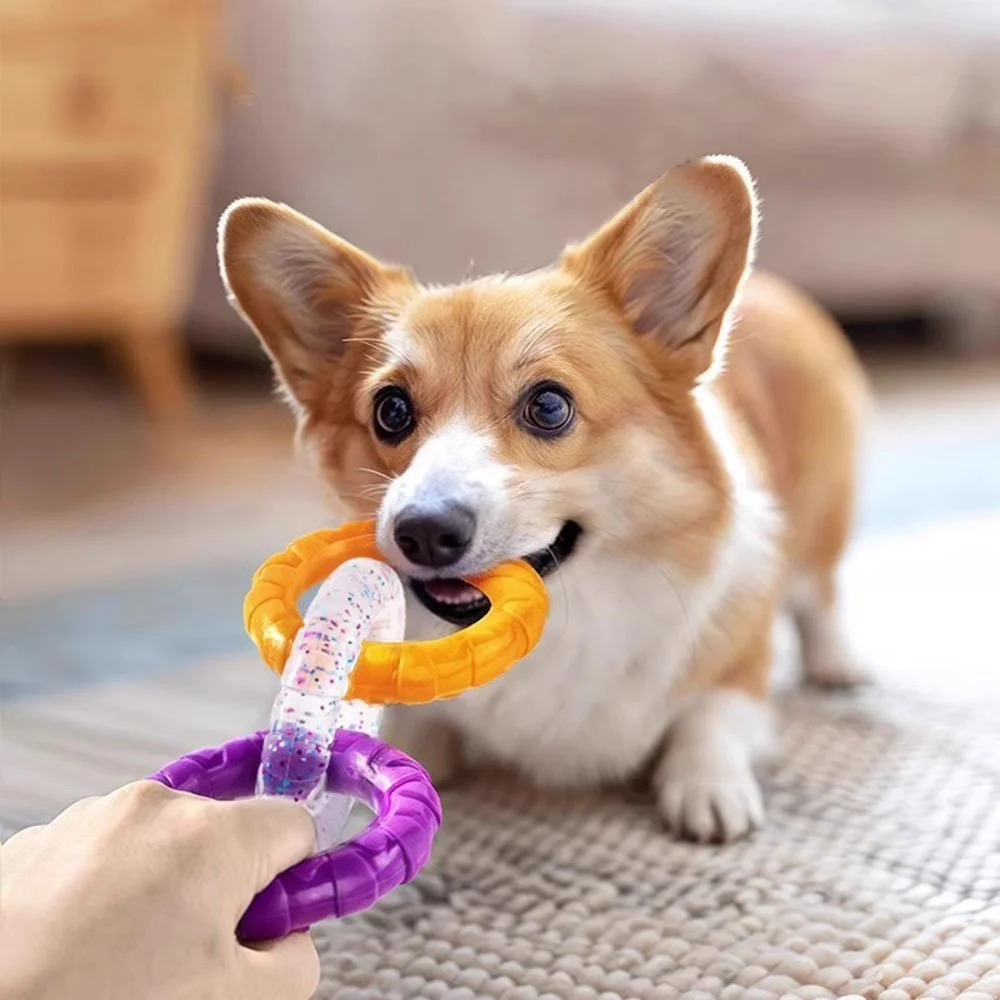
Do not assume a plush comfort toy is safe for unsupervised use. Some puppies gently cuddle plush. Others open it in minutes. Watch the first sessions. If the puppy focuses on seams, stuffing, or squeakers, the toy needs closer supervision or should be removed.
The goal of the comfort toy is not durability under heavy chewing. The goal is soft familiarity and acceptable mouthing. That distinction matters when choosing what to leave available.
Toy 2: A Gentle Teething Chew
Teething is one of the biggest reasons puppies bite everything. Even before adult teeth begin coming in, puppies use chewing to explore and relieve mouth pressure. A starter chew should be gentle, flexible, and appropriate for the puppy's size.
Avoid hard nylon bones, antlers, cooked bones, very hard plastic, and anything that does not have enough give for baby teeth. A chew that is marketed as durable for adult dogs may be wrong for a puppy. Baby teeth are sharp but not strong like adult teeth. They can crack.
Good starter chews often include puppy-safe rubber, soft textured chew toys, or supervised fabric-and-TPR toys made for teething. Cold can help some puppies, but do not give a rock-hard frozen object that forces heavy biting. The safest cold options have some flexibility and are used under supervision.
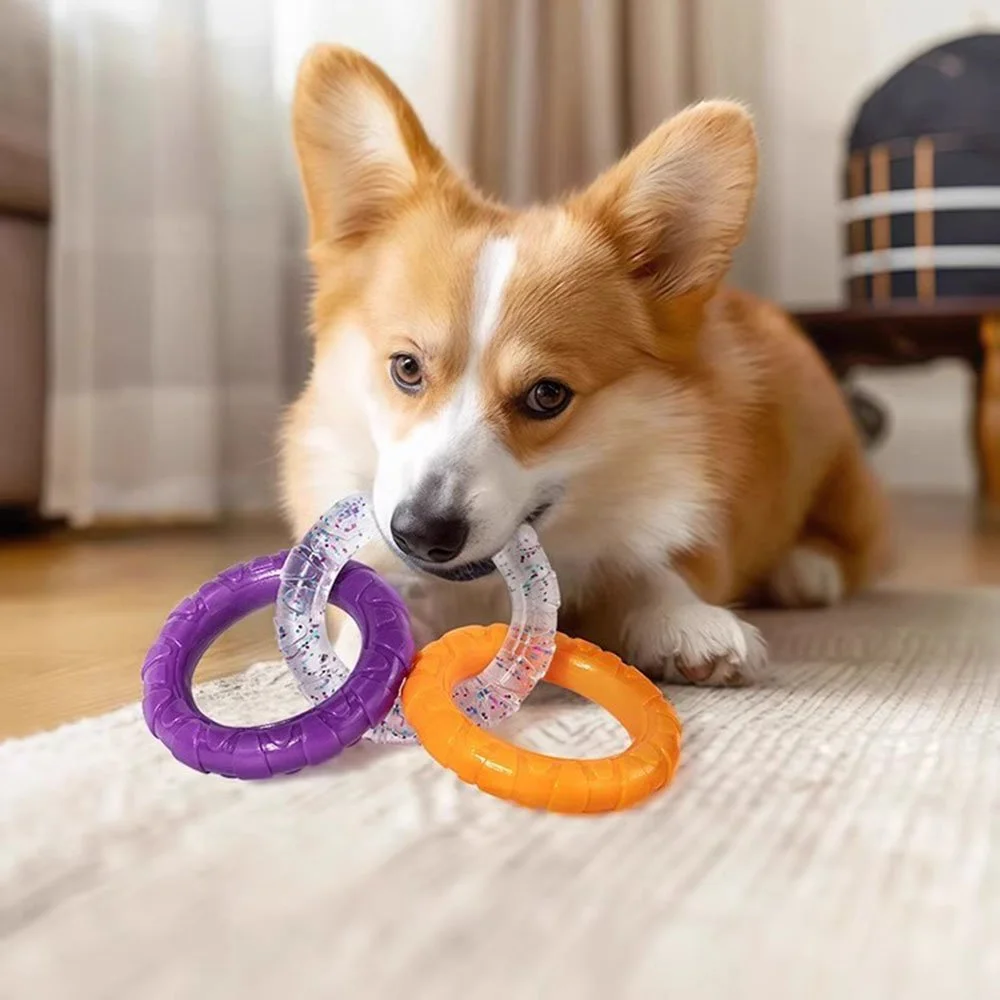
The Durable Puppy Tug Toy (#1745432) can support teething because it is designed for puppies and combines plush with TPR. That makes it more appropriate for short supervised mouthy sessions than a toy built only for adult power chewing. It should still be checked often. If the puppy damages the plush or starts tearing at the TPR, remove it.
Teething chews should appear before problem times. Offer one after naps, during evening mouthiness, and when the puppy starts chewing furniture. If the puppy is already overtired and frantic, a toy may not work. Sometimes the puppy needs sleep more than another chew.
Toy 3: A Supervised Tug And Bonding Toy
Tug can be an excellent first game when it is gentle and structured. It teaches the puppy to engage with a person, use the mouth on a toy instead of hands, and practice release. It also gives the owner a way to reward training without using food every time.
The tug toy should fit the puppy's mouth and body. It should not be so large that the puppy cannot grip it, or so small that fingers are too close to the teeth. It should have a clear place for the puppy to hold and a clear place for the person to hold. For small puppies, short sessions are better than intense pulling.
Rules matter from the beginning. If teeth hit skin, pause the game. If the puppy grabs clothing, redirect to the toy. If the puppy becomes frantic, stop and shift to a calmer activity. Tug should not teach the puppy that biting harder makes the game better.
Teach release early through trading. Offer a treat near the puppy's nose, say the release cue once, and reward when the puppy drops. Then give the toy back when appropriate. The puppy learns that dropping does not always end the fun. This prevents toy guarding and makes future training easier.
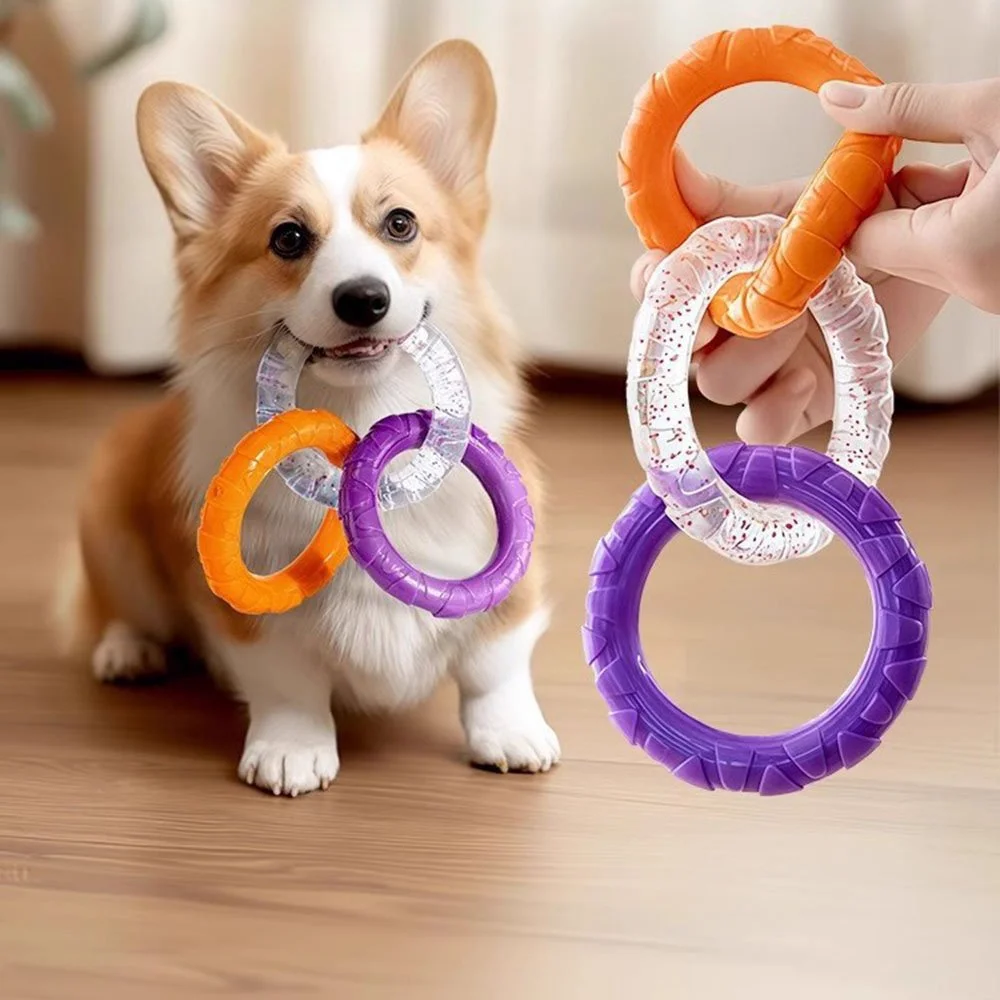
The #1745432 puppy tug toy fits this role because it is specifically framed for teething and interactive play. Use it as a bonding toy, not as an all-day chew object. Its value is in supervised play, training, and redirection.
Toy 4: A Simple Meal Puzzle
A puppy does not need a difficult puzzle on the first day. The first meal puzzle should be easy enough that the puppy succeeds quickly. The goal is not to prove the puppy is clever. The goal is to slow eating, build confidence, and turn food into calm mental work.
Start with simple treat dispensing or scatter-style feeding. If the puzzle has compartments, leave them easy at first. If the puppy paws, barks, or chews the puzzle aggressively, make it simpler. Frustration is not enrichment.
Food puzzles are especially useful when the puppy needs something to do while people cook, work, or settle in the evening. They also help teach the puppy to focus on independent activity instead of constantly demanding attention.
Use the puppy's regular food when possible. Too many rich treats can upset digestion. Puppies already experience changes in food, environment, and routine when they come home. Keep puzzle food simple.
Do not leave a puzzle toy unsupervised until the puppy has proven safe with it. Some puppies chew plastic, fabric, or rubber instead of working for food. Others flip the puzzle and become frustrated. Watch first, then decide access.
A meal puzzle should be part of the starter kit, but it does not replace training, walks, potty breaks, or naps. It is one structured tool.
Toy 5: A Soft Fetch Or Toss Toy
Fetch for puppies should be short, soft, and low impact. A puppy's joints, coordination, and teeth are still developing. Long-distance sprinting, slippery floors, hard balls, and repeated jumping are not appropriate starting points.
Choose a lightweight toy that can be rolled or tossed a few feet. Soft plush balls, small fabric toys, or gentle puppy-safe toss toys can work. Avoid hard balls that bounce unpredictably or require heavy biting. Avoid very small balls that can be swallowed.
The first goal is not a perfect retrieve. The first goal is interest, chase, and return toward the person. Roll the toy a short distance, encourage the puppy back, trade if needed, and stop after a few repetitions. End while the puppy still wants more.
Indoor fetch should happen on carpet or another non-slip surface. Hallways and hardwood floors can create sliding and impact. Outdoor fetch should happen in a safe, enclosed area with short distances and no heat stress.
Some puppies do not enjoy fetch yet. That is fine. Use tug, chasing you, hand targeting, or simple training games instead. Fetch is optional. Play and bonding are the real goals.
What Not To Buy First
Do not start with hard adult chews. They may last longer, but they can be too hard for baby teeth. Durability is not useful if the toy is wrong for the puppy's mouth.
Do not start with tiny toys. Puppies grow quickly, and a toy that looks cute in the store may become a choking risk. Choose sizes with growth in mind.
Do not buy toys with small detachable parts. Plastic eyes, buttons, ribbons, bells, tags, and weak appendages are common failure points.
Do not buy complex puzzles before the puppy understands simple food work. A difficult puzzle can create frustration and chewing on the puzzle itself.
Do not rely on squeaky toys for unsupervised use. Many puppies love squeakers, but the squeaker can become a target. If the puppy opens the toy, the small internal part is a risk.
Do not buy rawhide as a default puppy chew. Many owners reach for it because it is common, but choking, swallowing, and digestion concerns make it a poor starter choice for many puppies.
The first week is not the time to test every toy category. Start simple and watch.
How To Introduce Toys In The First Week
Day one should be gentle. The puppy is processing a major change. Offer a comfort toy, a soft chew, and very short play. Do not overwhelm the puppy with a full basket. Too many choices can create chaos rather than enrichment.
On days two and three, begin using toys in predictable routines. Soft toy after waking. Chew after meals or during mouthy periods. Tug for short bonding sessions. Simple food puzzle for one easy meal. Soft toss game only if the puppy is engaged and not overstimulated.
By the end of the first week, you should know more about the puppy's style. Does the puppy carry toys? Shred fabric? Love food puzzles? Bite rope? Ignore balls? Guard chews? Fall asleep with plush? These observations should guide the next purchase.
Do not keep adding toys to solve every behavior. If the puppy bites more at night, the issue may be overtiredness. If the puppy chews furniture, the issue may be access and supervision. If the puppy ignores toys, the toys may be too hard, too boring, or introduced at the wrong moment.
A starter kit is a learning tool for the owner as much as enrichment for the puppy. The first week teaches you what the puppy actually needs.
Safety Checks For Puppy Toys
Inspect toys before the first use and after every serious session. Look for loose threads, torn seams, cracked rubber, exposed stuffing, fraying rope, loose squeakers, and pieces small enough to swallow. Puppies change quickly, so a toy that was safe last week may be too small or too damaged today.
Watch how the puppy uses each toy. A gentle mouther can use toys differently from a determined shredder. A puppy that swallows fabric should not have plush access without close supervision. A puppy that frays rope should not be left with rope toys. A puppy that chews plastic puzzle parts needs a different feeding setup.
Separate toy categories by supervision level. Some toys are for interactive play only. Some are for supervised chewing. Some can be available in the pen. Some should be put away after every use. Labeling mentally this way prevents mistakes.
Clean toys often. Puppies drag toys through floors, crates, food, and outdoor areas. Plush toys can collect saliva and dirt. Rubber toys can trap food residue. Rope toys can become damp and dirty. Follow material care instructions and replace toys that cannot be cleaned safely.
Do not let sentiment override safety. The puppy may love a toy, but if it is torn open or too small, it needs to be retired. Safe toy rotation is part of responsible puppy care.
Matching Toys To Puppy Personality
A bold, high-energy puppy may need more structured interactive play. Tug, training games, and short toss sessions can help, but the owner must prevent overarousal. If the puppy gets wilder with every squeak or pull, shorten sessions and add calm breaks.
A shy puppy may need softer toys and slower introductions. Place toys near the puppy rather than waving them in the puppy's face. A comfort toy and gentle food puzzle may be more useful at first than tug.
A mouthy puppy needs toys within reach at all times during human interaction. Keep a teething toy near the sofa, by the playpen, and in the room where people sit. Redirection works only if the legal option is closer than the hand or sleeve.
A food-motivated puppy may learn quickly through puzzle feeding and trade games. Use food carefully so treats do not replace balanced meals or upset the stomach.
A strong chewer needs tougher supervised chew options, not unlimited plush. If the puppy tries to destroy the #1745432 toy quickly, use it for brief tug and training rather than extended chewing. Match access to behavior.
A sleepy or lower-energy puppy still needs toys, but not constant stimulation. Comfort, gentle chewing, and short play may be enough. Puppies need a lot of sleep. A toy plan should support rest, not prevent it.
Personality fit matters more than buying a famous toy. The best starter kit adapts.
How Many Toys Should Be Available At Once?
For a new puppy, fewer visible toys often works better. Keep two or three available in the main area and store the rest. Rotate them daily or every few days. This keeps toys interesting and helps the puppy understand what is allowed.
If every toy is on the floor, the puppy may stop valuing them and move to furniture, shoes, or hands. A toy offered at the right moment is more powerful than a basket ignored all day.
Use location strategically. Keep a chew toy where the puppy gets mouthy. Keep a tug toy where you train. Keep a food puzzle near the feeding area. Keep comfort toys near sleep areas. The toy should appear where the behavior happens.
Pick up toys that are not safe for unsupervised access. Tug toys, rope toys, squeaky plush, and puzzle toys often need cleanup after use. The puppy can have freedom with toys only after proving safe.
Rotation also helps you inspect. Stored toys can be checked, washed, and repaired or retired. A clean, safe, small rotation is better than a messy pile.
A Simple First-Week Toy Schedule
The first week with a puppy is easier when toys are tied to moments in the day instead of scattered randomly around the house. A toy schedule does not need to be strict, but it should help the puppy learn patterns: wake up, potty, eat, play, settle, nap. Toys work best when they support that rhythm.
After the first morning potty break, offer a gentle chew or soft comfort toy for a few minutes while the puppy is still fresh. This is a good time to reward calm chewing because the puppy is not yet overtired. If the puppy bites hands during morning greetings, keep a legal toy in your hand before you start petting. That small preparation prevents many early biting habits.
Use one meal each day for a simple puzzle or slow-feeding activity. Do not make every meal difficult. A new puppy is already adapting to new routines, new people, and possibly new food. One easy puzzle meal is enough to build confidence without turning eating into frustration. If the puppy solves it quickly, that is fine. Early success matters more than difficulty.
Late morning or early afternoon is usually a better time for short tug than late night. Puppies often become mouthier in the evening, and intense play can make that worse. Use the #1745432 tug toy for a controlled session: two or three short rounds, a simple release trade, praise, and then a calmer activity. The toy should disappear after the session so it stays valuable and safe.
Before nap time, shift from active toys to settling toys. A soft comfort toy or gentle chew works better than squeakers, tug, or fetch. If the puppy cannot settle with a toy and keeps escalating, remove the toy and help the puppy rest. Many owners mistake tired puppy biting for a toy problem. The puppy may simply need sleep.
In the evening, keep play short and predictable. A few minutes of soft toss on a non-slip surface is enough. Avoid chasing games that make the puppy run under furniture, jump on people, or grab clothing. End with a calm chew or comfort toy, then move toward the bedtime routine.
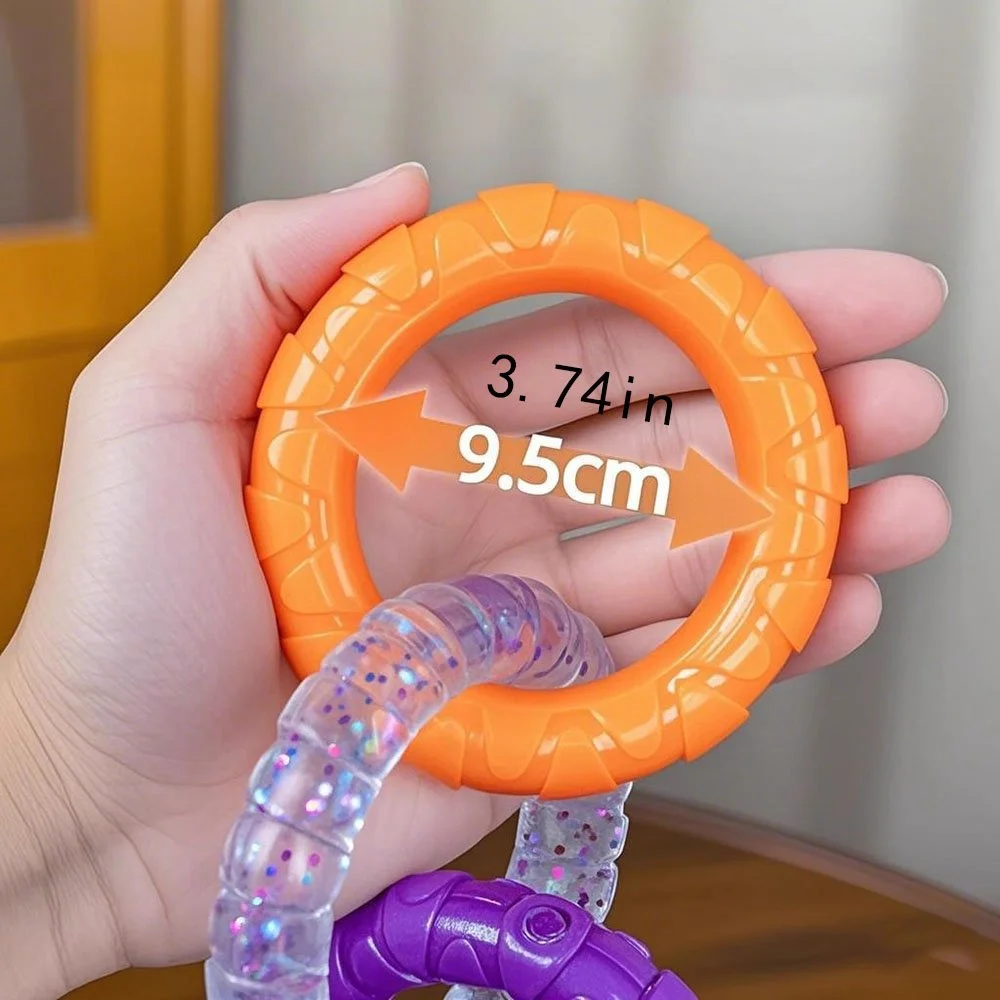
This schedule gives each toy a purpose. Chews handle mouth pressure. Tug builds bonding. Puzzles use food energy. Comfort toys support rest. Fetch stays short and low impact. The puppy learns that toys are part of daily structure, not random objects to destroy.
When To Upgrade The Starter Kit
A first toy kit should change as the puppy grows. The point is not to buy everything on day one. The point is to observe what the puppy proves it needs. Upgrade only when behavior gives you a clear reason.
Upgrade the chew category if the puppy finishes gentle chews too quickly, seeks furniture legs, or spends long periods working the same texture without settling. That does not automatically mean the puppy needs the hardest chew available. It may mean the puppy needs a different texture, a larger puppy-safe chew, or more frequent supervised chewing windows.
Upgrade the tug category if the puppy enjoys interactive play but the first toy is becoming too small, too easy to fray, or too short to protect fingers. A growing puppy needs enough distance between the human hand and the puppy's teeth. If the #1745432 tug toy still fits well and remains intact, keep using it. If the puppy's mouth and pulling strength outgrow it, move to a larger supervised tug toy.
Upgrade the puzzle category when the puppy solves the simple version calmly and reliably. Calmly is important. A puppy that flips the puzzle, barks at it, or bites the material is not ready for harder enrichment. Increase difficulty only when the puppy understands the game and stays relaxed enough to work through it.
Upgrade fetch toys when the puppy has better coordination, stronger recall, and more body control. Early fetch should be short. As the puppy matures, you can use larger soft balls, outdoor-safe toss toys, or floating toys if water play becomes part of the routine. Avoid long repetitive running until the puppy is physically ready.
Upgrade comfort toys only if the puppy damages them or ignores them completely. Some puppies keep the same soft toy for months. Others need tougher seams or simpler shapes. If a puppy repeatedly opens plush toys, stop buying detailed plush designs and choose simpler, stronger options or restrict plush to direct supervision.
The best upgrade rule is simple: replace for safety, add for a real behavior need, and skip purchases that only look cute. A puppy toy collection should become more accurate over time, not just bigger.
Final Recommendation
A new puppy does not need dozens of toys. The essential starter kit should cover soft comfort, gentle teething, supervised tug, simple meal enrichment, and low-impact toss play. Each toy should have a job, a supervision level, and a clear place in the daily routine.
The best product match for this article is the Durable Puppy Tug Toy - Chew Resistant Plush for Teething & Interactive Play (#1745432). It fits because it is puppy-specific and supports several early needs: teething redirection, gentle tug, supervised interactive play, and training rewards. It should be used as part of a starter kit, not as the only toy and not as an unsupervised chew for a puppy that destroys fabric or TPR.
Start small, observe the puppy, and buy the next toy based on behavior rather than guesswork. A focused first toy kit keeps the puppy safer, makes training easier, and prevents the common mistake of filling the house with toys that do not solve the real puppy problems.