Article
Feather Wand Mistakes That Are Ruining Playtime (And How to Fix Them)
Quick Answer
Feather Wand Mistakes That Are Ruining Playtime (And How to Fix Them): quick answer
A feather wand looks simple: stick, string, feathers, cat. But the difference between a cat who explodes into play and a cat who stares at you like you...
- Topic: Cat Play.
- Related product category: pet-toys.
- This article keeps the main answer in the article copy and places relevant product context inside the guide.
The Wand Is Not the Game. The Movement Is the Game.
A feather wand looks simple: stick, string, feathers, cat. But the difference between a cat who explodes into play and a cat who stares at you like you are wasting everyone's time is usually not the toy. It is the way the toy moves.
Cats do not chase random motion forever. They watch, calculate, stalk, wait, pounce, grab, bite, and reset. Good feather play gives them those moments in the right order. Bad feather play turns the toy into noise: too fast, too close, too predictable, too high, too easy, or impossible to catch.
This is why some owners say, "My cat does not like wand toys," when the real issue is technique. The feather is being waved like a flag, dragged like a mop, or spun like a ceiling fan. That might entertain the person for a minute, but it does not feel like prey to the cat.
A feather wand can mimic a bird, insect, or small fluttering target. It should appear, disappear, hesitate, land, escape, and sometimes make a mistake. The mistake is important. Prey that never makes a mistake is not fun. Prey that flies directly into the cat's face is not believable. Prey that never gets caught is frustrating.
The goal is not to tire the cat by waving your arm until you are bored. The goal is to create a small hunt the cat can actually finish.
Mistake 1: Starting Too Fast
Many people begin play at maximum speed. They pull the wand out, whip the feather across the room, and expect the cat to chase immediately. Some cats will. Many will not.
Cats often need a watching phase before the pounce. The pause is not disinterest. It is part of the process. A cat who crouches, stares, shifts weight, twitches the tail tip, or slowly tracks the feather is already playing. The hunt has started in the brain before the body moves.
Start smaller. Move the feather at the edge of the cat's vision. Let it slip behind a chair leg, peek around a box, or tremble near the base of a cat tree. Keep the first movements short and uneven. You are not trying to outrun the cat. You are trying to make the cat care.
For confident young cats, the warm-up may last ten seconds. For shy, older, or less active cats, it may take a few minutes. Do not punish patience by giving up too soon. If the cat is watching intently, keep going. The pounce may be loading.
The fix is simple: begin like prey that does not know it has been noticed. Then increase speed only after the cat commits.
Mistake 2: Flying Like a Helicopter
A feather wand should not spin in endless circles above the cat's head. That movement looks dramatic, but it often creates one of two problems. Either the cat gets overstimulated and swats wildly, or the cat gives up because the target has no readable path.
Real prey movement has rhythm. It moves, pauses, hides, changes direction, lands, and escapes. Even birds do not hover in perfect circles forever. Insects do not make clean loops for three minutes. The irregularity is what gives the cat something to solve.
Think in short phrases:
- flutter, pause, dip
- land, tremble, escape
- disappear, reappear, freeze
- climb, drop, skim, stop
The pause is as important as the motion. During the pause, the cat judges distance. If you keep moving constantly, the cat never gets the satisfying moment of "now."
If your cat watches but does not chase, slow down. If your cat swats once and walks away, change direction and hide the feather. If your cat leaps but misses repeatedly, lower the difficulty. A good hunt should challenge the cat without making the target seem impossible.
Mistake 3: Keeping the Feather in the Cat's Face
Putting the feather directly in front of the cat's nose is tempting because it looks like you are making the toy more available. To a cat, it can feel pushy or boring.
Prey usually moves away, not toward the predator's face. A feather that invades the cat's space may make the cat back up, blink, or swat defensively. Some cats will grab it, but that does not mean the movement was good. It may be irritation, not play.
Work around the cat, not at the cat. Move the feather across the field of vision. Let it cross a doorway, slip behind a table leg, or land on the far side of a cushion. The cat should feel like it discovered the target, not like the target was shoved into its whiskers.
This is especially important for shy cats. A shy cat may need the feather to stay low, distant, and partially hidden. Let the cat approach. If the cat sniffs, taps once, or simply watches from cover, that is progress.
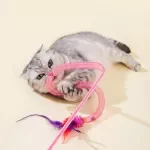
Confident cats also benefit from distance because it creates chase space. A feather six inches from the nose is a swat. A feather crossing the room is a hunt.
Mistake 4: Never Letting It Land
The old advice is to keep feather toys airborne. That can be useful, but it is incomplete. Birds land. Insects land. Injured prey pauses. A feather that never touches anything can become frustrating because the cat never gets a clean pounce opportunity.
Landing creates tension. Drop the feather onto a chair, windowsill, cat tree platform, cardboard box, or the edge of a rug. Let it sit for two or three seconds. Tremble it slightly. Then, just as the cat moves, let it escape a short distance.
Do not overdo the escape. If the toy always gets away, the cat may lose interest. Let the cat catch it sometimes. A hunt with no capture is just exercise. Some cats tolerate that. Many do not.
Use surfaces to make the game richer. A feather can perch on a box, slip under a paper bag edge, climb a scratching post, or disappear behind a curtain. The room becomes part of the toy.
For heavier cats, seniors, or cats with limited mobility, use lower landing zones. A ground-level box, folded blanket, or low scratcher can make the hunt accessible without asking for big jumps.
Mistake 5: Making Every Session a Jumping Contest
Jumping looks impressive, so people often make feather play vertical. They hold the wand high and try to get big leaps. A few jumps can be healthy for the right cat in the right space. Too many can be risky or discouraging.
Cats need traction, landing room, and confidence. Slippery floors, cluttered rooms, sharp table corners, and crowded furniture make vertical play worse. A cat who lands badly may avoid the toy next time.
Mix levels instead of chasing height. Let the feather skim low, hop onto a cushion, flutter to a chair, drop to the floor, hide behind a box, and rise again. This uses the whole body without turning every catch into an athletic test.
For kittens, keep jumps modest. Their coordination is still developing and they often overcommit. For seniors, focus on reaching, stepping, stretching, and low pounces. For cats carrying extra weight, choose movement that builds confidence rather than proving what they cannot do yet.
If your cat jumps once and then lies down, it may not be lazy. The game may be too intense. Shift to stalking and ground-level catches.
Mistake 6: Forgetting the Catch
Some owners accidentally train frustration. They make the feather fast, clever, and impossible. The cat chases, misses, chases, misses, and eventually quits or grabs the owner's arm.
Cats need wins. Not every thirty seconds, not on every move, but often enough that the game feels worth playing. Let the cat pin the feather. Let it bite. Let it hold for a moment. If the attachment is safe and supervised, let the cat kick lightly or carry it a short distance.
After a catch, do not immediately yank the toy away. That can teach the cat to grip harder. Instead, let the toy go still. Give the cat a few seconds of victory. Then move again slowly or trade to another toy.
A good pattern is three near misses, one catch. For some cats, use fewer misses. For highly confident cats, use more difficulty. The ratio should be based on the cat's motivation. If the cat gets sharper and more focused, you are in the right zone. If the cat gets sloppy, irritated, or leaves, the game is wrong.
Ending with a catch is especially useful. Let the cat capture the feather, then feed a meal or offer a small treat if that fits your routine. Hunt, catch, eat, rest is a sequence many cats understand.
Mistake 7: Playing in a Bad Room
The room can ruin the toy. A feather wand needs space, surfaces, and safe footing.
Avoid slick floors if your cat slides. Use a rug, mat, or carpeted area. Clear breakable objects. Watch for cords, blind strings, sharp table corners, unstable lamps, and clutter underfoot. If the cat likes to launch from furniture, make sure the landing area is clear.
Good wand rooms have hiding edges. Boxes, tunnels, chair legs, scratchers, and cat trees create ambush points. An empty room can work for chase, but many cats prefer cover. They want to stalk from behind something.
Lighting matters too. Some cats play better in softer evening light. Some need brighter light to track the feather. If the cat keeps losing the toy, change the contrast. A pale feather on a pale rug may disappear. A darker attachment may work better.
Noise matters for cautious cats. A loud room, television, vacuum, or crowded household may make play impossible. The cat is not refusing the toy. It is refusing the situation.
Before blaming the wand, fix the environment.
Mistake 8: Using One Attachment for Every Cat
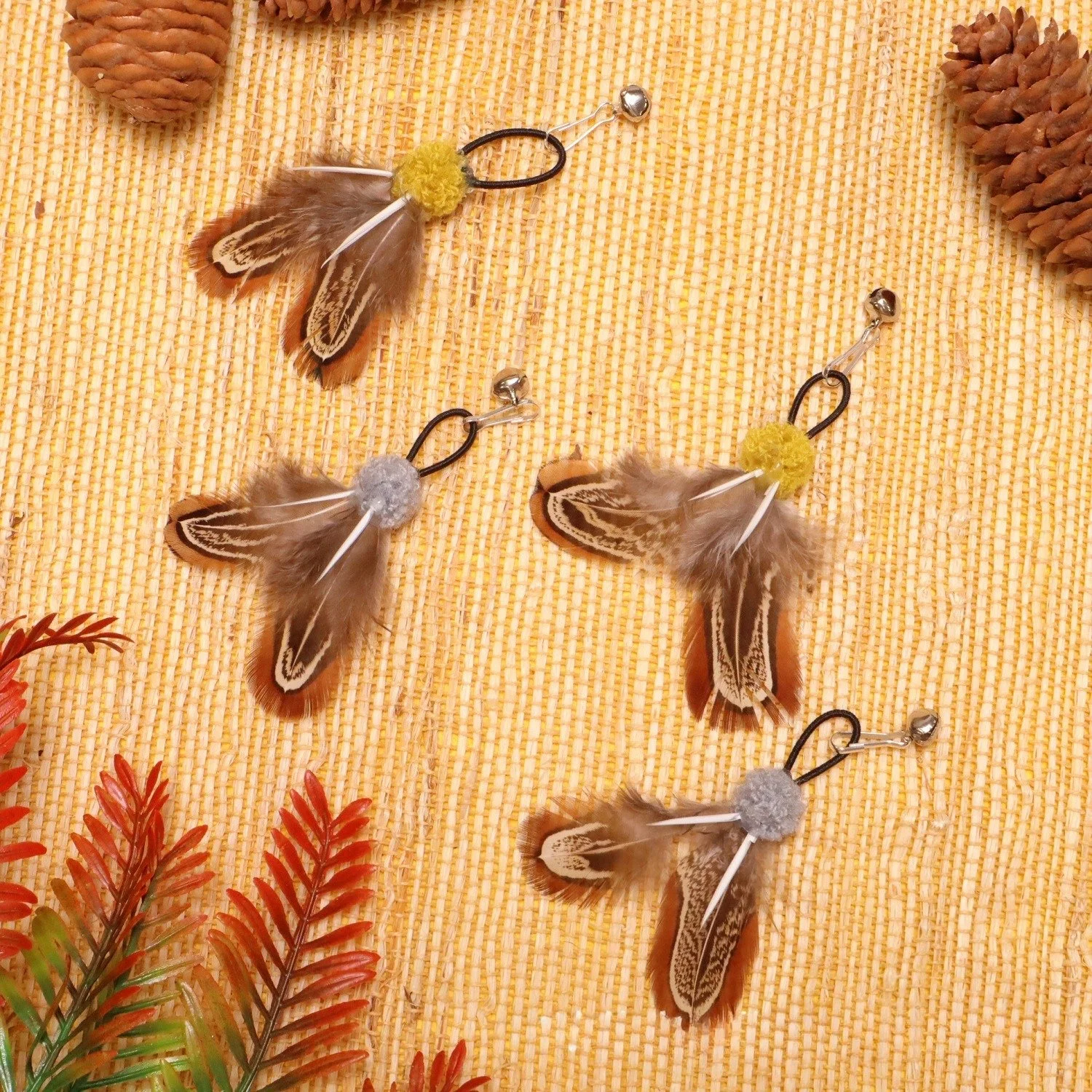
Feather attachments are not interchangeable to cats. Some flutter like birds. Some drag like insects. Some have bells. Some are stiff. Some are soft. Some are too large for timid cats and too flimsy for intense cats.
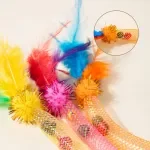
A cat who ignores one feather may love another. Try changing weight, size, sound, color, and movement type. Long feathers create sweeping motion. Short feather clusters can make quick fluttering movements. A worm-style attachment may work better for cats who prefer ground prey. A quiet attachment may be better for sound-sensitive cats.
Do not assume catnip is required. Many feather toys work because of motion, not scent. Adding scent can help some cats and distract others. If the cat rubs and rolls instead of chasing, the scent may have changed the game.
Attachment rotation also prevents boredom. Keep two or three heads in use and store the rest. Rotate weekly or when the cat's response fades. A new attachment does not need to be expensive. It needs to move differently.
Inspect attachments before each session. Feathers break, bells loosen, clips bend, and string frays. A worn attachment may still look usable to you while being unsafe or boring to the cat.
Mistake 9: Playing Too Long
Longer is not always better. Many cats prefer short, intense sessions. Five to ten minutes of good feather play can be more useful than twenty minutes of lazy waving.
Stop before the cat is completely done. If the cat is still engaged but slowing down, offer one final easy catch and end. This leaves the toy valuable for next time. If you play until the cat walks away every session, the wand becomes the thing that overstays its welcome.
Watch breathing and body language. Open-mouth breathing, heavy panting, repeated flopping without interest, irritated tail lashing, or sudden biting can mean the session has gone too far. Some cats need a rest. Some need lower intensity. Some need the game to end.
For high-energy cats, use multiple short sessions across the day instead of one marathon. Morning, late afternoon, and evening sessions can work better than trying to solve all energy at bedtime.
For cats who wake you at night, schedule feather play before dinner or before your own bedtime routine. Do not start a wild game in bed and then wonder why the cat thinks 2 a.m. is hunting hour.
A Simple Feather Wand Routine
Use this structure when you do not want to overthink it:
- one minute of slow appearance and hiding
- two minutes of chase with low and medium movement
- one minute of landing and pounce opportunities
- one minute of easier catches
- final catch, then food or rest
For a shy cat, stretch the first step and reduce the chase. For a young athletic cat, add more vertical movement in a safe area. For a senior cat, keep the game lower and slower but preserve the catch.
The routine is flexible. The point is the arc. Do not start at chaos and end at frustration. Start with interest, build to action, allow capture, and come down cleanly.
Adjust the Technique to the Cat
The same feather movement will not work for every cat. A good wand player watches the cat as much as the feather.
For the bold jumper, use more vertical movement but keep it controlled. Let the feather climb a cat tree, lift from a chair, and drop to a rug. Give the cat a few big moments, then bring the game back down before the jumps get sloppy. Bold cats often need harder prey, not faster prey.
For the floor hunter, stop trying to make the cat fly. Keep the feather low, skim around furniture, hide under paper, and let the cat pounce from the ground. Some excellent hunters do not enjoy jumping. They prefer ambush.
For the watcher, slow the game down. This cat may stare for several minutes before moving. If the eyes are locked, the ears are forward, and the body is low, the cat is not bored. It is studying. Use tiny movements and give the pounce time to arrive.
For the grabber, focus on safe catches. This cat wants contact quickly. Offer more frequent wins and avoid yanking the feather away once caught. If you pull too hard, the cat may learn to clamp and bite harder.
For the shy cat, use distance and cover. Move the feather near a box or tunnel, not directly toward the cat. Let the cat play from a hiding spot. Confidence often starts with one paw reaching out from under a chair.
For the easily overstimulated cat, lower the speed and shorten the session. Use fewer high jumps, fewer sudden face-level movements, and more stalking. End with a clean catch before the cat tips into biting or swatting at people.
For the senior cat, reduce impact. Use slow skims, low landings, and reachable surfaces. The session can still be mentally rich without dramatic leaps. A senior cat who follows, taps, grabs, and holds the feather is playing.
The right question is not "How do feather wands work?" It is "What kind of hunt does this cat still want to do?"
Troubleshooting Feather Wand Problems
My cat only watches and never jumps.
Do not assume failure. Watching is part of predatory play. Make the feather more believable by hiding it, pausing longer, and lowering the speed. If the cat's body stays relaxed and interested, keep the session short and repeat later. Some cats need several sessions before they commit physically.
My cat grabs the string instead of the feathers.
The string may be more visible or easier to catch than the attachment. Shorten the visible string when possible, change the angle, and make the feather do the interesting movement. Do not let the cat chew the string. Pause, reset, and offer the feather body as the target.
My cat attacks my hand.
Your hand may be too close to the prey zone, or the cat may be getting frustrated. Use a longer wand, keep your hand still, and move the feather away from your body. Give more catches. If the cat redirects to skin, end the session calmly and restart later at lower intensity.
My cat gets bored after one minute.
Change the pattern, not just the speed. Add hiding places, landing spots, and attachment rotation. A cat may ignore a feather that moves in the same line over and over but respond immediately when it disappears behind a box.
My cat bites the feathers and will not release.
Let the toy go still first. Pulling can make the grip harder. Use a trade cue with a treat or another toy. Next session, give more frequent catches so the cat does not feel it has to hold the prize forever.
My cat pants after play.
Stop and let the cat rest. Heavy exertion, heat, stress, or poor conditioning can make play too intense. Use shorter sessions and lower movement next time. If panting happens easily or looks distressing, ask a veterinarian.
My cat only plays at night.
That may be the cat's natural active window, but you can shift it earlier. Schedule a feather session before dinner or before your own evening routine. End with food. Over time, the cat may learn that the big hunt happens before bedtime, not after you turn off the lights.

Two cats chase the same wand and one always loses.
Separate sessions may be better. Competitive wand play can look cute while one cat is quietly giving up. Give the confident cat a harder session, then give the shy cat a slower private game. Fair play is not always simultaneous play.
Troubleshooting is mostly about reading the cat's answer. If the cat is interested but stuck, lower the difficulty. If the cat is wild, lower the intensity. If the cat is bored, add cover and variation. If the cat is unsafe, stop and change the setup.
The 30-Second Pre-Play Check
Before you start, do a quick scan. It prevents most bad feather wand sessions.
Check the attachment first. Are feathers loose? Is the clip bent? Is the string frayed? Are there sharp ends, loose bells, or exposed wire? If the attachment looks questionable, replace it before the cat makes the decision for you.
Check the room. Is the floor slippery? Are breakables nearby? Can the cat jump without landing on clutter? Are there cords, blind strings, or narrow gaps where the wand can snag? A safer room lets you move the toy more naturally because you are not constantly dodging hazards.
Check the cat. Is the cat awake and curious, or already irritated? Is the cat hungry, sleepy, hiding, or overstimulated from another event? Timing matters. A feather wand offered to the wrong mood can become an annoying object instead of prey.
Check your goal. Are you trying to help the cat exercise, build confidence, reduce night zoomies, or redirect rough play? The goal changes the movement. Exercise needs more chase. Confidence needs more distance and easier wins. Night routine needs a clean ending. Redirected aggression needs lower intensity and more space.
This check takes less than a minute, but it changes the session from random waving into actual play.
Product Spotlight
Interactive Feather Wand Cat Toy Set (#1804182)
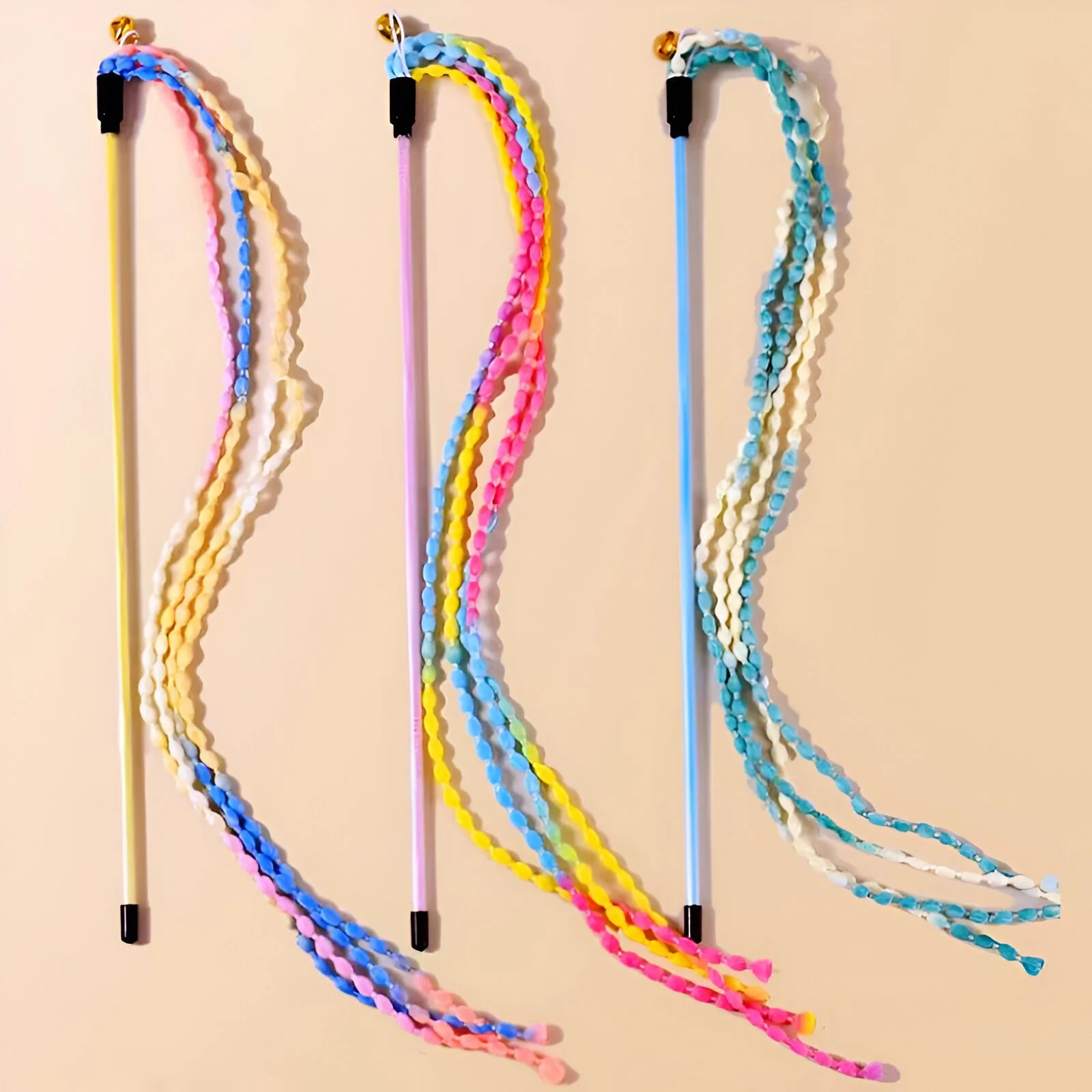
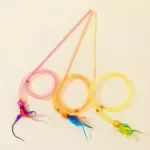
This set fits best for owners who want to vary movement instead of asking one feather head to do everything. Multiple attachments make it easier to switch between fluttering, skimming, landing, and short chase patterns. The longer wand also helps keep hands out of the target zone, which is useful for cats who get intense during the catch.
Best use: choose one attachment for a short session, play through a hunt sequence, then put the wand away after the final catch. Rotate heads when the cat's interest fades or when an attachment starts to wear. Do not leave feather attachments out unsupervised, especially for cats who chew feathers, string, bells, or clips.
Storage and Safety
Feather wands are supervised toys. They should not live on the floor all day. String can tangle, feathers can be chewed, clips can loosen, and some cats will drag the wand into unsafe places.
After play, inspect the attachment. Look for loose feathers, exposed wire, cracked clips, frayed string, missing bells, or sharp ends. Replace worn parts before they become interesting to swallow.
Store attachments in a drawer, bin, or sealed bag. This keeps the toy special and protects feathers from dust, moisture, and household pests. It also stops the cat from chewing the toy when nobody is watching.
If your cat swallows feathers, string, or a clip, contact a veterinarian for guidance. Do not pull string from the mouth or rectum if any part seems stuck. That can cause injury. Get professional advice.
The feather wand is one of the best cat toys because it lets you act like prey. But that only works when you stop waving and start directing. Make the feather hesitate, hide, land, flee, and lose. That is when the cat stops watching the toy and starts hunting it.