Article
6 Interactive Pet Toys for Bored Dogs and Cats (Plus a Rotation Plan)
Quick Answer
6 Interactive Pet Toys for Bored Dogs and Cats (Plus a Rotation Plan): quick answer
It's easy to label a pet's unwanted behavior as boredom, but chewing, scratching, vocalizing, pacing, over-grooming, and appetite changes can have...
- Topic: Pet Toys.
- Related product category: pet-toys.
- This article keeps the main answer in the article copy and places relevant product context inside the guide.
The Problem Nobody Calls "Boredom"
It's easy to label a pet's unwanted behavior as boredom, but chewing, scratching, vocalizing, pacing, over-grooming, and appetite changes can have several causes. Toys can add useful activity, but they are not a diagnosis or a replacement for medical or behavior support. Dogs and cats often benefit from varied, species-appropriate activities such as supervised chase play, scent games, food puzzles, short training sessions, and rest. The useful question is not "Which toy fixes my pet?" but "Which activity does this pet enjoy safely, and how can I rotate it without leaving hazards out?" The toy is only one part of the routine. Many pets respond better when a toy is introduced briefly, put away, and brought back later instead of being left out indefinitely. Each tip below pairs a toy type with a play pattern and rotation suggestion. Use the examples as a starting point, then adjust to your pet's size, chewing habits, mobility, and comfort level.
Tip 1: The 3 a.m. Hunter — Give the Cat a Job While You Sleep
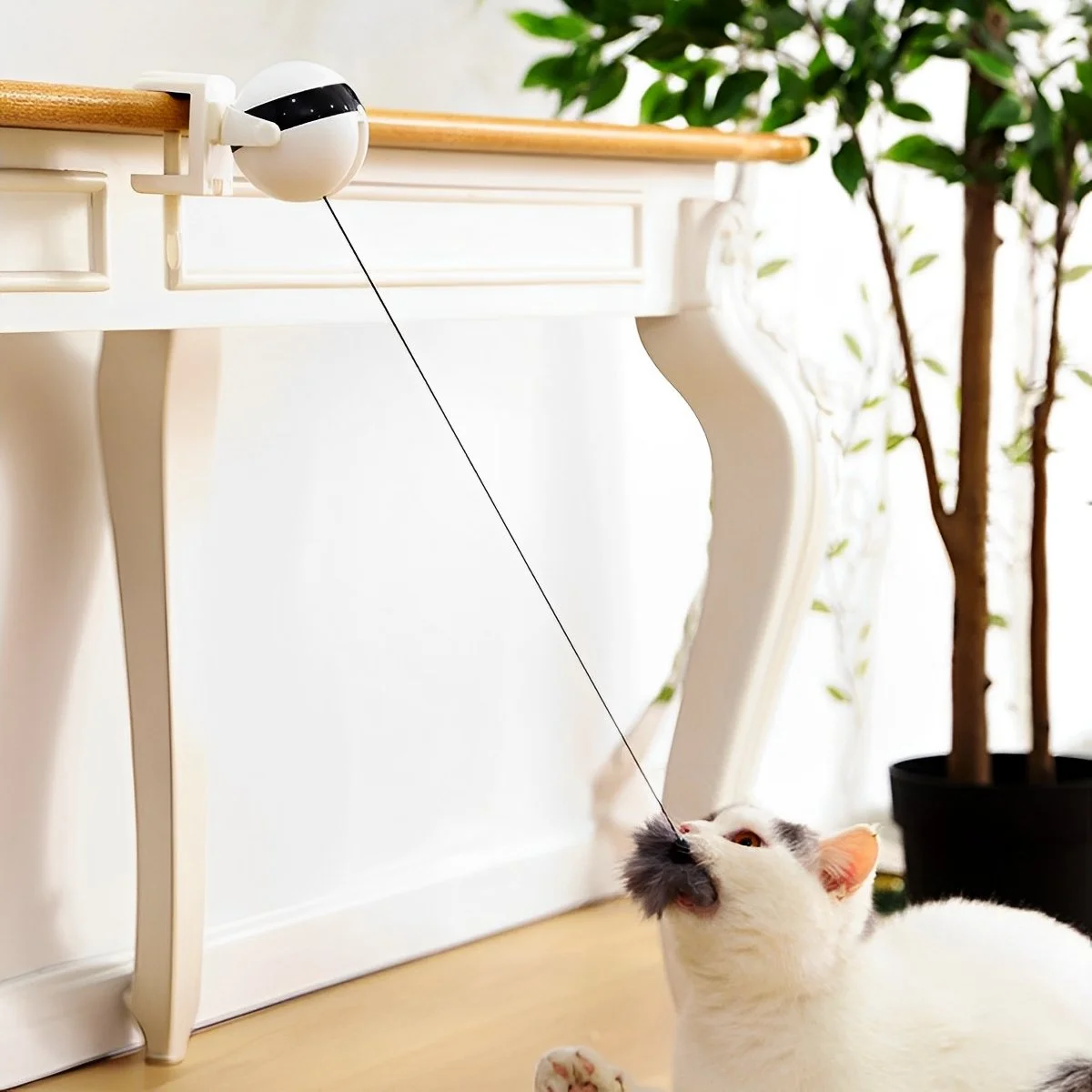
The boredom problem. Cats are crepuscular — most active at dawn and dusk — and indoor cats with no hunting outlet often transfer that energy to the worst possible target: your sleep. The 3 a.m. zoomies, the counter patrol, the deliberate mug-knocking (it gets a reaction, which is the point) — these are all play-hunting behaviors with nowhere to go. The cat isn't misbehaving; it's a predator with an empty schedule. The toy to try. The [Interactive Automatic Cat Toy with Retractable Teasing Ball](/products/interactive-automatic-cat-toy-with-retractable-teasing-ball-p-002611) ($37.80) is a motorized toy whose retractable teasing ball moves on its own without a human holding the other end. For a cat whose play energy peaks before bed or during work calls, it can create a short movement session when you are nearby but busy. How to use it. First sessions should be supervised and short - 10 to 15 minutes - so you can watch how your cat reacts before using it more often. Place it on a hard floor in an open area, away from furniture edges. Try it before bedtime, during a nearby work session, or during the evening stretch when the cat is already active. Check moving parts and cords before each use. Rotation advice. Automatic toys are your high-value slot — dessert, not a staple. If one stays out 24/7, most cats lose interest within days and it becomes an expensive paperweight. Bring it out for a few sessions, then put it away for a week; reserve it for the pre-bed routine and the busy-hours gap. Honest limitations. Motorized toys are not babysitters: cats can bat them into walls, tangle a paw in the teasing element, or chew cords, so unsupervised free-running is a risk. Some cats are genuinely frightened of moving machines — if yours hisses and hides, introduce it at a distance. And no automatic toy replaces ten minutes of wand play with you; it fills gaps, it doesn't replace the relationship.
Tip 2: The Floor Batter — Self-Exciting Toys for the Cat Who Hunts the Hallway
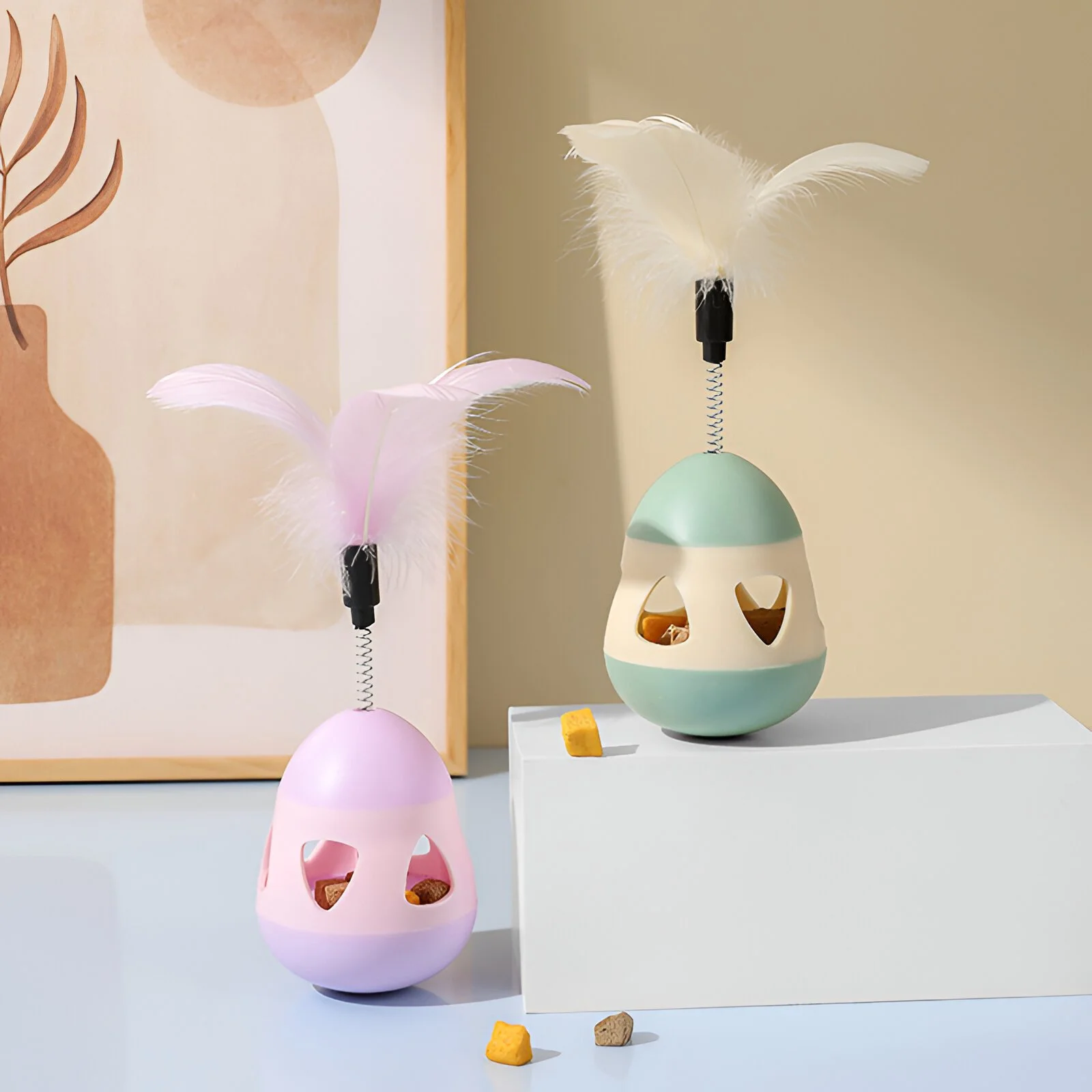
The boredom problem. Some cats are pouncers: they bat, chase, and ambush anything that moves along the floor, and they lose interest in a static toy in about ninety seconds. A crumpled ball that doesn't move might as well be a rock. These cats don't need more toys — they need toys that respond to their touch, that "run away" when batted, because that feedback loop is the entire game. The toy to try. The [Interactive Cat Toy Tumbler with Feather Teasers - Self-Exciting, Boredom-Busting Fun](/products/interactive-cat-toy-tumbler-with-feather-teasers-self-exciting-boredom-busting-fun-p-002635) ($15.49) is a tumbler that moves when your cat bats it, with feather teasers attached for visual interest. It is built for independent play: your cat provides the tap, the toy provides movement. How to use it. Start it on a hard floor — carpet kills the tumble motion. Give the first tap yourself so the cat sees the payoff, then let it take over. Feather teasers are the prey-drive trigger but also the fragile part: check them after every session and retire the toy the moment a feather is loose enough to pull out — ingested feather bits are a real, if uncommon, vet visit. For most cats, 10 to 20 minutes is a solid independent-play session. Rotation advice. Tumbler toys work best in the "always available" slot of a rotation — leave one out for two or three days, then swap. The self-exciting motion outlasts a static toy, but even motion becomes wallpaper; bring it back a week later and the cat will treat it like new. Honest limitations. Feather toys and unsupervised play don't mix perfectly — the feathers are what makes them engaging and precisely what a determined cat can shred. If your cat is a feather-eater, use this one only in supervised sessions. And some cats are vertical players: they want toys on shelves, not the floor. If yours ignores floor toys entirely, this isn't the toy for your cat — match the toy to the play style, not the other way around.
Tip 3: The Kitten Who Needs to Kill the Octopus — Catnip Plush for Solo Hunters
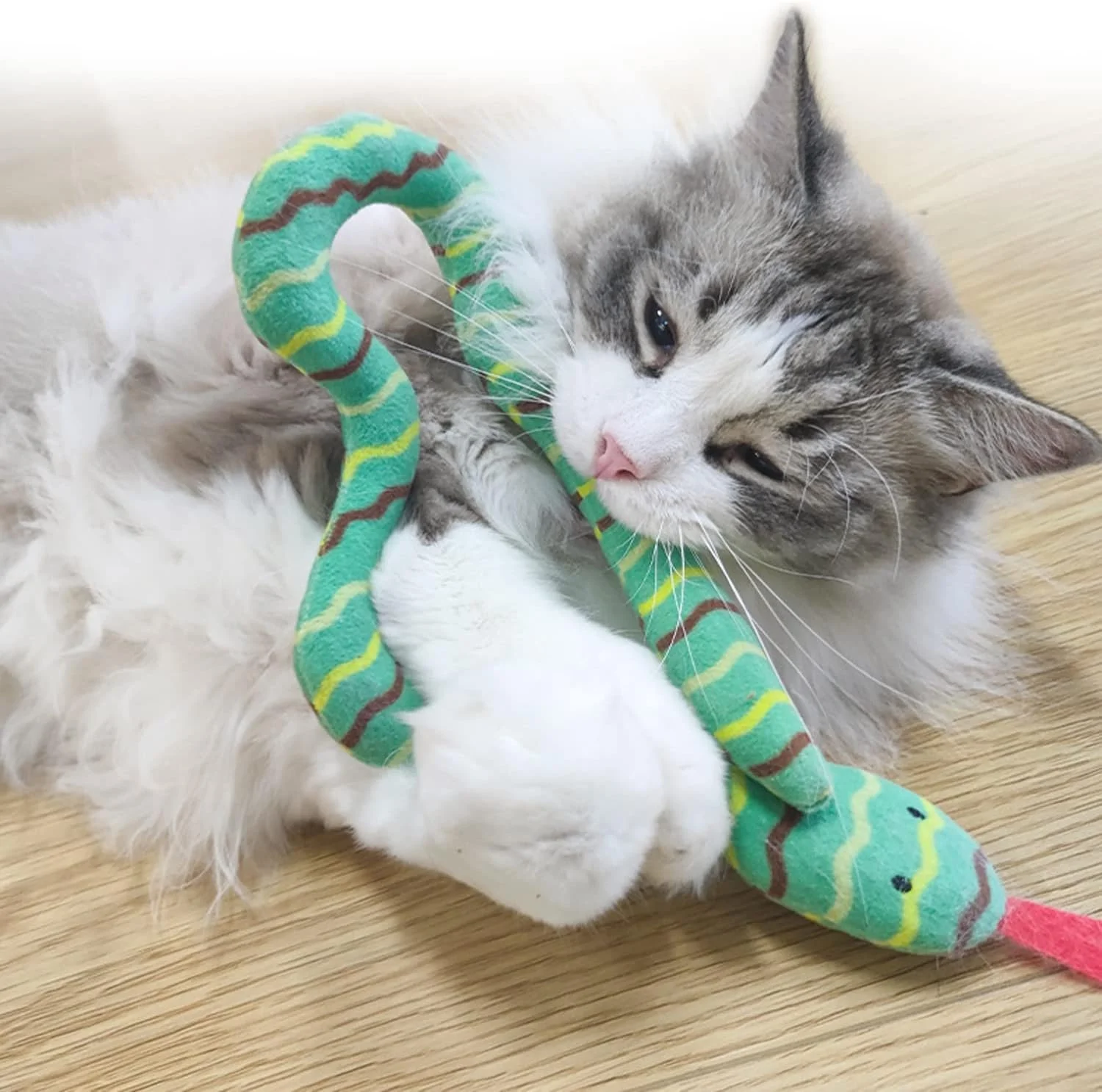
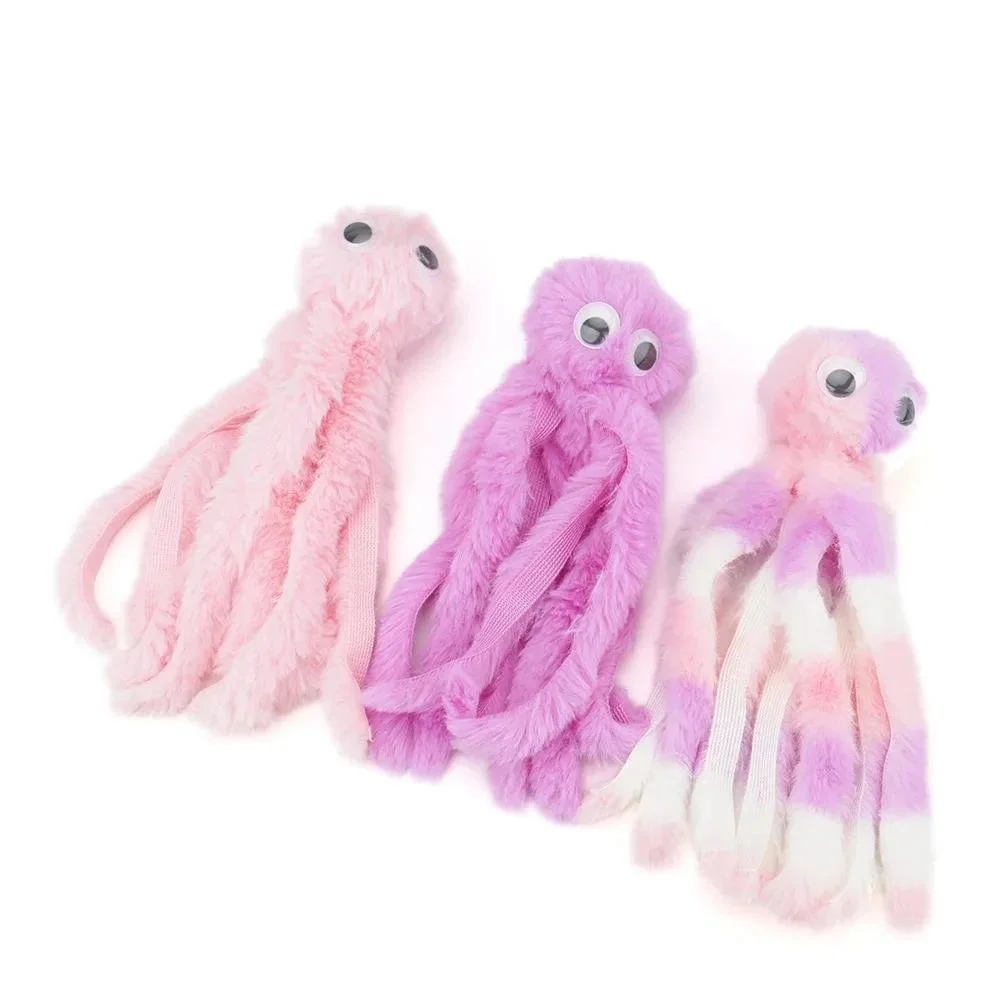
The boredom problem. Kittens and young cats have explosive, unpredictable energy — bursts of pouncing, bunny-kicking, and "carrying" behavior that can be aimed at your hands, ankles, and houseplants. They need appropriate targets: things to grab, kick, wrestle, and "kill." Without them, your forearm is the toy, and kittens play hard. The toy to try. The [Interactive Kitten Octopus Catnip Plush Toy - Colorful Teaser for Playful Cats](/products/interactive-kitten-octopus-catnip-plush-toy-colorful-teaser-for-playful-cats-p-002746) ($16.80) is a soft, colorful octopus plush stuffed with catnip. The tentacles give the kitten something to grab and bunny-kick; the catnip may add a sensory reward for cats that respond to it. How to use it. Catnip toys work best as an end-of-day reward, not an all-day fixture: bring it out for a 15-to-20-minute session, let the cat go through the kick-and-carry routine, then put it away. Store it airtight between uses — catnip's active compound fades in open air, and stale nip is just a stuffed animal. Supervise the first couple of sessions; catnip response varies wildly. Rotation advice. Never leave a catnip toy out permanently. A cat that can sniff it any time habituates fast, and habituation is the death of the catnip response — the toy goes from magic to furniture in about a week. Rotate it in for one evening, then out for a week or two. Stored airtight and used sparingly, a single catnip plush keeps its novelty for months. Honest limitations. Here's the fact most articles skip: catnip doesn't work on every cat. The response is genetic — roughly two-thirds of adult cats react, and a solid third show little or no interest no matter how fresh the nip. Kittens under about six months usually don't respond either; that's not a defect in the toy or the cat. If your cat ignores the nip, the octopus still works as a plain kicker toy. And in the minority of cats who get over-aroused on catnip, put the toy away at the first sign and use it less often.
Tip 4: The Fetch Machine — Squeaky Plush Balls for the Dog Who Wants *You*
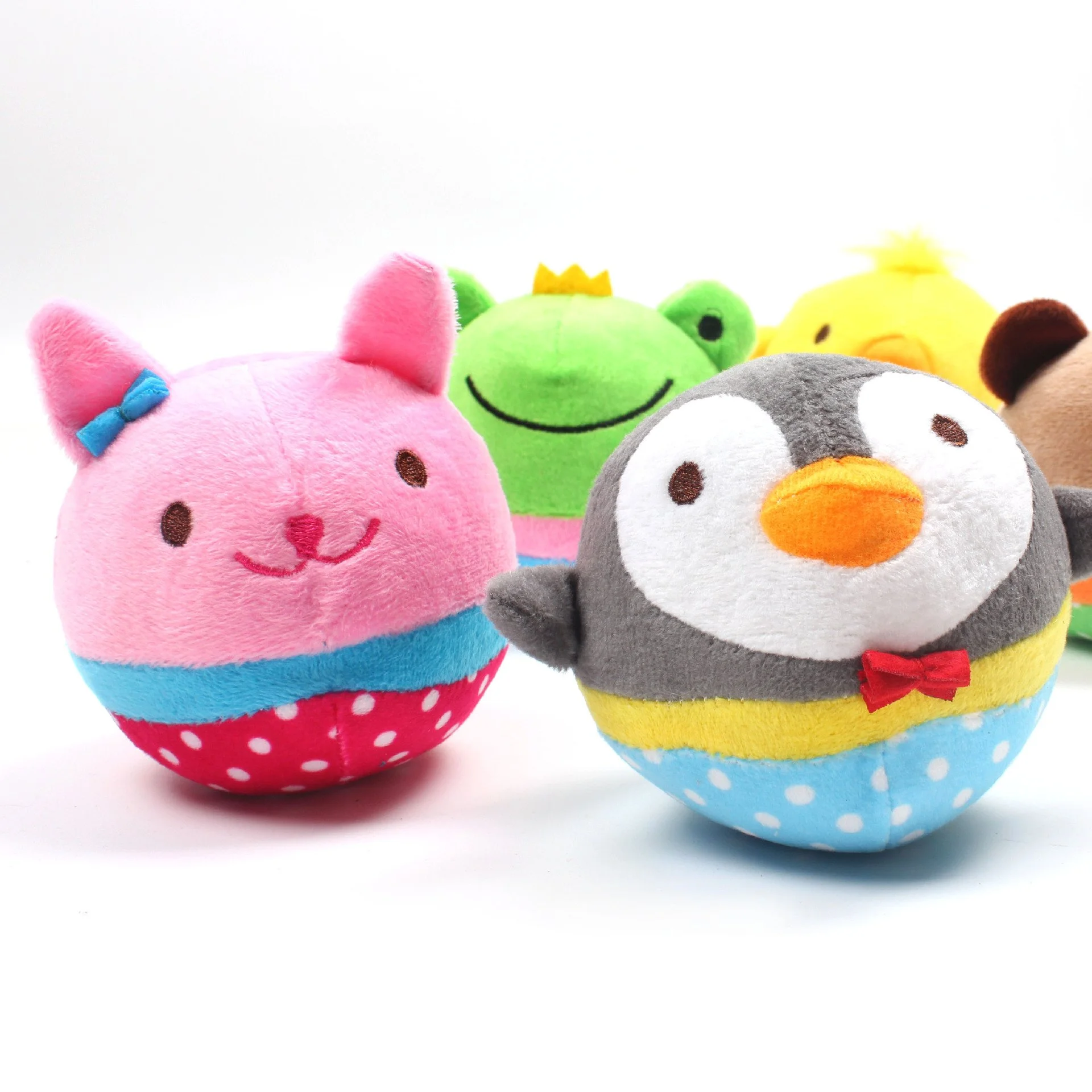
The boredom problem. Some bored dogs aren't bored of objects — they're bored of being alone. They follow you room to room, whine at your feet, and drop toys on your lap constantly. The toy drop is the giveaway: this dog doesn't want a thing, it wants a game with you. Squeaky toys are the perfect vehicle because the squeak taps the prey drive — the dog "kills" the squeak, and you're the one who makes it come back to life. The toy to try. The [Plush Squeaky Dog Chew Toy Animal Ball for Interactive Play](/products/plush-squeaky-dog-chew-toy-animal-ball-for-interactive-play-p-002636) ($19.49) is a plush ball with a squeaker for supervised fetch, carrying, and interactive play. It is a two-player toy by design: you throw, the dog retrieves, and the squeak adds feedback. How to use it. Run short, deliberate sessions — 10 to 15 minutes, once or twice a day — and end while the dog still wants more; that's how you keep a toy's value high. Teach a drop-it cue so the game doesn't become keep-away, and use fetch as the payoff for a sit-stay to turn obedience into a game the dog asks for. Rotation advice. Fetch toys belong in the everyday pool, but alternate two of them so one is always "fresh," and wash the plush regularly — a dirty, slobbery toy loses appeal fast. Honest limitations. The squeaker is the first thing to die, usually at the jaws of the very dog who loves it most. If your dog's goal is squeaker extraction, this is a supervised-play toy, not a solo toy — leaving it alone with a dedicated disemboweler means surgery on your rug and a possible blockage from swallowed stuffing. Retire the toy at the first exposed stuffing. And some dogs are scared of the squeak and will avoid the toy entirely — not every dog is a squeaker fan.
Tip 5: The Disemboweler — A Durable Plush That Survives (Supervised) Play
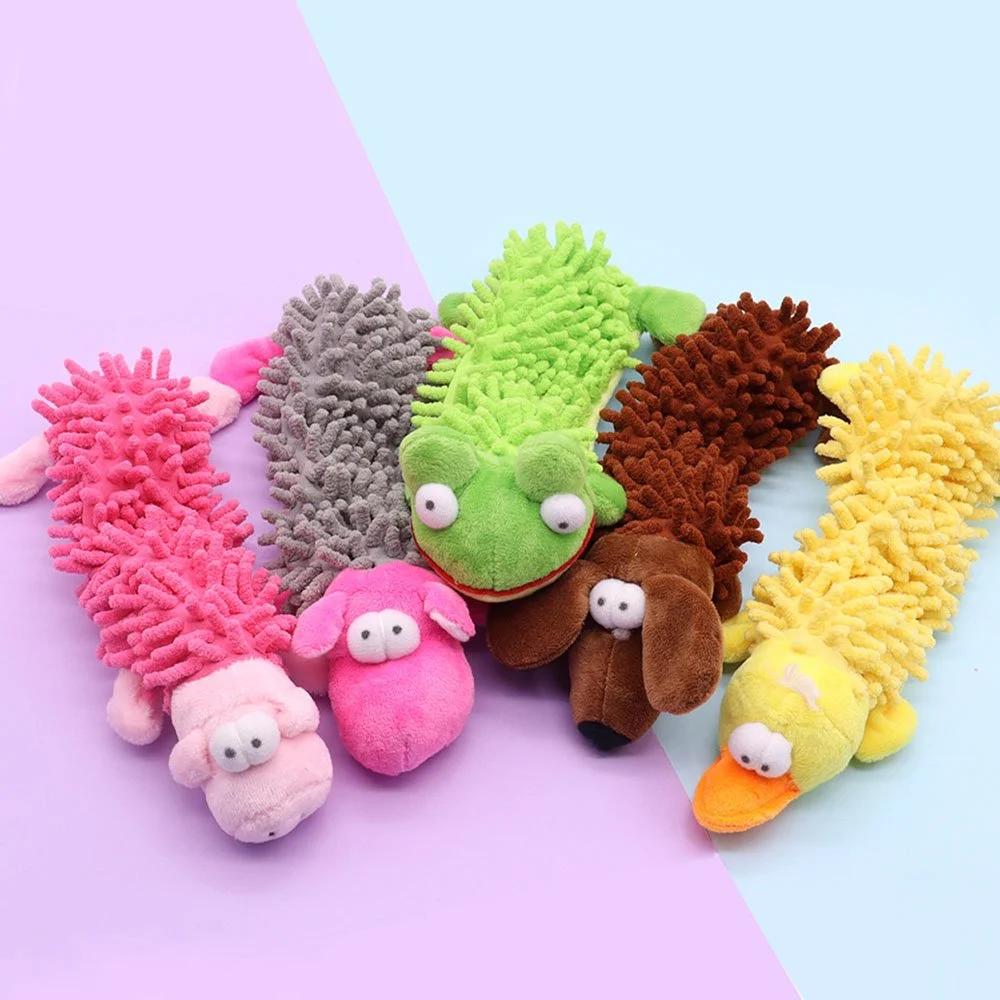
The boredom problem. Every owner knows a dog like this: the one that reduces a new plush toy to fluff and a single plastic squeaker in under four minutes, then looks at you ready for another. Many owners respond by stopping buying plush toys, which is a mistake — for a dog like this, the destruction *is* the play. It's an outlet for jaw work and prey drive that will find another target (your shoes, your couch) if you take the toys away. The fix isn't fewer toys; it's tougher toys and smarter supervision. The toy to try. The [Durable Plush Dog Toy with Squeaker for Interactive Play](/products/durable-plush-dog-toy-with-squeaker-for-interactive-play-p-002987) ($23.65) is listed as a heavier-duty take on the plush formula, with tougher fabric and stitching than a standard stuffy, plus the squeaker. It is best treated as an interactive toy for tug, fetch, or wrestling where you can see what the toy is doing. How to use it. Make this a "special occasion" toy: short, supervised sessions — 10 minutes of tug or fetch — then it goes away. Supervision means you're there when the first seam gives, and scarcity raises value: a toy that appears for 10 minutes and vanishes is a toy the dog treats like gold. Check the seams after every session and retire it at the first sign of stuffing. Rotation advice. Durable plush works best as the "supervised high-value" slot in your rotation, paired with a reserve toy: when this one needs washing or retirement, another tough toy takes its slot. If your dog eventually damages it, that does not automatically mean the product failed; fabric toys are consumable for many strong chewers. Honest limitations. "Durable" is relative — no fabric toy on the market survives being left alone with a determined power chewer for hours, so plush toys should never go in a crate or stay out unsupervised. And if your dog destroys even this toy in minutes, the honest read is that your dog loves shredding, not the toy: give it a supervised outlet (cardboard boxes, paper bags) and save the plush for tug and fetch, where the game matters more than the fabric.
Tip 6: The Mentally Bored Dog — Snuffle Toys and Treat Puzzles for the Brain
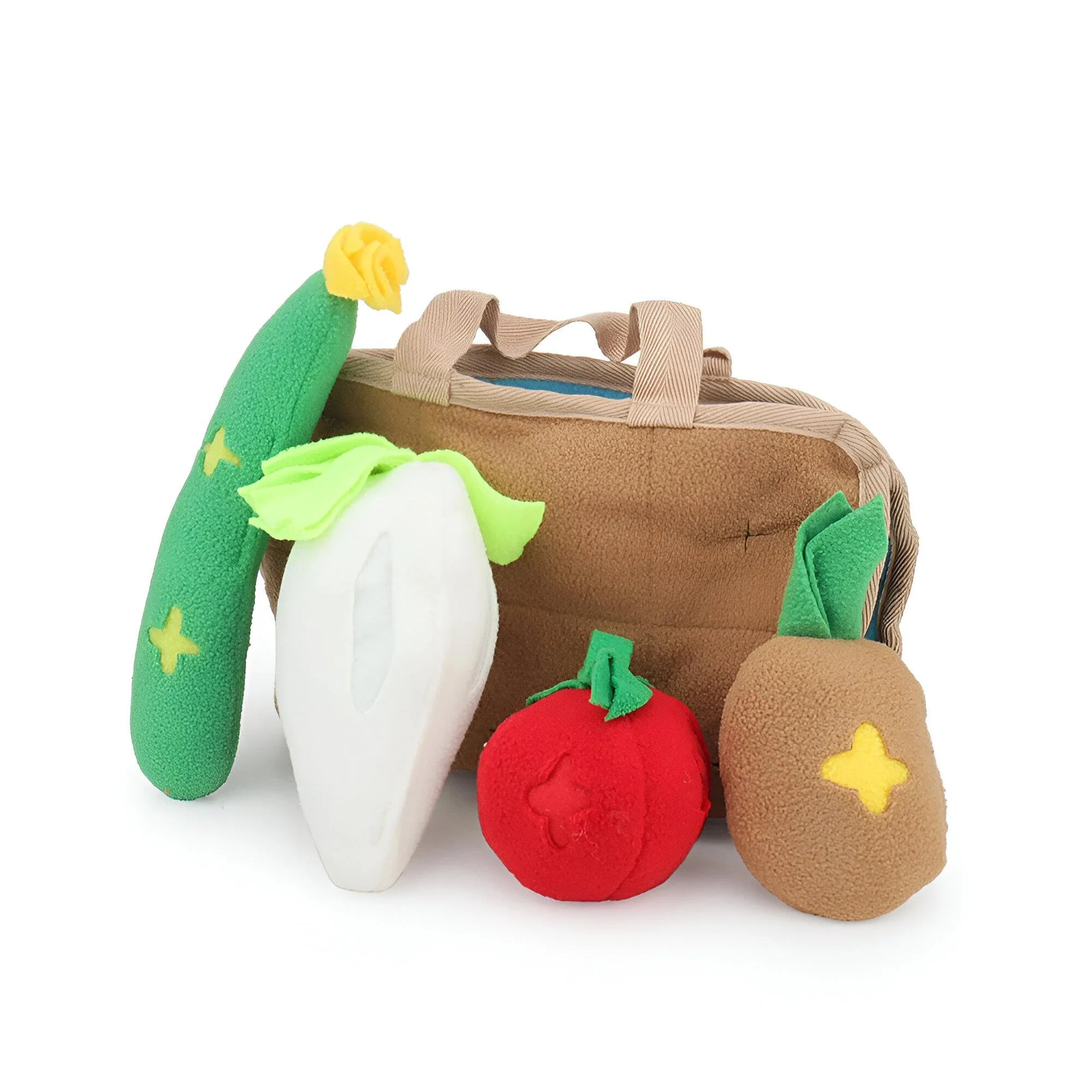
The boredom problem. Some dogs get long walks and still seem restless: chewing, barking, pacing, or following you around. That can point to a need for more mental work, although persistent behavior changes should be discussed with a professional. A dog's nose is a major part of how it explores the world, and many home routines give dogs limited chances to sniff, search, and forage. Scent games and food puzzles can add that missing mental task. The toy to try. The [Plush Handbag Snuffle Dog Toy with Squeaker and Treat Puzzle](/products/plush-handbag-snuffle-dog-toy-with-squeaker-and-treat-puzzle-p-002694) ($29.80) is a hybrid: a plush, handbag-shaped toy with pockets and folds that hide treats, plus a squeaker. Hide kibble or small treats in the folds and your dog has to sniff, paw, and root them out. How to use it. Start embarrassingly easy: sprinkle treats on top and let your dog find them instantly; the goal of the first session is success, not challenge. Over a few days, hide treats deeper in the folds. Use part of a meal instead of adding unlimited extra treats. The handbag shape makes it portable for an office, patio, or hotel room. Rotation advice. Puzzle toys hold novelty better than most because the content changes every session — but still rotate: two or three days of snuffle duty, then a break. Keep one puzzle toy in reserve for the days the dog will be alone longest; that's when mental work pays off most. Honest limitations. Treat puzzles have a real failure mode: frustration. A dog that can't solve one may quit or destroy the fabric to reach the treats, so supervise if yours is a shredder. Match difficulty to the dog and start at the easiest level. Mental work can complement walks, but it does not replace physical exercise.
Tip 7: The Free Fix — A Toy Rotation Schedule (This Is the Real Secret)
The boredom problem. You can buy twenty toys, dump them all on the floor, and your pet will still be bored — novelty is the ingredient that makes toys work, and it dies fast. A toy left in the same spot for a week stops being a toy and becomes furniture; your pet's brain stops registering it, and you conclude the toy was a waste of money when the real mistake was leaving it out too long. The method (cost: $0). Toy rotation is the highest-leverage habit in this guide, and it costs nothing: keep a small number of toys available and swap them on a schedule so the pet does not see the same objects every day. A pet with 5 to 8 toys in rotation and 3 or 4 out at any time gets more variety than a pet with the same pile on the floor all month. Here's a workable weekly schedule for a dog-and-cat household. Adapt it to yours — single-pet homes can drop or combine slots:
| Day | Available all day (independent) | Interactive session (you) | High-value reserve (15 min, supervised) |
|---|---|---|---|
| Monday | Tumbler (cat), squeaky ball (dog) | Fetch with plush ball | Snuffle toy with a portion of dinner |
| Tuesday | Catnip octopus (cat, evening only) | Tug with durable plush | Automatic cat toy (before bed) |
| Wednesday | Tumbler, squeaky ball | Snuffle toy (treats) | Catnip octopus |
| Thursday | Durable plush (short supervised slots) | Fetch with plush ball | Automatic cat toy (afternoon) |
| Friday | Tumbler, squeaky ball | Snuffle toy | Catnip octopus (weekend warm-up) |
| Saturday | Everything in rotation, fresh | Big play day: fetch + tug + wand | Rotate all high-value toys, 15 min each |
| Sunday | Calm day: snuffle toy only | Quiet games, grooming, sniffari walk | No high-value toys — let them reset |
A few rules make it work. Out of sight is out of mind: rotated-out toys go where the pet can't see or smell them, or the novelty clock never resets. Watch which toys your pet actually engages with and favor play style, not your taste. Combine rotation with free boredom busters: a cardboard box to shred (supervised), a paper towel tube with treats inside, a muffin tin with tennis balls hiding kibble, an ice cube with a treat frozen inside on hot days, or a "sniffari" — 15 minutes where the dog leads the walk and smells everything. None cost money; all count as enrichment. Multi-pet note. If you have both dogs and cats, do not assume every toy can be shared. Cat toys with feathers, strings, bells, and small parts should be kept away from dogs that chew. Dog plush toys may be too heavy or intimidating for cats. Treat puzzles also need separation if one pet guards food or steals from the other. Run short individual sessions first, then decide which toys can stay in shared areas and which belong behind a closed door. Honest limitations. Rotation is powerful but it isn't magic: it fixes habituation, not anxiety. A pet that paces, drools, destroys things at exit points, or can't settle even with fresh toys needs a vet or certified behaviorist, not a better schedule. If destruction continues after two weeks of disciplined rotation, that's a signal to get professional help — the toys were never going to be enough.
FAQ
Q: Are automatic cat toys safe to leave running while I'm out? A: Treat them like any motorized pet product: supervise. The main risks are a paw tangled in the moving element and chewed cords. Run first sessions supervised, check the toy before each use, and if you're out for hours, skip the auto-run and leave non-motorized toys instead. An automatic toy should extend playtime — not be the only thing between your cat and a full day alone. Q: My cat ignores catnip. Is something wrong? A: No. The catnip response is genetic — roughly two-thirds of adult cats react, so a solid third barely respond, and kittens under six months usually don't respond at all. If your cat ignores it, the octopus plush still works as a plain kicker toy. Also check freshness: catnip stored in open air loses potency fast, so airtight storage matters. Q: My dog destroys every plush toy in minutes. What do I do? A: First, stop leaving plush toys unsupervised — a dog that disembowels toys should only get fabric under your watch, because swallowed stuffing is a blockage risk. Second, recognize that for this dog shredding *is* the play: give it a supervised outlet (cardboard boxes, paper bags) and use plush for tug and fetch. Third, use rotation — a durable plush that appears for 10 minutes and vanishes stays far more interesting than one that lives on the floor. Q: How many toys does a pet actually need? A: Five to eight in rotation, with three or four available at any one time. The number matters far less than how they're managed: a pet with three rotated toys stays more engaged than one with thirty static ones. Quality of engagement beats quantity — and a rotating "new" toy costs nothing. Q: Do snuffle toys and treat puzzles really tire a dog out? A: They can help some dogs settle because sniffing and problem-solving require attention. But they do not replace physical exercise, and the effect depends on engagement. A frustrated dog that quits or shreds the puzzle gets little benefit, so match difficulty to the dog. Q: How do I tell if my pet is bored or actually anxious? A: Boredom is often situational: destructive or attention-seeking behavior may improve when the pet gets a safer outlet. Anxiety can look different: pacing, drooling, trembling, elimination indoors, and destruction concentrated at exit points such as doors, windows, or crates. If your pet cannot settle with a rotating toy supply and a reasonable play routine, ask a veterinarian or certified behavior professional for help.