Article
Best Dog Toys for Apartment Living: Quiet, Compact, Effective
Quick Answer
Best Dog Toys for Apartment Living: Quiet, Compact, Effective: quick answer
Apartment dogs do not fail because the home is small. They struggle when a small home gives them no acceptable way to spend energy, use their nose,...
- Topic: Apartment Dogs.
- Related product category: pet-toys.
- This article keeps the main answer in the article copy and places relevant product context inside the guide.
The Apartment Dog Problem Is Not Just Space
Apartment dogs do not fail because the home is small. They struggle when a small home gives them no acceptable way to spend energy, use their nose, chew safely, settle their body, and recover from stimulation.
That distinction matters. A studio apartment can work well for a dog if the day has structure. A large house can still produce barking, wall bouncing, furniture chewing, and restless pacing if the dog has no routine. The real problem is not square footage. It is the combination of limited movement, shared walls, predictable scenery, elevator hallways, neighbor noise, and owners who feel guilty but do not know what to offer indoors.
The wrong toys make the problem worse. Hard balls bounce on wood floors. Loud squeakers travel through walls. Floppy tug toys turn a living room into a wrestling ring. Food toys can become sticky messes on carpet. Toys with weak seams get destroyed while the owner is on a call. A toy that would be harmless in a fenced yard can become a complaint generator in an apartment.
The best apartment dog toys solve four jobs:
- they reduce noise
- they fit a small play zone
- they satisfy a real dog behavior
- they can be used safely under the level of supervision you can actually provide
That last point is important. Apartment owners often shop as if they need one perfect toy that keeps the dog busy forever. That is not realistic. Most dogs need a rotation: one toy for quiet chewing, one toy for sniffing, one toy for short tug, one toy for food work, and one toy for comfort or settling. The goal is not to keep the dog entertained every minute. The goal is to give the dog enough appropriate outlets that the apartment stops feeling like a pressure cooker.
Before buying anything, watch your dog for two days. When does the restlessness start? Does the dog bark at hallway sounds, chew after dinner, sprint after being crated, steal socks when you work, or paw at you before bedtime? Those are different problems. A toy that helps one may fail another.
Apartment toy selection works best when it starts with the behavior, not the product photo.
What Makes a Toy Apartment-Friendly
An apartment-friendly toy is not just small. Many small toys are terrible for apartments because they bounce, squeak, roll under furniture, or create frantic play in a room where the dog cannot safely open up.
Use five filters before a toy earns space in a small home.
Noise
Noise is the first filter. Hard rubber, hollow plastic, tennis balls, and dense chew toys can sound louder than expected on hardwood, laminate, tile, or thin subfloors. Even if the toy itself is quiet, the dog's paws may create thumping when the play style gets fast.
Good apartment toys should support slower movement: sniffing, licking, nibbling, carrying, gentle tug, or short retrieve on carpet. That does not mean the dog never gets active play. It means active play needs a surface and a boundary.
Impact
Impact is different from volume. A squeaker may be loud in the room, but a bouncing ball sends impact through the floor. Downstairs neighbors often hear the thud more than the bark.
Avoid repeated indoor bouncing unless you have thick rugs and a dog with controlled play habits. If the dog launches after every roll, that toy belongs outside or in a hallway-free, carpeted zone with supervision.
Space Control
Apartment toys should keep the game inside a defined area. A snuffle toy, lick toy, soft chew, or puzzle feeder lets the dog work in one spot. A fetch toy invites the dog to accelerate across the room.
If a toy naturally spreads play into hallways, furniture edges, stairs, or doorways, it is not a good default apartment toy.
Cleanliness
Small homes make mess more obvious. Food toys, fabric toys, and chew toys need a cleaning plan. A toy that traps wet food and sits under the sofa is not enrichment anymore. It is odor, residue, and possible stomach trouble later.
Apartment toy routines should include easy inspection, easy washing, and a place to dry toys completely.
Decompression
The best indoor toys do not only excite the dog. They help the dog settle. Sniffing, licking, chewing, and slow food work can shift a dog into a calmer state when used correctly.
That does not mean a toy cures anxiety or replaces walks. It means a toy can be part of a predictable routine that tells the dog, "This is what we do indoors now."
Start With a Quiet Play Zone
A good apartment toy setup starts before the toy comes out. Choose one play zone and make it boringly consistent.
The best zone is usually a rug, mat, carpeted corner, crate-adjacent area, or washable runner. It should be away from the front door if hallway sounds trigger barking. It should not be next to the food bowl if the dog guards food. It should not require the dog to sprint around furniture.
Put a washable mat under food toys and snuffle toys. Use a thicker rug for tug or soft rolling games. If you have downstairs neighbors, test sound from the floor by dropping the toy gently and listening. If it clacks, thuds, or skids, it needs a different surface.
Teach the dog that indoor toy time starts on that surface. This can be simple:
- Place the toy on the mat.
- Let the dog approach.
- Reward calm interaction.
- Pause the game if the dog leaves the zone and gets wild.
- Restart when the dog returns.
This is not about strict obedience. It is about giving indoor play a container. Dogs learn patterns quickly when the rules are consistent. The mat becomes a signal: sniff, chew, solve, tug gently, settle.
For very excitable dogs, start with nose work instead of tug or fetch. Scatter a few treats in a towel fold, use a simple snuffle toy, or hide small pieces around the mat. When the dog has spent a few minutes sniffing, the body often becomes easier to manage.
Apartment living rewards boring systems. A quiet play zone is one of those systems.
The Best Toy Categories for Apartment Dogs
Apartment dogs usually need fewer high-speed toys and more controlled-work toys. The categories below are useful because they fit limited space and can be adjusted by difficulty.
Snuffle Toys and Foraging Toys
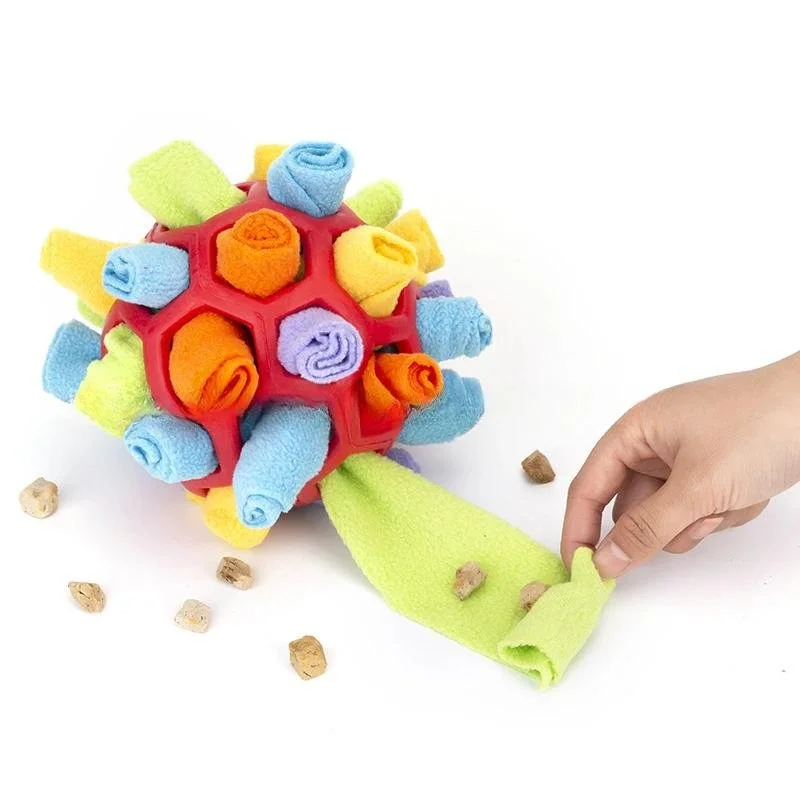
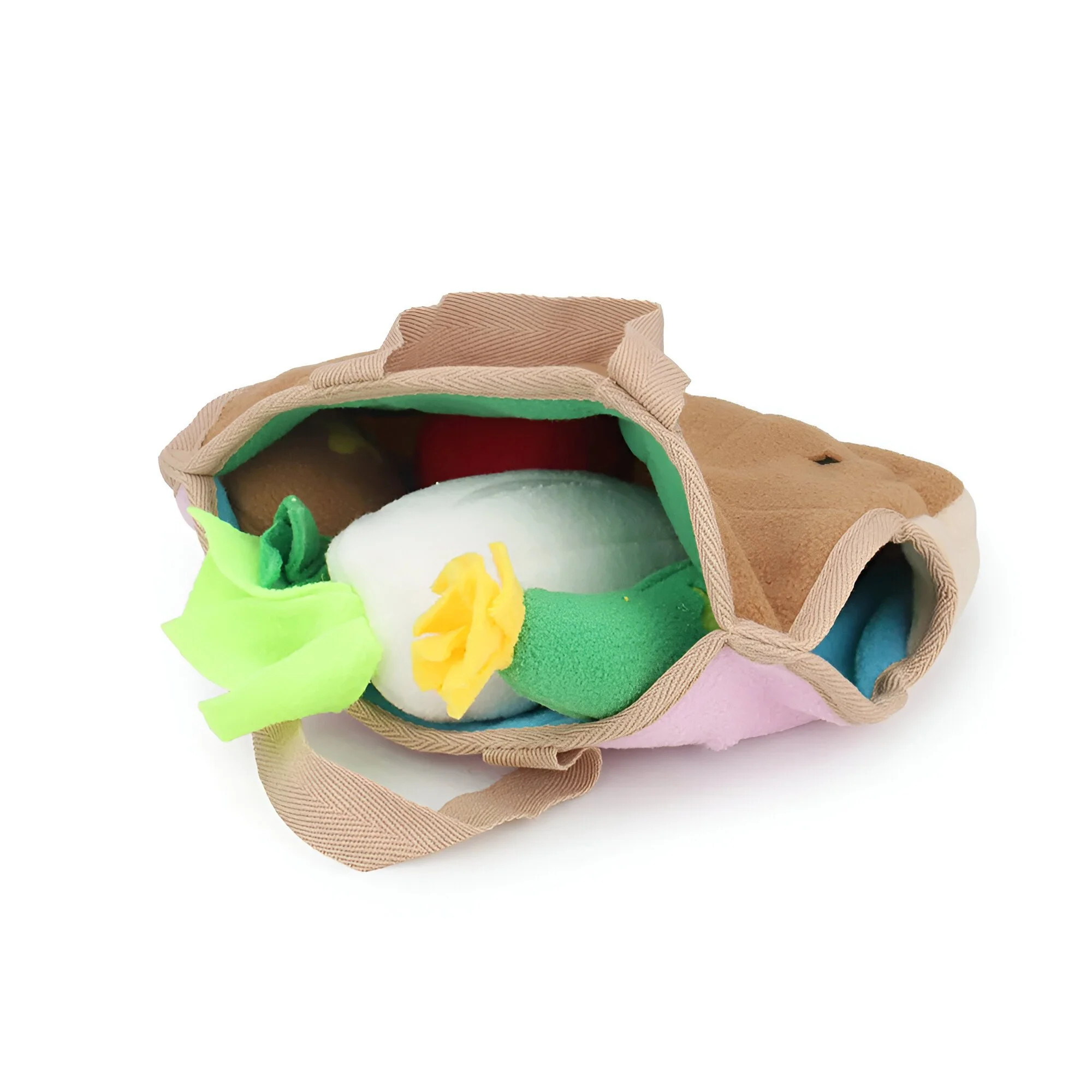
Snuffle toys are often the most apartment-friendly option because sniffing is quiet, low impact, and mentally demanding. A dog can spend real effort searching without running laps.
Use snuffle toys for part of a meal, not only treats. Start easy. Put food near the top of the folds so the dog learns the game. If the dog gives up or flips the toy violently, the setup is too hard. If the dog finishes instantly, add one small challenge at a time.
Snuffle toys are not chew toys. Remove the toy when the food is gone if your dog starts shredding fabric. For fabric eaters, use towel folds under direct supervision or switch to a sturdier puzzle feeder.
Good use cases:
- rainy-day meal work
- after-work decompression
- pre-bed settling
- replacing indoor fetch when noise is a problem
- giving a dog a job during owner work calls
Avoid leaving a fabric snuffle toy out all day. It becomes boring, dirty, or chewable. Bring it out with a purpose, then put it away.
Lick Toys and Stuffable Toys
Licking can help some dogs settle because the motion is repetitive and focused. Lick mats, stuffable rubber toys, and frozen food toys can work well in apartments when they are used on washable surfaces.
The cleaning requirement is higher. Wet food residue in grooves can spoil, smell, or attract pests. If you use peanut butter, yogurt, wet food, pumpkin, or other soft fillings, clean the toy immediately after use and dry it fully.
Do not make frozen toys too rich. Apartment dogs often get less total movement, so calories matter. Use part of the dog's normal food when possible.
Good use cases:
- crate practice
- visitor noise
- bath or grooming recovery
- after a walk
- evening settling
Avoid using lick toys as the only anxiety plan. If the dog panics when left alone, food may help only briefly or not at all. Severe separation anxiety needs behavior support beyond toys.
Soft Chew Toys
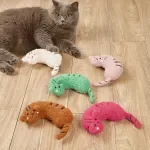
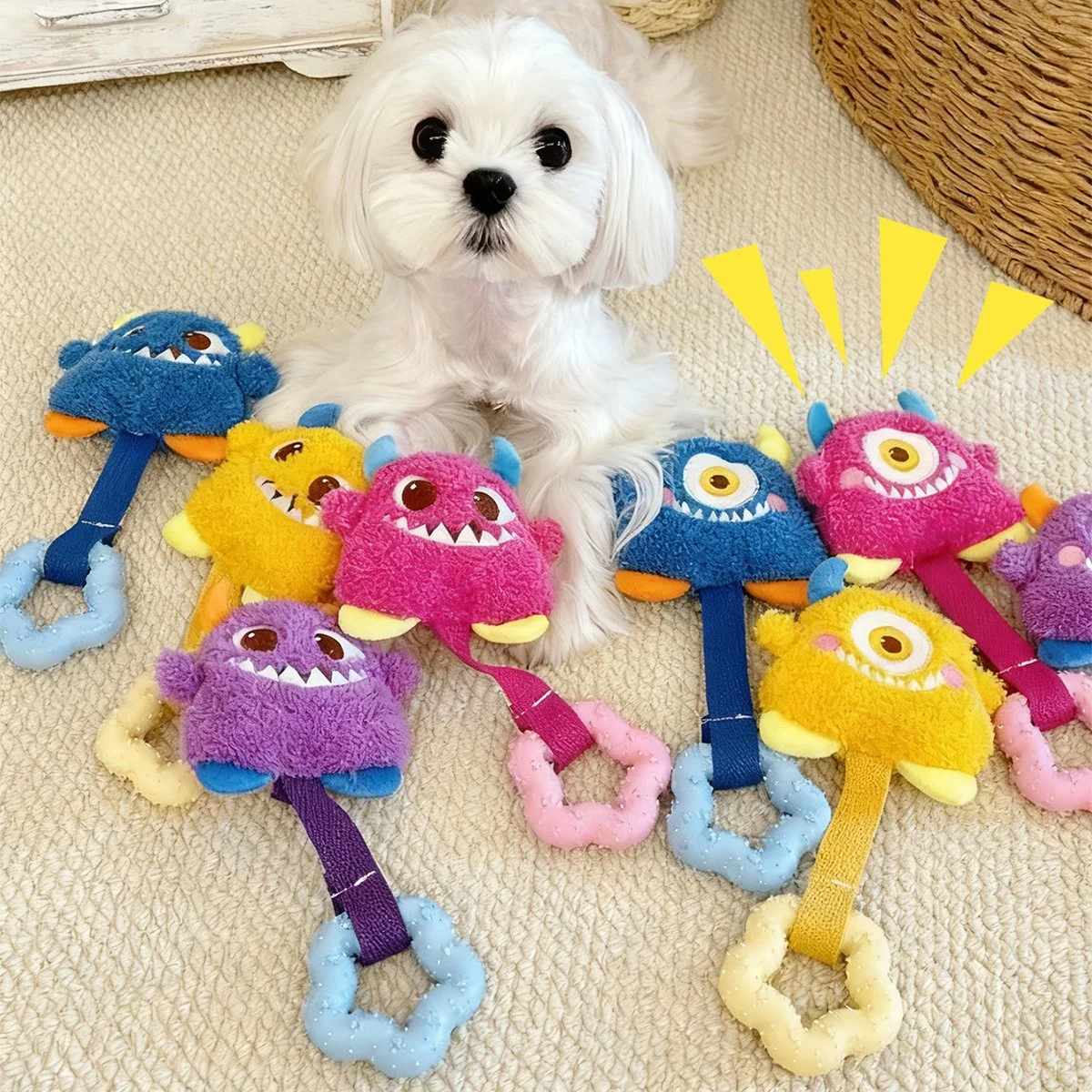
Soft chew toys can be useful when a dog wants mouth activity but you need low noise. Plush toys, fleece toys, and fabric chew toys do not usually bang on the floor the way hard toys do.
The tradeoff is durability. Soft does not mean safe. A dog that opens seams and eats stuffing needs supervised short sessions or stuffing-free options. A dog that gently mouths, carries, and cuddles may do well with plush.
Check seams before every session. Remove loose stuffing, torn fabric, dangling labels, and exposed squeakers.
Good use cases:
- quiet chewing during TV or work time
- comfort carrying
- gentle indoor tug
- puppy redirection
- senior dog play
Avoid giving a soft toy to a shredder and hoping the apartment stays quiet. Shredding can be satisfying, but swallowed fabric is not a safe tradeoff.
Puzzle Feeders
Puzzle feeders are good for apartments because they slow meals and add mental work without requiring space. They are especially useful for dogs that finish food quickly and then search for trouble.
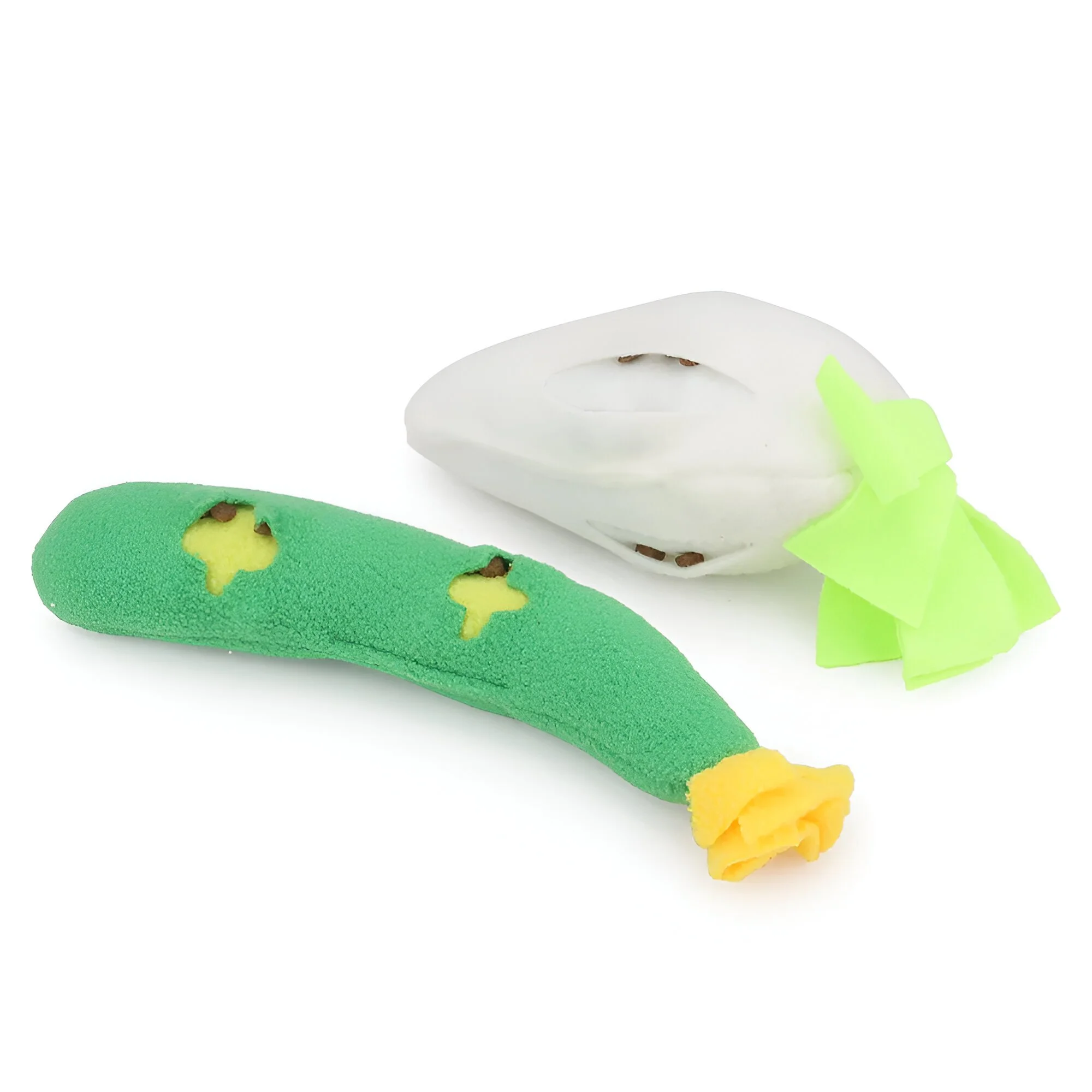
Start with simple puzzles. If a toy has sliding pieces, deep chambers, or multiple locks, the dog may bark, paw hard, chew the puzzle, or walk away. Difficulty should rise only after the dog understands how to win.
A good puzzle feeder should create focused problem solving, not frustration.
Good use cases:
- breakfast before work
- dinner on busy nights
- calming a dog after hallway triggers
- replacing some treat-based training with meal-based work
Avoid unsupervised use with dogs that chew plastic or pry parts loose.
Gentle Tug Toys
Tug can work in apartments if the rules are clear and the surface is soft. Use a rug or mat. Keep the toy low and controlled. Pause if the dog starts jumping into furniture or body-slamming the floor.
Tug is not automatically aggressive. It can be a useful relationship game when the dog understands start, drop, and pause cues. But in an apartment, tug should be short and contained.
Good use cases:
- five-minute energy outlet
- training impulse control
- rewarding calm behavior
- replacing chase games when space is limited
Avoid tug near slippery floors. A dog that loses traction may strain joints or crash into furniture.
What to Avoid in an Apartment
Some toys are not bad toys. They are just bad apartment defaults.
Avoid hard indoor balls on wood or tile. They bounce, roll, clatter, and invite high-speed pursuit. Use them outdoors or on thick carpet only.
Avoid toys with very sharp squeakers if your dog squeaks repeatedly. One squeak is cute. Thirty minutes of squeaking through a shared wall is not.
Avoid thin plastic treat toys that skitter across the floor. The dog may enjoy them, but the sound can travel. If the toy has to roll, use it on a rug.
Avoid overly difficult puzzles that turn into barking. Frustrated dogs often vocalize, dig, or chew the toy instead of solving it.
Avoid toys that require throwing across the room. Indoor fetch is usually the first game apartment owners should reduce, not increase.
Avoid leaving every toy available. A floor full of toys does not create enrichment. It creates clutter and makes each toy less interesting.
Avoid buying only for tiredness. A dog can be tired and still unsettled if the activity was frantic. Apartment toys should build calm engagement, not just exhaustion.
Match the Toy to the Apartment Dog
The right toy depends on the dog, not the building.
For Barky Hallway Watchers
Dogs that bark at hallway sounds often need a predictable redirect before the barking starts. Put a snuffle toy, lick toy, or easy food puzzle in the quiet zone during known trigger times: mail delivery, elevator rush, evening neighbor traffic, or trash pickup.
Do not wait until the dog is already shouting at the door. At that point, the toy is competing with the trigger. Use the toy early enough that the dog can still think.
For After-Work Zoomies
Some dogs explode indoors because the owner comes home and the whole day releases at once. A toy can help, but sequence matters.
First, potty break. Then a short walk or sniff outside if possible. Then indoor food work or gentle tug. If you skip the first steps, the dog may use the toy as a launch pad for more chaos.
For Power Chewers
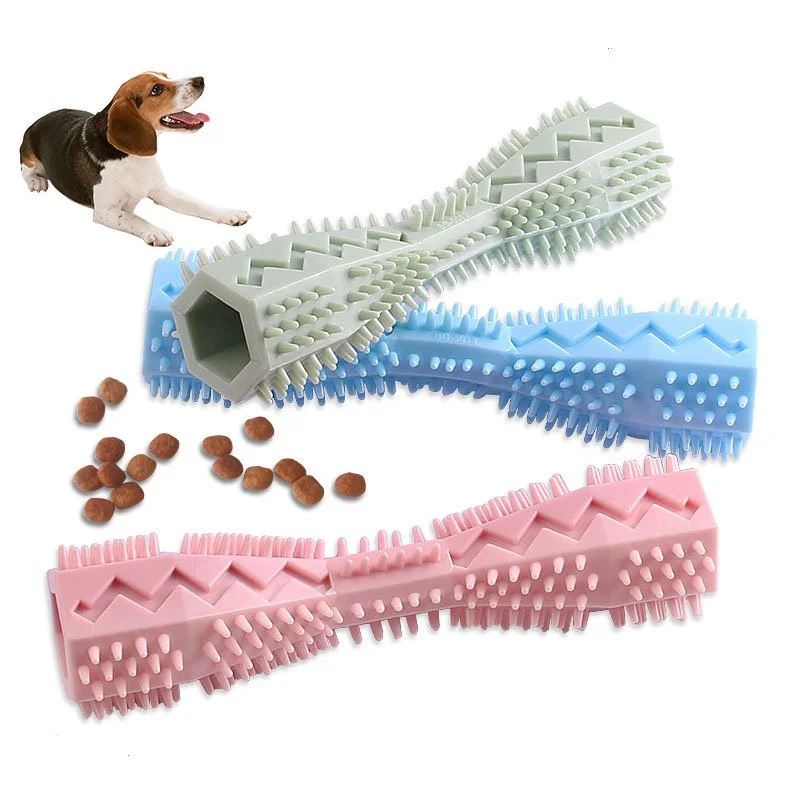
Apartment power chewers need supervision categories. A tough chew toy can still be noisy or unsafe. If the toy hits the floor like a hammer, use it on a mat. If the dog breaks off pieces, remove it.
For strong chewers, soft snuffle toys may be food tools only, not chew tools. Put them away as soon as the food is gone.
For Small Dogs
Small dogs often do well with compact plush, gentle food puzzles, and low-height tug. But small size does not mean low noise. Some small dogs bark more during frustration or excitement, so choose toys that keep the mind busy without escalating arousal.
For Seniors
Senior dogs may need softer surfaces, lower effort, and easier puzzles. Avoid slippery play and fast turns. A quiet snuffle session or soft toy carry can be more appropriate than tug or fetch.
If a senior dog suddenly loses interest in toys, consider pain, dental discomfort, hearing changes, vision changes, or cognitive decline. Do not treat every change as boredom.
A Daily Apartment Toy Routine
A routine matters more than the number of toys you own. Try this simple structure for one week.
Morning
Use part of breakfast in a low-noise food toy. Keep it simple if the dog is sleepy or rushed. The goal is a few minutes of sniffing and thinking before the day becomes boring.
Midday
If someone is home, offer a short chewing or lick session in the play zone. If the dog is alone, leave only toys that are safe for that specific dog without supervision. Many fabric toys should not be left out.
After Work
Do not start with wild indoor play. Go outside if possible, even briefly. Let the dog sniff, toilet, and reset. After that, use gentle tug, training, or a snuffle toy indoors.
Evening
Use the highest-value indoor toy during the time your dog usually becomes restless. For many apartment dogs, this is after dinner. Make the game predictable: toy comes out, dog works, toy goes away, house becomes calm.
Before Bed
Choose a settling activity, not a party. A lick toy, soft chew, or quiet scent game is better than fetch. End before the dog becomes overtired.
This schedule is not strict. It is a pattern: think in the morning, settle midday, decompress after work, engage in the evening, calm before bed.
How to Use Food Toys Without Overfeeding
Apartment dogs are easy to over-treat because owners use food to solve boredom. Food toys are useful, but the calories still count.
Use part of normal meals first. If your dog eats kibble, divide breakfast or dinner between a bowl, puzzle, towel scatter, and training. If your dog eats wet food, use small amounts in washable toys and clean them right away.
Treats should be small. The dog is working for searching, licking, or solving, not for giant snacks. For small dogs, even a few extra treats can matter over time.
Track body condition. You should be able to feel ribs under a light covering, see a waist from above, and notice a tuck from the side depending on breed and coat. If your dog is gaining weight, reduce treat calories before blaming lack of space.
Food toys should make meals slower and more interesting, not turn every quiet moment into a snack event.
Safety Rules for Small Spaces
Apartment safety is partly about the toy and partly about the room.
Remove breakable items from the play zone. Coffee table corners, glass decor, low shelves, and charging cables are common indoor hazards during play.
Use traction. Rugs, runners, and mats reduce slipping. Dogs that chase, tug, or pivot on hard floors can strain themselves.
Inspect toys often. Small spaces make it easy for damaged toys to hide under furniture. Check plush seams, loose squeakers, cracked rubber, torn fabric, and food residue.
Separate dogs if needed. In a small home, one high-value toy can create conflict quickly. If you have more than one dog, give food toys in separate zones or crates.
Watch noise triggers. If a toy makes the dog bark at the door, move the toy away from the door. If a toy creates jumping, use a calmer toy. If a squeaker escalates the dog, choose a different reward.
Put toys away. Rotation is a safety tool and a novelty tool. A toy that is available all day becomes less interesting and harder to monitor.
Product Spotlight
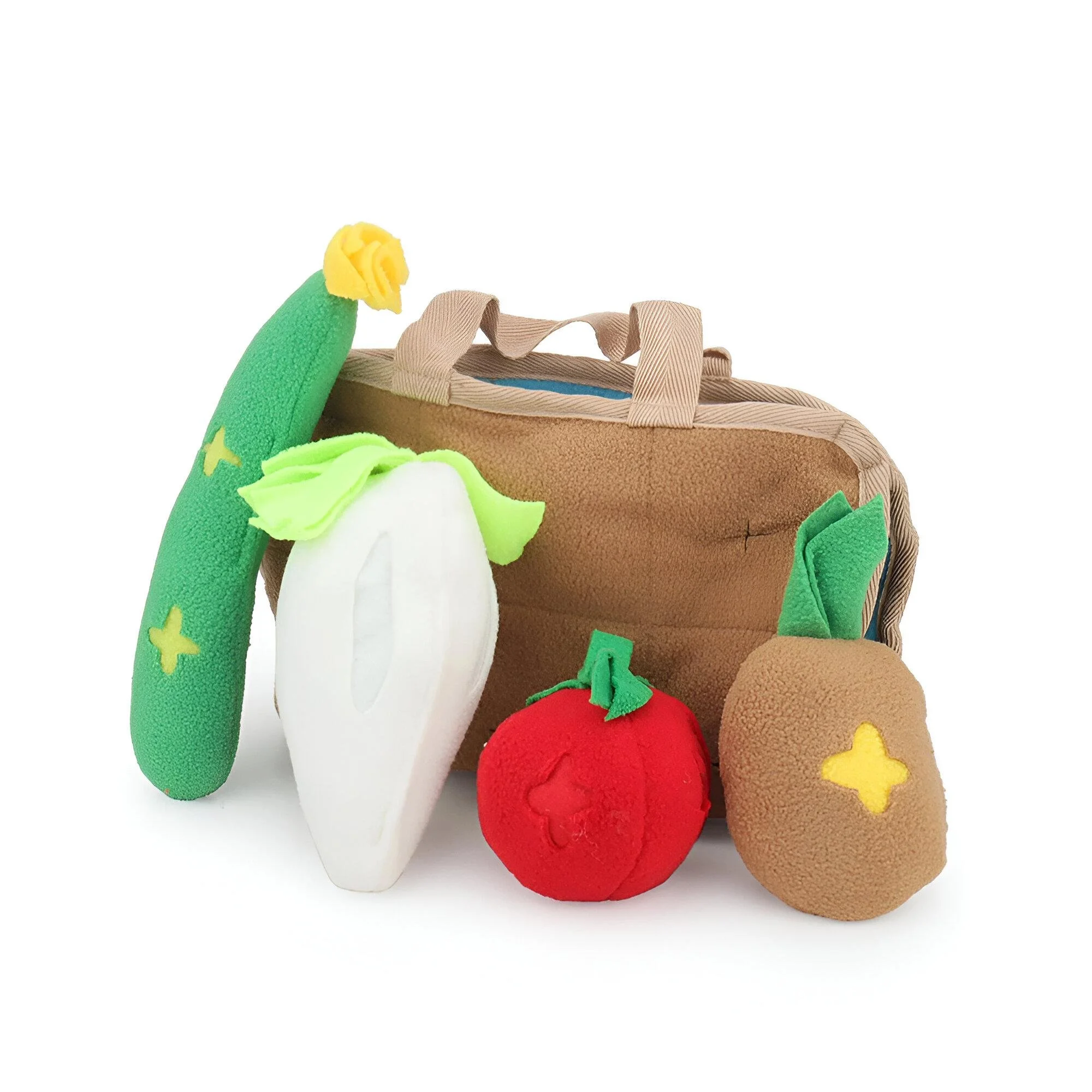
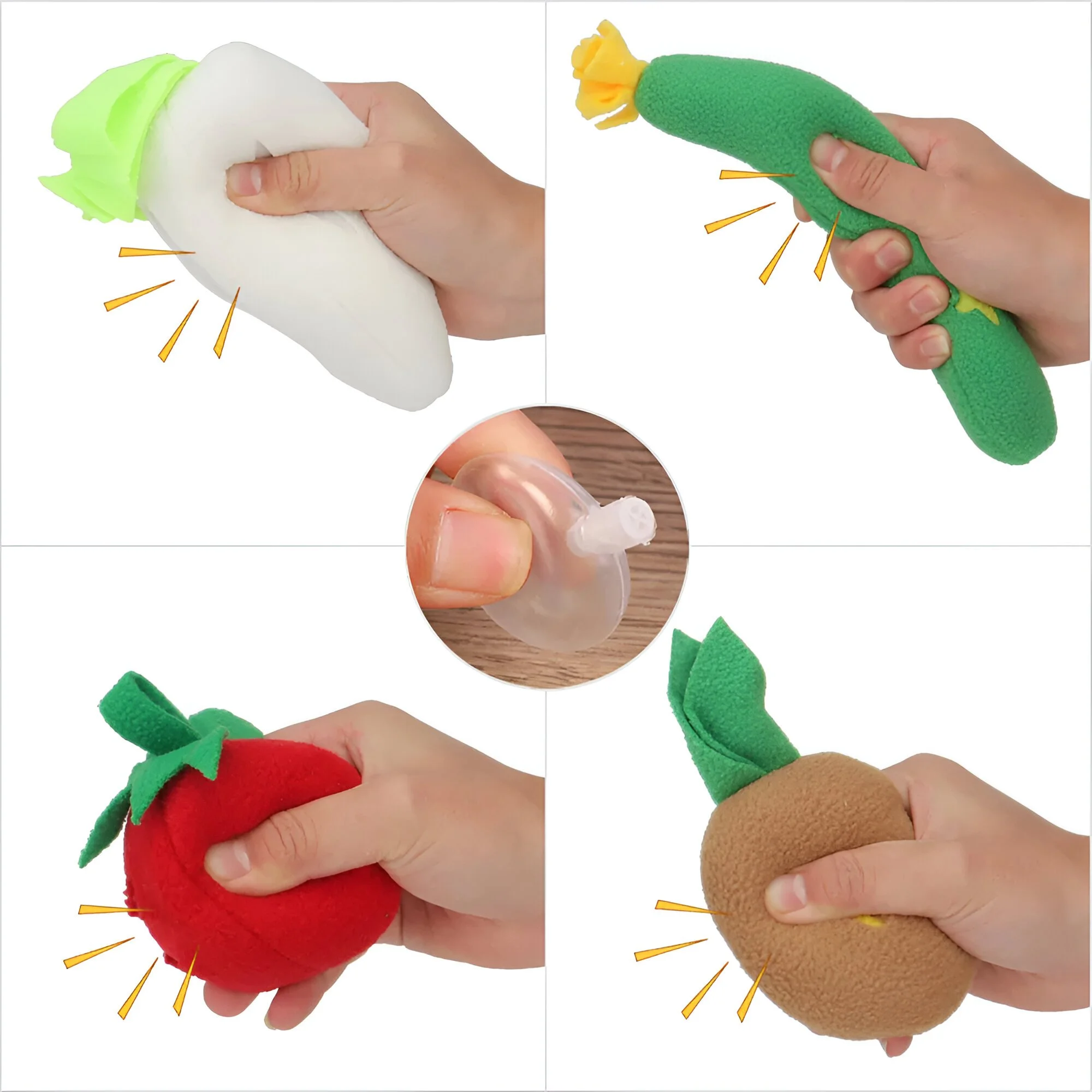
Plush Handbag Snuffle Dog Toy with Squeaker and Treat Puzzle (#1785172)
This product fits apartment living because its main value is not speed. It gives the dog a place to sniff, investigate, mouth, and search in a compact area. That makes it a better match for small-space enrichment than a toy that depends on bouncing, throwing, or chasing across the room.
The snuffle and treat-puzzle format is useful for dogs that need quiet mental work during owner work time, evening restlessness, or rainy days. The plush body also makes it less likely to clatter across hard floors than a hard puzzle toy.
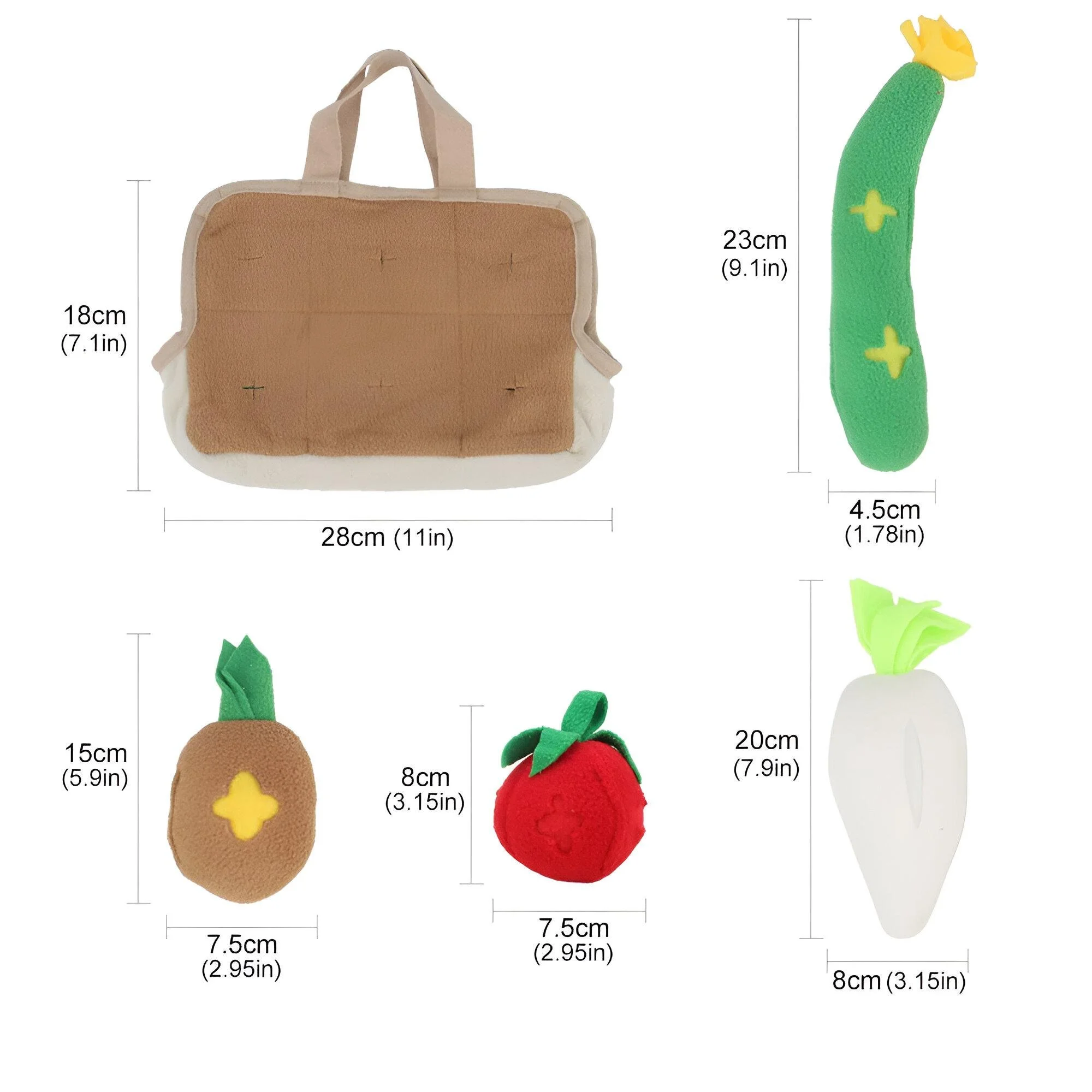
Best use: place it on a rug or mat, hide a small amount of food, and supervise the first sessions. If your dog sniffs and searches calmly, it can become part of a meal rotation. If your dog tries to shred the fabric, remove it once the food is gone and treat it as a supervised-only toy.
The built-in squeaker means it is not silent for every dog. If your dog repeatedly squeaks toys, use it during reasonable daytime hours or choose the snuffle function only when you can redirect rough play. Apartment-friendly still depends on your dog's style.
A Simple Buying Checklist
Before buying a toy for an apartment dog, ask these questions:
- Will it clatter, bounce, or thump on my floor?
- Can the dog use it in one small zone?
- Does it support sniffing, licking, chewing, carrying, or gentle tug?
- Can I clean it fully?
- Is it safe for my dog's chewing style?
- Will it calm the dog or make the dog louder?
- Can I put it away after the session?
If the answer is unclear, start with the quietest, simplest option. A useful apartment toy does not need to be complicated. It needs to fit the dog, the room, and the neighbors.
When Toys Are Not Enough
Toys can improve apartment life, but they cannot solve every problem.
If your dog barks for hours when left alone, destroys doors, drools heavily, panics in the crate, injures themselves trying to escape, or refuses food when alone, that may be separation anxiety rather than simple boredom. A snuffle toy may help at the edge, but it is not the full plan.
If your dog is restless because walks are too short, toys cannot fully replace outdoor sniffing, bathroom breaks, training, and social exposure. Indoor enrichment fills gaps. It does not erase biological needs.
If your dog suddenly becomes destructive, irritable, clingy, or uninterested in play, check for pain, illness, medication changes, or stress in the home.
The practical answer is balanced: use quiet toys well, build a repeatable routine, and treat behavior changes as information.
The Practical Answer
The best dog toys for apartment living are quiet, compact, washable, and matched to the dog's actual behavior. Snuffle toys, food puzzles, lick toys, soft chews, and controlled tug toys usually work better indoors than hard balls or loud squeakers.
Use a rug or mat as the play zone. Rotate toys so they stay interesting. Use food toys without adding too many calories. Put away fabric toys when the session ends if your dog chews or swallows material.
Apartment dogs do not need a huge toy collection. They need a small set of toys that do clear jobs: sniff, chew, solve, settle, and connect with the owner without turning the apartment into a noisy playroom.
Browse Apartment Dogs products