Article
Toys for Dogs That Destroy Everything: A Realistic Guide
Quick Answer
Toys for Dogs That Destroy Everything: A Realistic Guide: quick answer
A dog who destroys toys is not automatically aggressive. Most of the time, the dog is a power chewer, a shredder, a bored problem-solver, a young dog...
- Topic: Dog Safety.
- Related product category: pet-toys.
- This article keeps the main answer in the article copy and places relevant product context inside the guide.
First, Stop Calling It Aggression
A dog who destroys toys is not automatically aggressive. Most of the time, the dog is a power chewer, a shredder, a bored problem-solver, a young dog with too much mouth energy, or a dog who has learned that taking toys apart is the most rewarding part of play.
That distinction matters. If you treat toy destruction as bad character, you will reach for punishment or tougher marketing claims. If you treat it as a chewing pattern, you can choose safer toys, better supervision, and better outlets.
Some dogs gently carry plush toys for years. Other dogs remove a squeaker in ninety seconds, peel rubber like an orange, or turn rope into swallowed threads. The goal is not to find a mythical indestructible toy. The goal is to understand how your dog destroys toys and choose options that fail slowly, visibly, and safely.
"Indestructible" is not a serious safety plan. Every toy has a failure point. The question is:
- How does this toy fail?
- How fast does my dog reach that point?
- What happens if a piece comes off?
- Can I inspect damage before it becomes dangerous?
- Is the toy still useful if it is not left out all day?
For destructive chewers, toy buying is less about labels and more about risk management.
Identify the Chewing Style Before Buying
Two dogs can destroy the same toy for different reasons. If you only buy "tough" toys, you may miss the real pattern.
The shredder
This dog loves seams, edges, tags, fabric, and anything that can be peeled. Plush toys, rope knots, tennis ball fuzz, and soft rubber edges are all targets. The shredder is not always biting with huge force. It may be using the front teeth with precision.
The crusher
This dog clamps down hard and compresses the toy. Hard materials can be risky for teeth. Soft materials may tear into chunks. The crusher needs a toy with enough give to absorb pressure and enough size that it cannot be wedged deep in the mouth.
The squeaker hunter
This dog treats plush toys like a puzzle with a hidden prize. Once the squeaker is exposed, the toy has crossed into danger. Squeaky toys can still be used, but only as supervised short-session toys.
The swallower
This is the highest-risk category. Some dogs do not just destroy pieces; they eat them. Fabric, rope, rubber, stuffing, plastic, and foam can all become foreign-body risks. For swallowers, durability is not enough. You need larger, simpler toys, strict supervision, and fast removal at the first sign of damage.
The boredom worker
This dog destroys toys when under-stimulated. The toy is not the problem so much as the empty schedule. Food puzzles, training, sniffing, walks, and structured chewing may reduce destruction more than buying a tougher object.
Watch the first ten minutes with any new toy. Your dog will tell you which category matters.
Why "Indestructible" Toys Disappoint
The word "indestructible" sells hope to tired owners. It does not describe reality.
A toy can be strong and still unsafe. A toy can last a long time and still be too hard on teeth. A toy can survive normal chewing and fail under one determined edge-peeling session. A toy can be durable for one dog and useless for another.
The better standard is controlled wear. A good power-chewer toy should show damage slowly. You should be able to see cracks, fraying, chunks, seam stress, or surface changes before the toy becomes a swallowing hazard.
Avoid toys that fail suddenly into sharp pieces. Avoid toys that hide damage inside. Avoid toys with decorative parts that detach before the main body wears down. Avoid tiny toys that become choking risks once chewed smaller.
Reset your expectation from "will it survive forever?" to "does it survive long enough, safely enough, for the way my dog uses it?"
For some dogs, a toy lasting three weeks is excellent. For others, three days is normal. The replacement schedule is not a moral failure. It is data. Use it to choose better, not to keep gambling with unsafe toys.
Material Choices: What Works and What Can Go Wrong
Rubber is often the best starting point for power chewers because good rubber has give. It compresses and rebounds rather than acting like a rock. But rubber is not one material. Some is too soft and tears quickly. Some is too hard and unpleasant. Some becomes dangerous when chunks come off.
Choose rubber toys that match your dog's size and bite style. Look for rounded shapes, thicker walls, and designs without thin tabs or weak protrusions. Check for tooth marks after every session. If the dog starts peeling rubber, remove the toy.
Hollow rubber toys can be useful because they flex and can hold food. They turn chewing into work. A hollow center also gives the material room to compress. But hollow toys still need inspection around openings, seams, and thin edges.
Nylon chews can last a long time, but hardness is a serious consideration. If a toy is so hard that it does not give at all, it may not be right for a dog who bites down with full force. Use the knee test and fingernail test as rough screens: if pressing it into your knee hurts, or if your fingernail cannot make any impression, be cautious. Dogs with dental history need even more care.
Rope can be fun for tug, but it is a poor unsupervised chew for dogs who eat fibers. Loose threads can become a problem. If your dog shreds and swallows rope, rope is not a safe chew material.
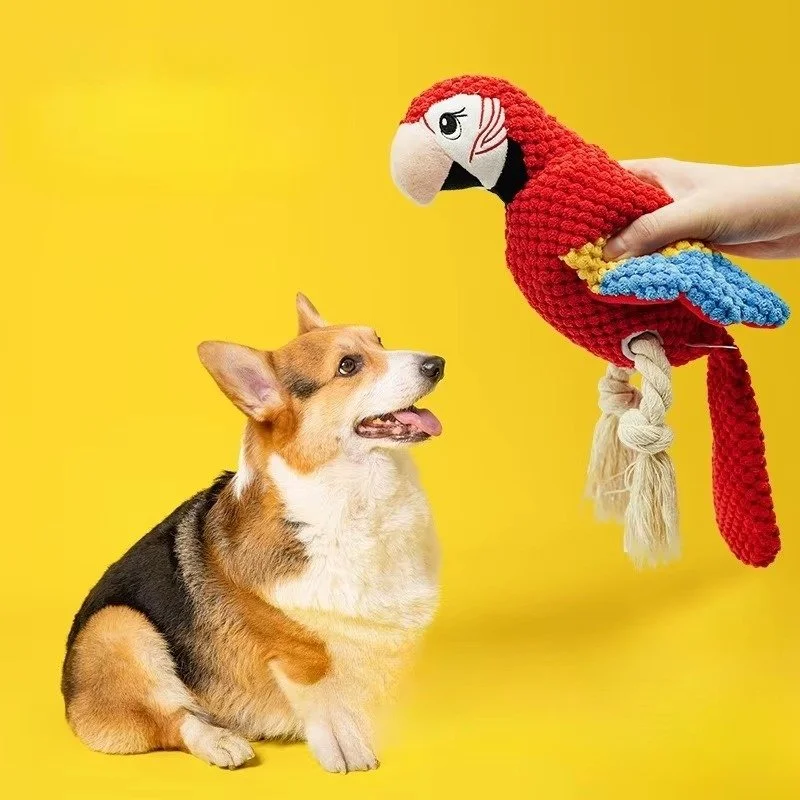
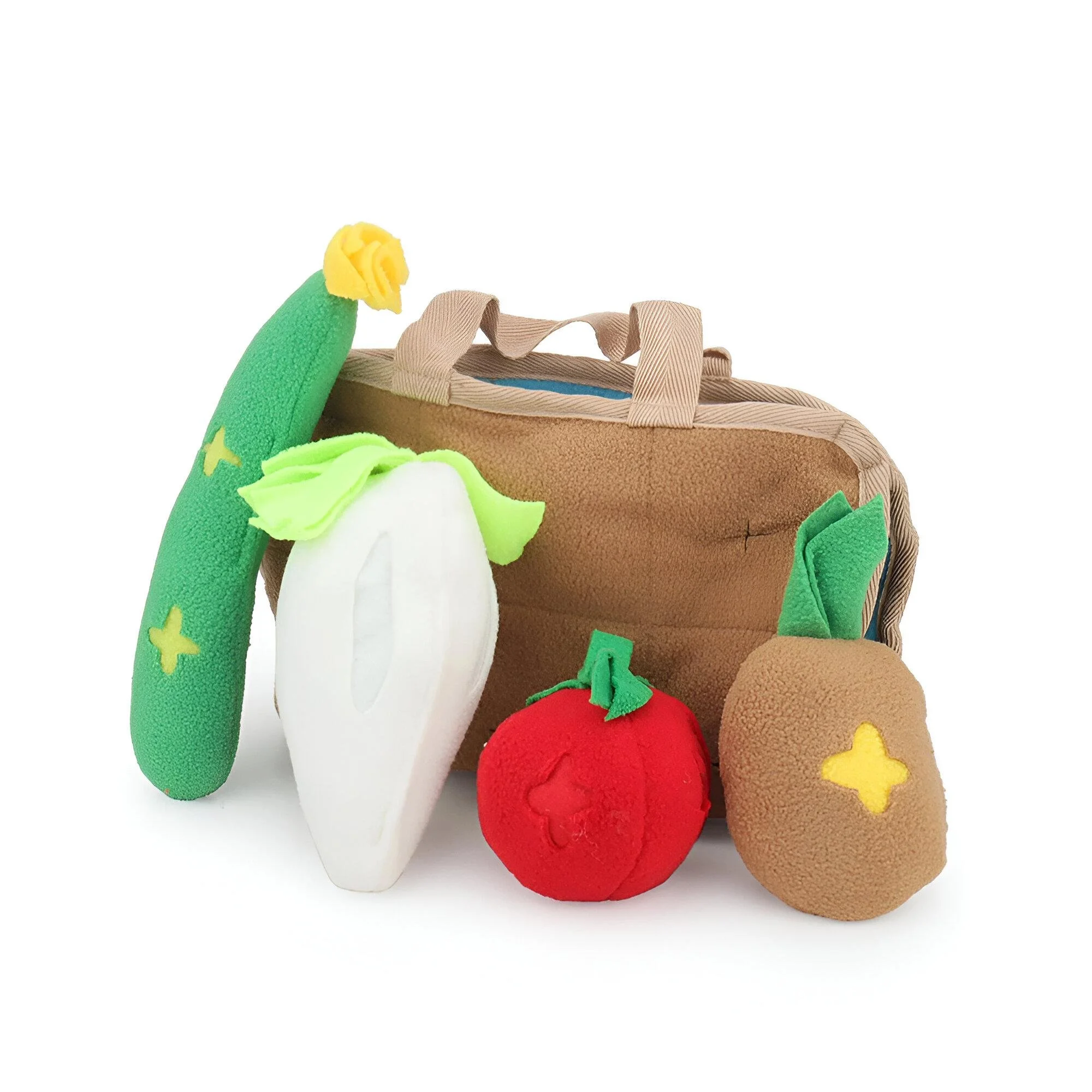
Plush is not automatically forbidden. It can be useful for carriers, gentle dogs, or supervised play. For a real shredder or squeaker hunter, plush belongs in the short-session category. It is not a crate toy.
Antlers, hooves, cooked bones, and very hard chews deserve caution. Some owners love them because they last. Lasting is not the only metric. Tooth risk, splintering, and digestive safety matter too. Ask your veterinarian before using hard natural chews, especially with puppies, seniors, or dogs with dental concerns.
Size Up, But Do Not Overshoot
For destructive chewers, undersized toys are dangerous. A toy that fits too far back in the mouth can become a choking or wedging risk. A small toy also gives the dog more leverage to crack, split, or peel it.
Sizing up one category is often useful, but do it thoughtfully. A larger toy spreads bite pressure over more surface area and may be harder to destroy. It may also be easier for you to see damage.
Do not choose a toy so large that the dog cannot carry, grip, or use it comfortably. If the toy is frustrating, the dog may abandon it or chew only one thin edge. The right size is large enough to be safe and durable, but not so large that it becomes awkward.
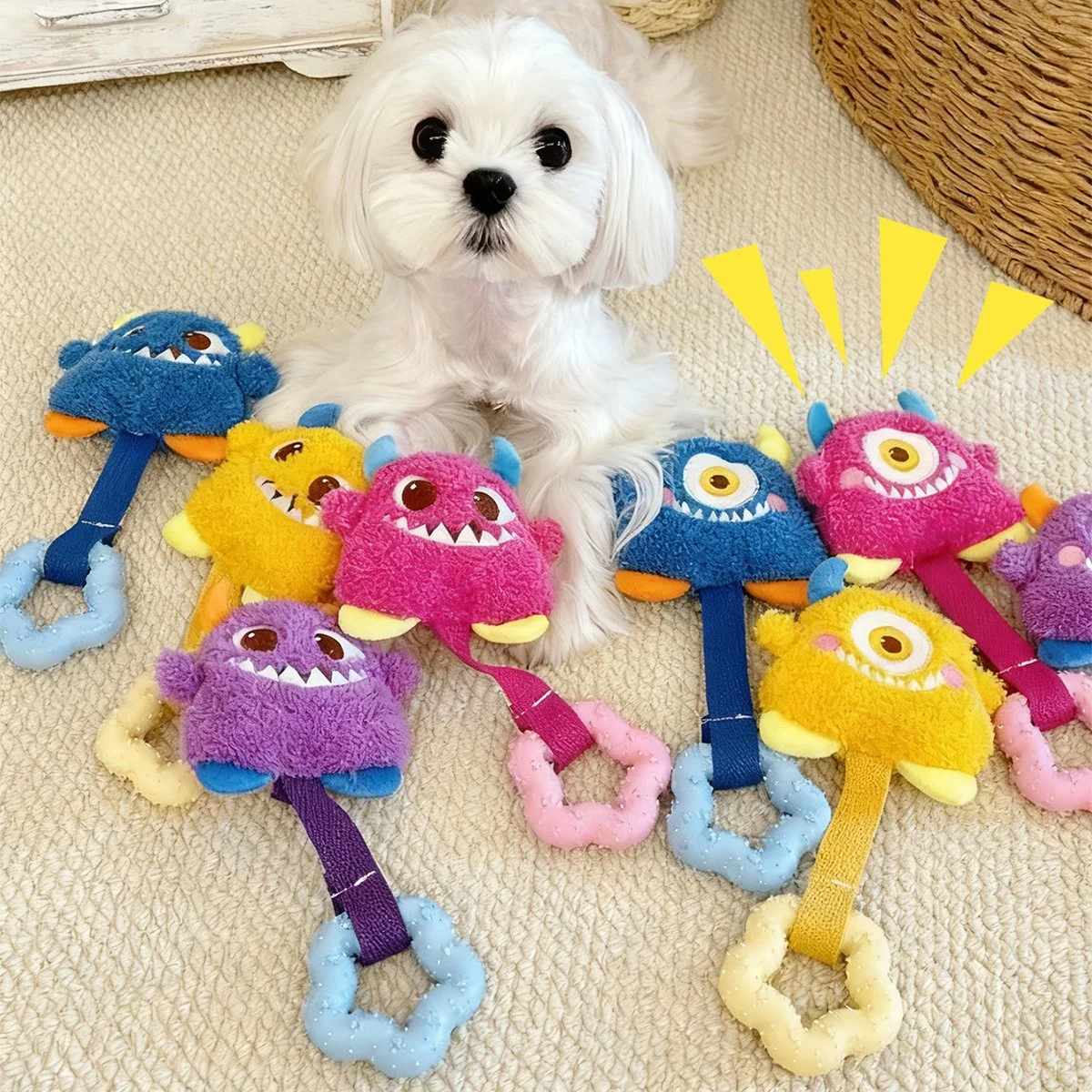
Shape matters too. Smooth round toys can be hard to grip and may roll under furniture. Thin rings can give a dog leverage to tear. Toys with tiny nubs, ears, feet, horns, or decorative points often fail at the protrusions. Simple shapes usually last longer.
For food-stuffed toys, check the opening size. The dog should be able to access the food safely without getting the jaw or tongue stuck. If the dog becomes frantic because the food is unreachable, the toy may create frustration instead of enrichment.
Engagement Is Part of Durability
Some dogs destroy toys because the toy is too boring. A smooth rubber object on the floor may not offer enough information. The dog starts testing edges, then learns that destroying is the only interesting thing the toy can do.
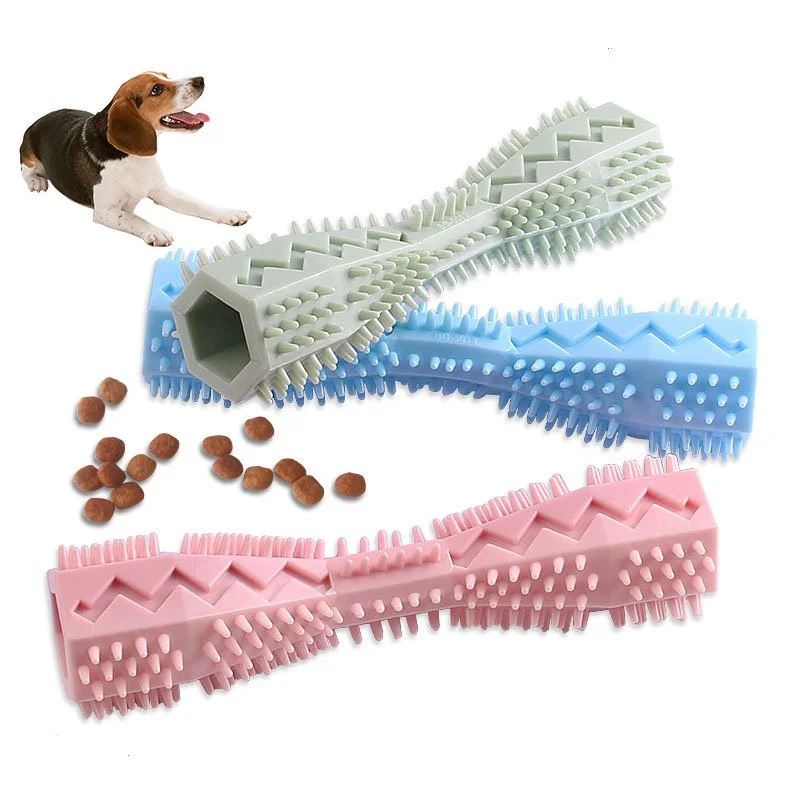
Texture can help. Ridges, grooves, uneven surfaces, and food-holding spaces give the mouth something to explore without immediately targeting a weak seam. The goal is not to make the toy complicated. The goal is to give chewing a job.
Food stuffing can also change the behavior. Fill a suitable rubber toy with part of the dog's meal, wet food, plain yogurt if tolerated, pumpkin if appropriate, or another vet-approved option. Freeze it for a longer session if the dog handles frozen foods well. Start easy before making it difficult. A dog who cannot get any reward may switch back to destruction.
Use food-stuffed toys as structured activities, not unlimited entertainment. Put the toy down in a safe area, supervise the first uses, and remove it when the session ends. Wash it thoroughly.
For dogs with sensitive stomachs, allergies, pancreatitis history, or weight concerns, choose fillings carefully and involve your veterinarian if needed. The enrichment value is not worth digestive trouble.
Engagement also comes from rotation. A durable toy that is available all day can become invisible. Bring it out for a specific chewing window, then put it away. Scarcity makes the toy more valuable and gives you a chance to inspect it.
The 10-Minute First-Use Test
Every new toy for a power chewer should be tested while you are present. Do not open the package, hand it over, and leave.
For the first ten minutes, watch closely:
- Does the dog chew broadly or target one weak point?
- Does the dog try to remove a squeaker, label, tag, or edge?
- Are tooth marks normal surface dents or actual tearing?
- Does the dog swallow loosened pieces?
- Does the dog become possessive or frantic?
- Is the toy too small once the dog has it in the mouth?
- Does the dog seem engaged or frustrated?
After ten minutes, take the toy and inspect it. If the toy already has chunks missing, deep cracks, exposed stuffing, loose threads, or a damaged squeaker, it is not a durable option for that dog. Do not rationalize it.
If the toy shows only light tooth marks and the dog stayed relaxed, extend the next session. Build trust gradually. A toy can move from supervised-only to longer access only after it proves itself with your dog.
This test also protects you from marketing. The dog is the real reviewer.
A Safer Chewing System
Power chewers do better with a system than with a random pile of toys.
Use one durable chewing toy for structured mouth work. Use one food-stuffed toy for longer enrichment. Use one tug or fetch toy for active play. Use one softer supervised toy if the dog enjoys carrying or squeaking. Keep backups out of reach.
Separate chewing from play. A tug toy is not automatically a chew toy. A fetch toy is not automatically a chew toy. A plush toy can be great for a supervised game and terrible for alone time.
Build predictable chewing windows. After a walk, during a crate rest period, while the household eats dinner, or after training can all work. The dog learns when chewing is available and what object is allowed.
Inspect during transitions. Toy comes out, dog uses it, toy goes back into storage, you check it. That rhythm prevents damaged toys from living in the basket until the dog finishes the job later.
If the dog chews furniture, shoes, or household items, do not rely on toys alone. Manage the environment. Remove access. Increase exercise and sniffing. Teach settle skills. Reward choosing the right chew. A good toy is part of the plan, not the entire behavior program.
What Not to Give a Dog That Destroys Everything
Avoid small plush toys with squeakers if your dog hunts squeakers. Avoid rope toys if your dog eats threads. Avoid tennis balls if your dog strips and swallows the fuzz or crushes the ball. Avoid toys with glued-on eyes, plastic accessories, ribbons, or decorative fabric pieces.
Avoid toys intended for much smaller dogs. The size mismatch can create choking risk and gives the dog more leverage.
Avoid leaving new toys in the crate until they have been tested repeatedly. Crate time is not the place to discover that a toy fails in five minutes.
Avoid assuming outdoor sticks are natural safe chews. Sticks can splinter, wedge, or injure the mouth.
Avoid giving the hardest object you can find just because the dog is powerful. Teeth are not tools for testing product claims.
Age Changes the Chewing Problem
A puppy who destroys toys is not the same as an adult dog who destroys toys. The mouth, motivation, and safety concerns change over time.
Puppies chew because they explore with their mouths, soothe teething discomfort, and have not learned what objects are allowed. They need softer, flexible toys that are safe for young teeth, plus constant redirection. Do not respond to puppy chewing by buying the hardest toy in the store. Puppy teeth and gums need more care than that.
Adolescent dogs are often the hardest group. They have more jaw strength, more confidence, and more energy, but not much judgment. A toy that survived puppyhood may suddenly fail. This is the age when many owners discover they have a power chewer. Increase size, increase supervision, and add more structured exercise and training rather than only buying tougher toys.
Adult dogs usually reveal a stable pattern. Some settle into carrying and casual chewing. Others remain serious destroyers. At this stage, you can build a long-term system: food-stuffed rubber for settling, tug toys for active play, supervised squeaky toys for fun, and durable chews only if they fit the dog's mouth safely.
Senior dogs may still chew hard, but teeth, gums, joints, and digestion can change. A toy that was fine at age three may be too hard at age ten. Watch for dropping toys, chewing on one side, bad breath, pawing at the mouth, or sudden refusal to chew. That can point to discomfort. Softer textures and shorter sessions may be better.
Life stage does not replace observation. It gives you a starting point. The real test is always what your dog does with the toy now.
Troubleshooting by Failure Pattern
The dog peels rubber.
Look for toys with fewer edges, thicker walls, and rounder shapes. Peeling usually starts at thin tabs, holes, seams, or decorative ridges. If your dog can create a flap, the toy may not be right. Remove rubber toys once peeling starts.
The dog splits hard toys.
Harder is not the answer. A dog who can crack or splinter hard materials needs a different material, not a more extreme version of the same risk. Consider flexible rubber, supervised food puzzles, or trainer-guided enrichment.
The dog eats fabric.
Fabric toys should become supervised only, if used at all. Some dogs can enjoy plush play and spit pieces out. Others swallow everything. If your dog eats fabric, do not leave soft toys out as comfort objects.
The dog destroys toys only when alone.
That points toward boredom, stress, separation-related distress, or too much unsupervised access. Test the same toy while you are home. If the dog uses it safely with you but destroys it when alone, the toy may be absorbing a bigger emotional problem.
The dog ignores durable toys.
Make the toy more meaningful. Add food, movement, a game, or a short training session. Some dogs do not want a dead object on the floor. They want interaction or scent work. A durable toy that nobody uses is not a solution.
The dog guards tough toys.
High-value chew items can create resource guarding in some dogs. Do not practice taking things away without a plan. Use trades, manage space, and get professional help if the dog stiffens, growls, snaps, or blocks access.
The dog destroys toys faster after exercise.
Some dogs get more aroused after intense activity. They come home from fetch or rough play and need a downshift, not another exciting toy. Try sniffing, licking, food puzzles, or a calm chew window instead of high-energy play.
The failure pattern tells you the next move. Do not keep buying the same toy in different colors and expecting a different result.
When It Is Not Really a Toy Problem
Some destructive chewing is normal. Some is a sign the day is not working.
If a dog destroys every toy, every shoe, every bed, and every household object, the issue may be more than toy strength. The dog may need more exercise, more sleep, more training, more confinement management, more appropriate chewing windows, or help with anxiety.
Look at the whole schedule. Does the dog get sniffing time or only fast walks? Is the dog alone for long stretches with no settling skills? Does chewing happen before meals, after visitors, during storms, or when the household gets loud? Does the dog chew calmly or frantically?
A toy can redirect normal chewing. It cannot replace sleep, training, medical care, or anxiety support.
Use enrichment variety. Power chewers often benefit from safe chewing, but also from scent games, scatter feeding, training, calm mat work, decompression walks, and puzzle feeders. The mouth is one outlet. The brain and nose need jobs too.
If chewing appears suddenly in an adult dog, consider pain, dental problems, gastrointestinal discomfort, stress, medication changes, or household changes. Sudden behavior shifts deserve attention.
For severe destruction when alone, especially with drooling, escape attempts, self-injury, house soiling, or panic, talk to a veterinarian or qualified behavior professional. Buying stronger toys is not enough if the dog is distressed.
The Weekly Toy Audit
Power-chewer homes need a maintenance routine. Once a week, collect every toy and sort them honestly.
Keep toys that are intact, cleanable, correctly sized, and still used appropriately. Move supervised toys into a separate bin so they do not accidentally become all-day toys. Retire toys with missing pieces, deep cracks, exposed stuffing, loose squeakers, sharp edges, fraying rope, or sour smells.
Do not save borderline toys for "one more session." That is how damaged toys get finished when nobody is watching.
Track what failed. Write the date on new toys with a marker if needed. If a toy lasted one day, that is useful information. If a certain shape always fails at the same edge, stop buying that shape. If food-stuffed toys last safely but plush toys do not, build around that.
The audit also prevents overbuying. Many owners keep buying because the dog "needs toys," while half the basket is unsafe clutter. A smaller, cleaner, better-matched rotation is usually safer than a large pile of damaged options.
The Buying Checklist
Before you buy the next "tough" toy, run through this list:
- Is it large enough for the dog's current mouth?
- Does it have thin edges, tabs, ears, feet, or protrusions?
- Does the material have some give, or is it rock-hard?
- Can the toy be cleaned?
- Is the intended use chewing, tug, fetch, or food stuffing?
- Does your dog have a history of swallowing this material?
- Can you inspect the failure point easily?
- Will this be supervised, short-session, or longer-access?
If you cannot answer those questions, do not buy based on the toughness claim alone. For power chewers, a boring toy with a clear purpose is usually better than a dramatic-looking toy with weak parts.
Also buy one test toy, not five. Let the dog review it first. Once you know the toy category works, then consider backups.
Product Spotlight
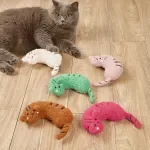
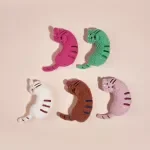
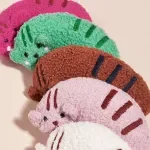
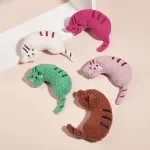
Bite Resistant Universal Cat & Dog Toy (#1804518)
This toy fits best as a supervised durability test for moderate chewers or pets who need more texture than a smooth toy provides. The bite-resistant positioning and textured surface make it more useful than a decorative plush for dogs who like oral stimulation, but it should still be introduced carefully.
Best use: offer it during a short supervised session and watch the failure pattern. If your dog chews broadly, leaves only surface marks, and stays engaged, it can become part of the rotation. If your dog targets one edge, peels material, swallows pieces, or becomes frustrated, remove it and choose a different category.
Because it is described as universal for cats and dogs, size and behavior matter even more. A toy that is appropriate for a cat or small dog may not be appropriate for a large power chewer. Match the toy to the actual mouth using it.
Emergency Red Flags
Call a veterinarian promptly if your dog swallows part of a toy or shows signs such as vomiting, repeated gagging, drooling, loss of appetite, diarrhea, straining, abdominal pain, lethargy, or attempts to vomit without producing anything.
Do not wait for a swallowed piece to "just pass" if symptoms appear. Do not induce vomiting unless a veterinarian instructs you to. Some materials can create more damage coming back up, and some objects may already be beyond the stomach.
The safest power-chewer strategy is not finding one perfect toy. It is matching the toy to the chewing style, testing every new toy, supervising high-risk categories, rotating access, and retiring damaged toys early.
If your dog destroys everything, believe the evidence. The dog is telling you how toys fail. Your job is to choose toys that fail in safer, slower, more visible ways.