Article
The 6 Best Cat Toys for Apartment Cats (2026 Buyer's Guide)
Quick Answer
The 6 Best Cat Toys for Apartment Cats (2026 Buyer's Guide): quick answer
Apartment cats can benefit from regular opportunities to climb, chase, stalk, and investigate new objects. A smaller, more predictable home does not...
- Topic: Pet Toys.
- Related product category: pet-toys.
- This article keeps the main answer in the article copy and places relevant product context inside the guide.
Why Apartment Cats Get Bored — and Why It Matters
Apartment cats can benefit from regular opportunities to climb, chase, stalk, and investigate new objects. A smaller, more predictable home does not automatically make a cat bored, but it can make play, vertical space, and toy rotation more important, especially for an indoor-only cat. Changes such as increased scratching, over-grooming, vocalizing, or sudden withdrawal can have many causes. Enrichment may help with routine and activity, but new or persistent behavior changes should be discussed with a veterinarian rather than treated as a toy-shopping problem. The good news is that enrichment can start small. Toys are not a cure-all, but they can give an indoor cat more chances to chase, stalk, kick, investigate, and solve small problems. The six toys below are selected for small-space living: they respect the difference between vertical and horizontal play, and several can support solo play when a human is nearby but busy. None requires a cat tree, and none replaces daily interactive play, but together they cover four useful play styles: hunting, teasing, solo self-play, and automatic distraction.
The Top 6
1. Interactive Catnip Snake Plush Cat Toy — Best for Solo Hunting Play
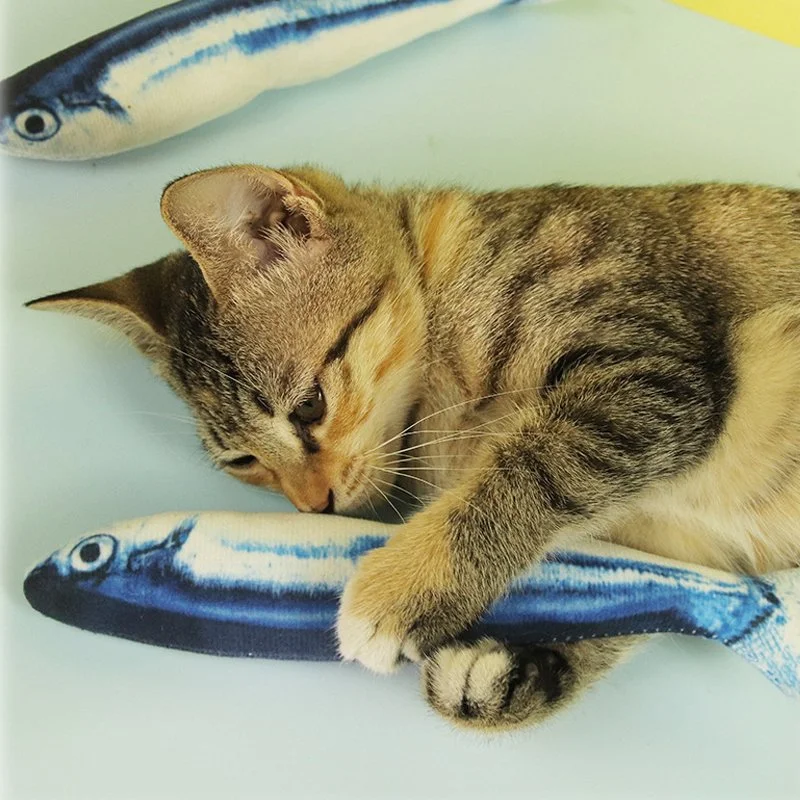
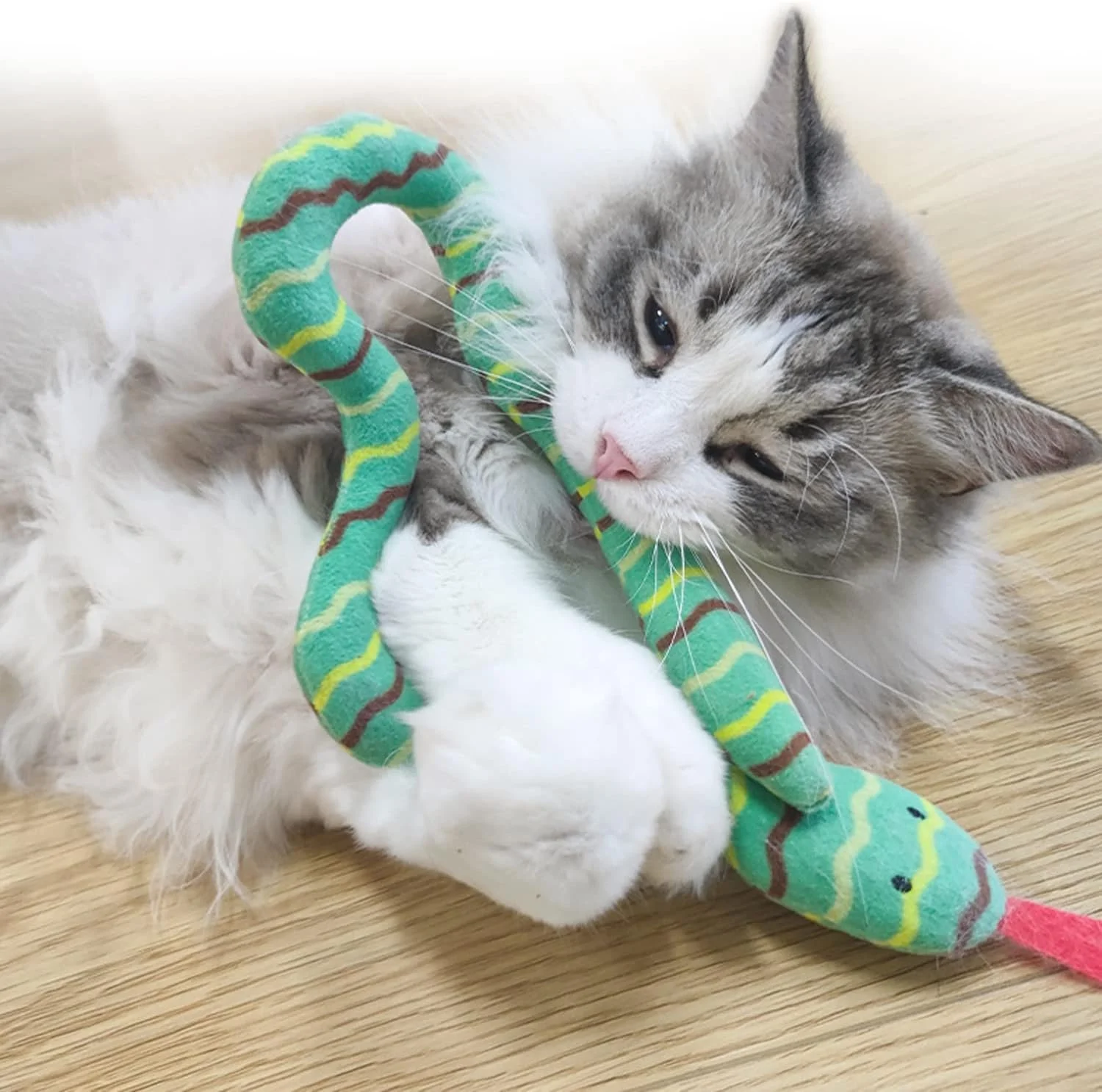
Price: $15.49 The best first purchase for many apartment cats is not the most expensive gadget; it is a soft toy that gives them something to grab, bite, kick, and carry. This catnip snake plush is built around that use case. As a long, soft-bodied toy, it can mimic the shape of prey-like objects a cat may stalk. Your cat can bite it, bunny-kick it with the hind legs, carry it, then settle down after play. For a solo cat in a small space, that matters more than it sounds. Some cats redirect play energy toward ankles, rug corners, or furniture when they do not have acceptable targets. A plush prey-style toy gives that energy a better outlet. The snake's length is a real feature: a long-bodied toy is easier to grab, hold, and bunny-kick than a small mouse, so it may suit both energetic kittens and some older cats. Catnip is the other half of the equation. Some cats respond strongly to dried catnip, while others show little interest. For responders, scent can make a passive plush more interesting without you moving it. For non-responders, the snake still needs shape, texture, and occasional human involvement to stay engaging. Honest limitations. Catnip sensitivity is genetic and skips some cats entirely — if your cat is a non-responder, the snake becomes a nice-but-ordinary plush. Catnip also fades over time, so expect to refresh or replace the toy every few months. And because it is soft, an enthusiastic kicker will eventually shred it — that is the toy working as intended, but check for torn seams and loose stuffing before every session. Who it's for: solo cats, kittens, seniors, and cats whose boredom shows up as attacking feet or furniture — the lowest-risk, highest-value addition to an apartment cat's toy box. [View the Interactive Catnip Snake Plush Cat Toy](/products/interactive-catnip-snake-plush-cat-toy-p-002603)
2. Interactive Plush Tassel Teaser Stick with Bell — Best for Owner-Driven Hunting Sessions
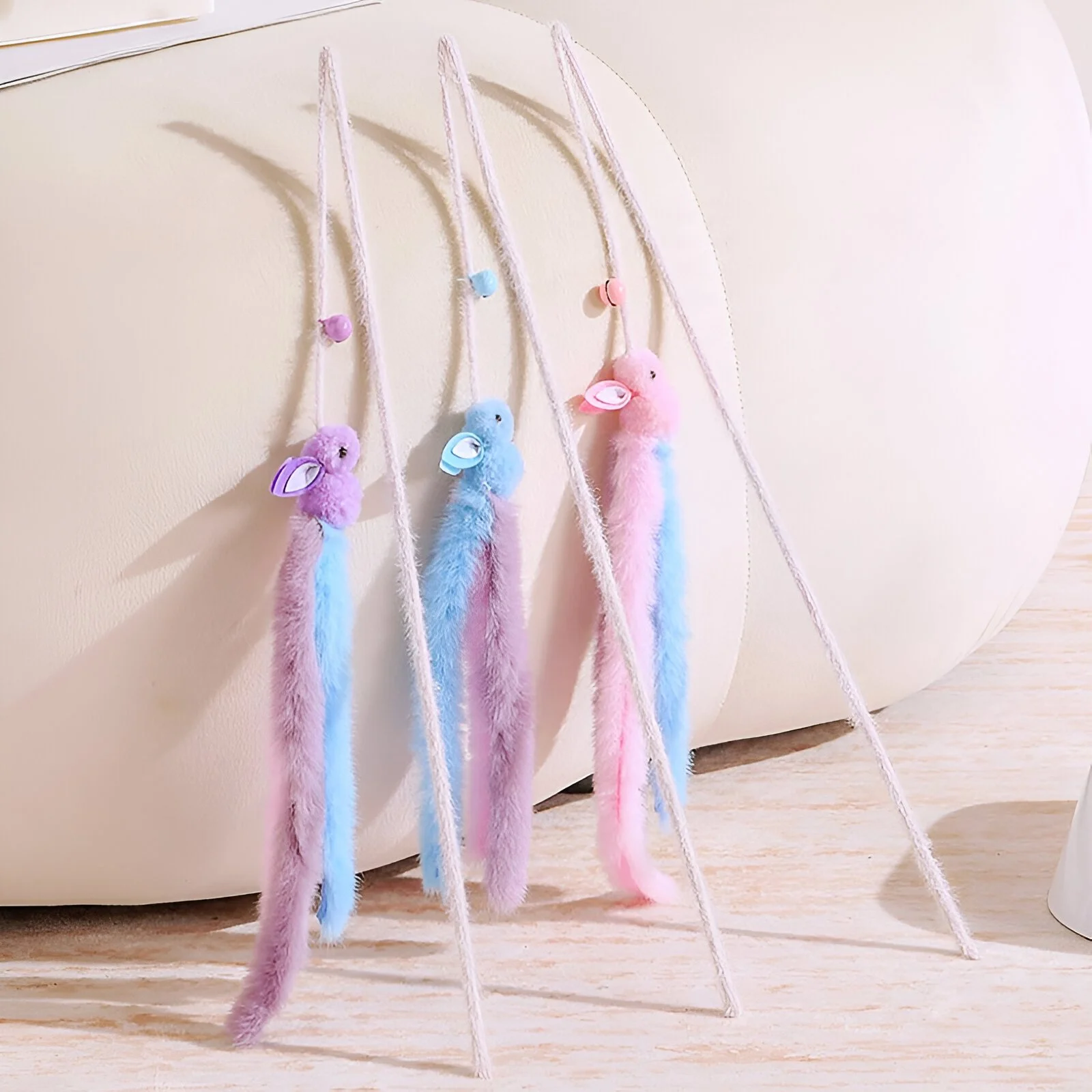
Price: $16.49 If the catnip snake is the toy your cat plays with alone, the teaser stick is the toy your cat plays with *you* — and for apartment cats, daily interactive play is not optional; it is the core of the whole enrichment strategy. This plush tassel teaser stick is a handheld wand with a dangling tassel and bell: exactly the toolset for a 10- to 15-minute hunting simulation in a small living room. Here is why the wand format works in an apartment specifically. Wrist flicks let you control the prey's movement — darting, hovering, skittering along the baseboard — triggering the stalk-and-pounce response no stationary toy can. Make the "prey" disappear under a sofa cushion, reappear on a chair arm, zip across the floor: in a small space, that vertical-and-horizontal variety fakes the movement of a bird or mouse without needing extra room. The tassel adds visual chaos like a fluttering wing; the bell adds a sound cue for tracking prey — vital for cats with reduced vision. The teaser stick is also the strongest bonding tool on this list because the toy depends on you. A cat who learns "the wand comes out at 6 p.m." gets a predictable outlet for chase-and-pounce play. Short, regular sessions are usually more realistic than one long play burst, especially in a small apartment. Honest limitations. This toy demands your time — it is not self-play, and left on the floor it will lose interest in a day. The bell is a charm until it becomes a nuisance: a cat batting it around at 2 a.m. will test your patience, so this is a put-away toy, not a leave-out toy. And wand toys should be stored out of reach when play ends — some cats chew and swallow strings, and no toy here should be left unsupervised with a determined chewer. Who it's for: every apartment cat, but especially those whose owners are home in the evenings and want a fast bonding and exercise session. Pair it with a solo-play toy for the workday. [View the Interactive Plush Tassel Teaser Stick with Bell](/products/interactive-plush-tassel-teaser-stick-with-bell-for-cats-p-002969)
3. USB Rechargeable Laser Cat Toy with 5 Adjustable Light Patterns — Best for Automatic Chase Play
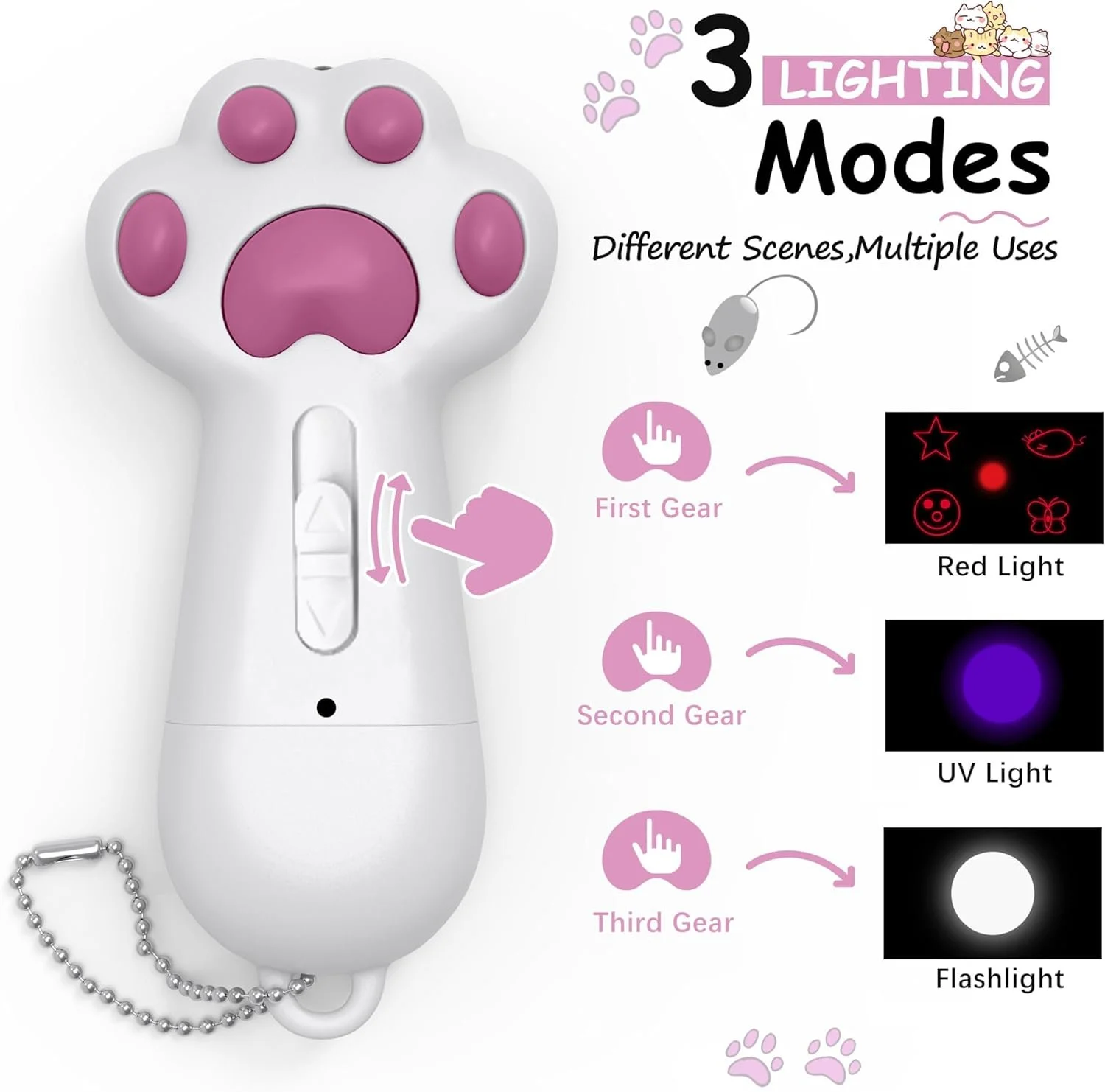
Price: $18.65 The laser toy answers a specific apartment problem: the cat is full of energy while you are on a call or cooking nearby. This USB-rechargeable laser cat toy projects a moving dot with five adjustable light patterns, turning floor, walls, and ceiling into a chase course. For apartment cats, the laser has two advantages. First, it uses the vertical dimension for free: the dot can run up the wall and across the ceiling, adding movement that a floor toy cannot provide. Second, it needs less active handling than a wand toy, although you should still supervise sessions and end with a physical reward. The USB rechargeable format also avoids frequent disposable battery changes. The five adjustable light patterns matter more than the marketing suggests: erratic, darting movement mimics prey better than smooth sweeping, and rotating patterns fights habituation — cats tire of repetitive movement fast, and a toy running the same pattern daily goes ignored by week three. Honest limitations — read this one carefully. Lasers can frustrate some cats because the cat chases and never catches. The fix is to use the laser carefully: end every session by landing the dot on a physical toy or treat, let the cat "catch" it, then switch off. Never aim the beam into the cat's eyes, keep sessions short, and watch for obsessive light-chasing. Who it's for: busy owners, high-energy cats, and kittens with more zoomies than floor space. Not for cats that already show obsessive light-chasing behavior — for those, stick to physical toys. [View the USB Rechargeable Laser Cat Toy](/products/usb-rechargeable-laser-cat-toy-with-5-adjustable-light-patterns-p-002786)
4. 7-Pack Interactive Feather Cat Toys with Bells — Best for Toy Rotation and Variety
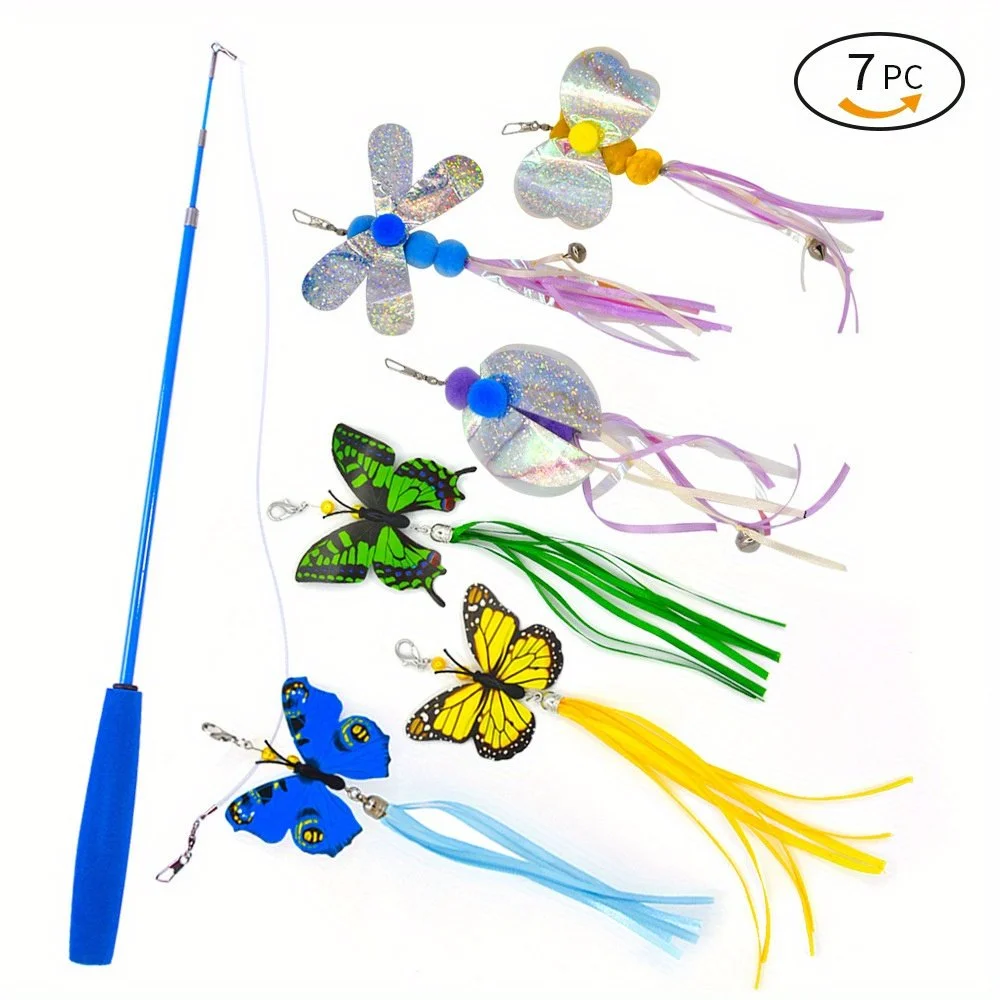
Price: $21.95 Here is the dirty secret of cat toy shopping: most cats get bored of a single toy within days, not because the toy is bad, but because cats are novelty hunters. A feather toy that triggered a full stalk-and-pounce on Monday is ignored by Friday. The fix is rotation — and this 7-pack of interactive feather toys with bells is rotation in a box. The pack's value is variety. A multi-pack makes it easier to offer one toy at a time and keep others in reserve. Rotate toys every few days, then bring an older item back later. Keep feather toys out of reach between supervised sessions and remove any loose pieces promptly. The pack also covers multiple play styles in one purchase: some pieces are wand-style (you animate them), some are toss-and-carry toys the cat bats and retrieves on its own — one SKU spanning both the interactive and solo categories. For a first-time apartment owner, that breadth is genuinely useful: you observe which style your cat prefers before spending more on a specialized toy. At $21.95 for seven pieces, it is also the cheapest "experiment kit" on this list. Honest limitations. Feather toys are the highest-attrition toys a cat can own: feathers detach, bells get batted off, and a dedicated chewer can destroy one in a session. Retire pieces quickly and check for loose parts before each play — swallowed pieces are a real (if uncommon) emergency risk. And a 7-pack does not mean seven toys your cat will love: expect four ignored, one obsessed-over. That is normal — the pack exists to find the one and keep rotation cheap. Who it's for: new cat owners figuring out their cat's play style, multi-toy households that want cheap rotation, and anyone who wants to test feather toys before committing to bigger purchases. [View the 7-Pack Interactive Feather Cat Toys with Bells](/products/7-pack-interactive-feather-cat-toys-with-bells-p-003071)
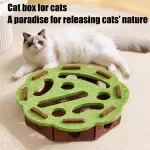
5. Interactive Felt Cat Puzzle Box — Best for Solo Brain Training and Boredom Relief
Price: $28.49 The most underrated weapon against apartment-cat boredom is not a chase toy — it is a problem to solve. This interactive felt cat puzzle box is a self-play toy for boredom relief and brain training: treats or kibble go inside, and the cat must use paws and nose to fish them out through the felt openings. It converts eating — the one activity every cat reliably does — into a hunting simulation. Why does this matter in an apartment? A predictable indoor space may offer fewer small changes to investigate during the day. A food puzzle adds a simple problem: find the treat, paw it out, and repeat. That can be useful for food-motivated cats because it turns eating into a slower, more active task. It is not a treatment for stress behavior, but it can be part of a broader enrichment routine. The felt construction is a small-space advantage in itself. Compared with hard plastic feeders, a felt box may be quieter on floors and softer to bat around. It may also slow some cats down if they have to fish kibble out one piece at a time, though fast eating or vomiting concerns should be discussed with a veterinarian. Honest limitations. A puzzle box is a brain toy, not a cardio toy — it will not burn the physical energy a wand session does, so it complements rather than replaces interactive play. It also needs you to load it (treats are not included), and it only works if your cat is food-motivated; a cat on a strict schedule who ignores treats will simply walk away. And felt is durable but not indestructible — a determined claw can tear the openings wider, so check it periodically. Start with easy-to-reach treats and increase difficulty as your cat learns. Who it's for: solo cats left alone during the day, food-motivated cats of any age, and owners who want enrichment that runs on its own. The best "while you are at work" toy on this list. [View the Interactive Felt Cat Puzzle Box](/products/interactive-felt-cat-puzzle-box-self-play-toy-for-boredom-relief-and-p-003053)
6. 2-in-1 Interactive Cat Toy with Automatic Feather & Fun Ball — Best All-in-One Automatic Distraction
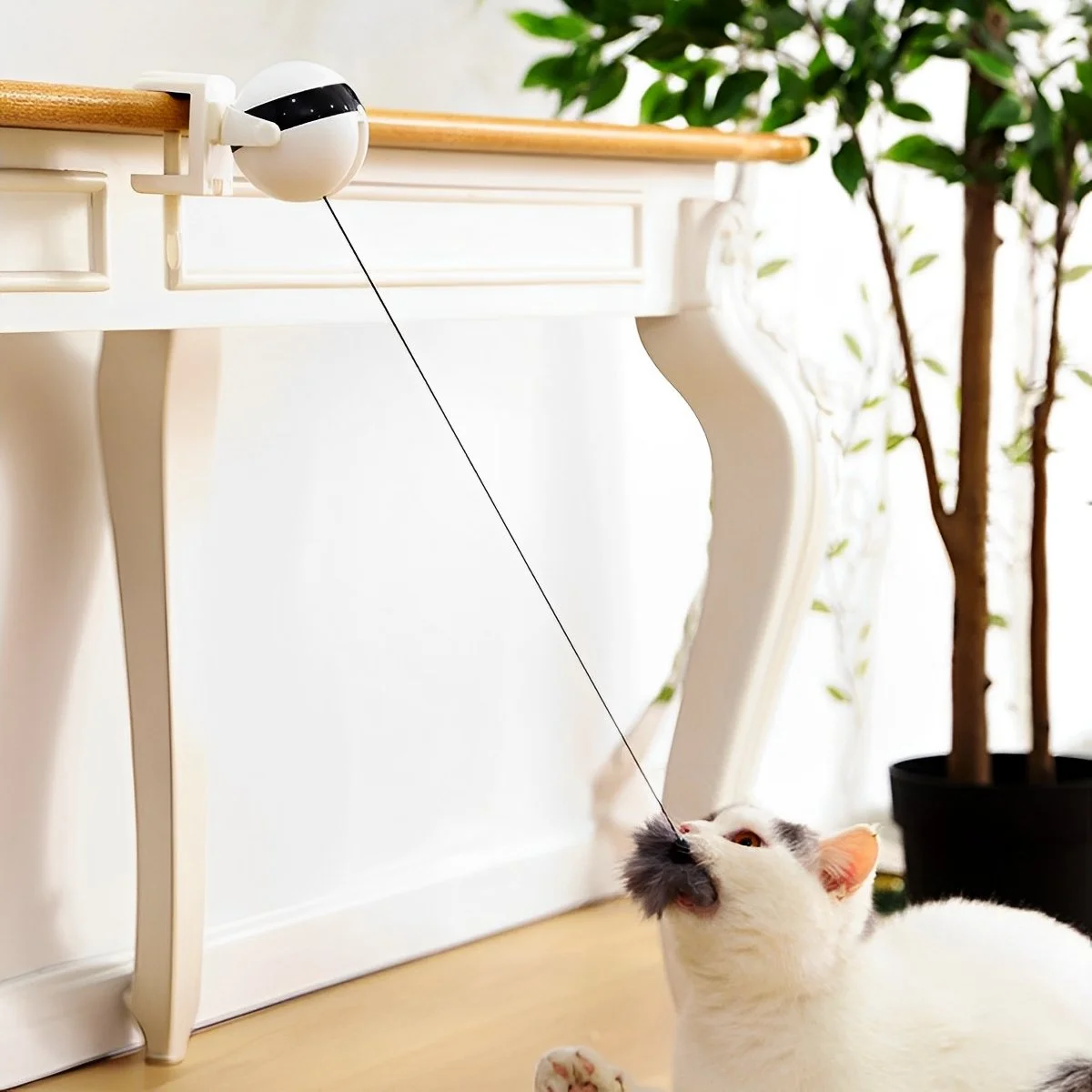
Price: $45.49 The flagship of this list — and the most expensive — is this 2-in-1 automatic cat toy pairing an automatic feather wand with a fun ball. It is meant to give a solo cat two styles of movement in one device: a feather-style target and a ball-style chase object. The design logic for apartment cats is straightforward. The automatic feather can provide movement when you are nearby but busy, while the ball adds a second style of batting or chasing. Movement patterns are the spec that matters; cats often lose interest in predictable motion, so variety is useful. Still, this is cat-dependent. Some cats love moving gadgets, while others avoid them. For an apartment, the 2-in-1 format has a practical bonus: one device instead of two means one floor footprint, one charging routine, and one thing to tidy away. Since automatic toys are typically pricier than plush toys or feather packs, two play styles in one unit is a reasonable value argument if the toy matches your cat's play style. Honest limitations — and these are real. First, automatic toys are not babysitters: moving parts, feather pieces, and balls can be broken or chewed, and a toy that malfunctions while you are out is a hazard, not a help — treat this as a "while you are in the next room" toy. Second, it is the most cat-dependent purchase here: some cats are genuinely scared of moving mechanical objects and will avoid the device entirely, making $45.49 a riskier gamble than the $15 snake. Third, it habituates like any toy, so rotate it with the rest of this list. If your cat tolerates moving gadgets, this is the one; if timid, start with the cheaper solo-play options. Who it's for: solo cats whose humans are out during the day, tech-tolerant cats, and owners who want one device instead of a shelf of toys. Not for timid cats or households that cannot supervise automatic devices. [View the 2-in-1 Interactive Cat Toy with Automatic Feather & Fun Ball](/products/2-in-1-interactive-cat-toy-with-automatic-feather-and-fun-ball-p-003019)
Comparison Table: The 6 Best Cat Toys for Apartment Cats
| Toy | Price | Play Style | Best For | Needs Owner? | Supervision |
|---|---|---|---|---|---|
| Interactive Catnip Snake Plush | $15.49 | Solo hunting / kick & carry | Solo cats, kittens, seniors | No | Low (check seams) |
| Plush Tassel Teaser Stick with Bell | $16.49 | Interactive teasing / wand play | Bonding, energy burn, shy cats | Yes — every session | Medium (strings) |
| USB Rechargeable Laser Toy | $18.65 | Automatic chase (vertical!) | Busy owners, high-energy cats | No | High (eye safety, catchable reward) |
| 7-Pack Feather Toys with Bells | $21.95 | Variety / rotation, hunt & toss | New owners, multi-toy rotation | Some pieces | Medium (loose feathers) |
| Felt Puzzle Box | $28.49 | Solo brain training / slow feed | Day-alone cats, food-motivated cats | No (you load treats) | Low |
| 2-in-1 Automatic Feather & Fun Ball | $45.49 | Automatic prey simulation | Day-alone cats, tech-tolerant cats | No (runs on timer) | High (mechanical parts) |
How to read this table. Price is the obvious axis, but the more useful one is *owner involvement*. The teaser stick ($16.49) is the highest-value interactive option per dollar. The laser ($18.65) is the cheapest way to add vertical play without a cat tree. The puzzle box ($28.49) is the best "while you are at work" investment. The 2-in-1 ($45.49) earns its price only if your cat demonstrably plays with automatic toys. And all of them work better in rotation — that is what the 7-pack is for.
Safety and Rotation Checklist
Apartment cats do best when toys are available, but not all toys should be available all the time. Use a simple rotation system: leave out one soft toy, one puzzle or food toy, and one low-risk batting toy. Store wand toys, feather toys, strings, bells, and automatic devices after play. Before each session, check for:
- Torn seams or exposed stuffing on plush toys.
- Loose feathers, bells, tassels, or string ends.
- Cracked plastic, sharp edges, or jammed moving parts.
- Laser beams pointed toward eyes or reflective surfaces.
- Treat puzzles loaded with too many calories for the day.
If a toy is damaged, retire it. If a cat guards, chews, swallows pieces, or becomes unusually agitated, switch to a simpler toy and supervise more closely. For multi-cat apartments, watch whether one cat blocks the other from playing; two shorter sessions may work better than one shared session. The goal is not to keep the floor covered with toys. The goal is to make play feel new enough that the cat investigates again. A smaller toy set, rotated well, usually beats a large pile that never changes.
FAQ: Apartment Cat Toys, Answered
Q1: How many toys does an apartment cat actually need? Behaviorally, the minimum is one interactive toy, one solo toy, and one automatic or puzzle option — roughly the shape of this list. But the number matters less than the rotation: a cat with twenty toys on the floor ignores all twenty, while three toys rotated weekly stay engaging. The standard advice is to swap toys every few days, retiring the ignored ones and reintroducing them later. Ten toys in a drawer and two on the floor beats twelve on the floor, every time. Q2: Are automatic cat toys safe to leave on while I'm at work? Not unsupervised, and it is worth being blunt. Automatic toys with moving parts can be broken during an intense session, and a broken toy left running is a chewing hazard. The 2-in-1 feather toy and the laser are designed for play bursts — run them in sessions you can hear, or while you are home but busy. For all-day enrichment, a puzzle box loaded with treats is the safer choice: no motor, no detachable parts, nothing to malfunction. Q3: My cat ignores catnip. Is the catnip snake a waste of money? Not necessarily — but manage expectations. Roughly 30 to 50 percent of cats lack the genetic response to nepetalactone and show little reaction to catnip. For a non-responder, the snake still works as a plain hunting toy — cats will bite, kick, and carry a soft prey-shaped object even without the scent — but it loses its *self-animating* magic, so pair it with interactive play. Unsure if your cat responds? Buy the cheapest catnip toy first and watch for the roll-and-rub response before spending more. Q4: Aren't laser toys bad for cats? Laser toys are fine when used correctly; the problems come from misuse. The documented issue is frustration: the cat chases but never catches, and if the laser simply switches off, the unresolved hunting sequence can drive obsessive light-chasing. The fix is a two-second habit: end every session by landing the dot on a treat or physical toy so the cat "catches" it, then switch off. Keep the beam out of eyes and sessions to 10–15 minutes. Used that way, the laser is one of the best small-space toys — the only one on this list that reaches the ceiling. Q5: How do I keep a solo cat entertained in a small apartment without a cat tree? The three workarounds are: vertical play with a laser (the ceiling is free vertical territory), food-based enrichment like the puzzle box (turn meals into hunting), and scheduled interactive wand sessions — even 10 minutes a day measurably reduces stress behaviors. Add window access if you can; a perch by the window is a cat's television. The combination that consistently works: puzzle or solo toy for the workday, wand session in the evening, laser or automatic toy for the zoomies hour. Q6: How do I know if my cat is actually bored versus just relaxed? Watch for the stress symptoms: destructive scratching, over-grooming, night-time zoomies, excessive meowing, sudden aggression. A relaxed cat sleeps deeply and greets you without drama; a bored cat's "sleep" is restless, it attacks ankles and furniture at predictable hours, and it becomes hyper-vigilant, staring at walls. If you see the symptom list, add enrichment before the behavior becomes a habit — and if nothing changes in two weeks of rotation, that is a conversation for your vet, not another toy.