Article
7 Ways to Keep Your Indoor Cat Entertained (And Stop the 3AM Zoomies)
Quick Answer
7 Ways to Keep Your Indoor Cat Entertained (And Stop the 3AM Zoomies): quick answer
Indoor cats are not lazy by default. They are efficient. A healthy adult cat can sleep through most of the day and still be completely normal. The...
- Topic: Cat Enrichment.
- Related product category: pet-toys.
- This article keeps the main answer in the article copy and places relevant product context inside the guide.
The Real Problem
Indoor cats are not lazy by default. They are efficient. A healthy adult cat can sleep through most of the day and still be completely normal. The problem starts when the few hours they are awake have no structure, no challenge, and no satisfying way to use the instincts they still carry around in a small apartment or quiet house.
That is when "cute indoor cat energy" turns into 3AM hallway sprints, ankle attacks, shredded corners of the sofa, nonstop meowing near closed doors, and the strange habit of staring at a toy for two seconds before walking away. Owners often read those behaviors as attitude. In many homes, they are boredom with nowhere to go.
A bored cat is not asking for a mountain of toys. Most cats already have more toys than they use. What they lack is a daily system: a few short hunting moments, a few safe places to climb, food that takes a little effort, and enough novelty that the room does not feel exactly the same every day. The goal is not to exhaust the cat. The goal is to give the cat a reason to wake up, investigate, chase, solve, scratch, climb, and then settle again.
The easiest mistake is to buy one toy and expect it to fix the whole problem. That almost never works. A toy is only useful when it is attached to a routine. A feather wand left on the floor becomes furniture. A catnip ball left in the same corner for three weeks becomes background noise. A food puzzle that is too hard becomes a frustration machine. Good enrichment is less about owning the "best" cat toy and more about using the right tool at the right moment.
Before changing everything in your home, watch your cat for two days. When do they get restless? What rooms do they return to? Do they prefer chasing across the floor, leaping upward, wrestling with soft toys, batting small objects, or watching movement through the window? The answer tells you what kind of entertainment will actually work.
What Cat Boredom Looks Like
Cat boredom is easy to miss because it does not always look dramatic. Some cats become noisy and destructive. Others become flat, sleepy, or hard to engage. Look for patterns rather than a single behavior.
Common signs include:
- waking you up at night even after eating well
- attacking feet, hands, curtains, or other pets during quiet hours
- scratching furniture despite having a scratcher nearby
- ignoring toys that are always available
- begging for food when they are not truly hungry
- staring out doors or windows for long stretches with no follow-through activity
- overusing one behavior, such as grooming, pacing, or meowing
Not every one of these means "boredom." Pain, stress, urinary problems, dental issues, and household changes can create similar behavior. If the change is sudden, if your cat stops eating, hides constantly, avoids the litter box, or seems physically uncomfortable, treat it as a health or stress signal first. Enrichment helps many indoor cats, but it should not be used to explain away a medical problem.
For ordinary under-stimulation, though, the pattern is predictable: the cat has energy, instinct, and curiosity, but the environment gives them no satisfying outlet. The following seven fixes are meant to create that outlet without turning your home into a pet store aisle.
1. Build a Complete Hunt, Not Just a Chase
Most indoor play fails because it starts and ends at "chase." A human wiggles a toy, the cat runs after it, the toy escapes forever, and the session ends when the cat gets tired or annoyed. That can burn a little energy, but it does not feel complete to the cat.
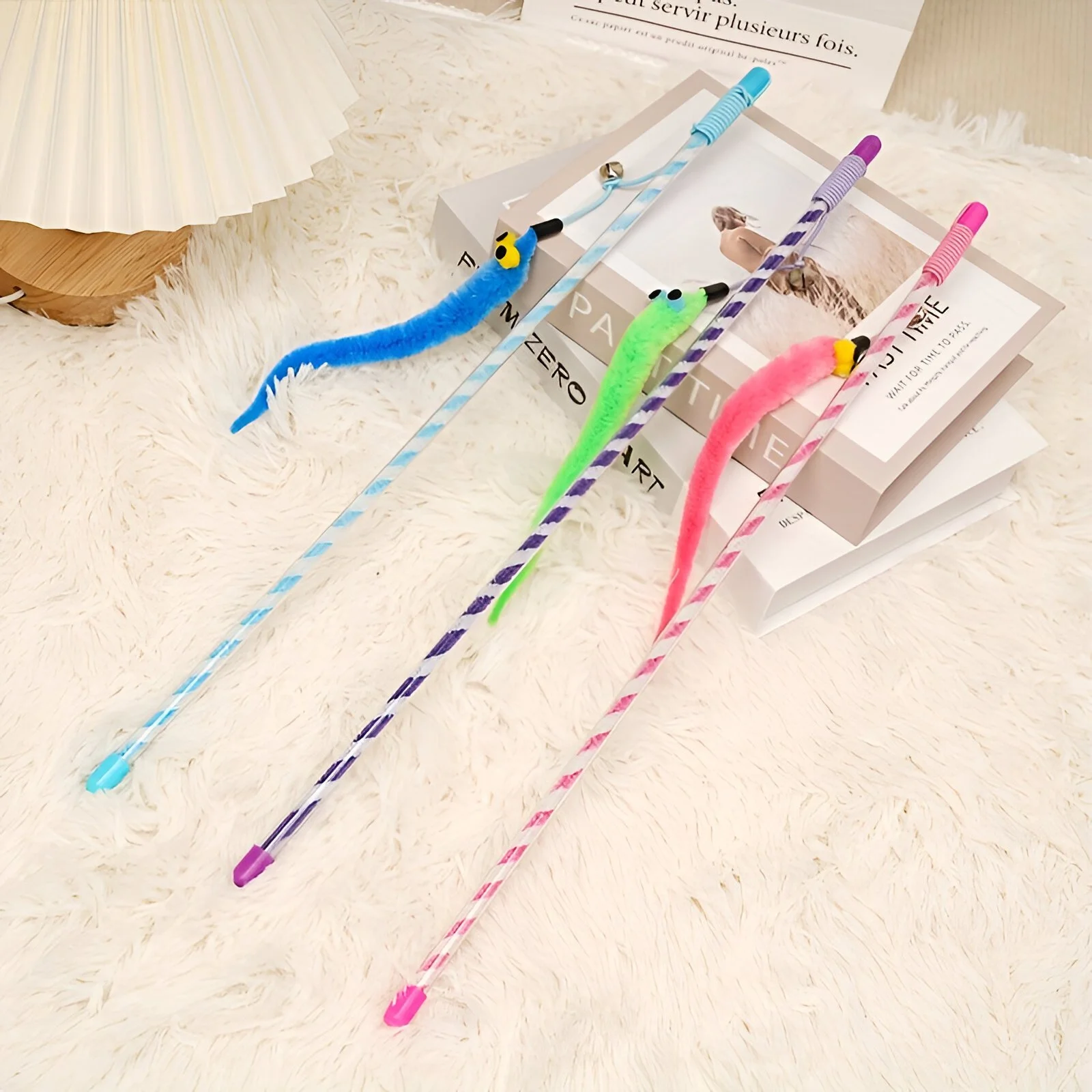
A satisfying hunt has stages. The cat notices movement, stalks it, waits, chases, pounces, grabs, bites, kicks, and then settles. You do not need to make every play session theatrical, but you do need to include the final part: the catch. Without that payoff, some cats become more wound up after play, not calmer.
Use this simple pattern:
- Start slow. Move the toy along the edge of a wall, behind a chair leg, or under a paper bag.
- Let the cat watch. Do not force the toy into their face.
- Make one short escape. Move the toy away from the cat, not toward them.
- Let them pounce.
- Let them hold the toy for 20 to 60 seconds.
- End with a small treat or meal if the session happens near feeding time.
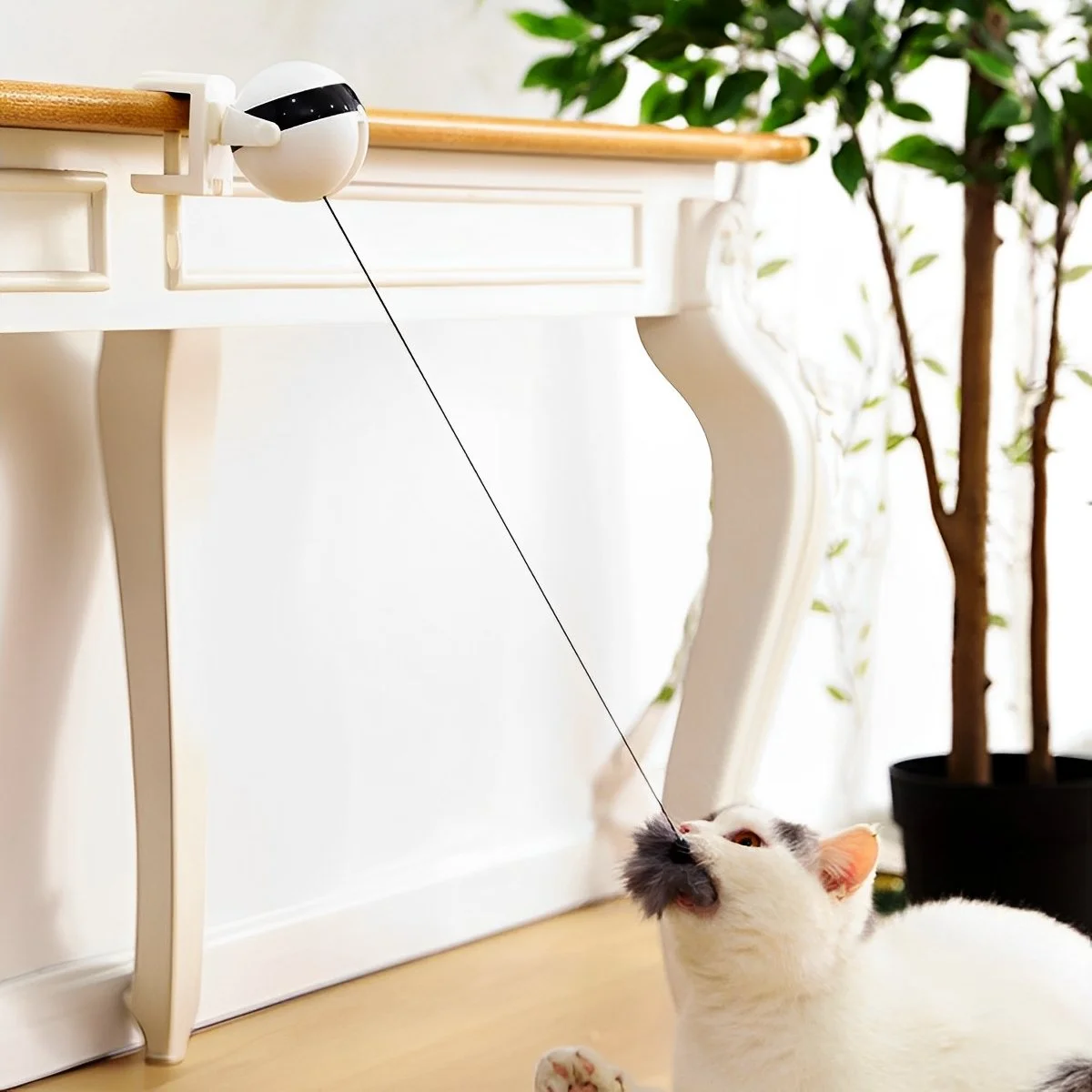
This is why laser pointers can be tricky. They create exciting movement, but the cat can never grab the red dot. If you use a laser, always end by pointing it to a physical toy or treat the cat can actually catch. The chase is fun, but the catch is what closes the loop.
For cats that seem "too lazy" to chase, lower the speed. Many people move toys like a human trying to entertain another human. Cats often prefer prey-like hesitation: a twitch, a freeze, a tiny move, another freeze, then a sudden dash. The pause is what builds attention. If your cat crouches, stares, and wiggles before pouncing, the game is working.
The best sessions are short. Five focused minutes with a real catch beats twenty minutes of random waving. If your cat walks away, do not keep pushing. Put the toy away and try again later. Consistency matters more than intensity.
2. Rotate Toys Like They Are New Again
Most cats do not need more toys. They need fewer toys visible at one time. When everything is always on the floor, nothing feels special. A toy that is available every day becomes part of the room. A toy that disappears for a week and returns in a different place can feel interesting again.
The simplest rotation system uses three groups:
- active toys for this week
- stored toys for later
- damaged or boring toys to repair, clean, or retire
Keep three to five toys out at a time. Put the rest in a sealed box, drawer, or bag. Once a week, swap the visible set. Do not just change the toy; change the location. A crinkle ball in the hallway is not the same experience as a crinkle ball under a chair. A kicker toy on the living room rug is not the same as one half-hidden beside a cardboard box.
Rotation also helps you learn what your cat actually likes. If every toy is on the floor, it is hard to tell what matters. When only a few toys are available, you can see patterns: maybe your cat likes soft toys after dinner, rolling balls in the morning, and cardboard puzzles on quiet afternoons. That tells you how to buy smarter and avoid the pile of ignored toys that every cat owner eventually collects.
Clean or refresh toys during rotation. Fabric toys can hold stale smells. Plastic toys can collect dust. Catnip toys lose strength after repeated exposure. If a toy looks safe but smells flat, seal it with a small amount of fresh catnip or silvervine for a short time before putting it back into the rotation.
There is one more benefit: rotation prevents overstimulation. Some cats get too excited when every scent toy, sound toy, and chase toy is available at once. A smaller weekly set makes the environment easier to read. The cat knows what is available today, uses it, then gets a new set later.
3. Use Scent as a Play Switch
Scent is one of the most underused tools in indoor cat enrichment. People often think of catnip as a cute extra, but for responsive cats it can work like a switch: "This object is worth investigating now."
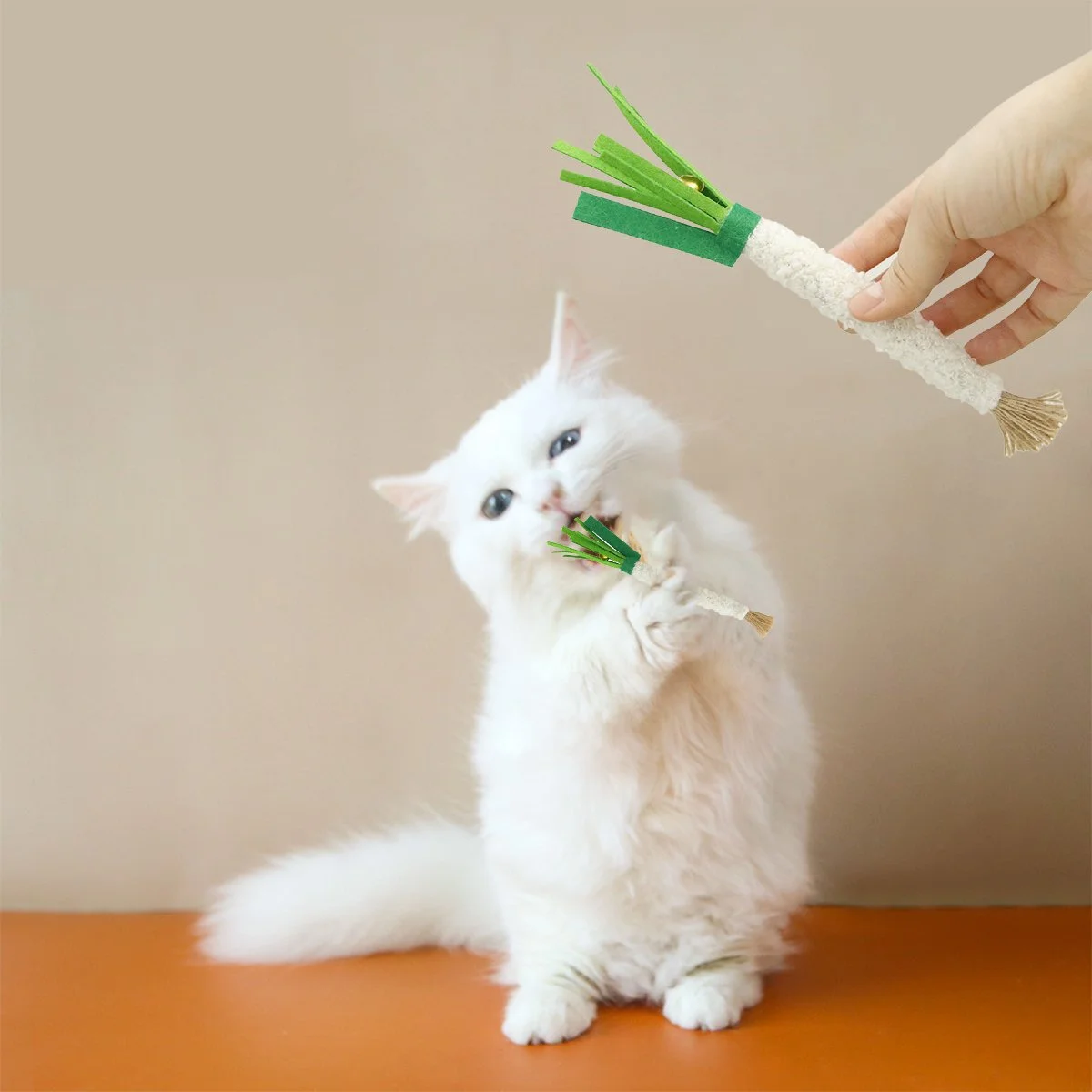
Not every cat responds to catnip. Some cats react strongly, some relax, some roll, some become playful, and some do nothing at all. That does not mean the toy failed. Catnip response depends partly on the individual cat. Kittens may not respond until they are older, and some adult cats simply are not interested. Silvervine, valerian, and other scent-based cat toys may work for cats that ignore traditional catnip.
The important part is timing. Do not leave scent toys out all day, every day. Constant exposure makes them less interesting. Use scent before a play window, not as permanent room decoration.
Try this:
- Offer a scent toy for 5 to 10 minutes.
- Let the cat rub, lick, roll, bat, or kick.
- Remove it before the cat is completely bored.
- Put it away in a sealed container.
- Bring it back a few days later.
Scent also pairs well with motion. A stationary catnip object can interest some cats, but a scent toy that rolls, spins, or moves slightly gives the cat more to do. That is especially useful for cats that need gentle stimulation rather than a full sprinting game.
Watch your cat's response. If catnip makes them frantic, use it earlier in the day, not at bedtime. If it makes them relaxed, it may be better after an active play session. If it does nothing, do not force it. Your cat may prefer sound, texture, food puzzles, height, or human-led play.
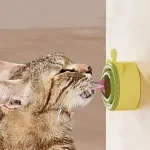
This is where the related product fits naturally. A rotating catnip licking ball is not a magic boredom cure, but it can become one useful piece in a weekly rotation. It gives scent, mouth contact, and small movement in one compact object. That makes it better suited for short sessions than for permanent free access.
4. Make Food Take a Little Work
A food bowl is convenient for humans, but it is not very interesting for cats. Many indoor cats walk to the bowl, eat quickly, and then have nothing else to do. If food is the most exciting part of the day, that excitement ends in under a minute.
Food puzzles change the rhythm. They turn eating into searching, batting, sniffing, and solving. That does not have to mean buying a complicated feeder. You can start with a muffin tin, an egg carton, a towel fold, a cardboard tube with treats inside, or a shallow box with paper balls and a few pieces of kibble hidden between them.
The rule is simple: make the first version easy. If your cat has never used a puzzle, do not start with a hard one. Put treats where they are visible. Let the cat win quickly. Confidence matters. Once the cat understands the game, you can make it slightly harder by covering some treats, spreading them farther apart, or using a puzzle with smaller openings.
Food work is especially helpful for cats that beg from boredom. A cat that cries for food at 4PM may not need more calories. They may need something to do with the food they already receive. Splitting a portion of the daily meal into a puzzle gives the cat an activity without increasing total intake.

If your cat eats wet food, you still have options. Use a lick mat, spread food thinly on a shallow plate, or divide it into several small locations so the cat has to move between them. For dry food, scatter feeding works well: toss a few pieces down a hallway or place small amounts in safe hiding spots. This mimics the search part of hunting without needing a live target.
Do not make food puzzles the only feeding method overnight if your cat is anxious, elderly, or easily frustrated. Start during the day when you can observe. The point is enrichment, not stress.
5. Give Your Cat a Vertical Route
Floor space is only one layer of a cat's world. Height changes everything. A cat on the floor is sharing space with shoes, vacuum cleaners, dogs, toddlers, and moving legs. A cat on a shelf, perch, or cat tree can watch without being in the middle of the traffic.
Vertical space is not just entertainment. It is control. A cat that can choose height often feels safer and more confident. That confidence can reduce boredom-driven conflict because the cat is not stuck using only the floor to move, rest, and observe.
Start with what you already have. Clear the top of a sturdy bookshelf. Move a chair near a window. Add a blanket to a safe ledge. Create a path from the floor to the perch that does not require a risky jump. If you use a window perch, check the suction cups or brackets often. A perch that falls once can make a cat avoid it forever.
The best vertical spots have a reason to exist. A perch facing a blank wall is not nearly as useful as one facing a window, bird feeder, street, balcony, or active room. Cats like observation. Even a quiet window can become interesting if sunlight moves across the floor or if outdoor sounds are audible.
Think in routes, not isolated objects. A cat tree is useful, but a cat tree connected to a windowsill, shelf, sofa back, and scratcher is better. The route gives the cat choices. They can climb, pause, look, scratch, descend, and return later. That is a small indoor territory instead of a single piece of furniture.
For multi-cat homes, vertical space becomes even more important. One cat may want the high perch. Another may prefer a lower shelf. Multiple levels reduce competition. If every desirable spot is at the same height, the boldest cat often controls all of it.
6. Schedule Play Around Your Cat's Real Clock
Cats often become most active when humans are trying to sleep or work. That is not because they are plotting against you. It is because their natural rhythm leans toward short bursts around dawn and dusk, with rest between. If the household ignores that rhythm all day, the energy shows up at the worst possible time.
Two short sessions usually work better than one long one:
- morning: 5 to 10 minutes before breakfast
- evening: 10 to 15 minutes before the final meal or bedtime snack
The morning session gives the cat a clean start. Instead of waking up, eating, and going straight back to boredom, the cat gets a small hunt first. The evening session is the important one for night behavior. A cat that has chased, caught, eaten, groomed, and settled is more likely to sleep through the first part of the night.
Make the evening session predictable. Use the same broad pattern: active chase, catch, short wrestle, food, lights down. Cats learn routines quickly. If the routine is reliable, some cats begin saving energy for that play window instead of spending it on random chaos.
Do not wait until your cat is already wild. If the zoomies begin at 11PM, start the structured session at 9:30PM or 10PM. You want to drain the pressure before it explodes. Once the cat is sprinting across the room, they are harder to redirect.
Also avoid accidentally rewarding nighttime demands. If your cat wakes you at 3AM and you immediately play, feed, or give attention, the cat may learn that waking you works. Build the play and food earlier, then keep the night boring. That does not mean ignoring distress, illness, or unusual behavior. It means not teaching a healthy bored cat that screaming at the bedroom door is the best entertainment system in the house.
7. Create a Solo-Play Station for When You Are Busy
Human-led play is important, but no one can entertain a cat all day. A good indoor setup gives the cat safe things to do when you are working, sleeping, or out of the house.
A solo-play station does not need to be fancy. Pick one corner, hallway section, window area, or spare room zone and make it changeable. The station can include:
- a cardboard box with two entrances
- a safe scratcher
- one rolling or batting toy
- one scent toy used only during rotation
- a small food puzzle
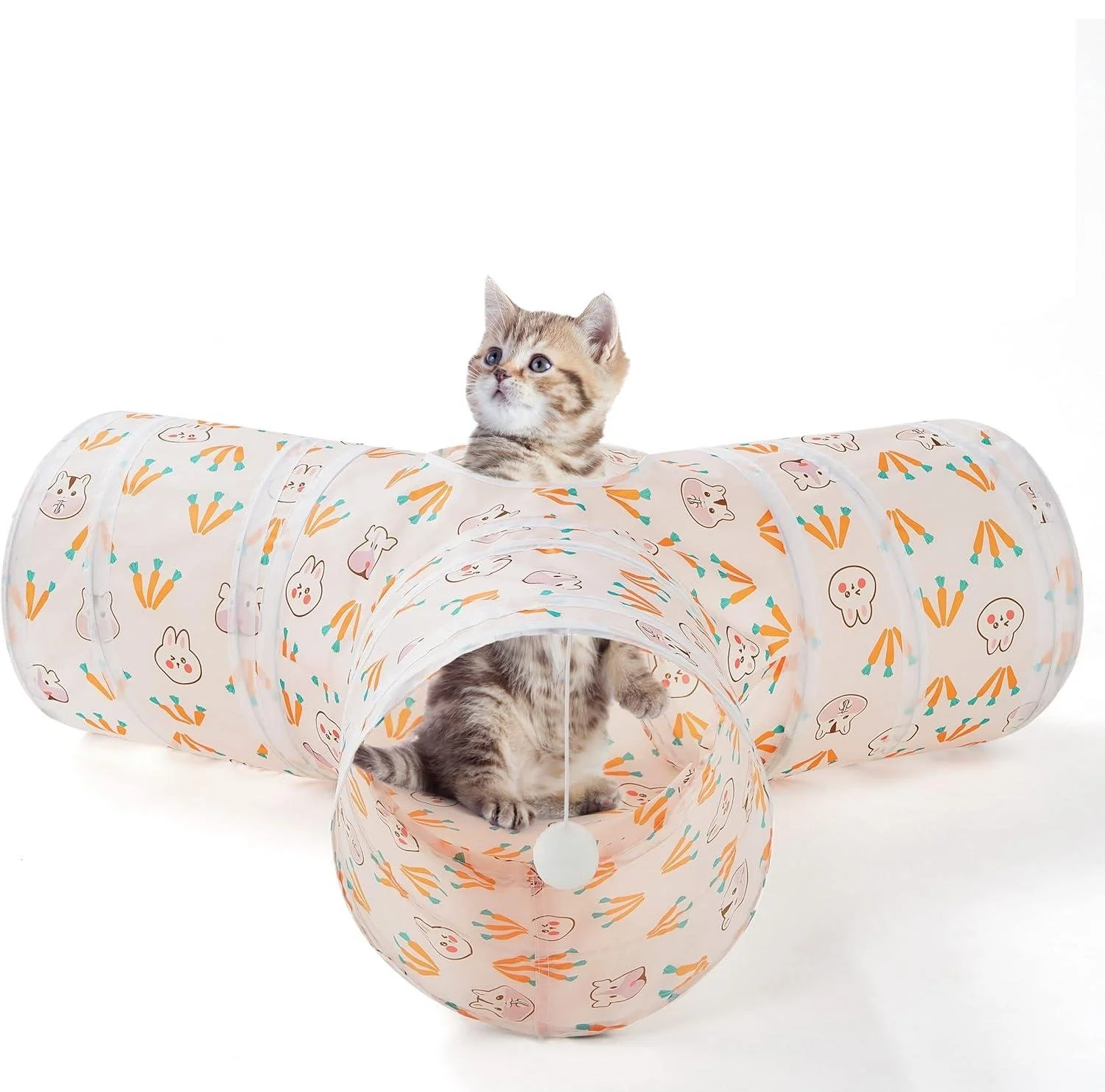
- a tunnel or paper bag with handles removed
- a washable mat or blanket
The key is not leaving everything there forever. Change one element every few days. Turn the box sideways. Move the scratcher. Hide a toy inside the tunnel. Put the food puzzle near the window instead of the kitchen. Cats notice small changes more than people think.

For safety, inspect every solo toy before leaving it out. Remove strings, loose feathers, cracked plastic, bells that can come off, and anything your cat tries to chew apart. Wand toys should be stored after supervised play. Elastic cords and long strings are not solo-play items.
If your cat is cautious, introduce the station slowly. Sit nearby and let them explore. Toss one treat into the box. Touch the scratcher with your fingers. Roll a ball once and stop. Do not turn the station into a performance. Let the cat decide it belongs to them.
Solo play is not a replacement for interaction. It is the bridge between sessions. It gives the cat something acceptable to do instead of inventing their own job, which might be knocking everything off the desk.
A Simple Daily Enrichment Plan
If the advice above feels like a lot, start with a small daily plan. Do it for one week before buying anything new.
Morning
Spend 5 to 10 minutes on a chase-and-catch game before breakfast. Use a wand, rolling toy, or soft toy your cat can grab. End with the meal or a small portion of it.
Midday
Leave one safe solo-play station available. Put a toy in a different place than yesterday. If your cat uses a window perch, make sure that route is clear.
Late afternoon
Use a food puzzle for part of dinner or scatter a small portion of dry food in a safe room. The goal is not difficulty; it is movement and searching.
Evening
Run the main play session. Make it the most energetic one of the day. Include stalking, chasing, catching, and a final wrestle with a soft toy.
Before bed
Offer a calm activity: a lick mat, a scent toy for a few minutes, or a quiet perch. Keep the house boring after that. No exciting play at 3AM unless something is truly wrong.
This plan works because it gives the cat several small outlets instead of expecting one big play session to carry the whole day. Indoor cats do not need constant entertainment. They need repeated chances to act like cats.
How to Tell Whether It Is Working
The first sign of success is not that your cat suddenly becomes hyperactive. A well-enriched cat often looks calmer. They sleep more deeply, interrupt you less, and use their energy in more predictable windows. The goal is not to create a cat that plays all day. The goal is to create a cat that has satisfying things to do when they are awake.
Track three things for one week:
- night waking
- destructive or attention-seeking behavior
- voluntary use of play stations, perches, puzzles, or scratchers
If the plan is working, you should see small shifts before dramatic ones. Maybe your cat still wakes up at night, but it happens once instead of four times. Maybe they still scratch the sofa occasionally, but they also use the scratcher after evening play. Maybe they do not love the food puzzle yet, but they spend two minutes investigating it instead of ignoring it completely. Those are real improvements.
Do not judge a new enrichment setup after one attempt. Cats are cautious learners. Some need repetition before a new object feels safe. A toy that fails on Monday may work on Thursday if it appears in a different room, at a different time, or after a successful hunt game. This is why rotation and observation matter more than buying something expensive.
Also watch for the opposite problem: overstimulation. If your cat gets rougher, bites more, or seems unable to settle after play, shorten the session and make the ending clearer. Use a physical catch, then food, then quiet. A good routine has an exit ramp. Without one, active cats can stay stuck in chase mode and redirect that energy to hands, ankles, or other pets.
After two weeks, keep what works and remove what does not. The best enrichment system is not the most elaborate one. It is the one you can repeat without exhausting yourself, because a realistic routine beats an impressive setup that only happens once.
Product Spotlight
360 Degree Rotating Catnip Licking Ball Toy (#1804128)
This toy is useful when it is treated as a short-session enrichment object, not as a permanent floor toy. The rotating motion gives the cat something to investigate with the mouth and paws. The catnip adds scent interest for cats that respond to it. The compact format makes it easy to bring out during a weekly toy rotation or before a calm solo-play window.
Best use: offer it for 5 to 10 minutes, then put it away. Try it after a chase game, near a scratcher, or inside a solo-play station. If your cat ignores it the first time, do not assume it failed. Move it to a new location, refresh the scent later, and test again during a different time of day.
When Enrichment Is Not Enough
Boredom is common, but it is not the answer to everything. If your cat suddenly changes behavior, enrichment should happen alongside closer observation, not instead of it.
Call a veterinarian or behavior professional if your cat:
- stops eating or drinking normally
- hides for long periods when they did not before
- avoids the litter box
- cries while urinating
- grooms one area until the fur thins
- becomes aggressive without an obvious trigger
- seems stiff, painful, or reluctant to jump
Indoor entertainment can improve quality of life, but it cannot fix pain, illness, or severe stress by itself. The best approach is practical: enrich the environment, track the pattern, and rule out medical causes when the behavior does not match your cat's normal personality.
Browse Cat Enrichment products