Article
7 Ways to Use a Hair Claw Clip (Even If Your Hair Feels Too Short or Too Thin)
Quick Answer
7 Ways to Use a Hair Claw Clip (Even If Your Hair Feels Too Short or Too Thin): quick answer
A hair claw clip is one of the fastest ways to get hair off the face without building a tight ponytail, slick bun, or heat-styled updo. It works by...
- Topic: Styling.
- Related product category: hair-accessories.
- This article keeps the main answer in the article copy and places relevant product context inside the guide.
Quick Answer: Why Claw Clips Work So Well
A hair claw clip is one of the fastest ways to get hair off the face without building a tight ponytail, slick bun, or heat-styled updo. It works by holding a twist, fold, coil, or small section of hair between two rows of teeth. The spring provides tension, but the real hold comes from matching the clip size and technique to your hair.
That is why claw clips feel easy for some people and impossible for others. Thick hair can make small clips pop open. Fine hair can slide out of large clips. Short hair may not have enough length for a full twist. Freshly washed hair can be too slippery. Curly or textured hair may need a different placement than straight hair.
The Cowboy Boots Print Acrylic Hair Claw Clip (#p-006201, $13.49) is best positioned as a statement everyday clip: functional enough for quick styling, visible enough to work as an accessory, and affordable enough to test whether claw clips fit your routine.
The key is not learning one perfect viral style. The key is learning a few small systems:
- Use a full twist when you have enough length.
- Use a half-up style when the full twist slips.
- Clip hair to hair for thin hair.
- Use the clip like a barrette for short hair.
- Avoid styles that pull painfully at the scalp.
Dermatology guidance warns that hairstyles that pull tightly and repeatedly can contribute to breakage and traction-related hair loss. A claw clip can be gentler than a tight ponytail when used loosely, but it is not automatically damage-free. If the style hurts, pulls at the hairline, or gives you a headache, loosen it or choose another placement.
This guide covers seven practical claw clip styles, how to choose the right clip, and the mistakes that make clips slide, pull, or break.
Before You Style: Choose the Right Clip Size
Most claw clip problems are size problems.
A clip that is too small cannot close around the hair. It strains, pops open, or holds only the outer layer while the center slips out. A clip that is too large has the opposite issue. It closes around empty space and never grips the hair bundle firmly enough.
Use this basic sizing guide:
| Hair Type or Length | Better Clip Choice | Why |
|---|---|---|
| Short bob | Small to medium claw, mini clips, side clips | Full twist usually needs more length |
| Shoulder-length hair | Medium claw | Enough grip without too much empty space |
| Long fine hair | Medium claw or two smaller clips | Large clips may slide |
| Long thick hair | Large claw with strong spring | Small clips pop open |
| Curly hair | Wider teeth and enough space | Tight teeth can snag curls |
| Second-day hair | Medium or large clip | Texture improves grip |
| Freshly washed silky hair | Smaller clip or added texture | Smooth hair slips easily |
Material matters too. Acrylic clips are firm and can look polished, especially with printed designs. Plastic clips may feel lighter. Metal clips can look sleek but may feel heavier or create sharper pressure depending on construction. The best clip is the one that closes fully without crushing the hair or digging into the scalp.
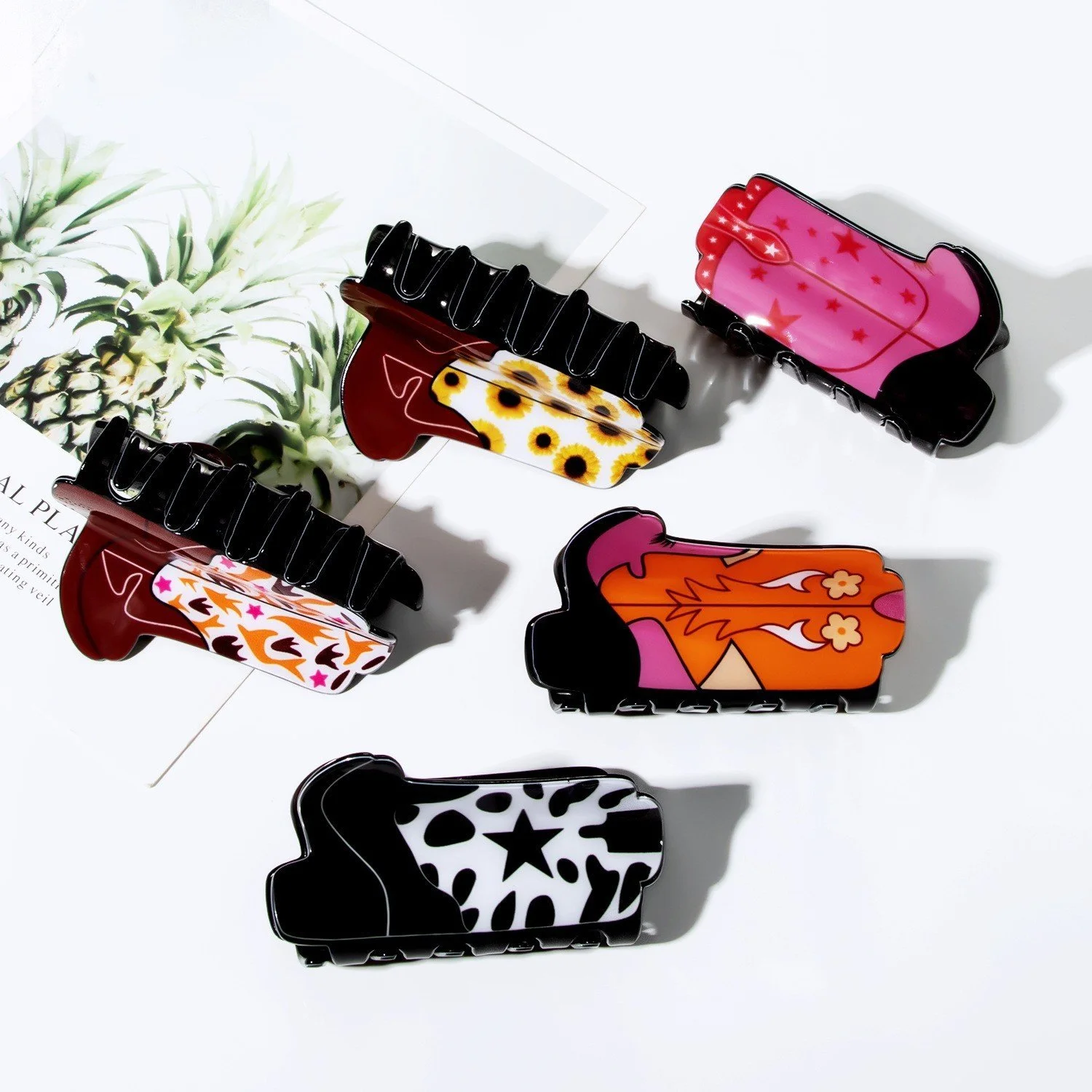
The Cowboy Boots Print Acrylic Hair Claw Clip is a statement piece, so it works best when the clip remains visible: half-up styles, side sweeps, French-twist-inspired looks, and casual low twists. If your hair is very thick, test whether the clip can close fully around a full twist. If not, use it for partial styles instead of forcing it.
Style 1: The Classic Twist
Best for: medium to long hair, second-day hair, quick everyday styling.
This is the style most people picture when they think of a claw clip.
How to do it:
- Gather hair at the back of the head as if making a low ponytail.
- Twist the hair once or twice.
- Fold the twist upward against the back of the head.
- Open the clip and place it over the folded section.
- Make sure the teeth catch both the twist and some hair near the scalp.
The most common mistake is over-twisting. If you twist the hair into a tight rope, the bundle becomes thick and stiff. The clip has to fight the twist instead of holding it. A looser twist usually holds better and feels more comfortable.
For fine hair, use a medium clip rather than a large one. For thick hair, use a larger clip and avoid trying to capture every strand on the first attempt. A few loose pieces around the face can make the style look intentional instead of messy.
Hair-friendly note: the style should feel secure, not tight. If you feel pulling at the crown or hairline, redo it lower or looser.
Style 2: The Half-Up Clip
Best for: fine hair, medium hair, layered hair, short-to-medium lengths.
The half-up clip is often easier than a full twist because it uses less hair. It also lets the clip function as an accessory rather than hiding inside a large bundle.
How to do it:
- Take the top section of hair from the temples back.
- Smooth it lightly with your fingers.
- Twist once at the crown or upper back of the head.
- Clip the twist in place.
- Let the lower half of the hair fall naturally.
This style works especially well on second-day hair because the top section is often the part that looks flat, oily, or in the way first. Clipping it back gives the face a cleaner frame while keeping length visible.
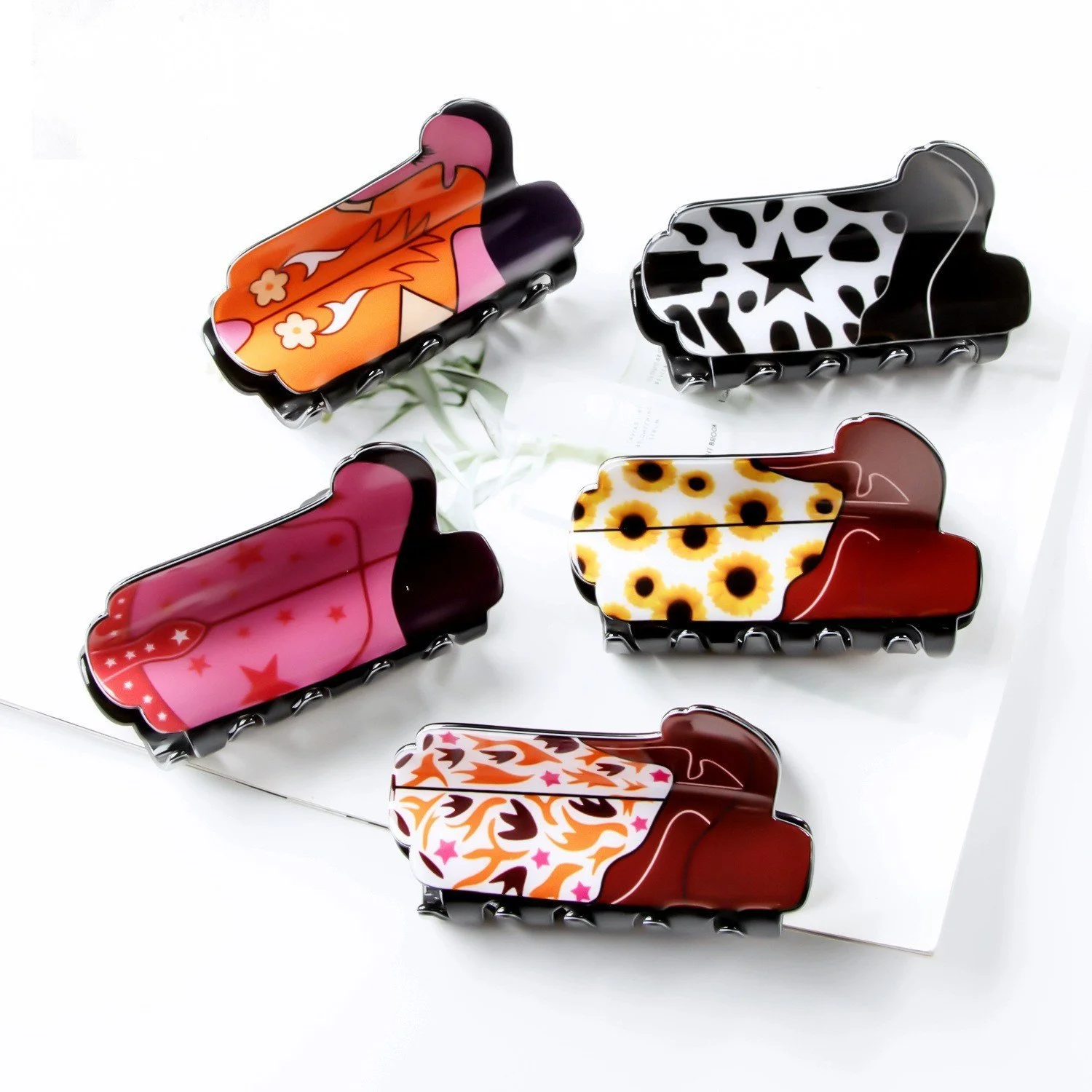
For thin hair, keep the section small. Too much hair in a loose half-up section can slide down. For thick hair, take a wider section and use a stronger spring.
The Cowboy Boots Print Acrylic Hair Claw Clip works well here because the print stays visible. Instead of looking like a hidden utility clip, it becomes the main accessory.
Style 3: The Thin-Hair Anchor
Best for: fine hair, slippery hair, low-density hair.
Thin hair often struggles with claw clips because there is not enough bulk for the teeth to grip. The fix is to create an anchor.
How to do it:
- Gather hair low at the nape.
- Twist the hair once.
- Fold the twist into a small coil or loop.
- Place the clip so one side catches the coil and the other side catches hair close to the scalp.
- Gently tug the top section to loosen tension without loosening the clip.
The goal is to clip hair to hair, not just squeeze a thin rope. If the clip only holds the twist and does not catch the base hair, the style slides out.
If your hair is very silky, add a small amount of dry shampoo, texture spray, or a light wave before clipping. Do not overload the hair with sticky product. Too much product can make removal rough.
Another option is using two smaller clips instead of one large clip. One clip holds the lower section, and the statement clip sits above it for the visible style.
Style 4: The French Twist Substitute
Best for: medium to long hair, office looks, dinner, weddings, video calls.
A real French twist often requires pins, smoothing, and practice. A claw clip version gives a similar vertical shape with less effort.
How to do it:
- Gather hair low at the back.
- Sweep the hair slightly to one side.
- Twist the length upward vertically.
- Fold the ends inward or let them fan out at the top.
- Clip across the twist so the teeth catch the roll and base hair.
This style looks more polished than the casual twist because the shape is vertical. It can work for dressier settings while still taking less than two minutes.
For layered hair, let shorter pieces fall around the face. Trying to force every layer into the twist can create pulling. For thick hair, use a large clip or divide the hair into two stacked twists. For fine hair, keep the twist lower and tighter at the base.
The clip should sit comfortably against the back of the head. If it pokes when you sit against a chair or car headrest, move it slightly higher or lower.
Style 5: The Short-Hair Side Sweep
Best for: bobs, lobs, short layers, growing-out bangs.
Short hair usually cannot make a full claw clip bun, but it can use a claw clip as a statement barrette.
How to do it:
- Choose the side where hair falls into your face.
- Sweep that section back as if tucking it behind the ear.
- Open the claw and place it diagonally behind the temple or above the ear.
- Catch enough hair for grip, but do not pull the hairline tight.
- Let the rest of the hair stay loose.
This is one of the best uses for a printed clip. The clip is not pretending to hold a full updo. It is doing one clear job: keeping the front section back while adding visual interest.
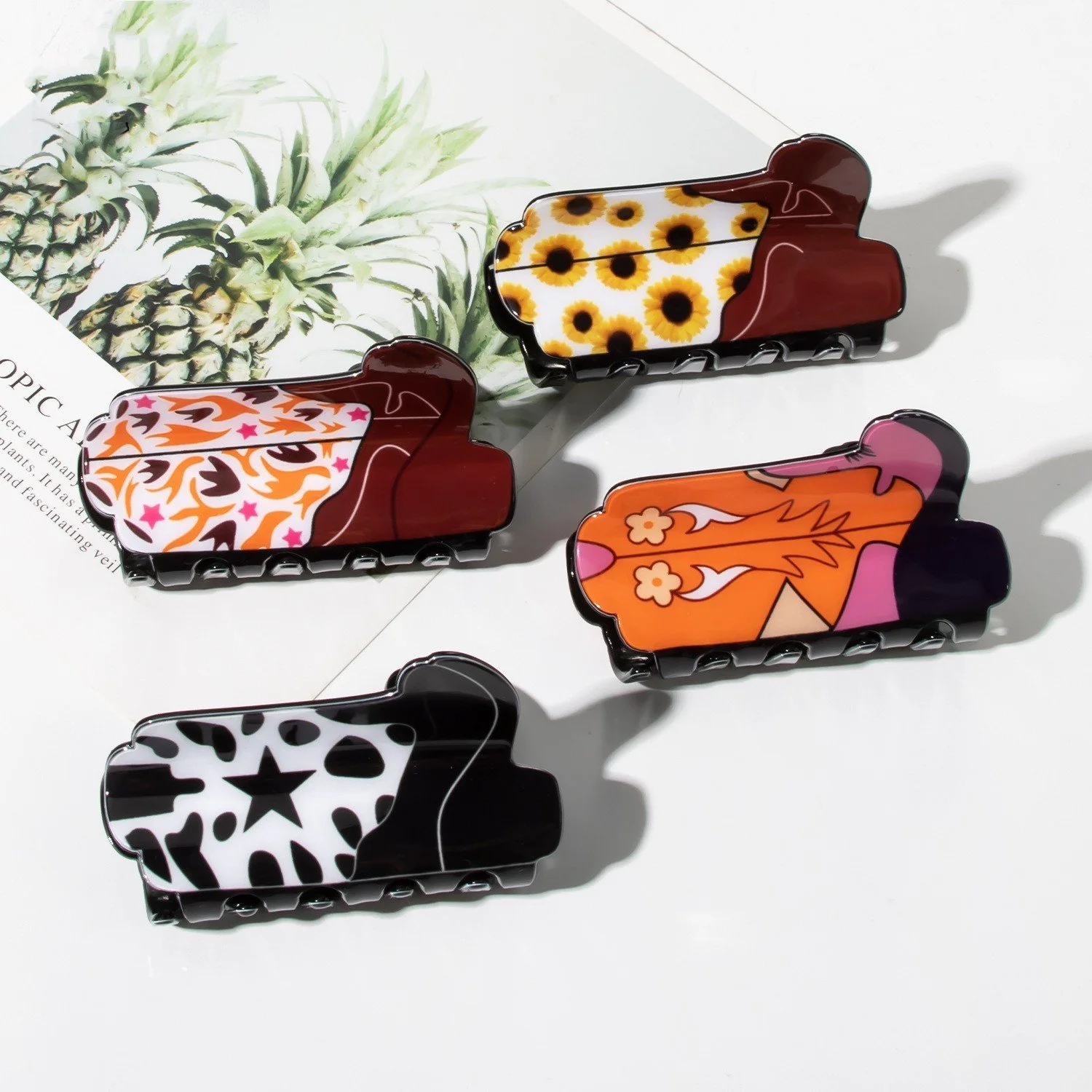
If the clip slides, try crossing two small sections before clipping them. That creates friction. If the clip feels too heavy, use it lower behind the ear instead of high near the temple.
Style 6: The Low Clip Bun
Best for: medium hair, long hair, errands, kitchen, work-from-home days.
The low clip bun is softer than a tight bun and often more comfortable than a ponytail.
How to do it:
- Gather hair at the nape of the neck.
- Twist the hair into a loose coil.
- Tuck the ends under the coil.
- Clip across the bun so the teeth catch both bun and base hair.
- Loosen the crown slightly for comfort.
This style is practical because it keeps hair off the neck without pulling the crown upward. It is useful for cooking, cleaning, skincare, workouts, and hot weather.
The mistake is making it too tight. A low clip bun should not feel like a ballet bun. If you feel scalp tension, loosen the twist or move the clip slightly.
For fine hair, a smaller clip often works better. For thick hair, use a larger clip or leave the ends loose instead of forcing them under the bun.
Style 7: The Emergency Clip
Best for: gym bags, car consoles, desk drawers, kitchens, travel.
This is the style that made claw clips useful before they became trendy again.
How to do it:
- Gather hair quickly.
- Twist once.
- Clip the twist wherever it naturally lands.
- Fix only the pieces that bother you.
The emergency clip is not about perfection. It is about function. Hair is in your face. You need it out of the way. A claw clip solves that faster than searching for a hair tie.
Keep one clip in the places where hair becomes a problem:
- Bathroom counter.
- Gym bag.
- Car console.
- Desk drawer.
- Kitchen drawer.
- Travel pouch.
- Beach bag.
This is also where lower-tension styling matters. A quick loose clip usually pulls less than a tight elastic ponytail. That can be helpful if your scalp gets sore from repeated ponytails.
Hair Type Troubleshooting
If Your Hair Is Too Short
Stop trying to do long-hair claw clip styles. Use the clip as a side accessory, bang holder, mini half-up clip, or small nape anchor. Short hair needs section control, not full updo control.
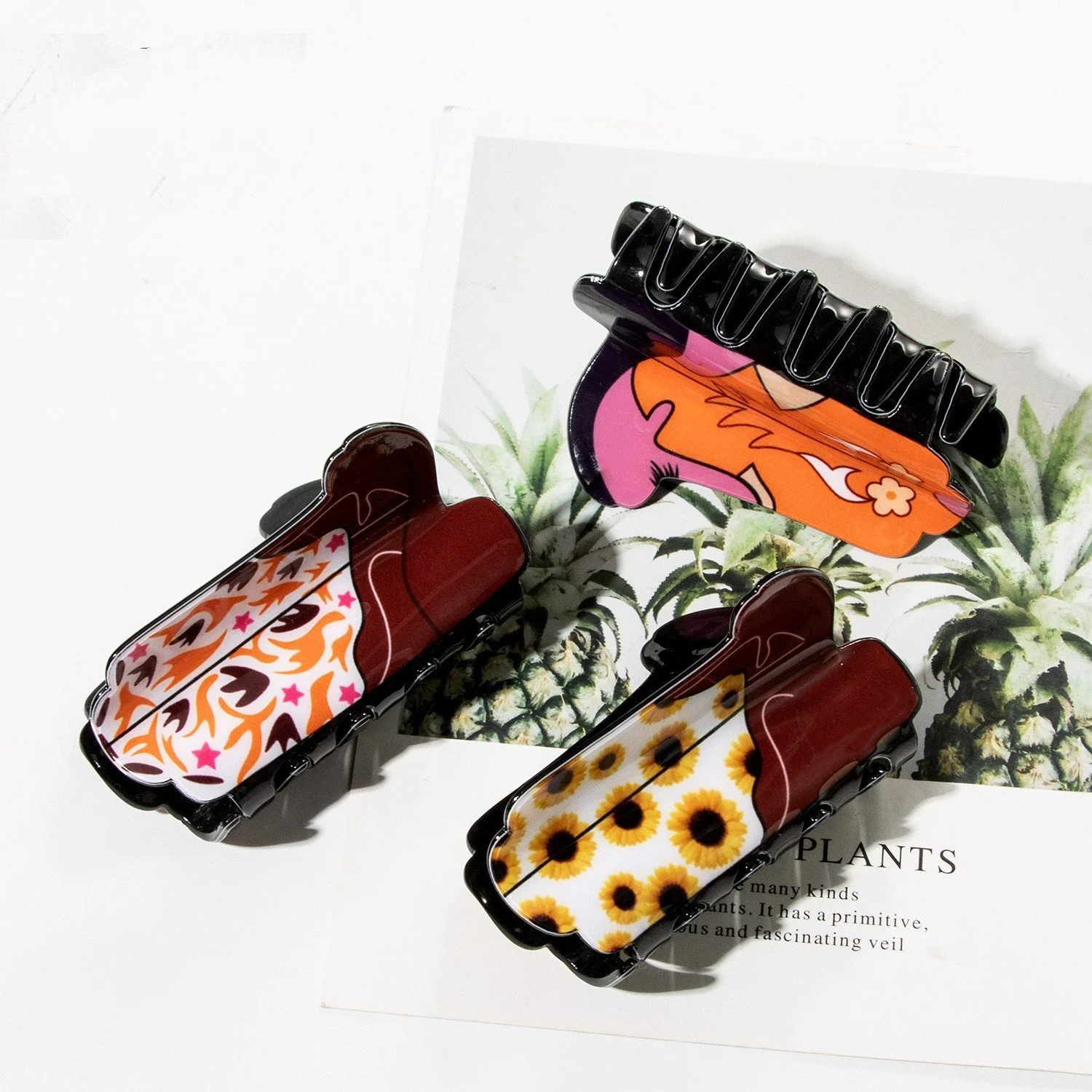
If Your Hair Is Too Thin
Use a smaller clip, create a coil, add light texture, or use two clips. Avoid oversized clips that close around air. Grip comes from contact.
If Your Hair Is Too Thick
Use a larger clip with a strong spring and wider teeth. Do not force all the hair into one twist if the clip cannot close. Try a half-up style, two stacked clips, or a low bun with loose ends.
If Your Hair Is Curly
Avoid clips with tight teeth that snag. Place the clip into the shape of the curl pattern instead of brushing everything flat first. Use the clip to hold volume, not crush it.
If Your Hair Slips Out
Try second-day hair, dry shampoo, texture spray, a smaller clip, or a lower placement. Freshly washed silky hair often needs friction.
If the Clip Hurts
The style is too tight, too heavy, or placed badly. Loosen it. Pain is not a sign of hold. AAD guidance on tight hairstyles is clear: repeated pulling can damage hair and contribute to traction-related hair loss.
Common Claw Clip Mistakes
Mistake 1: Using one clip for every style. Hair changes by style, wash day, humidity, and length. One clip may work for half-up styles but fail on a full twist.
Mistake 2: Clipping only the twist. The teeth need to catch some base hair near the scalp, or the clip slides.
Mistake 3: Pulling the hair too tight. A claw clip should reduce tension, not recreate a tight ponytail.
Mistake 4: Styling wet hair roughly. Wet hair can break more easily for many hair types. Handle it gently and avoid forcing a tight clip into wet strands.
Mistake 5: Sleeping in a hard acrylic clip. Some people can sleep in soft clips or loose setups, but hard clips can press into the scalp and cause discomfort. Remove it if it hurts.
Mistake 6: Ignoring weight. A large decorative clip can look good but feel heavy. If it drags down fine hair, use it as a half-up or side clip.
Mistake 7: Yanking the clip out. Open the claw fully before removing it. Pulling a closed clip through hair can cause tangles and breakage.
The Product: Cowboy Boots Print Acrylic Hair Claw Clip
The Cowboy Boots Print Acrylic Hair Claw Clip (#p-006201, $13.49) is best positioned as an everyday statement clip: practical enough for quick styling, decorative enough to be visible.
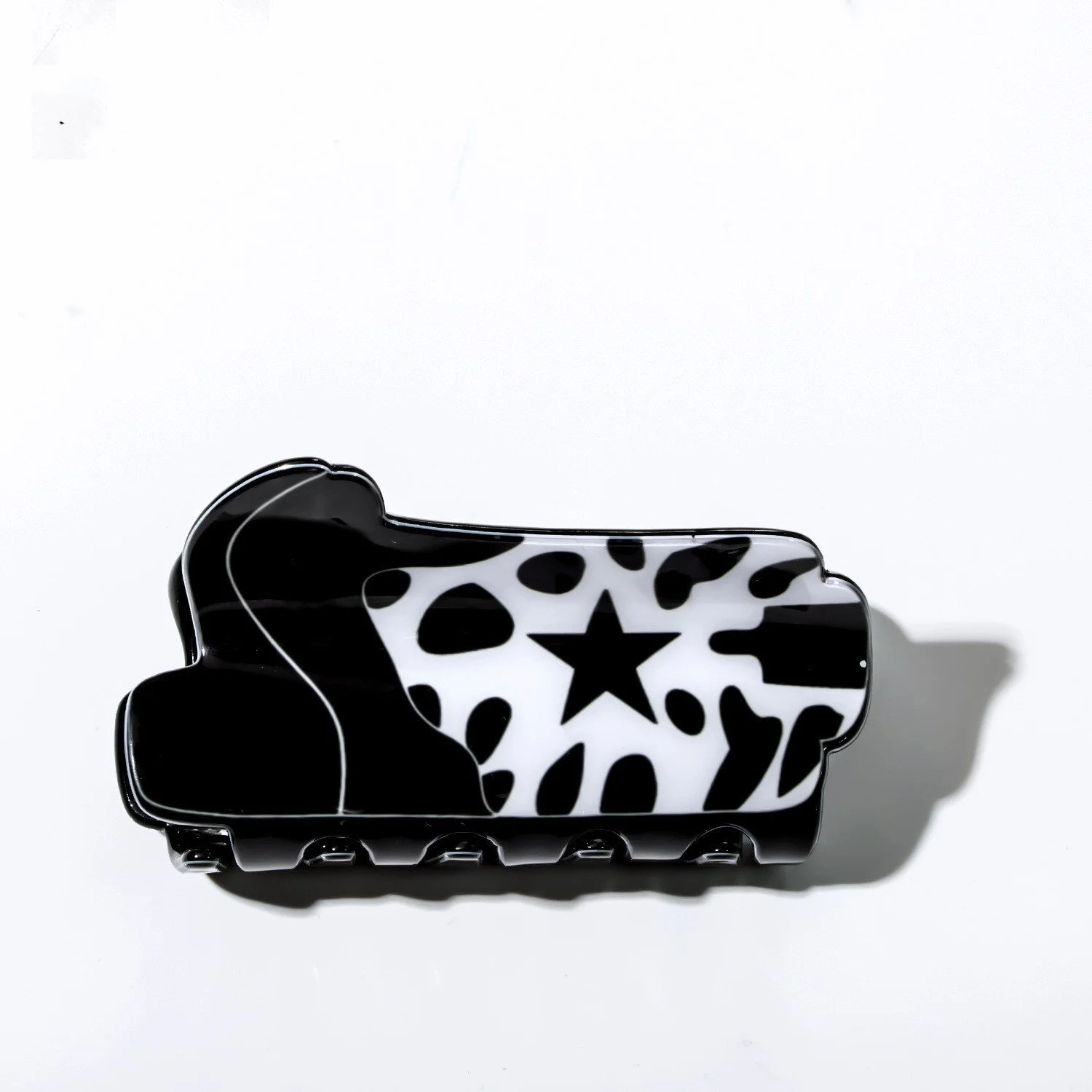
It fits these uses:
- Half-up style: the print stays visible and the clip does not need to hold all the hair.
- Short-hair side sweep: works as a functional accessory.
- Low twist: useful if hair density matches the clip size.
- Work-from-home or errands: fast styling without a tight elastic.
- Second-day hair: texture helps the teeth grip.
- Style accent: cowboy boot print turns a basic clip into an outfit detail.
The acrylic construction gives the clip a more structured look than a soft plastic basic. That is good for a visible accessory, but buyers should still pay attention to weight and spring strength. Fine hair may prefer partial styles. Thick hair may need to test whether the clip closes fully around a full twist.
The honest limit: one statement clip is not a full hair system. Most people who use claw clips regularly end up wanting at least two sizes: a larger utility clip and a smaller or decorative clip. This product is a good style test and everyday accessory, but it may not replace every hair tie, pin, or large clip you own.
When a Claw Clip Is the Wrong Choice
A claw clip is useful, but not every hair situation needs one.
Avoid tight clipping if your scalp already feels sore or your hairline is sensitive. Choose loose styles and rotate placement.
Avoid hard clips during sleep if they press into the scalp or neck.
Avoid using a clip to force very wet, tangled hair into place. Detangle gently first.
Avoid heavy clips if fine hair slides or feels pulled.
Avoid relying on a decorative clip for sports that involve jumping, running, or fast movement. A secure athletic hair tie or braid may work better.
Avoid any style that hurts. If a hairstyle gives you pain or a headache, it is too tight or poorly placed.
The right conclusion is specific: claw clips are excellent for fast, low-tension everyday styling. They are not automatically the best tool for sleep, sports, wet detangling, or every hair density.
FAQ
Are claw clips better than hair ties?
They can be gentler for some everyday styles because they do not require the same tight elastic tension. But they are not automatically damage-free. Fit, weight, placement, and tension matter.
Can claw clips damage hair?
Yes, if they pull, snag, crush, or are removed roughly. Use a clip that fits, avoid painful tension, open the clip fully before removing it, and rotate styles.
What claw clip works best for thin hair?
Thin hair often works better with small or medium clips, more teeth, and partial styles. Oversized clips may slide because there is not enough hair for the teeth to grip.
What claw clip works best for thick hair?
Thick hair usually needs a larger clip, stronger spring, and wider teeth. If one clip cannot close fully, use a half-up style or two clips instead of forcing it.
Can short hair use claw clips?
Yes. Use the clip like a barrette, side sweep, bang holder, or mini half-up accessory instead of trying to copy long-hair twist styles.
Why does my claw clip keep sliding?
The clip may be too large, the hair may be too freshly washed, or the teeth may not be catching base hair. Try a smaller clip, lower placement, light texture, or clipping a coil instead of a loose strand.
Can I sleep in a claw clip?
Only if it is comfortable and does not press into the scalp. Hard acrylic clips are often uncomfortable for sleep. If it hurts, remove it.
Is an acrylic claw clip heavy?
It can be heavier than thin plastic. That can feel secure on some hair and too much on fine hair. Use it for half-up or side styles if full updos feel heavy.
How do I make a claw clip look intentional?
Leave a few face-framing pieces loose, place the clip where it can be seen, avoid over-tightening, and match the style to the outfit. A printed clip works best when treated as an accessory.