Article
Camping Cookware 101: What to Bring for Your First Weekend Trip
Quick Answer
Camping Cookware 101: What to Bring for Your First Weekend Trip: quick answer
A first weekend camper does not need a full outdoor kitchen. The minimum useful camping cookware kit is one pot, one pan, one lid, and one safe way to...
- Topic: Outdoor Cooking.
- Related product category: camping-hiking.
- This article keeps the main answer in the article copy and places relevant product context inside the guide.
Quick Answer: What Does a Weekend Camper Actually Need?
A first weekend camper does not need a full outdoor kitchen. The minimum useful camping cookware kit is one pot, one pan, one lid, and one safe way to lift hot cookware. That combination can handle pasta, oatmeal, eggs, pancakes, soup, chili, rice, instant noodles, reheated leftovers, and hot water for drinks.
Everything beyond that should earn its place.
This is where many beginners overpack. They buy a large 10-piece or 12-piece camp cookware set because it feels complete. Then they discover that half the pieces are too small, too hard to clean, or too awkward to pack. The extra cups, plates, utensils, and tiny bowls look efficient in a product listing, but they can turn into a noisy pile of metal and plastic in the trunk.
The better first-trip strategy is a compact nesting cookware set. A nesting set stores the pot, pan, lid, and accessories inside one another, so the kit packs as one unit instead of five loose pieces. For car camping, this matters almost as much as cooking performance because a campsite already creates enough packing chaos: food bin, stove, fuel, cooler, chairs, bedding, water, trash bags, and lights.
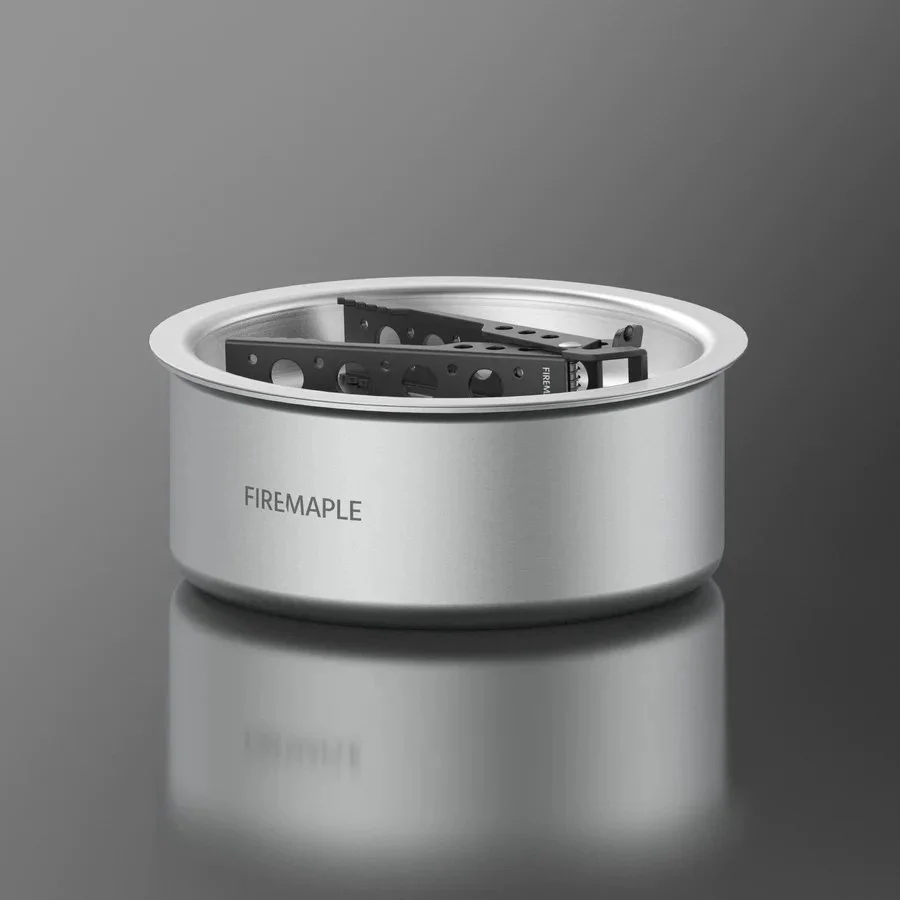
For a solo camper or couple, the Ultralight 4-in-1 Non-Stick Camping Cookware Set with Folding Pot Lifter (#p-004304) matches the right beginner pattern: one pot, one pan, one lid, and one folding lifter. It is not meant to feed a large group from scratch. It is meant to make the first weekend simpler, cleaner, and easier to pack.
This guide explains how to choose a beginner cookware kit, what to skip, how to build a two-night menu, and when a small 4-in-1 set is the right choice.
Rule 1: Start With the Menu, Not the Cookware Set
The biggest beginner mistake is shopping for cookware before deciding what will be cooked.
Camping meals are not restaurant meals. On a first trip, the goal is not to prove you can make everything outdoors. The goal is to eat well without turning dinner into a long cleanup project. A good first menu uses simple meals that fit the cookware you brought.
Start with these questions:
- How many people are eating?
- How many hot meals will you cook?
- Are you cooking from raw ingredients or reheating prepared food?
- Will breakfast be eggs, oatmeal, pancakes, or just coffee and snacks?
- Is water easy to access for cleanup?
- Is the campsite close to the car, or do you carry gear a long distance?
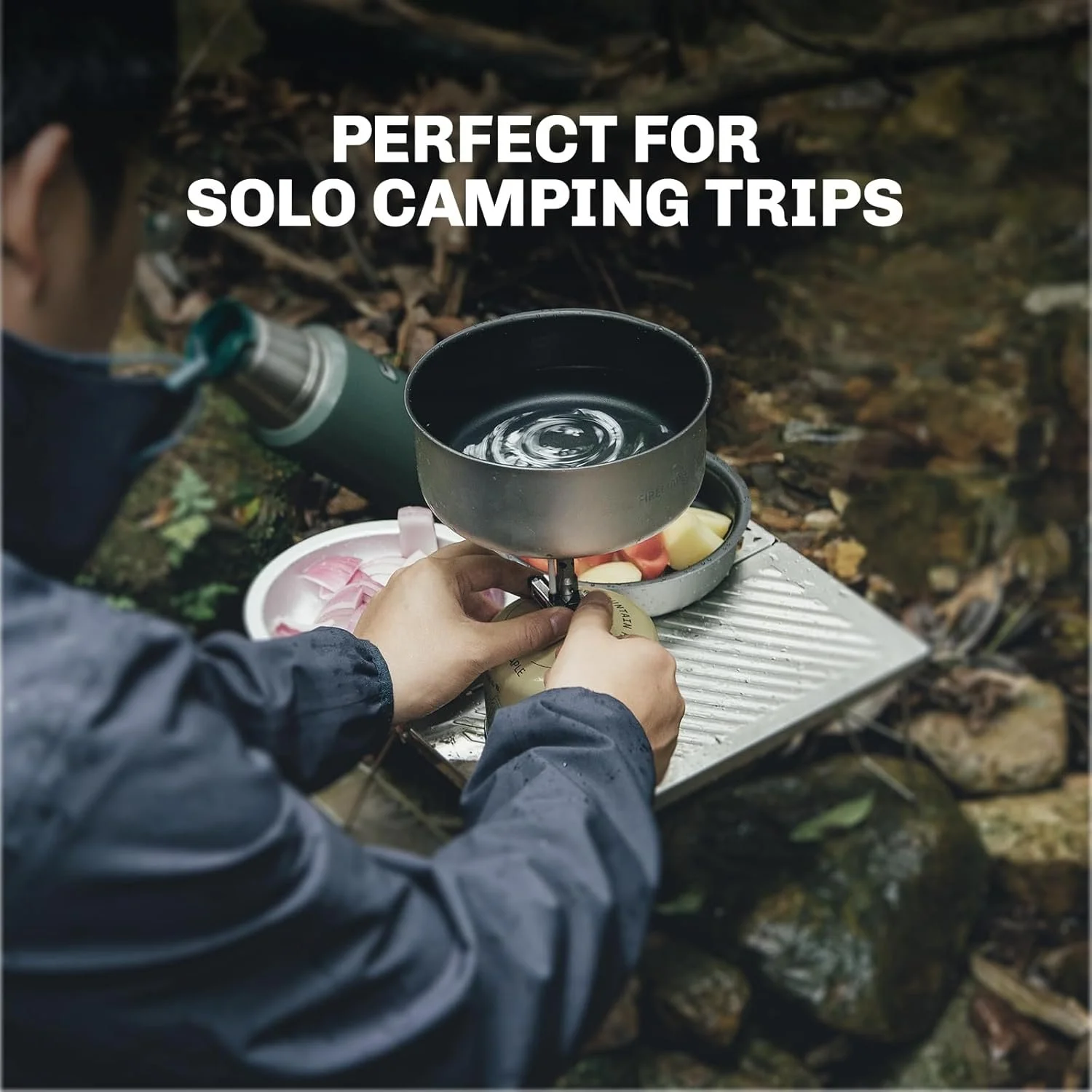
Once you answer those, cookware decisions get easier. A two-person weekend with one arrival dinner, two breakfasts, and one Saturday dinner does not need a giant set. It needs a pot for boiling and simmering, a pan for breakfast and quick sauteing, a lid for heat control, and a lifter or handle system that prevents burned hands.
Here is the beginner menu test: if the cookware can make one-pot pasta, eggs, oatmeal, and chili, it can handle most first weekend trips.
Do not buy for imaginary meals. If you are not actually making fish tacos, grilled vegetables, Dutch oven bread, cowboy coffee, and skillet cobbler on trip one, do not pack cookware for all of those meals. Add specialized pieces later after you know your real camp cooking style.
Rule 2: Nesting Cookware Beats a Long Gear List
A camp cookware set has two jobs. It has to cook food, and it has to pack cleanly.
Nesting cookware solves the packing problem. The pot holds the smaller pieces. The pan or lid closes the set. Handles fold down. The whole kit becomes one object that can sit in a gear bin or trunk corner.
Loose cookware creates the opposite problem. A separate pot, separate pan, separate lid, separate handle, and separate accessory bag can spread across the car quickly. They clatter, scratch, and disappear under soft gear. At camp, loose pieces also create more opportunities to lose something. The lid gets left in the dish bin. The pan slides under a chair. The pot handle ends up in the wrong tote.
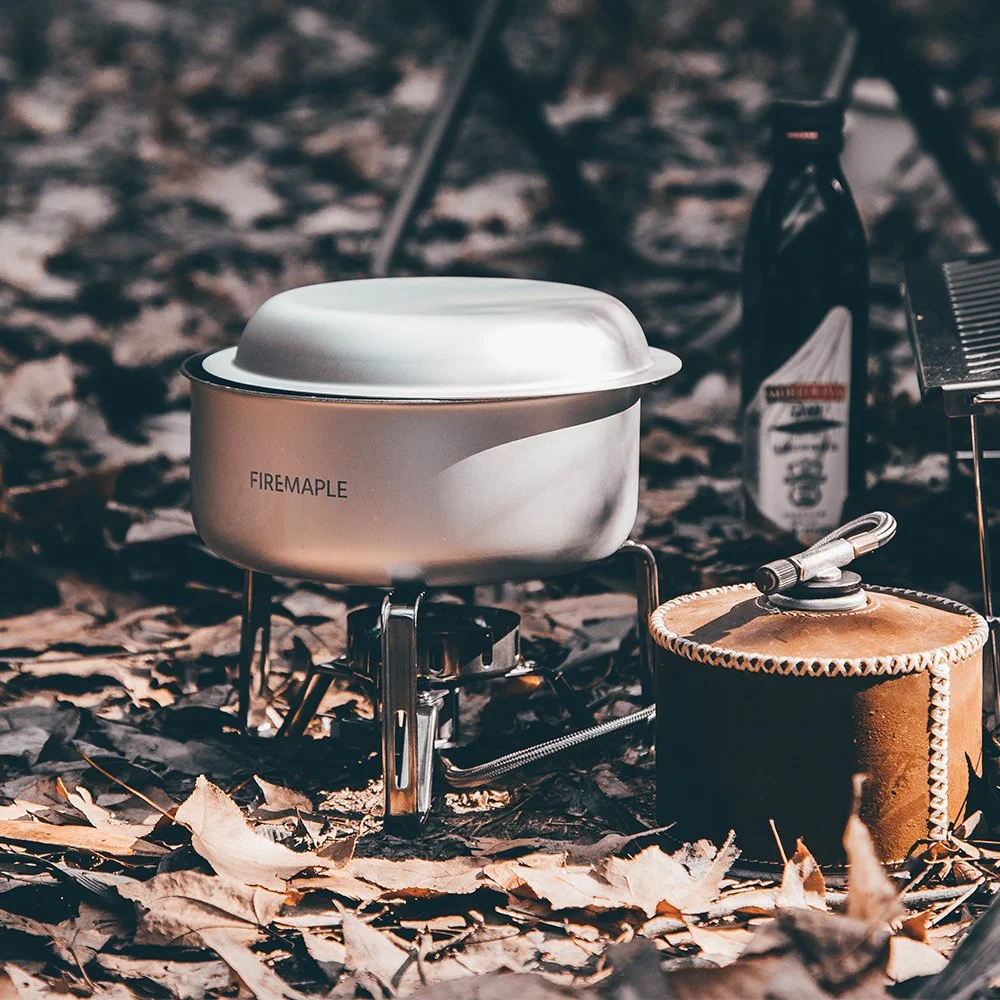
For beginners, a clean packing system is a real feature. It reduces friction before the trip, during dinner, and when breaking camp on Sunday morning.
Nesting also helps with cleanup discipline. When every piece must fit back into one unit, you naturally clean and dry the cookware before packing it. If the pieces are loose, it is easier to throw a damp pan into a plastic bag and deal with it later. That later usually means stale food smell in the trunk.
The 4-in-1 set belongs in a beginner kit because it keeps the system small: pot, pan, lid, lifter. No extra case full of parts. No cookware puzzle. No dedicated bin just for pans.
Rule 3: Non-Stick Matters More Outdoors Than It Does at Home
At home, sticky cookware is annoying. At camp, sticky cookware becomes a water and time problem.
Home kitchens have hot running water, a sink, dish soap, scrubbers, towels, counters, and good lighting. Campsites may have a shared spigot, cold water, a small basin, limited soap, insects, dirt, and a table that is already full. Every burned egg and scorched noodle adds work when everyone is tired and the sun is dropping.
Non-stick cookware makes beginner meals easier because it reduces the cleanup penalty. Eggs release more easily. Pancakes are less likely to tear. Sauce and rice are less likely to weld themselves to the pot. A quick wipe can remove most residue before washing.
That does not mean non-stick cookware is indestructible. It needs basic care:
- Do not preheat an empty pan on high for a long time.
- Use silicone, plastic, or wooden tools instead of metal.
- Let the pan cool before adding cold water.
- Avoid abrasive scrub pads.
- Wipe food residue before it dries.
For weekend car camping, that trade-off is worth it. Stainless steel and cast iron have their place, but a first-time camper benefits more from easy cleanup than from maximum durability. The goal is to make the first trip repeatable, not to build the most rugged camp kitchen on day one.
Rule 4: Weight Only Matters After You Know How Far You Carry It
Backpackers care about every ounce because the cookware goes on their back. Car campers should care about packability, capacity, and ease of use first.
Many beginners confuse "camping" with "backpacking" and buy cookware that is too tiny for the trip they are actually taking. A very small ultralight pot may be excellent on a trail, but frustrating at a drive-in campsite where you want to cook pasta for two people. A fragile featherweight pan may save space, but it may also heat unevenly, wobble on a stove, or make breakfast harder than it needs to be.
Ask one practical question: how far is the cookware carried from the car to the cooking spot?
If the answer is 20 feet, choose comfort. A slightly sturdier pot and pan will make the trip better. If the answer is three miles, then weight becomes a serious decision. Different trip, different gear.
The #p-004304 set is best understood as a compact weekend kit, not a hardcore backpacking solution. It is light enough to pack easily, but the real value is the one-unit system and beginner-friendly cooking setup.
Rule 5: Capacity Is About Real Portions, Not Product Photos
Cookware capacity is easy to underestimate because empty pots look larger than they feel during cooking. Once pasta, water, sauce, and stirring space are involved, a pot fills quickly. A pan that looks wide in a photo may only handle two eggs comfortably.
For a solo camper, small cookware is usually fine. For two people, the pot should comfortably handle dinner without filling to the rim. For three or four people, a compact 4-in-1 set can still help, but it should not be the only cookware if you plan to cook full meals.
Use this simple sizing guide:
| Group Size | Practical Cookware Setup | Notes |
|---|---|---|
| 1 person | Small pot + small pan | Best for noodles, oatmeal, eggs, soup, coffee water |
| 2 people | Nesting pot + pan + lid | Ideal beginner weekend setup |
| 3 people | Nesting set plus larger shared pot | Small pan may need batches |
| 4 people | Larger pot, second pan, or griddle | Compact set works for sides, not the whole meal |
| 5+ people | Dedicated group cookware | Plan meals around large-volume cooking |
The mistake is expecting one compact set to behave like a family kitchen. Small cookware is not bad. It just has a job. It works best when the menu and group size match the kit.
What Each Piece Does
The Pot: The Weekend Workhorse
The pot is the most important piece in a beginner camping cookware kit. It boils water, cooks pasta, heats soup, makes oatmeal, simmers chili, warms sauce, and handles one-pot meals.
For a first trip, the pot should be used for meals that are hard to ruin. Pasta, rice packets, ramen, instant soups, oatmeal, curry, and pre-made chili all work because they are forgiving. They do not require perfect heat control, and they can usually be fixed with a little more water or a few extra minutes.
A good beginner pot should have:
- A non-stick interior for easier cleaning.
- Enough capacity for the actual group size.
- A lid for faster boiling and better simmering.
- A stable base for camp stove use.
- A safe handle or compatible lifter.
The lid matters more than beginners think. Without a lid, boiling water takes longer, wind steals heat, and simmering becomes harder. A lid also helps protect food from dust and insects while people move around camp.
The Pan: The Breakfast Tool
The pan usually handles the meals people care about most: eggs, pancakes, bacon, sausage, tortillas, grilled sandwiches, and reheated leftovers.
It is also the piece most likely to punish bad heat control. Camp stoves can run hotter than expected, especially in a small pan. A non-stick surface helps, but the best technique is moderate heat and patience. If the pan is smoking, it is too hot. If eggs brown instantly, turn the stove down.
For a first weekend, plan pan meals that cook quickly and clean easily:
- Scrambled eggs.
- Pancakes.
- Breakfast tortillas.
- Toasted bread.
- Quesadillas.
- Sausage or pre-cooked bacon.
Avoid complicated first-trip pan meals that need precise timing, multiple batches, or lots of oil. The pan should make breakfast easier, not create a campsite cooking show.
The Lid: The Efficiency Piece
A lid saves fuel, time, and attention. It helps water boil faster, traps heat for simmering, keeps bugs away from food, and can briefly cover leftovers while people get plates ready.
If one lid works with both the pot and pan, the whole kit becomes more efficient. You carry fewer pieces, and the lid gets used more often. A lid that only fits one rarely used pot is much easier to forget or leave behind.
The lid can also become a temporary plate or cover in a pinch, but it should not be treated as a full replacement for eating gear. It is mainly a cooking control tool.
The Folding Pot Lifter: The Safety Piece
Hot cookware is where many beginner mistakes happen. Camp pots are often smaller, lighter, and less insulated than home cookware. Handles can heat up. A pot full of boiling water can feel unstable. A towel used as a potholder can slip, catch food, or get wet.
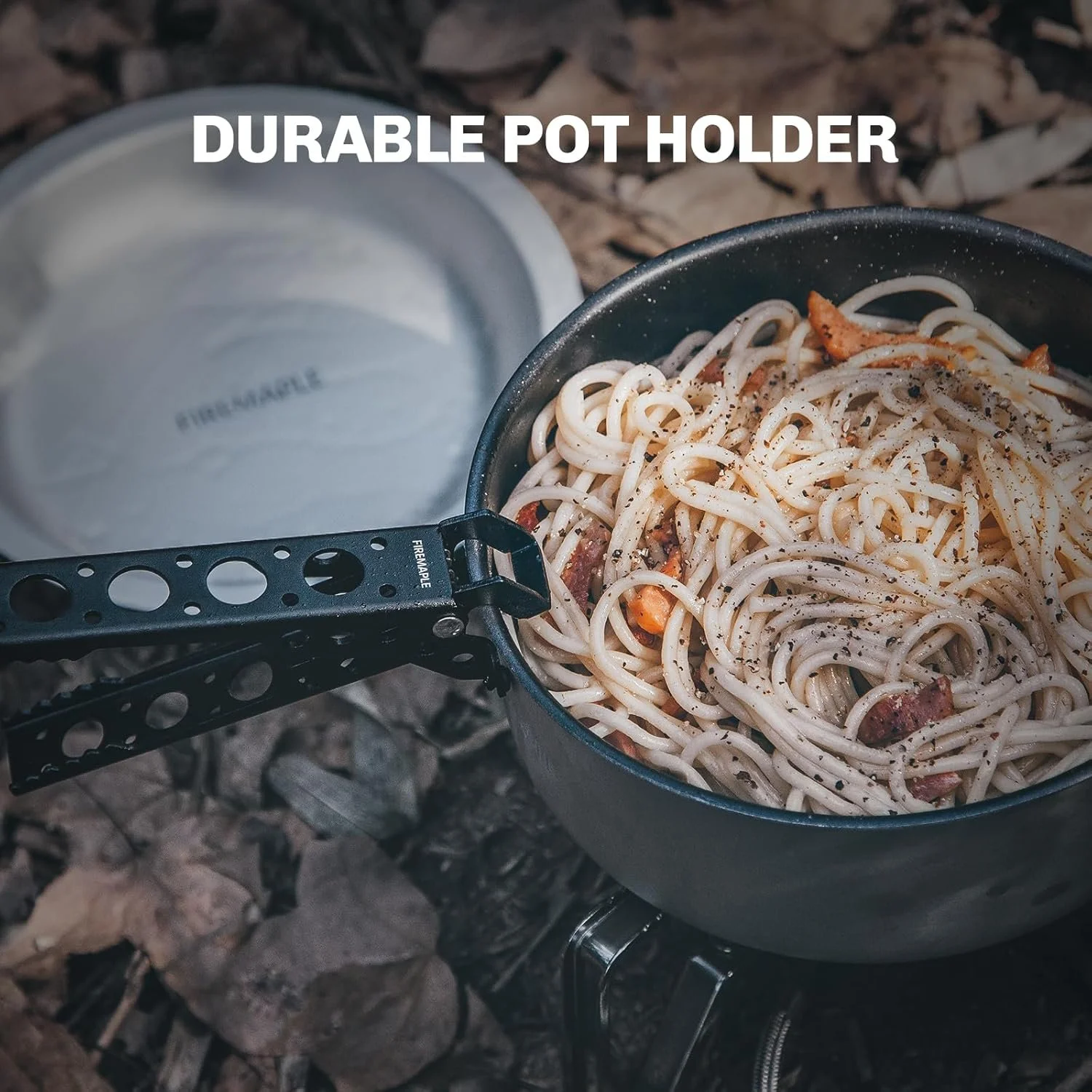
A pot lifter solves this by giving you a dedicated grip. It clamps onto the cookware rim and lets you lift without grabbing hot metal. A folding lifter is especially useful because it stores inside the kit instead of becoming another loose item.
This piece may look minor, but it prevents the worst kind of camp cooking failure: dropping hot food or boiling water because the handle was uncomfortable. For beginners, safety is part of convenience.
A Two-Night Beginner Menu That Fits One Compact Kit
The easiest way to prove a cookware kit works is to run it through a real weekend.
Friday Dinner: Arrival Pasta
Arrival night should be simple because camp setup always takes longer than expected. Use the pot for pasta or noodles. Add sauce, pre-cooked protein, vegetables, or a seasoning packet. Keep the pan optional. If you want better flavor, use the pan quickly for garlic, sausage, or vegetables, then combine everything in the pot.
Why it works: one-pot pasta is filling, flexible, and easy to clean if the pot is non-stick.
Saturday Breakfast: Eggs and Toast
Use the pan for scrambled eggs or fried eggs. Toast bread or tortillas in the dry pan afterward. If the pan is small, cook in batches instead of crowding it. Crowding cools the pan and makes food messy.
Why it works: breakfast feels like real camping, but the cleanup stays manageable.
Saturday Lunch: No-Cook or Low-Cook Meal
Do not plan a full hot lunch on the first trip unless you already enjoy camp cooking. Use sandwiches, wraps, fruit, cheese, trail mix, or leftovers. If you want something warm, heat soup or water in the pot.
Why it works: lunch is usually when people are hiking, swimming, driving, or dealing with weather. A low-cook lunch protects the schedule.
Saturday Dinner: Chili, Curry, or Rice Bowl
Use the pot for a thicker meal such as chili, curry, soup, or a rice bowl. Pre-chopped ingredients make this much easier. If you use raw meat, cook it first and handle cleanup carefully. Beginners are usually better off with pre-cooked sausage, canned beans, prepared sauce, or shelf-stable ingredients.
Why it works: the pot handles volume, and the lid helps simmer without constant stirring.
Sunday Breakfast: Oatmeal or Pancakes
Sunday morning is packing morning. Choose food that creates minimal cleanup. Oatmeal in the pot is easiest. Pancakes in the pan are more fun but require more wiping and attention.
Why it works: the last meal should not delay the entire departure.
This menu uses the same four cookware pieces all weekend. No Dutch oven, no griddle, no coffee percolator, no extra saucepans. That is the point: the best first kit is the one that supports realistic meals without spreading gear everywhere.
Cleaning System: The Part Beginners Forget
Cookware choice and cleanup are connected. A pan that cooks well but takes 20 minutes to clean is not beginner-friendly at a campsite.
Bring a basic cleaning kit:
- Small bottle of biodegradable dish soap.
- Soft sponge or non-scratch scrubber.
- Microfiber towel or quick-dry cloth.
- Paper towels for grease wipe-down.
- Trash bag.
- Collapsible wash basin if the campsite has no sink.
- Small scraper or spatula for food residue.
The best cleanup method is to wipe first, wash second. Let the pan cool slightly, then wipe out grease and food bits with a paper towel. Do not pour grease onto the ground. Put the dirty towel in the trash. Then wash with a small amount of soap and water.
For non-stick cookware, avoid aggressive scrubbing. If food sticks, add a little warm water, let it sit, and wipe gently. The goal is to protect the surface so the set stays useful for future trips.
Dry the cookware before nesting it. Packing damp cookware inside itself can trap smell and moisture. If you are leaving early, dry it as well as possible with a towel and open it again at home.
Good cleanup also protects the campsite. Food residue attracts insects and wildlife. Even small scraps around the table can create problems. Cooking is not finished until the cookware is cleaned, food is sealed, and trash is handled correctly.
What Not to Bring on a First Trip
The wrong cookware does not just add weight. It adds decisions, cleanup, and packing friction.
| Item | Why to Skip It on Trip One | When It Earns a Place |
|---|---|---|
| Cast iron Dutch oven | Heavy, slow, needs seasoning and heat control | Group meals, campfire baking, experienced cooks |
| 12-piece cook set | Too many parts, many go unused | Larger groups with planned multi-dish meals |
| Dedicated percolator | Extra cleaning and packing | Coffee-focused trips where everyone wants brewed coffee |
| Full-size griddle | Bulky and specialized | Pancakes or breakfast for 4+ people |
| Fragile ceramic-coated pans | Coating can chip in gear bins | Careful car camping with protected storage |
| Multiple saucepans | Redundant for beginner menus | More complex meals with separate sauces or sides |
| Home kitchen cookware | Awkward handles and poor packing | Emergency backup only |
The rule is simple: bring the minimum set that can cook the planned menu. Add gear only when repeated trips prove a specific need.
The Product: Ultralight 4-in-1 Non-Stick Camping Cookware Set with Folding Pot Lifter
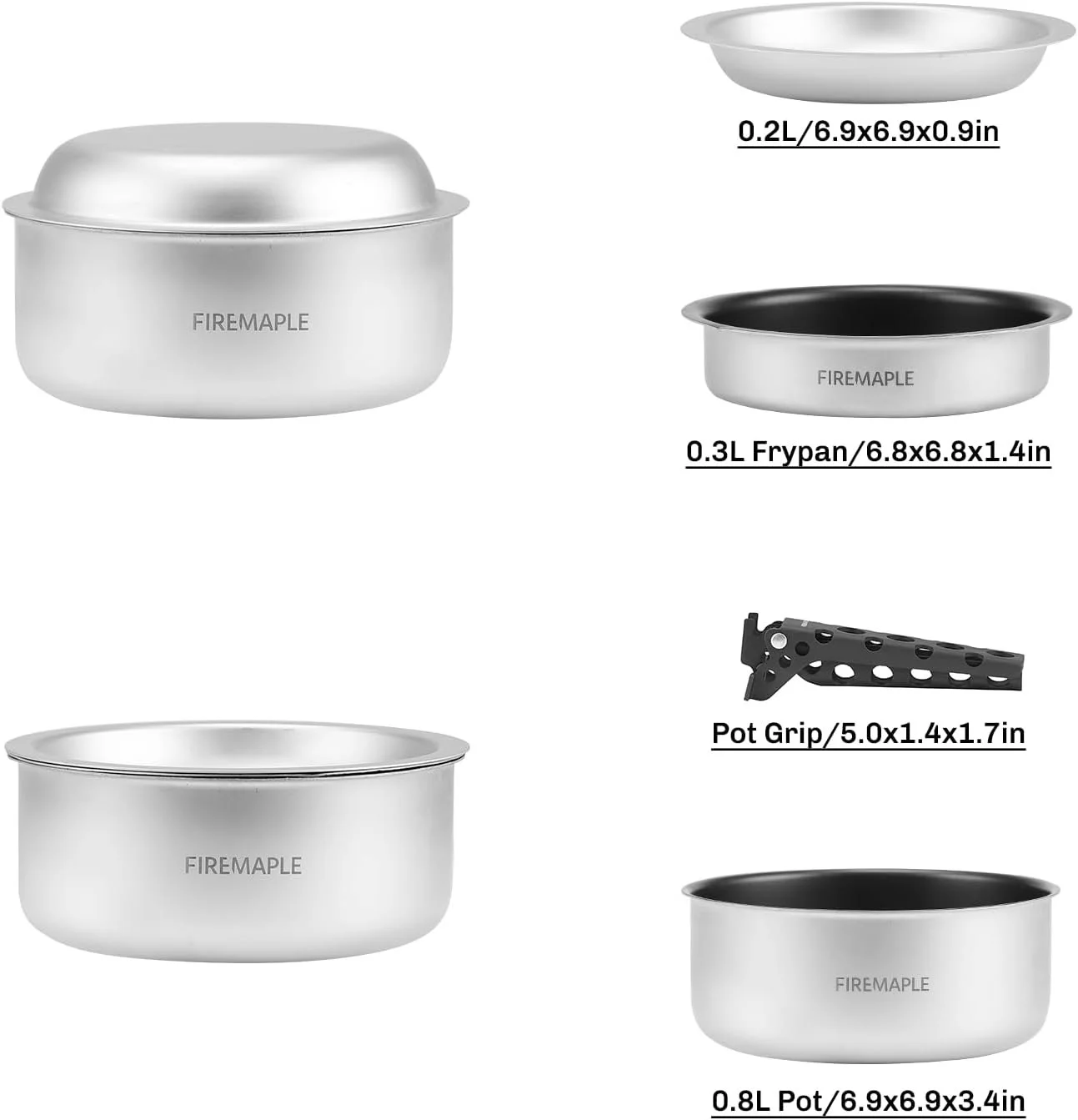
The Ultralight 4-in-1 Non-Stick Camping Cookware Set with Folding Pot Lifter (#p-004304, $84.95) is a compact beginner kit for solo campers and couples who want one organized cookware unit.
It fits the beginner formula:
- Pot: handles boiling, simmering, oatmeal, pasta, soup, and one-pot dinners.
- Pan: handles eggs, pancakes, tortillas, quick sauteing, and reheating.
- Lid: helps water boil faster, protects food, and improves simmering.
- Folding pot lifter: gives a safer grip on hot cookware and stores with the set.
- Nesting design: reduces loose pieces and keeps packing simple.
- Non-stick cooking surface: lowers the cleanup burden after sticky breakfast or sauce-based meals.
The biggest advantage is not that it makes you a better outdoor cook. It makes the first cooking system easier to repeat. Pack it, cook from it, clean it, nest it, and bring it again.
The honest limit: this is not a full family kitchen. A group of four cooking every meal will want a larger pot, a second pan, or a griddle. Campers who cook directly over fire may also want heavier cookware designed for that heat. For the first weekend trip, especially for one or two people using a camp stove, this set is the right size and format.
When This Cookware Set Is the Wrong Choice
A good recommendation needs boundaries. The #p-004304 set is useful for beginner weekend camping, but it is not the best fit for every trip.
Do not make it your only cookware for a large family trip. Small cookware forces batch cooking, and batch cooking gets old fast when people are hungry.
Do not choose it as your main fire cookware if you plan to cook directly over flames or coals. Non-stick surfaces and lightweight construction are better suited to controlled stove use than rough fire cooking.
Do not buy it if your real goal is gourmet camp cooking. If you already know you want steaks, grilled vegetables, fresh fish, sauces, and campfire baking, you need a more complete kitchen plan.
Do not use metal utensils on the non-stick surface. If your camping style is rough, fast, and careless with tools, stainless or cast iron may last longer.
This does not weaken the product match. It makes the match more accurate. For beginner stove-based weekend cooking, compact non-stick nesting cookware is useful. For large groups, open-fire cooking, or advanced meals, add more specialized gear.
First-Trip Cookware Packing Checklist
Use this list before leaving:
- Nesting pot and pan.
- Lid.
- Folding pot lifter or safe handle system.
- Camp stove and fuel.
- Lighter or matches.
- Silicone, plastic, or wooden spatula.
- Spoon or serving utensil.
- Eating bowls or plates.
- Mugs if making hot drinks.
- Small cutting board.
- Knife with cover.
- Dish soap.
- Sponge or non-scratch scrubber.
- Paper towels.
- Trash bags.
- Quick-dry towel.
- Food storage bags or containers.
The cookware itself is only half the system. The stove, utensil, and cleaning kit decide whether the meal goes smoothly.
FAQ
What is the minimum camping cookware for beginners?
The minimum useful kit is one pot, one pan, one lid, and one pot lifter or safe handle system. That setup can cover most simple weekend meals for one or two people.
Do I need a 12-piece camping cookware set?
Not for a first weekend trip. Large sets often include pieces you will not use. Start small, then add gear when you know which meals you actually cook outdoors.
Is non-stick cookware good for camping?
Yes, especially for beginners using a camp stove. Non-stick cookware makes eggs, pancakes, pasta, and sauce-based meals easier to clean. Protect the coating by avoiding metal tools, high empty-heat, and abrasive scrubbers.
Can I use normal kitchen pans for camping?
You can, but they often pack poorly. Long handles, heavy bases, and loose lids take up space in a camp bin. Kitchen cookware is fine for a backyard test, but nesting camp cookware is easier for repeated trips.
Is this 4-in-1 set enough for four people?
It can help with sides, breakfast batches, or simple meals, but it should not be the only cookware for four hungry campers. Add a larger pot or second pan for group cooking.
What meals are easiest with beginner camp cookware?
Oatmeal, eggs, pancakes, pasta, soup, chili, ramen, curry, rice bowls, tortillas, and reheated prepared meals are all beginner-friendly. Avoid meals that require many pans, precise timing, or heavy cleanup on the first trip.
How do I clean non-stick cookware at camp?
Let the cookware cool slightly, wipe out food and grease first, then wash with a soft sponge and a small amount of soap. Dry before nesting. Never pack greasy or damp cookware without reopening it at home.
Should I bring cast iron camping?
Cast iron is excellent for some experienced campers, especially fire cooking and group meals. For beginners, it is often heavy, slow, and cleaning-intensive. Bring it later if your menu specifically needs it.
Browse Outdoor Cooking products