Article
Travel Toys for Dogs: 6 Essentials for Safer, Calmer Road Trips
Quick Answer
Travel Toys for Dogs: 6 Essentials for Safer, Calmer Road Trips: quick answer
Travel toys are not the same as everyday toys. At home, a dog can choose where to rest, walk away from a toy, drink water, move to another room, or...
- Topic: Dog Travel.
- Related product category: pet-toys.
- This article uses one relevant product insertion and keeps the main answer in the article copy.
Why Travel Toys Need A Different Standard
Travel toys are not the same as everyday toys. At home, a dog can choose where to rest, walk away from a toy, drink water, move to another room, or take a break from people. On a road trip, the dog has fewer choices. The car is small. The schedule changes. The dog may hear traffic, smell unfamiliar places, wait longer than usual, and then enter a hotel room or rental home that does not smell like home. Even dogs that are normally relaxed can become restless when the environment changes this much.
That is why the best road trip toy plan is not about bringing the biggest pile of toys. It is about choosing a few toys that each solve a real travel problem. One toy should help the dog settle. One should provide comfort. One should offer safe, low-mess interaction. One should support short movement at rest stops. One should help with quiet mental work after arrival. One backup should be available if the first choice gets wet, dirty, or damaged.
Good travel toys should be safe in tight spaces, easy to pack, easy to clean, and familiar enough that the dog understands them. A toy that creates wild energy in the living room may be a bad choice in a car. A loud squeaker may distract the driver. A hard ball may roll into an unsafe area. A messy treat toy may stain a hotel carpet. A toy that sheds stuffing can create cleanup problems when you are away from home.
The goal is not to entertain the dog every minute. The goal is to give the dog predictable ways to stay calm, use energy appropriately, and transition between places without becoming overstimulated.
Match The Toy Plan To Your Dog
Before packing toys, think about how your dog behaves when travel becomes stressful. Some dogs chew when they are uneasy. Some carry soft toys. Some sniff the ground and relax. Some bark at movement outside the window. Some refuse food when nervous. Some become excited and cannot settle after a rest stop. The right toy depends on that pattern.
If your dog relaxes by chewing, bring one safe chew for supervised settling after arrival. If your dog likes to hold something in the mouth, a soft plush-style toy may work better than a food puzzle. If your dog gets mentally tired from sniffing, a simple food-search activity can be useful at the hotel. If your dog becomes too excited by squeaky toys, save those for home or skip them entirely for the trip.
The most important rule is to test the toy before travel. Do not introduce a completely new toy on departure day and expect it to solve anxiety. A travel day already includes enough new information. Use the toy at home first, watch how the dog plays with it, and decide whether it creates calm behavior or more intensity.
Also be honest about chewing style. A gentle chewer may do well with a soft no-fill toy. A heavy shredder may tear fabric quickly. A dog that swallows pieces should not be given plush, rope, or fabric toys without close supervision. Travel-friendly does not mean indestructible. It means the toy format fits the situation better when used correctly.
Essential 1: A Calming Chew For Arrival
A calming chew is useful because chewing gives many dogs a repetitive, focused activity. It can help a dog settle after a long drive, especially once the dog has had a potty break, water, and a quiet place to lie down. The best time for this toy is usually after arrival, not during active driving.
Hard chews and heavy treat toys can be risky in a moving car. They may slide, become projectiles during sudden braking, or encourage the dog to twist around in a seat restraint. If the dog rides in a crate, any chew used inside the crate should be large enough, familiar, and appropriate for the dog's chewing habits. If there is any doubt, save the chew for the hotel room, rental home, or a calm stop where you can supervise.
Choose a chew your dog already handles safely. Avoid anything that causes stomach upset, sharp fragments, frantic gulping, or resource guarding. Road trips are not the right time to test rich treats or long-lasting chews that may affect digestion. If your dog gets carsick, do not use food-heavy toys before or during the drive.
The strongest use is as part of a routine: arrive, potty, water, set up the dog's rest area, then offer the chew for a short supervised session. A predictable routine helps the dog understand that the new place is not just excitement. It is also a place to settle.
Essential 2: A Familiar Comfort Toy
A comfort toy has a simple job: it makes an unfamiliar place feel less strange. It does not need to be exciting. In fact, the best comfort toy is often a soft item the dog already knows. It may smell like home. It may be something the dog rests with, carries, or keeps near the bed.
Pack this toy before the trip and avoid washing it immediately before leaving unless it is dirty. Familiar scent can matter in hotel rooms, rentals, and relatives' houses where every smell is new. Place the toy on the dog's travel mat, inside the crate if safe, or near the dog's sleeping spot. Use it during transitions so the dog learns that this object marks a calm place.
This is different from handing over a high-energy toy every time the dog gets restless. A comfort toy should lower excitement, not raise it. If the toy makes your dog jump, bark, or demand play, it may not be the right comfort item for travel.
Inspect the toy before packing. Remove anything with loose seams, damaged fabric, small plastic parts, or pieces the dog may swallow. If the dog guards the toy around other pets or children, manage it carefully in shared spaces.
Essential 3: A Soft, Low-Mess Travel Toy
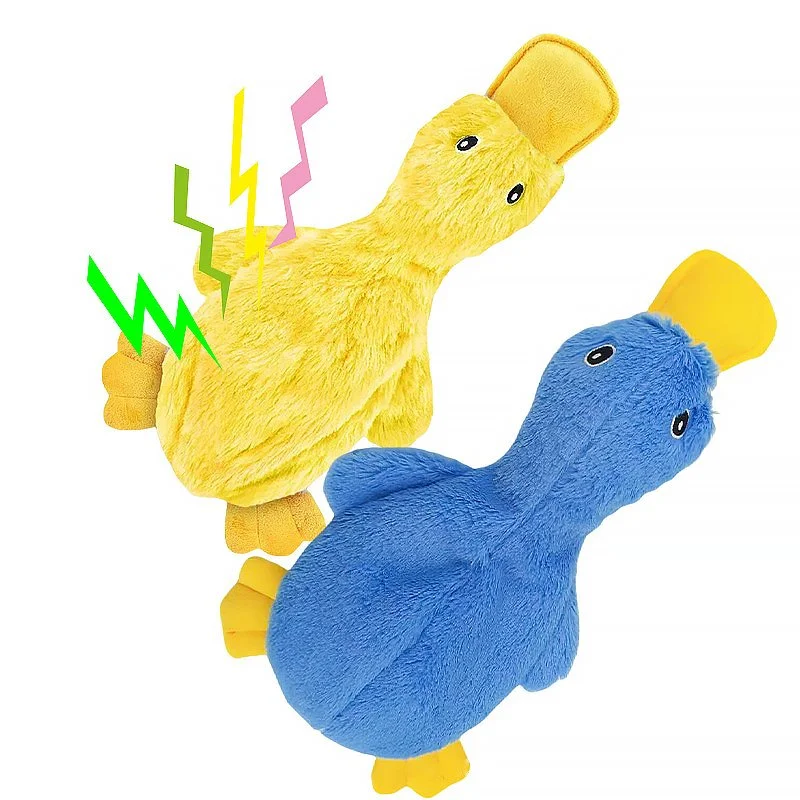
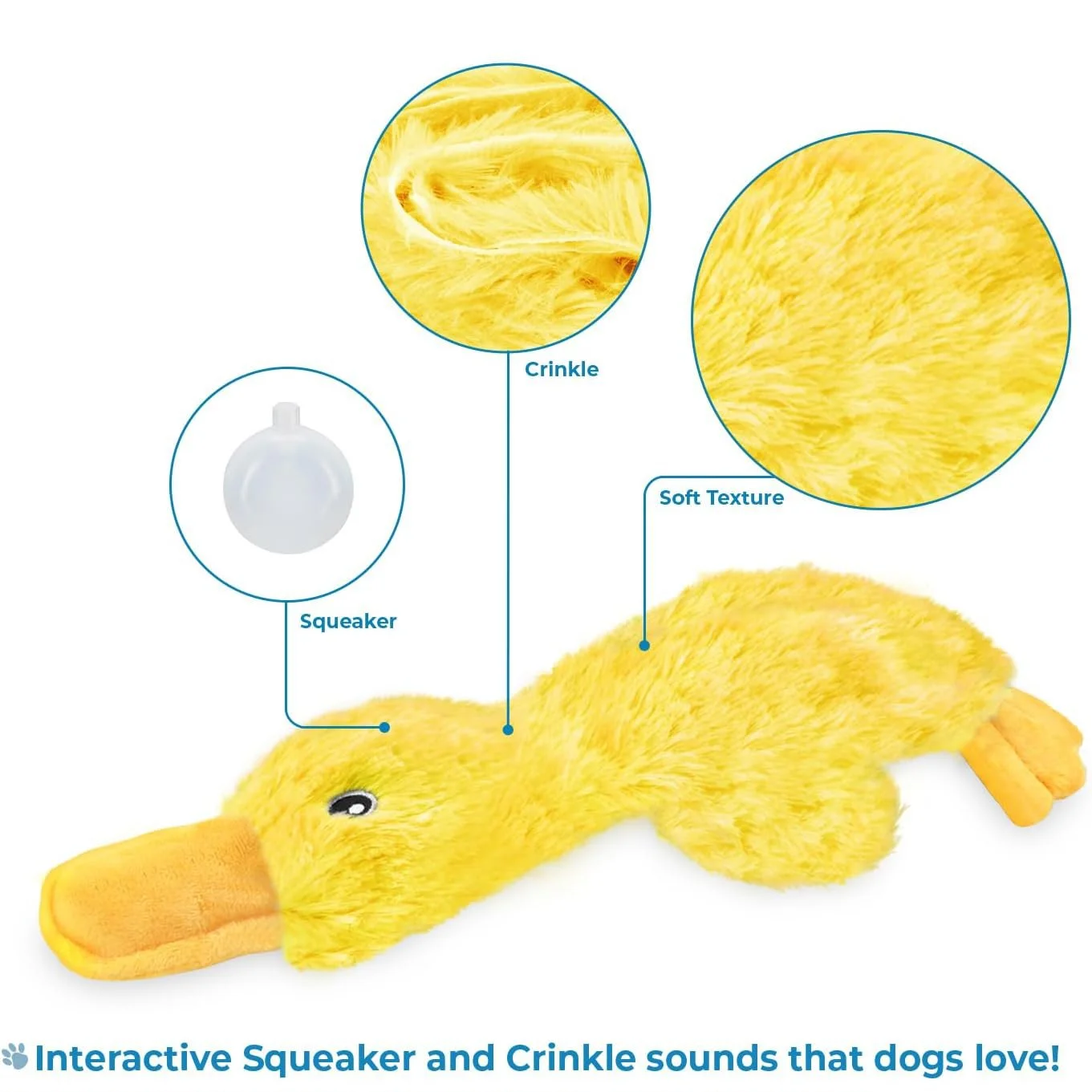
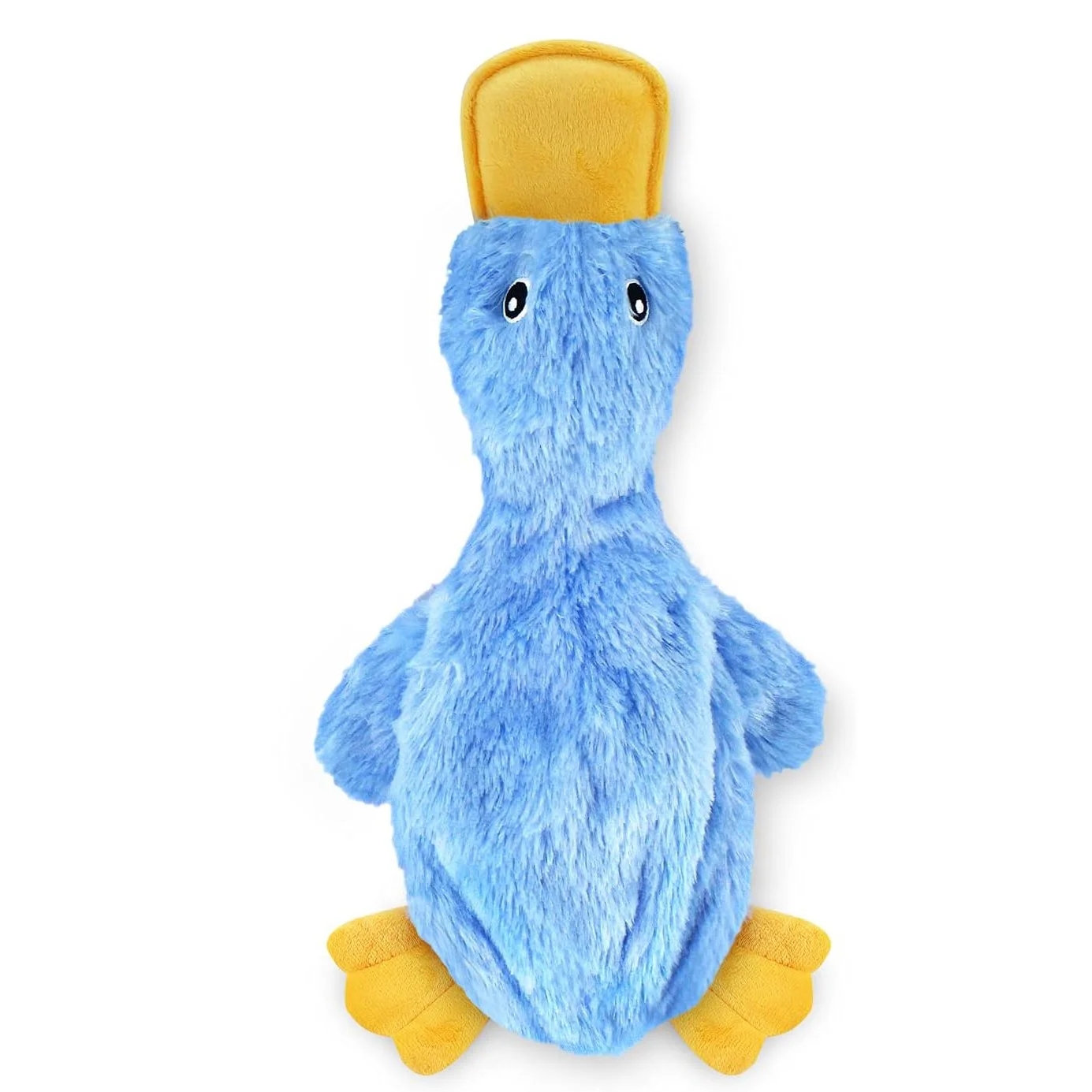
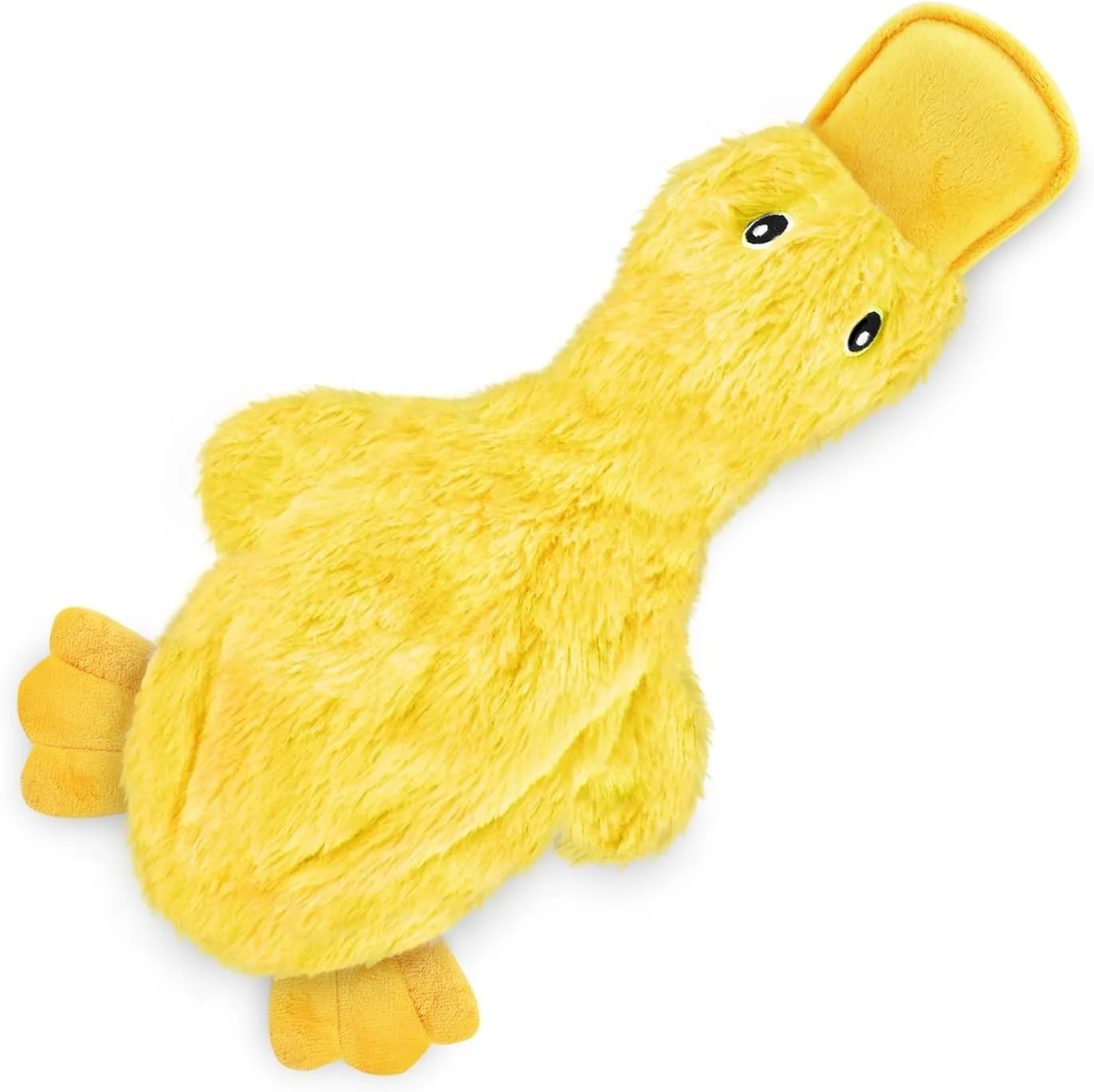
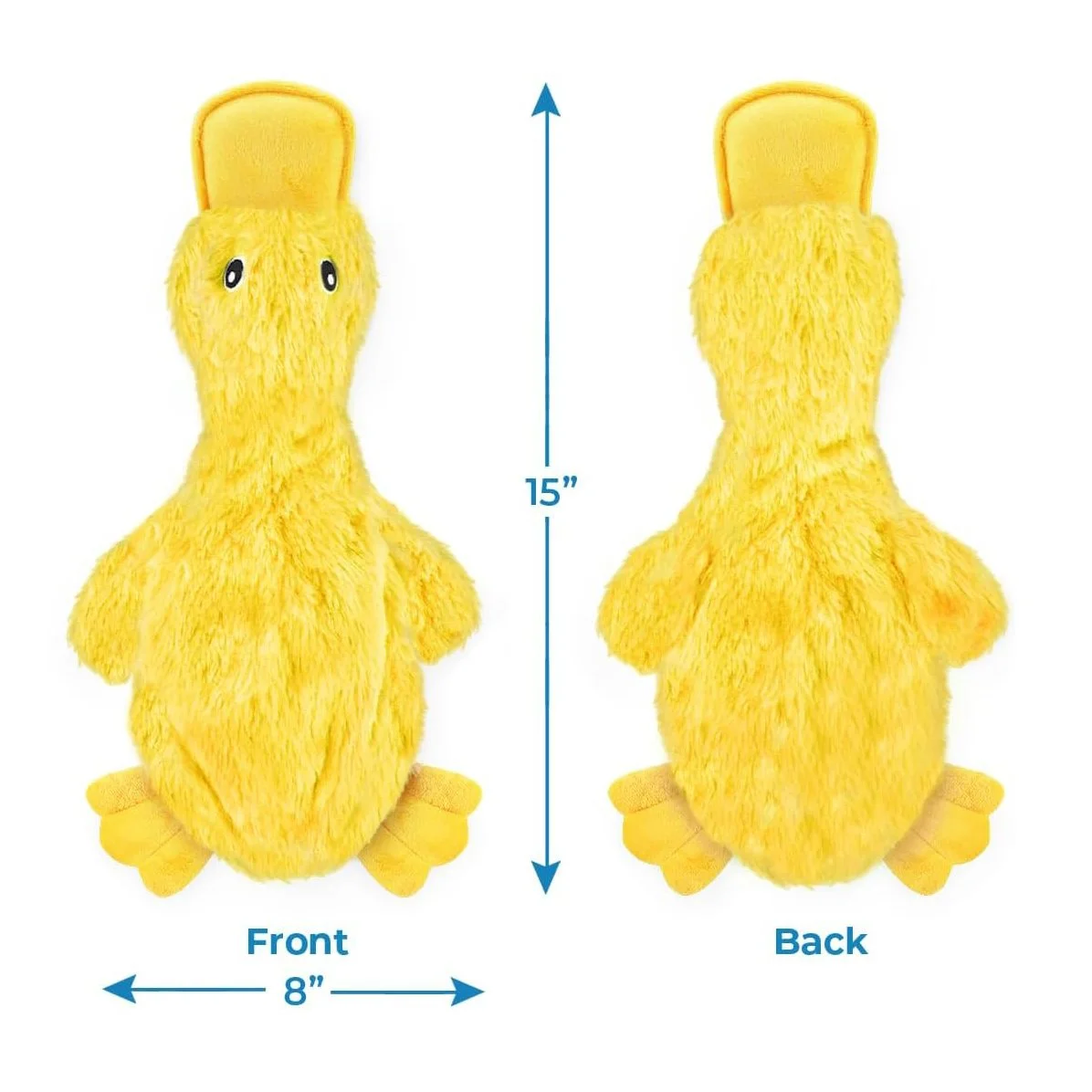
A soft, low-mess toy is often the most practical road trip item because it can move from car to bag to hotel room without creating cleanup problems. This is where the Interactive Yellow Duck Plush Toy for Dogs & Cats - No Fill Chewing Pet Training Toy (#1772491) fits the article well. It is lightweight, portable, and no-fill, which makes it more suitable for travel than a bulky stuffed plush that can scatter filling if damaged.
For dogs that like to carry, mouth, or gently chew soft toys, this type of product can serve several travel jobs. It can be introduced before the trip as a familiar object. It can be used for a short supervised play session at a safe rest stop. It can sit near the dog's bed in a hotel room. It can give the dog something acceptable to hold during quiet downtime.
The no-fill design is the important detail. It does not make the toy impossible to destroy, but it reduces the mess that often comes with traditional stuffed toys. That matters when you are in a car, hotel, rental home, or someone else's house.
Use it with boundaries. If your dog tries to shred fabric, supervise closely and remove the toy when play becomes too intense. If the toy becomes torn, inspect it before giving it back. If your dog becomes excited by plush toys, use it outside the car or after arrival rather than during driving.
Essential 4: A Rest-Stop Movement Toy
Rest stops should do more than let the dog pee quickly and jump back into the car. They are a chance to release pressure from long periods of stillness. A short, structured movement session can help the next driving block go better.
The movement toy should be easy to control. A soft toss toy, a familiar tug item, or a lightweight plush used for a few gentle retrieves can work if the area is safe. Avoid balls that bounce toward traffic or roll under parked cars. Avoid toys that attract too much attention from other dogs. Rest stops are full of distractions, and even a well-trained dog may behave differently there.
Keep the session short. The goal is not to exhaust the dog. The goal is to stretch the body, lower tension, and return to the car calmly. A few minutes of controlled play is usually better than ten minutes of frantic chasing. End before the dog becomes overheated or too excited to settle.
If your dog is reactive, nervous, or easily distracted, skip active toy play in busy areas. Use sniffing instead. A slow sniff walk or a small food-search game in a safe patch of grass may calm the dog more effectively than tug or fetch.
Pack this toy where it is easy to reach. If it is buried under luggage, it will not get used when you need it.
Essential 5: A Quiet Sniffing Or Food Toy
Arrival can be surprisingly difficult for dogs. The drive ends, but the dog may still be alert and unsettled. A hotel hallway, elevator, rental house, or new neighborhood can keep the dog scanning the environment. A quiet sniffing or food toy can help shift attention away from every sound and smell.
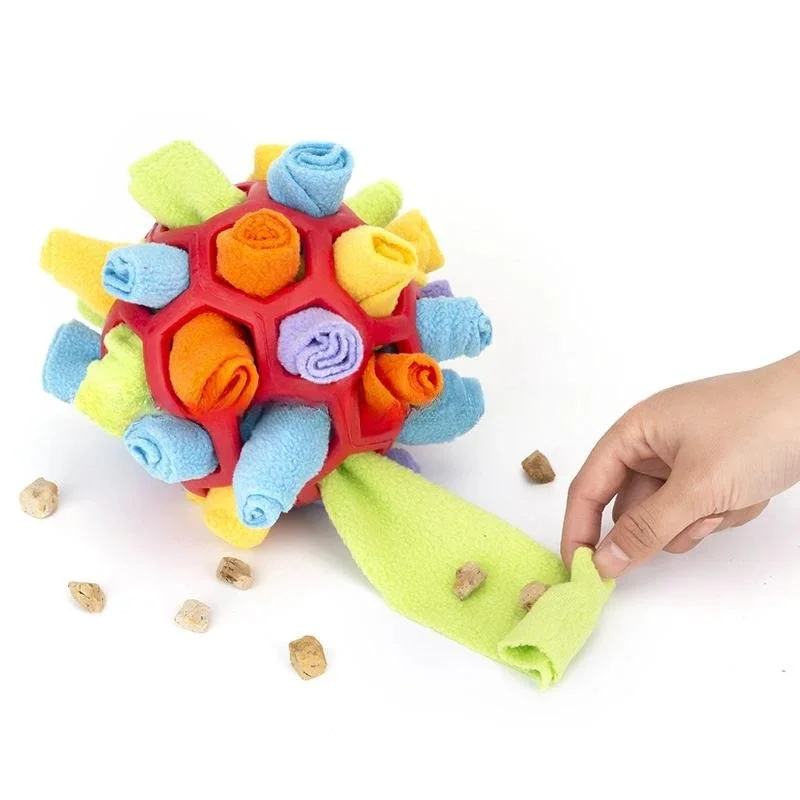
Choose something simple. A small food puzzle the dog already understands, a snuffle-style activity, or a controlled food scatter on a washable mat can work. Avoid sticky fillings, oily treats, strong smells, and anything that may stain carpet or bedding. If possible, use part of the dog's regular food rather than adding too many rich treats.
Timing matters. Set up the dog's rest spot first. Offer water. Take a potty break if needed. Then use the sniffing or food toy. If you give the toy too early, the dog may drag it around the room or work on it while still pacing.
This type of toy is especially useful before bedtime. Dogs may bark at hallway noise because they do not yet understand the space. A short sniffing session gives the dog a quiet job and can help reduce door-watching. Keep the activity calm and low-mess.
If your dog refuses food during travel, do not force it. Some dogs cannot eat when stressed or nauseous. For those dogs, use a comfort toy, calm mat routine, and shorter exposure to busy environments.
Essential 6: A Backup That Has A Purpose
The backup toy should not be random. It should solve a likely problem. If the soft toy gets wet during a rainy rest stop, the backup gives the dog a dry option. If a chew becomes unsafe, the backup prevents the evening from depending on it. If the trip lasts several days, a second washable item can help while the first one dries.
For a short day trip, you may not need a full backup. For a weekend or longer vacation, one extra item is reasonable. Keep it simple and compact. The backup should not create more excitement than the original plan.
Do not bring the entire toy bin. Too many choices can make some dogs restless, and it makes it easier to lose items. A focused kit is easier for people to manage and easier for the dog to understand.
Before leaving, inspect every toy. During the trip, inspect them again each day. A toy that was fine on day one may be damaged by day three. Remove torn toys immediately, especially if your dog swallows fabric, rope, or small pieces.
Car-Safety Rules For Dog Toys
The car is the strictest part of the trip. A toy should never interfere with driving, restraints, or passenger safety. Avoid hard balls, rolling toys, heavy objects, long rope toys, and anything that encourages the dog to move around the vehicle.
If the dog rides in a crate, the crate should feel like a resting place. A small comfort item may be safe for some dogs, but active play toys are usually better outside the crate. If the dog rides with a seat belt or harness, the toy should not make the dog twist, lunge, or tangle.
Loud toys can also be a problem. A squeaker that seems funny at home may distract the driver or excite the dog during a long drive. Save noisy play for appropriate places, or skip it on travel days.
For many dogs, the safest car plan is simple: comfort object nearby, active toys saved for stops, chew items saved for supervised settling after arrival. Boring is often better in the car.
Hotel And Rental Room Rules
Hotel rooms and rental homes require cleaner, quieter toy choices. You are sharing walls, floors, and furniture with other people. A toy that sheds stuffing, drops crumbs, or makes repeated noise can become a problem quickly.
Use soft, quiet toys for indoor downtime. Keep food toys on a mat or towel. Do not place greasy chews on bedding or upholstery. Clean up crumbs. Put wet or dirty toys in a separate bag instead of on furniture.
Never leave a dog alone with a toy that may be shredded or swallowed. Dogs can behave differently in unfamiliar rooms, especially after a long drive. Even a dog that is calm at home may chew harder when stressed.
The Interactive Yellow Duck Plush Toy (#1772491) works well in this part of the plan because it is soft, portable, and no-fill. It should still be supervised and inspected. Its value is that it gives the dog a familiar, low-mess object for hotel settling, not that it removes the need for common-sense safety.
A Practical Packing Plan
For a half-day trip, pack one comfort item, one soft low-mess toy, water, waste bags, and a safe chew for after arrival if needed. For a full-day drive, add a rest-stop movement option and a quiet sniffing or food activity. For a weekend or longer trip, add one backup toy and a washable bag for dirty items.
Keep the toys in a separate travel pouch or bin. The items you need at rest stops should be easy to reach. The hotel toys should not be buried under suitcases. A simple setup makes people more likely to follow the plan when everyone is tired.
Use each toy at the right moment. Comfort item during transitions. Soft toy for gentle interaction. Movement toy at safe rest stops. Sniffing or food toy after arrival. Chew for supervised settling. Backup only when something gets dirty, damaged, or ignored.
This structure prevents random toy use. Instead of handing the dog something only after behavior becomes difficult, you are giving the dog a predictable rhythm. Predictability is one of the most useful things you can give a traveling dog.
Adjust The Kit For Different Dogs
The same six toy jobs can work for many dogs, but the exact mix should change with the dog. A young, active dog usually needs more planned movement than a senior dog. A nervous dog may need fewer toys and more routine. A strong chewer needs safer materials and shorter supervised sessions. A dog that gets car sick may need comfort and rest more than food-based enrichment.
For an energetic young dog, the mistake is waiting until the dog is already frustrated. Build movement into the schedule before the dog starts barking, pawing, or spinning. Use the rest-stop toy for short controlled play, then put it away and give the dog a clear return-to-car routine. Do not let every stop become a wild game. The dog should learn that rest stops include movement, sniffing, water, and then calm travel again.
For a nervous dog, reduce novelty. Bring the most familiar comfort item, keep the toy kit small, and avoid high-arousal play in busy public areas. A soft toy such as #1772491 can be helpful if the dog likes to carry something, but only if it has already been introduced at home. Nervous dogs often do better when one object becomes part of the routine instead of being offered a changing menu of toys.
For a senior dog, comfort matters more than intensity. Choose soft items that do not require hard chewing or fast movement. Rest stops should allow gentle walking and sniffing, not sudden chasing. A senior dog may also need more time to settle into a hotel room, especially if vision, hearing, or mobility has changed. Place the comfort toy and bed in a clear, quiet spot and keep the layout consistent.
For a heavy chewer, be conservative. Soft toys may still have a role, but only with supervision and short sessions. If the dog tries to tear fabric immediately, use the plush toy for brief interaction rather than unsupervised downtime. The main calming tool may need to be a safer chew selected for that dog's mouth and chewing history. Inspect everything often.
For a dog that guards toys, travel adds risk. New places, tired people, and close quarters can make guarding worse. Use chews and food toys only when the dog has space. Do not let other dogs, children, or visitors approach during toy time. A comfort object may still help, but it should be managed as a valuable item.
Practice Before The Road Trip
A travel toy plan works better if the dog has practiced it before the real trip. This does not require formal training. It can be built through small routines at home.
Start by choosing the toys you plan to pack. Use each one in the same way you will use it on the trip. If the soft no-fill toy will be used for calm hotel downtime, do not only use it for wild tug games at home. Place it near the dog's bed, reward calm interaction, and put it away after a short session. If a food puzzle will be used after arrival, practice it on a mat so the dog understands where to work on it.
Next, practice the car routine without going far. Put the dog in the normal travel setup, take a short drive, stop for a potty break, then offer the appropriate toy after returning home. This teaches the dog that car travel has a beginning, middle, and recovery period. It also reveals problems early. If the dog ignores food after a drive, a food toy may not be useful on the road. If the dog becomes too excited by a plush toy, save that toy for outdoor stops rather than the car.
Practice also helps people. A toy plan fails when everything is packed in the wrong place. During a short trial, you learn which items need to be reachable, which ones should stay in the hotel bag, and which ones are unnecessary. You may discover that one well-chosen soft toy and one chew are more useful than five random toys.
The best time to test the matched product is before departure. Let the dog meet the Interactive Yellow Duck Plush Toy (#1772491) at home. Watch whether the dog carries it, mouths it gently, ignores it, or tries to destroy it. That response tells you where it belongs in the travel plan.
Where Product Images Should Support The Reading
When this article is later placed into the blog area, the product images should appear where the reader is already thinking about that use case. A large product image after the soft low-mess toy section makes sense because the product directly matches that point. Another image can fit near the hotel and rental room section because the no-fill design is useful for cleaner indoor downtime. Another image can support the rest-stop section if it shows the toy clearly as a portable play object.
The images should not be stacked together. A reader should see advice, then a relevant product image, then more advice. That pattern feels like a helpful buying guide instead of a product dump. Each image should have enough paragraph spacing around it so the page does not feel crowded.
The BUY NOW button belongs under each product image because the product is being shown in context. The article should not show price in the content body. The decision point is simple: the reader learns why a soft no-fill travel toy is useful, sees the matched product, and can click through to the product detail page if interested.
This also avoids mismatched visuals. The article is about one travel-friendly toy type, so it should use one matching product with its available images, not six unrelated dog products. That keeps the article coherent and prevents the page from looking like a general catalog.
When A Toy Is Not The Answer
Toys are useful, but they should not be used to cover every travel problem. If a dog is panting because the car is hot, the answer is cooling and safety. If the dog is drooling from motion sickness, the answer may be shorter drives, vet guidance, better timing around meals, or medication recommended by a professional. If the dog is barking at people because the rest stop is too busy, the answer may be distance and management, not a more exciting toy.
The same is true in a hotel room. If the dog cannot settle because the room is next to an elevator or loud hallway, a toy may help for a few minutes, but it may not solve the environment. Move the dog's bed farther from the door if possible. Use a familiar mat. Keep the evening routine quiet. A toy works best when the setting already gives the dog a fair chance to relax.
Do not use toys to force interaction when the dog needs rest. Many dogs are tired after travel but still mentally alert. They may need a calm place and time more than another activity. If the dog walks away from the toy and lies down, let the dog sleep.
The best travel plan combines toys with restraint safety, water, potty breaks, temperature control, predictable routines, and realistic expectations. Toys are one part of the system, not the whole system.
Common Mistakes To Avoid
The first mistake is packing only exciting toys. Travel already raises arousal. If every toy encourages barking, chasing, or rough play, the dog may become harder to settle.
The second mistake is relying on new toys. A new toy may be exciting, confusing, or ignored. Introduce travel toys at home before the trip.
The third mistake is using toys to cover basic needs. If the dog needs a potty break, water, shade, nausea support, or distance from strangers, a toy is not the solution. Handle the real need first.
The fourth mistake is ignoring mess. Stuffing, crumbs, strong smells, and sticky fillings are much harder to manage away from home.
The fifth mistake is leaving damaged toys in use. Travel is not the time to take chances with torn fabric, loose rope, or small pieces. Inspect and remove unsafe toys quickly.
Final Recommendation
The best travel toy kit for dogs is focused, not large. Bring one calming chew for supervised settling, one familiar comfort object, one soft low-mess toy, one rest-stop movement option, one quiet sniffing or food toy, and one practical backup for longer trips.
For this article, the best product match is the Interactive Yellow Duck Plush Toy for Dogs & Cats - No Fill Chewing Pet Training Toy (#1772491). It matches the travel use case because it is portable, soft, and no-fill, which makes it useful for gentle supervised play, comfort, and hotel downtime. It should be introduced before the trip and used with normal safety checks.
A good road trip toy plan helps the dog understand what to do in each situation. The car stays calmer. Rest stops become more useful. Hotel rooms stay cleaner. The dog gets familiar routines in unfamiliar places. That is the real value of choosing travel toys carefully.