Article
The Crossbody Bag Travel Guide: How to Pick One That Is Actually Useful in a Crowd
Quick Answer
The Crossbody Bag Travel Guide: How to Pick One That Is Actually Useful in a Crowd: quick answer
A crossbody bag is one of the best everyday travel bag styles because it keeps essentials close, visible, and attached to the body. The strap runs...
- Topic: Travel.
- Related product category: bags-wallets.
- This article keeps the main answer in the article copy and places relevant product context inside the guide.
Quick Answer: A Crossbody Bag Is Useful, But It Is Not a Force Field
A crossbody bag is one of the best everyday travel bag styles because it keeps essentials close, visible, and attached to the body. The strap runs across the torso instead of hanging from one shoulder, so the bag is harder to slip off casually. It also leaves both hands free for tickets, maps, luggage, coffee, photos, and transit gates.
But a crossbody bag is not automatically anti-theft. A careless traveler with a nice crossbody can still lose a wallet at a cafe, leave a phone on a table, carry a passport in an outer pocket, or unzip the bag while distracted. Travel safety guidance from the U.S. Department of State repeatedly emphasizes staying alert, not leaving bags unattended, keeping valuables secure, and avoiding outer pockets or public tables for important items.
The right way to think about a travel crossbody is this:
The bag should make safe habits easier. It does not replace safe habits.
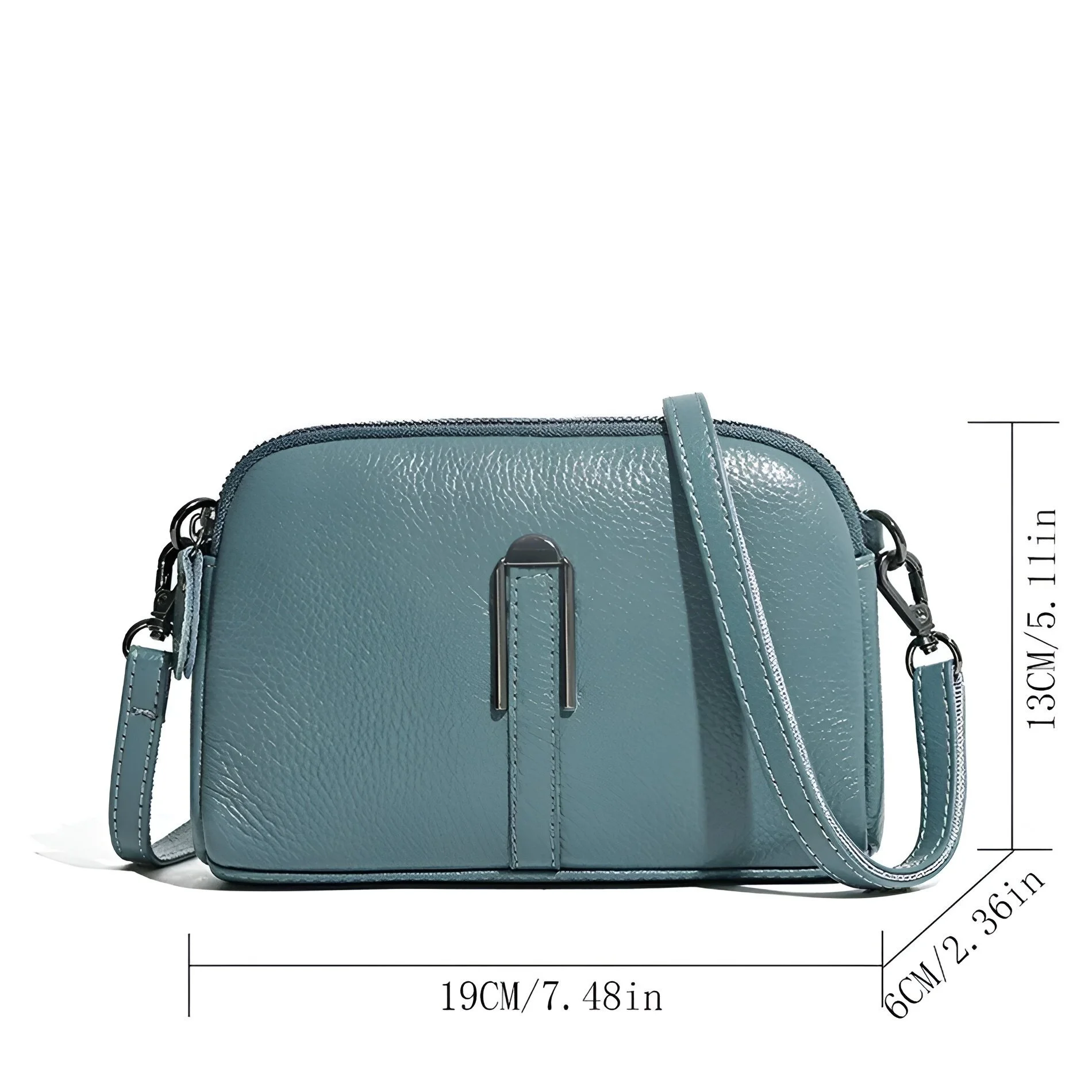
For city travel, the best crossbody bag is small enough to discourage overpacking, secure enough to close properly, comfortable enough to wear all day, and organized enough that you do not rummage in public. The 100% Genuine Leather Crossbody Handbag (#p-005864, $61.49) fits the city-walk version of that job: phone, wallet, passport or ID, keys, sunglasses, small essentials, and light daily carry.
The honest limit: this is not a luggage replacement, camera bag, beach tote, laptop bag, or hard-shell anti-theft device. It is a compact daily carry bag. That is the point.
Decision 1: Strap Fit
The strap is the first travel-safety feature because it decides where the bag sits and how much it moves.
A good travel crossbody should sit close to the body, usually around the front hip, high hip, or lower ribs depending on comfort and style. If the bag hangs near the thigh or swings freely behind you, it is easier to bump, grab, unzip, or forget.
Check three strap details:
Adjustability: the strap should shorten enough for your body. Some bags look like crossbodies but hang too low on shorter travelers.
Hardware stability: the buckle or slider should hold position. If the strap slowly lengthens during the day, the bag will end up lower and less controlled.
Comfort: the strap should not cut into the neck, slip constantly, or twist. A bag that is uncomfortable will eventually be carried on one shoulder, held in the hand, or taken off at a cafe. That defeats the purpose.
Leather, textured webbing, and structured straps can stay put better than extremely slick straps, but material is only part of the story. Strap width, bag weight, clothing texture, and body shape all affect comfort.
Test before traveling:
- Load the bag with real items.
- Wear it crossbody.
- Walk briskly for five minutes.
- Sit down and stand up.
- Bend to pick something up.
- Check whether the bag swings, slides, digs, or drops.
If the bag annoys you at home, it will annoy you more in an airport.
Decision 2: Closure Type
The closure decides how easy the bag is to open, for you and for everyone else.
Zippers are usually best for travel essentials because they create a clear barrier. A zippered main compartment is the minimum for a daily travel crossbody.
Flaps add coverage, especially when paired with a zipper underneath. A flap alone can be stylish, but if it uses only a weak magnet, it may be too easy to open.
Snaps and buttons can help on small pockets, but they should not be the only protection for passports, cards, or cash.
Open pockets are useful for tissues, lip balm, or a transit card you are prepared to lose. They are not safe places for phones, wallets, passports, or primary cards.
The best layout is layered:
- Main zipper for the valuable zone.
- Inner pocket for wallet or passport.
- Back pocket against the body for high-priority items.
- Small quick pocket for low-value frequent-use items.
Do not confuse fast access with good design. A bag that lets you grab everything instantly may also let someone else do the same. The goal is selective access: easy for low-risk items, slower for valuables.
Decision 3: Compartment Layout
Organization is part of security.
When everything sits in one open pile, you end up rummaging. Rummaging creates distraction, exposes cash or cards, and makes it easier to drop something. It also makes you more likely to set the bag down while searching.
A useful travel crossbody has zones:
Body-side zone: passport, backup card, emergency cash, or important ID when it must be carried.
Main zone: wallet, sunglasses, keys, small pouch, medication, charger, or travel documents needed that day.
Quick zone: transit card, lip balm, hand sanitizer, tissues, or earbuds.
No-value zone: receipts, gum, small snack, or items that do not matter if lost.
The U.S. Department of State's destination advisories often warn travelers not to keep valuables in outer pockets or on tables, and to keep belongings under control in airports, train stations, restaurants, public transit, and tourist areas. A good compartment layout helps you follow that advice without thinking about it all day.
The key rule:
Valuables go behind a closure, preferably against the body. Convenience items go in easy pockets.
If your bag does not let you separate those categories, it is less useful for travel.
Decision 4: Size
The best travel crossbody is usually smaller than the bag you think you need.
A large bag encourages overpacking. Once you add a water bottle, umbrella, camera, guidebook, snacks, cosmetics, medicine pouch, charger, jacket, and souvenirs, the bag gets heavy. Heavy bags become uncomfortable. Uncomfortable bags get taken off. A bag sitting on a chair, table, floor, or suitcase handle is easier to lose than one worn across the body.
For city walking, a small-to-medium crossbody should hold:
- Phone.
- Wallet or slim card holder.
- ID or passport if needed.
- Keys.
- Sunglasses.
- Tissues.
- Lip balm.
- Small hand sanitizer.
- One small emergency item, such as medication or a bandage.
If you need a water bottle, tablet, camera, sweater, and umbrella, you may need a daypack or tote, not a small leather crossbody.
This is where the 100% Genuine Leather Crossbody Handbag is best framed. It is a city-walk bag. It is not trying to carry the whole day. That limitation is useful for travelers who want to carry less and keep essentials close.
Decision 5: Material
Material affects comfort, durability, weight, weather behavior, and how the bag blends into your outfit.
| Material | Good For | Watch Out For |
|---|---|---|
| Genuine leather | Everyday city style, durability, polished look | Heavier, needs care, not ideal for heavy rain |
| Nylon | Lightweight travel, rain resistance, easy packing | Can look more casual or technical |
| Canvas | Casual city travel, softer structure | Can stain and absorb water |
| PU leather | Lower-cost leather look | May crack or wear less gracefully |
| Anti-theft technical fabric | Slash-resistant or locking features | Can be heavier and more obvious |
Leather is a good match when you want the bag to look like an everyday handbag instead of obvious travel gear. It can feel more polished in cities, restaurants, museums, and casual evenings. It also works well when you want one bag that fits both daytime walking and dinner.

Nylon is better when weather, weight, and packability matter more. If you are moving between airports, rain, beaches, hikes, and buses, a lightweight technical crossbody may be more practical.
Do not buy leather just because it sounds premium. Buy it if the trip and outfit use case match. The #p-005864 product is strongest for city travel, errands, daily carry, and polished casual use.
Crossbody vs. Backpack vs. Shoulder Bag
Each travel bag style solves a different problem.
| Bag Type | Best For | Main Risk |
|---|---|---|
| Crossbody | Daily essentials in crowds | Too small for large gear |
| Backpack | Water, layers, camera, day-trip load | Access behind you |
| Shoulder bag | Easy style and access | Can slip or be grabbed more easily |
| Sling bag | Compact active carry | Can still sit behind the body |
| Money belt | Deep storage for passport/cards/cash | Awkward for frequent access |
Rick Steves' travel advice strongly separates deep storage from daily access: money belts or hidden storage are for valuables you do not need constantly, while a daily bag holds spendable cash and items you use often. That distinction is useful even if you do not use a money belt.
A crossbody should not hold every irreplaceable item. It should hold the day's working items. Backup cards, extra cash, and sometimes passports should stay in deep storage when practical, such as a hotel safe, money belt, hidden pouch, or other secure system appropriate to the destination.
The safer travel system is layered:
- Deep storage: passport, backup card, extra cash.
- Crossbody: phone, daily card, small cash, ID copy, essentials.
- Pocket: transit card or small amount of quick cash.
No single bag should be the only security plan.
The Anti-Theft Routine
The bag matters. The routine matters more.
Wear It in Front in Crowds
On trains, buses, markets, escalators, festivals, lines, and busy sidewalks, move the bag slightly forward. Keep a hand near the zipper when passing through dense crowds.
Zip It Fully
A half-open zipper is common because travelers want fast access. It is also easy to exploit. Build the habit: open, use, close.
Do Not Hang It on Chair Backs
Travel.State.Gov destination guidance repeatedly warns travelers not to leave bags on chairs, counters, floors, tables, luggage, or out of physical control in restaurants, airports, train stations, hotel lobbies, and tourist areas. Keep the bag on your lap, between your feet with a strap looped around your leg, or worn across the body.
Keep Phones Off Tables
Phones on cafe tables are easy targets. Keep the phone in hand, in a closed pocket, or inside the bag. If you need to check maps, step aside and put the phone away before moving again.
Separate Cards
Do not keep every card in one wallet inside one bag. Carry one daily card and keep backup access elsewhere. If the bag is lost, the trip should still continue.
Reduce Outer-Pocket Value
Outer pockets should hold things you can lose without ruining the day: tissues, lip balm, receipts, or sanitizer. Never passport, primary wallet, or full cash stash.
Avoid Displaying Wealth
The State Department's general crime-prevention guidance advises travelers not to wear expensive jewelry or carry valuable items unnecessarily. That principle applies to bags too. A flashy designer bag can attract attention in places where low-profile carry would be smarter.
High-Risk Travel Moments
Most bag mistakes happen during transitions.
Airports: people are distracted by tickets, passports, luggage, security bins, phones, and rideshare pickup. Keep the crossbody zipped and on your body except when security rules require otherwise.
Train stations: crowds, announcements, bags, and ticket machines create distraction. Keep valuables out of outer pockets.
Public transit: move the bag to the front. Do not let it sit behind your hip on packed buses or trains.
Outdoor cafes: do not put the phone or wallet on the table. Do not hang the bag on the chair back.
Photo stops: people often unzip bags, pull out phones, and forget to close compartments. Pause after taking photos to reset the bag.
Markets: brushing, crowding, and distraction are normal. Carry less and close the bag.
Beach days: a leather crossbody is usually not the right beach bag. Sand, sunscreen, and water are hard on leather. Use a different system for swimming and wet environments.
Night walks: carry less, keep the bag close, and avoid isolated areas. If a destination advisory warns about specific neighborhoods or theft patterns, take that seriously.
Match the Bag to the Trip, Not the Photo
Many crossbody bags look perfect in product photos because they are styled empty, clean, and still. Travel is different. The bag has to work while you are walking quickly, checking into hotels, paying for coffee, scanning train signs, lifting luggage, sitting in tight restaurants, and moving through crowds.
Use the trip type to decide whether a compact leather crossbody is the right tool.
| Trip Type | Best Crossbody Setup | Why It Works |
|---|---|---|
| City weekend | Small leather crossbody with zipper | Carries essentials without looking like technical travel gear |
| Museum and restaurant trip | Polished compact bag | Fits dressier settings better than a backpack |
| Airport connection day | Crossbody plus carry-on | Keeps documents and phone separate from luggage |
| Public transit-heavy trip | Zippered bag worn in front | Easier to monitor in crowded trains and buses |
| Beach vacation | Washable nylon or waterproof pouch | Leather is vulnerable to sand, sunscreen, salt, and water |
| Hiking or active day trip | Sling or daypack | Better weight distribution for water, layers, and gear |
| High-theft urban itinerary | Crossbody plus deep storage | Keeps daily items handy while backup cards and passport stay elsewhere |
This matters because a bag can be good and still be wrong for a specific day. A genuine leather crossbody can be excellent for walking through a city center, visiting galleries, shopping, or going to dinner. The same bag can be a poor choice for a rainy hike, a sandy beach day, or a long excursion where you need water, snacks, a camera, and a jacket.
The practical answer is not to own every bag style. It is to assign jobs clearly. Let the crossbody handle the items you need often. Let deep storage protect items you cannot afford to lose. Let a backpack or tote carry bulk when the day requires bulk.
The Two-Minute Buying Test
Before buying a travel crossbody, do a simple mental test. Imagine the bag in five moments:
At airport security: Can you quickly reach your ID and boarding pass without exposing every card, receipt, and cash bill in the bag?
On a packed train: Can the bag sit in front of your torso without digging into your ribs or swinging behind you?
At a sidewalk cafe: Can you keep it on your body or on your lap without needing to hang it behind the chair?
At a ticket machine: Can you retrieve one card or transit pass without opening the main compartment wide?
At dinner: Does the bag still look appropriate, or does it feel like obvious travel equipment?
If the answer is yes to most of these, the bag is probably a good travel crossbody. If the bag fails two or more, the product photo is doing too much work.
There is also a physical test if you already own the bag or can inspect it in person:
- Put your real daily items inside.
- Close every zipper or flap.
- Wear the bag with a coat, then without a coat.
- Sit in a chair as if you are at a restaurant.
- Reach for your phone with one hand.
- Walk quickly while holding a coffee or suitcase handle.
- Check whether the bag shifts, twists, bounces, or forces you to adjust it constantly.
Travel bags fail in small ways before they fail in big ways. A strap that slips every five minutes becomes a safety issue because you stop wearing the bag correctly. A pocket that is too tight becomes a distraction because you fight with it in public. A bag that looks sleek but has no internal organization makes you open the whole thing every time you pay.
The best travel crossbody should feel boring in use. It should close, stay put, and give you the right item without drama.
Common Buying Mistakes
The biggest mistake is buying too large. A crossbody that is big enough for everything often becomes heavy enough to take off. Once it is off your body, it loses the main advantage of the design.
The second mistake is buying for anti-theft labels without checking normal usability. Locking zippers and slash-resistant panels can be useful, but if the bag is uncomfortable, stiff, awkward, or too heavy, you may use it less carefully. Security features should support daily behavior, not fight it.
The third mistake is ignoring closure quality. A cute flap, loose magnet, or open-top design may be fine for local errands, but travel usually demands a zippered main compartment.
The fourth mistake is treating the outer pocket as a wallet pocket. Outer pockets are convenient, which is exactly why they should hold low-value items. A transit card is reasonable. A passport or full wallet is not.
The fifth mistake is carrying the passport by default. Some destinations, hotels, rentals, or transactions may require original identification, so local rules and plans matter. But when you do not need the passport during the day, keeping it in a safer storage method is usually better than carrying it through every cafe, market, and train ride.
The sixth mistake is choosing material without thinking about climate. Leather can be durable and attractive, but it is not a wet-weather workhorse. If your trip involves rain, beaches, boats, or outdoor festivals, a washable synthetic bag may serve you better.
The final mistake is buying a bag that looks too precious for the trip. A travel bag should make you feel put together, but it should not make you nervous every time it touches a seat, wall, or security tray. If you would be constantly worried about scuffs, the bag may be better for daily local use than travel.
The Product: 100% Genuine Leather Crossbody Handbag
The 100% Genuine Leather Crossbody Handbag, Small Cowhide Messenger Bag for Women (#p-005864, $61.49), is best positioned as a polished city travel crossbody.
It fits these uses:
- City walks: phone, wallet, keys, sunglasses, small essentials.
- Museums and restaurants: looks more like an everyday handbag than technical travel gear.
- Airport personal carry: useful for documents and phone if not overstuffed.
- Evening travel outfits: better style match than a backpack.
- Light daily errands: small enough to discourage overpacking.
The strongest feature is the combination of genuine leather styling and crossbody function. It can look more refined than many nylon travel bags while still giving the practical benefit of hands-free carry.
The honest limit: genuine leather needs care. It is not the best choice for heavy rain, beach use, hiking, muddy festivals, or situations where weight and washability matter most. It is also small. If you need a tablet, water bottle, camera, guidebook, or extra layer, choose a larger day bag.
This is not an anti-theft fortress. It is a compact leather crossbody that supports better travel habits when worn correctly, zipped, and packed lightly.
When This Crossbody Is the Wrong Choice
Do not choose this bag if you need to carry a full travel day load. Small leather crossbodies are for essentials, not everything.
Do not choose it for beach or pool days. Leather and wet sand are a bad match.
Do not choose it for heavy rain unless you are prepared to protect and care for the leather.
Do not choose it as your only security layer on high-risk trips. Use deep storage for backup cards, passport, and extra cash when appropriate.
Do not choose it for hiking, biking, or active outdoor travel where nylon, sling, or backpack designs make more sense.
Do not assume genuine leather automatically means better travel security. Security comes from fit, closure, organization, and behavior.
The right buyer is someone who wants a city-ready daily essentials bag that looks polished and stays close to the body.
Packing Checklist for a Travel Crossbody
Pack the bag like a daily tool, not a suitcase.
Put inside the main compartment:
- Phone.
- Slim wallet or card holder.
- Small cash amount.
- ID or passport copy.
- Keys.
- Sunglasses.
- Medication or small personal item.
Put in quick-access pockets:
- Transit card.
- Lip balm.
- Tissues.
- Hand sanitizer.
- Earbuds.
Keep elsewhere when possible:
- Backup credit card.
- Extra cash.
- Passport when not needed that day.
- Full travel documents.
- Large electronics.
- Jewelry or valuables.
After packing, do the weight test. Wear the bag for ten minutes. If it already feels heavy, remove something before the trip.
FAQ
Is a crossbody bag safer than a backpack for travel?
For daily essentials in crowds, often yes, because the bag can sit in front of the body and stay visible. A backpack is better for larger loads but harder to monitor behind you.
Is a crossbody bag pickpocket-proof?
No. It can reduce some risks when zipped and worn correctly, but no bag is pickpocket-proof. Safe habits and light packing matter.
Should I carry my passport in a crossbody bag?
Only when you need it. When practical, keep your passport in secure deep storage such as a hotel safe, money belt, or hidden pouch, and carry a copy or photo for routine identification needs where acceptable.
What should go in the outer pocket?
Low-value items such as tissues, lip balm, sanitizer, receipts, or a transit card. Avoid passports, wallets, primary cards, and large cash in outer pockets.
Is leather good for a travel crossbody?
Leather is good for city travel, daily wear, restaurants, museums, and polished outfits. Nylon is often better for rain, beaches, hiking, or very lightweight packing.
What size crossbody is best for travel?
Small-to-medium is best for city essentials. It should hold phone, wallet, ID, keys, sunglasses, and small personal items without becoming heavy.
Should the bag have a zipper?
Yes. A zippered main compartment is strongly preferred for travel. Flaps and magnets can add coverage but should not be the only closure for valuables.
How should I wear it in a crowded place?
Wear it crossbody, keep it in front or against the body, close all zippers, and keep a hand near it when moving through dense crowds.
Is an anti-theft bag necessary?
Not always. Some travelers prefer locking zippers, slash-resistant straps, or technical fabrics. Others use a normal crossbody plus deep storage and careful habits. Match the security level to the destination and your comfort.