Article
Catnip vs Silvervine: Which One Actually Works Better?
Quick Answer
Catnip vs Silvervine: Which One Actually Works Better?: quick answer
Some cats react to catnip like it is the best thing ever invented. They rub their faces on it, roll, kick, drool a little, race around, or melt into a...
- Topic: Cat Enrichment.
- Related product category: pet-toys.
- This article keeps the main answer in the article copy and places relevant product context inside the guide.
If Catnip Does Nothing, Your Cat Is Not Broken
Some cats react to catnip like it is the best thing ever invented. They rub their faces on it, roll, kick, drool a little, race around, or melt into a happy stretch. Other cats sniff the exact same toy once and walk away.
That difference frustrates owners because catnip is treated like a universal cat button. It is not. Many cats respond to catnip, but many do not. Kittens may ignore it. Some adults never care. Some cats respond one month and seem less impressed later when the product is stale or overused.
Silvervine matters because it gives those cats another option. It is not simply "stronger catnip." It is a different plant with a different chemical profile and a long history of use in Japan, where it is often called matatabi. In a 2017 study of 100 domestic cats, almost 80% responded to silvervine, and nearly three quarters of the cats that did not respond to catnip responded to silvervine. A 2026 free-choice study also found a stronger voluntary preference for silvervine in its tested cats, but that does not make silvervine universal or guarantee that every commercial product will work.
That does not mean every cat needs silvervine. It means cat owners should stop treating catnip failure as the end of scent enrichment.
The better question is not "which plant is better?" It is "which scent produces the best, safest, most useful response in this cat?"
What Catnip Actually Does
Catnip is Nepeta cataria, a plant in the mint family. The compound most people talk about is nepetalactone, which is part of the classic catnip response. Cats usually react through smell rather than eating. They sniff, rub, roll, lick, chew, bunny-kick, or become briefly playful.
The response is inherited and variable. In the 2017 study, about one out of every three cats did not respond to catnip. Young kittens often do not show the full response yet, so a kitten ignoring catnip does not predict the rest of its life.
The effect is usually short. Many cats have a response window of several minutes, then lose interest for a while. This is normal. More catnip does not necessarily create more response. Sometimes it just creates a messy toy the cat ignores.
Catnip is not only "calming." Some cats become playful and silly. Some roll and relax. Some become mouthy or overstimulated. Some seem mildly sedated afterward. The same plant can look different across cats.
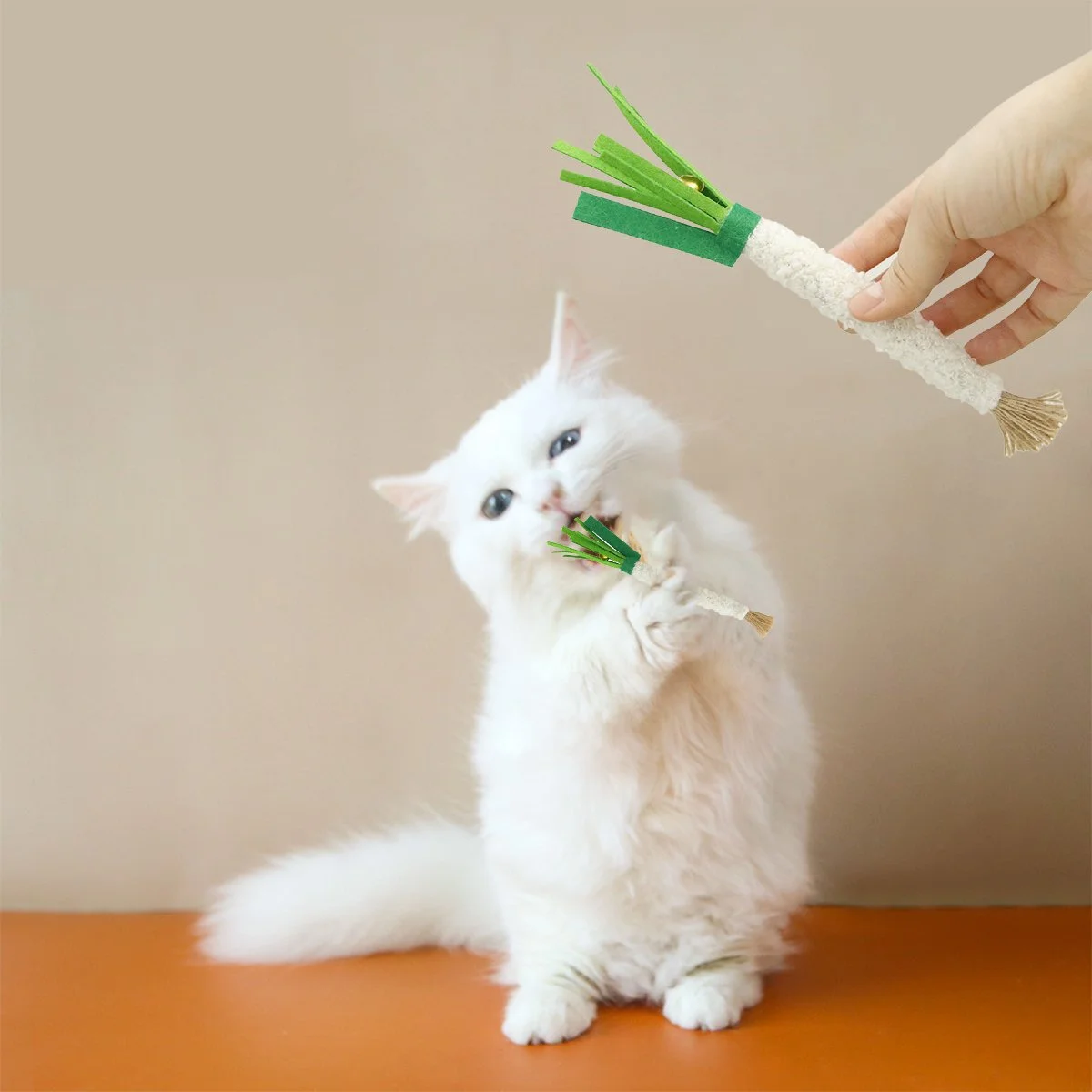
Catnip works best when it has a job:
- refreshing interest in a scratcher
- encouraging a hesitant cat to investigate a toy
- adding scent to a kicker or plush toy
- supporting short play sessions
- creating a positive association with a new object
It works less well when it is dumped everywhere all the time. If every toy smells like catnip, scent stops being special.
What Silvervine Does Differently
Silvervine is Actinidia polygama, a plant related to kiwi. Cats may respond to silvervine sticks, powder, fruit galls, leaves, or extracts depending on the product. Many commercial toys use silvervine powder or pieces inside a chew toy.
The reason silvervine can work when catnip fails is not just marketing. Silvervine contains different active compounds, and research on feline scent response has repeatedly found high response rates among domestic cats. Older studies reported that silvervine attracted many cats, including a large share of cats that did not respond to catnip. Newer free-choice work also suggests that when cats can approach or ignore both scents, silvervine may be the more reliable voluntary stimulus.
That distinction is important. A cat can respond to a scent in a controlled test but not choose it in a real environment. What matters at home is voluntary engagement. Does the cat approach, rub, roll, chew, play, or return to the toy later?
Silvervine responses can look similar to catnip responses: face rubbing, rolling, licking, chewing, kicking, and playful excitement. Some cats appear more intense with silvervine than catnip. Others show a gentle rub and leave. A few do not respond at all.
Silvervine is not automatically better for every situation. It may be too exciting for cats who guard scented toys or become rough. It may be unnecessary for cats who already respond beautifully to catnip. It may also vary by form and freshness.
Use silvervine as a tool, not a miracle switch.
The Real Comparison
Here is the practical comparison for pet owners:
| Question | Catnip | Silvervine |
|---|---|---|
| Common response? | Many adult cats respond, but not all | Often works for cats that ignore catnip |
| Typical behavior | Rubbing, rolling, play, chewing, relaxation | Rubbing, rolling, chewing, active engagement |
| Best first use | Scratchers, soft toys, kicker toys | Chew toys, scent toys, cats bored by catnip |
| Intensity | Mild to strong depending on cat | Often stronger, but variable |
| Kittens | May not respond yet | May also vary; introduce gently |
| Overuse risk | Can become boring if always available | Can also lose novelty if overused |
| Safety focus | Avoid excessive ingestion and messy loose herb | Watch chewing, splinters, loose pieces, guarding |
The most important row is not response rate. It is safety focus. A scent that works too well can create new problems if the toy is wrong.
For example, a cat who gently rubs a catnip plush may do well with free access. A cat who chews silvervine sticks aggressively may need supervision. A cat who becomes possessive over scented toys may need shorter sessions and separate play in a multi-cat home.
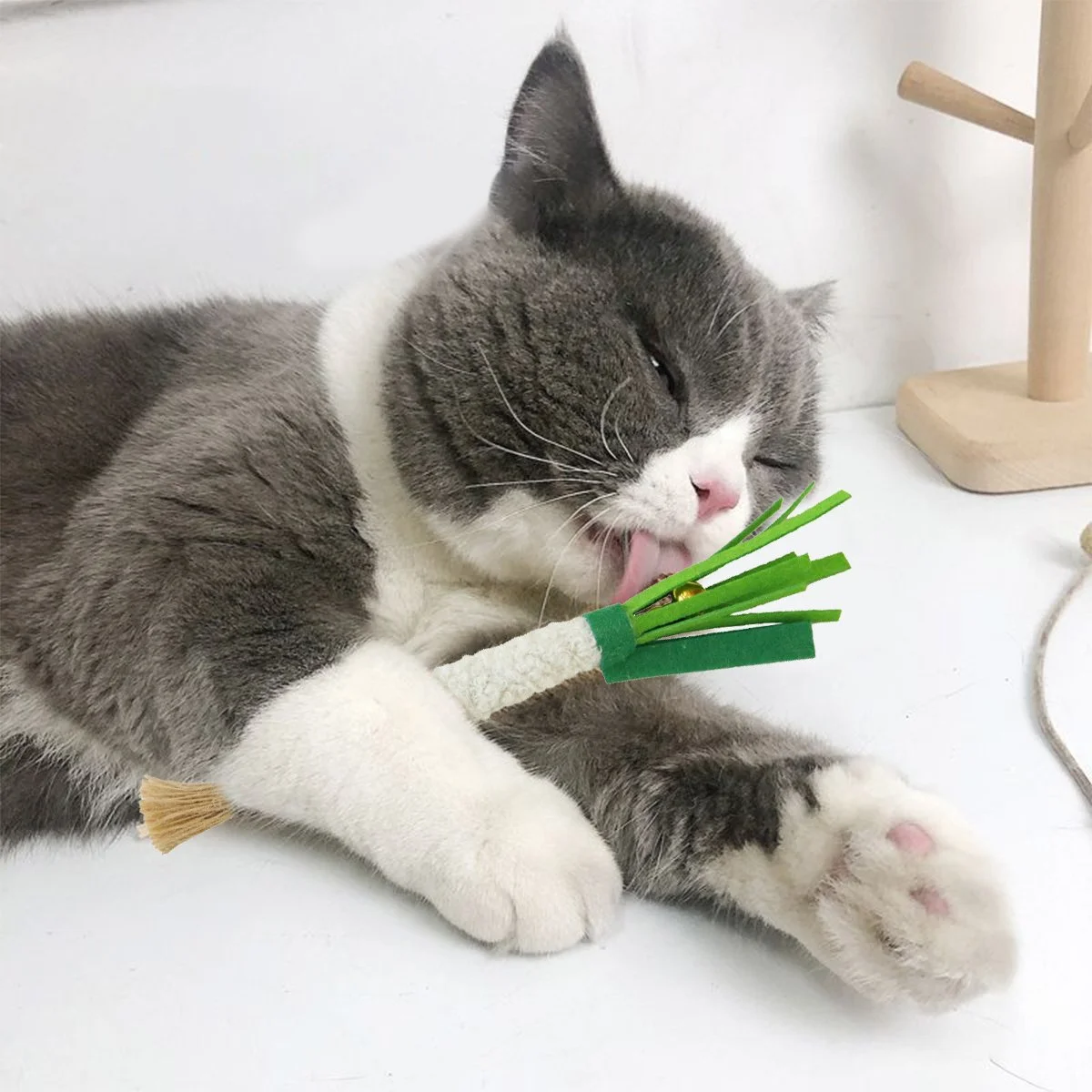
Do not choose based only on "stronger." Choose based on the behavior you want.
What the Research Does and Does Not Prove
The research supports a useful pattern, not a universal winner.
In the 2017 study, researchers offered catnip, silvervine, valerian, and Tatarian honeysuckle to 100 domestic cats. Almost 80% responded to silvervine. Of the cats that did not respond to catnip, nearly 75% responded to silvervine. That makes silvervine a sensible second test for a cat that ignores catnip, but the study did not show that every cat prefers silvervine or that every silvervine toy has the same strength.
The newer free-choice work is valuable because cats could approach or ignore the scents instead of being judged only after exposure. Silvervine produced more consistent voluntary self-anointing in the tested cats. The sample was still limited, and the test used specific plant materials and extracts. A dried stick, powder, stuffed toy, and spray can smell different because processing, plant part, freshness, and dose all change the result.
Safety research is encouraging but should not be stretched too far. A 2023 study of repeated silvervine exposure did not find the liver or kidney injury biomarkers that researchers were monitoring, and it did not find signs consistent with addiction or stress. That supports normal enrichment use; it does not make damaged toys, swallowed fibers, unknown sprays, or unsupervised chewing safe.
The practical conclusion is simple: use research to choose the next experiment, then use your cat's behavior to choose the routine.
When Catnip Is the Better Choice
Catnip is still useful. It is familiar, widely available, affordable, and effective for many cats.
Choose catnip first if your cat already responds well and safely. There is no need to upgrade a working routine. A catnip kicker, scratcher, or plush toy may be enough to encourage play.
Catnip may be better for cats who get too intense with silvervine. If silvervine causes guarding, biting, frantic chewing, or conflict with other cats, catnip may provide a softer level of interest.
Catnip may also be better for routine scent refreshes. A small amount rubbed into a scratcher can encourage use without creating a high-value object the cat wants to guard.
Use catnip sparingly. Put it on specific toys or surfaces, not the entire house. Store it sealed and replace stale material. If your cat stops responding, take a break and rotate unscented toys for a while.
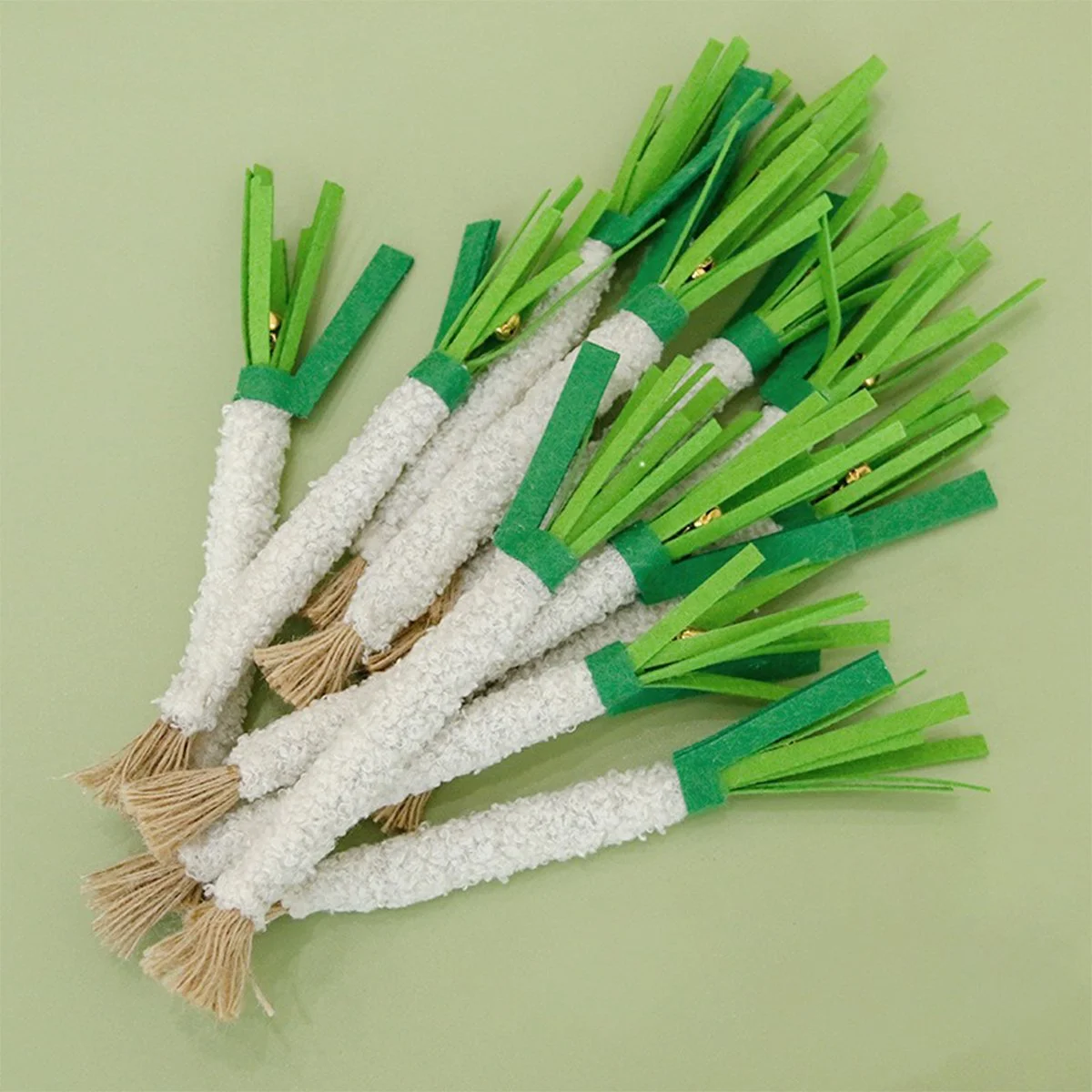
Catnip is not a failure because silvervine exists. It is one scent option in a wider enrichment toolkit.
When Silvervine Is the Better Choice
Silvervine is worth trying if your cat ignores catnip, seems bored with scented toys, or needs more sensory enrichment.
It can be especially useful for:
- cats who sniff catnip and walk away
- indoor cats who need stronger toy motivation
- cats who enjoy rubbing and chewing
- cats who need encouragement to use a chew toy
- cats who respond better to wood, powder, or gall-based scents
Silvervine chew toys can provide both scent and texture. That combination is useful because the cat has something to do with the response. It can rub, chew, paw, kick, or carry the toy.
Start small. Offer the toy for a few minutes while watching. Some cats react strongly the first time. If the cat rolls, rubs, chews gently, and relaxes afterward, the toy is a good candidate for rotation. If the cat bites aggressively, eats pieces, or guards the toy, shorten access and supervise closely.
For multi-cat homes, introduce silvervine separately at first. A scent that one cat loves can become a conflict point if several cats crowd the same toy.
Silvervine is also useful as a test. If your cat ignores catnip and silvervine, the problem may not be scent. That cat may prefer motion, food puzzles, window watching, cardboard, or social play.
Do Not Use Either One Every Day
Scent novelty fades when it is always available. If catnip toys live on the floor for weeks, they become background objects. Silvervine can lose impact the same way.
Use a rotation:
- one day with a scented toy
- one day with motion play
- one day with a food puzzle
- one day with a scratcher refresh
- several days with unscented toys
You can also rotate by purpose. Use silvervine for active play if your cat responds strongly. Use catnip on scratchers or softer toys if your cat responds more gently. Keep unscented toys in the mix so play does not depend entirely on chemical excitement.
Store scented toys in a sealed bag or container when not in use. This preserves scent and prevents constant exposure. It also lets you inspect the toy before each session.
If a cat stops responding, do not keep adding more. Take a break. Try again in a week. Freshness, form, and context often matter more than quantity.
A Simple Three-Day Home Test
Do not compare the scents by putting every product in front of the cat at once. That can create crowding, competition, and a confusing result. Test one option at a time in the same quiet location.
Day 1: Catnip. Offer a fresh catnip toy for five minutes. Record whether the cat approaches, sniffs, rubs, rolls, chews, plays, or walks away.
Day 2: Silvervine. Use the same timing and setup with a silvervine toy. Do not add loose powder to the room. Supervise the first session.
Day 3: Unscented control. Offer a familiar unscented toy with similar size and texture. This tells you whether the cat prefers the scent or simply prefers that toy shape.
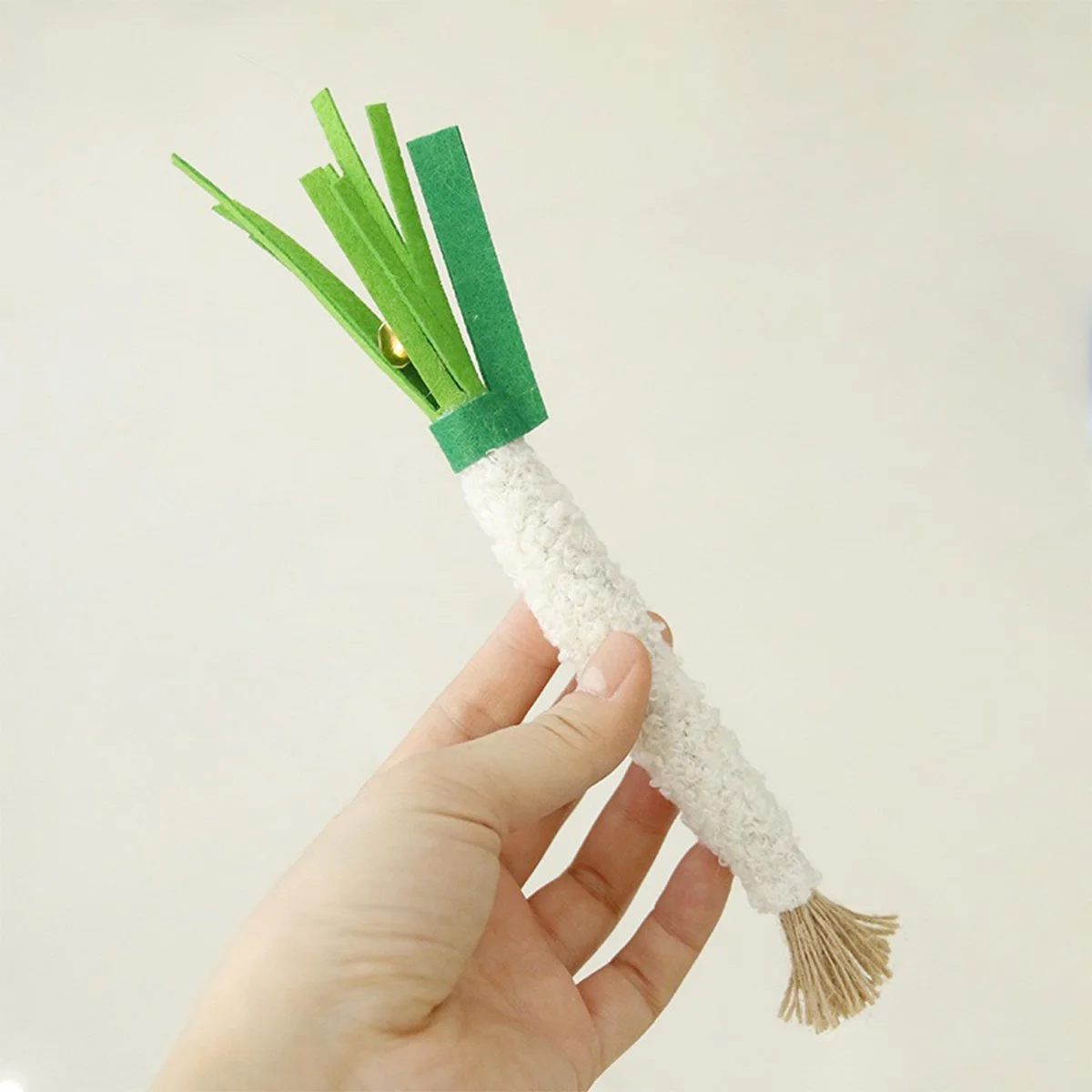
Score the response by behavior, not by excitement alone:
| Observation | What it may mean |
|---|---|
| Sniffs and leaves | The scent, form, or freshness is not compelling |
| Rubs or rolls, then relaxes | Positive scent enrichment |
| Chews gently and returns later | Good match for a supervised chew toy |
| Bites hard, guards, or eats pieces | Too intense or unsafe in that form |
| Ignores all three | Try motion, food puzzles, scratching, or window enrichment |
Repeat the test once on another day before making a strong conclusion. One refusal can reflect mood, recent play, a full stomach, a noisy room, or stale material.
Forms Matter: Powder, Sticks, Galls, and Toys
Catnip usually appears as dried leaves, sprays, pellets, or stuffed toys. Dried catnip quality varies widely. Old, dusty, scentless catnip may not do much. Sprays can be useful for scratchers but may not interest cats who prefer plant material.
Silvervine appears in more forms:
- sticks
- powder
- fruit gall powder
- chew toys
- mixed herb blends
- refillable pouches
Sticks can be satisfying for cats who like chewing, but they need supervision. Remove splintered pieces or small broken parts. Powder can be strong, but it can also make a mess and may lead to ingestion if overused. Refillable toys can be useful if the closure is secure.
Stuffed scent toys are often the easiest starting point because they contain the scent and give the cat a safe target. The toy still needs inspection. If seams open, stuffing appears, or the cat eats fabric, remove it.
The form can explain why a cat "likes silvervine" but ignores one silvervine product. A cat may like powder but not sticks, chew toys but not sprays, fresh scent but not stale filler. Test one variable at a time.
Safety Rules
Catnip and silvervine are generally used as enrichment, but safe use still depends on the cat and the product.
Use small amounts. More is not always better. Too much loose plant material can lead to stomach upset in some cats, and a very strong reaction can make some cats rough or irritable.
Supervise first use. Watch whether the cat rubs, rolls, chews, eats, guards, or becomes overstimulated. The first session tells you how much access makes sense.
Do not force it. Do not push a scented toy into the cat's face. Let the cat approach voluntarily. Scent enrichment works best when the cat can choose.
Avoid damaged toys. Loose seams, exposed stuffing, broken sticks, loose fibers, or detachable parts change the safety level.
Separate cats if needed. Scented toys can become high-value resources. If one cat guards or another cat crowds, give each cat its own space.
Use caution with kittens, seniors, cats with medical issues, and cats on special diets if plant ingestion is likely. When in doubt, ask your veterinarian.
Product Spotlight
Eco-Friendly Silvervine Cat Chew Toy with Jute Rope (#1804159)
This toy fits cats who ignore catnip or who prefer scent plus texture. The silvervine gives the toy a different scent profile from traditional catnip toys, while the jute rope provides a surface for rubbing, chewing, and pawing.
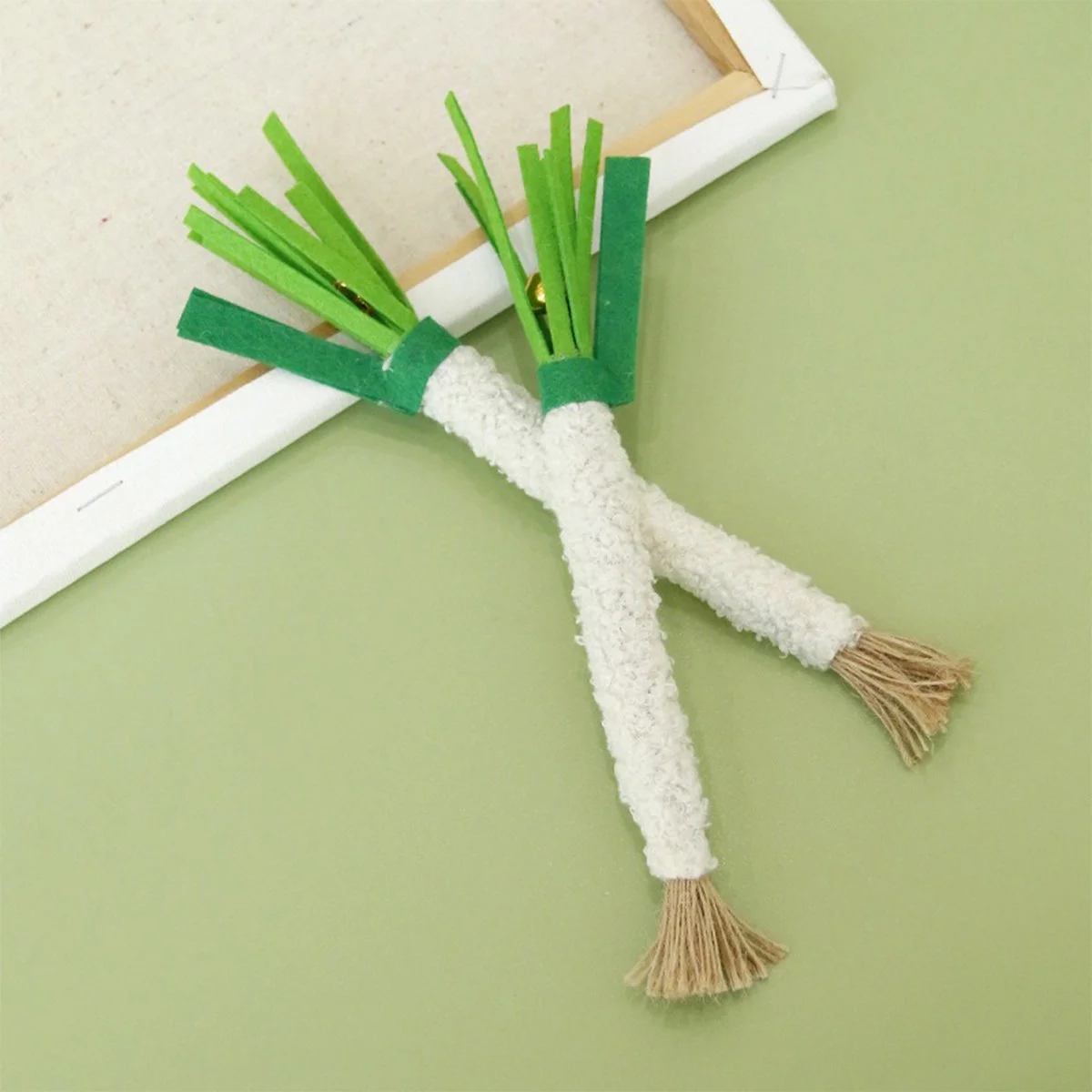
Best use: introduce it during a supervised session and watch the response. If your cat rubs, rolls, paws, or chews gently, add it to a rotation. If your cat pulls fibers, eats pieces, or guards the toy, shorten sessions or remove it.
It works best as one enrichment option, not the only toy in the house. Pair it with unscented play, scratchers, and motion toys so your cat's activity does not depend on scent alone.
The Practical Answer
If your cat loves catnip and uses it safely, keep using catnip. If your cat ignores catnip, silvervine is the next scent to try. If your cat reacts too intensely to silvervine, use it less often or choose a gentler option.
Silvervine appears to be the more reliable choice for many cats, especially in free-choice situations where cats can decide what to approach. But the best enrichment is still individual. The plant matters. The form matters. Freshness matters. The toy matters. The cat's behavior matters most.
Do a simple home test: offer catnip one day, silvervine another day, and an unscented toy on a third day. Watch what your cat voluntarily returns to. That answer is more useful than any label.
Browse Cat Enrichment products