Article
Cat Tunnels For Indoor Cats: Why Hiding, Chasing, And Resting Need The Same Toy
Quick Answer
Cat Tunnels For Indoor Cats: Why Hiding, Chasing, And Resting Need The Same Toy: quick answer
A good cat tunnel works because it gives an indoor cat something the home usually removes: cover. Many indoor play areas are too open. The owner waves...
- Topic: Cat Enrichment.
- Related product category: pet-toys.
- This article uses one relevant product insertion and keeps the main answer in the article copy.
A Cat Tunnel Is More Than A Tube On The Floor
A good cat tunnel works because it gives an indoor cat something the home usually removes: cover. Many indoor play areas are too open. The owner waves a wand toy in the middle of the room, rolls a ball across a bare floor, or sets out a toy mouse in full view. The cat watches, crouches, maybe swats once, and then loses interest. The problem is not always the toy. The problem is that the cat has no place to stalk from.
Cats are not built to chase everything in open space like a dog chasing a ball. Many cats prefer to watch, hide, wait, ambush, retreat, and attack again. A tunnel gives that sequence a physical structure. The cat can enter, pause, listen, peek, pounce, and disappear. That makes ordinary toys more interesting because the tunnel changes the environment around them.
For indoor cats, this matters. A home is comfortable, but it can be flat and predictable. Food arrives in bowls. Weather stays outside. Prey does not appear behind grass or furniture unless the owner creates that opportunity. A tunnel adds a small, movable zone of uncertainty. It can become a hunting blind, a sprint lane, a nap cave, a confidence shelter, or a play station depending on where it is placed.
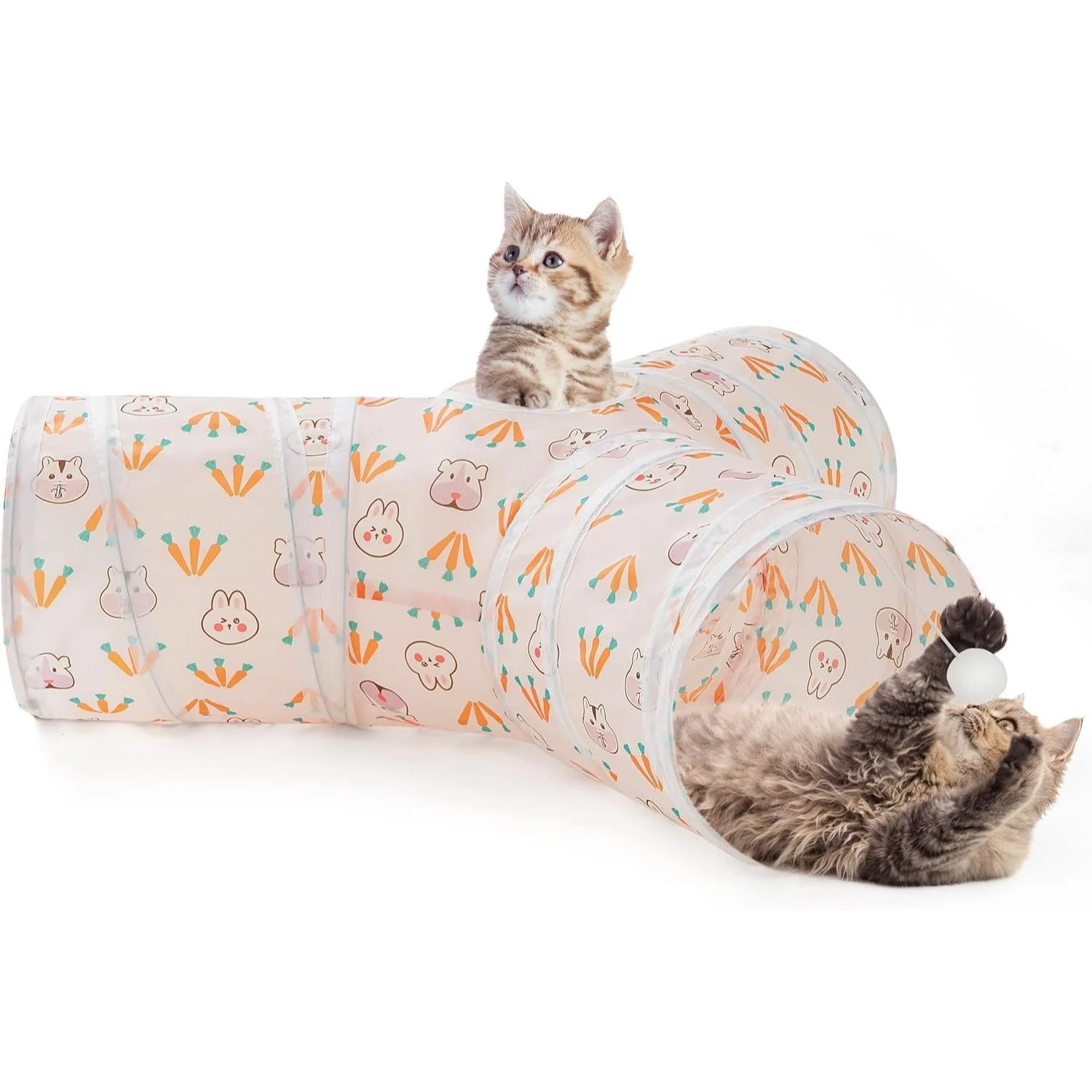
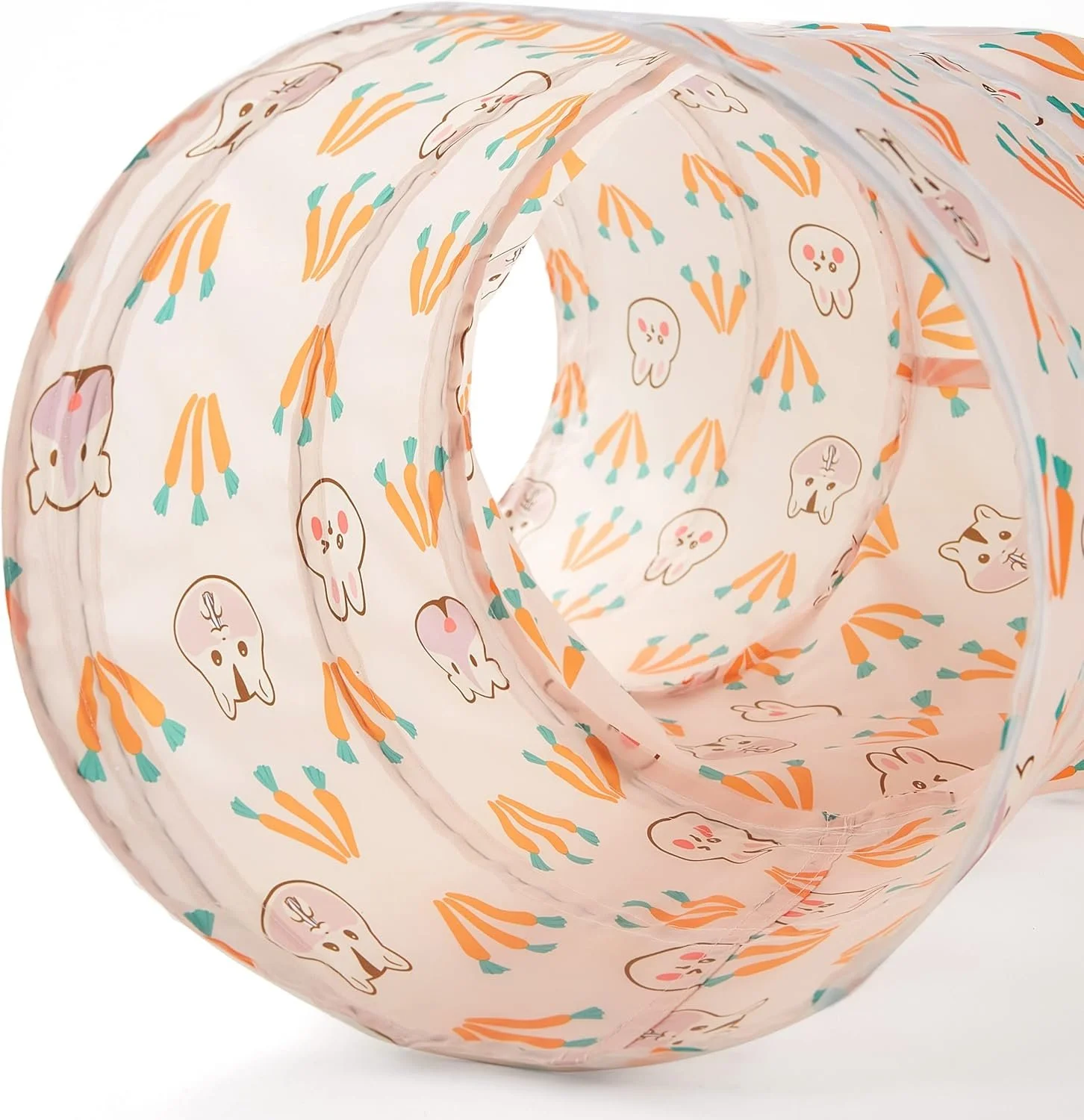
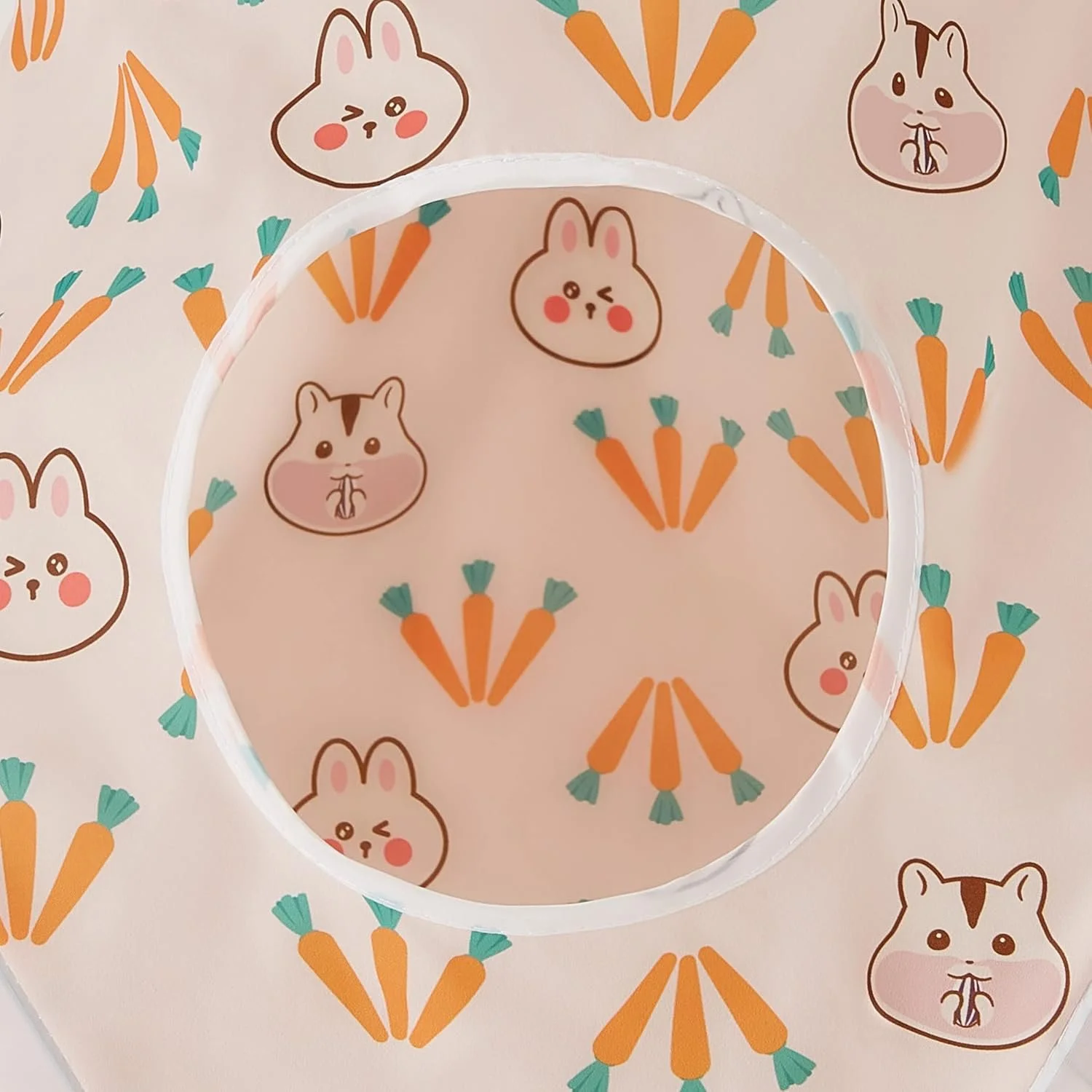
The 3-Way Foldable Cat Tunnel with Peek Holes for Indoor Play (#1766233) is the matched product for this article because it has five product images and a design that supports more than one tunnel behavior. Multiple entrances reduce the feeling of being trapped, peek holes allow ambush and observation, and the foldable polyester construction makes it easier to rotate or store. It fits the article better than a single straight tube because this guide is about using tunnels as part of a full indoor enrichment setup.
Why Tunnels Trigger Real Cat Behavior
A tunnel gives a cat three things at once: concealment, movement, and choice. Those are core parts of feline play. A toy that only moves may not be enough. A toy that only hides may become a bed. A tunnel combines both if the owner uses it correctly.
Concealment lets the cat feel hidden while still watching the room. This is especially useful for cautious cats that do not want to chase in open space. A cat may ignore a feather wand in the middle of the floor but become focused when the feather disappears beside a tunnel entrance.
Movement happens naturally because the tunnel creates a path. Cats run through it, turn around inside it, burst out of an opening, or reach through a peek hole. Even a cat that does not do long play sessions may make several short sprints when the tunnel becomes part of the route.
Choice matters because cats dislike feeling cornered. A one-entry hiding spot can help some cats, but it can also make multi-cat tension worse if another cat blocks the opening. A tunnel with multiple exits gives the cat options. The cat can enter, leave, reverse, or hide without committing to one trapped position.
A tunnel also changes sound and texture. Some cats like the rustle of fabric. Some like the feeling of the tunnel moving slightly as they pass through. Some like batting at a toy from inside because the walls make the game feel more private.
That is why tunnels often revive toys the cat previously ignored. The wand, ball, mouse, or treat has not changed. The hunting context has changed.
Straight, Curved, Three-Way, And Bed-Style Tunnels
Not every cat tunnel serves the same purpose. A straight tunnel is simple and easy to understand. It works well as a sprint path, hiding tube, or doorway between two play zones. It is usually best for kittens, active cats, and homes with limited space.
A curved tunnel feels more interesting because the cat cannot see the whole route at once. The bend creates surprise. A toy can disappear around the curve, and the cat has to decide whether to follow. Curved tunnels can be better for ambush play than straight tunnels.
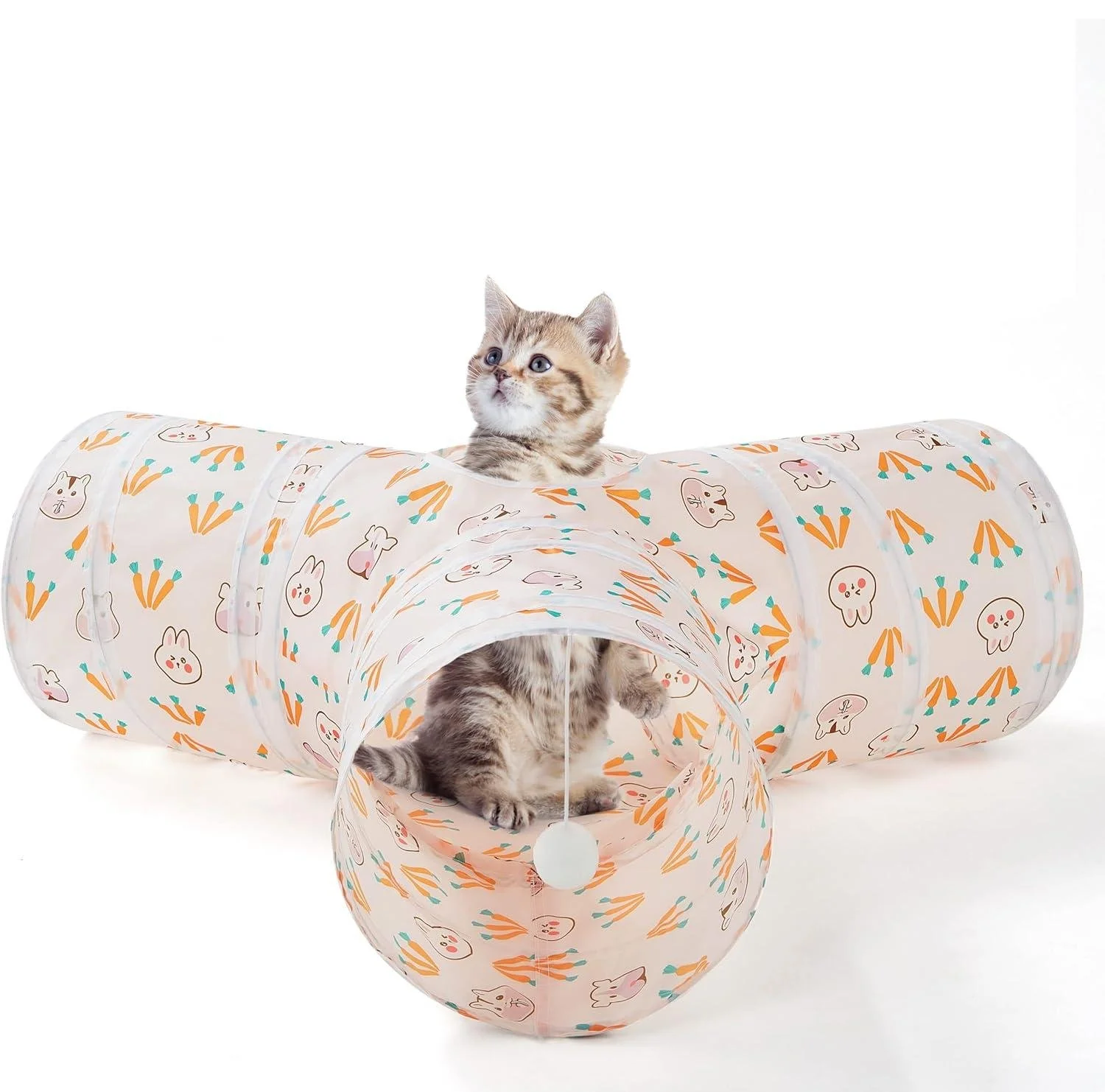
A three-way tunnel gives multiple entrances and exits. This is useful for multi-cat homes and cats that like to change direction quickly. The #1766233 tunnel fits here. Multiple openings and peek holes make it more flexible than a basic tube. One cat can hide in the center, watch through a hole, and exit another side if another pet approaches.
A bed-style tunnel combines resting and play. These are good for cats that like enclosed naps, seniors that prefer comfort, or small homes where a tunnel must earn its floor space all day. The tradeoff is that a bed-style tunnel may become more of a nap spot than an active play tool.
A crinkle tunnel adds sound. Some cats love this; others avoid it. If the cat is sound-sensitive, start with a quieter fabric. If the cat is bold and playful, crinkle can increase excitement.
The best choice depends on the cat's temperament and the room. For broad enrichment, a foldable three-way tunnel is one of the most versatile formats because it supports hiding, chasing, observing, and escape routes.
Size And Material Matter More Than Cute Design
Cat tunnel sizing is easy to underestimate. A tunnel should be wide enough for the cat to enter, turn, and exit without scraping whiskers or shoulders. A kitten may fit any tunnel, but an adult cat, large breed, or overweight cat needs more space. If the tunnel is too narrow, the cat may use it once and then avoid it.
Length matters too. A very short tunnel may feel like a sleeve rather than a hiding place. A very long tunnel may be fun for confident cats but intimidating for cautious ones. Multi-exit designs solve this by giving shorter routes through the same structure.
Material affects both safety and use. Polyester tunnels are common because they are light, foldable, and easy to move. Felt tunnels can feel softer and more stable. Plush tunnels add comfort but may collect hair and need more cleaning. Wire-framed tunnels should be checked to make sure no wire is exposed.
Washability is practical. Indoor cats shed, track litter dust, drool on toys, and sometimes hide treats inside play areas. A tunnel that cannot be cleaned may become unpleasant over time. The #1766233 product is described as washable fabric, which is useful for long-term rotation.
Avoid tunnels with loose parts, weak hanging toys, sharp internal wires, or small detachable decorations. If a hanging ball is included, inspect the string and attachment point often. Many cats attack the hanging piece first.
Cute colors and novelty shapes are secondary. The tunnel must fit the cat, stay stable enough for play, clean reasonably well, and fold away if the room needs to be reset.
Placement Decides Whether The Cat Uses It
A cat tunnel placed randomly in the center of a room may be ignored. Placement creates meaning. Put the tunnel where the cat already moves, watches, or rests.
Near a window, the tunnel becomes a watching station. The cat can observe birds, people, and outdoor movement while feeling partly hidden. This is useful for cats that like visual enrichment but become overstimulated at the window.
Near a sofa or chair, the tunnel becomes an ambush point. A wand toy can disappear behind furniture and reappear near the tunnel opening. The cat can stalk from the tunnel without feeling exposed.
Across a normal walking route, the tunnel becomes part of daily movement. Many cats cannot resist running through something that appears in a familiar path. Do not block human traffic dangerously, but use the cat's existing route.
In a multi-cat home, placement should avoid dead ends. Do not put a tunnel so one cat can trap another against a wall. Leave space around exits. A three-way tunnel like #1766233 helps because it offers more escape choices, but the room still matters.
Avoid loud, unstable, or high-stress areas at first. A tunnel next to a washing machine, vacuum storage, barking dog gate, or children's play zone may fail because the cat does not feel safe there.
Move the tunnel every few days. A tunnel in the same place for months can become furniture. Rotation restores novelty.
How To Introduce A Tunnel To A Cautious Cat
Some cats dive into a tunnel immediately. Others need time. Do not push, place, or force a cat inside. A tunnel should feel like an option, not a trap.
Start by leaving the tunnel open in a calm area. Let the cat sniff it. If the tunnel is folded or compressed from storage, open it fully and make sure it is stable. Some cats dislike a tunnel that rolls or collapses unexpectedly.
Use treats near the entrance first, not deep inside. Put one treat beside the opening, then one just inside if the cat is comfortable. Let the cat choose. For a nervous cat, putting the reward too far inside can create pressure.
Use play around the tunnel before play through the tunnel. Move a feather or small toy beside the entrance. Let the cat watch. Let the toy disappear partially. The first goal is curiosity.
For sound-sensitive cats, avoid loud crinkle tunnels at first. If the tunnel makes sound when touched, press it lightly yourself while the cat is nearby and relaxed, then stop. Let the cat learn the sound is not dangerous.
Keep first sessions short. If the cat looks interested but cautious, end on that success. The tunnel can stay out if it is safe and the cat is not chewing it. Over time, curiosity usually increases.
The best introduction is slow enough that the cat thinks the tunnel was its own idea.
Combining Tunnels With Other Toys
A tunnel becomes much more useful when combined with other toys. It is the stage, not always the whole game.
With a wand toy, move the feather along the outside of the tunnel, pause at an opening, disappear behind the tunnel, then reappear through a peek hole. The cat gets to stalk, wait, and pounce. This is better than waving the feather in the air nonstop.
With a ball, roll it through the tunnel rather than across an empty room. The sound and sudden exit can trigger chase. Lightweight balls are best. Hard balls may be loud and may startle some cats.
With treat play, place one or two treats near different openings. Do not turn the tunnel into a food storage area. Small scent rewards can encourage exploration, but crumbs should be cleaned out.
With a kicker toy, let the cat carry or wrestle near the tunnel after a chase. Some cats like to grab the toy and retreat into the tunnel. This completes a hunt sequence: chase, catch, hold, and rest.
With another tunnel or box, create a small play route. A box near one opening and a tunnel angled toward a rug can turn a simple room into a hunting layout. Do not make the layout so cluttered that the cat crashes or feels trapped.
The #1766233 tunnel is especially useful for combination play because the peek holes and multiple entrances give the owner more ways to hide and reveal the toy.
Tunnels In Multi-Cat Homes
Tunnels can help multi-cat homes, but only if the setup respects territory and escape routes. A tunnel can reduce tension by giving a cat cover and an exit. It can also create conflict if one cat blocks the only opening.
Choose tunnels with multiple exits when possible. A three-way design is safer than a one-way dead end for many multi-cat homes. The #1766233 tunnel is a good match for this reason. Multiple entrances let cats avoid direct confrontation.
Place tunnels in open enough areas that cats can move around them. Do not wedge the tunnel between furniture so the center becomes a trap. Leave room around exits.
Watch body language. Playful tunnel chasing looks loose and bouncy, with pauses and role changes. Tense chasing looks stiff, silent, one-sided, and hard to interrupt. If one cat always hides and the other always blocks, remove the tunnel and reset the layout.
Use more than one enrichment point. A tunnel, a box, a perch, and a food puzzle in separate areas can reduce competition. If the tunnel is the only exciting object in the room, cats may compete over it.
Do not force shared play. Some cats enjoy chasing each other through a tunnel. Others prefer solo access. Rotate turns if needed.
A tunnel is not a cure for serious cat conflict, but it can be part of a better room setup when used with enough exits and observation.
Tunnels For Kittens, Adults, And Senior Cats
Kittens often use tunnels intensely. They sprint through, attack the sides, roll inside, and test every opening. For kittens, check stability and exposed wires often. Their energy can damage lightweight tunnels faster than expected.
Adult cats may use tunnels more strategically. They may sit inside and wait, launch a short chase, then disappear again. Adult cats often benefit from tunnels combined with wand toys because the tunnel gives the game structure.
Senior cats may not sprint, but tunnels can still help. A senior cat may enjoy a shorter tunnel as a cozy hideout, a low-effort watching spot, or a soft route between resting places. Avoid tunnels that collapse easily or require tight turning. Put the tunnel on a non-slip surface and keep entrances easy to access.
Overweight cats need sizing attention. A tunnel that is too narrow may discourage movement and create frustration. Start with a wider tunnel and short games. Do not use the tunnel to force fast exercise. Use it to invite movement.
Shy cats need quiet placement and multiple exits. Bold cats may enjoy a tunnel in a more active room. Each life stage and personality changes how the same tunnel should be used.
The right tunnel is not just the one that looks fun in photos. It is the one the cat can enter comfortably, exit freely, and use repeatedly without stress.
Cleaning, Storage, And Safety Checks
Cat tunnels collect hair, dust, litter particles, treat crumbs, and saliva. Shake the tunnel out regularly. Vacuum or wipe it when needed. If the fabric is washable, follow the product care method and let it dry fully before folding or storing.
Inspect the frame. Many foldable tunnels use internal wire or spring frames. If the frame pokes through fabric, the tunnel should be removed immediately. Exposed wire is not worth repairing casually.
Check seams, peek holes, and hanging toys. Cats often claw at openings. A small tear can become a larger one quickly. If the cat chews fabric, use the tunnel only under supervision or choose a tougher material.
Foldable tunnels should be stored carefully. Do not let them spring open near the cat's face. Fold and secure them away from pets. If the tunnel uses straps, make sure the straps are not dangling during play.
If treats are used inside or near the tunnel, clean afterward. Food residue can attract insects or encourage chewing. A tunnel should not smell like old snacks.
Rotate storage. Put the tunnel away for a few days, then bring it back. This keeps it interesting and gives the owner time to inspect and clean it properly.
Safety is simple but consistent: check structure, remove damaged parts, clean food residue, and do not leave risky attachments unsupervised.
Common Reasons Cats Ignore Tunnels
If a cat ignores a tunnel, the tunnel may not be the problem. The location may be wrong. Move it near a window, beside a sofa, along a normal walking route, or near an existing favorite toy.
The introduction may have been too forceful. If the cat was placed inside or startled by the tunnel, give it time. Fold it away for a few days and reintroduce it calmly.
The tunnel may be too small, too noisy, too unstable, or too exposed. Try stabilizing it against a rug or furniture edge. Add a nearby box or blanket so the cat has more cover.
The cat may need a companion toy. Some cats do not care about an empty tunnel but become interested when a feather disappears through it. Use slow movement and pauses.
The tunnel may have become boring. Cats habituate. Move it, rotate it, pair it with a different toy, or store it temporarily.
The home may have stress factors. Other pets, loud rooms, blocked exits, or resource competition can make a cat avoid a tunnel. Fix the room before assuming the cat dislikes tunnels.
Troubleshooting should be practical. Change one variable at a time so you know what helped.
Cat Tunnels In Small Apartments
Small homes do not need less enrichment. They need more deliberate placement. A tunnel can take up visible floor space, so it should work with the room instead of becoming clutter.
In a studio or small living room, place the tunnel along the edge of a wall rather than in the center. This keeps a clear walking path while giving the cat a protected route. A three-way tunnel can be angled so one entrance faces the room, one faces a sofa or cabinet, and one faces a low play area. The cat gets choices without the entire floor becoming a toy zone.
Use vertical space around the tunnel. A low cat tree, chair, window perch, or shelf near the tunnel gives the cat two ways to observe the room: from inside cover and from above. Do not put the tunnel under a high jumping route where the cat may land on it awkwardly.
Storage is important in a small home. The #1766233 tunnel folds flat, so it can be brought out during active periods and stored after. This is not a disadvantage. A tunnel that appears for the evening may create more interest than one left out all day.
Try a simple evening setup: tunnel along the wall, a box near one exit, and a wand toy used for five minutes. Then put the wand away, leave the tunnel available if it is safe, and return the room to normal later. The cat gets a hunting environment without permanent clutter.
For very limited spaces, do not add several tunnels at once. One well-placed tunnel with a rotation of balls, wand toys, or treats will create more value than a crowded pile of gear.
A Seven-Day Tunnel Play Rotation
Tunnels stay interesting when the activity around them changes. The tunnel does not need to be redesigned every day. Change one small part of the game.
On day one, leave the tunnel open in a familiar room and let the cat explore. Use no extra toys if the cat is cautious. The goal is simple comfort.
On day two, roll a lightweight ball through one entrance. Let it exit on its own. Do not repeat too fast. A cat may need time to watch where the ball goes.
On day three, use a wand toy around the outside. Hide the target beside an opening, pause, and let it emerge through a peek hole. Give the cat a few successful catches.
On day four, move the tunnel to a different safe location. A new angle beside the sofa, window, or rug can make the same product feel new. Keep all exits open.
On day five, add a few pieces of regular food near separate entrances for a quiet scent search. Do not bury food deep in the tunnel or leave crumbs behind.
On day six, use the tunnel as a rest zone. Put a familiar blanket near, not inside, the tunnel and let the cat choose whether to nap or watch. Not every day needs active play.
On day seven, combine the cat's favorite element from the week with the tunnel. If the cat loved the wand, repeat wand play. If it preferred a ball, use that. The cat's response should guide the next rotation.
This approach prevents the tunnel from becoming background furniture. It also gives the owner useful information about whether the cat prefers chasing, hiding, food searching, or calm observation.
Final Recommendation
Cat tunnels are valuable because they create cover, movement, choice, and repeatable indoor enrichment. They help cats stalk from hiding, sprint through a safe route, observe from a protected place, and combine ordinary toys into more realistic hunting games. For multi-cat homes, multiple exits and smart placement matter as much as the toy itself.
The best matched product for this article is the 3-Way Foldable Cat Tunnel with Peek Holes for Indoor Play (#1766233). It has five product images and fits the topic because it offers multiple entrances, peek holes, foldable storage, washable polyester fabric, and lightweight indoor use. It is a better article match than a basic straight tube because it supports hiding, chasing, resting, and escape-route planning.
Use the tunnel as part of the room, not just as an object on the floor. Place it where the cat already wants to be, pair it with wand or ball play, rotate it regularly, and inspect it for damage. A good tunnel makes indoor play feel less flat and gives the cat a small but meaningful territory to control.
Browse Cat Enrichment products