Article
Cat Toys for Weight Loss: 6 Ways to Get Your Overweight Cat Moving
Quick Answer
Cat Toys for Weight Loss: 6 Ways to Get Your Overweight Cat Moving: quick answer
An overweight cat does not need a toy box full of exciting objects. It needs a plan that makes movement easier to start, easier to repeat, and safe...
- Topic: Cat Health.
- Related product category: pet-toys.
- This article keeps the main answer in the article copy and places relevant product context inside the guide.
Weight Loss Starts Before the Toy Comes Out
An overweight cat does not need a toy box full of exciting objects. It needs a plan that makes movement easier to start, easier to repeat, and safe enough for a heavier body.
That is the part many owners miss. They buy a wand toy, wave it fast, watch the cat stare from the floor, and decide the cat is lazy. The cat may not be lazy at all. The cat may be heavy, stiff, bored by predictable motion, worried about slippery floors, or unsure that chasing is worth the effort.
Weight loss in cats is mostly controlled by food intake, and any serious weight plan should be discussed with a veterinarian. Cats should not be crash-dieted. Rapid weight loss can be dangerous. Exercise is not a replacement for a measured feeding plan. Its job is to support the plan by improving daily movement, muscle use, confidence, and interest in the environment.
The best toy routine for an overweight cat is not intense. It is repeatable. A cat that moves for three minutes five times a day is usually doing better than a cat that is pushed into one exhausting session and avoids play tomorrow.
Think of toys as movement invitations. A good toy asks the cat to stand up, shift weight, walk a few steps, bat, stalk, stretch, climb a little, or pounce once. Those small actions add up when they happen daily.
The goal is not to turn a couch cat into an athlete overnight. The goal is to rebuild the habit of moving.
First, Check Whether Movement Hurts
Before increasing play, look at how your cat moves when no toy is involved.
Watch the cat get up from sleep. Does it rise smoothly or hesitate? Watch jumping. Does the cat still jump onto furniture, or does it pull itself up with the front legs? Watch stairs, litter box entry, grooming, and posture. A cat that avoids jumping, stops grooming the back half of the body, lands heavily, or seems stiff may be dealing with pain as well as weight.
That matters because painful cats often look lazy. If play is uncomfortable, more toys will not fix the problem. The cat may need veterinary evaluation, a slower weight plan, easier surfaces, lower perches, or pain management before exercise can increase safely.
Also check breathing. Cats should not be pushed to pant during play. Open-mouth breathing, repeated collapsing, limping, hiding after activity, or distress vocalization means the session was too much or something else is wrong.
For a healthy but overweight cat, start below what you think the cat can handle. The first win is voluntary participation, not speed.
Build Tiny Play Sessions
Many owners fail because they try to create a workout. Cats are not small dogs. Most cats prefer short hunting bursts with rest in between.
Start with sessions of one to three minutes. That sounds too short, but it is useful if the cat actually participates. A heavy cat that stands up, walks across the rug, bats twice, and returns later has done something valuable. You are building the routine first.
Use a simple rhythm:
- Place the toy where the cat can see it.
- Move slowly at first.
- Let the cat watch without pressure.
- Create one easy catch.
- Stop before the cat quits completely.
- Repeat later in the day.
Stopping early is important. If you always play until the cat walks away, the cat learns that play ends in fatigue or boredom. If you stop while the cat still has interest, the toy remains more valuable.
A practical starting goal is three short sessions per day. After one week, add a fourth session or extend the best session by one minute. Do not increase everything at once.
Weight-loss play should feel almost too easy at the beginning. Easy is what makes it repeatable.
Choose Toys That Lower the Starting Effort
Overweight cats often resist toys that require instant acceleration. Fast wands, high jumps, and frantic laser games can feel like too much.
Start with toys that allow small movements:
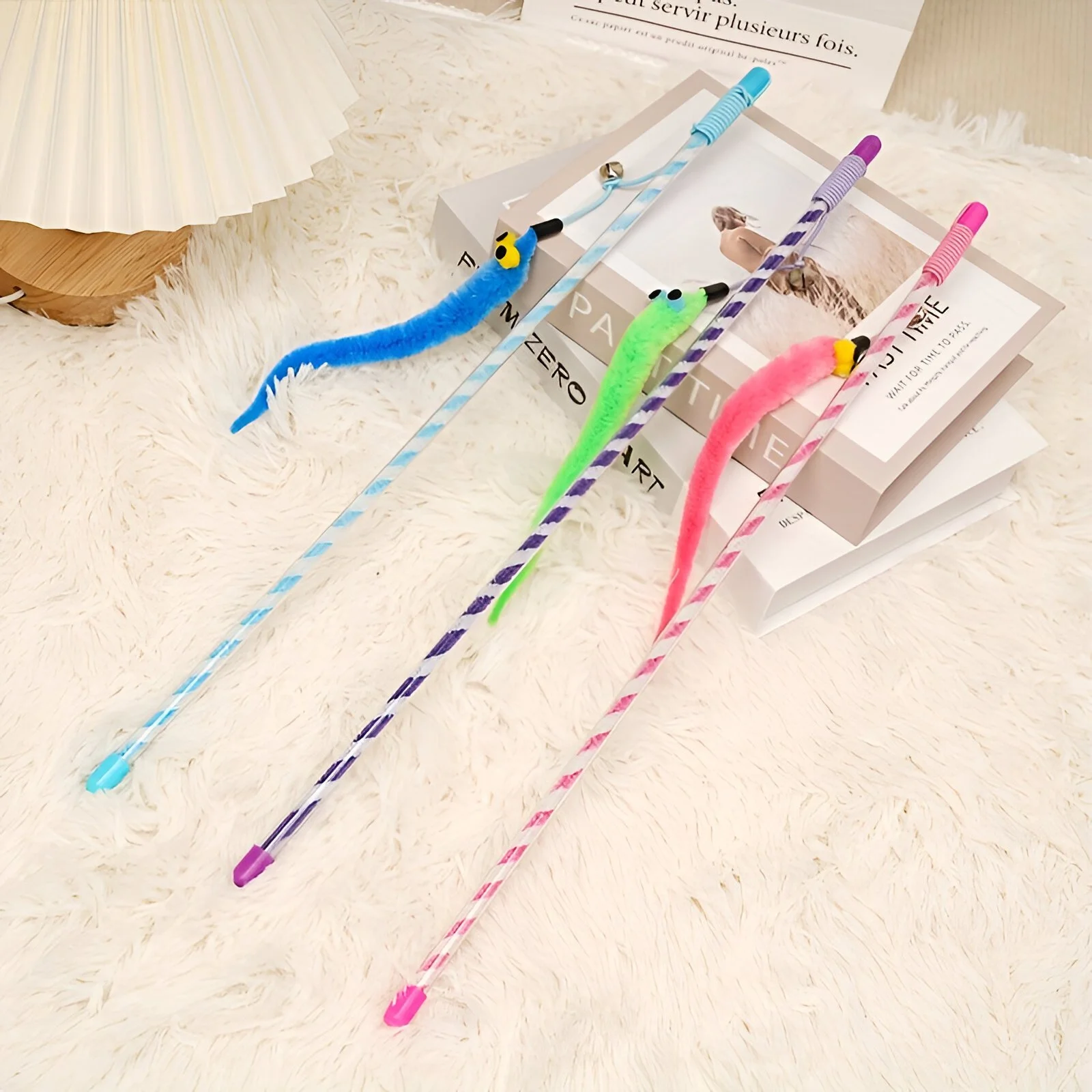
- a feather that drags slowly past the front paws
- a rolling toy that moves in short bursts
- a treat puzzle that makes the cat stand and paw
- a ball track that lets the cat bat while lying down
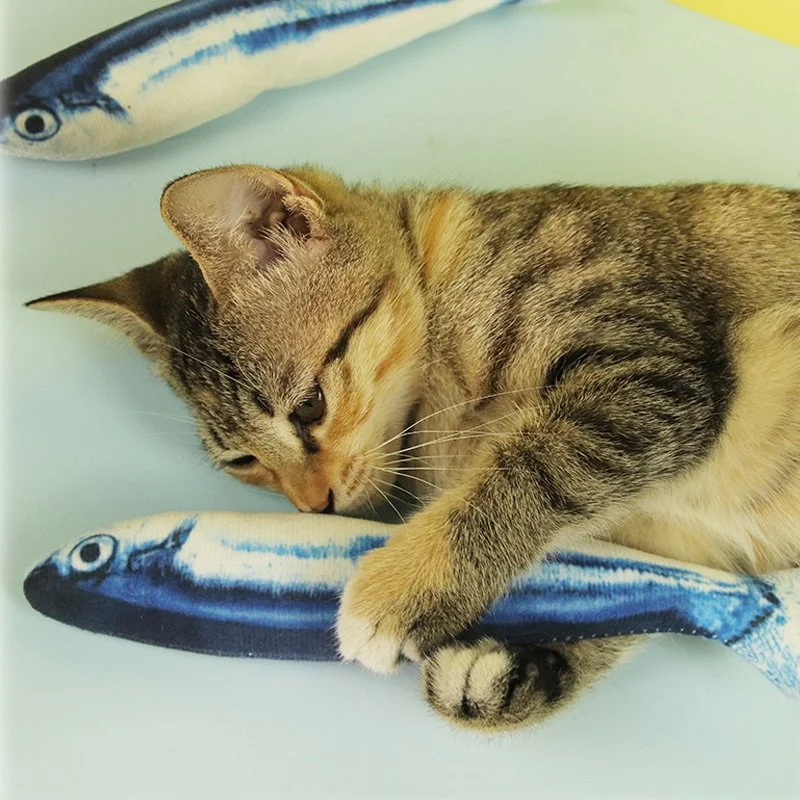
- a soft kicker toy that encourages grabbing and rear-leg movement
- a low automatic toy that creates movement without demanding full owner participation
These are not all equal. The right toy depends on how your cat says yes. One cat may paw at a rolling ball. Another may only respond to feathers. Another may ignore movement unless food is involved. Another may prefer a toy partly hidden behind a box.
The first job is not calorie burn. It is finding the entry point.
If the cat watches but does not move, slow down. If the cat walks away, change location. If the cat swats once and stops, count it as a beginning. If the cat gets frustrated, reduce difficulty.
For very inactive cats, even standing up for a toy is progress.
Use Food Without Adding Calories
Food can motivate an overweight cat, but it can also sabotage the entire plan. The answer is not "no food rewards." The answer is to use measured food differently.
Take a small portion of the cat's normal meal and use it for movement. Do not add a separate pile of treats on top of the day's food. If your cat eats dry food, place pieces in different spots around a room. If your cat eats wet food, use a small amount on a lick-safe surface or food puzzle that can be cleaned properly.
Scatter feeding is one of the simplest movement tools. Start with very short distances: a few pieces beside the bowl, a few pieces two steps away, a few pieces near the doorway. Over time, spread them farther apart. The cat should search, walk, and succeed without frustration.
Food puzzles can also help, but only if the cat can solve them. A puzzle that is too hard may lead to pawing, biting, giving up, or begging for a bowl. Start easy. Let the cat win. Increase difficulty slowly.
Use food rewards at the end of chase games. Cats need a catch. If a toy always escapes, some cats stop trying. A tiny food reward after a pounce can make the hunt feel complete.
The key rule is simple: food rewards should come from the daily food budget.
Make the Home Require a Little More Movement
A cat does not lose weight only during formal play. The home can quietly ask for more steps.
Move resources slightly apart. Put water, beds, scratchers, litter boxes, and food in sensible but separate locations. Do not make life hard or stressful. Just avoid putting everything the cat wants within two feet of the favorite sleeping spot.
Use low vertical changes. A healthy cat can benefit from climbing, but an overweight cat may need gradual height. Start with a low platform, ottoman, or stable step rather than a tall perch. Make sure surfaces do not wobble.
Place toys in paths. A kicker toy near the hallway, a ball track near a resting spot, or a wand session near a scratcher can make movement feel natural. The cat should encounter opportunities, not be chased around the room by a human.
Create two or three stations:
- a food-search station
- a play station
- a resting station that requires a short walk
Rotation helps. Move toys weekly. A toy in a new position can create fresh interest without buying anything.
This is especially useful for cats that do not respond to scheduled play. Some cats move more when the environment invites them quietly throughout the day.
Strategy 1: Replace Bowl Feeding With Foraging
Bowl feeding is efficient, which is exactly the problem. Many cats can eat a meal in less than a minute and then return to sleep. For an overweight cat, that removes one of the easiest chances to move.
Foraging changes the meal into an activity. It does not have to be complicated. Place measured food in several small portions around a room. Use a towel fold, a shallow puzzle, a treat ball, or a few safe hiding spots.
Start with success:
- keep the first search area small
- make food visible at first
- use the same room for several days
- increase distance before increasing difficulty
- stop if the cat becomes stressed
Foraging works because it attaches movement to something the cat already wants. It also slows eating, which can help owners notice appetite and behavior more clearly.
Do not use foraging to restrict food suddenly. The amount should still be measured and appropriate. The delivery changes; the feeding plan remains controlled.
Strategy 2: Use Wand Toys More Slowly
Many overweight cats ignore wands because owners move them too fast. A heavy cat may not want to leap, twist, or sprint. That does not mean the wand is useless.
Use ground-level prey movement. Drag the feather along a wall. Let it disappear behind a chair leg. Pause. Twitch once. Move away slowly. The pause is often more interesting than the speed.
Keep early targets low. Avoid high jumps until the cat is stronger and lighter. A low pounce is enough. A paw tap is enough at the beginning.
Let the cat catch the toy. The catch is not optional. If the toy always escapes, the game can become frustrating. Let the cat pin it, bite lightly, and hold it briefly before you move again.
End with calm. After the final catch, offer a small part of the meal or let the cat settle with the toy. Do not whip the cat into a frenzy and then disappear.
For overweight cats, wand toys should build confidence before athleticism.
Strategy 3: Use Automatic Toys Carefully
Automatic toys can help because they create movement when the owner is busy. They are not a babysitter, and they are not a complete exercise plan.
The best use is scheduled, supervised or semi-supervised sessions. Bring the toy out for a few minutes, let the cat engage, then put it away. If the toy is always available, many cats stop caring.
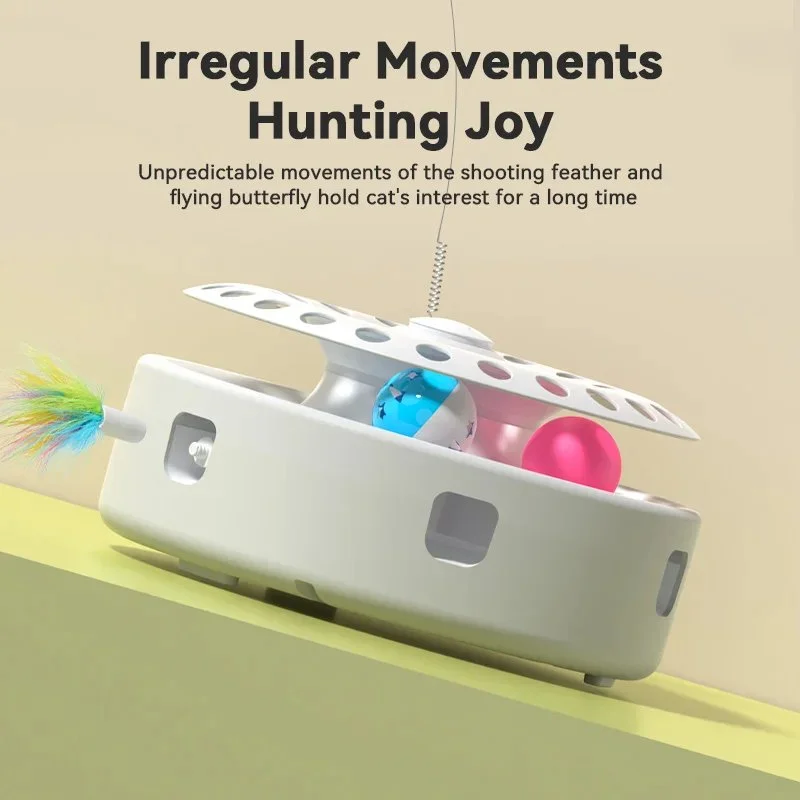
Automatic toys are useful for cats that respond to unpredictable movement. Rolling balls, feathers, fluttering pieces, and short motion cycles can trigger stalking without requiring the owner to perform every movement.
Watch the cat's response. If the cat crouches, tracks, walks closer, bats, and returns later, the toy is useful. If the cat hides, freezes, or swats defensively, the toy may be too intense. If the cat only watches from across the room, lower the difficulty by placing it farther away, using shorter sessions, or pairing it with a familiar mat.
Automatic does not mean unsupervised for every cat. Check for loose feathers, small parts, battery compartments, cords, and damaged pieces.
Strategy 4: Turn Scratching Into Movement
Scratching is not only furniture protection. It stretches the body, engages the shoulders, and gives the cat a physical outlet.
Place a scratcher near where the cat already wakes up or stretches. If the scratcher is hidden in a corner the cat never visits, it will not help. Use catnip or silvervine lightly if your cat responds to scent, but do not rely on scent alone.
For overweight cats, horizontal scratchers may be easier at first. Vertical scratching asks for more reach and balance. Both can be useful, but start where the cat succeeds.
Pair scratching with play. Drag a wand past the scratcher. Place a toy nearby. Put a small food reward on the far side so the cat walks, stretches, and investigates.
The goal is not to make scratching a workout. The goal is to add one more natural movement into the day.
Strategy 5: Build Low Vertical Challenges
Climbing burns more effort than walking, but it must be safe. Overweight cats are at higher risk of awkward landings, slips, and joint stress.
Start low. Use a stable step, short bench, low cat tree platform, or furniture route the cat already uses. Avoid asking for big jumps. Add traction if surfaces are slick.
Use food or toys to encourage movement upward only when the cat is comfortable. Place the reward at the edge of a low platform, then farther back as confidence improves.
Watch landing quality. A cat that lands heavily, hesitates, or avoids coming down may need lower options. Downward movement can be harder than upward movement.
Vertical movement should never feel like forcing a heavy cat into an obstacle course. It should feel like making daily routes slightly more active.
Strategy 6: Track Behavior, Not Only Weight
A scale matters, but it is not the only progress signal. Weight may change slowly, especially if the plan is safe and gradual.
Track weekly:
- how many play sessions the cat accepts
- how long the cat stays engaged
- whether the cat initiates movement
- whether jumping or climbing looks easier
- whether grooming improves
- whether begging changes
- whether the cat explores more rooms
Use the same scale and the same day if you weigh at home. Better yet, ask your veterinarian for a target weight and safe loss rate. Guessing can be risky because cats vary widely by frame, breed, age, and muscle.
Photos can help. Take a top-view and side-view photo every two to four weeks in similar lighting. Small changes are easier to see over time.
Do not punish slow progress. A cat that moves more, plays more, and feels better is improving even before the number looks dramatic.
Why Many Weight-Loss Toy Plans Fail
Most failed weight-loss toy plans fail for predictable reasons. The cat is not given enough time to learn the toy, the toy is too difficult, the reward is too large, the floor is uncomfortable, or the owner expects the cat to behave like a kitten immediately.
The first failure pattern is overexcitement. A person buys an energetic toy, turns it on, and expects the cat to chase. Some cats do chase. Many overweight cats watch, retreat, or lie down. That does not mean the toy is useless. It means the first exposure was too intense. Cats often need to observe new motion before they trust it.
The fix is distance and repetition. Place the toy several feet away. Let it move for a short time. Do not push the cat toward it. If the cat watches, that is the first step. On another day, move it closer or use a slower mode if the toy has one. Confidence often comes before movement.
The second failure pattern is treat inflation. The owner uses a toy to encourage movement, but every tiny effort earns a large treat. The cat moves more but eats more too. That cancels the point of the plan.
Use tiny rewards, meal portions, or non-food rewards when possible. Some cats will work for a brush session, a window opening, a chin scratch, or access to a favorite room. Food is powerful, but it should be controlled.
The third failure pattern is making the session too long. Heavy cats may look interested for the first minute and then suddenly quit. Owners often interpret this as stubbornness. It may be fatigue. It may also be frustration if the toy is always just out of reach.
End sessions while the cat still has a little curiosity left. A two-minute session that happens every day is stronger than a twelve-minute session that makes the cat avoid the toy tomorrow.
The fourth failure pattern is ignoring the room. A slippery floor, loud motor, unstable mat, bright light, or another pet watching too closely can make a cat refuse play. Weight-loss play needs a calm setup. The environment should make movement feel safe.
When a toy plan fails, do not immediately buy another toy. Change one variable first: location, speed, time of day, food amount, surface, or distance. That teaches you what the cat is avoiding.
Match the Plan to the Cat's Starting Point
Not every overweight cat starts from the same place. A mildly overweight five-year-old cat that still jumps easily can handle more movement than a senior cat with arthritis. A playful cat that gained weight after free-feeding needs a different plan from a fearful cat that hides most of the day.
For a mildly overweight but mobile cat, focus on frequency. Use wand play, automatic toys, scatter feeding, and low climbing routes. The cat can probably do several small activity windows if you keep them fun.
For a very heavy cat, focus on access. Make movement easier before you make it harder. Use low-sided litter boxes, stable steps, wide resting surfaces, and toys that can be reached without jumping. A very heavy cat may need to lose some weight through diet before active play becomes comfortable.
For a senior overweight cat, focus on comfort and joint safety. Choose soft surfaces, slow wand movements, food searches, and low platforms. Avoid fast pivots, slippery floors, and big jumps. If the cat seems sore after play, the plan is too aggressive.
For a shy overweight cat, focus on privacy. Some cats will not play when people stare at them. Use quiet toys in a familiar room. Sit nearby but do not hover. Let the cat decide whether to approach. A shy cat may start with nighttime or early morning play when the house is calmer.

For a food-obsessed cat, focus on measured puzzle feeding. That cat may not chase a toy for fun, but it may walk, paw, search, and solve for part of its normal meal. This is often the most reliable entry point.
For a multi-cat home, protect the overweight cat from competition. A faster cat may steal the toy, the food, or the attention. Feed and play separately when needed. The overweight cat needs chances to succeed without being crowded.
The best plan is not the hardest plan. It is the plan the specific cat repeats without stress.
How to Increase Difficulty Without Overdoing It
Progress should be gradual enough that the cat barely notices the increase. The fastest way to ruin a weight-loss routine is to make yesterday's success feel like today's punishment.
Increase only one variable at a time.
You can increase duration by adding 30 to 60 seconds to one session. You can increase distance by placing food a few steps farther away. You can increase height by moving from the floor to a low step. You can increase toy challenge by making the prey movement less predictable. Do not increase duration, distance, height, and speed in the same week.
Use a weekly pattern:
- Week 1: make the cat participate
- Week 2: repeat the easiest wins
- Week 3: add one small challenge
- Week 4: reassess weight, mobility, and attitude
If the cat refuses the new level, return to the previous level for several days. Refusal is useful feedback. It tells you where the plan became too hard, too strange, or too unrewarding.
Do not chase the cat with the toy. Do not drag the cat to the toy. Do not restrict food so sharply that the cat becomes frantic. A safe plan should create more confidence, not more pressure.
The most useful progress sign is voluntary return. If the cat comes back to the toy, waits near the play area, follows you to the feeding puzzle, or starts batting before you prompt, the routine is becoming part of the cat's life.
Common Toy Mistakes for Overweight Cats
The first mistake is relying only on laser pointers. Lasers can create movement, but they do not give the cat a physical catch. Some cats love them. Others become frustrated or overstimulated. If you use a laser, end with a real toy, food puzzle, or small meal portion the cat can actually reach.
The second mistake is using only electronic toys. Automatic motion is useful, but owner-led play still matters. A cat often responds differently when a person changes rhythm, hides the toy, pauses, and lets the cat win. Automatic toys should fill gaps, not replace interaction.
The third mistake is buying toys that require jumping too soon. Jumping can be good later, but early weight-loss play should protect joints. Build walking, standing, turning, batting, and stretching first.
The fourth mistake is leaving every toy on the floor. Constant access kills novelty. It also makes it harder to know what the cat actually likes. Keep a small active set and rotate.
The fifth mistake is ignoring claws and traction. Overweight cats need stable footing. Trim claws as appropriate, use rugs or mats, and avoid slick launch points. A cat that slips during play may avoid that area afterward.
The sixth mistake is treating exercise as punishment. If the cat associates toys with frustration, chasing, hunger, or pressure, play becomes harder. The cat should feel like it is winning often.
Product Spotlight
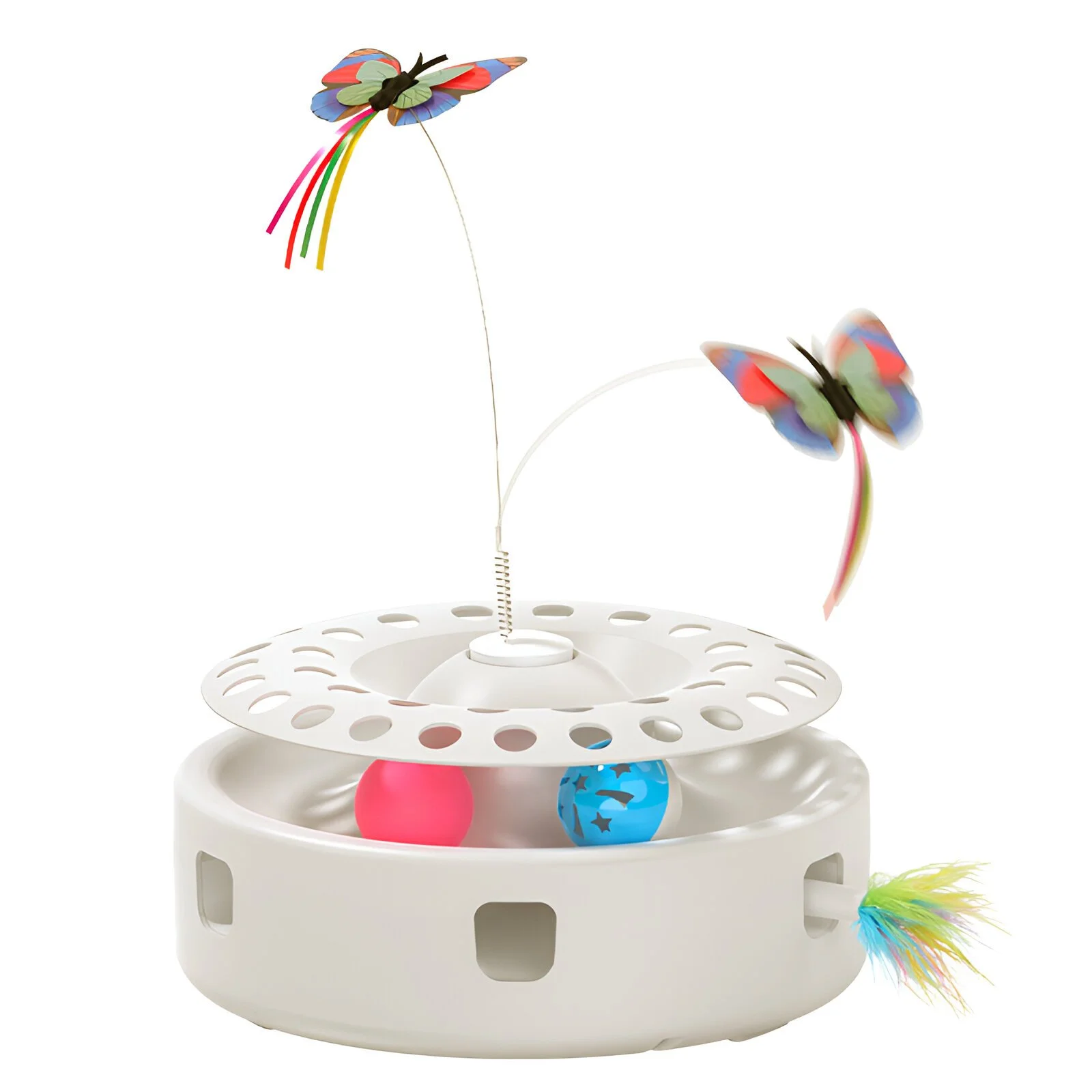
Interactive 3-in-1 Electric Cat Toy with Feather & Teasing Balls (#1785284)
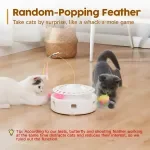
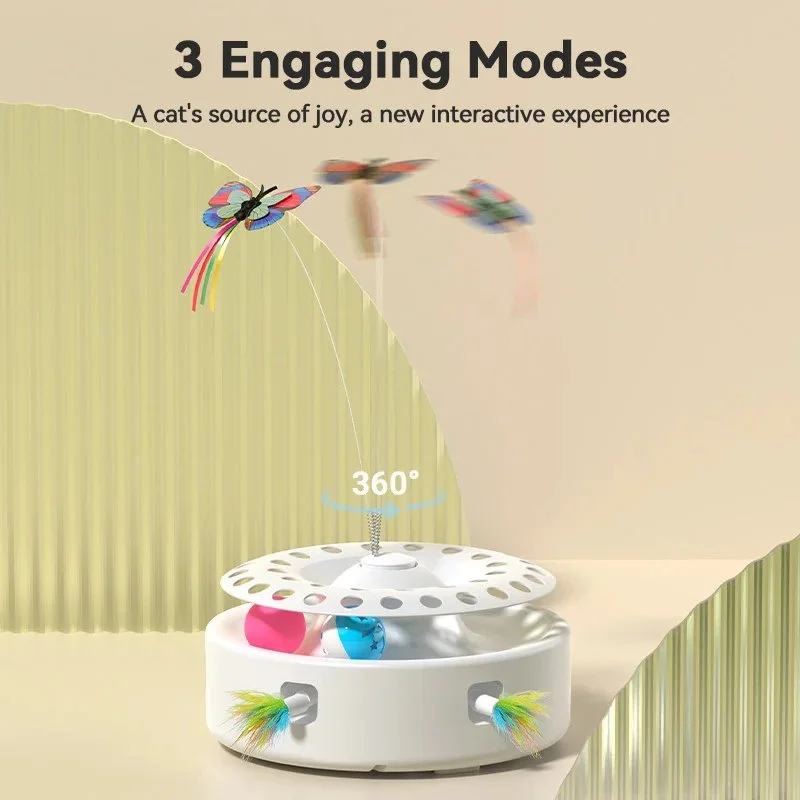
This toy fits overweight indoor cats because it offers several low-entry movement triggers in one object: rolling balls, feather teasing, and fluttering motion. That variety matters when a cat is interested but not ready for intense running or jumping.
Best use: bring it out for short sessions, especially when your cat is awake but inactive. Place it on a stable surface with good traction. Let the cat approach voluntarily. If the cat bats, stalks, shifts position, or walks closer, count that as useful movement.
Do not leave it running all day. The toy works better as a scheduled activity than as permanent background noise. Rotate it with food puzzles, wand play, scratching, and quiet rest so the cat does not depend on one stimulus.
For heavier cats, keep sessions short at first. Stop before the cat pants, limps, hides, or becomes frustrated. The product is a movement tool, not a medical treatment. Use it alongside a measured feeding plan and veterinary guidance.
Warning Signs During Exercise
Stop the session and reassess if you see:
- open-mouth breathing or panting
- limping
- repeated lying down after only a few seconds
- hiding after play
- irritated tail lashing or defensive swatting
- sudden refusal to jump or climb
- vomiting after activity
- unusual crying or distress
Cats hide discomfort well. A cat that refuses to move may not be stubborn. It may be tired, sore, frightened, or unwell.
Exercise should leave the cat calmer and more confident, not depleted.
A One-Week Starter Plan
Use this as a gentle beginning, not a strict program.
Day 1: Measure meals. Replace one bowl meal with easy scatter feeding in one room.
Day 2: Add one two-minute wand session at ground level. Let the cat catch the toy.
Day 3: Use a food puzzle for part of a meal. Keep it easy.
Day 4: Add a low vertical step with a small portion of food or a toy on top.
Day 5: Use an automatic toy for three to five minutes while supervising.
Day 6: Repeat the two activities your cat accepted best.
Day 7: Rest from new challenges. Observe movement, appetite, mood, and soreness.
After the first week, keep the easiest wins. Weight-loss routines fail when they are too ambitious. A plan the cat accepts is more valuable than a perfect plan the cat avoids.
The Practical Answer
The best cat toys for weight loss are toys that create frequent, voluntary, low-stress movement. Food puzzles, scatter feeding, slow wand play, scratching stations, low climbing routes, and carefully used automatic toys all help when they are matched to the cat's body and confidence.
Use toys to support a measured feeding plan, not to cancel out extra calories. Start with tiny sessions. Track behavior as well as weight. Watch for pain, breathing trouble, limping, or sudden changes.
An overweight cat does not need to be forced into exercise. It needs a home that makes small movement rewarding again.