Article
Why Cats Bunny-Kick: The Instinct Behind the Adorable Attack
Quick Answer
Why Cats Bunny-Kick: The Instinct Behind the Adorable Attack: quick answer
The first time a cat bunny-kicks a toy, it looks almost too cute to be explained by biology. The cat grabs the object with both front paws, curls...
- Topic: Cat Behavior.
- Related product category: pet-toys.
- This article keeps the main answer in the article copy and places relevant product context inside the guide.
The Move Looks Funny Because It Is Serious
The first time a cat bunny-kicks a toy, it looks almost too cute to be explained by biology. The cat grabs the object with both front paws, curls around it, rolls slightly onto the side, and then fires the back legs in a fast double kick. The toy thumps. The cat's face may look wild for a second. Then, just as suddenly, the whole thing is over.
Owners often laugh because the motion is dramatic. It feels like a tiny indoor cat has briefly remembered that it is supposed to be something much larger. That is not far from the truth.
Bunny kicking is part play, part exercise, part hunting practice, and part emotional release. It belongs to the same family of behaviors as stalking, chasing, pouncing, biting, grabbing, wrestling, and carrying prey. A house cat does not need to hunt dinner, but the movement patterns are still there. They do not disappear because the food bowl is full.
This is why the behavior can show up in three very different ways:
- a cat joyfully kicks a long plush toy
- a kitten grabs another kitten during wrestling
- an overstimulated cat grabs a human arm and kicks too hard
The first version is useful. The second is normal social play when both cats are relaxed and taking turns. The third is the one owners usually want to fix. The goal is not to train the bunny kick out of the cat. The goal is to give it the right target, the right timing, and enough boundaries that the behavior stays safe.
A good kicker toy is not just a cute accessory. It is a pressure valve for one of the most physical parts of feline play.
What Is a Bunny Kick?
A bunny kick happens when a cat grips with the front paws and kicks with the back legs, usually while lying on the side or back. The hind legs extend and retract quickly, almost like a rabbit's motion, which is where the nickname comes from.
The posture matters. The cat is not standing upright and batting. It is wrapping around the target. That wrapped position lets the cat hold something close while using the larger back-leg muscles. In a real hunting context, that kind of motion helps a small predator control prey that is fighting back. In play, the same motor pattern appears with plush toys, kicker toys, blankets, other cats, and sometimes hands.
This does not mean your cat is angry every time it bunny-kicks. Cats borrow hunting movements for play constantly. A cat who stalks a feather wand is not trying to kill the feather. A cat who pounces on a crinkle ball is not confused about whether the ball is alive. The movement is satisfying because it matches the cat's internal wiring.
The problem is that bunny kicking is powerful. Back claws can scrape skin. A cat who grabs an arm can leave long scratches before the person realizes play has tipped too far. That is why hand wrestling is such a risky habit. It teaches the cat that human skin is an acceptable prey-sized target.
When the target is a sturdy kicker toy, the same behavior becomes useful. The cat can grab hard, bite fabric, kick with full extension, and finish the play sequence without injuring anyone.
Why Cats Bunny-Kick During Play
The simple answer is instinct. The better answer is that bunny kicking solves several needs at once.
It Completes the Predatory Sequence
Most cat play is a softened version of hunting. The cat watches, stalks, chases, pounces, grabs, bites, and then controls the target. Wand toys are excellent for the chase and pounce stage, but they do not always give the cat a satisfying final grab. Laser pointers are even more incomplete because the cat can chase the dot forever without ever holding anything.
A kicker toy fills that missing final step. It gives the cat something solid to catch and hold. This matters for cats who get worked up during play but do not seem satisfied afterward. They may chase a wand for ten minutes, then turn around and attack an ankle because the game never gave them a proper ending.
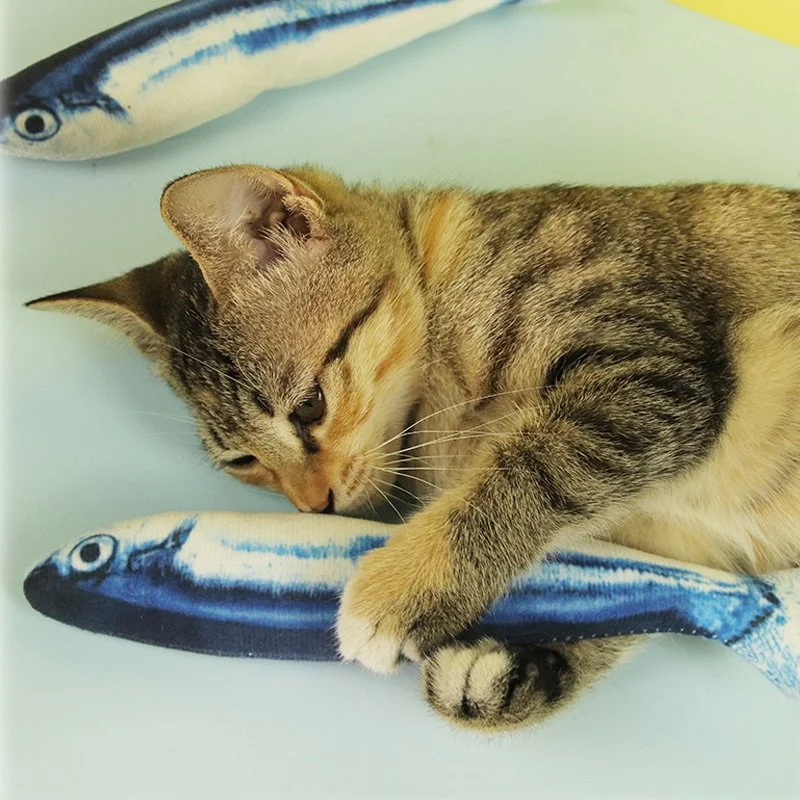
The grab-and-kick phase tells the body, "I caught it." That does not mean every play session has to end with a dramatic wrestling match, but many cats do better when the chase ends with something they can physically capture.
It Lets the Cat Use the Back Half of the Body
Indoor cats spend a lot of time walking, sitting, jumping short distances, and sleeping. They may not get many chances to twist, clamp, brace, and kick. Bunny kicking uses the hips, abdomen, rear legs, and core in a way casual batting does not.
This is one reason kicker toys can be helpful for indoor cats who are active in short bursts but otherwise sedentary. The movement is not a replacement for climbing, chasing, or daily interactive play, but it adds a kind of physical work that many cats naturally enjoy.
For older cats, the idea is not to make the session intense. A senior cat may only grab and kick a few times before losing interest. That can still be worthwhile as long as the toy is easy to hold and the cat is comfortable. If a cat suddenly avoids kicking, cries during play, or reacts badly when the hips or back legs are touched, that is not a toy issue. That is a reason to check for pain.
It Releases Built-Up Energy
Many owners notice bunny kicking during the evening. The cat has napped all day, watched the house move around, listened to outdoor sounds, and stored energy. Then the lights shift, people settle on the couch, and the cat suddenly has a full-body urge to do something.
This is the famous evening wildness many cat owners know. Some cats sprint down the hallway. Some climb furniture. Some attack a rug. Some grab whatever is closest and kick it until the mood passes.
A kicker toy gives that energy a legal place to land. It works best before the cat chooses a bad target. Once the cat is already attached to your sleeve, you are late. If you know your cat gets intense after dinner, put the kicker toy into the routine before the ambush window opens.
It Helps Cats Practice Control
Kittens learn a lot through rough play. When they wrestle with littermates, they learn what happens when they bite too hard or kick too hard. The other kitten stops, squeals, leaves, or fights back. That feedback matters.
Cats who were raised alone, adopted very young, or encouraged to wrestle with hands may not have learned the same limits. They can become enthusiastic players who do not understand that human skin is fragile.
Kicker play can help by giving the cat a target where intensity is allowed. You are not trying to make the cat gentle with the toy. You are giving the cat one place where it can be rough so that hands and ankles stop being part of the game.
Play, Overstimulation, or Aggression?
The same kicking motion can appear in different emotional states, so context matters. A cat can bunny-kick because it is playful, overstimulated, defensive, frustrated, or redirected from something else.
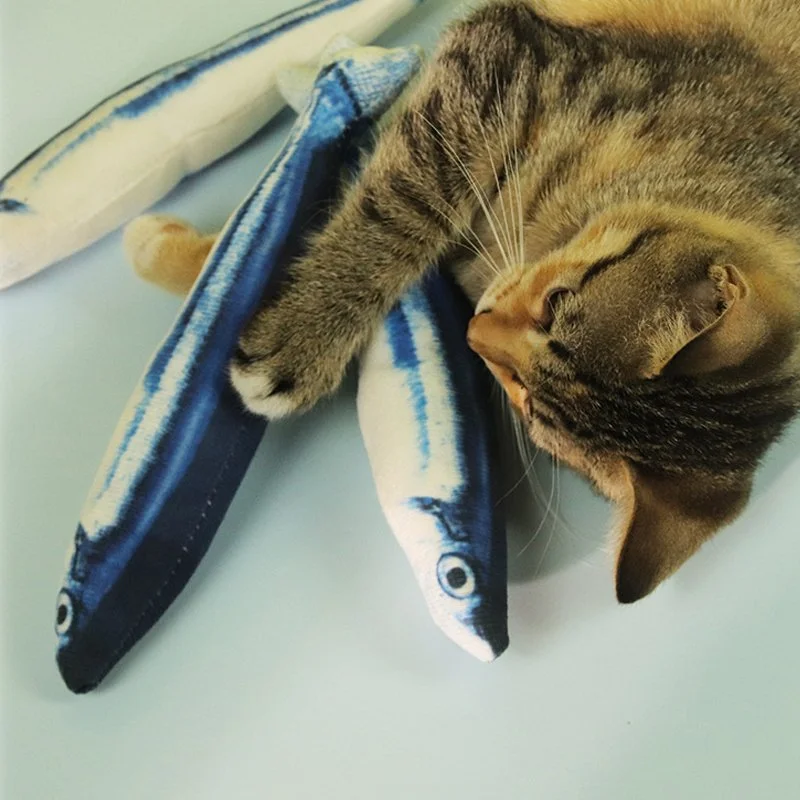
Playful kicking usually has a loose quality. The cat may have bright eyes, quick movements, forward or neutral ears, and a body that resets quickly. The cat may return to the toy, toss it, stalk it again, or walk away calmly. If another cat is involved, the play should be reciprocal. One cat chases, then the other chases. One cat pins, then the other escapes. The mood shifts, but it does not stay one-sided.
Overstimulation looks different. The cat may grip harder, stop responding to normal cues, lash the tail, flatten the ears, or bite with more pressure. This often happens during petting or hand play. The cat may have enjoyed the contact at first, but the nervous system tips from relaxed to too much. The bunny kick is then not an invitation to keep playing. It is a sign to stop touching and give space.
Defensive kicking can happen when a cat feels trapped. A cat on its back is not always asking for a belly rub. In that position, the cat has access to teeth and all four paws. If you reach in and the cat grabs, bites, and kicks, the lesson is simple: do not treat the exposed belly as permission.
Redirected kicking can happen after a cat is aroused by something it cannot reach, such as an outdoor cat at the window or a sudden loud noise. The cat's energy has nowhere to go, and the nearest person or pet becomes the target. In that situation, throwing a toy into the chaos may not help immediately. The safer move is distance, calm, and time.
The practical rule is this: if the cat is loose and choosing the toy, continue. If the cat is tense, silent in a hard way, growling, flattening ears, locking onto skin, or refusing to release, pause the interaction and let the cat cool down.
Why Human Arms Become the Target
Most cats do not wake up planning to injure people. They learn targets from the environment.
If hands wiggle like prey, hands become prey. If feet dart under blankets, feet become prey. If a kitten is allowed to wrap around a forearm because it is funny at two pounds, the adult version may still think that is the household game.
The fix is not punishment. Punishment often adds fear or excitement, and both can make biting worse. The fix is consistency. Hands are for petting, feeding, grooming, and calm contact. Toys are for chasing, biting, grabbing, and kicking.
When a cat grabs your arm and starts to kick, do not yank away if you can avoid it. Pulling can trigger the cat to grip harder, and it can make scratches worse. Freeze for a moment, soften the arm, and use the other hand only if needed to place a toy near the cat's mouth and paws. Once the cat switches, calmly disengage. After that, review the timing. The toy should appear earlier next time.
If the cat targets ankles, look for the pattern. Does it happen at dusk? When you walk past a certain hallway? Before meals? After long hours alone? Ambush behavior often has a schedule. Once you know the schedule, you can interrupt it with play before the cat makes its own plan.
A five-minute wand session followed by a kicker toy can be enough for many cats. The wand handles the stalk and chase. The kicker handles the grab and wrestle. The cat gets the whole sequence, and your legs stay out of it.
How to Use a Kicker Toy Well
A kicker toy is simple, but how you introduce it matters. Tossing it into the room and hoping the cat understands may work for some cats. Others need the toy to act alive for a moment before they care.
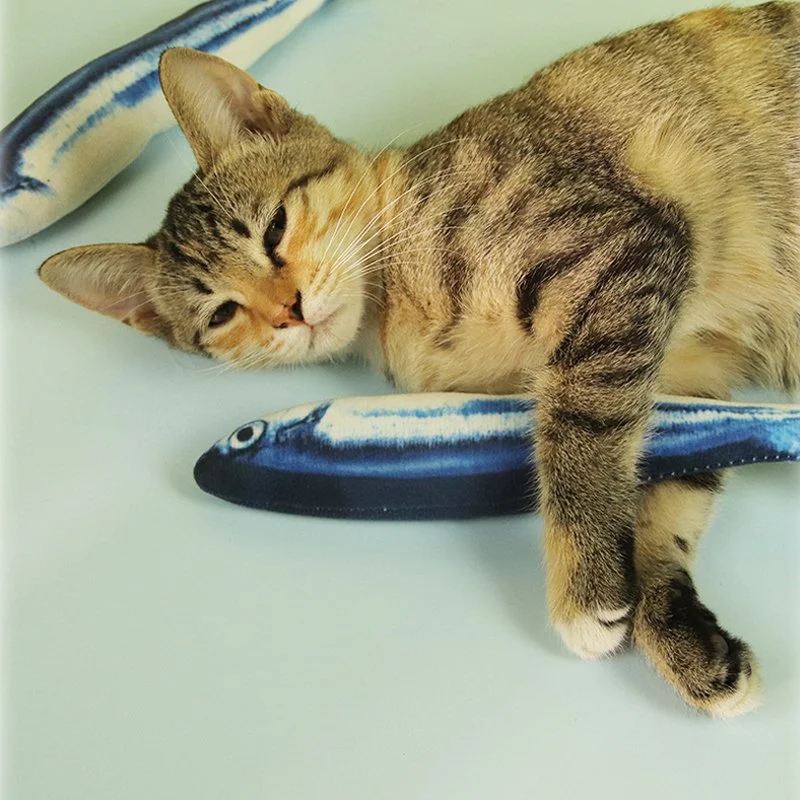
Start by choosing a time when the cat is awake but not already wild. Drag or wiggle the toy along the floor in short, uneven movements. Do not shove it into the cat's face. Prey does not volunteer. Let the cat watch, stalk, and decide.
When the cat grabs the toy, reduce your movement. This is the part many owners get wrong. They keep pulling, which turns the session into tug-of-war. For bunny kicking, the cat should feel like it has caught something. Let it clamp down, kick, bite the fabric, and own the moment.
After 20 to 60 seconds, the cat may release, reset, or walk away. Let that happen. Do not immediately restart if the cat looks finished. A good play session does not have to exhaust the cat. It should leave the cat more settled than before.
For cats who need a fuller sequence, use this order:
- start with a wand or moving toy for stalking and chasing
- slow the movement so the cat can pounce
- switch to the kicker toy for the grab-and-kick phase
- let the cat keep the toy for a short victory lap
- end with a small meal or normal feeding time when possible
This routine works especially well for cats who get restless before dinner or at night. It gives the body a clean story: hunt, catch, kick, eat, rest.
Choosing the Right Kicker Toy
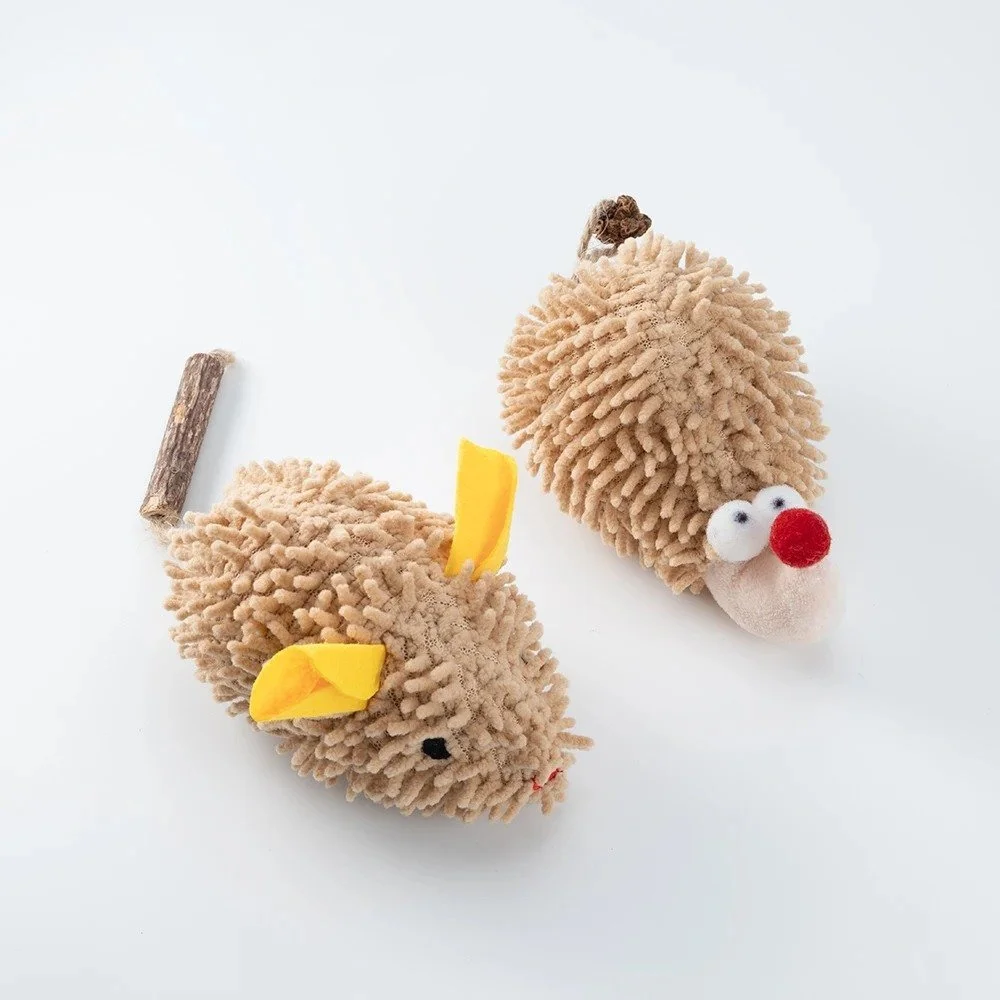
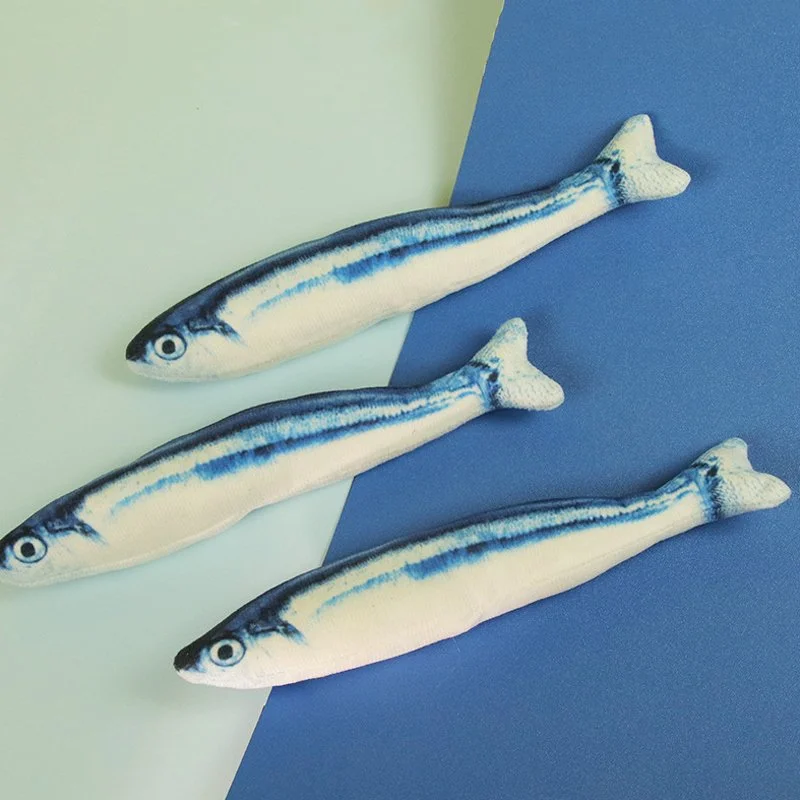
The best kicker toy is long enough for the cat to hold with the front paws while kicking with the back paws. A tiny mouse toy may be fun to bat across the floor, but it does not give most adult cats enough length for a full bunny kick. A long fish, tube, banana, baguette-shaped plush, or narrow pillow shape usually works better.
Firmness matters. If the toy is too limp, the cat may not get enough resistance. If it is too hard, the toy may be uncomfortable to bite or grip. The sweet spot is a toy with enough stuffing to hold shape but enough give for the cat to sink claws and teeth into the fabric.
The cover should be durable but not abrasive. Cats may bite, lick, rake, and rub the toy. Weak fabric opens quickly. Very fuzzy fabric can shed. Loose threads, ribbons, bells on fragile loops, plastic eyes, and glued decorations are not worth the risk.
Scent can help, but it is not magic. Some cats respond strongly to catnip. Some respond to silvervine. Some respond to neither. Kittens may not care about catnip yet, and individual response varies. If your cat does not react to a catnip kicker, the toy has not failed. Try movement, texture, warmth from your hands, or a different scent profile.
Washability is easy to forget. A toy that gets bitten, kicked, and drooled on should be cleaned or replaced. If the toy has a refillable scent pouch, check that the closure stays secure. If it cannot be washed, treat it as a shorter-life item and inspect it more often.
For multi-cat homes, choose more than one kicker toy. Competition can turn play into tension. Two cats may not want to share the same high-value toy, especially if one cat guards it after a strong catnip reaction.
Matching the Toy to the Cat
Not every cat wants the same kind of kicker session.
A kitten may want fast, frequent play with short rests. Keep the toy soft and oversized enough that the kitten cannot swallow parts. Do not encourage hand wrestling just because the kitten is small. The habit grows with the cat.
A young adult indoor cat may want a more athletic session. This is where a wand-to-kicker sequence works well. Let the cat chase, pounce, and then wrestle the kicker at the end.
A shy cat may need distance. Place the kicker near a box, tunnel, or chair leg and move it lightly from the side. Some cats feel safer attacking from cover. Do not drag the toy directly toward the face.
A senior cat may prefer slower movement and a lighter toy. Watch the hips and back legs. The goal is comfortable engagement, not big dramatic kicks. If the cat only hugs, bites, and gives two back-leg pushes, that still counts.
A cat who becomes too intense with catnip may need unscented toys. Catnip is not required for bunny kicking. For some cats, scent makes play better. For others, it removes too much control. If your cat growls, guards the toy, or swats at other pets after catnip, use the kicker in shorter sessions or switch to a plain plush version.
The cat tells you what works by coming back to the toy in a relaxed way. If the toy creates fixation, guarding, or conflict, change the setup.
Redirecting Kicks Away From Skin
If your cat already grabs arms or ankles, do not expect one toy to fix the habit overnight. You are changing a pattern, and patterns need repetition.
First, remove the accidental invitations. Do not wiggle fingers under blankets. Do not tap the cat's belly. Do not wrestle with bare hands. Do not let guests tease the cat with sleeves or strings from clothing. Every mixed signal slows the training.
Second, place kicker toys where the problem happens. If the cat attacks ankles in the hallway, keep a kicker near the hallway. If the cat grabs arms on the couch, keep one beside the couch. The correct target has to be easier to reach than the wrong target.
Third, redirect before contact. The best moment is the stare, crouch, tail twitch, or shoulder wiggle that happens before the pounce. Toss the kicker across the cat's path or slide it away from your body. You are not rewarding the attack; you are giving the hunting behavior a legal route before it lands on skin.
Fourth, end calmly when teeth or claws hit people. Make your body boring. Stop moving. Remove attention. Restart later with a toy when the cat is calm. Long lectures, shouting, and chasing usually add more energy to a cat who already has too much.
If children are in the home, make the rule simple: no hands as toys. Children often miss the early signs that a cat is getting overstimulated. Kicker toys make the boundary visible. The toy is the target. People are not.
A Daily Bunny-Kick Routine
You do not need a complicated enrichment plan. Most cats do better with a few predictable moments than with a huge pile of toys on the floor.
In the morning, offer a short movement game if the cat wakes up active. This may be a wand, a rolling toy, or a few quick tosses of a soft toy. Save the kicker for the end if the cat likes to wrestle after chasing.
In the afternoon, leave out lower-intensity toys the cat can bat or carry. A kicker can stay out only if your cat does not shred and swallow fabric. For cats who destroy toys, kicker play should be supervised and then put away.
In the evening, use the kicker before the usual wild period. Many cats become active around dusk or after household routines change. A planned session beats an ankle ambush. Keep it short, physical, and satisfying.

Before bed, avoid turning the kicker into a high-speed chase unless you want a fully awake cat. Some cats need a final capture to settle. Others get more excited. Watch the result. If the cat zooms around after kicker play, move the session earlier.
Rotate two or three toys so the favorite does not become stale. Put one away for a week, then bring it back. Refresh scent only if your cat responds well to it. Novelty should support the routine, not replace it.
Product Spotlight
Interactive Plush Fish Cat Kicker Toy with Catnip (#1804137)
This toy fits the bunny-kick use case because the long fish shape gives a cat enough length to grab with the front paws while kicking with the back legs. It makes the most sense as a supervised capture toy after a short chase session, especially for cats who like plush texture and respond well to catnip.
Best use: drag or wiggle it lightly along the floor, let the cat stalk, then let the cat grab and kick without turning the moment into tug-of-war. Put it away after the session if your cat chews seams, guards catnip toys, or tries to pull stuffing loose. For cats who get intense at dusk, keep it near the usual ambush zone and offer it before the ankle attack starts.
Safety Rules for Kicker Play
Kicker toys take real abuse, so inspection matters. Check the toy after hard sessions. Look for loose seams, exposed stuffing, damp fabric, detached parts, or areas where the cat is chewing through one spot. If the toy starts shedding threads or stuffing, remove it.
Avoid toys with small plastic decorations, glued-on eyes, fragile bells, loose ribbons, or long strings attached to the main body. A wand string is different because you control it during play and put it away afterward. A long string attached to a toy left on the floor can become a swallowing or tangling risk.
Do not force belly contact to "make" a cat bunny-kick. A cat who rolls over may be relaxed, playful, defensive, or simply stretching. Reaching into the belly area can turn a calm moment into a four-paw grab.
Do not use kicker play to break up a real fight between cats. If two cats are tense, growling, hissing, or locked onto each other, manage the space first. Toys are for play and redirection, not for inserting your hand into conflict.
Call a veterinarian or qualified behavior professional if the kicking behavior changes suddenly, becomes severe, appears linked to pain, or is paired with hiding, appetite changes, litter box changes, or unprovoked attacks. A cat who starts grabbing and kicking people out of nowhere may be overstimulated, stressed, redirected, or uncomfortable. The toy can help with normal play. It should not be used to ignore a bigger problem.
The bunny kick is not bad behavior by itself. It is a normal cat movement that needs the right outlet. Give the cat something long enough to hold, sturdy enough to kick, and interesting enough to choose over your arm. Then let the little hunter finish the game.