Article
The 6 Best Camping Lights and Lanterns (2026 Buyer's Guide)
Quick Answer
The 6 Best Camping Lights and Lanterns (2026 Buyer's Guide): quick answer
The best camping light setup uses more than one light: a lantern for the table, a focused flashlight for walking, and a small task light or headlamp...
- Topic: Camping Hiking.
- Related product category: camping-hiking.
- This article keeps the main answer in the article copy and places relevant product context inside the guide.
Editorial note: Product references, prices, and listed features were checked in the PickByU catalog on 2026-08-09. These are camping-light recommendations based on product specifications and common campsite use cases, not field testing.
Quick Answer: Best Camping Light Setup
The best camping light setup uses more than one light: a lantern for the table, a focused flashlight for walking, and a small task light or headlamp for hands-free work. For most weekend campers, rechargeable LED lanterns are the practical default; gas lanterns belong outside the tent and make sense only when you already understand fuel, heat, and ventilation.
Night Falls Faster Than You Think
Night comes fast at a campsite, and it comes completely. One minute you're squinting at the last of the daylight trying to get dinner sorted, and the next you're fumbling through a duffel for something that glows. Every camper learns the same lesson eventually: the light you brought decides whether the evening is comfortable or clumsy.
The trouble is that "camping light" isn't one thing. It's at least four. A lantern spreads soft light across the table; a flashlight throws a focused beam down a trail; a headlamp keeps both hands free for cooking; and an ambient light just makes the camp feel like a place you want to sit in. Most campsites need two, sometimes three, of these — no single product does all of them.
Before you buy, get realistic about lumens. The number on the box is the number the manufacturer wants you to see — marketing lumens, measured in ideal conditions on the brightest mode for a few seconds. Real-world output is a fraction of that, and budget gear is the worst offender. A "High Lumens" claim on a $15 keychain light isn't exactly a lie; it's a hope. Plan for half the claimed brightness and half the runtime, and you'll be pleasantly surprised instead of disappointed.
This guide walks through six real camping lights and lanterns — a keychain work light, a multifunction flashlight, two rechargeable lanterns, a mini ambient light, and a gas lantern — covering what each is actually good at, who it's for, and where it falls short. These are catalog-based recommendations with honest expectations, not fake testing claims.
1. High Lumens Rechargeable COB Keychain Work Light — $15.49
The light job it does: Close-up task lighting. A COB — chip-on-board — panel throws a wide, even wash of light instead of a focused spot, which is exactly what you want when the job is a foot in front of your face: reading a map at the picnic table, re-threading a tent pole sleeve, finding the dropped earplug in the tent floor, sorting stove parts in the vestibule before breakfast. At $15.49 it's cheap enough to live on a keyring or in a jacket pocket full-time — the best camping light is the one that's actually with you when the sun goes down. It's the difference between hunting for your headlamp in the dark and just having light.
What you're getting: A USB-rechargeable, keychain-sized COB light with eight modes, which typically means several brightness steps plus a strobe and an SOS pattern — useful for signaling and for stretching a small battery through an evening. The "High Lumens" in the name tells you what the manufacturer wants you to believe about output, and you should read it in that spirit. The form factor is the honest spec: small, flat, easy to clip, always within reach. USB charging means it tops up from the same power bank that charges your phone.
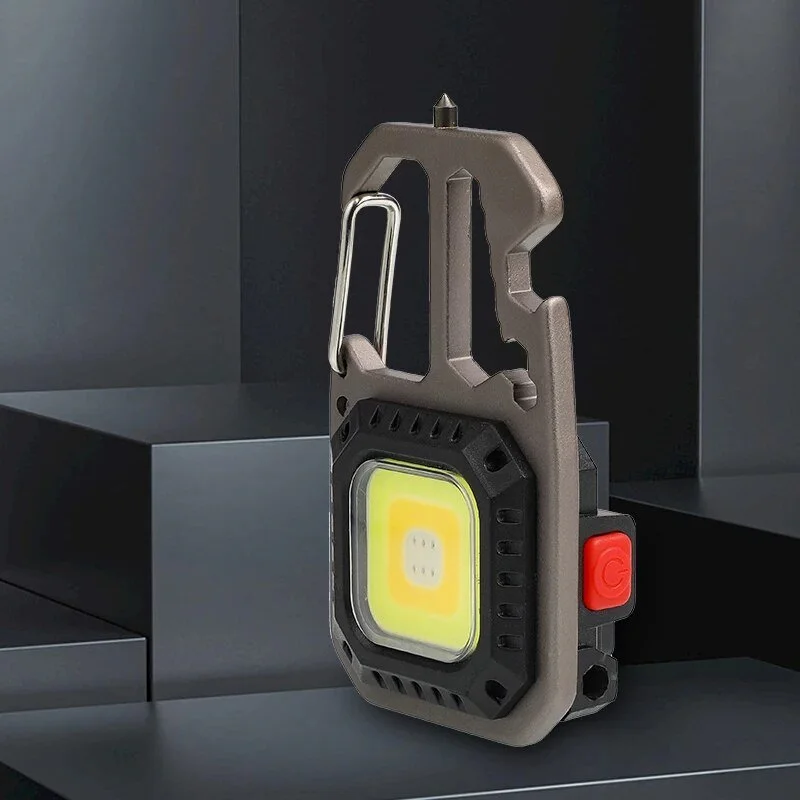
Where it fits: In your pocket or on your keys every day, not just on trips. It earns its place at camp as the second light — the one that handles fiddly close work while your main lantern handles the table. It's also the backup light you grab when the main lantern is across the site, and the emergency light that lives in the glovebox between trips.
Who it's for: Backpackers who count every gram, car campers who want a spare that lives in the vehicle, and anyone who keeps keys in a pocket. If you've ever stood in a dark tent patting down every pocket for a light, this is the $15.49 cure.
Honest limits: Physics doesn't care about marketing. A keychain-sized cell cannot sustain "high lumens" for long — real output from this class of light is a fraction of the claim, and runtime at maximum brightness is measured in tens of minutes, not hours. The COB panel is floody by design, so it won't throw a beam down a trail; don't expect to light up the treeline with it. The eight modes are handy but mean cycling to find the one you want, and strobe modes chew battery fast. Charge it before a trip — a dead keychain light is just a lump of aluminum.
2. 4-in-1 Multifunctional USB Charging Flashlight with Safety Hammer and Magnet — $17.49
The light job it does: A flashlight's job is throw — a focused beam that reaches where you point it. This one covers the classic camp flash duties: walking the trail after dark, finding your tent from the parking area, checking the treeline for sounds, lighting the inside of the car while you pack up at night. A lantern lights a table; a flashlight lights a path, and they are not interchangeable. At $17.49 this is the budget answer to "I need something that shines far," and it's the light you want in your hand on the walk back from the bathroom at midnight.
What you're getting: USB-rechargeable, plus two tools bolted onto the same body: a safety hammer — the spring-loaded glass breaker you'd use to get out of a car in an emergency — and a magnet for hands-free mounting on a car hood, a trailer hitch, a steel picnic table frame, or any metal surface around camp. The 4-in-1 concept is real: one device that covers lighting, emergency escape, and hands-free positioning. It's the kind of thing that earns its place in the car as much as in the camp kit.
Where it fits: The glovebox or door pocket of your car, and the car-camping duffel. The hammer and magnet tilt it toward road trips and vehicle emergencies — think of it as the light for the camp-to-car corridor: finding your way back after dark, dealing with a flat tire at night, freeing both hands while you work under the hood or on the hitch. The magnet is quietly the most useful part for anyone who camps near a vehicle.
Who it's for: Road-trippers, car campers, and anyone who wants one light that doubles as a bit of car safety kit. If you're a backpacker counting grams, this is overkill — the hammer and magnet are dead weight you'll never use on the trail. It's a car-first, camp-second light, and it knows it.
Honest limits: The safety hammer is a break-glass-in-case-of-emergency tool, not a feature to test casually — once it's been deployed, it's been deployed, and it's not a demo piece. Magnet strength varies by build; check the listing for how much it holds before trusting it with anything heavy. And like any USB-rechargeable light, it lives or dies by your charging discipline: without a power bank on a multi-day trip, a dead flashlight is a paperweight. It's also a beam light only — it won't soften a campsite the way a lantern does, so plan to pair it with something ambient.
3. USB Rechargeable LED Camping Lantern with Built-in Battery — $20.49
The light job it does: The tent-and-table lantern — the one that turns a dark campsite into a room. A lantern's job is ambient coverage: soft, roughly 360-degree light that lets four people eat, play cards, read, and talk without anyone holding anything. It hangs from the tent's center loop to light the whole interior, or sits on the picnic table for dinner and the cleanup after. At $20.49 this is the classic budget answer to "light up the camp," and for most weekend car campers it's the single most useful light on this list — the one you'd rescue first if the site caught fire.
What you're getting: LED lighting, USB rechargeable, and a built-in battery — everything is in the unit, no fuel, no AA cells to buy, no mantles to replace. The "built-in battery" is the headline: one device, one cable, and it tops up from the same power bank or car USB port that charges your phone. It's the modern lantern formula — plug it in before the trip, hang it up at night, charge it again when you're home.
Where it fits: The tent interior, the picnic table, the camp kitchen, and the porch when the trip is over. It's the main evening light for car campers and families, and it's the light kids can't break in five minutes. If your camping is mostly weekend car trips within reach of a power bank, this is probably the first light you should buy — everything else on this list is a specialist by comparison.
Who it's for: Families, first-time campers, and anyone who wants one reliable, no-thought light for the evening. It's also the easiest gift on this list to buy for someone who camps — the price is painless and the use is obvious.
Honest limits: The built-in battery is also the built-in weakness. When it's dead, it's dead until you find USB power — you can't pop in fresh AAs at 11 p.m. like you can with a battery lantern. Rechargeable cells also have a finite life: a few hundred full charge cycles before capacity visibly fades, so a hard-used lantern slowly dims over the years, and the battery isn't something you swap at the campsite. And like most budget lanterns, the lumen figure on the listing is optimistic — expect a good fraction of the claim in the real world, not the whole number. Check the listing for runtime claims and treat them the same way.
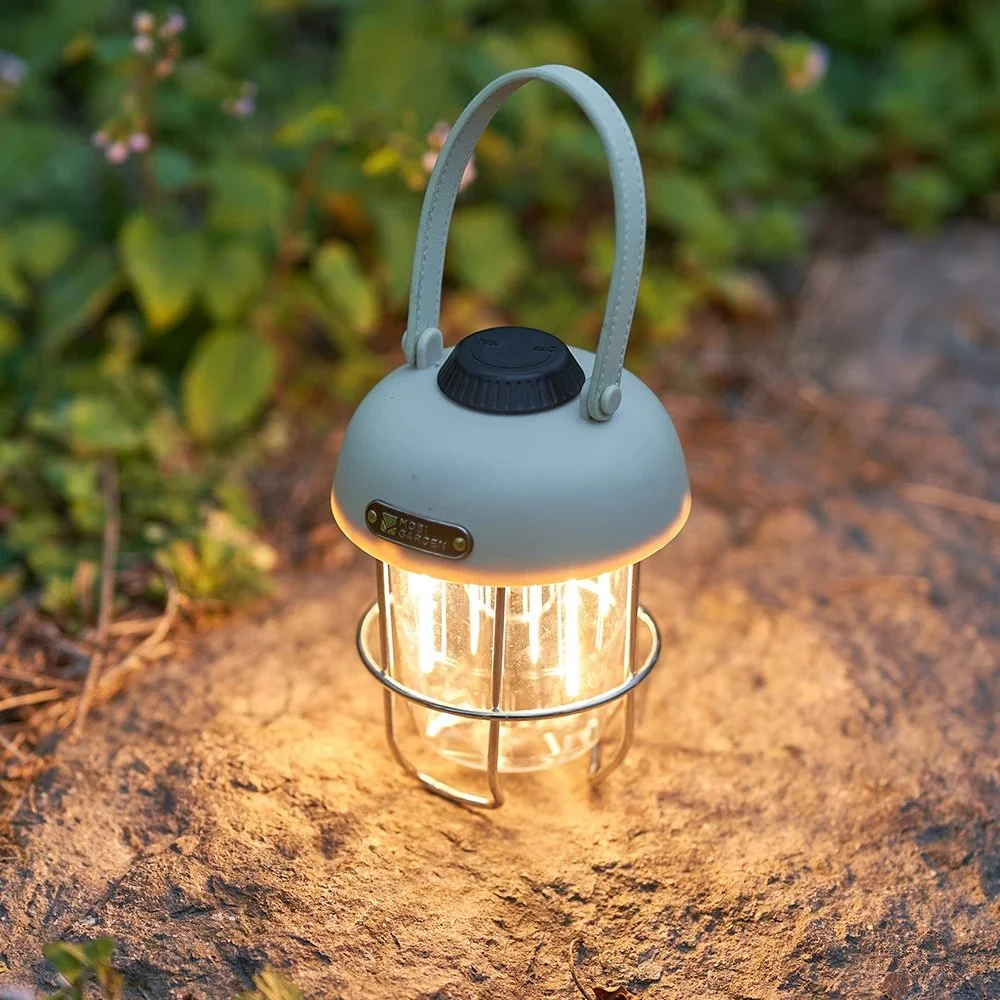
4. Vintage Rechargeable LED Camping Lantern — $52.65
The light job it does: The aesthetic job. Some campsites are functional; some are meant to feel like something. A vintage-style lantern exists to make the camp glow — warm, soft, characterful light that turns a folding table into a dinner scene. If the $20.49 USB lantern is the workhorse, this one is the centerpiece: the light you set in the middle of the table, the one in the photos, the one that makes sitting around after dinner feel like the whole point of camping. It lights the table and it lights the mood, and that second job is the one you'll actually miss when it's not there.
What you're getting: Vintage styling wrapped around modern internals — LED lighting and USB recharging in a body that looks like it came from a 1960s base camp. The rechargeable LED core means no mantles, no fuel, no soot, and no hissing; the looks are the feature, and the modern guts are the convenience. At $52.65 you're paying for design, and it's a fair trade if the design is what you want — this is the rare camping purchase that doesn't look like camping gear.
Where it fits: Base camp, the picnic table, glamping setups, cabin decks, and the home patio when the trip is over. It's a light that does double duty as décor, which is why it's also one of the more giftable items on this list — it reads as a considered present in a way a utilitarian lantern never will.
Who it's for: Campers who care how the campsite looks, glampers, porch-and-patio people, and gift buyers shopping for someone who already owns the practical lights. If you only care about max output per dollar, this isn't your pick — buy the $20.49 USB lantern and pocket the difference.
Honest limits: You are paying a premium for styling, and styling is mostly what you're buying. Vintage-inspired LEDs typically run warm and cozy rather than bright — this is a mood light with a lantern shape, not a work light, and its maximum output will generally sit well below a utilitarian lantern of similar size. The warm, low-color-temperature glow that makes it beautiful is the same glow that makes it mediocre at lighting a task. It's also heavier and pricier than its output justifies on paper, so buy it for the feeling, not the specs. Check the listing for runtime and charging details rather than assuming they match a modern high-output lantern.
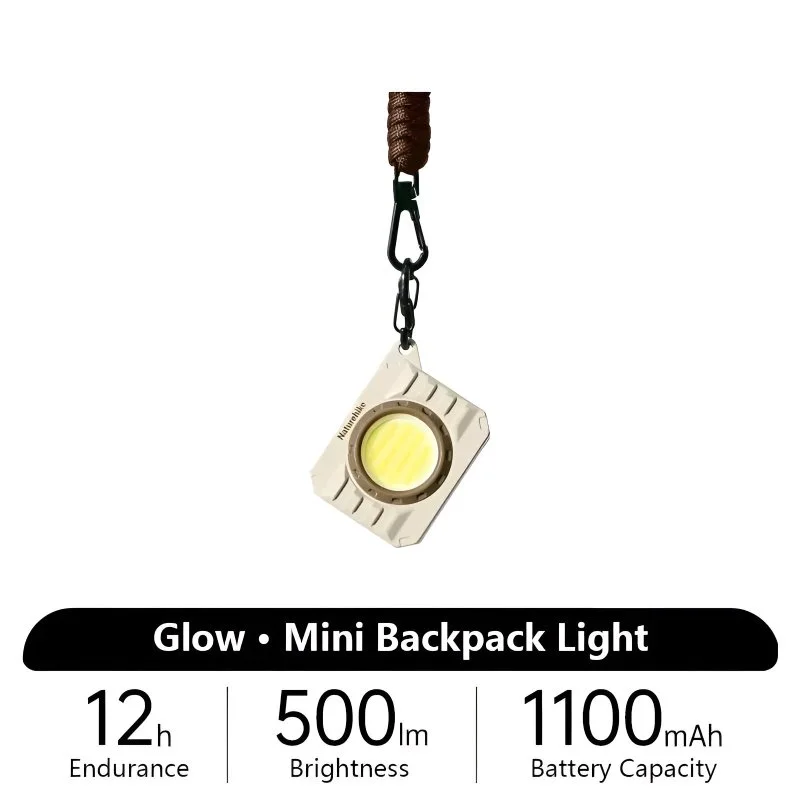
5. Mini Outdoor Ambient Light — $62.49
The light job it does: The atmosphere job, and nothing else. An ambient light is the opposite of a flashlight: it isn't trying to illuminate a task or a path, it's trying to make a space feel good to be in. This mini light is for the camp kitchen counter, the hammock campsite, the tent interior when you want a soft glow instead of full brightness — the little pool of light that keeps the evening from feeling like a headlamp tunnel. It's the last light you'd think to pack and often the one that makes a site feel like home.
What you're getting: A deliberately small, portable ambient light designed for outdoor evening use. "Mini" is the whole point — it's the light you can hang in a tent, set on a log, or tuck into a pack without planning around it. The listing is where you'll find the battery size, runtime, and any weather rating — read those before you buy, because "outdoor" on the label is a description, not a guarantee. What the price buys is size and design: a light small enough to forget and nice enough to leave on.
Where it fits: The evening hangout zone — the camp kitchen counter, the hammock ridge line, the tent vestibule, the table when the fire has died down. It pairs naturally with a task light: the beam does the work, the ambient light makes the work feel like a place.
Who it's for: Campers who prioritize atmosphere, hammock campers, and anyone who has ever sat in the dark regretting that their only light was a blinding headlamp. It's also a strong gift for someone who already owns the practical lights and would never buy themselves a pretty one.
Honest limits: Let's be direct: $62.49 is a lot for a small light that, by design, doesn't light much. You are paying for size, design, and the ambient experience — not lumens, not throw, not runtime per dollar. It will not light a campsite, it will not light a path, and if your trip is function-first, this is the first pick on the list you should skip. Ambient lights are complements, not replacements: they work because a lantern or flashlight is doing the real work nearby. And a mini light with a modest battery will need frequent top-ups, so check the listing's runtime before you commit.
6. Outdoor Adjustable Gas Lantern for Camping and Hiking — $78.49
The light job it does: The big one. A gas lantern is the classic base-camp light: bright, warm, and capable of actually lighting an area — a picnic table, a camp kitchen, a group sitting circle — rather than a single point. "Adjustable" means you control the output, from a low simmer of light for late-night conversation to full hissing brightness for dinner prep. This is the light that makes a campsite feel like a camp, and it keeps working long after every rechargeable on the site has given up. It's also, at $78.49, the biggest commitment on this list.
What you're getting: A traditional fuel-burning lantern with an adjustable valve, built for camping and hiking. Gas means real output — fuel burns bright and doesn't fade as it drains the way batteries do. For cold-weather camping especially, a gas lantern is the reliable choice: flames don't care about freezing temperatures the way lithium cells do. It's a workhorse with a century of design behind it, and adjustable output makes it flexible.
Where it fits: Base camp, car camping, group sites, and winter trips — anywhere weight and fuel logistics are manageable and you want serious light for serious hours. If you're hiking miles in, the weight and the fuel canisters will make you think twice; this light earns its place at the car or the sled, not in a backpack. At the site, it's the center of the evening — the thing everyone gathers around.
Who it's for: Traditionalists who grew up with gas light, large groups that need real area lighting, cold-weather campers whose batteries keep sagging, and anyone running a long base camp who is tired of recharging things. It's also a statement piece — the lantern everyone gathers around.
Honest limits: Gas means fuel, and fuel is a recurring cost and a logistics item: canisters need buying, packing, and transport — you can't fly with fuel, some parks restrict it, and running out at 10 p.m. means a dark campsite. Open flame means rules: this lantern never goes inside a tent — carbon monoxide and fire risk are real, not theoretical — and it needs to sit clear of flammables, out of the wind, and out of reach of kids and clumsy elbows. The glass and fittings are also more fragile than a drop-proof LED unit, and the bright, hot output is exactly what you have to manage. Check the listing for fuel type and sizing; whatever it says, budget for fuel as part of ownership.
The Camp Lighting Zones
No single light covers a campsite well, and the six picks above split cleanly into zones. Use this table to match each zone to the light that should own it:
| Zone | The job | The pick |
|---|---|---|
| Tent interior | Soft, safe light for reading and sleep prep | USB Rechargeable LED Camping Lantern ($20.49) |
| Camp table and dinner | Hands-free light that covers the whole table | Vintage Rechargeable LED Camping Lantern ($52.65) |
| Trails, paths, and emergencies | A beam that reaches where you point it | 4-in-1 USB Flashlight ($17.49) |
| Close-up tasks | Even light on the work right in front of you | COB Keychain Work Light ($15.49) |
| Evening atmosphere | A glow that makes the site feel like home | Mini Outdoor Ambient Light ($62.49) |
| Base camp and cold weather | Bright, long-running area light | Adjustable Gas Lantern ($78.49) |
Read the zones as a kit: most campers want the tent-and-table lantern plus one beam light, which covers ninety percent of campsite nights. The ambient light and the gas lantern are specialist picks, worth buying only if the middle of the table is already covered. Buy the zone you actually camp in, not the one that sounds nice.
FAQ
How many lumens do I actually need for camping?
Most camping needs are smaller than the marketing suggests. Reading and cooking prep need roughly 100–200 real lumens; a tent or table lantern wants 200–400. But treat every claimed lumen as optimistic — budget gear typically delivers half the box number, and few campers run full brightness anyway. Buy for the lowest setting that works; that's the one you'll live at.
Rechargeable, battery-powered, or gas — which should I choose?
Match the light to the trip. USB-rechargeable lights are the most convenient — no battery shopping — but they depend on a power bank and their cells age after a few hundred cycles. Battery lights run on AAs you can buy anywhere, at the cost of weight. Gas lanterns give the brightest, most dependable cold-weather output, but add fuel cost, transport rules, and open-flame responsibility. Weekend car camper? Rechargeable. Remote trip? Batteries. Winter base camp? Gas.
Is it safe to use a lantern inside a tent?
An LED lantern can be used in a tent with care — hang it from a loop, keep it clear of fabric, and never run it where it can be knocked over. A gas lantern should never go inside a tent, full stop: open flames produce carbon monoxide and are a fire hazard around nylon, down, and sleeping people. Gas burns outside, away from flammables — that's not a suggestion, it's the rule.
Why do campers make such a fuss about red light?
Red light preserves night vision: your eyes stay adapted to the dark, so you can see the trail instead of being blinded every time the light comes on. It's also less intrusive in a shared tent and, many campers report, draws fewer bugs. The catch: not every budget light includes a red mode, so check the listing. If red matters to you, it's a spec to shop for, not a given.
Why does real-world brightness fall short of the box claim?
The number on the box is usually a peak figure: maximum mode, fresh battery, ideal conditions, measured for seconds. Real use means lower modes, a drained battery, cold, and dusty lenses — all of which cut output. Standards like ANSI FL1 try to fix this, but many budget listings quote the optimistic peak anyway. Plan on roughly half the claimed brightness and half the runtime, and treat any unverifiable figure as a ceiling.
Why do batteries die faster on winter camping trips?
Cold slows the chemical reactions inside every battery, so a cell that reads full at home reads half-empty at 20°F. Lithium holds up far better than alkaline — which is why rechargeable lights are the better winter pick — but even lithium sags. Keep spare cells in an inside pocket, warm a battery before use, and expect shorter runtimes on cold nights. It's also exactly why gas lanterns shine in winter: flames don't care about temperature.
Sources
- Reddit r/camping — "Favorite Camping Lantern" discussion thread (community consensus and practical lantern habits)
- OutdoorGearLab — "The Best Lanterns: Tested & Ranked" (lantern categories and battery-life benchmarks)
- Fenix Lighting — camping lanterns collection (high-output rechargeable lantern specifications)
- REI Co-op — camp lanterns buying guide (lantern types: electric, propane, liquid fuel, and their trade-offs)
- CleverHiker — "Best Camping Lanterns of 2026" (portability and ease-of-use criteria)
- Camping Guidance — "The 12 Best Rechargeable LED Lanterns (Bought & Tested)" (feature comparisons)
- ANSI/NEMA FL 1 — the measurement standard behind lumen and runtime claims
Prices and product details reflect the PickByU catalog as of August 9, 2026, and may change.
— Maya Porter, Editor-in-Chief, PickByU
Browse Camping Hiking products