Article
Portable Outdoor Tools Under $50 (6 Picks for Weekend Trips)
Quick Answer
Portable Outdoor Tools Under $50 (6 Picks for Weekend Trips): quick answer
Every weekend camper starts the same way: a trunk full of gear, a pack that weighs more than the tent, and a nagging feeling that half of it never left the car. That first trip teaches a brutal lesson about carrying weight 鈥?the f
- Topic: Camping Hiking.
- Related product category: home-garden.
- This article keeps the main answer in the article copy and places relevant product context inside the guide.
Product references, prices, and listed features were checked in the PickByU catalog on 2026-08-07. These are gear recommendations based on product specifications and how this class of tool is used, not hands-on test results.
The Problem: Your Pack Is Full of Things You Won't Use
Every weekend camper starts the same way: a trunk full of gear, a pack that weighs more than the tent, and a nagging feeling that half of it never left the car. That first trip teaches a brutal lesson about carrying weight 鈥?the folding chair hauled a mile "just in case," the lantern nobody turned on, the knife set that stayed zipped in its pouch. The second trip is where the philosophy shifts. You start asking one question about everything that goes in the pack: will this actually get used before I carry it home again?
That question is the whole argument for portable outdoor tools under $50. Cheap single-purpose gear gets left behind because it isn't worth its grams. Good tools earn their pack space by doing a job you genuinely hit on a two-night trip 鈥?navigating, lighting camp, making hot water 鈥?without dragging your shoulder down. The multi-tool principle applies to your whole kit: one item should replace three, and the lightest item that does the job should win.
The other lesson of weekend trips is what actually gets used. Ask any regular camper and the list is short: something to find your way, something to see with, and something to boil water in. Navigation, light, and hot drinks cover ninety percent of the "I wish I'd brought..." moments. The six picks below cover exactly those jobs, all under $50, all small enough that you'll stop noticing them by the trailhead. Each one names the job it does, what you're getting, when it earns its place 鈥?and honestly, where it falls short. Nothing here is tested-by-us hype; these are recommendations built on the specs and how this class of gear actually behaves in the field.
1. Portable Brass Camping & Hiking Compass 鈥?$15.49
The job it does: Navigation is the most under-packed item in weekend camping, because the phone makes it feel obsolete 鈥?right up until the phone is dead, wet, or out of signal. A compass doesn't need a charge, a tower, or a satellite. It does one thing and does it forever: it tells you which way you're facing and which way you need to go. On a weekend trip that's usually enough. You take a bearing at the trailhead, check it at the fork, confirm the direction of the parking lot when the sun drops and every ridge starts looking identical. It's the cheapest insurance on this list, and the one item that could genuinely get you un-lost.
What you're getting: A portable brass-bodied compass built for camping and hiking, with a waterproof construction that shrugs off rain, river crossings, and the condensation in your pack. Brass is the classic compass material: tough, corrosion-resistant, and heavy enough to tell you it isn't a toy. The liquid-filled needle settles quickly instead of wobbling for ten seconds every time you move 鈥?the difference between a compass you'll actually use and one you'll give up on. It's small enough to live in a jacket pocket or a hip-belt pouch, so it rides along without demanding dedicated pack space.
When it earns its pack space: The moment your phone hits 15 percent on day two, the compass earns its weight. It also earns it on trails with no signage, on unmarked shortcuts, and on the walk back to the car after dark when landmarks have gone shadowy. It scales with experience: a first-timer can use it to walk out of a forest, and a practiced navigator can hold a bearing across open ground.
Honest limits: A compass tells you direction, not location. It can't show you where you are on a map, which is why the honest pairing is compass plus a paper map of the area you're actually in 鈥?the map is what makes the bearing useful. Brass is also the heaviest material on this list; at this size that's ounces, not pounds, but the ultralight crowd will notice. Extreme cold can slow the needle's settling, and a compass you haven't practiced with is a paperweight. Ten minutes of practice in a parking lot turns it from a talisman into a tool.
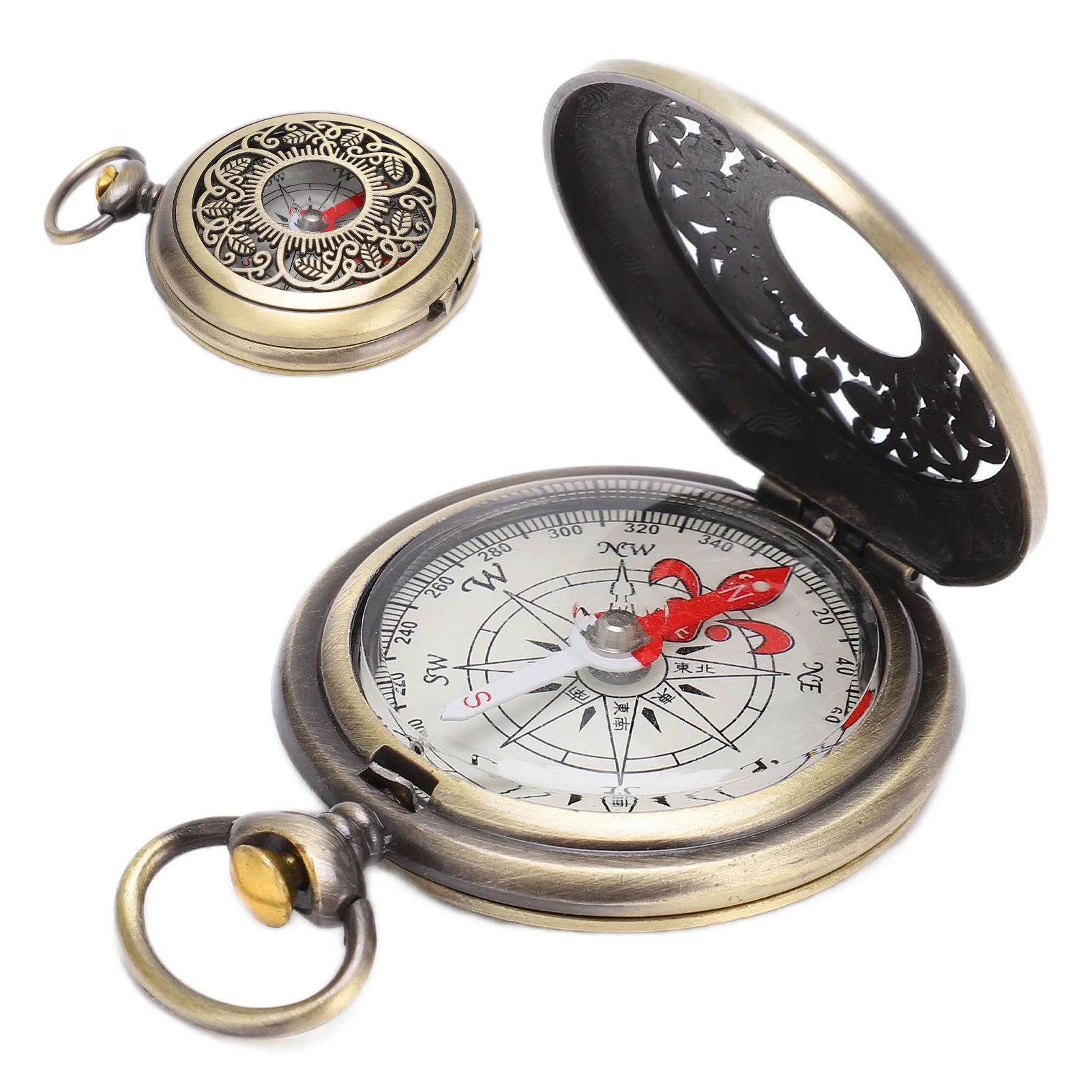
The pick: Portable Brass Camping & Hiking Compass 鈥?Waterproof Outdoor Navigation Tool 鈥?$15.49
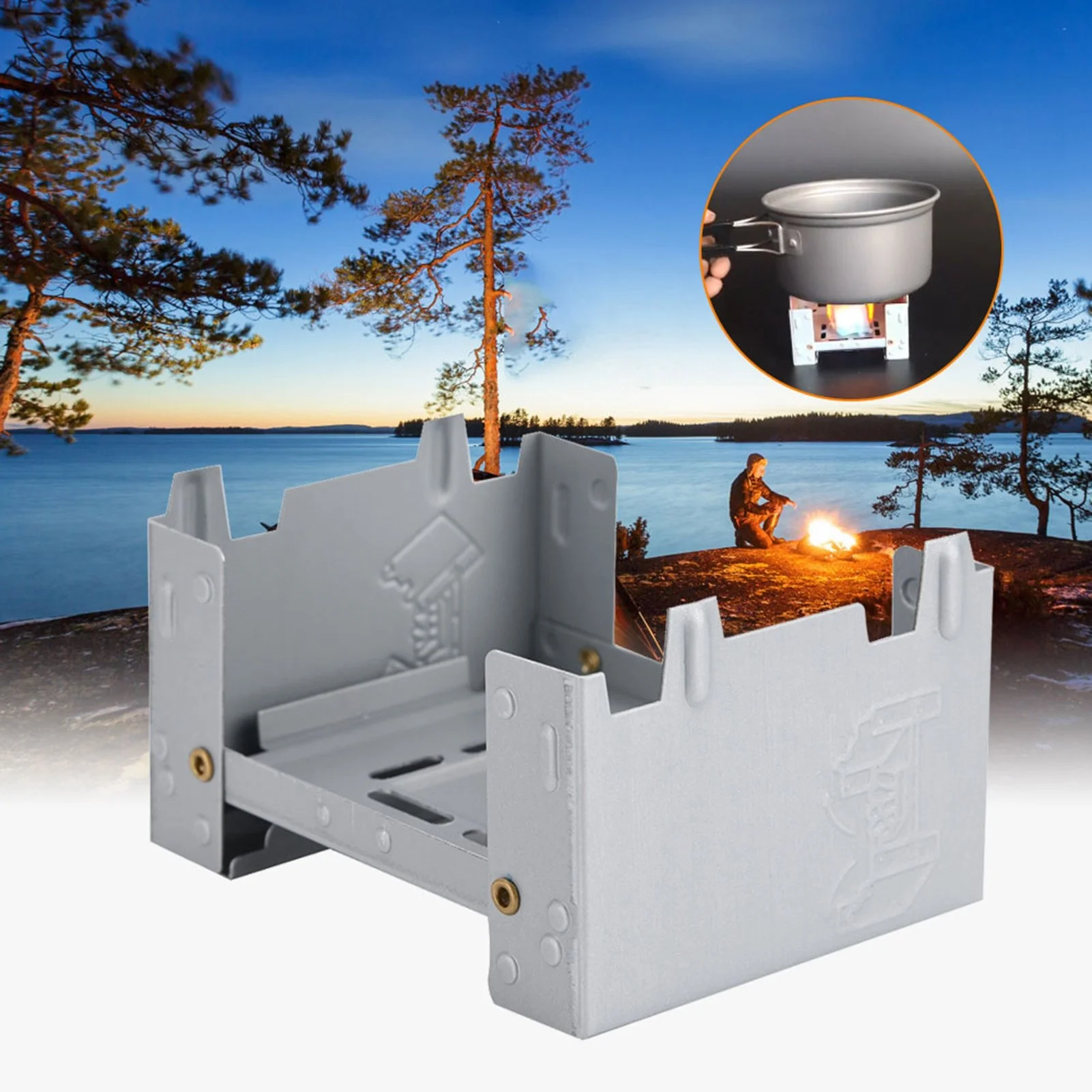
2. Mini Foldable Outdoor Alcohol Stove 鈥?Lightweight Solid Fuel Pocket Burner 鈥?$15.49
The job it does: Hot water is the single highest-value luxury in camping, and a stove is the tool that delivers it. The job is narrow but essential: boil water for coffee, tea, oatmeal, and freeze-dried meals without hauling a full camp stove and a canister of propane. This is backup-and-solo stove philosophy 鈥?light enough to live in the pack all season, dependable enough for a hot drink at day's end. It turns "cold dinner and a granola bar" into "coffee and a warm meal," which is a bigger morale upgrade than any other single piece of gear.
What you're getting: A mini foldable alcohol stove that collapses to roughly pocket size, built around the solid-fuel approach 鈥?a lightweight pocket burner you can drop in a pouch and forget. The foldable design is the point: it packs flat where a rigid canister stove demands a dedicated pack corner, and the solid-fuel format means no pressurized canister, no regulator, no hissing gas bottle to store.
When it earns its pack space: On solo trips and overnighters where the group stove stays home, this stove is the difference between hot and cold. It earns its place on the second morning, when a hot mug of coffee turns a damp start into a good one, and at the end of a long day when boiling water means a warm dinner. It's also the redundancy layer: the group stove that won't light or the canister that runs dry becomes a fifteen-minute inconvenience when there's a pocket burner in the pack.
Honest limits: Alcohol and solid-fuel stoves are the most weather-sensitive cookers in camping. Wind is the enemy 鈥?a breeze a canister stove barely notices can slash efficiency, and on exposed sites you'll be building a windbreak out of rocks before you get a boil. Boil times run longer than gas, so this is a patience stove, not a quick one. There's also no simmer control: it's boiling or not. Fuel is real logistics 鈥?you carry it, and some parks restrict alcohol and solid fuels entirely, so check the rules where you're going. And the small burner footprint means a stable, flat surface is mandatory; a wobbly rock pile is how hot water ends up on your boot.
The pick: Mini Foldable Outdoor Alcohol Stove 鈥?Lightweight Solid Fuel Pocket Burner 鈥?$15.49
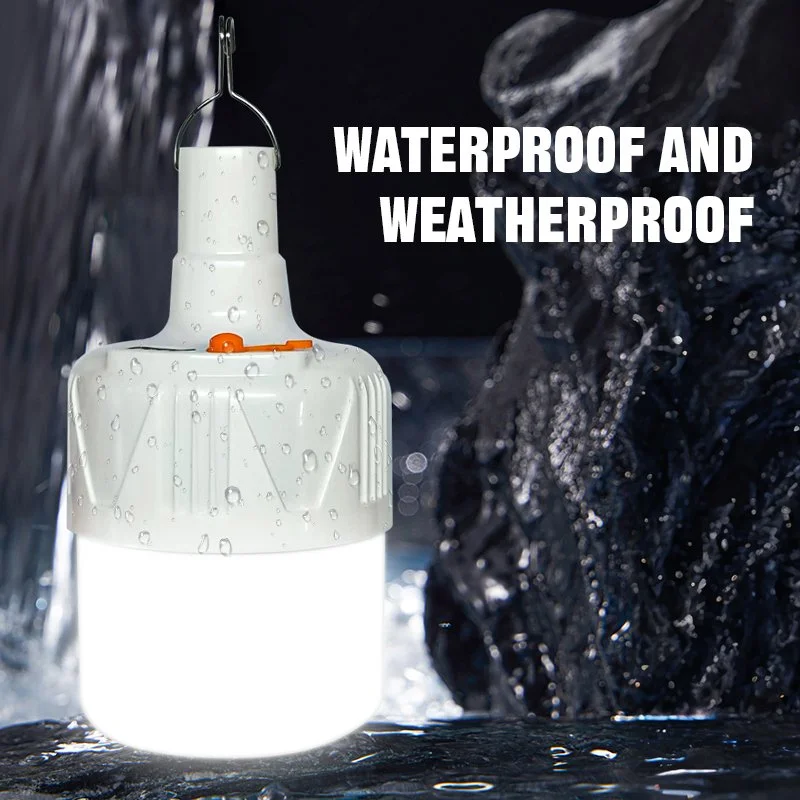
3. USB Rechargeable LED Emergency Lantern - Portable Camping Light 鈥?$22.49
The job it does: After dark, a campsite needs ambient light 鈥?the kind that spreads across the table, the tent floor, and the camp kitchen without blinding anyone. A headlamp follows your eyes; a lantern fills a space, so two or three people can share it while they cook, eat, or pack up at dusk. It's also the honest emergency tool of the group: the light you grab when the power's out at home, the car breaks down after dark, or the tent zipper fails at midnight.
What you're getting: A USB-rechargeable LED emergency lantern built for camping 鈥?LED for long burn time and low power draw, a rechargeable battery so you're not buying disposables at the camp store, and USB charging so it tops up from the same power bank that charges your phone. The "emergency" in the name is doing real work: this is the light you can rely on when everything else is dead, because its power source is the one you already carry. It's portable by design, sized to hang from a tent loop or sit on a picnic table, and its job is to turn a dark campsite into a usable one.
When it earns its pack space: The lantern earns its place at dusk, every single night of the trip 鈥?rare for any piece of camping gear. It's the light for the tent, where a strapped headlamp creates a moving shadow show while you change; the light for the table, where you can see what you're eating; and the light for the camp kitchen. For car campers it's borderline essential 鈥?the trunk is the lantern's natural habitat.
Honest limits: A lantern spreads light; it doesn't aim it. For anything needing focused, hands-free illumination 鈥?reading, cooking detail work, the 2 a.m. walk 鈥?a headlamp is the right tool and the lantern is the wrong one. Battery life depends entirely on remembering to charge it, and the honest failure mode of every rechargeable light is arriving with a dead battery; USB charging means topping up tethered to a power bank, so budget that bank's capacity across phone, lantern, and headlamp together. It's also heavier and bulkier than a headlamp 鈥?fine for car camping, the first thing to leave behind on an ultralight trip. And "emergency" is a promise, not a spec: the lumens are camp-comfortable, not search-and-rescue bright.
The pick: USB Rechargeable LED Emergency Lantern - Portable Camping Light 鈥?$22.49
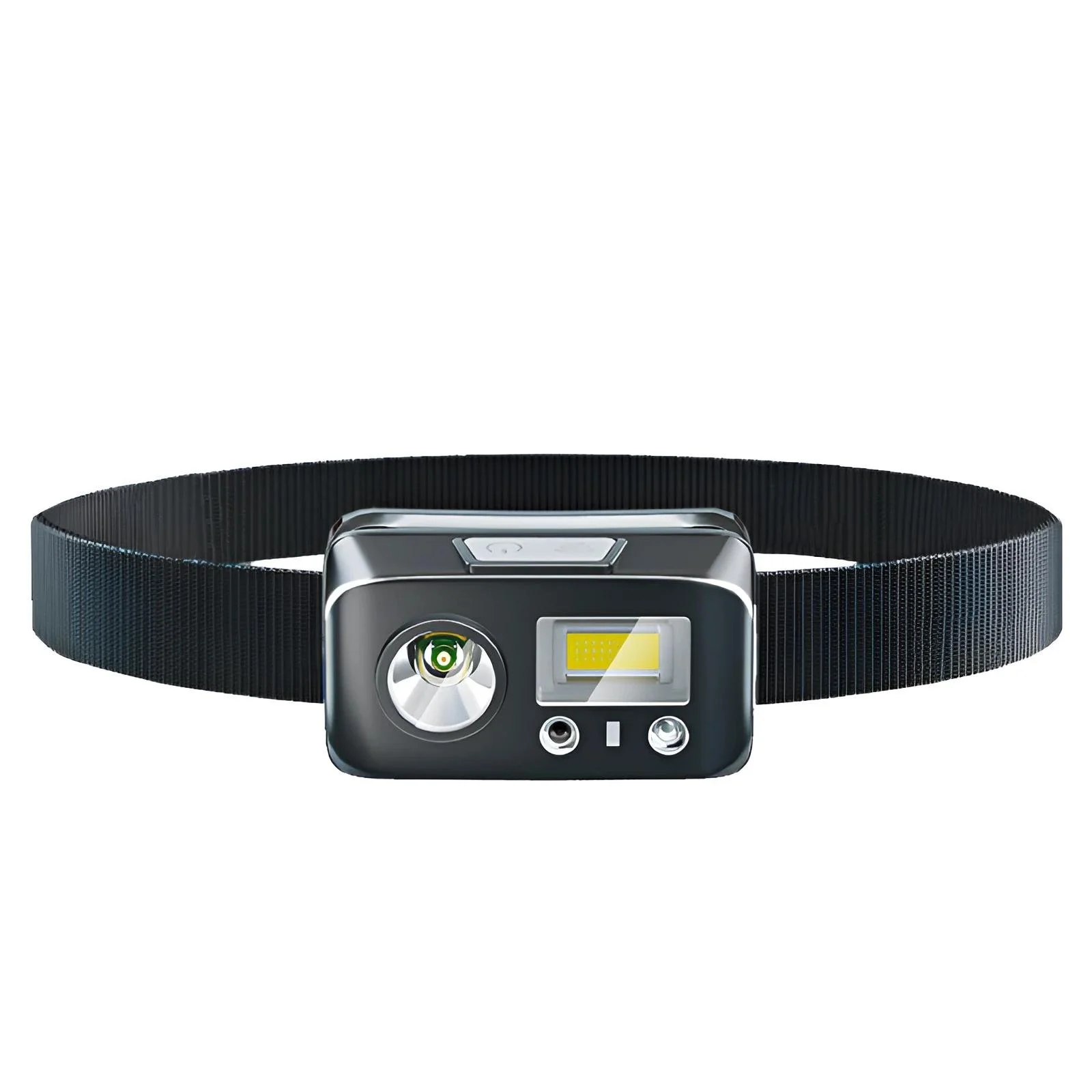
4. Rechargeable LED Headlamp 300Lm Lightweight Waterproof with Motion Sensor 鈥?$28.49
The job it does: The headlamp is the most-used light in camping, full stop, because it puts light exactly where your eyes are already looking and leaves both hands free. That combination makes it the tool for every after-dark chore: setting up the tent when you roll in late, cooking dinner when the sun beats you, washing dishes, reading in the tent, and the midnight walk that would be miserable with a flashlight jammed under your arm. A 300-lumen headlamp is the sweet spot for weekend camping: bright enough to light the trail and the campsite, without the battery-hungry brute force of a searchlight.
What you're getting: A rechargeable LED headlamp rated at 300 lumens, built lightweight so it doesn't bounce or drag on the strap, and waterproof so it survives rain, fog, and the splash from the camp sink. The rechargeable format means one less box of batteries in your pack 鈥?it charges from the same USB cable as your phone 鈥?and the LED gets long runtime from a small battery. The headline feature is the motion sensor: wave your hand to switch modes or turn it off without fumbling for a button.
When it earns its pack space: A headlamp earns its space before you even reach camp 鈥?the late start, the longer-than-planned hike, the trail that takes twice as long as the map promised, all end in darkness, and the headlamp is what makes the last mile safe. It earns its place every night at camp for the chores listed above, and again on the final morning when you break camp before sunrise. The motion sensor pays off specifically in cooking and tent contexts: hands full, light needs changing, a wave does it.
Honest limits: 300 lumens is a camp-and-trail light, not a searchlight. It will light the path and the campsite, but it won't flood a field or reach across a valley 鈥?long-range spotting needs a bigger light with a bigger battery. Rechargeable means remembering to charge: the honest failure mode is a dead headlamp on night two because it sat in the pack for a month. The motion sensor can also trigger accidentally 鈥?a swinging strap or a tent wall brushing the lamp can cycle modes or drain battery when you didn't ask it to. And waterproof means weather-resistant, not submersible: it shrugs off rain, it doesn't want a swim.
The pick: Rechargeable LED Headlamp 300Lm Lightweight Waterproof with Motion Sensor 鈥?$28.49
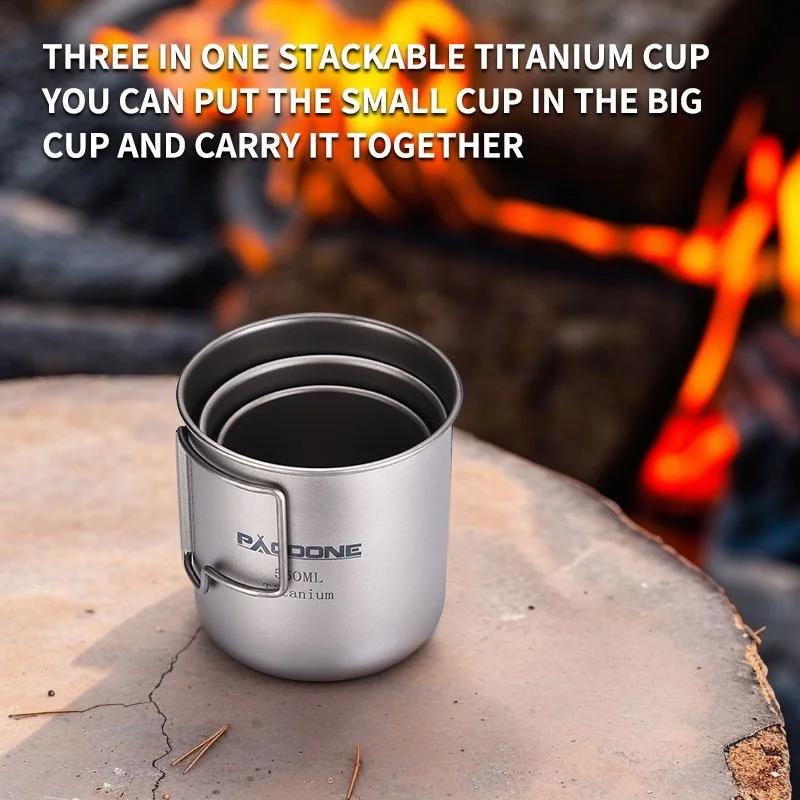
5. Ultralight Titanium Camping Mug 鈥?$32.65
The job it does: The titanium mug is the minimalist's hot-drink system: a single cup that boils water, brews coffee or tea, and serves as the vessel you drink from 鈥?one item replacing a pot, a kettle, and a camp cup. Weekend campers don't need a full cookware set; they need hot water and something to put it in, and a titanium mug is the lightest honest way to get both. Titanium is what makes this work: dramatically lighter than steel or enamel, strong enough for a lifetime of campfire use, and it doesn't rust.
What you're getting: An ultralight titanium camping mug 鈥?the no-frills version of the category. No lid, no folding handle, no extras: just a titanium cup sized for camping, built to take direct flame on a stove and handle the thermal shock of boiling water. Ultralight is the spec that matters: titanium mugs in this class weigh a fraction of their steel equivalents. It goes straight on the stove 鈥?the same stove you're carrying for hot water 鈥?so your boil-and-drink cycle is one vessel from flame to lips.
When it earns its pack space: Every morning and every evening of the trip 鈥?that's the mug's earning schedule. It earns its place at dawn when coffee is the difference between a good trip and a zombie one, and at dinner when boiling water means a warm meal. It earns it doubly on any trip where weight is the deciding factor: the hike-in campsite, the bike-packing overnight, the carry-everything-in trip. For campers hauling a steel pot "just in case," a titanium mug is the most visible weight win in the whole kit.
Honest limits: The honest truth is that titanium mugs are small. This is a mug, not a pot: capacity is a cup or so, which is perfect for coffee and tight for feeding two people 鈥?if your trip is group cooking, this is the wrong tool and a real pot is the right one. Titanium also conducts heat fast, which means water boils quickly and the rim gets hot enough to burn your lip if you're not careful 鈥?the no-handle design assumes you're careful, and first-timers learn that lesson exactly once. And the price is the big one: $32 for a cup is a lot, and a steel mug does the same job for a fraction of the cost 鈥?you're paying for ounces saved, and if you don't care about ounces, you're overpaying.
The pick: Ultralight Titanium Camping Mug 鈥?$32.65
6. Ultralight Titanium Camping Mug with Lid & Folding Handle 鈥?$45.65
The job it does: This is the same titanium-mug philosophy with the two upgrades that fix the plain mug's honest complaints. The lid keeps heat in 鈥?coffee stays hot longer, water comes to a boil marginally faster, and the mug stops being a splash hazard on uneven ground. The folding handle solves the burned-fingers problem that plagues every handleless titanium cup: you get a stable grip when the mug is full of boiling water, precisely when you need one. The job is still boil water, brew, and drink from one vessel 鈥?but with the convenience of daily-use gear.
What you're getting: An ultralight titanium camping mug with a lid and a folding handle, both of which stow into the mug's footprint when not in use 鈥?the handle tucks flat for packing and the lid covers the top. The lid is the quiet hero 鈥?it keeps rain, pine needles, and curious insects out of your drink, holds heat in so the water that boiled stays hot, and gives you a covered vessel to carry from stove to tent without losing half of it.
When it earns its pack space: This mug earns its space for the camper who drinks from it daily 鈥?the coffee person, the tea person, the person for whom the morning mug is the ritual the whole trip is built around. The lid earns its place the first time you carry a full mug of hot water from the stove to the tent in the dark without spilling; the handle earns its place the first time you pick up a full, freshly boiled mug without a wince. For campers who know they'll use a mug every day, the upgrades pay for themselves in one season.
Honest limits: At $45.65 this is a lot of money for a cup, and the honest framing is that it's the luxury end of a simple category. The capacity is the same mug-sized limitation as the plain version 鈥?this still isn't a pot, and group meals still need real cookware. The lid and handle add a little weight and a couple of moving parts compared to the bare mug, which matters if your goal is absolute minimalism 鈥?at which point the cheaper version is the purer choice. Titanium's fast heat conduction is unchanged: the handle protects your hand, but the rim can still burn your lip, and the lid itself gets hot when the water inside is boiling. And for car campers who never carry anything more than ten feet, a steel mug at a third of the price does the same job 鈥?you're paying for ounces and comfort, and you should know you're paying for them.
The pick: Ultralight Titanium Camping Mug with Lid & Folding Handle 鈥?$45.65
Pack Weight: What You're Actually Carrying
The whole argument for these six tools is that they're small and light, so here's the honest arithmetic. Weights below are typical ranges for each product type from general gear references, not measurements of these specific units 鈥?treat them as a planning guide. Either way, the full kit lands around a pound and a half to two pounds, less than a single bulky camp chair.
| Item | Price | Approx. weight class | What it earns its place for |
|---|---|---|---|
| Portable Brass Camping & Hiking Compass | $15.49 | ~3 oz | Navigation backup when the phone dies |
| Mini Foldable Alcohol Stove | $15.49 | ~4 oz (plus fuel) | Hot water for solo and backup cooking |
| USB Rechargeable LED Lantern | $22.49 | ~6 oz | Ambient campsite light and emergency use |
| Rechargeable LED Headlamp 300Lm | $28.49 | ~2 oz | Hands-free light for every night chore |
| Ultralight Titanium Mug | $32.65 | ~2 oz | Boil-and-drink hot drinks, minimal weight |
| Titanium Mug with Lid & Folding Handle | $45.65 | ~3 oz | Daily hot drinks with heat retention |
Two rules of thumb. Weight compounds 鈥?two ounces per item across six items is over half a pound you'll never feel again, so the lighter version of each job wins. And the lightest item that does the job is only right if it actually gets used: when in doubt, pack the tool whose job you know you'll hit.
Build the Kit Around the Trip, Not the Catalog
For a day hike, the compass, headlamp, and lantern matter more than the stove or mug. You are not cooking, but you can still lose daylight, drain your phone, or need a backup way to orient yourself. The day-hike version of this list is not romantic; it is practical. Navigation and light come first.
For an overnight campsite, add the mug and decide whether you actually cook. If your food plan is sandwiches and snacks, the stove is dead weight. If your morning depends on coffee or tea, the mug earns its place immediately. If you boil water for meals, the stove becomes useful, but only if you also carry appropriate fuel and know whether the campsite allows open flame.
For an emergency bag, choose the tools that work when the house or car plan fails: lantern, headlamp, compass, and one heat source if local rules and safety allow it. The emergency version of an outdoor tool does not have to be beautiful or ultralight; it has to be understandable when you are tired. A tool you cannot operate in the dark is not emergency gear.
That is the main buying rule: build from the trip outward. A weekend tool earns its price only when its job appears on the trip you are actually taking.
FAQ
Q: Titanium or steel for camp mugs and cookware? A: It's a weight-versus-cost trade, not a quality question. Titanium wins on weight and never rusts; steel wins on price and durability 鈥?it costs a third as much and shrugs off more abuse. Buy titanium if you carry your cookware; buy steel if you camp next to the car.
Q: Is an alcohol stove safe to use? A: Yes, with the same respect you'd give any flame. There's no pressurized canister, so no explosion risk like gas stoves 鈥?but the fuel is still flammable: keep it away from flames while pouring, never refill a hot stove, and cook on a stable, non-flammable surface. The real risks are wind and spills, since alcohol burns with a nearly invisible flame. Some parks restrict these fuels entirely 鈥?check the rules.
Q: Compass or phone GPS for weekend trips? A: Both, with the compass as the backup. Phone GPS is better when it works 鈥?it shows where you are on a map 鈥?but it fails in the three situations that actually get people lost: dead battery, no signal, and wet electronics. A compass fails at none of those. The honest system is a phone for primary navigation, a paper map, and a compass as the fallback. Ten minutes of practice makes that system real.
Q: How bright does a headlamp need to be? A: For weekend camping, 300 lumens is the comfortable middle: it lights the trail, handles camp chores, and reads a book without a tent-wide glow. Under 150 lumens feels dim on unlit trails; over 500 is more light than camp needs and drains the battery faster. The more useful spec is runtime and the low mode 鈥?a rechargeable headlamp with a solid low setting outlasts a brighter one.
Q: Lantern or headlamp 鈥?which one do I actually need? A: They do different jobs, so the honest answer is both 鈥?but if you can only buy one, buy the headlamp. A headlamp handles every task that needs light aimed at what you're doing: hiking after dark, cooking, reading, tent setup. A lantern handles the one job a headlamp can't: filling a space with light so two or three people can share it. The headlamp covers the lantern's job better than the lantern covers the headlamp's.
Q: Are alcohol stoves allowed everywhere? A: No, and that's a real limitation, not a formality. National forests and parks with burn bans can restrict or prohibit alcohol and solid-fuel stoves 鈥?the rules usually center on whether the stove has an on/off valve (alcohol stoves generally don't) and the current fire danger. Check fire restrictions for your area before packing the stove, and never assume a stove is exempt because it's small.
Sources
- Serper research: "portable outdoor tools under 50" 鈥?market context from Direct Tools Factory Outlet, Amazon outdoor listings, Outside Magazine, The Spruce, and ProTradeCraft
- PickByU catalog: product titles, prices, and URLs checked 2026-08-07
Prices and availability from the PickByU catalog, checked 2026-08-07. Product descriptions are based on product specifications and how this class of gear is typically used, not hands-on testing.
Browse Camping Hiking products