Article
Why Do Dogs Go Crazy for Squeaky Toys? The Science Behind the Squeak
Quick Answer
Why Do Dogs Go Crazy for Squeaky Toys? The Science Behind the Squeak: quick answer
Some dogs hear one squeak and lose their minds. The ears go up, the eyes sharpen, the body tightens, and suddenly the toy is the most important object...
- Topic: Dog Behavior.
- Related product category: pet-toys.
- This article keeps the main answer in the article copy and places relevant product context inside the guide.
The Squeak Is Not Just Noise
Some dogs hear one squeak and lose their minds. The ears go up, the eyes sharpen, the body tightens, and suddenly the toy is the most important object in the room. Other dogs pick up the same toy, squeak it twice, and wander away. A few dogs dislike the sound completely.
That difference is the first clue: squeaky toys do not work because every dog has the same reaction. They work because the sound adds feedback to play. The dog bites, the toy responds, and the game feels alive for a moment.
For many dogs, that response taps into old predatory play patterns. Chase, grab, bite, shake, carry, dissect, and repeat. Domestic dogs do not need to hunt dinner, but play often borrows pieces from hunting behavior. The squeak can make the toy feel more interactive than a silent plush toy because the dog gets instant confirmation: I touched it, and something happened.
That feedback loop is powerful. A ball rolls away when chased. A tug toy resists when pulled. A squeaky plush answers when bitten. Each toy tells the dog something different. The squeaker's job is to make the bite feel meaningful.
This is why squeaky toys can be useful, annoying, hilarious, and risky all at once. They can motivate exercise, make fetch more exciting, redirect mouthy behavior, and give a dog a satisfying object to carry. They can also overstimulate some dogs, trigger guarding, or tempt determined chewers to remove and swallow the squeaker.
The goal is not to decide whether squeaky toys are good or bad. The goal is to know what kind of squeaky-toy dog you have.
Why the Sound Gets a Reaction
The most common explanation is that squeaks sound like small prey. That may be part of the appeal for some dogs, especially dogs who enjoy chase, grab, shake, and pounce games. But it is not the whole story.
The sound also works as immediate reinforcement. The dog does something and the toy answers right away. That is satisfying even when the dog is not thinking in any literal "prey" way. Dogs are excellent at repeating behaviors that produce interesting results. Push the toy here, squeak. Bite harder, louder squeak. Shake it, different squeak. The toy becomes a puzzle the mouth can solve.
Squeaks also add novelty. A silent toy has texture, smell, and movement. A squeaky toy has all of that plus a sound event. For dogs who need more stimulation to stay engaged, that extra layer can make the difference between "boring plush" and "favorite toy."
Some dogs like control. They enjoy carrying the toy and deciding when the squeak happens. These dogs may walk around gently squeaking the toy like they are testing a button. Other dogs like impact. They slam, bite, shake, and work until the squeaker stops. A third group likes social response. They squeak the toy because people laugh, talk, chase, or join the game.
That last point matters. Owners accidentally train squeaker obsession all the time. The dog squeaks the toy, everyone reacts, and the toy becomes a remote control for human attention. The sound is interesting to the dog, but the household reaction may be even more rewarding.
Not Every Dog Loves the Same Squeak
Dogs differ by breed background, individual temperament, age, hearing sensitivity, play history, and toy experience. It is too simple to say one breed always loves squeakers and another does not. Still, certain tendencies show up often.
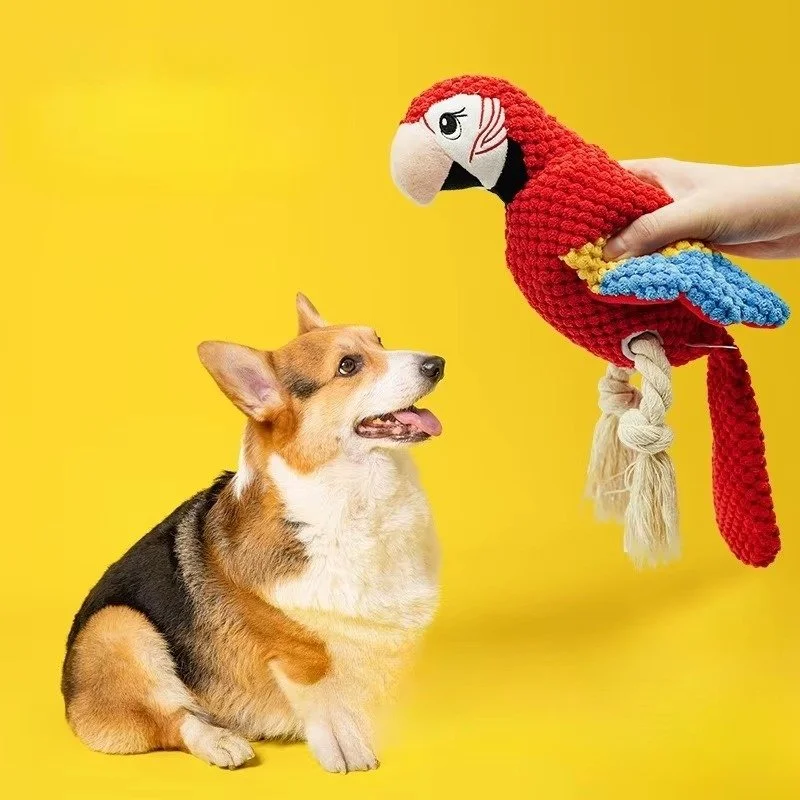
Retrievers may enjoy carrying soft squeaky toys because carrying objects is already part of their play style. They may parade with the toy rather than destroy it. Terriers may become intense because the sound fits their quick, grab-and-shake style. Some hounds may care more about scent than squeak. Some herding dogs may prefer movement, chase, and control over biting a plush toy. Small companion dogs may enjoy squeaks because the toy is easy to activate and carry.
But the individual dog always wins over the category. A Labrador can ignore squeakers. A Border Collie can love them. A senior terrier can become sound-sensitive. A rescue dog may be confused by noisy toys at first and obsessed with them later.
Age matters too. Puppies often explore squeaky toys with curiosity and poor judgment. They may chew seams, swallow loose pieces, or learn that squeaking gets human attention. Young adult dogs may use squeaky toys as high-energy outlets. Senior dogs may prefer softer, quieter squeakers or no squeaker at all if hearing, teeth, or joints have changed.
Sound level matters. Some squeakers are sharp and high-pitched. Some are lower and softer. Some toys grunt, crinkle, honk, or use multiple squeakers. A dog who dislikes one sound may enjoy another. If your dog backs away, blinks, licks lips, tucks the tail, or leaves the room, the toy is not fun for that dog. Put it away.
Squeaky toys should fit the dog in front of you, not the stereotype on the package.
The Four Squeaky-Toy Personalities
Watch your dog with a new squeaky toy for five minutes. The behavior tells you how safe and useful that toy is likely to be.
The carrier
This dog gently holds the toy, walks around with it, maybe squeaks it occasionally, and may bring it to people. Carriers are often good candidates for plush squeaky toys because they are not trying to open the toy. Inspection is still needed, but the risk level is lower.
The fetcher
This dog loves the squeak because it makes the toy more exciting to chase and return. The toy is part of a social game. For fetchers, squeaky toys can be excellent exercise tools as long as the toy is sized properly and does not become a chewing project between throws.
The squeaker hunter
This dog focuses on one area and works until the squeaker is exposed. The dog may ignore the rest of the toy once the sound mechanism is found. This is the highest-risk plush category. Squeaky toys should be supervised, short-session toys for this dog. Once the toy is damaged, remove it.
The arousal amplifier
This dog becomes more frantic the longer the squeak continues. The body gets stiff, the dog stops responding to cues, or play turns into grabbing hands, barking, guarding, or humping. For this dog, squeaky toys may need strict time limits, quieter versions, or replacement with tug, sniffing, or food puzzles.
The same dog can also move between categories. A puppy carrier can become an adult squeaker hunter. A tired dog can carry gently, while the same dog after two days without exercise may destroy the toy in minutes. Treat the category as a current reading, not a permanent label.
Why Some Dogs Try to "Kill" the Squeaker
Many dogs do not simply play with a squeaky toy. They investigate it. They bite the sound spot, rotate the toy, push with the front teeth, tear at seams, and work toward the hidden plastic part. Owners call these dogs squeaker surgeons for a reason.
This behavior is not automatically a problem. It is normal for dogs to explore the weak point of an object. The problem is what happens next. If the dog removes the squeaker and drops it, you can take it away. If the dog removes it and swallows it, you may have an emergency.
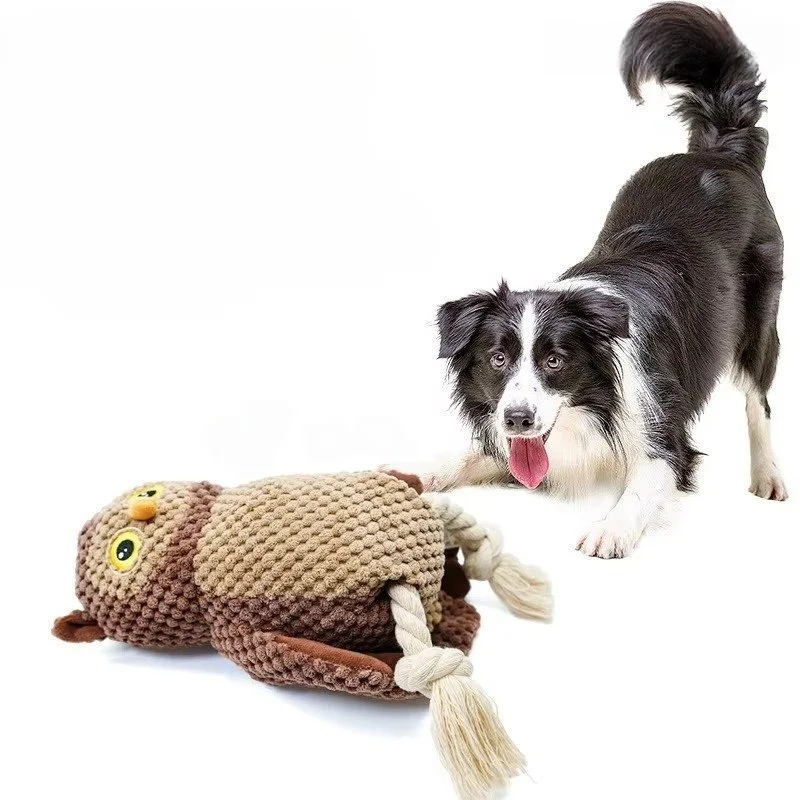
The safest response is management, not wishful thinking. If your dog has a history of opening plush toys, do not leave squeaky plush toys out unsupervised. Use them for short, owner-led sessions. Put the toy away while it is still intact. Choose larger toys with fewer seams, tougher fabric, or squeakers that are better protected. For some dogs, use rubber squeaky toys instead of stuffed ones, but still inspect them for cracks and chunks.
Do not let a dog continue dissecting a toy just because "they are having fun." Fun does not cancel swallowing risk. The moment you see stuffing, a loose seam, a shifting squeaker, or missing fabric, the toy is done for that session.
Teach a trade cue before you need it. Offer a treat, say the cue, and trade calmly for the toy. Practice with low-value toys first. When the dog has a squeaker halfway out of a plush toy, that is not the time to begin teaching drop-it.
How to Use Squeaky Toys Without Creating Chaos
The best squeaky-toy sessions are short and structured. The toy comes out, the dog plays, the dog gets a clear ending, and the toy goes away before it becomes a problem.
For fetch, use the squeak to capture attention. Squeak once or twice, throw, let the dog chase and return, then trade or ask for drop. Avoid letting the dog lie down and chew the toy between throws if the dog is a destroyer.
For tug, use a toy designed for tugging. Not every squeaky plush can handle pulling. Keep the movement low and side-to-side rather than yanking upward. Let the dog win sometimes. Ask for a drop, reward, and restart. This keeps arousal from climbing endlessly.
For solo chewing under supervision, set a timer. Five to ten minutes may be plenty for dogs who become intense. Sit nearby, watch the seams, and remove the toy before it fails. The dog should not need to destroy the toy for the session to count.
For anxious or easily aroused dogs, try quieter squeaky toys or crinkle toys. Some dogs need less sound, not more. A toy that calms one dog may hype up another.
End the session with a downshift. After squeaky play, offer water, a sniffing break, a lick mat, a chew that is safe for that dog, or a simple settle cue. This is especially useful for dogs who get worked up by sound.
The squeaky toy should be one tool in the day, not the whole entertainment plan.
Safety Rules for Squeaky Toys
Size comes first. A toy that can fit too far into the back of the mouth is too small. This is especially important for balls and small plush toys. Choose a toy large enough that the dog can grip it without swallowing or wedging it.
Material comes next. Plush is comfortable and exciting, but not for unsupervised power chewing. Rubber can be better for some dogs, but it must have enough give and must not break into chunks. Hard plastic squeaky toys can be unpleasant for teeth and may crack. Rope-squeaky combinations need caution if the dog eats fibers.
Inspect before and after play:
- Are seams loose?
- Is stuffing visible?
- Is the squeaker shifting?
- Are there tooth holes in rubber?
- Are any parts missing?
- Does the toy smell sour or dirty?
- Has it become small enough to swallow?
Remove damaged toys immediately. Do not keep a ripped toy in the basket because the dog still likes it. Dogs like plenty of unsafe objects.
If a dog swallows a squeaker, fabric, rubber, or stuffing, contact a veterinarian for guidance. Watch for vomiting, gagging, loss of appetite, diarrhea, lethargy, abdominal pain, repeated swallowing, or attempts to vomit without producing anything. Do not induce vomiting unless a veterinarian tells you to.
Wash toys according to the material. Dirty plush can hold saliva and odor. Rubber toys can collect grime in seams and openings. A toy that is clean and intact lasts longer and is easier to inspect.
When Squeaky Toys Help Training
Squeaky toys can be useful training rewards for dogs who find food less exciting than play. A quick squeak can get attention. A short tug or fetch can reward recall. A squeaky toy can make a dog more willing to engage in a distracting environment.
Use the toy reward with control. Keep the toy hidden until the reward moment. Bring it out, play briefly, then put it away. If the toy is available all day, it may lose value as a reward.
For recall practice, start in a safe enclosed area. Squeak, call, move backward, reward with a short game when the dog reaches you, then trade for food or restart the game. Do not use the squeak as a bribe every time. The goal is to build response, not teach the dog to wait for a sound before listening.
For impulse control, practice "take it," "drop," and "wait" with a squeaky toy. Begin when the dog is calm. If the dog cannot think once the squeaker appears, the toy is too exciting for that lesson right now.
For confidence-building, some shy dogs enjoy a soft squeaky toy because it responds to gentle pressure. Keep the sound level low and the session short. Let the dog control the approach. Do not squeak the toy near the dog's face to force interest.
Squeaky toys can be great rewards, but they are high-arousal rewards for many dogs. Use them where energy helps, not where calm thinking is the main goal.
When the Squeak Is Too Much
A toy is too much if your dog cannot disengage from it. Signs include stiff body posture, hard staring, growling over the toy, frantic chewing, ignoring known cues, snapping at hands near the toy, or pacing and whining when the toy is put away.
That does not mean the dog is bad. It means the toy is too valuable, too stimulating, or being used without enough structure.
Try changing one factor. Use the toy for shorter sessions. Switch to a softer squeak. Use it outside instead of in a tight room. Pair it with a clear drop cue. Give the dog a calming activity afterward. If guarding appears, stop casual access and work with a qualified trainer rather than practicing conflict over the toy.
In multi-dog homes, squeaky toys can create competition. One dog may love the sound; another may chase the dog who has it. If squeaky toys trigger stealing, guarding, or scuffles, use them separately. Dogs do not have to share every toy.
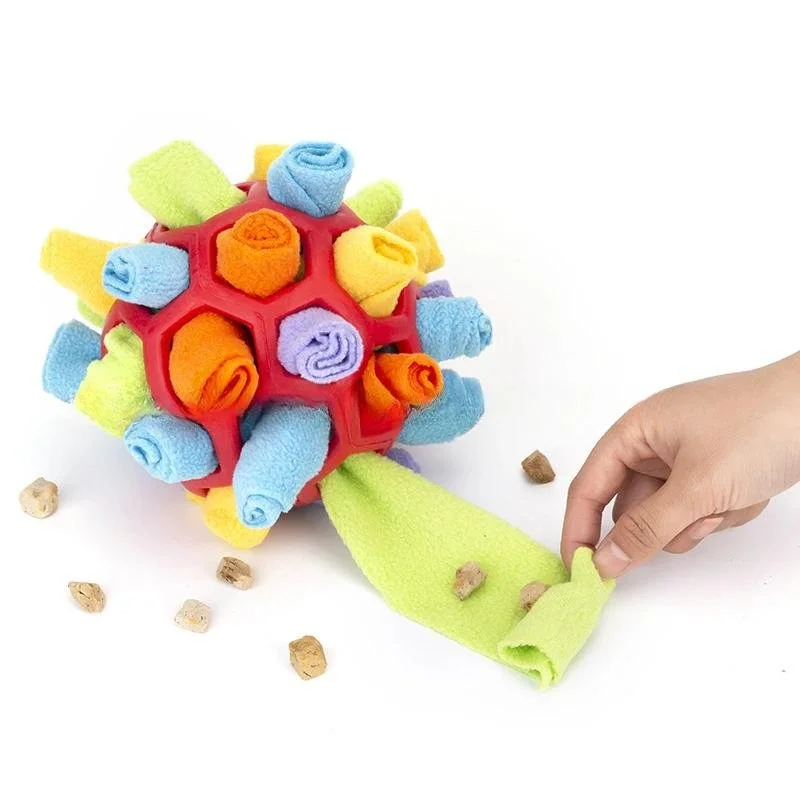
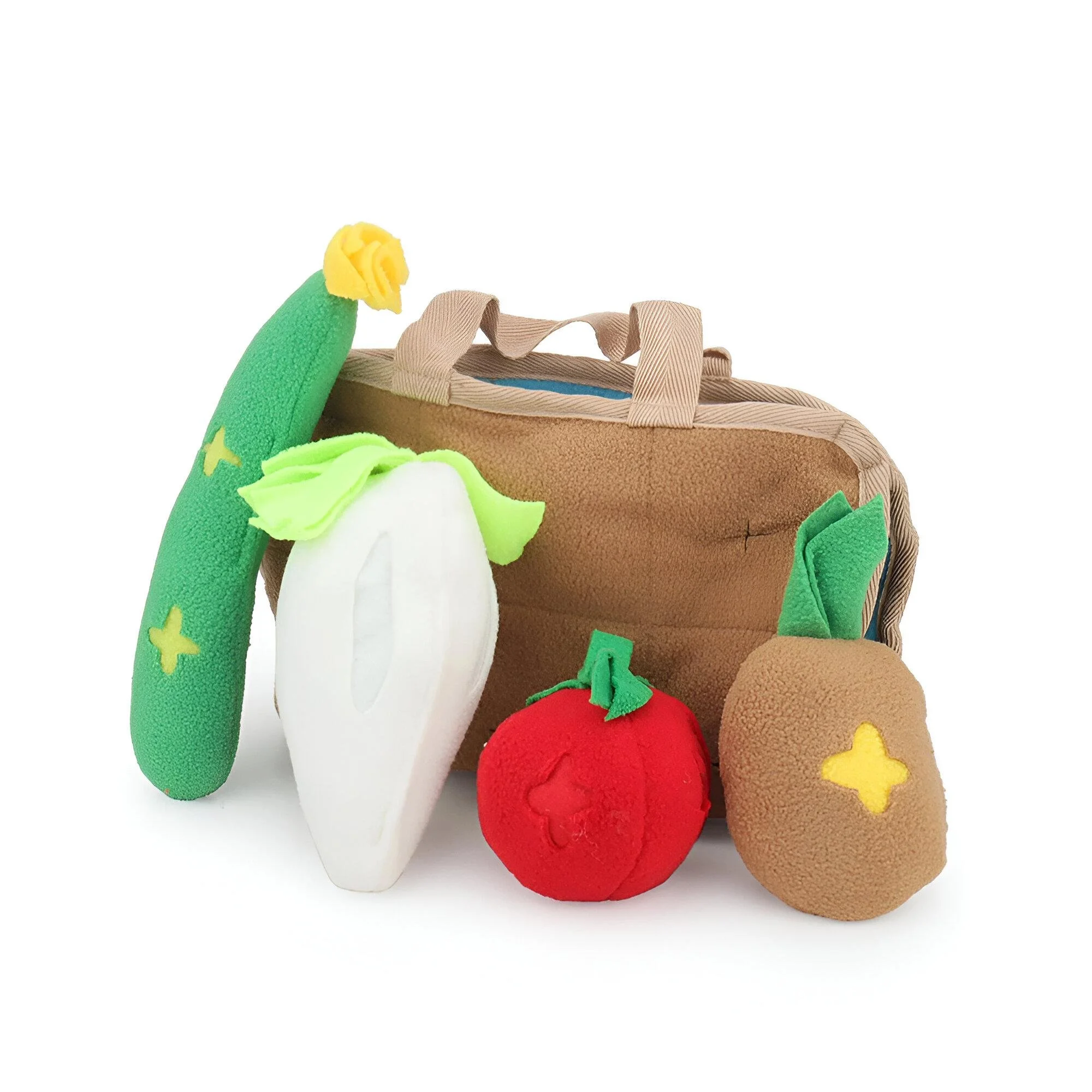
If your dog is noise-sensitive, skip squeakers altogether. There is no moral value in making a dog like a noisy toy. Snuffle mats, food puzzles, soft chews, tug toys, and scent games can be better choices.
Build a Squeaky Toy Rotation
The fastest way to make a squeaky toy boring is to leave it on the floor all week. The fastest way to make it dangerous is to let a destroyer work on it whenever nobody is paying attention. Rotation solves both problems.
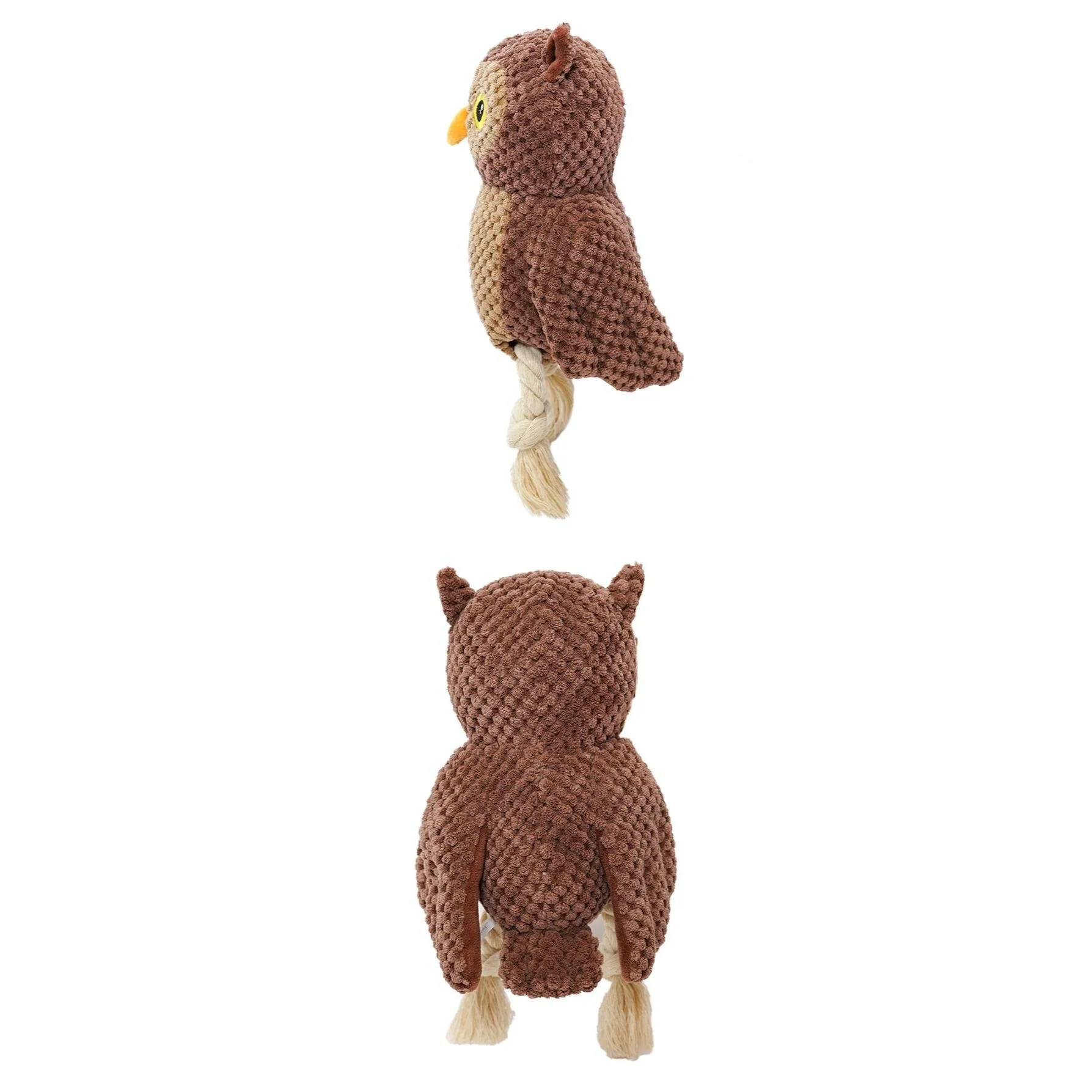
Keep squeaky toys in a separate category from everyday chew toys. They come out for specific moments: a fetch session, a rainy-day play break, a quick reward after training, or a supervised evening game. Then they go away. This keeps the sound interesting and gives you a natural inspection point.
A simple rotation might include three toys:
- one soft plush squeaker for carrying and gentle indoor fetch
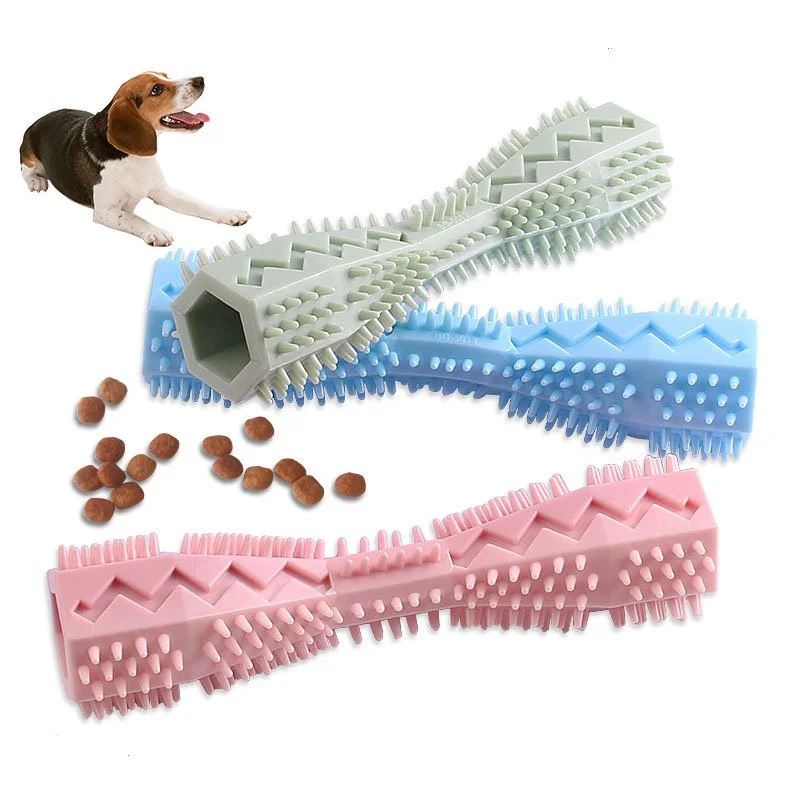
- one tougher rubber squeaker for dogs who bite harder
- one quiet crinkle or low-squeak toy for calmer play
Do not rotate in a toy just because it still technically squeaks. Check the seams, size, stuffing, and surface first. A toy can keep making noise after it has stopped being safe.
Rotation also helps you learn what the dog actually values. If the dog only loves one toy because it is easy to destroy, that tells you something. If the dog brings one plush to bed but attacks another toy like a project, those toys belong in different supervision categories.
For multi-dog homes, rotate by dog, not just by toy. A gentle carrier and a squeaker hunter should not have the same access rules. Put names on storage bins if needed. It sounds excessive until one dog keeps stealing the unsafe toy from the other.
What to Buy Based on Play Style
For carriers, look for soft plush toys that are large enough to hold but not so huge that the dog trips over them. A gentler squeaker is often enough. These dogs may enjoy toys with a soft body and a single sound point.
For fetchers, choose a shape that throws well and is easy to see. Avoid tiny squeaky balls that can lodge in the mouth. A slightly elongated plush, rubber bumper, or large squeaky ball may work better than a small novelty toy.
For squeaker hunters, avoid thin plush and heavily decorated toys. Look for stronger seams, fewer external parts, larger bodies, and designs where the squeaker is harder to reach. Even then, assume supervision. No fabric toy is a promise.
For nervous dogs, start quieter. Some dogs are startled by the first sharp squeak and never want the toy again. Press the toy softly at a distance, let the dog approach, and use praise or food if the dog investigates. If the dog leaves, respect the answer.
For puppies, size up early and supervise closely. Puppies chew with curiosity, not judgment. A toy that is fun during owner-led play can become a swallowed-piece risk if left in a crate.
For seniors, consider softer textures, lower-volume squeaks, and toys that do not require hard biting. A senior dog may still enjoy the feedback but no longer want to clamp down with the same force.
Troubleshooting Common Squeaky Toy Problems
My dog destroys every squeaky toy.
Stop treating squeaky toys as chew toys. Use them as event toys. Bring the toy out, play for a few minutes, trade, inspect, and put it away. Give the dog a separate safe chew if it needs long-duration mouth work. A dog who needs to chew for 30 minutes should not be doing that on a plush squeaker.
My dog ignores squeaky toys.
Try movement before replacing the toy. Drag it, toss it, hide it partly behind your leg, or pair it with a short game of chase. If the dog still does not care, accept it. Many dogs prefer food puzzles, tug, scent games, balls, or social play. A toy is not useful just because other dogs like it.
My dog barks at the toy.
Barking can mean excitement, frustration, uncertainty, or demand behavior. Lower the intensity. Use the toy in shorter bursts. Reward quiet engagement. If the squeak itself seems to trigger barking, switch to a non-squeaky version.
My dog guards squeaky toys.
Remove casual access and stop reaching directly into the dog's mouth or paws. Practice trades with lower-value items and consider help from a qualified trainer if guarding is tense or escalating. Guarding is not solved by taking the toy away repeatedly; that can make the dog more worried about losing it.
My dog squeaks toys at night.
This is a household management problem, not a dog morality problem. Put noisy toys away before bed and leave out quiet options. A crinkle-free plush, chew approved for that dog, or food puzzle may be a better evening choice.
My dog gets too rough after squeaky play.
Add a decompression step. After the session, switch to sniffing, licking, chewing, or a calm settle cue. If roughness continues, use squeaky toys earlier in the day or replace them with lower-arousal toys.
The pattern behind most squeaky-toy problems is mismatch. Wrong dog, wrong toy, wrong access level, or wrong timing. Fix the match and the toy becomes much easier to live with.
Product Spotlight
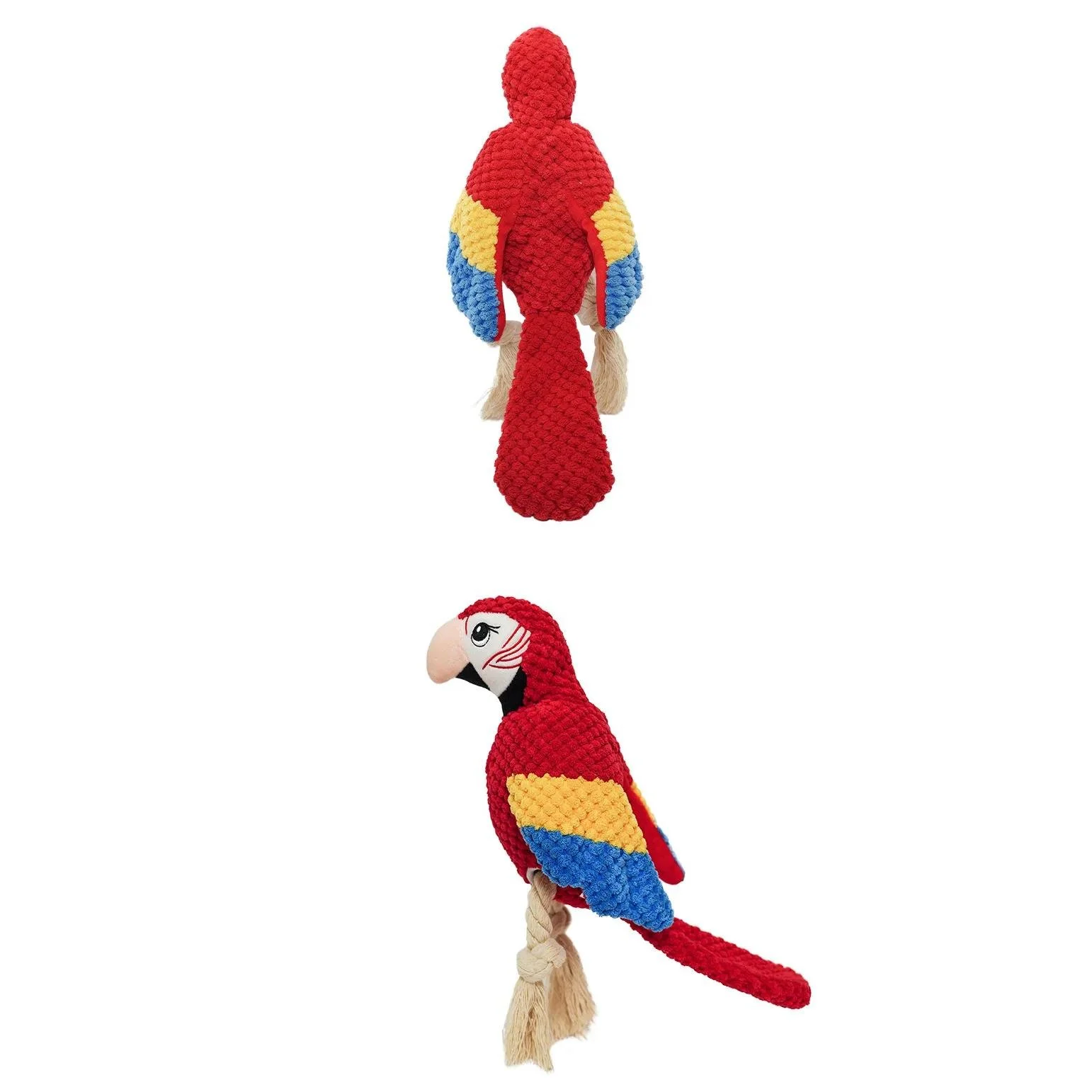
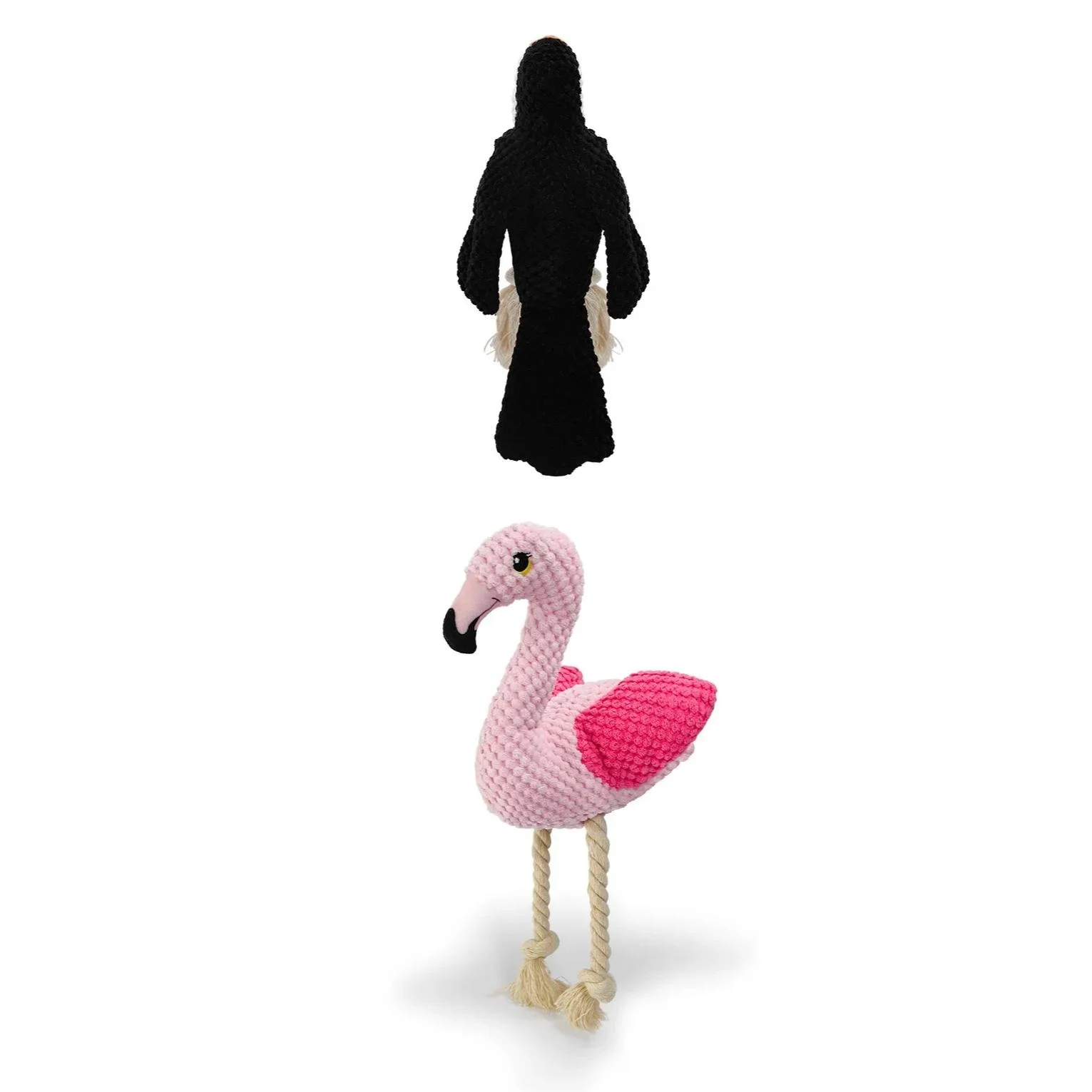
Plush Parrot Squeaky Dog Toy (#1804135)
This plush squeaky toy fits best for supervised play with dogs who enjoy carrying, fetching, and light squeaking. The plush body gives the dog something soft to grip, while the squeaker adds feedback that can make short play sessions more engaging.
Best use: bring it out for owner-led fetch, gentle tug, or a short indoor play break. Watch how your dog treats the squeaker. If the dog carries and squeaks calmly, it can stay in the supervised toy rotation. If the dog targets one spot, opens seams, or tries to extract the squeaker, put it away before damage starts. It should not be used as an unsupervised crate toy for squeaker hunters or fabric eaters.
Pair it with a trade cue. Let the dog enjoy the toy, then trade for a treat or another toy before the play session turns into surgery.
The Simple Answer
Dogs love squeaky toys because squeaks make play feel responsive. The sound can trigger chase, bite, carry, shake, attention-seeking, or problem-solving behavior depending on the dog. That is why one dog gently parades with a squeaky plush while another dog destroys it in five minutes.
The squeak is not the whole toy. The dog's play style is the real story.
Choose the right size, supervise the first sessions, inspect damage, teach trade, and remove the toy before the squeaker becomes a swallowed object. Used well, a squeaky toy can be a great outlet. Used carelessly, it can become an expensive little piece of plastic inside a dog who was only doing what the toy invited them to do.