Article
Senior Dog Toys: Gentle Play Ideas For Aging Joints, Teeth, And Energy
Quick Answer
Senior Dog Toys: Gentle Play Ideas For Aging Joints, Teeth, And Energy: quick answer
A senior dog does not stop needing play just because the body slows down. Play still supports mood, routine, confidence, appetite, problem solving, and...
- Topic: Senior Dog Care.
- Related product category: pet-toys.
- This article keeps the main answer in the article copy and places relevant product context inside the guide.
Senior Dogs Still Need Play, But The Rules Change
A senior dog does not stop needing play just because the body slows down. Play still supports mood, routine, confidence, appetite, problem solving, and the bond with people. What changes is the type of play. The toy that worked at age three may be too hard, too fast, too loud, too slippery, or too physically demanding at age ten.
Dogs become seniors at different ages. A giant breed may show senior needs at six or seven. A small breed may stay active well past ten. The useful question is not the exact birthday. The useful question is what the dog can comfortably do today. Can the dog bend down easily? Can it grip a toy without tooth pain? Does it recover after play? Does it hesitate before jumping? Does it still enjoy fetch, or does it only chase because the habit is familiar?
Senior toy choices should reduce impact while preserving interest. That usually means softer textures, ground-level play, short sessions, scent work, food puzzles, easy tug, gentle carrying toys, and toys that do not require sudden turns. A senior dog may not need less enrichment. It may need smarter enrichment.
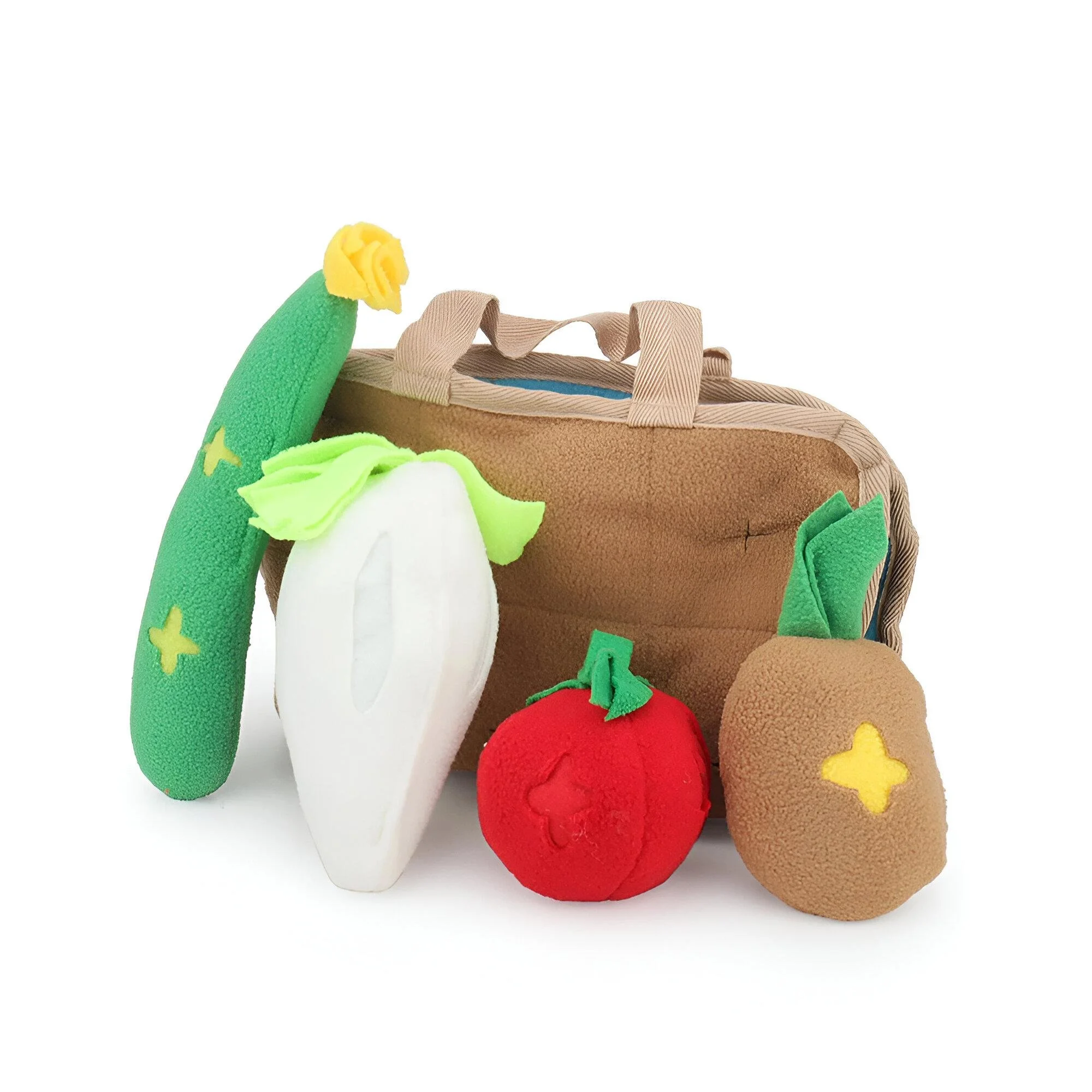
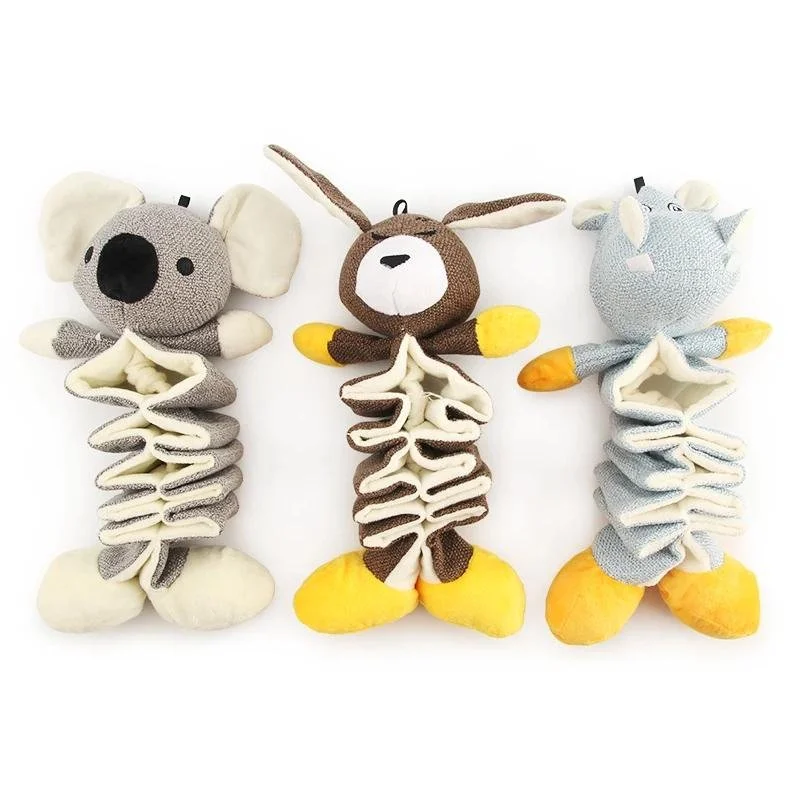
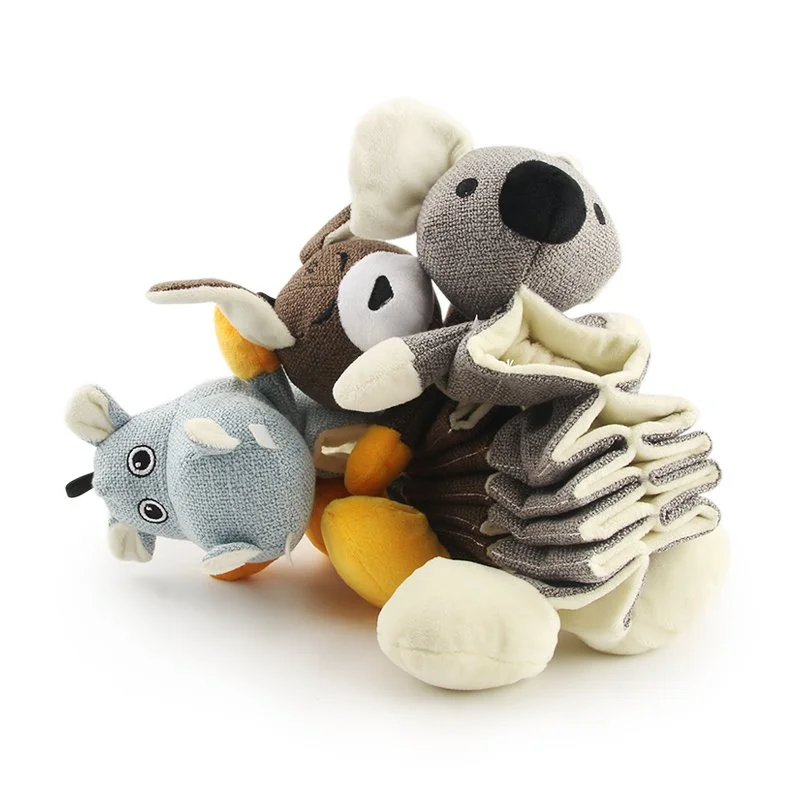
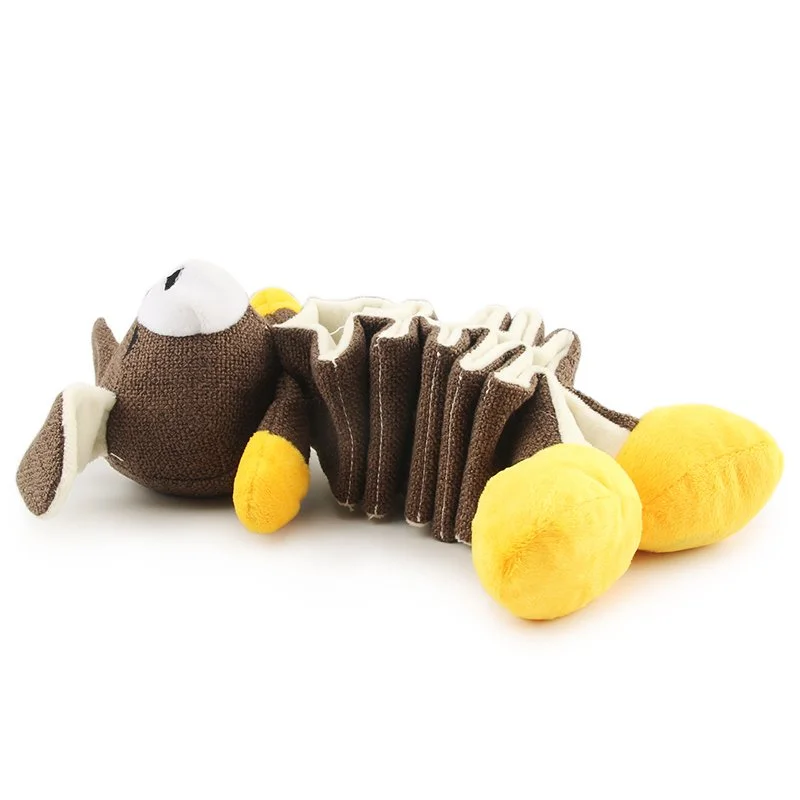
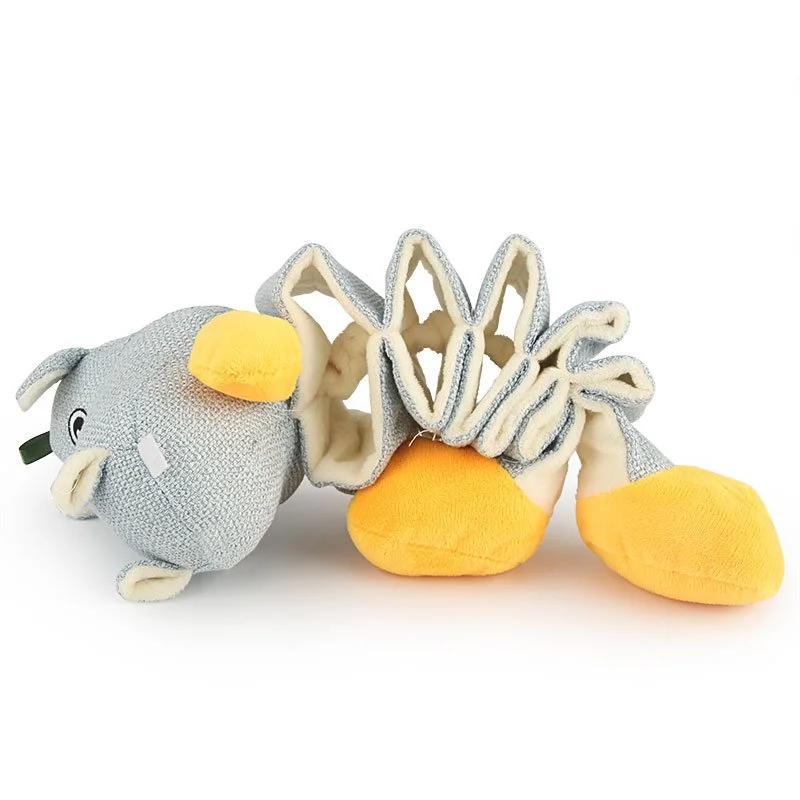
The Plush Slow Feeder Dog Toy (#1785350) is the matched product for this article because it supports the senior-dog priority of mental work over hard physical effort. Its soft cloth and fleece design, built-in snack pockets, and non-electrical construction make it useful for treat-hiding, slow feeding, calm sniffing, and short supervised engagement. It is not a replacement for veterinary care, walking, or pain management, but it fits the kind of low-impact play many aging dogs need.
Start With Comfort Before Excitement
A young dog may tolerate awkward play. A senior dog often cannot. Before choosing a toy, look at the surfaces, the dog's posture, and the amount of effort required to reach the toy. A toy that makes the dog twist, leap, skid, or stretch too far can create discomfort even if the toy itself is soft.
Floor-level play is usually safest. Avoid fetch on stairs, jumping for balls, high catches, slippery hallway chases, and tug games that pull the dog sideways. If the dog cannot comfortably reach the toy from a standing or lying position, bring the toy closer.
The play surface matters as much as the toy. Rugs, yoga mats, carpet runners, and non-slip flooring help older dogs feel secure. Many senior dogs stop playing not because they lost interest, but because the floor feels unstable. A dog that slips once may become cautious for weeks.
Warm-up matters too. A short slow walk around the room or yard before play can help a stiff dog move more comfortably. Do not start with the most exciting toy the moment the dog wakes up from a long nap. Give the body time to shift from rest to movement.
Comfort also includes the mouth. Senior teeth may be worn, cracked, missing, or sensitive. Hard rubber, nylon chews, antlers, bones, and dense toys that once seemed durable may now be too harsh. Softer toys, plush treat puzzles, and gentle chewing options often make more sense.
Excitement is not the goal at first. Comfort is. A comfortable senior dog is more likely to choose play again tomorrow.
The Five Jobs Senior Dog Toys Should Cover
A good senior dog toy kit should cover five jobs: gentle mouth use, mental enrichment, scent work, light movement, and comfort. One toy can cover more than one job, but the jobs should stay clear.
Gentle mouth use means the dog can hold, lick, nose, or chew without heavy pressure. Soft plush, fleece, rubber with give, and no-filler designs can work depending on the dog. Avoid small parts, hard edges, and toys that require forceful chewing.
Mental enrichment gives the dog a task. Puzzle feeders, slow feeders, treat pockets, and simple hide-and-find games can tire a senior dog without stressing joints. The #1785350 toy fits here because the built-in snack pockets turn food into a calm search activity.
Scent work is especially valuable because sniffing can stay enjoyable even when running declines. Hiding treats in towels, snuffle toys, boxes, or soft pockets lets the dog use the nose at its own speed.
Light movement keeps the dog engaged without impact. Rolling a toy a few feet, asking for a gentle nose touch, placing a treat just far enough to encourage one step, or playing soft tug without pulling hard can all count.
Comfort toys support rest and emotional security. Some seniors like carrying a soft toy, resting their head on it, or keeping it near the bed. This is still enrichment. Not every toy needs to create exercise.
Thinking in jobs helps owners avoid buying toys based only on cuteness. A senior dog needs a toy plan, not a crowded basket.
Soft Toys Are Useful, But They Still Need Supervision
Soft toys are often better for senior mouths, but soft does not automatically mean safe. Plush toys can tear. Stuffing can come out. Squeakers can become a target. Seams can fail. A senior dog with fewer teeth may still be a determined shredder.
Choose soft toys with simple shapes and fewer detachable parts. Avoid plastic eyes, hard noses, ribbons, long loose tails, weak ears, or decorative pieces. A soft body with strong stitching is usually better than a toy covered in small details.
No-filler toys can reduce mess and stuffing risk, but they still need inspection. A toy can be stuffing-free and still contain squeakers, fabric strips, or loose seams. If the dog chews through the fabric, the toy should be removed.
For dogs with dental sensitivity, use toys that allow mouthing rather than hard chewing. A senior dog may enjoy carrying, nudging, licking, or gently nibbling. Do not judge the toy by whether it survives power chewing. Judge it by whether it supports comfortable engagement.
The #1785350 plush slow feeder toy should be used with observation, especially the first few sessions. It is soft and food-focused, which is appropriate for many senior dogs, but treat pockets can encourage determined digging or chewing. If the dog tries to rip the pockets open instead of sniffing and searching, make the task easier or use it only briefly.
Soft toys are best when they are part of a rotation. Use them, inspect them, wash them when appropriate, and retire them when they lose structure.
Food Puzzles Are Often Better Than Long Fetch
Many senior dogs still love fetch emotionally, but the body may not love repeated running, braking, turning, and bending. Food puzzles offer a different kind of satisfaction. The dog still works, still solves, still earns a reward, and still gets tired, but with less joint impact.
Start with very easy puzzles. Hide a few pieces of regular food in a folded towel, a shallow box, a snuffle mat, or the pockets of a soft slow feeder toy. Let the dog succeed. A senior dog should not have to paw aggressively, flip heavy plastic, or fight a puzzle to get food.
Use the dog's regular meal when possible. Treat-heavy puzzles can add calories quickly, and many seniors need careful weight management. If treats are used, keep them small and adjust meals.
The #1785350 toy is a good match because it offers snack pockets in a soft format. That makes it useful for slow feeding and boredom reduction without requiring running or jumping. For a small senior dog, place it on a non-slip mat so it does not slide away. For a dog with neck stiffness, raise it slightly only if the dog can access it comfortably and safely.
Watch the dog's problem-solving style. Sniffing, nudging, licking, and gentle pawing are good. Frantic scratching, chewing through fabric, barking at the toy, or walking away may mean the puzzle is too hard or the dog is uncomfortable.
A successful food puzzle session may be only five minutes. That is enough. Senior enrichment should be repeatable, not exhausting.
Scent Games Keep Older Dogs Engaged
The nose is one of the best tools for senior enrichment. Many older dogs can still enjoy scent games even when fast movement is limited. Sniffing is mentally demanding, naturally rewarding, and easy to scale.
Start with visible treat searches. Place a few pieces of food on the floor while the dog watches. Say a simple cue, then let the dog find them. Once the dog understands, place food behind a chair leg, beside a bed, under the edge of a towel, or inside a soft toy pocket.
Keep search areas small. A senior dog should not have to wander the entire house at first. One rug, one room corner, or one hallway section is enough. Make the dog successful before increasing difficulty.
Use scent games before physically exciting games. A dog that becomes frantic with fetch may settle better after sniffing. A dog that wakes stiff may warm up gently with a slow search.
The Plush Slow Feeder Dog Toy (#1785350) can become a small scent station. Put a few pieces of food in different pockets, let the dog sniff them out, then remove the toy when finished. This is especially helpful for senior dogs that cannot handle long walks every day but still need a satisfying job.
Scent work should be calm. If the dog becomes frustrated, make it easier. If the dog lies down halfway through, let the session end. The dog is not failing. The plan is simply being adjusted to the dog's current capacity.
Tug Can Still Work If It Is Gentle
Some owners remove tug completely when a dog gets older. That is not always necessary. Tug can still be useful if the dog enjoys it, the grip is comfortable, and the person controls the intensity.
Senior tug should happen on a non-slip surface with all four paws on the floor. Keep the toy low. Avoid lifting, shaking, dragging, or pulling the dog off balance. Let the dog do more holding than fighting. Think of it as shared resistance, not a strength contest.
Use short sessions. Ten to twenty seconds of gentle tug, then pause. Ask for a release if the dog knows it, or trade for a treat. Then decide whether to continue. Several tiny rounds are better than one long intense round.
Choose a soft tug toy that is long enough to protect fingers. A toy that is too short can lead to accidental tooth contact. A toy that is too hard can be uncomfortable. For seniors with dental issues, tug may need to become holding, carrying, or gentle pulling only.
Watch the day-after response. A senior dog may seem fine during play and sore later. If the dog limps, hesitates to get up, avoids stairs, licks joints, or seems unusually tired the next morning, reduce tug intensity or stop.
Tug is optional. If the dog does not enjoy it anymore, replace it with scent work, food puzzles, or soft carrying games. The best senior toy plan respects preferences that change.
Fetch Needs New Rules In The Senior Years
Fetch is often the hardest habit to modify because dogs and owners both love it. But repeated sprinting, sliding, twisting, and hard braking can be rough on aging joints. Senior fetch should be shorter, slower, and lower impact.
Roll the toy instead of throwing it high. Toss only a few feet. Use soft toys on non-slip surfaces. Avoid stairs, slick floors, steep hills, and long-distance throws. If the dog has arthritis, spinal issues, or a history of injury, ask a veterinarian what level of fetch is appropriate.
Use fewer repetitions. A senior dog may chase with enthusiasm after the body is tired. Owners need to stop before the dog self-limits. Try three easy retrieves, then rest. If the dog still wants more, do another short set later in the day.
Choose the object carefully. Hard balls can be uncomfortable for worn teeth. Small balls can be risky. Heavy toys can strain the neck when carried. Soft, visible, easy-to-grab toys are better.
If fetch is no longer a good fit, preserve the emotional pattern in a gentler way. Roll a treat across a rug. Hide a toy a few feet away. Ask the dog to find it. Use a soft slow feeder after a short walk. The dog still gets anticipation and reward without the same impact.
The goal is not to take joy away. The goal is to keep play available in a form the senior body can recover from.
Match Toys To Senior Changes
Senior dogs may experience changes in teeth, vision, hearing, mobility, confidence, appetite, and sleep. Toy choice should adapt to those changes.
For dental changes, choose softer textures and inspect chewing carefully. A dog with missing teeth may still enjoy plush, lick mats, and food pockets. A dog with painful teeth may avoid toys entirely until dental care is addressed.
For vision changes, use toys with scent, sound, contrast, or familiar placement. Do not throw toys into cluttered areas. Keep the play zone consistent so the dog can move confidently.
For hearing changes, use visual cues and touch cues instead of relying only on verbal commands. A toy that makes a gentle sound may help some dogs, but loud squeakers can startle others.
For mobility changes, reduce distance and increase stability. Put toys where the dog already rests. Use rugs. Avoid sudden turns. Keep sessions short enough that the dog finishes comfortably.
For lower appetite, food toys may need higher-value but still appropriate rewards. Use small amounts. If appetite changes suddenly, treat it as a health signal, not just a toy problem.
For anxiety or cognitive changes, predictable routines matter. Bring out the same enrichment toy at the same time each day. A soft puzzle or scent game can become a calming ritual.
Senior dogs are not all the same. The best toy is the one that fits the dog's current senses and body.
How Long Should Senior Dogs Play?
Senior play is better in small pieces. Instead of one twenty-minute session, use three to five short sessions across the day. A few minutes of sniffing after breakfast, a gentle toy game in the afternoon, and a soft puzzle in the evening may be more useful than one long workout.
Watch quality, not only time. Good senior play looks focused, comfortable, and recoverable. The dog moves willingly, breathes normally, stays coordinated, and can settle afterward.
Stop early if the dog pants heavily, slows suddenly, lies down, avoids the toy, limps, coughs, stumbles, seems confused, or becomes unusually mouthy. Do not wait for obvious collapse. Senior dogs often hide discomfort until they have done too much.
Rest days are fine. Some days the dog may only want a food puzzle or a comfort toy. Weather, sleep, pain, medication, and routine changes can all affect energy.
A useful rule is to end when the dog still looks successful. That creates a positive memory and lowers the chance of soreness. Senior enrichment should make tomorrow easier, not harder.
The #1785350 toy fits short sessions well because it can be loaded lightly. Use a few pieces of food, let the dog search, then put it away. There is no need to fill every pocket or make the puzzle long.
Create A Senior-Friendly Toy Rotation
A senior toy rotation does not need many items. Start with one soft comfort toy, one gentle food puzzle, one scent game setup, one easy tug or carrying toy, and one low-impact movement toy. Store the rest and rotate based on the dog's energy.
Keep the gentle food puzzle in a predictable place. Use it when the dog is awake but not overly excited. This can help with boredom and meal pacing.
Keep comfort toys near resting areas. Some seniors like having a familiar soft item by the bed or crate. If the dog carries the toy gently, that is a valid use.
Use movement toys only on stable surfaces. If the dog starts slipping, the surface is wrong. Put down a mat or move the game.
Wash and inspect toys more often. Senior dogs may drool more, chew unevenly, or use toys more slowly, which means moisture can sit in fabric. Food toys need special attention because crumbs in pockets can create odor.
Retire toys without guilt. A worn toy may be emotionally familiar, but if it has loose parts, torn seams, exposed stuffing, or sharp edges, it is not worth keeping in the active rotation.
Rotation also keeps the dog interested. A soft slow feeder one day, a towel search the next, and a gentle carry toy the next can give variety without overloading the dog.
Pain Signals Owners Often Miss
Senior dogs do not always yelp when something hurts. Pain can look like small behavior changes. The dog may stop sooner, turn away from a favorite toy, chew only on one side, refuse to bend down, hesitate before lying down, or seem restless after play.
Morning-after signs matter. If the dog is stiff, slow to rise, reluctant to walk, licking a joint, or less eager the day after play, the previous session may have been too much.
Changes in play style matter too. A dog that used to chase may now prefer sniffing. A dog that used to tug may now only hold the toy. A dog that used to chew hard may now lick or mouth gently. These changes should guide the toy plan.
Do not respond by removing all play. Respond by lowering intensity and checking comfort. Many seniors become happier when play is adjusted rather than stopped.
Veterinary guidance is important when pain signs appear. Toys can support enrichment, but they cannot diagnose arthritis, dental disease, injury, or neurological changes. If signs persist or worsen, get professional care.
Owners should also be careful with pain medication assumptions. Do not give human medications unless directed by a veterinarian. The toy plan should stay practical: soft surfaces, short sessions, gentle toys, and careful observation.
A Practical Day Of Senior Dog Enrichment
A senior toy plan works best when it fits normal daily care. It should not feel like a separate project that owners forget after two days. Tie toys to moments that already exist: waking up, meals, potty breaks, rest periods, and evening settling.
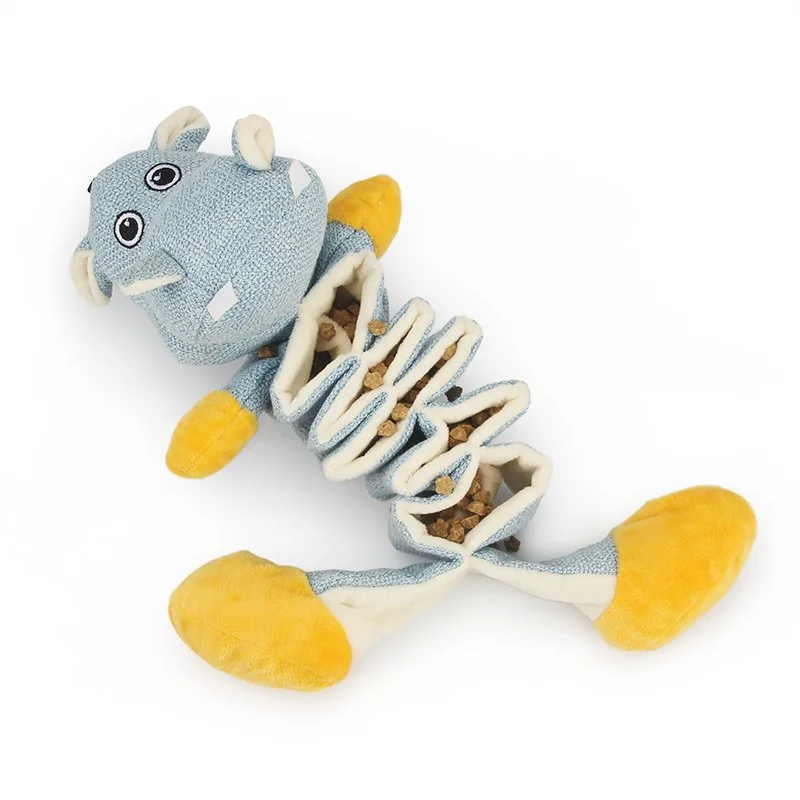
In the morning, start gently. After the first potty break, offer a short scent search or a lightly loaded soft puzzle. The dog has moved a little, the body is warmer, and the food motivation is natural. This is a good time for the #1785350 toy with only a few pieces of regular food hidden in easy pockets. Keep the session short enough that the dog finishes with interest.
In the afternoon, use comfort or low movement. A senior dog may not want a full game after resting. Place a soft toy near the dog, roll it a short distance, or invite a gentle carry game. If the dog chooses to engage, continue for a few minutes. If the dog only sniffs and lies back down, that is information, not failure.
In the evening, use mental work before rest. Many older dogs become restless in the evening even when they cannot handle more physical exercise. A small food puzzle, towel search, or soft treat-pocket toy can give the dog a final job without creating wild energy before bedtime.
This pattern keeps enrichment predictable: small sniffing task, light movement, rest, another small task. It is easier on the body than one long play block and easier for owners to maintain.
Adjusting Toys For Size And Breed
Senior toy advice should change by dog size. A small senior dog may struggle with toys that slide away, openings that are too large, or objects that are heavy to carry. Use smaller soft toys, stable feeding puzzles, and surfaces that prevent slipping.
A medium senior dog may still want real interaction but need impact control. This dog may enjoy gentle tug, short rolling fetch, soft slow feeders, and scent games around the room. Keep intensity low even if the dog looks enthusiastic.
A large senior dog needs special attention to joints, neck position, and toy size. Do not make the dog bend deeply for every reward if bending is uncomfortable. Place food puzzles where the dog can reach them naturally. Choose toys that cannot disappear into the mouth and avoid small soft objects that may become swallowing risks.
Breed tendencies matter too. Retrievers may still want to carry. Terriers may still want to shake. Herding breeds may still want a task. Scent hounds may prefer searching. Toy selection should honor what the dog likes, but the movement pattern must be adjusted for the senior body.
The right senior toy is therefore not only "soft." It is soft enough for the mouth, stable enough for the floor, large enough for the dog, simple enough to avoid frustration, and interesting enough to repeat.
Final Recommendation
Senior dog toys should protect comfort while preserving daily engagement. Choose softer textures, ground-level games, non-slip surfaces, short sessions, scent work, gentle food puzzles, and toys that do not force jumping or hard chewing. Watch how the dog feels during play and the next morning.
The best matched product for this article is the Plush Slow Feeder Dog Toy (#1785350). It has five product images and fits senior-dog enrichment because it uses soft cloth and fleece, built-in snack pockets, and a calm slow-feeding format. It supports sniffing, gentle problem solving, boredom reduction, and meal pacing without requiring high-impact movement.
Use it as one part of a senior rotation: soft comfort toy, scent game, food puzzle, easy carry toy, and low-impact movement game. The best senior play does not try to recreate puppy energy. It gives an aging dog safe, satisfying work at the pace the body can handle.
Browse Senior Dog Care products