Article
Your Pet's Shedding Is Not Normal: When Fur Everywhere Means Something Is Wrong
Quick Answer
Your Pet's Shedding Is Not Normal: When Fur Everywhere Means Something Is Wrong: quick answer
Dogs and cats shed. A healthy pet can leave fur on clothing, furniture, bedding, car seats, rugs, and every black pair of pants in the house. Seasonal...
- Topic: Grooming & Health.
- Related product category: grooming.
- This article keeps the main answer in the article copy and places relevant product context inside the guide.
Quick Answer: Normal Shedding Is Even. Problem Shedding Has a Pattern
Dogs and cats shed. A healthy pet can leave fur on clothing, furniture, bedding, car seats, rugs, and every black pair of pants in the house. Seasonal shedding can be heavy, especially in double-coated dogs and long-haired cats. Some pets shed more than others because of breed, coat type, age, indoor lighting, climate, and grooming routine.
But not all fur loss is normal shedding.
Normal shedding is usually even. Loose hair comes out across the coat. The skin underneath looks calm. The pet acts normal. Appetite, thirst, weight, energy, and behavior stay steady. A brush fills with fur, but the coat still looks complete.
Problem shedding has a signal:
- Bald patches.
- Sudden dramatic hair loss.
- Itching, chewing, licking, or scratching.
- Red skin, crusts, scabs, scaling, odor, or sores.
- Dull, greasy, dry, or clumpy coat.
- A cat that stops grooming or overgrooms one area.
- Shedding paired with weight loss, appetite change, thirst change, lethargy, hiding, or pain.
Veterinary sources make the line clear. Merck Veterinary Manual notes that hair loss is a sign, not a diagnosis, and the underlying cause has to be identified for treatment to work. Cornell's feline health guidance explains that skin disease and itch can create a cycle of inflammation, scratching, and more damage. VCA notes that poor coat appearance, excessive shedding, dandruff, greasiness, odor, or recurring skin problems can indicate an underlying issue.
So the practical rule is this:
Brush normal shedding. Investigate abnormal hair loss.
This guide helps you decide which situation you are dealing with.
The Shedding Scale: What Is Normal, What Is Not
Use this scale before buying a grooming tool.
| Level | What You See | Likely Meaning | What to Do |
|---|---|---|---|
| 1 | Light fur on clothes or bedding | Normal maintenance shedding | Brush weekly |
| 2 | More fur during spring or fall | Normal seasonal shedding | Brush more often during peak shed |
| 3 | Daily fur on furniture, but coat and skin look healthy | High-normal shedding or under-grooming | Improve routine, tool, diet discussion if needed |
| 4 | Sudden heavy shedding over days | Stress, illness, medication, hormonal change, or environment shift possible | Track closely and call vet if it continues or pairs with symptoms |
| 5 | Bald patches, itching, licking, redness, scabs, odor, or clumps | Skin disease, parasites, allergy, infection, pain, or overgrooming possible | Veterinary visit |
| 6 | Hair loss plus appetite, thirst, weight, energy, or behavior changes | Systemic illness possible | Veterinary visit this week |
Levels 1 to 3 are grooming territory if the pet otherwise seems healthy. Levels 5 and 6 are veterinary territory. Level 4 depends on context, but sudden dramatic shedding should never be dismissed if it continues or appears with other signs.
The most common owner mistake is using a Level 1 solution for a Level 5 problem. A better brush can remove loose hair from a healthy coat. It cannot treat fleas, mites, ringworm, allergies, bacterial infection, endocrine disease, pain, or a cat that is licking because something hurts.
Warning Sign 1: Sudden Shedding
Seasonal shedding usually builds gradually. You notice more fur on the sofa, then the brush fills faster, then the coat lightens. A sudden fur explosion is different. If the amount of loose hair seems to double within a few days, ask what changed.
Possible triggers include:
- Moving homes.
- Boarding or travel.
- A new pet or person in the home.
- Construction noise or schedule disruption.
- Recent illness or fever.
- Medication changes.
- Pregnancy, nursing, or hormonal changes.
- Major diet change.
- Flea exposure or new itching.
Stress can trigger shedding, but "stress" should not become a lazy explanation for everything. If the pet is also hiding, vomiting, refusing food, drinking more, losing weight, scratching, or acting painful, treat the shedding as one part of a larger health picture.
What to do:
- Look at the skin, not only the fur.
- Check whether the shedding is even or patchy.
- Check appetite, water intake, energy, bathroom habits, and behavior.
- Note any recent changes in home, food, medication, or environment.
- Call the veterinarian if the shedding is dramatic, persistent, or paired with other symptoms.
If everything else is normal and the pet recently experienced a clear stressor, short-term extra shedding may settle. If you cannot explain it, or it keeps going, do not assume a brush is the answer.
Warning Sign 2: Bald Patches
Bald patches are not normal shedding. Shedding means old hairs are released as new hairs grow. Bald spots mean hair is missing from an area where it should be present.
Patchy hair loss can come from:
- Fleas.
- Mites or mange.
- Allergies.
- Ringworm.
- Bacterial or yeast infection.
- Pressure or friction.
- Pain-related licking.
- Cat overgrooming.
- Hormonal or metabolic disease.
Merck notes that acquired hair loss can be inflammatory or noninflammatory, localized or widespread, itchy or not itchy, and that diagnosis depends on history, exam, skin tests, and sometimes lab work. That is why guessing at home is risky. Many skin problems look similar from the outside.
Ringworm deserves special attention because it can spread between animals and people. Cornell describes ringworm as a fungal infection that can cause circular hair loss, scaling, crusty skin, broken hair, inflamed areas, excessive grooming, and dandruff. It is treatable, but it should not be ignored.
What to do:
- Do not share brushes between pets if ringworm or parasites are possible.
- Wash bedding and clean high-contact areas if your vet suspects something contagious.
- Keep children and immunocompromised people from handling suspicious lesions until checked.
- Book a veterinary appointment instead of trying cosmetic grooming first.
A bald spot is information. Preserve that information for the vet instead of brushing the area aggressively and irritating the skin further.
Warning Sign 3: Itching, Chewing, Licking, or Scratching
If fur loss comes with itch, the problem changes. The pet is not just shedding. The pet is reacting to irritation, allergy, parasites, infection, or pain.
Common patterns:
- Tail base chewing can point toward fleas or flea allergy.
- Paw licking can be associated with allergies, irritation, infection, or pain.
- Ear scratching can appear with ear disease or allergy.
- Belly licking can reflect skin irritation or discomfort.
- One focused licking area can sometimes mean pain under the skin, joint, or back.
Cornell's feline skin disease guidance describes how itch and scratching can create a cycle: irritation leads to scratching, scratching damages skin, damaged skin becomes more inflamed, and the itch continues. Once that loop begins, removing loose fur does not solve the cause.
Cats can be especially hard to read. Cornell notes that cats spend a large part of the day grooming, so owners may not notice overgrooming until hair loss or lesions are visible. A cat that quietly "mows" fur from the belly, legs, or flanks may be itchy, stressed, or painful.
What to do:
- Check for fleas or flea dirt, but do not assume you would always see fleas.
- Notice whether licking is focused or widespread.
- Take photos of the skin and coat pattern.
- Prevent aggressive brushing over red or scabbed skin.
- Call the veterinarian if itching is frequent, intense, or causing hair loss.
Itching is one of the most important clues in pet dermatology. Do not cover it up with fragrance sprays, baths, or constant brushing before the cause is evaluated.
Warning Sign 4: Dull, Greasy, Dry, or Clumpy Coat
Healthy coat quality is not only about beauty. It can reflect nutrition, grooming ability, skin health, and general health.
VCA's cat coat guidance says inadequate diet can contribute to dull, dry haircoat and excessive shedding, and that illness or chronic stress can affect shine and texture. It also lists possible contributors such as hormonal or metabolic problems, digestive issues, internal parasites, external parasites, cancer, arthritis, and obesity.
For dogs, the same practical idea applies: a coat that suddenly becomes dull, dry, greasy, flaky, smelly, or clumpy deserves attention.
Possible causes:
- Poor diet quality or imbalance.
- Fleas, ticks, mites, or lice.
- Allergic skin disease.
- Bacterial or yeast infection.
- Obesity limiting grooming.
- Arthritis or pain limiting movement.
- Endocrine or metabolic disease.
- Chronic illness.
Clumps need context. A double-coated dog can release undercoat in clumps during normal seasonal shedding. That loose undercoat may look alarming but the skin underneath should look healthy, and the coat should not leave bald areas. Clumps with redness, sores, odor, itch, or bare skin are different.
What to do:
- Separate normal undercoat release from true hair loss.
- Check whether skin under the coat is calm.
- Note odor, flakes, greasiness, or matting.
- Discuss diet and health changes with your vet if coat quality has shifted.
Coat quality is a dashboard. When it changes sharply, ask what the body is trying to show.
Warning Sign 5: The Cat Stops Grooming
A cat that stops grooming is not taking a break from hygiene. It may be sick, painful, overweight, depressed, stressed, arthritic, or unable to reach parts of the body.
Signs include:
- Greasy coat.
- Matted fur.
- Dandruff along the back.
- Dirty rear area.
- Fur that looks separated or spiky.
- Reduced grooming after years of normal grooming.
- Irritability when touched.
Older cats often develop arthritis or dental disease that changes grooming behavior. Obesity can also prevent a cat from reaching the back, hips, or rear. A long-haired cat may mat quickly once grooming slows.

Mats are not harmless. They pull on skin, trap moisture, hide wounds, and can become painful. Do not cut mats with scissors close to the skin; cat skin is thin and easy to injure. Severe matting may require professional grooming or veterinary help, especially if the cat is painful or stressed.
What to do:
- Book a vet exam if grooming stops suddenly or the cat seems unwell.
- Use gentle brushing only if the skin is normal and the cat tolerates it.
- Avoid pulling hard on mats.
- Ask about arthritis, dental disease, obesity, and skin problems in older cats.
A dirty, matted cat is often a health story before it is a grooming story.
Warning Sign 6: Shedding Plus Appetite, Weight, or Thirst Changes
Hair is not the body's top priority. When a pet is dealing with systemic disease, coat quality and shedding can change.
Call the veterinarian if shedding or coat decline appears with:
- Weight loss.
- Weight gain without explanation.
- Eating more than usual.
- Eating less than usual.
- Drinking more.
- Urinating more.
- Vomiting or diarrhea.
- Lethargy.
- Hiding.
- Restlessness.
- Behavior changes.
In cats, shedding plus eating more and losing weight can raise concern for hyperthyroidism, among other possibilities. Drinking more and urinating more can point toward endocrine or kidney issues. In dogs, endocrine disease, parasites, chronic skin disease, infection, and other conditions can affect the coat.
This does not mean every shedding pet has a serious disease. It means the combination matters. Fur loss by itself may be grooming. Fur loss plus body-wide changes is a medical signal.
What Brushing Can Actually Do
Brushing is valuable when the pet is healthy enough for grooming to be the right solution.
Good brushing can:
- Remove loose undercoat before it lands on furniture.
- Reduce hair swallowed during self-grooming.
- Help prevent mats in long-haired pets.
- Distribute natural oils through the coat.
- Let you find fleas, ticks, lumps, scabs, and skin changes earlier.
- Create a calm handling routine when done gently.
Brushing cannot:
- Cure allergies.
- Kill fleas or mites.
- Treat ringworm.
- Diagnose endocrine disease.
- Fix pain-related licking.
- Replace a veterinary exam for bald patches or itch.
- Repair infected, inflamed, or wounded skin.
The order matters:
- Check for warning signs.
- See a veterinarian when warning signs are present.
- Use grooming tools for normal shedding, maintenance, and prevention.
This is the responsible way to connect pet-care content with grooming products. The brush is useful after the owner knows the problem is actually loose fur.
The Five-Minute Home Check Before You Brush
Before a heavy grooming session, do a quick health check. This is not a diagnosis. It is a way to avoid brushing over a problem that needs medical attention.
Start with the coat pattern. Part the fur in several places: shoulders, back, hips, belly, tail base, behind the ears, and under the collar. Look for redness, flakes, scabs, black specks, crusts, broken hairs, bare spots, or moist areas. Normal loose fur should come out while the skin underneath still looks calm.
Then check symmetry. Seasonal shedding is usually broad and even. A bald strip on one side, a patch at the tail base, a bare belly, or missing fur around the ears is more meaningful than general fur on the sofa.
Next, watch behavior. Does the pet lean into brushing, or does it flinch when you touch a certain area? Does the dog chew after you stop? Does the cat immediately return to licking the same patch? Grooming should not reveal pain, panic, or intense itch.
Finally, check the household pattern. If all pets are itchy, think parasites, contagious skin disease, or an environmental trigger. If one pet is affected and the pattern is localized, think about allergies, injury, pain, infection, or overgrooming. Either way, the pattern helps your veterinarian.
If the check looks normal, brush gently. If the check shows skin changes, stop and document what you see. Take clear photos in good light, note the date, and call the vet if the signs match the warning list.
Cleaning Fur Without Hiding the Clue
It is reasonable to want the house clean. Fur on bedding, sofas, carpets, and clothing gets frustrating fast. But when shedding may be abnormal, cleaning should not erase the evidence before you understand what is happening.
Use a balanced approach:
- Vacuum and launder normally so the home stays comfortable.
- Save photos of the worst shedding areas before deep cleaning.
- Keep one sample of unusual clumps if the hair loss is dramatic.
- Photograph bald spots every few days from the same angle.
- Note whether fur loss improves, worsens, or spreads.
For normal shedding, home control is straightforward: brush before vacuuming, wash pet bedding weekly during heavy shed, use washable throws on favorite sleeping spots, and keep grooming tools near the place where the pet already relaxes. The easier the routine is to start, the more likely it is to happen.
For abnormal shedding, avoid the trap of cleaning harder and asking questions later. If you remove fur from every surface but never check the skin, you may miss the moment when grooming territory became veterinary territory.
The Grooming Plan for Normal Shedding
If your pet is at Level 1, 2, or 3 on the shedding scale and has no medical warning signs, build a routine.
For short-haired dogs:
- Brush once or twice per week.
- Increase during seasonal shedding.
- Use short, gentle strokes.
- Check the belly, chest, and tail base for irritation.
For double-coated dogs:
- Brush several times per week during peak shed.
- Focus on undercoat release.
- Avoid shaving the coat unless your veterinarian or groomer recommends it for a specific reason.
- Stop if the skin becomes red.
For long-haired cats:
- Brush daily or every other day if mats form easily.
- Keep sessions short.
- Use a gentler tool around the belly, armpits, and hind legs.
- Watch for overgroomed areas.
For short-haired cats:
- Brush weekly, more often during heavy shed.
- Use gentle pressure.
- Do not force long sessions.
- Watch for stress signs such as tail flicking, growling, flattening ears, or attempts to leave.
Basic technique:
- Brush in the direction of hair growth first.
- Work in small sections.
- Do not scrape the skin.
- Remove collected fur often so the tool keeps working.
- End before the pet becomes frustrated.
- Reward calm behavior.
If the pet hates brushing, start with thirty seconds. A short routine done consistently is better than one long fight every month.
Product Match: Which Brush Fits Which Shedding Problem?
These tools are for normal shedding and coat maintenance, not for untreated medical hair loss.
| Product | Best For | Watch Out For |
|---|---|---|
| 2-in-1 Pet Hair Remover & Deshedding Brush (#p-007105, $44.49) | General loose-fur removal for cats and dogs | Do not overuse on sensitive skin |
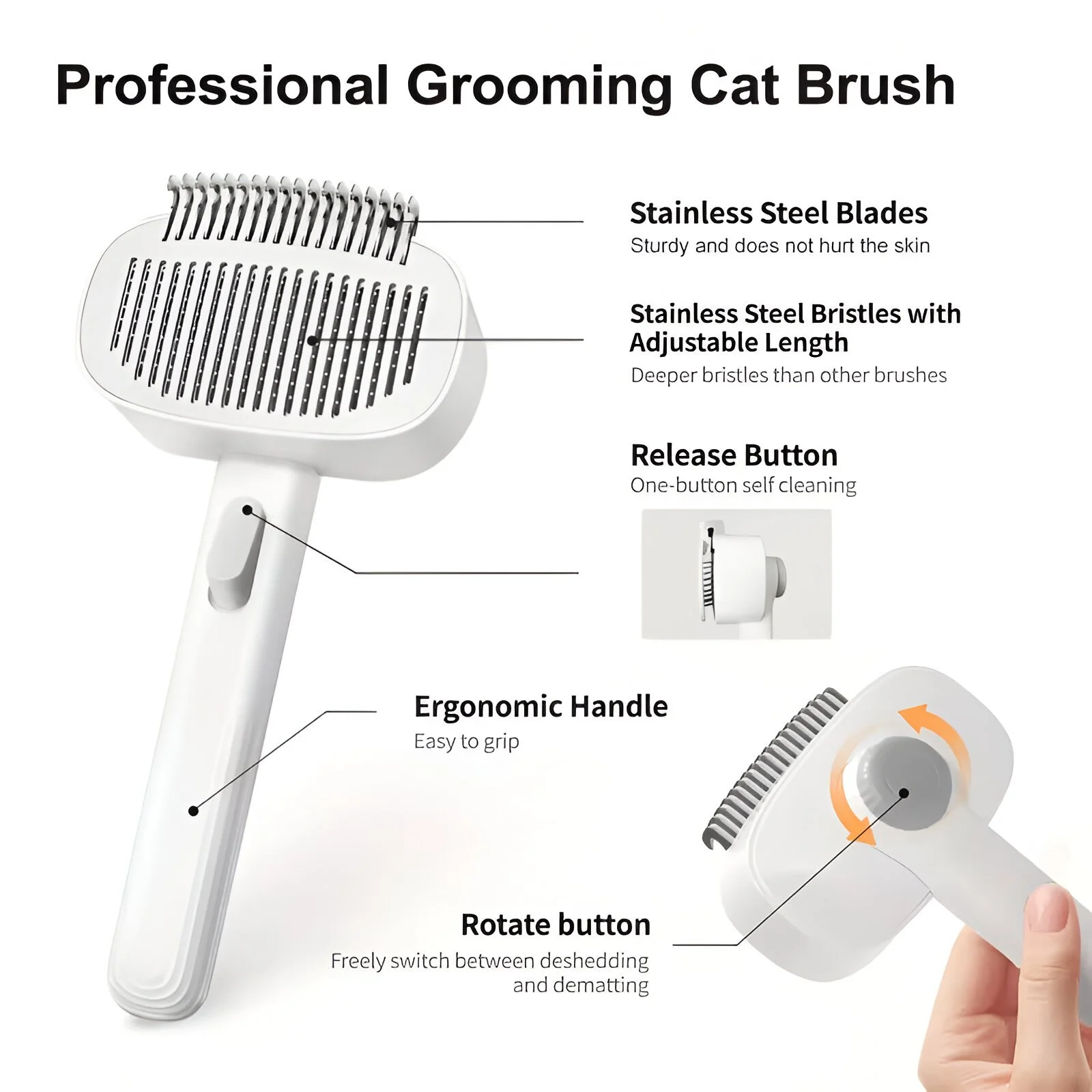
| One-Touch Self-Cleaning Deshedding Brush (#p-007106, $44.80) | Daily or frequent brushing when cleanup is annoying | Still requires gentle pressure |
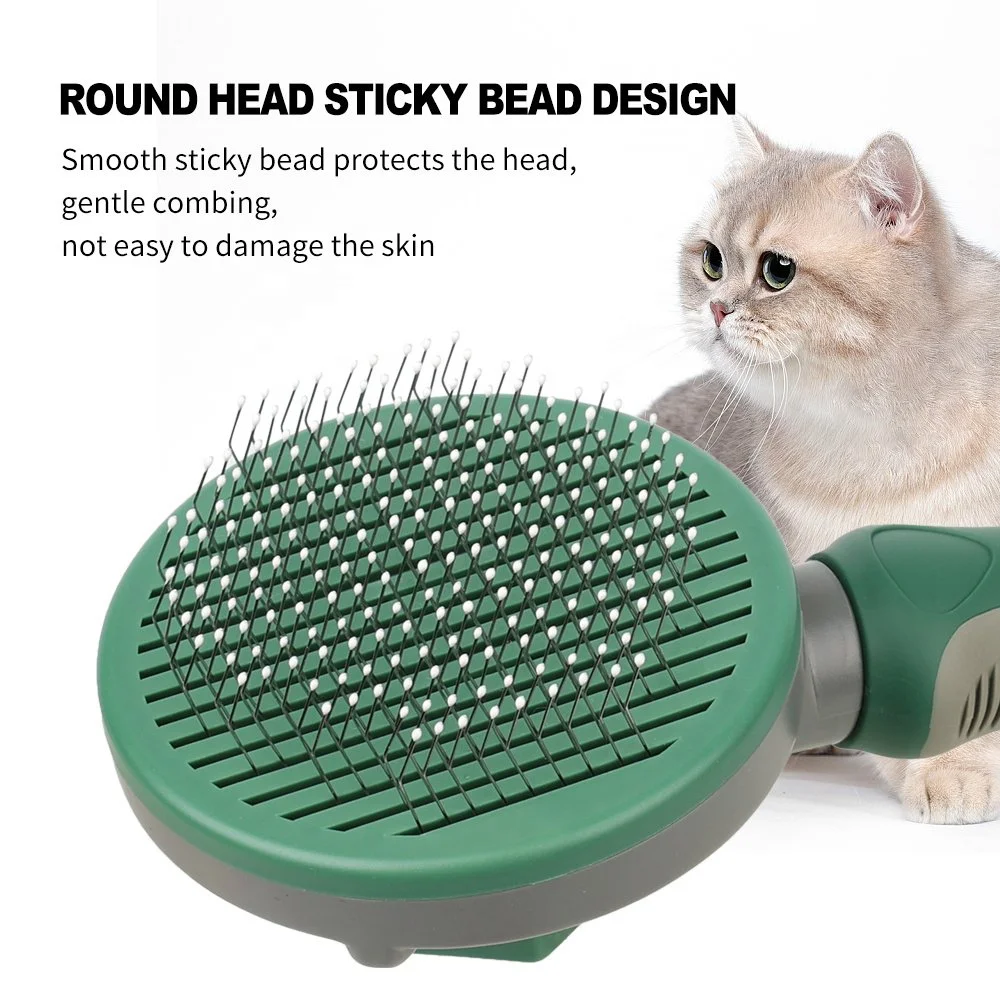
| Self-Cleaning Slicker Pet Brush (#p-007107, $21.99) | Budget-friendly routine brushing, long coats, surface tangles | Slicker pins can irritate if pressed hard |
| Dual-Action Stainless Steel Deshedding & Massage Comb (#p-007108, $28.65) | Finishing, loose-hair removal, massage-like grooming | Not a substitute for dematting severe mats |
2-in-1 Pet Hair Remover & Deshedding Brush
This is the all-rounder for owners who want one tool for loose hair. It works best for healthy pets that shed visibly but do not have skin irritation. It is a good match for Level 2 or Level 3 shedding when the home is collecting fur faster than casual brushing can handle.
Use it in short sessions and avoid repeatedly working one spot. A deshedding tool should remove loose coat, not scrape the skin.
One-Touch Self-Cleaning Deshedding Brush
This is the convenience pick. The self-cleaning feature matters because brushing becomes easier to repeat when the tool is easy to empty. Owners who brush daily often stop because cleanup is unpleasant; a one-touch release reduces that friction.

It is best for pets that tolerate regular grooming and owners who need a fast routine before fur reaches furniture.
Self-Cleaning Slicker Pet Brush
This is the budget daily brush and a practical option for long-haired pets that need frequent light grooming. A slicker brush can help with loose surface hair and small tangles, but it must be used gently.
Do not use a slicker brush to rip through tight mats. Severe mats need careful detangling, professional grooming, or veterinary help if the skin is painful.
Dual-Action Stainless Steel Deshedding & Massage Comb
This is useful as a finishing tool and for pets that respond well to a comb-like feel. The massage element can make grooming more tolerable for some pets, while the comb helps lift loose hair.
It is not the first choice for a pet with dense, impacted undercoat, but it can be helpful for maintenance after heavier shedding is controlled.
When to Stop Brushing and Call the Vet
Stop treating the issue as grooming if you see:
- Bald patches.
- Open sores.
- Bleeding.
- Crusts or scabs.
- Strong odor.
- Greasy coat that returns quickly after bathing.
- Heavy dandruff with itch.
- Constant licking or chewing.
- Ear scratching plus hair loss around the head.
- Sudden fur loss after illness or medication.
- Hair loss plus weight, thirst, appetite, or behavior changes.
Also call the vet if multiple pets are itchy, if people in the home develop suspicious circular skin lesions, or if a new pet enters the home and skin problems begin. Contagious causes such as ringworm or parasites need proper diagnosis and household control.
Bring useful information:
- When shedding changed.
- Whether it is seasonal or sudden.
- Where hair is missing.
- Whether the pet is itchy.
- What flea prevention is used.
- Any diet, medication, or home changes.
- Photos of the coat over time.
Better information helps the veterinarian separate normal shedding from disease faster.
FAQ
How much shedding is normal for dogs and cats?
Normal shedding varies by breed, coat type, season, age, and environment. It is usually even across the coat and not paired with bald patches, skin irritation, or behavior changes.
Is sudden shedding normal?
Sudden shedding can happen with stress or seasonal shifts, but dramatic shedding over a few days should be watched carefully. If it continues or comes with appetite, energy, skin, or behavior changes, call a veterinarian.
Are bald patches ever normal shedding?
No. Bald patches are hair loss, not routine shedding. They can come from parasites, allergies, infection, ringworm, pain, overgrooming, or other causes.
Why is my cat licking the fur off its belly?
Cats may overgroom because of itch, allergy, stress, or pain. Cornell notes that cats can lick excessively when an area is itchy or painful. A vet exam is the right next step if hair loss is visible.
Can a better brush stop shedding?
A brush can remove loose hair from a healthy coat and reduce fur around the home. It cannot stop the biological shedding cycle or fix medical hair loss.
How often should I brush a shedding pet?
For healthy pets, weekly brushing may be enough for light shedding. Heavy seasonal shedding may need several sessions per week. Long-haired cats may need daily or near-daily maintenance.
Can over-brushing cause problems?
Yes. Pressing too hard or brushing one area repeatedly can irritate skin and break hair. Stop if the skin becomes red, sore, or sensitive.
Should I bathe my pet for shedding?
Bathing can help some healthy pets when done appropriately, but repeated skin or coat problems that return quickly after bathing should be evaluated by a veterinarian.
Browse Grooming & Health products