Article
Toys For Multi-Dog Households: How To Prevent Fights And Share Fairly
Quick Answer
Toys For Multi-Dog Households: How To Prevent Fights And Share Fairly: quick answer
Toys become more complicated when there is more than one dog in the home. A toy that is harmless with one dog can create tension when another dog walks...
- Topic: Multi-Pet.
- Related product category: pet-toys.
- This article keeps the main answer in the article copy and places relevant product context inside the guide.
Multi-Dog Toy Problems Are Usually Management Problems
Toys become more complicated when there is more than one dog in the home. A toy that is harmless with one dog can create tension when another dog walks into the room. One dog wants to chew quietly. Another dog wants to steal. One dog values squeaky toys. Another dog values anything the first dog has. The problem is not always the toy itself. The problem is access, timing, space, and value.
Many owners describe the issue as "they need to learn to share." That is not the best starting point. Dogs do not naturally understand sharing the way people want them to. Some dogs can trade, wait, and play together beautifully, but that comes from temperament, training, and careful setup. Other dogs become tense around toys because toys are limited resources. If the household keeps creating competition, even friendly dogs can develop guarding habits.
The goal in a multi-dog home is not to force equal interest in every toy. The goal is to prevent scarcity, give each dog safe access to appropriate toys, supervise high-energy play, separate high-value items, and read early signs of tension before they turn into a fight. The best toy plan is practical and calm. It makes good behavior easy.
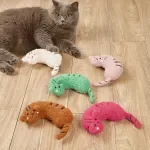
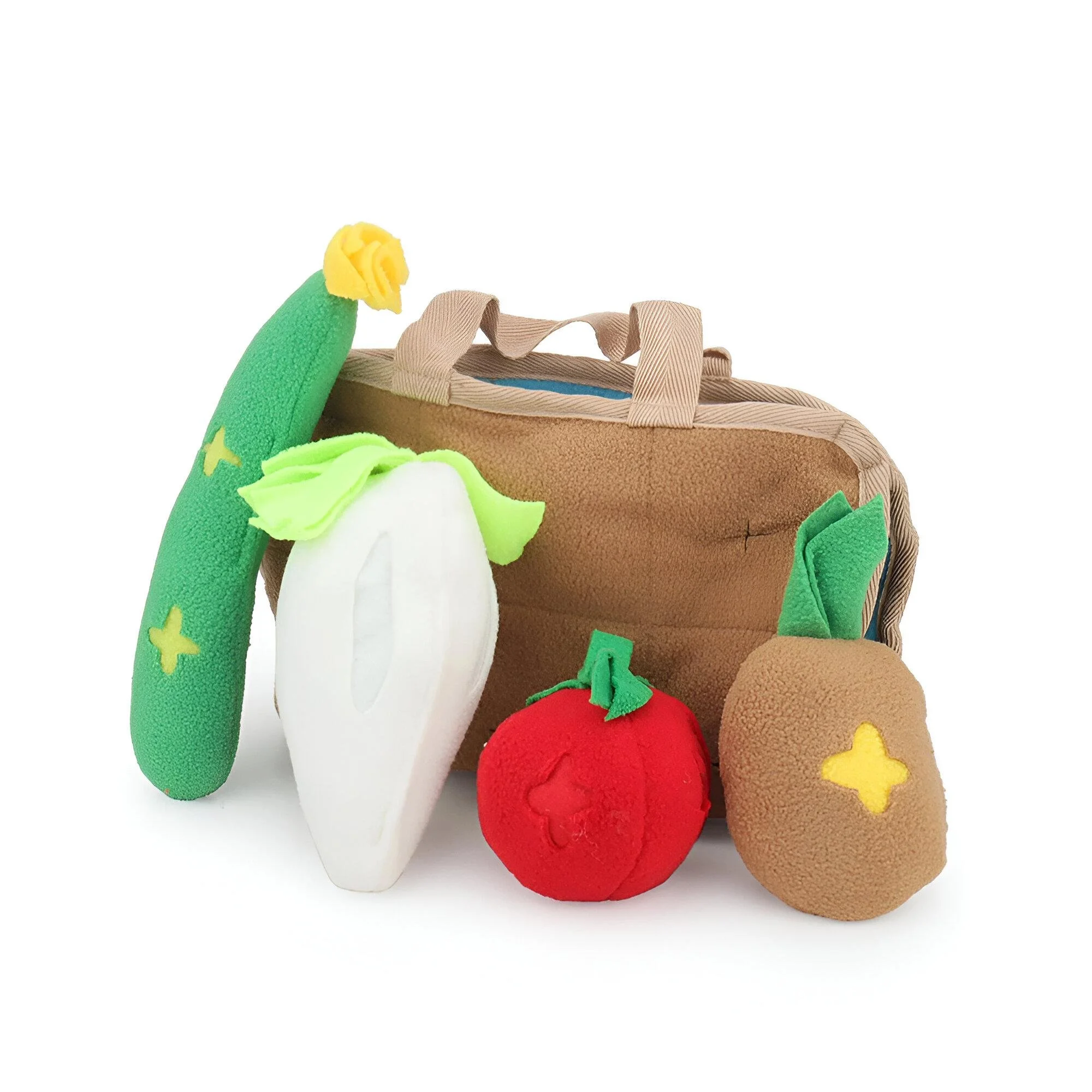
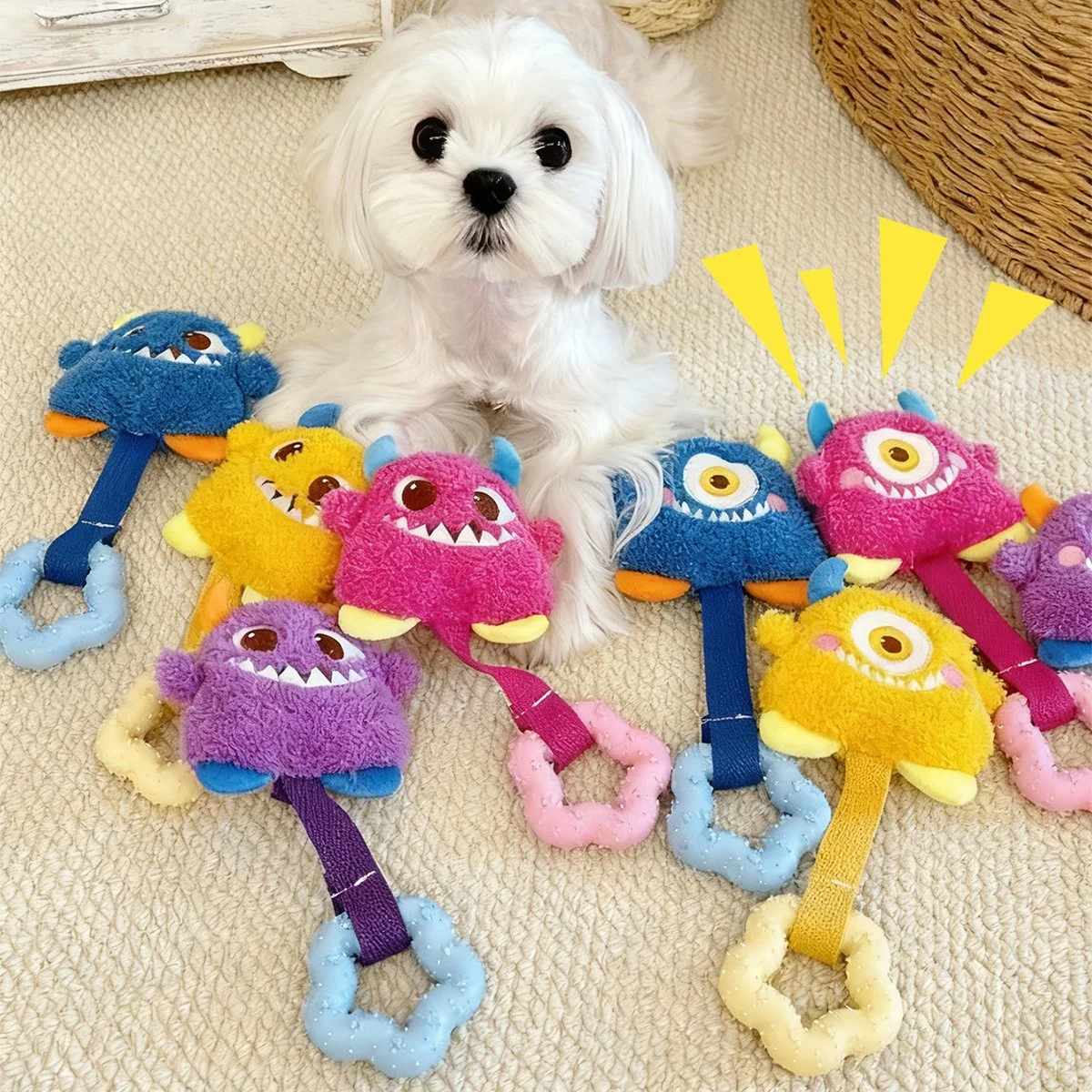
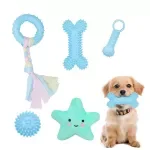
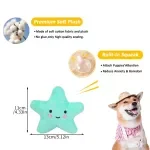
This is why multi-dog households often need more duplicate toys, more rotation, and more structure than single-dog homes. A five-pack toy set such as the 5-Pack Plush Dog Chew Toys (#1799498) fits this article because it supports the most important rule: one toy is rarely enough when multiple dogs are present. The value is not that all five toys should be thrown into a room at once. The value is that the owner has enough pieces to distribute, rotate, and separate play without creating a one-toy contest.
Rule 1: Stop Creating Scarcity
Scarcity is one of the fastest ways to create toy conflict. If two dogs both want the same chew, the same squeaky plush, or the same treat puzzle, the household has created a competition. Some dogs will avoid conflict and walk away. Some will hover. Some will steal. Some will freeze, stare, growl, or snap. If the same situation repeats, guarding can become stronger.
The simplest fix is duplication. For high-value items, there should be one for each dog, and in many cases one extra. Identical is better than similar. Dogs notice differences that people dismiss. If one toy squeaks louder, smells newer, has a different texture, or has been chewed by another dog, it may become the preferred item. Then the "duplicate" plan fails because the dogs still compete for one object.
This does not mean every toy in the home must exist in pairs. Low-value toys can be shared in some homes. But chews, food toys, favorite plush toys, balls used for fetch, and anything that creates intense interest should be treated as limited resources. If it matters to one dog, do not assume the other dog can casually approach it.
A multi-pack product can help because it gives the household a working supply. With #1799498, the useful approach is to assign toys intentionally. One dog gets one toy in one space. Another dog gets another toy in a separate space. A third toy can be held back for rotation. The pack reduces the pressure that comes from having only one interesting plush chew available.
The mistake is dumping all toys on the floor and hoping the dogs sort it out. That can work with some easygoing dogs, but it is not a safe foundation. Distribution should be deliberate.
Rule 2: Separate High-Value Play
Not all toy use should happen in the same room. High-value toys are safer when dogs have space. This is especially true for chews, food puzzles, new toys, and toys that one dog strongly prefers. Separation does not mean the dogs dislike each other. It means the owner is preventing unnecessary pressure.
Use gates, crates, pens, leashes, separate rooms, or visual barriers. Give each dog a toy in a defined area. Let them chew or play for a set period, then pick the toys up before opening the space again. This prevents one dog from finishing early and walking over to pressure the other dog. It also prevents the slower dog from feeling trapped.
Separate zones are useful even for friendly dogs. A young dog may not understand boundaries. A confident dog may take toys from a softer dog. A senior dog may want quiet chewing without a puppy bouncing nearby. A newly adopted dog may not yet trust that resources will remain available. Separate toy time gives each dog a fair chance.
When using a plush toy pack, separation helps you learn preferences. One dog may like soft mouthing. Another may want to shake and squeak. Another may ignore plush and prefer rubber. Watch without interference at first, then adjust. If one dog tries to destroy soft toys quickly, that dog may need a different material while another dog can still use plush safely.
The more valuable the toy, the more space the dogs should have. Food plus toys usually requires the most caution. A treat puzzle should not be used in a shared room unless the dogs have a long, proven history of calm behavior around food.
Rule 3: Supervise Shared Play
Some dogs can play tug together, chase the same ball, or wrestle around toys without conflict. Others cannot. Shared play is not automatically wrong, but it needs supervision and clear interruption skills.
Watch the quality of the play. Healthy play usually has loose bodies, role changes, pauses, and easy disengagement. One dog may win the toy, then the other gets a turn. The dogs may shake, bounce, and return to each other willingly. Tension looks different. The bodies become stiff. One dog guards the toy under the chin. The eyes become hard. Movement slows. One dog keeps trying to leave and the other blocks. Growling changes from playful rhythm to low warning. The tail may rise stiffly or tuck. The mouth may close.
Interrupt early. Do not wait until a fight starts. Use a trained cue, cheerful movement, a treat scatter away from the toy, or a calm separation. Avoid reaching into two tense dogs fighting over a toy. Prevention is safer than physically breaking up conflict.
Shared tug should require strong skills. Both dogs should know "drop," "leave it," and how to disengage from play. If one dog has a history of guarding, shared tug with one toy is usually not worth the risk. Play tug with each dog separately instead.
Squeaky plush toys need particular observation. Some dogs become very excited by squeakers. One dog may want to possess the toy while another dog wants the sound. If the energy rises too fast, pick up the toy and switch to parallel play with separate items.
Supervision means active watching, not being in the same room while looking at a phone. Toy conflict can change in seconds.
Rule 4: Teach Trade Before You Need It
The trade game is one of the most useful skills in a multi-dog home. A dog that happily gives up an item in exchange for something better is less likely to panic when a person approaches a toy. Trading also helps owners remove unsafe or high-value items without creating conflict.
Start with low-value toys. Offer a toy, let the dog hold it, then present a better treat or another toy. When the dog drops the first item, mark the behavior and give the trade. Then, when safe, give the original toy back. This teaches the dog that giving something up does not always mean losing it forever.
Practice with each dog separately before practicing near other dogs. A dog may trade well alone but become tense when another dog is nearby. Build the skill slowly. Do not start with bones, food puzzles, or the dog's favorite toy. Start easy.
In a multi-dog household, trade also prevents crowding. If one dog has a toy and another dog approaches, call the approaching dog away and reward that dog for leaving the situation. Owners often focus only on the dog holding the toy, but the dog hovering nearby is also part of the pressure.
When rotating toys from a multi-pack, trade makes cleanup easier. Instead of chasing dogs around the room to remove toys, trade calmly, pick up the items, and reset the space. This keeps toy time predictable and reduces the chance that cleanup becomes a guarding trigger.
Never punish a growl during trade training. A growl is information. It means the dog is uncomfortable. Lower the value of the item, increase distance from other dogs, and improve the reward. Suppressing warnings can make conflict less predictable.
Rule 5: Know Which Toys Are High Risk
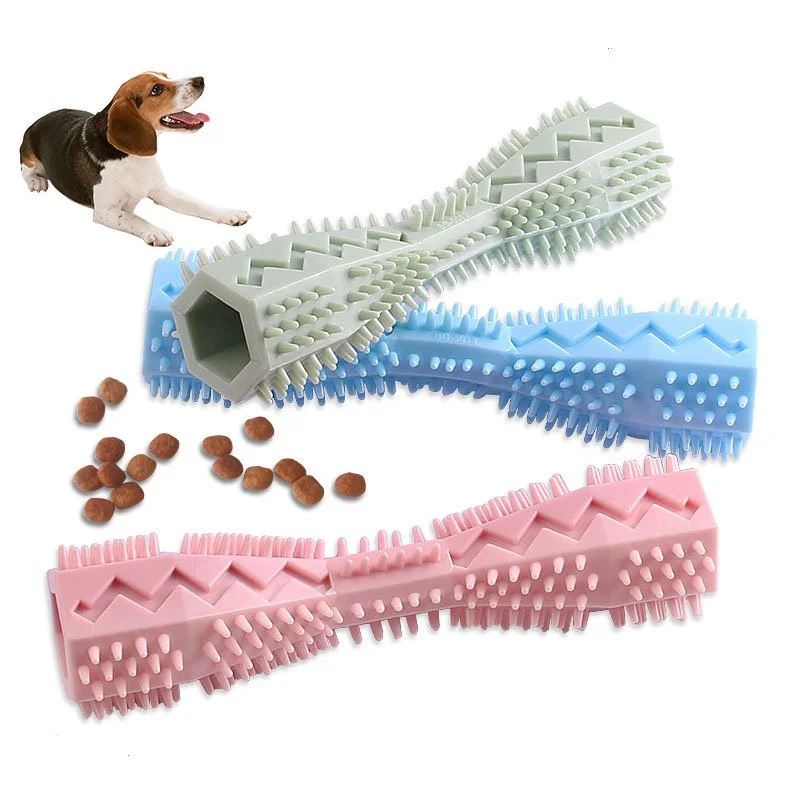
Some toy categories create more conflict than others. Food toys are usually highest value because they combine possession with eating. Long-lasting chews, stuffed rubber toys, bones, bully sticks, and treat puzzles should generally be separated unless the household has excellent management and very reliable dogs.
Squeaky toys can also become high value. The sound activates excitement, and some dogs become possessive. Plush toys may be lower risk for some dogs and very high value for others. The material does not determine value. The dog's response does.
Balls can create problems when dogs have different speed, size, or confidence levels. One dog may always win. Another may start body-blocking. Fetch can become competitive quickly if there is only one ball. Use multiple balls, separate lanes, or individual fetch sessions if needed.
Tug toys are high risk when the dogs do not have good self-control or when one dog uses size to dominate. Tug can be a great human-dog game, but dog-dog tug should be treated carefully. It is not the right test for dogs with resource guarding history.
Comfort toys can be surprisingly valuable. A soft toy that smells like one dog, lives in a crate, or is carried during rest may become personal property. Do not let another dog steal it just because it is not food.
The practical rule is simple: the more a dog cares about an item, the more structure it needs.
How To Use A Multi-Pack Toy Set Well
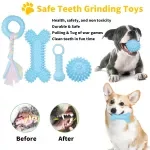
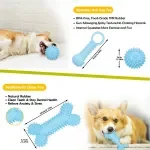
A five-pack toy set should be used as a management tool, not as a pile of clutter. The 5-Pack Plush Dog Chew Toys (#1799498) is useful because it provides several soft chew and play items that can be distributed across dogs, rooms, and days. This helps reduce the feeling that one toy is the prize.
Start by inspecting all pieces. Check seams, squeakers, stuffing areas, and material strength. Decide which dog can safely use plush toys. If one dog shreds plush immediately, that dog may need supervised short sessions only or a different toy type. If another dog gently mouths plush toys, that dog can use them for longer calm play.
Assign toys rather than letting dogs choose from a pile. For example, Dog A gets one toy in the living room while Dog B gets another in the kitchen behind a gate. After ten minutes, trade and pick up. On another day, rotate a different toy from the pack. This keeps novelty without increasing competition.
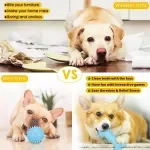
Do not assume a multi-pack means every dog gets equal access to every item. Equal is not always fair. A senior dog may need a softer, quieter toy. A young dog may need a more durable option. A heavy chewer may need the plush toy only during supervised training. A nervous dog may need its toy in a private area.
Use the product for parallel play. Parallel play means each dog has a similar activity at the same time without competing for the same item. This is often safer than shared play. The dogs enjoy toy time together in the same household rhythm, but they are not forced to negotiate one object.
Pick the toys up after the session if tension exists. Leaving high-interest toys out all day can create repeated opportunities for conflict. In calm homes, some low-value toys may remain out. In homes with guarding, toys should be controlled.
Two Dogs With Different Play Styles
Many multi-dog toy problems happen because the dogs do not play the same way. One dog wants to chase. One wants to chew. One wants to tug. One wants to steal and run. One wants to lie quietly with a toy. If the owner treats both dogs as if they need the same toy session, tension increases.
A chase-focused dog may do best with fetch or movement games away from the dog that prefers chewing. A chew-focused dog may need private chew time behind a gate. A toy-stealing dog needs impulse-control training and management. A gentle senior dog may need protection from a young dog's enthusiasm.
Size differences matter too. A large dog and a small dog may enjoy each other but still create risk around toys. A large dog can accidentally body-check, step on, or intimidate a smaller dog during excited play. Use separate toys and more space. Do not let "they are just playing" excuse one dog being overwhelmed.
Age differences matter. Puppies often have poor manners around adult dogs' toys. They approach directly, grab from mouths, and ignore warnings. Adult dogs vary in tolerance. Some correct fairly. Some become stressed. Some guard. Give the puppy its own toys and prevent constant stealing. The adult dog should not have to defend every item.
Confidence differences matter. A softer dog may surrender toys every time, and the owner may think there is no fight, so there is no problem. But repeated stealing can still create stress. Fair sharing means the softer dog gets protected access, not just whatever remains after the bolder dog is done.
The toy plan should fit the dogs you have, not the idea of what multi-dog play should look like.
Warning Signs Before A Toy Fight
Toy fights rarely come out of nowhere. The early signs are often subtle. A dog freezes over a toy. The head lowers. The body curves around the item. The dog stops chewing and watches the other dog. The mouth closes. The eyes become hard. The dog turns away while keeping the toy. The other dog hovers, creeps closer, or stares.
Vocal signals can be misunderstood. Play growling can be normal during loose, bouncy play. Warning growling is different. It may sound lower, shorter, or more serious. It often comes with stiffness and stillness. Do not judge the sound alone. Judge the whole body.
Speed changes are important. If fast play suddenly becomes slow and stiff, interrupt. If one dog keeps trying to leave and the other follows with pressure, interrupt. If one dog repeatedly steals and the other starts guarding corners or hiding toys, change the setup.
Position matters. Doorways, couches, crates, narrow halls, and under tables can increase tension because dogs have fewer escape routes. Do not let dogs negotiate valuable toys in tight spaces.
If you see these signs, do not scold the warning. Calmly separate, remove the toy if safe, and reset with lower-value items or separate zones. The warning is useful because it gives you time to prevent escalation.
Repeated warning signs mean the toy plan is too loose. Increase structure before a real fight happens.
New Dog, Foster Dog, Or Recently Adopted Dog
Toy rules should be stricter when a new dog enters the home. You do not yet know the dog's resource history. A dog that seems friendly on walks may guard toys indoors. A dog from a shelter, foster home, or uncertain background may have learned that resources disappear quickly. Do not test sharing on the first day.
For the first weeks, keep toys controlled. Offer toys separately. Pick them up before dogs mix. Avoid food toys in shared spaces. Watch how the new dog responds when people approach, when another dog passes, and when toys are removed through trade. Build information slowly.
Existing dogs also need protection. A resident dog may not appreciate a new dog taking favorite toys. Put away deeply personal items before introductions. Bring out lower-value toys only when the dogs are calm and supervised.
Multi-pack plush toys can be useful after the first adjustment period because they allow parallel play, but do not start by scattering them around a new relationship. Begin with structure. Separate toy sessions first. Supervised parallel play later. Shared play only if the dogs show relaxed behavior over time.
If either dog has known resource guarding, consult a qualified trainer or behavior professional. Guarding can be managed, but the plan needs to be careful. The internet advice of "make them work it out" is not appropriate for toy guarding.
New relationships need predictability. Toys should support calm routines, not become the first major conflict.
Multi-Dog Toy Storage And Rotation
Toy storage is part of behavior management. If every toy is available all the time, the owner has less control over value and timing. Some dogs do fine with open toy baskets. Others use toy baskets as guarding zones. Watch how your dogs behave around storage.
For homes with tension, keep higher-value toys in a closed bin. Bring them out for planned sessions. Leave only low-value, safe toys available if the dogs can handle them. If one dog guards the toy basket, remove the basket from shared space and distribute toys directly.
Rotation keeps toys interesting without creating constant novelty. A simple system works: a few toys active this week, others stored. Wash and inspect toys before rotating them back. Remove damaged items. For a pack like #1799498, rotation can prevent one favorite from becoming the only item that matters.
Labeling or assigning toys can help if dogs have different needs. One dog may have soft plush toys. Another may have rubber chews. A puppy may have teething-safe toys. A senior dog may have comfort toys. The household does not need perfect equality. It needs appropriate access.
Storage also matters during guests, meals, deliveries, and high-energy times. If the dogs become excited when people arrive, pick up high-value toys first. A dog who is normally relaxed may guard when arousal is already high.
Good storage prevents many conflicts before they begin.
A Daily Routine For Safer Toy Time
Start the day with separate or parallel play, not competition. Each dog gets an appropriate toy in a defined space. Keep the session short enough that the dogs finish calm, not overstimulated. Pick up toys before opening gates or removing barriers if the toys are high value.
Use individual sessions for training. Practice drop, leave it, take it, and trade with each dog separately. Then practice with another dog visible at a distance. Do not rush to shared toy play. Reliable skills are built in easy setups first.
Use outdoor play carefully. Multiple dogs chasing one ball can create collisions and frustration. If playing fetch with two dogs, use multiple balls, call dogs by name, or give each dog a separate turn. If one dog always wins and the other becomes tense, split the session.
Use quiet chew time when the household needs calm. Give each dog a chew or soft toy in a separate resting place. This is especially useful in the evening. Do not let one dog finish and then visit the others. Pick up finished items and release dogs when everyone is done.
End toy sessions intentionally. Trade, collect, and reset. Do not wait until dogs are tired, possessive, or arguing. A good ending teaches that toy time is predictable and safe.
Consistency is what prevents toy rules from becoming confusing. Dogs relax when they know access is fair and pressure is low.
If one dog repeatedly finishes first, build that into the routine. Give the faster dog a shorter session, a different activity, or a calm place to wait while the slower dog finishes. Do not let the fast dog patrol the room looking for leftovers. That habit creates pressure even when no fight happens. The quieter dog should be allowed to enjoy a toy without being watched, rushed, or crowded.
Final Recommendation
The safest multi-dog toy plan is built around structure. Duplicate high-value items. Separate chews and food toys. Supervise shared play. Teach trade before you need it. Watch early tension signs. Use storage and rotation instead of leaving every exciting toy available all day.
The best product match for this article is the 5-Pack Plush Dog Chew Toys - Soft Teething & Interactive Playtime Toys for Dogs (#1799498). A multi-piece set supports the main safety principle for homes with more than one dog: reduce scarcity. It gives the owner several soft toys to distribute, rotate, and use for parallel play. It should still be supervised, especially if any dog shreds plush, guards squeaky toys, or tries to steal from other dogs.
Multi-dog homes do not need dogs to share one toy perfectly. They need enough good options, enough space, and clear routines. When each dog can enjoy toy time without pressure from the others, fights become less likely and play becomes easier to manage.