Article
6 Living Room Refresh Ideas Under $90 Each (Budget Decor Guide)
Quick Answer
6 Living Room Refresh Ideas Under $90 Each (Budget Decor Guide): quick answer
Refreshing a living room does not have to mean replacing its largest furniture. In many rooms, a more focused change to the wall behind the sofa, the...
- Topic: Guide.
- Related product category: home-decor.
- This article keeps the main answer in the article copy and places relevant product context inside the guide.
The Living Room Refresh Myth
Refreshing a living room does not have to mean replacing its largest furniture. In many rooms, a more focused change to the wall behind the sofa, the coffee table, the entry, or an empty corner can make the space feel more deliberate while keeping the existing layout. For a small budget, start with the surfaces you notice first when entering or sitting in the room: the wall behind the sofa, tabletop styling, open shelves, and the entry line. Keeping each area simple gives a stronger result than spreading several small objects across the room. Run the before-and-after test yourself. Before: a blank wall above the sofa, a coffee table carrying yesterday's mail, a mantel of dusty objects. The room is "fine" because you stopped seeing it long ago. After: the same sofa, same rug, same paint, but the wall has a deliberate decal cluster, the table holds one gold vase catching the afternoon light, and the mantel has a sculptural pair that makes you look closer. Nobody repainted and nothing large was replaced, yet the room reads as more intentional because the most visible surfaces changed. This guide is six budget upgrades, each targeting a visible zone, each under $90, and each chosen to make a noticeable difference in a weekend. Prices are from the PickByU catalog, checked 2026-08-06. The order matters: we start with the cheapest change and work down, so you can stop at any point and still have a more deliberate room.
1. The Wall Behind the Sofa: Wall Stickers Instead of Art
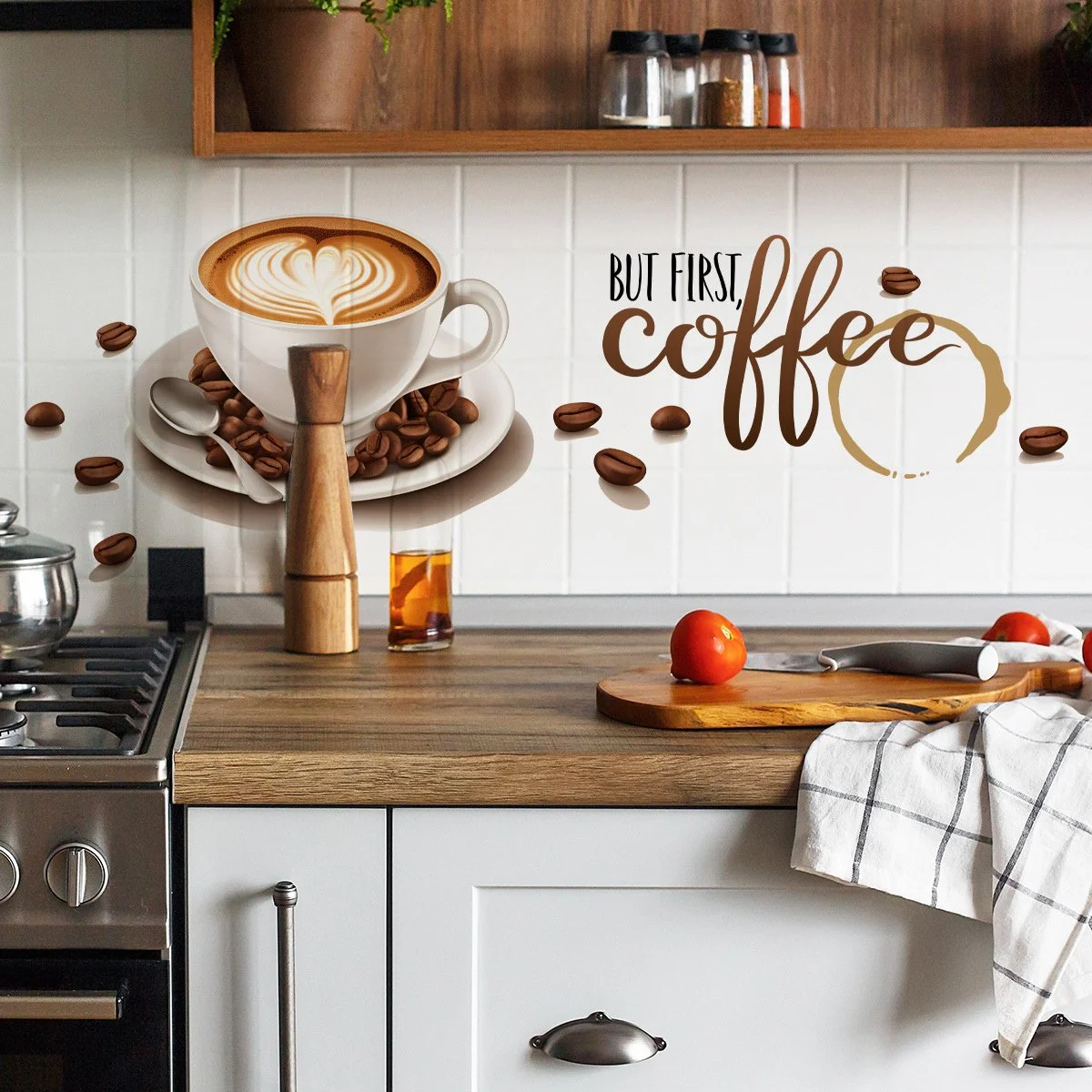
The most visible wall in many living rooms is the one behind the sofa, and it is often either bare or covered in small frames that never got properly arranged. Real art can be expensive; poster frames can look temporary; removable wall stickers are a lower-commitment third option. The Creative Coffee Cup Wall Stickers - Kitchen & Living Room Wall Art Decals ($16.49) is a coffee-cup themed decal set that can work on a living-room feature wall if the style fits the room. Why this works as a refresh: the wall behind the sofa is often the room's largest visible blank area, and a coordinated decal cluster can read as intentional from across the room. Check the listing and your wall finish before assuming the decals are renter-safe or repositionable. The upgrade play: arrange them in an organic cluster, not a grid, with the shape following the sofa. Where and how to place it: sit the cluster at seated eye level, roughly centered on the sofa and no wider than two-thirds of it. Dry-run the layout with painter's tape, then stick from the center outward. Pair it with the room: a neutral sofa takes the coffee tones easily; a gray room can use them as a warmer accent. One rule: one feature wall per room, or the effect can start to feel busy. Cost-to-impact: the highest on this list. $16 for a wall that was empty.
2. The Coffee Table's Second Surface: A Statement Vase
The coffee table is the other major fixation zone, and its problem is usually the same: it's either empty (wasted surface) or cluttered (wasted surface with mail on it). A single statement vase fixes both — it gives the table a focal point that says "this table is styled," and it gives the daily mail a visual competitor for the eye. The Elegant Gold Glass Flower Vase ($33.80) is the right kind of statement: gold-tinted glass that catches light, sized to sit on a coffee table without towering over it, and beautiful empty or with a few stems. Why gold glass instead of ceramic? Gold-toned glass catches light, which can help a small tabletop change feel more visible. It can work empty as a decorative object, with dried stems for low maintenance, or with fresh flowers for seasonal rotation. The styling rule: one vase, one tray, one candle - the coffee table needs a trio, not a collection. Where and how to place it: set the vase off-center, toward the front third of the table — dead center reads "placed," off-center reads "styled." On a low table, lift it on a stack of two or three books so the gold stays at eye level from the sofa. No coffee table? A console or sideboard works too. It pairs with brass lamp bases or gold-framed art; if the room is all matte, this is the one shiny accent that stays. Lighting is the payoff: put it where late-afternoon sun or a lamp hits from the side, and the glass throws a soft golden glow across the tabletop every evening. Three stems of anything, rotated seasonally. Cost-to-impact: high. $34 transforms the table's identity.
3. The Mantel or Shelf: The Hug Vase as Conversation Piece
If you have a mantel, a shelf, or even a sideboard, it's a fixation zone that most people leave to dust. The fix is a sculptural object — something with presence that doesn't need to be "arranged around." The Romantic Hug Heart Vase Set – Abstract Couple Ceramic Decor ($49.49) is a two-piece ceramic set shaped as two figures embracing — a modern-sculpture look that reads as art, not knickknack. This is the kind of piece that can start a conversation because the form is more specific than a plain vase. It is a pair, which is useful for shelves: two related objects read as more intentional than one random object. Place them on a shelf with a stack of books, or on the mantel as the centerpiece. The ceramic-style matte finish works best in warm and neutral palettes. Where and how to place it: on a mantel, let the pair be the centerpiece with shorter objects flanking it — candles, a clock, a stack of coasters — so the composition builds toward the middle. On a shelf, keep the two figures together, or bookend them at opposite ends with books between. Scale check: a few inches of clearance above, a hand's width on each side — a piece that crowds its shelf loses the sculpture effect. Under a directional spot or sconce, the embrace throws a soft shadow and looks different at dusk than at noon. Cost-to-impact: medium-high. $49 for a genuine conversation piece.
4. The Entry Line: The Door Mat Nobody Ignores
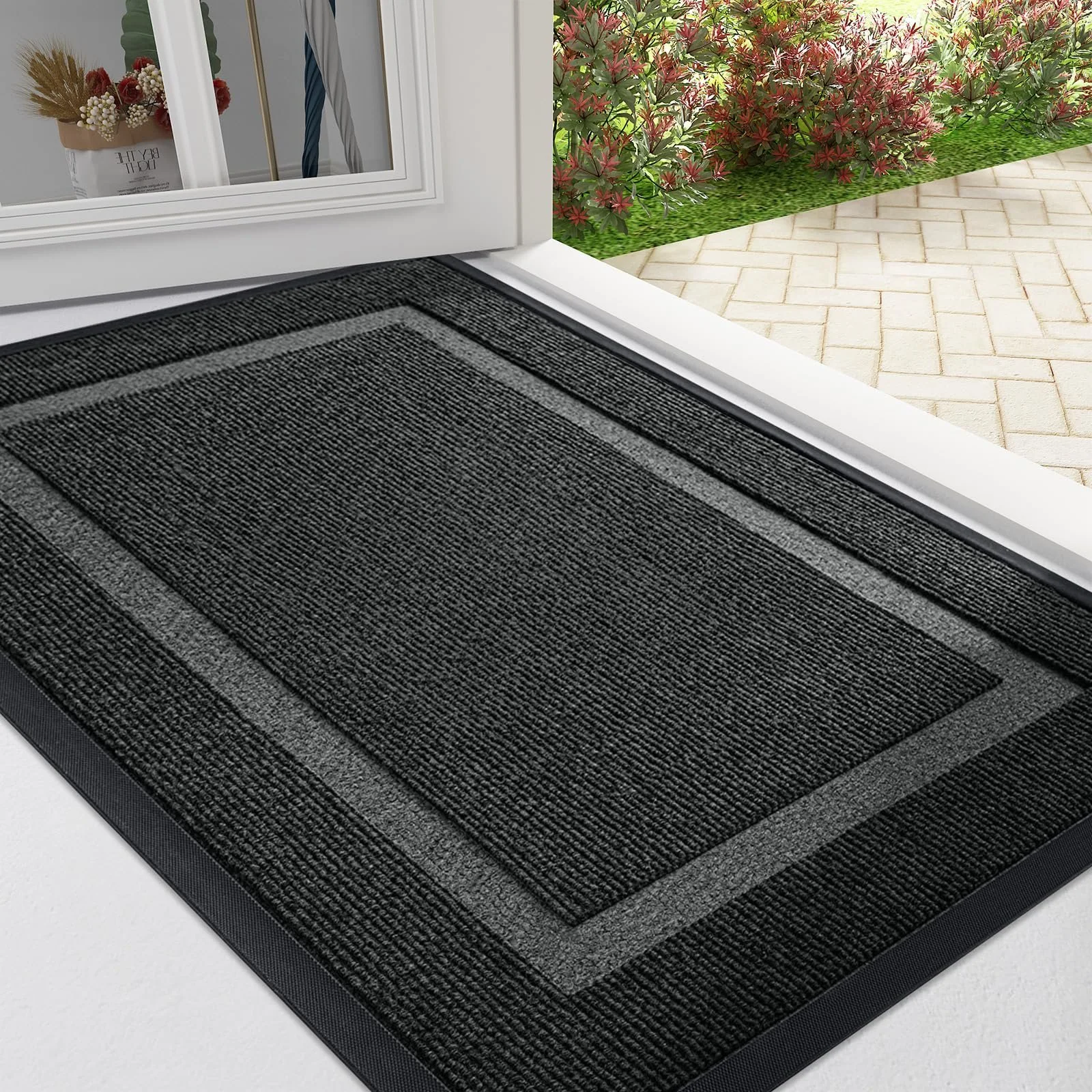
Here's a trick designers use that most people don't: the door mat is the *first* fixation zone, the thing you see for three seconds while the door opens. A tired, stained mat sets the room's baseline before you've seen any of it. The Waterproof Indoor Outdoor Front Door Mat – Non-Slip Low Profile Rubber ($62.49) is the upgrade: low-profile rubber that doesn't trip people (the #1 doormat complaint), non-slip backing that doesn't skate across the floor, and a waterproof surface that actually wipes clean. The low-profile design is the detail that matters: thick mats can catch on doors or hold debris, while a low-profile rubber mat is meant to sit flatter and clean more easily. It is listed as an indoor-outdoor mat, so it may work inside an entryway or outside a covered doorway depending on your space. Where and how to place it: outside the door if you have a covered porch, inside the entry if you don't. Match it to the doorway: roughly the width of the opening looks intentional, narrower looks accidental. Pair it with a small bench or wall hook a few feet inside, so the entry reads as a sequence - mat, bench, hook. Keep the palette in the room's family: a neutral mat disappears, a patterned one anchors an all-door hallway. Check the product page for cleaning instructions and floor compatibility. Cost-to-impact: medium. It's the most expensive item on this list, but it's also the room's front door — literally.
5. The Corner: The Wavy Vase for the Dead Zone
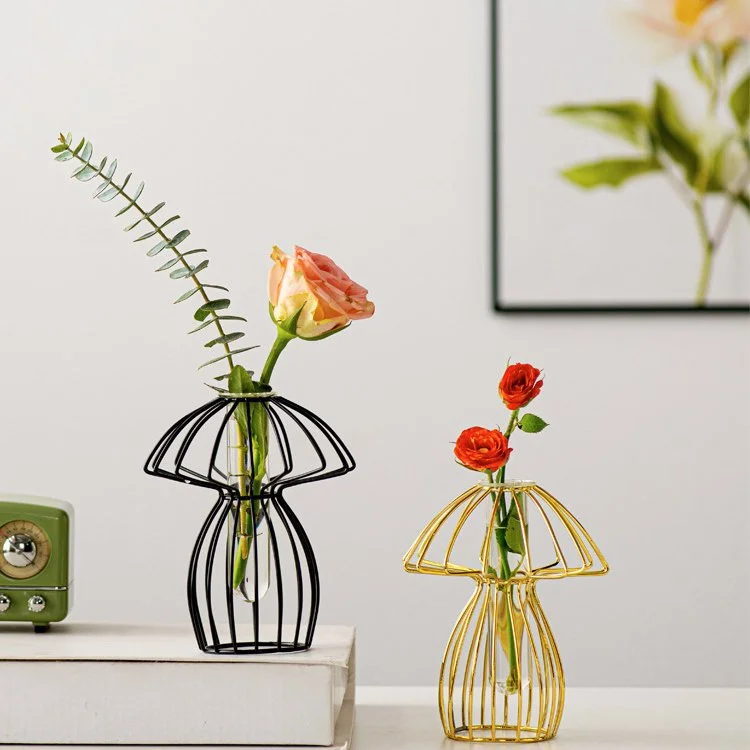
Every living room has a dead zone: the corner by the window, the end table nobody uses, the gap beside the TV stand. Corners are visible but often left empty by default. The fix is a sculptural object sized for the corner, and the Abstract Wavy Matte White Ceramic Vase - Modern Minimalist ($69.65) is a tall, wavy, matte-white vase that adds a vertical line to a room that's otherwise all horizontal. Matte white is flexible in corners because it can work with many palettes, and its wavy form adds shape without committing to a strong color. Stand it empty with a few dried branches, or let it be a pure sculptural object. The verticality is the point: corners often need height. Where and how to place it: let this vase be the tallest thing in its zone — the floor beside the TV stand, a corner shelf, the unused end table. Give it clear air: don't crowd it against a plant or book pile, because a corner object's job is to draw the eye up and out of the dead zone. It pairs with a trailing plant or warm wood — and with the wall stickers, if you bought them, since the matte white echoes their cream tones. Lighting does the heavy lifting: put it where side light — a window or floor lamp — skims the wavy form and throws its silhouette on the wall. At night, one warm lamp makes the corner a designed vignette. Cost-to-impact: medium. It is the most expensive vase here, but corners are often harder to style than tabletops.
6. The Night Light Upgrade: The Astronaut Figurine
The last upgrade is the one that works after dark: a sculptural night light that turns the shelf or sideboard into a *scene*. The Nordic Astronaut Resin Figurine Night Light ($85.65) is a resin astronaut figurine with an integrated warm light — it's decor by day, ambient lighting by night, and it's the kind of piece that makes a room feel curated rather than furnished. Warm ambient light can make a room feel more finished after dark. The astronaut's warm glow creates a low-light focal point that may suit a movie night, shelf, or sideboard. It also fills the "what do I put on this shelf" problem with a piece that does two jobs. The astronaut motif is playful, so it works best in a room that can handle a slightly whimsical object. Where and how to place it: mid-shelf is the sweet spot — eye level on a bookcase, sideboard, or mantel end — so the glow reads as intentional. Keep it off the TV stand, where it would compete with the screen. It pairs with books or a small trailing plant, and coordinates with warm bulbs — and with the gold vase, if you bought both. The effect is the point: switch off the overheads at dusk and the astronaut becomes the room's low-light anchor — soft enough for movie night, warm enough to feel like a lamp. If your bulbs are cool and blue-toned, swap to warm first. Cost-to-impact: medium-high. It's the splurge of the list, but it's also the only piece that works at night, which is half the time the room is seen.
The Refresh Budget Cheat Sheet
| Upgrade | Zone it fixes | Price | Impact |
|---|---|---|---|
| Coffee Cup Wall Stickers | Wall behind sofa | $16.49 | Highest (empty wall → art) |
| Gold Glass Vase | Coffee table | $33.80 | High (table identity) |
| Hug Heart Vase Set | Mantel / shelf | $49.49 | High (conversation piece) |
| Low-Profile Door Mat | Entry line | $62.49 | Medium (sets baseline) |
| Wavy White Vase | Corner dead zone | $69.65 | Medium (vertical line) |
| Astronaut Night Light | Shelf after dark | $85.65 | Medium-high (night scene) |
The "which first" rule: if your budget is $30, do items 1 and 2 — wall and table, the two zones everyone sees. If it's $60, add item 3 (mantel/shelf). If it's $90+, add the corner vase or the night light. The order is deliberate: visible-first, then structural.
How to Spend the First $90
The title says under $90 each, not that every room needs all six products. A good budget refresh starts with one weak zone and one supporting detail. If your living room feels blank, spend the first $90 on the wall and coffee table: the decal set plus the gold vase. That gives you one vertical change and one tabletop change, which is usually enough for a visible first pass. If your living room feels cluttered, do not buy decor first. Clear the coffee table, mantel, and entry, then choose only one statement piece. The Hug Heart Vase Set or Gold Glass Vase works better after the surface is edited. Otherwise the new object becomes part of the clutter. If your living room feels flat at night, use the first $90 on lighting. The astronaut night light is the strongest single pick because it changes the room after dark. Pair it with a warm bulb in an existing lamp before buying more objects. If your living room feels unfinished at the doorway, start with the mat. It is not the most decorative product here, but it changes the first impression before anyone reaches the sofa. The best budget refresh is staged. Buy one piece, place it, live with it for a week, then decide whether the next weak zone is wall, table, shelf, entry, corner, or lighting.
The Weekend Refresh Timeline
Six hours, one weekend, in the order that makes each hour's work visible by dinner. Block out Saturday 10am–4pm, or split it across two evenings — either way, you'll go to bed in a room that reads as "done." Hour 1 — Declutter (10am–11am). Clear every fixation zone at once: coffee table, mantel, shelves, entry. Use the three-box method — keep, relocate, donate — and be honest: if an object hasn't been looked at in a year, it's box three. Leave out only what you'll style later: one tray, one stack of books, one candle. You can't style clutter. Hour 2 — The wall (11am–12pm). Unpack the coffee-cup decals, dry-run the cluster with painter's tape, then stick. Work from the center out, step back after every decal, and stop at nine — more reads as a mural. It's a 20-minute job; use leftover time to straighten art heights on the other walls. Hour 3 — The coffee table (12pm–1pm). The table is empty from Hour 1, so this is a clean canvas: the gold vase off-center, books beneath it, the tray, one candle. Rule of the trio — vase, tray, candle — and nothing else, or the clutter is back by Tuesday. Hour 4 — The shelf and mantel (1pm–2pm). Place the hug-vase pair as the centerpiece, flanked by shorter objects. Edit as you go: if a shelf holds more than three objects after the pair, remove one. Odd numbers, varied heights, one statement per zone — the rules from the next section, applied in real time. Hour 5 — The corner (2pm–3pm). Position the wavy vase in the dead zone with clear air around it, add a few dried branches, and step back. If the corner still reads empty, pull a plant a foot closer; if it reads crowded, take the branches out. Then sweep — a corner only looks styled when it looks clean. Hour 6 — Evening lighting (3pm–4pm, then test at dusk). Place the astronaut night light on its shelf, turn off the overheads, and turn on every lamp you own. Walk the room at eye level: the glow should catch the gold vase, light the decals, and anchor the astronaut. Adjust the lamps once, and you're done — six hours, under $90, and the room will look different the moment you walk in tonight.
The 4 Rules of a Budget Refresh (So You Don't Waste the $90)
Rule 1: Change fixation zones, not furniture. Sofa, rug, and paint are expensive and don't move the needle like the eye-level layer does. Spend on what the eye registers. Rule 2: One statement per zone. A coffee table with a vase, a tray, and a candle reads styled; a coffee table with six objects reads cluttered. The vase is the statement; everything else is support. Rule 3: Odd numbers and varied heights. Three objects of different heights (short vase, mid tray, tall candle) read intentional; two identical vases read accidental. Height variety is what separates "styled" from "placed." Rule 4: Matte finishes for warm rooms, shiny for cool. The matte white and ceramic pieces here work in warm palettes; the gold glass works in cool/gray palettes. Match the finish to the room's undertone.

FAQ
Q: Are wall stickers really a good substitute for art? A: For the *refresh* purpose, yes — they read as intentional from across the room, which is all art does from that distance. Real art is worth buying when you find a piece you love; stickers are the $16 way to test whether your wall wants a cluster there at all. Q: How do I know if my living room needs a refresh or a redo? A: If the layout works (you can move through it, the sofa is comfortable, the TV/watch distance is fine), it's a refresh — change the eye-level layer. If the layout doesn't work, no amount of decor fixes it, and that's a furniture problem. Q: What's the fastest refresh I can do in one hour? A: The wall stickers (20 minutes) plus moving one vase from a hidden shelf to the coffee table (10 minutes) plus decluttering the mantel (30 minutes). All three are in this guide, all under $70. Q: Will these decor pieces look dated in a year? A: The matte white vase and neutral ceramic pieces are the lower-risk choices because they rely on shape and texture more than trend color. The gold glass and astronaut are more style-specific. If you're worried about longevity, prioritize the matte pieces and treat the gold and astronaut as seasonal accents. Q: Can I mix these pieces with what I already own? A: Yes, that's the design. Each piece is chosen to work *with* existing furniture — they're accent layer, not theme layer. The one rule: don't mix more than two "statement" pieces per room. Three statements read as chaos; two read as a collection. Q: What if my living room is very small? A: Small rooms benefit more from refreshes because the eye-level layer is *closer* — the wall stickers and coffee table vase work even better. Skip the corner vase (no corner) and the door mat (no room for it) and spend the whole budget on wall + table + shelf. Vertical decor (the wavy vase, wall clusters) is the small-room cheat. Q: How do I rotate decor seasonally without buying a second living room? A: Keep a "seasonal box" in a closet and swap stems, textiles, and one statement piece — never furniture. The gold vase gets a new stem load four times a year (wheat in fall, bare branches in winter, eucalyptus in spring); the astronaut can rotate to another room; the wall stickers stay year-round. The rule: a seasonal swap takes 15 minutes and costs about $10 — longer or pricier means it's a redo, not a rotation. Q: I'm renting - will any of this damage the walls or floors? A: These ideas avoid paint, nails, and drilled installation, which makes them more renter-friendly than wall-mounted shelves or framed gallery walls. Still, test decals on a hidden area first and check whether rubber-backed mats are safe for your floor finish. Q: How do I avoid the "everything matches" look? A: Match the room's undertone, not every object. The matte pieces work in warm palettes, the gold glass can lift cool or gray rooms, and the astronaut works only if the room has room for a playful accent. Vary heights on every surface and repeat at most two finishes per room.