Article
Tug of War With Your Dog: 5 Rules That Make It Safe and Fun
Quick Answer
Tug of War With Your Dog: 5 Rules That Make It Safe and Fun: quick answer
Tug has carried an unfair reputation for years. Some owners still worry that tug will make a dog dominant, aggressive, or unwilling to listen. The...
- Topic: Dog Play.
- Related product category: pet-toys.
- This article keeps the main answer in the article copy and places relevant product context inside the guide.
Tug Is Not the Problem. Unstructured Tug Is.
Tug has carried an unfair reputation for years. Some owners still worry that tug will make a dog dominant, aggressive, or unwilling to listen. The reality is more practical: tug is a high-energy game. High-energy games need rules.
Played badly, tug can teach a dog to grab hands, ignore release cues, guard toys, jump on people, or escalate when excited. Played well, tug can become one of the cleanest ways to teach impulse control because the dog learns to think while aroused.
That is the useful part. A calm dog on a kitchen floor can often sit, drop, and wait. A dog in the middle of an exciting tug game has to work harder to do those same things. When the rules are clear, tug becomes practice for self-control in a fun state.
The goal is not to overpower the dog. It is not to prove who wins. It is not a wrestling match with teeth near your hands. A good tug session has a start cue, a safe toy, controlled movement, release practice, occasional wins, and a clear ending.
If your dog loves tug, that is not a problem to suppress. It is a motivation source you can use.
Rule 1: Use a Real Tug Toy
The toy decides how safe the game can be. A proper tug toy creates distance between your hand and the dog's mouth. It gives both of you a clear grip. It holds up to pulling without shedding unsafe pieces. It also looks and feels different from household items.
Do not use socks, towels, sleeves, blankets, or old clothing. Dogs do not understand "this towel is for tug but that towel is for guests." If you tug with clothing-like objects, you make the category blurry.
A good tug toy usually has:
- enough length to keep hands away from teeth
- a clear human grip area
- a clear dog bite area
- material that fits the dog's mouth
- strong stitching or construction
- no tiny detachable parts
- enough flexibility to absorb movement
Length matters. Small dogs may not need a huge toy, but you still need hand distance. Large or enthusiastic dogs need even more space. If your fingers are close to the dog's bite zone, the toy is too short or the grip is wrong.
Material depends on the dog. Fleece can be gentle for puppies and soft-mouthed dogs. Rope can work for supervised tug but should not be left for dogs who eat fibers. Rubber handles can help some dogs grip but may be too hard for others. Plush handles can make a toy easier to hold but need inspection if the dog chews fabric.
The tug toy is not automatically a chew toy. Many tug toys are built for interactive play, not solo destruction. Put them away when the session ends.
Rule 2: Teach "Take It" Before the Game Gets Wild
Tug should begin on cue. That small rule changes the whole game.
Hold the toy still. Say "take it" or your chosen cue. Let the dog grab. Play for a few seconds. Then go still. The dog learns that the cue opens the game and your stillness means the game is changing.
This prevents the dog from deciding that any moving object near your hand is fair game. It also helps with dogs who jump and snatch. If the dog lunges before the cue, freeze, lift the toy out of reach calmly, wait for four paws on the floor, and try again.
Start in a low-distraction room. Do not begin with a dog who is already frantic. The first lessons should be boringly clear:
- toy appears
- dog waits
- cue happens
- dog grabs
- game starts
Once the dog understands, you can use the cue in more exciting contexts. The rule stays the same. No cue, no tug.
For puppies, this is especially valuable. Puppies learn quickly that teeth make fun things happen. Tug can teach the opposite: teeth only make fun happen when they are on the correct toy after the correct cue.
Rule 3: Teach "Drop" as a Trade, Not a Fight
The release cue is the safety valve of tug. Without it, tug becomes hard to manage.
Do not teach drop by prying the toy from the dog's mouth or turning every release into conflict. Start with trades. Play for a few seconds, then make the toy go still. Put a treat near the dog's nose. When the dog releases, mark it with "yes" or your marker word, give the treat, then restart the game.
The restart is important. If dropping the toy always ends the fun, many dogs learn to avoid dropping. If dropping often makes the game come back, the cue becomes easier.
Over time, say "drop" just before the dog releases. Reward. Restart. Then begin rewarding some drops with food and some with immediate tug. The dog learns that releasing does not mean losing.
If the dog refuses to drop, lower the intensity. Your session may be too long, the toy may be too valuable, or the dog may not understand the cue outside calm practice. Go back to easier trades.
Avoid chasing the dog after a stolen tug toy. Chase can become the better game. Instead, manage access, use a leash or enclosed area during training if needed, and teach trades away from the hot moment.
Rule 4: Teeth on Skin Ends the Round
Tug should never teach that human skin is part of the target. Accidental contact can happen, especially with puppies and excited dogs, but the consequence should be consistent.
If teeth touch skin, freeze the toy and end the round briefly. Do not yell. Do not shove. Do not turn it into drama. Just remove the fun for a few seconds. When the dog is calmer, restart with a cue.
This works best when the toy is long enough and the rules are clear. If your hand is too close to the bite area, the dog is being set up to fail. If you wave the toy around the dog's face, the dog may miss. If children are playing tug, an adult should supervise closely or choose a safer game.
For dogs with poor mouth control, use a longer tug and slower movement. Reward clean grabs. Stop before arousal climbs too high.
The dog should learn that biting the toy keeps the game alive. Biting skin makes the game disappear.
Rule 5: Move Side to Side, Not Up and Down
Body mechanics matter. Tug should not be a neck-yanking contest.
Keep the toy low and move it mostly side to side, in small controlled motions. Avoid lifting the dog's front feet off the ground. Avoid sharp vertical jerks. Avoid twisting the dog's head. Your goal is resistance, not whiplash.
Let the dog pull against you, but keep your own body stable. Bend your knees. Use smooth movement. For small dogs, get lower instead of pulling upward. For large dogs, keep the game close enough that you are not being dragged.
Puppies need gentle tug because their bodies and teeth are still developing. Senior dogs need gentler tug because joints, neck, back, and dental comfort may change. Dogs with known neck, spine, dental, jaw, or orthopedic issues should avoid hard tug unless a veterinarian says it is appropriate.
If your dog limps, yelps, drops the toy suddenly, avoids turning the head, or seems sore after tug, stop the game and get advice.
Tug should leave the dog happy, not physically tweaked.
Letting the Dog Win Is Not a Problem
Some owners are afraid to let the dog win tug. They worry it will make the dog think it is in charge. In normal play, winning is part of the fun.
Let the dog win sometimes. Release the toy, celebrate, let the dog carry it for a moment, then ask for a drop or invite another round. This builds confidence and keeps the game rewarding.
A dog who never wins may lose interest or grip harder because the toy is always being taken away. A dog who wins and then restarts with you learns that cooperation keeps the game going.
The important rule is not "human always wins." The important rule is "the dog can still respond to cues." If your dog can win, carry, drop, and restart, the game is healthy.
If winning triggers guarding, stiff posture, growling, or running away with the toy, change the plan. Use lower-value toys, practice trades separately, shorten the win moment, or work with a qualified trainer if guarding is serious.
Tug as Training
Tug can be a powerful reward. For some dogs, a short tug game is more exciting than food. Trainers often use tug because it builds engagement quickly and rewards the dog with interaction.
Use tug after a recall, hand target, heel position, agility move, or trick. The reward should be brief: three to ten seconds of tug, then drop, reset, and continue. Short rewards keep the dog thinking.
Tug can also teach impulse control:
- wait while the toy is still
- take it on cue
- tug with energy
- drop when asked
- wait again
- restart
That cycle teaches the dog to move between excitement and control. This is useful for dogs who struggle with doorways, leash greetings, or overexcited play.
Do not use tug as a reward if it makes the dog unable to think. Some dogs need lower-arousal rewards first. Build the skill gradually.
Matching Tug to the Dog
A puppy needs soft material, short sessions, and clean rules. Keep movement gentle. Use tug to teach toy targeting and release, not to test strength.
A high-energy adolescent may need tug more than you think, but with structure. This dog benefits from take, drop, wait, and all done. Tug can drain energy and teach control at the same time.
A small dog needs a toy scaled to the mouth but long enough for safety. Do not yank upward. Get low.
A large dog needs a strong toy and a handler who can stay balanced. If the dog drags people, practice in shorter rounds and reward calmer gripping.
A nervous dog may need low-pressure tug. Offer the toy, let the dog pull lightly, and release often. Tug can build confidence when the dog feels safe.
A resource-guarding dog needs caution. Tug may still be possible, but casual grabbing and taking are not the way to start. Work on trades and professional guidance if the guarding is intense.
A senior dog may enjoy gentle tug or simply holding a soft toy while you provide light resistance. That still counts. Do not compare the session to a young dog's game.
Tug Toy Types and Best Uses
Not every tug toy solves the same problem.
Fleece tugs are soft, light, and useful for puppies, small dogs, and dogs who need a gentle mouth target. They are easy to grip but not ideal for dogs who shred and swallow fabric.
Rope tugs are common and affordable. They can be satisfying for many dogs, but they should be supervised. If your dog pulls threads loose or eats fibers, rope is not a safe chew object. Use rope for tug, then put it away.
Rubber tug toys can be useful for stronger dogs because they clean easily and may hold up better than fabric. Choose rubber with some flexibility. Very hard rubber or plastic can be uncomfortable for teeth.
Bungee tugs can reduce impact on the handler and dog by adding stretch. They are popular in training and sport contexts. They still need control. A bungee toy can make the game more exciting, so it may be too much for dogs who already struggle with arousal.
Ball-with-handle toys combine chase, retrieve, and tug. They can be useful for dogs who like to run after a toy and then tug briefly when they bring it back. The handle should be sturdy and long enough to keep hands away from the mouth.
Long line or flirt-style tug toys should be used carefully. They add chase and speed, which can be great for athletic dogs but risky on slick floors or for dogs with joint issues.
Choose by use. If the goal is teaching release, use a toy the dog likes but can still think around. If the goal is confidence, use something soft and easy to win. If the goal is exercise, use a stronger toy and a safe surface. If the goal is calm bonding, use gentle resistance and short rounds.
A 5-Minute Tug Training Session
Tug training does not need to be long. Five focused minutes can be enough.
Minute one: practice calm starts. Show the toy, wait for four paws on the floor, say "take it," and let the dog grab. Tug lightly for three seconds, then stop. Repeat.
Minute two: practice drop with trades. Tug briefly, go still, say "drop," offer a treat, and restart when the dog releases. Keep the tone neutral and easy.
Minute three: practice winning. Tug, then let go. Let the dog carry the toy for a moment. Call the dog back, trade, and restart. This teaches that winning does not end the relationship.
Minute four: add wait. Ask for a one-second pause before "take it." Do not push duration too fast. You want success, not frustration.
Minute five: end cleanly. Ask for drop, reward, say "all done," and put the toy away. Give the dog a calmer activity afterward if needed.
This short structure teaches the whole tug vocabulary: take, play, drop, win, wait, end. Once the dog understands, tug becomes much easier to use as a reward or exercise.
Kids, Guests, and Multi-Dog Homes
Tug rules have to be stricter when more people or dogs are involved.
Children should not play tug with large, intense, or mouthy dogs unless an adult is actively supervising and the dog already has excellent control. Many children naturally lift the toy upward, squeal, run, or pull it near their body. That can make the game unsafe.
If children do play tug, use a long toy, keep rounds short, and teach the child to freeze if teeth touch skin. The adult should control the start and end of the game.
Guests should not start tug casually with a dog they do not know. A visitor may not read arousal, guarding, or mouthiness correctly. Keep tug as an owner-led game unless the dog is reliable and the guest understands the rules.
In multi-dog homes, tug can create competition. Two dogs tugging the same toy may be fine if both are loose, reciprocal, and responsive. It is not fine if one dog stiffens, guards, pins the other dog, or refuses to let go. Separate sessions are often better.
If one dog steals tug toys, store them between sessions. If one dog gets too aroused by watching another dog play, use different rooms. Fair does not always mean simultaneous.
Tug should build trust. If it creates conflict, simplify the setup.
Product Spotlight
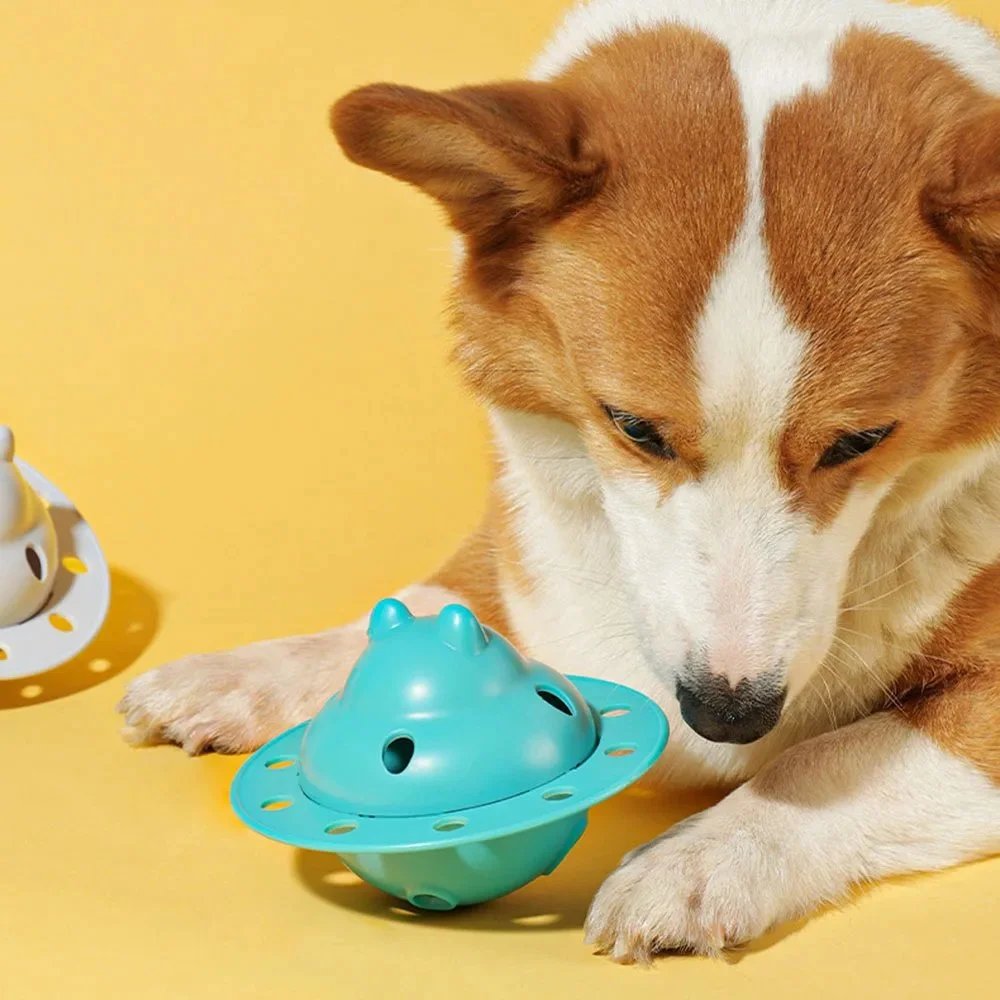
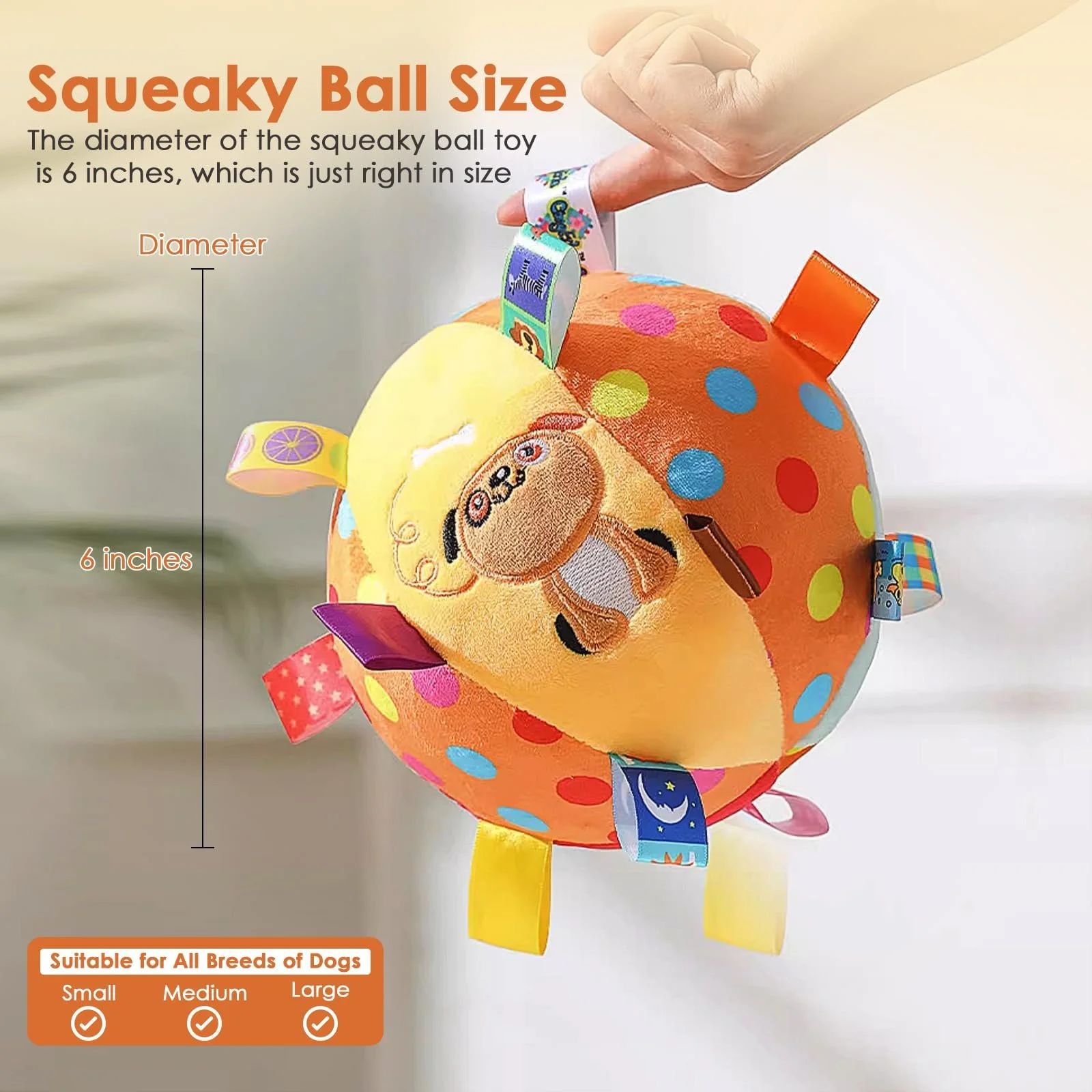
Interactive Dog Ball Toy with Plush Handle (#1801413)
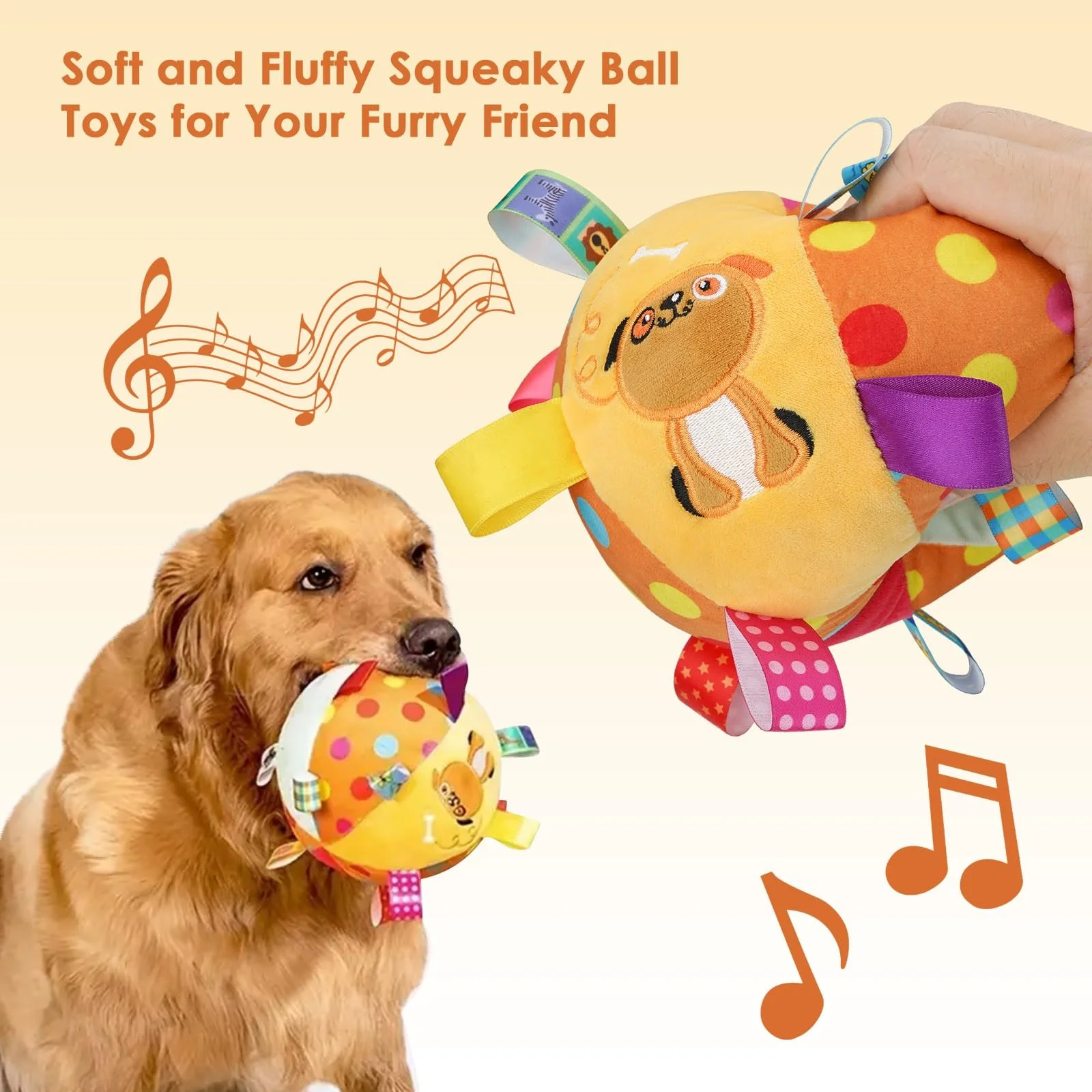
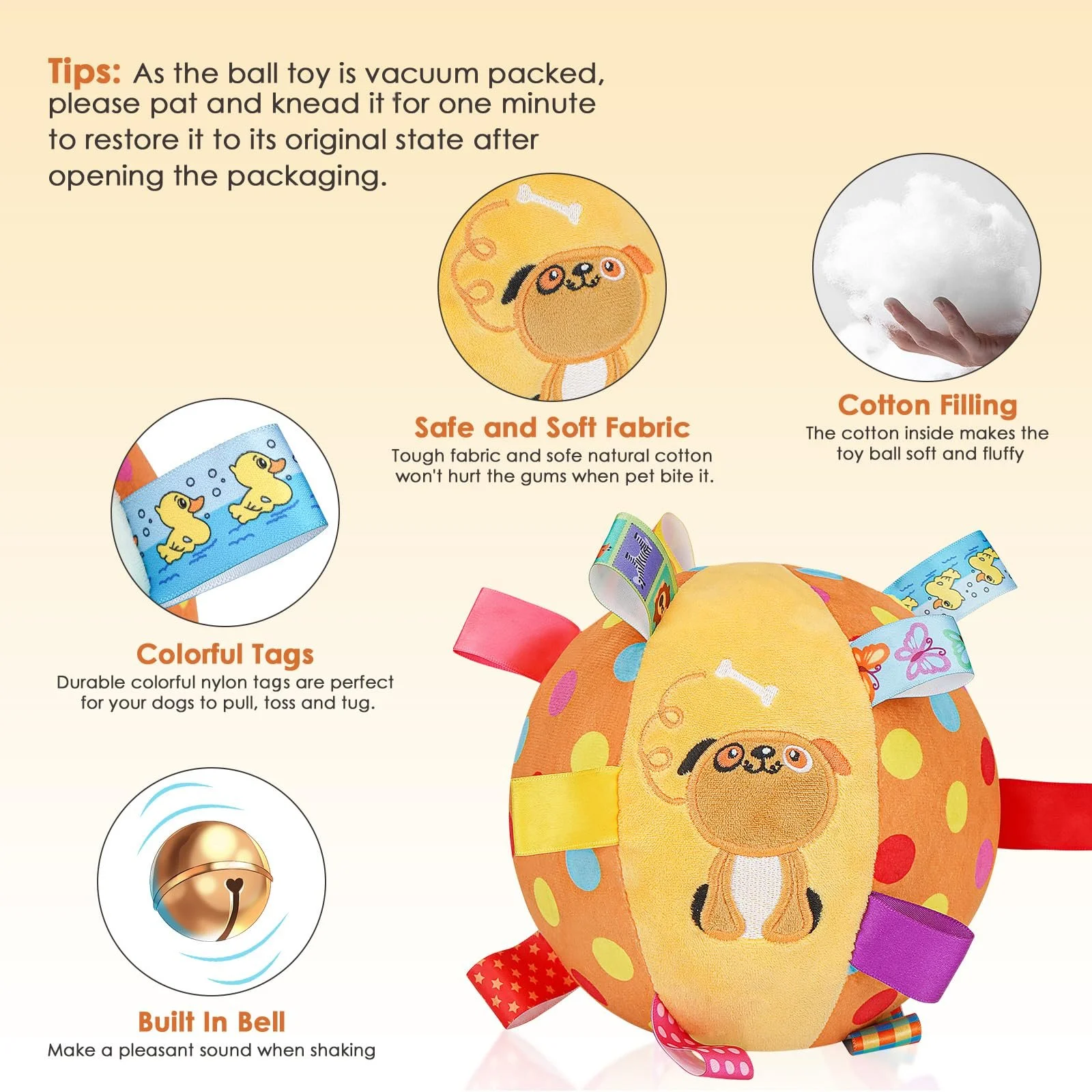
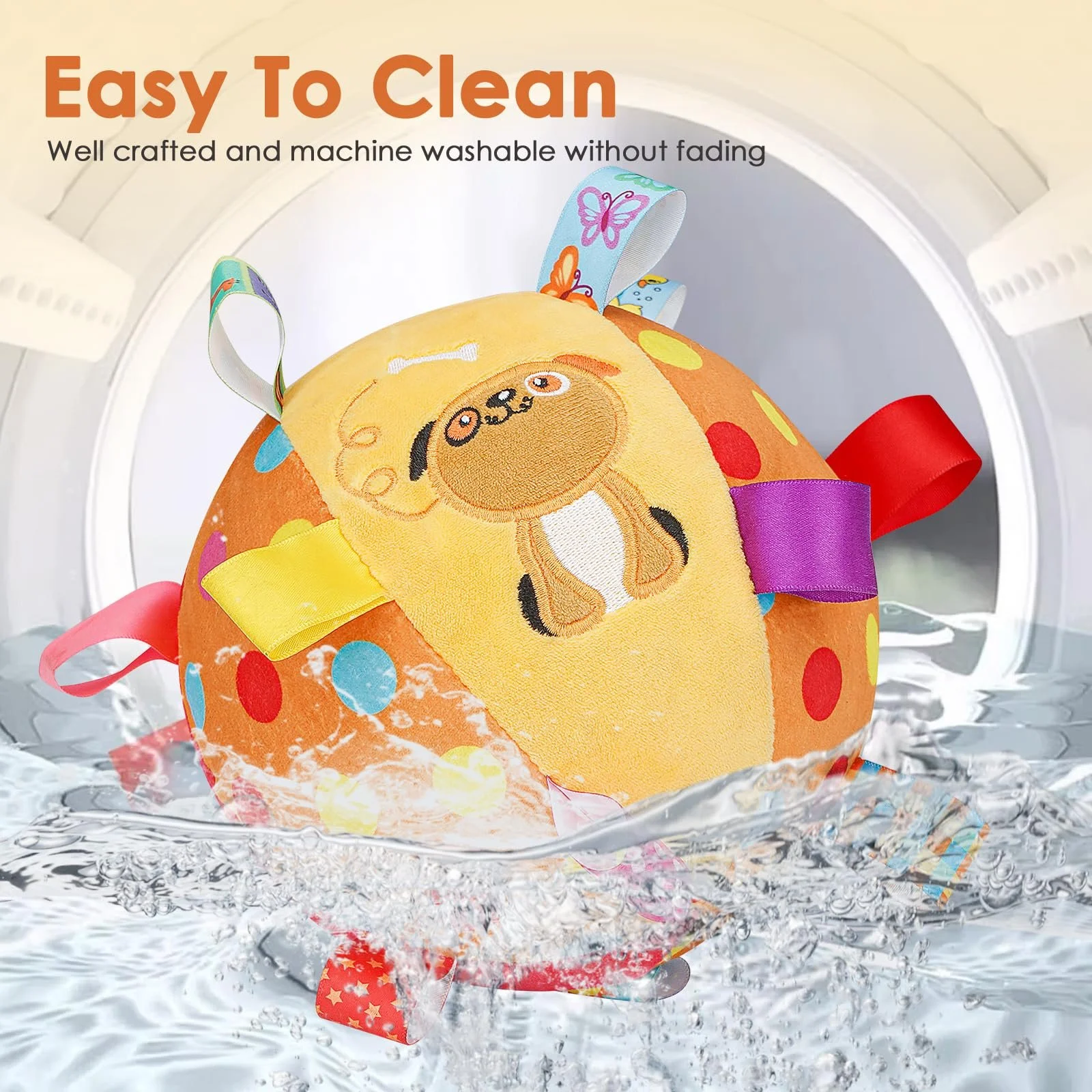
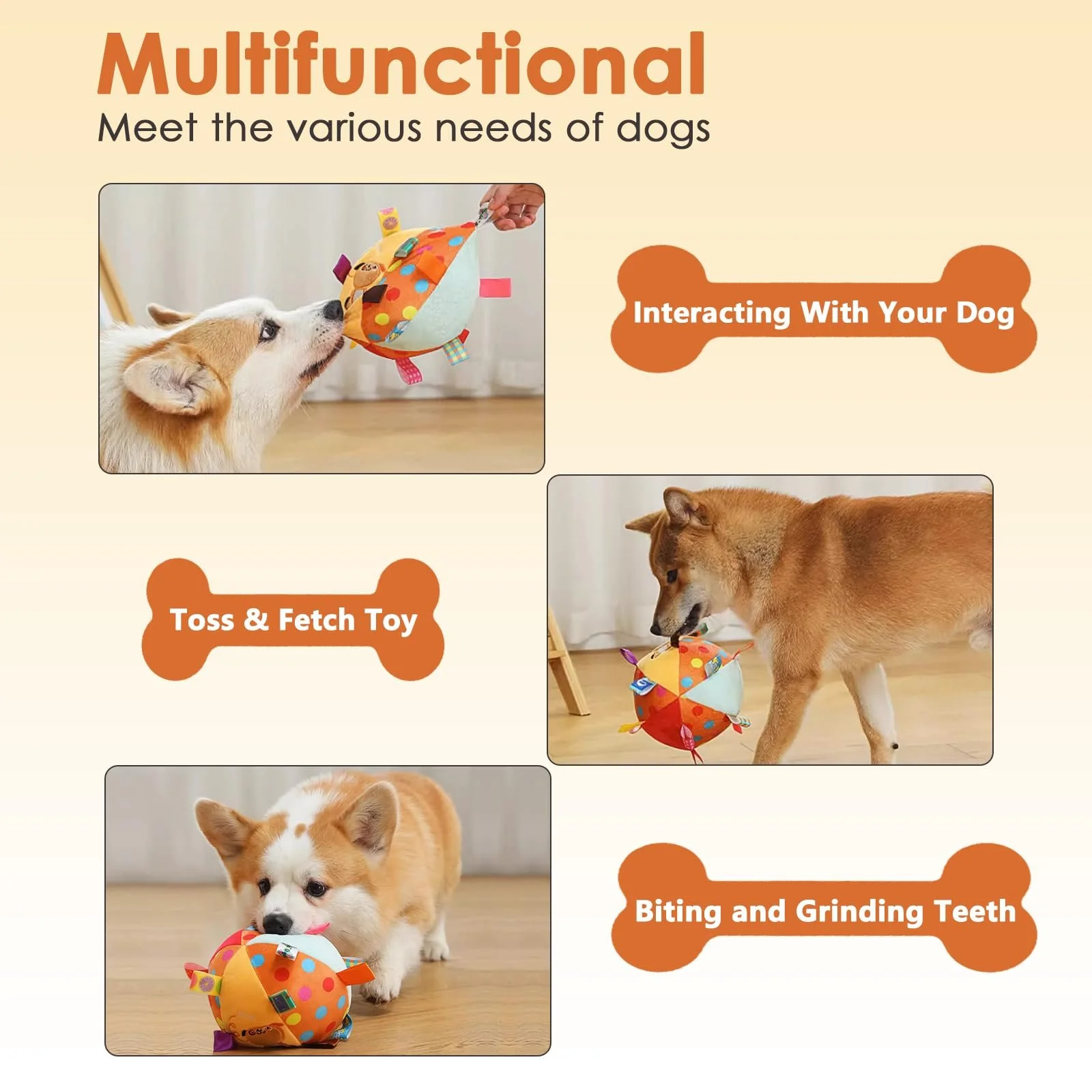
This toy fits best for dogs who enjoy a mix of chase, carrying, and light tug. The plush handle gives the human a clearer grip than a small ball alone, which helps keep fingers farther from the mouth during structured play.
Best use: start with "take it," tug for a few seconds, go still, cue "drop," reward, and restart. Keep sessions short, especially while teaching the rules. If your dog chews the plush handle, tears seams, or tries to remove parts, use it only under close supervision and retire it when damaged.
Because it combines a ball shape with a handle, it can also work for hide-and-seek or fetch-to-tug games. Do not leave it out as an unsupervised chew toy for fabric destroyers.
Troubleshooting Tug Problems
My dog will not drop.
Go back to trades outside the full tug game. Use food, make the toy still, reward release, and restart. Do not turn drop into a wrestling match.
My dog grabs before the cue.
Lower the toy, wait for calm, and only start when the dog pauses. If the dog jumps, the toy disappears briefly. Reward four paws on the floor.
My dog bites hands.
Use a longer toy, slow the movement, and stop the round every time teeth touch skin. If children are involved, switch to a safer game until the dog has better control.
My dog growls during tug.
Play growling can be normal if the body is loose and the dog still responds to cues. Stiffness, hard staring, freezing, guarding, or snapping are different. Stop and reassess.
My dog gets too wild afterward.
Add a downshift. After tug, use a sniffing game, water break, mat cue, or calm chew. End before the dog is over threshold.
My dog loses interest.
Let the dog win more often, use a better toy, make the movement more prey-like, or shorten the session. Some dogs prefer chase or food rewards. Tug is optional.
Safety Boundaries
Do not play tug with dogs who have active neck, spine, jaw, dental, or serious orthopedic pain unless cleared by a veterinarian. Do not lift dogs by the toy. Do not swing puppies. Do not let multiple dogs tug the same toy if it creates conflict.
Inspect tug toys after play. Rope threads, torn handles, exposed stuffing, cracked rubber, and loose seams are removal signs. Tug toys take force, so they need frequent checks.
Store tug toys between sessions. This keeps the toy valuable and prevents unsupervised chewing.
Tug is safe when the rules are clear: take on cue, teeth stay on the toy, movement stays controlled, drop works, and the game has an ending. That structure is what turns a rough-looking game into useful communication.
When Tug Is the Wrong Game Today
Even dogs who love tug should not play tug in every mood.
Skip tug if the dog is already over threshold: barking hard, jumping uncontrollably, grabbing clothes, refusing known cues, or guarding objects. Start with a calmer activity first, such as sniffing, a food puzzle, or a settle cue.
Skip tug if the dog is recovering from dental work, neck soreness, back pain, orthopedic injury, or any condition where pulling may be uncomfortable. Use scent games, food puzzles, or gentle training instead.
Skip tug in crowded spaces. Tight hallways, slippery kitchens, rooms full of children, and areas with breakable objects make the game harder to control.
Skip tug if you are angry or impatient. Tug requires timing. If you are likely to yank, scold, or turn the game into a power struggle, put the toy away and come back later.
The best tug sessions happen when both sides can play and still think.
How to Tell Tug Is Helping
Good tug should make your dog more responsive over time, not less. You should see cleaner starts, faster drops, softer mouth placement, easier restarts, and a dog who can shift from excitement to calm.
After tug, the dog may drink water, lie down, chew calmly, or stay connected to you without demanding more. That is a good sign.
If tug consistently leads to jumping, biting clothes, guarding, barking, or zooming with no recovery, change the structure. Shorten the game, lower the intensity, use a different toy, add more drop practice, or move tug earlier in the day.
Track one behavior: drop response, teeth on skin, jumping, or ability to settle afterward. Improvement in that one behavior tells you the game is becoming useful rather than just exciting.
The Beginner Version
If you are starting from zero, keep the first week simple. Do not worry about perfect obedience inside the game yet.
Use a long, soft tug toy. Ask for one calm second. Say "take it." Tug for three seconds. Go still. Trade for a treat. Restart. End after five good repetitions.
That is enough. The dog learns the toy has rules, your hands are not the target, releasing brings the game back, and "all done" means the toy disappears. Once that pattern is easy, add longer tug, more waiting, and fewer food trades.
Most tug problems come from skipping this stage. Owners jump straight to intense play, then try to install rules after the dog is already overexcited. Teach the rules while the game is still small.