Article
Dog Toys Under $20 (Picks That Survive Real Play)
Quick Answer
Dog Toys Under $20 (Picks That Survive Real Play): quick answer
There's an old math about dog toys: a $5 toy that dies in a day costs more than a $15 toy that survives a month. The budget toy aisle is full of flimsy squeakers, thin plush, and rubber t...
- Topic: Pet Toys.
- Related product category: pet-toys.
- This article keeps the main answer in the article copy and places relevant product context inside the guide.
Product references, prices, and listed features were checked in the PickByU catalog on 2026-08-14. These are budget-minded dog toy recommendations, not hands-on test results. Every pick is chosen because it solves a specific "under-$20 dog toy that doesn't die in a week" problem — durability for chewers, engagement for fetch players, and value for households that go through toys fast.
The $20 Dog Toy Problem: Cheap Toys Are Expensive
There's an old math about dog toys: a $5 toy that dies in a day costs more than a $15 toy that survives a month. The budget toy aisle is full of flimsy squeakers, thin plush, and rubber that shreds in a single chewing session — and every dead toy is money out of your pocket, plus a disappointed dog staring at the remains. The trick isn't buying cheap; it's buying right under $20: toys with enough structure to survive, enough engagement to earn their keep, and enough variety to cover the ways your dog actually plays.
Dogs don't all play the same way, and that's the real filter. Chewers need durable materials with dental benefits. Fetch players need toys that fly and survive the landing. Tug players need something with grip and give. Puzzle-adjacent players need toys that reward persistence. A "best dog toys" list that ignores play style is just a random collection of squeaky things; a list organized by play style is a toolkit for the specific dog you own.
This guide is organized around six ways dogs play, each with one under-$20 pick: the teething chewer, the aggressive chewer, the fetch-and-return player, the dental-health chewer, the squeak-obsessed dog, and the tug-of-war player. Every pick is under $20, every one is a real dog toy (no cat toys sneaking in), and every one earns its price tag by surviving actual play.
1. For the Teething Chewer: Interactive Teething Bell Plush Toy with Rope Knot — $15.65
The play style it serves: Puppies and young dogs who need to chew — not to destroy, but because their teeth and gums are actively uncomfortable. A teething puppy will chew on furniture, shoes, and your hands unless given something better. The teething toy needs to be soft enough not to hurt their developing teeth, structured enough to survive, and interesting enough to keep them off the baseboards.
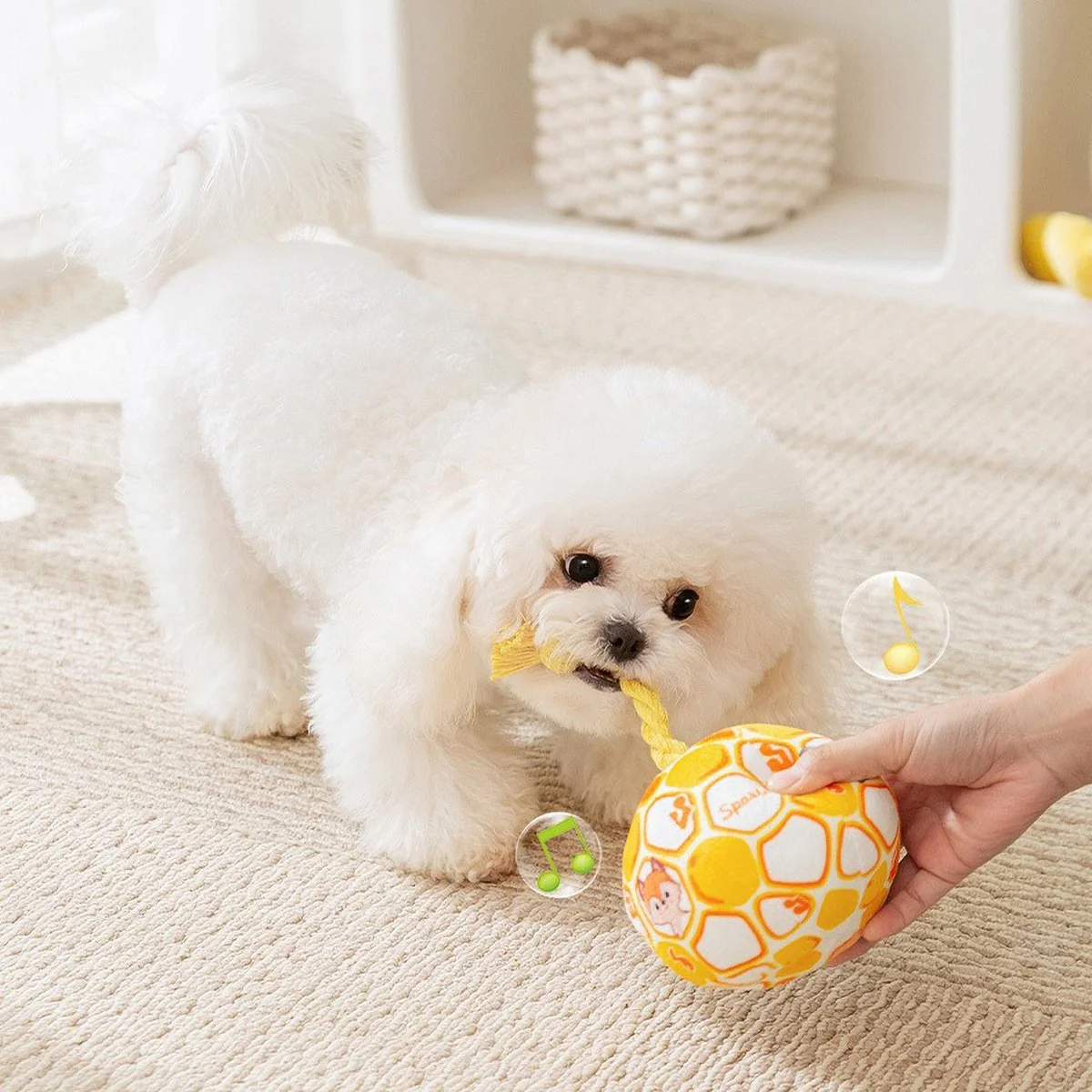
Interactive Teething Bell Plush Toy for Dogs – Chew Ball with Rope Knot ($15.65) — a plush chew toy combining a bell, a chew ball, and a rope knot. The rope knot is the teething tool: it gives the puppy something with texture to gnaw, which soothes gums the way a teether works for a human baby. The bell adds engagement — the toy makes sound when moved, which holds a puppy's short attention span. The plush ball gives them something to carry and pounce on.
What you're getting: A multi-texture toy (plush + rope + bell) designed for the chew-and-bite phase. The rope is the key: rope fibers are gentle on baby teeth while providing the resistance that satisfies the chewing urge. The bell teaches cause-and-effect (move the toy, it makes noise), which is exactly the kind of stimulation a teething puppy needs to redirect their energy from your furniture.
Who it's for: Puppies from about 8 weeks to 8 months, and any adult dog that still loves a good rope chew. Also a great first-toy gift for a new puppy household — it covers the two biggest puppy needs (teething relief and engagement) in one under-$20 package. If you have an aggressive power chewer, this plush-adjacent toy isn't the pick — the next entry is.
Honest limits: Plush toys are for chewers, not destroyers — a power chewer will disembowel this in an afternoon. The bell is a small part that could be chewed off by a determined dog, so supervise play and retire the toy if it starts coming apart (standard plush-toy caution). And rope toys should be checked for frayed strands — loose fibers can be swallowed, so replace the toy when the rope starts unraveling.
2. For the Aggressive Chewer: Interactive Dog Ball Toy with Plush Handle — $15.95
The play style it serves: The dog who doesn't just chew — they destroy. Aggressive chewers turn plush toys into confetti in minutes and need toys engineered for abuse: durable outer materials, reinforced construction, and a shape that's awkward to rip apart. The toy also needs to survive fetch, because aggressive chewers are often the most athletic, energetic dogs.
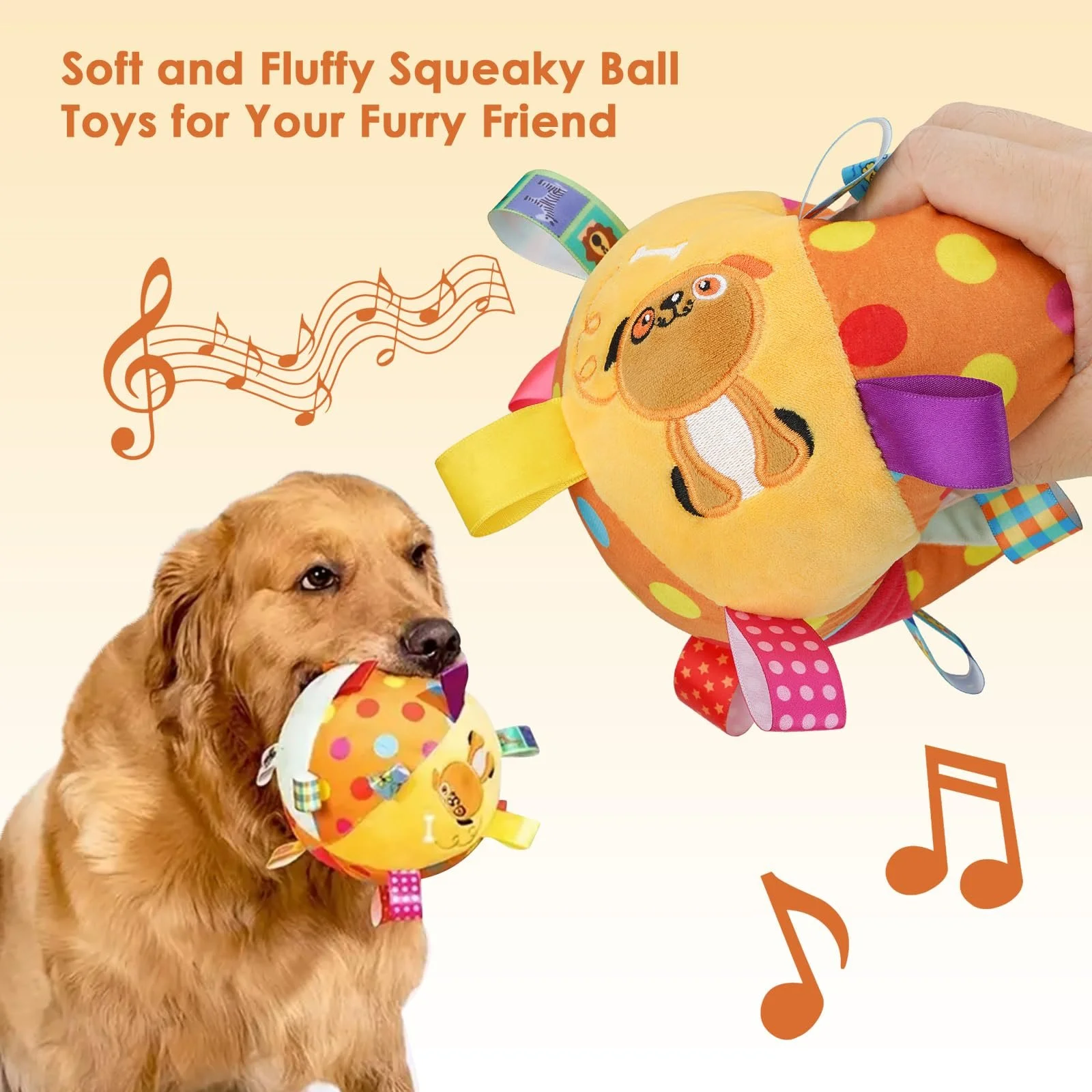
Interactive Dog Ball Toy with Plush Handle for Aggressive Chewers ($15.95) — a ball toy with a plush handle, marketed specifically for aggressive chewers. The ball body gives the dog something to chomp that rolls and bounces, while the handle gives them (and you) something to grip — it doubles as a fetch toy you can throw by the handle and a tug toy the dog can grab. The construction is built for the dog that treats toys as a challenge.
What you're getting: A ball-with-handle design that serves three play styles at once: fetch (throw by the handle), chew (the ball body), and tug (you hold the handle, they pull the ball). The handle is also a control point — it lets you keep a grip during tug games without putting your hand near the teeth. For the dog that goes through toys weekly, this is designed to be the toy that doesn't die in a day.
Who it's for: Aggressive chewers, high-energy dogs, and any household that's given up on plush toys. Also a strong pick for the "my dog eats everything" owner who needs something that survives. If your dog is a gentle, non-chewing soul who just wants soft plush, this may be overbuilt — the next few picks are gentler.
Honest limits: No toy is indestructible — "aggressive chewer" marketing means designed-for-abuse, not chew-proof. The plush handle is the vulnerable point: if the dog targets the handle specifically, it can be chewed through (supervise the first few sessions to see how they play with it). And it's a single toy — rotation with other picks below keeps it novel and extends its life.
3. For the Fetch-and-Return Dog: Durable Squeaky Dog Bone Toy — $16.80
The play style it serves: The dog who lives for fetch — the endless-return player who'll chase a ball until your arm falls off. A good fetch toy needs to fly reasonably, survive the landing (and the jaws), and be easy for the dog to pick up and bring back. The squeaker adds the reward: the squeak on each bite reinforces the retrieve loop, which is why squeaky fetch toys train better than silent ones.
Durable Squeaky Dog Bone Toy – Rubber Chew for Dental Health & Fun ($16.80) — a bone-shaped rubber toy with a built-in squeaker, designed for fetch and chew. The bone shape is fetch-friendly: easy to grab mid-air, easy to carry on the return, and the rounded ends are gentle on the dog's mouth. The rubber body absorbs the landing, and the squeaker rewards every bite.
What you're getting: A rubber bone that works as a fetch toy and a chew toy in one. The squeaker is the engagement engine — dogs learn fast that biting this toy produces the satisfying sound, which makes solo play (while you're working) more likely. The rubber material doubles as a gentle dental aid: chewing it helps scrape plaque, which is why the "dental health" in the name isn't just marketing.
Who it's for: Fetch-obsessed dogs, medium chewers, and any dog that needs an engaging solo toy. Also a solid choice for the "my dog destroys every ball" owner who wants something with more structure than a tennis ball. If your dog prefers soft plush over rubber, test their reaction to the material first — some dogs are picky about texture.
Honest limits: The squeaker is the weak point on most squeaky toys — a determined chewer can eventually puncture it, after which the toy goes quiet (still usable, but the reward is gone). Rubber is durable but not soft; dogs with very senior or sensitive teeth may prefer plush. And while it's a dental-adjacent aid, it's not a replacement for regular teeth brushing — the marketing overstates what a chew toy can do.
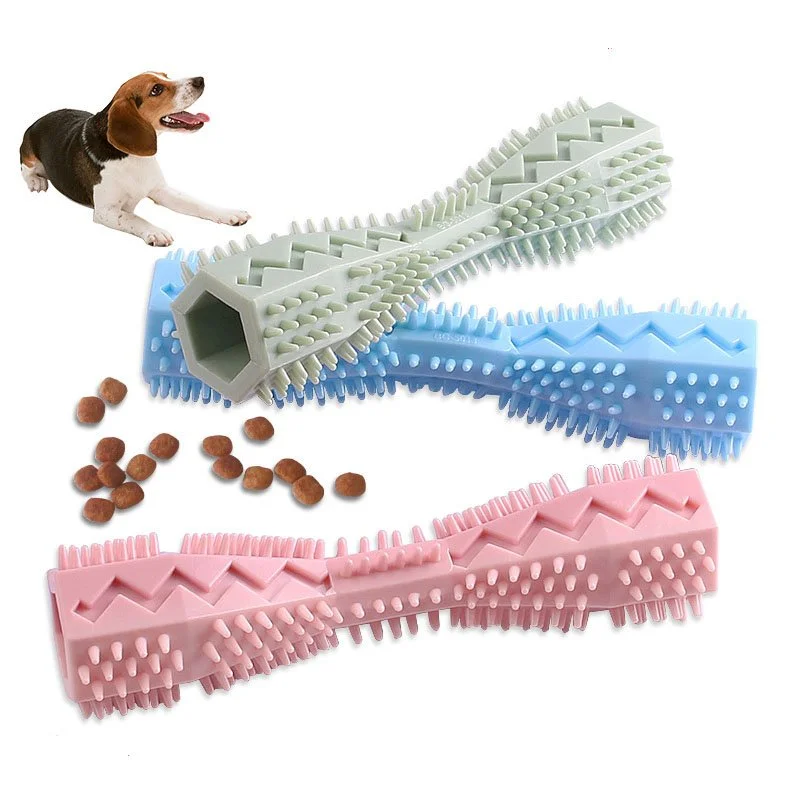
4. For the Teeth-Cleaning Chewer: Durable Squeaky Carrot & Corn Dog Chew Toy — $13.95
The play style it serves: The dog whose chewing serves a purpose — cleaning teeth, exercising jaws, and working out the natural urge to gnaw. Dental-focused chew toys have nubs, ridges, or textures designed to scrape plaque as the dog chews. The carrot-and-corn shape is the clever part: vegetables are foods dogs already associate with chewing, and the shape gives the dog distinct zones to work on.
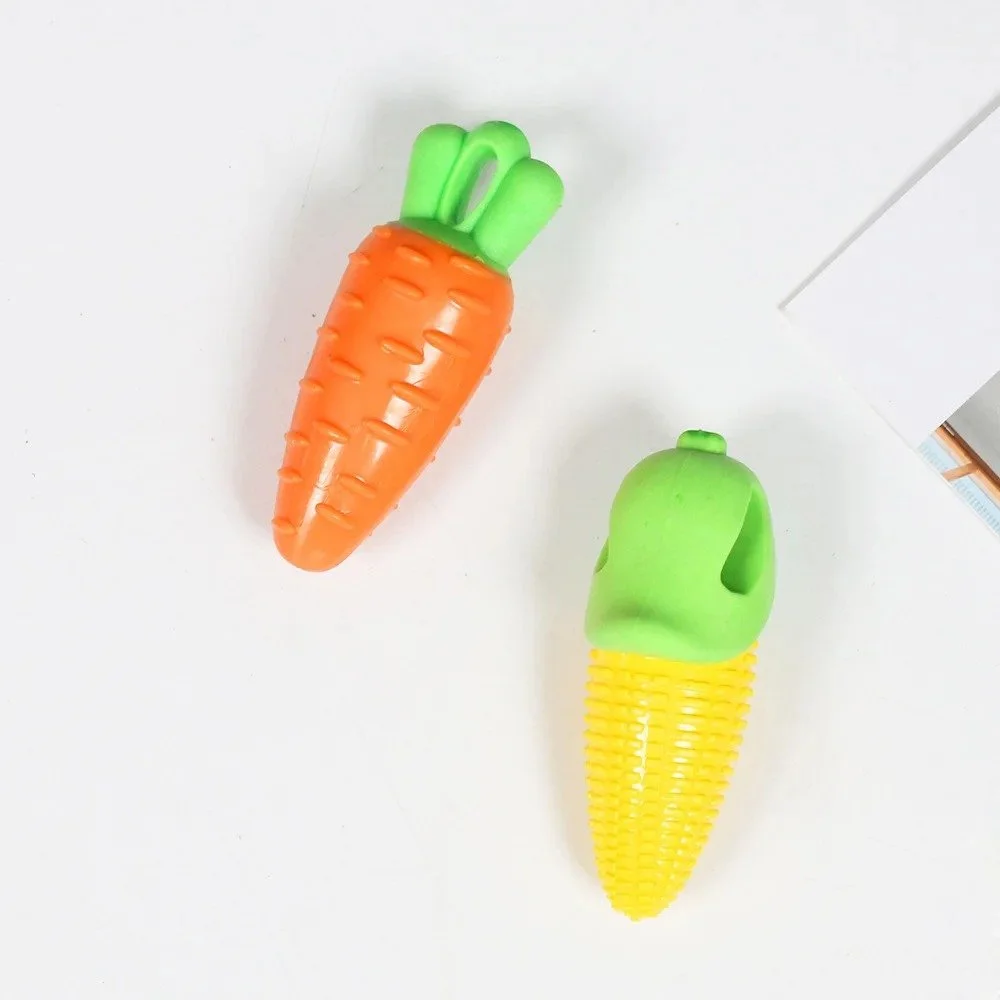
Durable Squeaky Carrot & Corn Dog Chew Toy for Teeth Cleaning ($13.95) — a carrot-and-corn shaped chew toy with a squeaker, marketed for teeth cleaning. The veggie shapes give the toy two different chewing experiences: the carrot's length for a full-mouth chomp, the corn's ridges for spot-scrubbing. The squeaker keeps the dog engaged so they chew longer — and longer chewing is what actually does the dental work.
What you're getting: A fun, food-shaped chew toy that makes the dog chew more (via the squeaker reward) while the textured surfaces work on plaque. At $13.95 it's the cheapest pick in this guide — a budget-friendly option for households that go through toys fast. The food shapes also make it a natural training reward alternative to actual food.
Who it's for: Chew-motivated dogs, dogs who need a dental-adjacent aid between professional cleanings, and budget-conscious households. Also a great "always have a spare" toy — at this price, you can own several in rotation. If your dog is a power destroyer who shreds rubber in minutes, the softer construction may not hold up — the aggressive-chewer pick above is stronger.
Honest limits: "Teeth cleaning" is marketing for "chewing may help scrape plaque" — it's not a dental product and doesn't replace brushing or vet cleanings. The food shapes are toys, not food — make sure no one in the house mistakes them for treats (and don't leave them out where a dog could chew pieces off unsupervised). Soft rubber can be gouged by aggressive chewers, so know your dog's chewing level.
5. For the Squeak-Obsessed Dog: Squeaky Chicken Chew Toy — $19.80
The play style it serves: Some dogs are squeak-motivated — the sound is the reward, and they'll play far longer with a toy that squeaks than one that's silent. The classic squeaky chicken is the archetype of this category: dogs recognize it, they hunt it, they "kill" it (which is why the squeak stops), and they bring it back for another round. The chicken shape also has the right proportions for a dog to carry and shake.
Squeaky Chicken Chew Toy for Dogs – Bite-Resistant, Interactive Rubber Toy ($19.80) — a squeaky chicken toy in bite-resistant rubber, built for the squeak-and-shake play style. The rubber body survives the shaking and tossing that plush squeaky toys die from, while the squeaker delivers the reward that keeps the dog engaged. It's the squeaky toy for dogs who've killed every plush version.
What you're getting: The classic squeaky chicken in a tougher rubber build. The shape is dog-recognizable (chickens are one of the most universally motivating toy shapes), the squeaker is the engagement hook, and the rubber construction means it survives the shake-and-kill ritual that destroys plush versions. For the dog who's squeak-obsessed but toy-destructive, this is the middle ground.
Who it's for: Squeak-motivated dogs of any size, households where plush squeaky toys die fast, and anyone whose dog's favorite game is "find it, shake it, kill it, bring it back." If your dog ignores squeakers entirely and only wants to fetch silently, the fetch bone above is a better fit — this toy's whole job is the sound.
Honest limits: Bite-resistant isn't bite-proof — a determined power chewer can eventually breach the rubber and kill the squeaker. The chicken shape is a specific aesthetic (some owners find it funny, others find it odd — the dog doesn't care either way). And at $19.80 it's the top of the under-$20 range; for a household that destroys everything, buying two cheaper picks in rotation may stretch further.
6. For the Tug-of-War Dog: 3 Bone-Shaped Squeaky Pet Toys — $15.80
The play style it serves: The tug player — the dog who wants to pull, wrestle, and win. Tug is one of the best ways to bond with a dog (contrary to old myths, tug doesn't cause aggression — it teaches impulse control when played with rules), and it needs toys with grip and give. The bone-shaped trio also serves the "novelty" play style: three toys in rotation keeps the game fresh, and the squeakers reward each tug.
3 Bone-Shaped Squeaky Pet Toys – Durable, Vibrant Chew Toys for Dogs ($15.80) — a three-pack of bone-shaped squeaky toys in vibrant colors, built for tug, fetch, and chew. The three-pack is the value story: at $15.80, you get three toys — one for tug, one for fetch, one in reserve (or one per room, which multi-surface households love). The bones' shape gives the dog (and you) a solid grip for tug games.
What you're getting: Three bone-shaped squeaky toys for the price of one premium toy. The set covers multiple play styles — tug (the bones are grippable from both ends), fetch (they throw and land predictably), and solo chew (the squeakers reward independent play). Having three also means rotation, which is the single cheapest way to keep a dog interested in its toys: a "new" toy every few days extends the life and engagement of the whole set.
Who it's for: Tug-loving dogs, multi-dog households (each dog gets a bone, no sharing drama), and owners who want variety without buying five separate toys. Also a strong value pick for new dog owners building a first toy collection. If your dog is a dedicated destroyer, the trio won't last as long as the single aggressive-chewer ball — but at this price, replacing them is affordable.
Honest limits: Three cheaper toys won't outlast one premium toy for a power chewer — durability scales with price. The bones are vibrantly colored (which is a feature for visibility in grass, but if your dog is sensitive to loud colors, the aesthetic is what it is). And the squeakers are the first thing to go under heavy chewing — expect the set to go quiet faster than a single squeaker would.
The Comparison
| Pick | Price | Play style | Best for | Watch out for |
|---|---|---|---|---|
| Teething Bell + Rope | $15.65 | Teething puppy | New puppies | Not for power chewers |
| Ball with Plush Handle | $15.95 | Aggressive chewer | Toy destroyers | Handle is vulnerable |
| Squeaky Rubber Bone | $16.80 | Fetch + chew | Fetch players | Squeaker eventually dies |
| Carrot & Corn Chew | $13.95 | Dental chewer | Budget households | Soft rubber can gouge |
| Squeaky Chicken | $19.80 | Squeak-obsessed | Squeak lovers | Bite-resistant ≠ proof |
| Bone 3-Pack | $15.80 | Tug + variety | Multi-dog homes | Less durable per toy |
Editor's Buying Notes: Match the Toy to the Dog, Then Watch the First Session
Dog toys are not one-size-fits-all, even when the price is low. The right under-$20 toy depends on four things: your dog's size, bite strength, play style, and supervision level. A toy that is perfect for a gentle puppy can be unsafe for a power chewer. A rubber squeaky toy that keeps one dog busy for a month can lose its squeaker in ten minutes with another dog. The label helps, but your dog's first play session tells the truth.
Start with chewing style. If your dog mouths toys gently, carries them around, or likes soft textures, the teething bell toy or squeaky bone can be enough. If your dog pins toys down and works one spot until it opens, skip plush-adjacent toys and start with the aggressive-chewer ball or tougher rubber picks. If your dog immediately searches for the squeaker and tries to remove it, squeaky toys should be supervised and retired early. The most dangerous toy is not the toy that looks cheap; it is the toy your dog has figured out how to take apart.
Size matters as much as durability. A toy should be large enough that the dog cannot swallow it whole, but small enough to carry comfortably. Tiny dogs may ignore oversized rubber toys because they cannot get a satisfying grip. Large dogs can turn small toys into choking hazards. For multi-dog homes, buy for the largest and strongest dog in the house, not the smallest. Shared toys get tested by the toughest mouth eventually.
Puppies need a different standard than adult dogs. Teething puppies benefit from rope, plush, and softer textures because their gums are sore and their adult teeth are still developing. But puppies also explore by shredding, so supervision matters. Rope strands, loose bells, and exposed squeakers should end the toy's life immediately. For puppies, a toy rotation is smarter than one favorite toy left out all day. Short, supervised sessions keep the toy novel and reduce the chance that boredom turns into destruction.
For adult power chewers, the buying goal is not "indestructible." That word should make any dog owner suspicious. The realistic goal is controlled wear: a toy that lasts through multiple sessions, shows damage slowly, and gives you time to remove it before pieces come loose. The ball with plush handle and rubber squeaky chicken are better starting points for these dogs, but even they need inspection. If your dog has a history of swallowing toy pieces, choose fewer squeakers, fewer seams, and less fabric.
For fetch dogs, shape and visibility matter. Bone-shaped rubber toys are easier for some dogs to pick up than smooth balls, especially on grass or flooring. Bright colors in the three-pack make lost toys easier to spot outside. Squeakers can reinforce the return loop, but they can also overstimulate dogs that become frantic around sound. If fetch turns into chewing and refusing to release, use the toy only during active play and put it away afterward.
For tug dogs, grip and rules matter more than squeak. The bone three-pack is useful because it gives both dog and owner a clear end to hold, but tug should still have a start cue, a drop cue, and a pause if teeth touch skin. Tug is a good game when it teaches impulse control. It is a bad game when the toy is too small, too slippery, or left out afterward for unsupervised shredding.
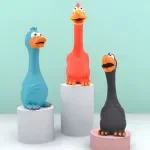
Avoid buying by cuteness alone. The squeaky chicken may be funny, the carrot-and-corn toy may be charming, and the bell toy may look sweet for a puppy, but the dog does not care about the joke. The dog cares about texture, sound, resistance, and the way the toy moves. Choose the toy that matches the behavior you want: chew calmly, fetch and return, tug with control, or self-entertain safely.
The simplest ranking is this: choose the teething bell and rope toy for supervised puppy chewing, the aggressive-chewer ball for dogs that destroy plush, the squeaky rubber bone for fetch plus moderate chewing, the carrot-and-corn toy for budget dental-style chewing, the squeaky chicken for sound-motivated dogs, and the three-pack bones for tug, rotation, or multi-dog households. After the first session, inspect the toy. If it is already opening, the dog has answered the buying question for you.
FAQ
How do I pick the right toy for my dog? Match the toy to the play style, not the price. Watch your dog for a day: do they chew relentlessly (aggressive chewer pick), mouth things gently (plush or dental picks), fetch and return (the bone), or shake and squeak (the chicken)? The list is organized by play style specifically so you can identify your dog's behavior and pick the matching entry. A gentle chewer with the aggressive-chewer ball will be bored; a destroyer with a plush toy will be disappointed.
Are squeaky toys safe for dogs? Yes, with supervision. Squeakers are safe while the toy is intact — the risk is a dog that chews through the toy and swallows the squeaker, which is a real hazard. The rule: supervise first sessions, inspect toys regularly, and retire any toy that starts showing holes or loose pieces. The rubber picks here are lower-risk than plush with internal squeakers because the squeaker is more protected, but no squeaky toy is chew-proof for a determined dog.
How often should I replace dog toys? Replace any toy when it shows structural damage — holes, loose fabric, exposed squeakers, chewed-off pieces. For the toys here, that's roughly every few weeks to months depending on your dog's chewing level. Rotation helps: having 3-5 toys in rotation (as the 3-pack encourages) extends the life of each because the dog's enthusiasm is spread across them. The rule: when in doubt, throw it out — a $15 toy is cheaper than a vet visit.
Can these be used for training? Yes — the squeaky picks double as training rewards because the sound is naturally rewarding. The carrot-and-corn toy works as a "settle and chew" reward after training sessions. Just be careful not to over-rely on toys as treats — food rewards and play rewards serve different training purposes, and a dog that expects a toy after every command can become toy-obsessed.
What about puppy safety with the rope toy? The rope-knot teething toy is safe for puppies with supervision, but check it regularly: rope fibers that fray can be swallowed, and the bell could be chewed off by a determined puppy. Start with short supervised sessions and remove the toy when it shows wear. Rope is also a good tooth-cleaning surface for puppies, but it's not for unsupervised all-day chewing — that's what the rubber picks are for.
Is tug-of-war bad for dogs? No — the old myth that tug causes aggression is outdated. Played with rules (a "drop it" cue, a pause when teeth touch skin, a clear start and stop), tug is one of the best bonding and impulse-control games you can play. The bone trio here is well-suited to it: grippable from both ends, with a clear release point. The only real caution is with puppies during teething — tugging on sore teeth can hurt, so let them initiate and keep sessions gentle.
Sources
- Serper Google SERP analysis (gl=us) 2026-08-14: "dog toys under 20", "best dog toys for aggressive chewers", "durable dog toys", "puppy teething toys", "squeaky dog toys"
- The Spruce Pets — "The 24 Best Dog Toys of 2026" (dog toy category landscape)
- Wirecutter (NYT) — dog toy testing coverage (durability testing methodology)
- Chewy — dog toy category collections (retail toy segmentation by play style)
- Reddit r/dogs — "Dog winter jacket recommendations" thread context / general toy discussion patterns (real-user toy pain points)
- PickByU catalog (products-combined-20000.csv, pet-toys category) — all six products verified with exact prices and product IDs on 2026-08-14
Product references, prices, and listed features were checked in the PickByU catalog on 2026-08-14.
— Maya Porter, Editor-in-Chief, PickByU