Article
Slow Feeder Dog Toys: Why Fast Eaters Need More Than A Regular Bowl
Quick Answer
Slow Feeder Dog Toys: Why Fast Eaters Need More Than A Regular Bowl: quick answer
Many dogs can empty a bowl before the owner has finished putting the food bag away. The dog looks happy, the bowl is clean, and the meal is technically...
- Topic: Dog Health.
- Related product category: pet-toys.
- This article keeps the main answer in the article copy and places relevant product context inside the guide.
A Fast Meal Is Usually Not A Better Meal
Many dogs can empty a bowl before the owner has finished putting the food bag away. The dog looks happy, the bowl is clean, and the meal is technically done. But a meal that disappears in thirty seconds does very little for the dog's brain, nose, self-control, or sense of satisfaction. For some dogs, speed eating can also create practical problems: gulping, gagging, burping, vomiting after meals, stealing food from other pets, begging immediately after eating, and becoming restless because the meal offered no activity.
A slow feeder dog toy changes the meal from a pile of food into a task. The dog has to nose, paw, roll, lick, sniff, or problem-solve to access the food. That slows the pace and turns normal feeding into enrichment. The dog gets more time with the same measured portion, and the owner does not have to add a separate training session every time.
This does not mean every dog should eat every meal from a difficult puzzle. Some dogs need simple slow bowls. Some need soft snuffle toys. Some need rolling treat dispensers. Some need hand feeding during training. The right slow feeder depends on the dog's size, eating style, confidence, teeth, mobility, and frustration tolerance.
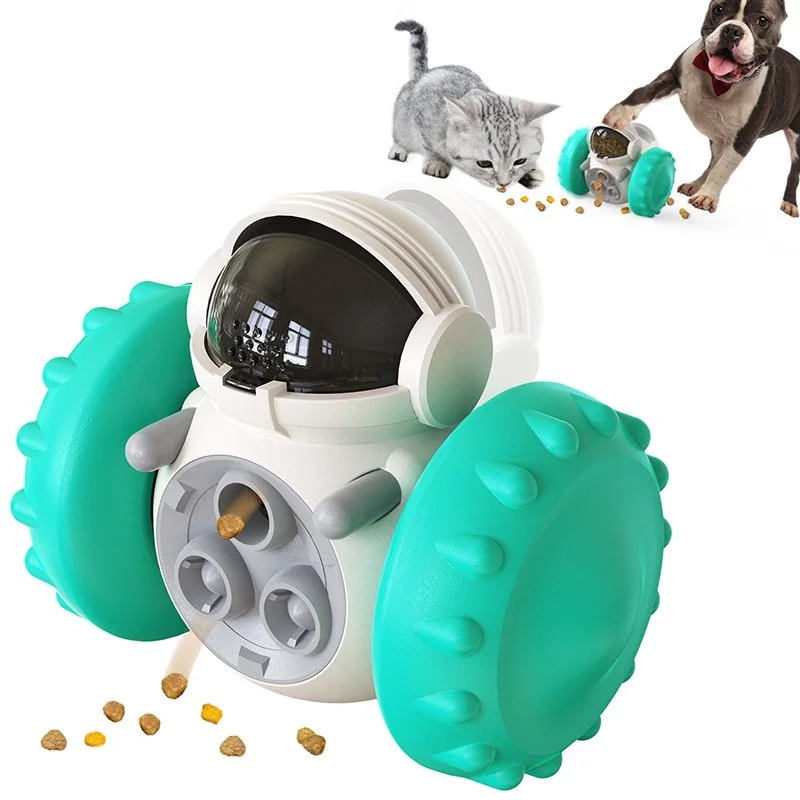
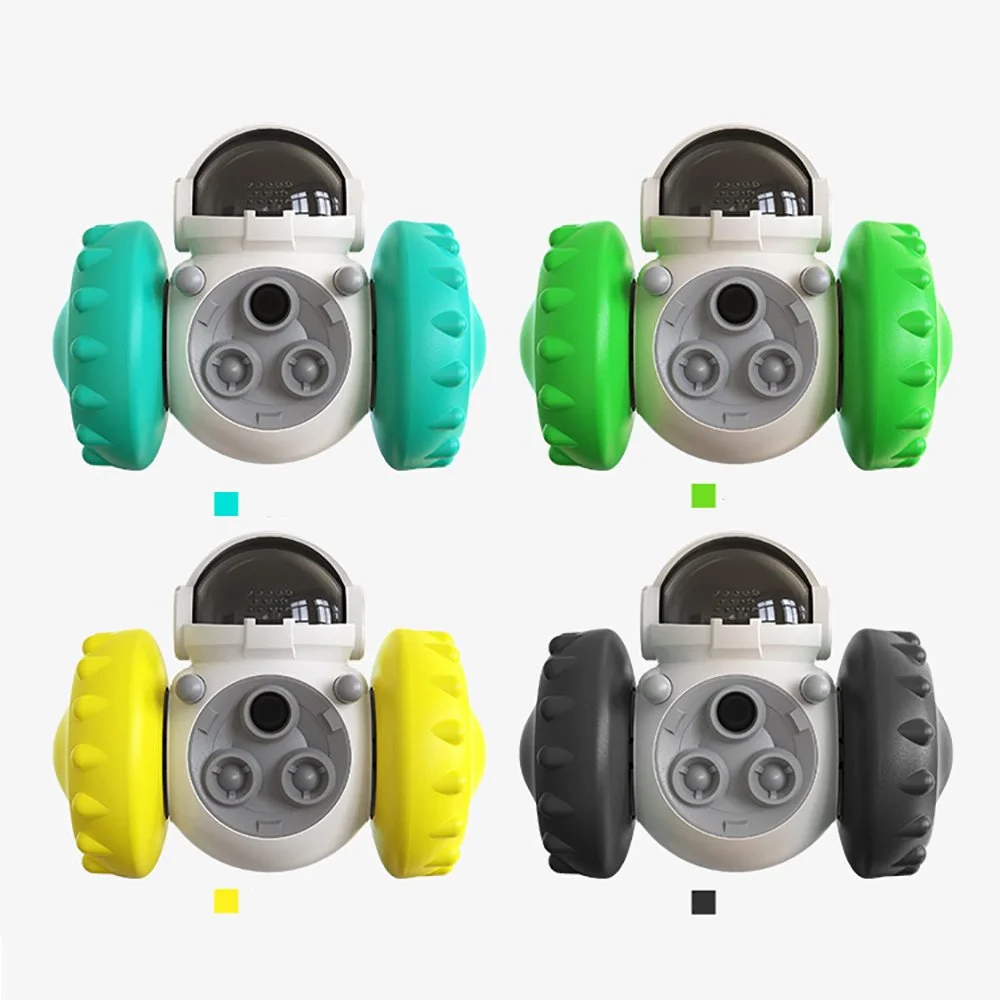
The Interactive Dog Treat Leaking Toy and Slow Feeder (#1761916) is the matched product for this article because it is designed around the main benefit: treats or kibble release gradually as the dog rolls and shakes the toy. It has five product images, uses a battery-free tumbler design, and is described as suitable for slow feeding, mental stimulation, boredom reduction, and indoor or outdoor use. It should be introduced correctly, not simply filled and dropped in front of a confused dog.
What Slow Feeders Actually Do
Slow feeders do three things at once. They change speed, change effort, and change attention. A regular bowl asks the dog to put the head down and swallow. A slow feeder asks the dog to work through a small challenge before each bit of food appears.
The speed benefit is the most obvious. Food does not arrive in one open pile. It is separated by grooves, pockets, openings, rolling movement, or hiding places. This can reduce gulping and make the meal last longer. A dog that vomits because it inhales food may benefit from a slower, more controlled setup, though persistent vomiting should be discussed with a veterinarian.
The effort benefit is just as important. Dogs are built to use the nose, mouth, paws, and brain around food. A slow feeder gives the dog a legal job. Instead of raiding trash, stealing socks, barking for attention, or begging after dinner, the dog spends part of that energy on the meal itself.
The attention benefit is often overlooked. A dog working through a feeder is focused. It is not pacing around the kitchen, hovering around the table, or trying to rush another pet's bowl. In many homes, slow feeding creates a calmer mealtime routine.
The best slow feeder is not always the hardest one. If the dog is frustrated, chewing the feeder, or giving up, the tool is too hard or the format is wrong. Slow feeding should create steady engagement, not stress.
The Health Argument, Without Overpromising
Slow feeders are often marketed as health tools, and there is a real reason for that. Eating too fast can contribute to gulping air, regurgitation, stomach discomfort, and poor meal pacing. For some deep-chested breeds and individual dogs, owners are also concerned about bloat and gastric emergencies. A slow feeder can be part of a risk-reduction routine, but it should not be treated as a guarantee or medical device.
If a dog is at high risk for bloat, has a history of gastric problems, retches, has a distended abdomen, seems restless after eating, or shows signs of distress, the answer is veterinary care, not only a different bowl. Slow feeders can support better meal habits, but they do not replace medical guidance.
Weight management is another area where slow feeders help indirectly. A dog that eats slowly may seem more satisfied because the meal lasts longer and requires effort. The portion, however, still matters. A slow feeder filled with extra treats will not help weight control. It may quietly add calories.
Digestive comfort can improve when the dog is not swallowing a full meal at top speed. Some dogs do better when food is spread across a slow bowl, puzzle, snuffle mat, or rolling dispenser. Others need smaller meals, different food, or medical evaluation.
Mental health is the safest and most reliable benefit to emphasize. Most dogs benefit from using the nose and brain. Even if the dog is not a dangerous fast eater, turning meals into enrichment can reduce boredom and improve daily routine.
The practical takeaway is simple: use slow feeders because they slow eating, add mental work, and make meals more satisfying. Do not use them as a substitute for veterinary advice when symptoms are serious.
Match The Feeder To The Dog's Eating Style
Different fast eaters need different tools. A dog that inhales kibble from a bowl is not the same as a dog that guards food, flips puzzles, swallows toys, or becomes frustrated when food is hidden.
A gentle but fast eater may do well with a simple slow bowl or rolling treat dispenser. This dog understands food access quickly and does not attack the feeder. A toy like #1761916 can fit because the dog can roll or shake it and receive food gradually.
A strong chewer needs tougher materials and close supervision. If the dog tries to chew through the feeder instead of working it, remove the toy. Treat dispensers are not meant to become chew objects. A strong chewer may need a more durable feeder bowl, training-based feeding, or a heavy-duty puzzle made for that chewing style.
A nervous dog needs an easy start. If the first slow feeder is too noisy, slippery, or difficult, the dog may avoid it. Begin with food visible and easy to access. Let the dog learn that the tool pays.
A food-guarding dog needs space. Do not introduce a slow feeder next to other dogs or children. Food puzzles can increase frustration or guarding if the dog feels watched or threatened. Feed separately and manage the environment.
A senior dog may need a soft or stable feeder. Rolling toys can be hard for dogs with limited mobility. A snuffle mat, soft pocket feeder, or shallow puzzle may work better. The feeder should not force bending, slipping, or repeated pawing that strains joints.
A puppy needs simplicity and size control. The openings should not encourage chewing or swallowing pieces. The challenge should be easy enough that the puppy succeeds without frustration.
Matching matters because "slow feeder" is a category, not one product type.
Slow Feeder Bowls, Mats, Puzzles, And Toys
Slow feeder bowls are the easiest entry point. They have ridges or patterns that make the dog work around obstacles. They are good for dogs that eat too fast but do not need much mental challenge. Choose a bowl that is stable, easy to clean, and sized for the dog's muzzle. Very tight ridges can frustrate flat-faced dogs or dogs with sensitive mouths.
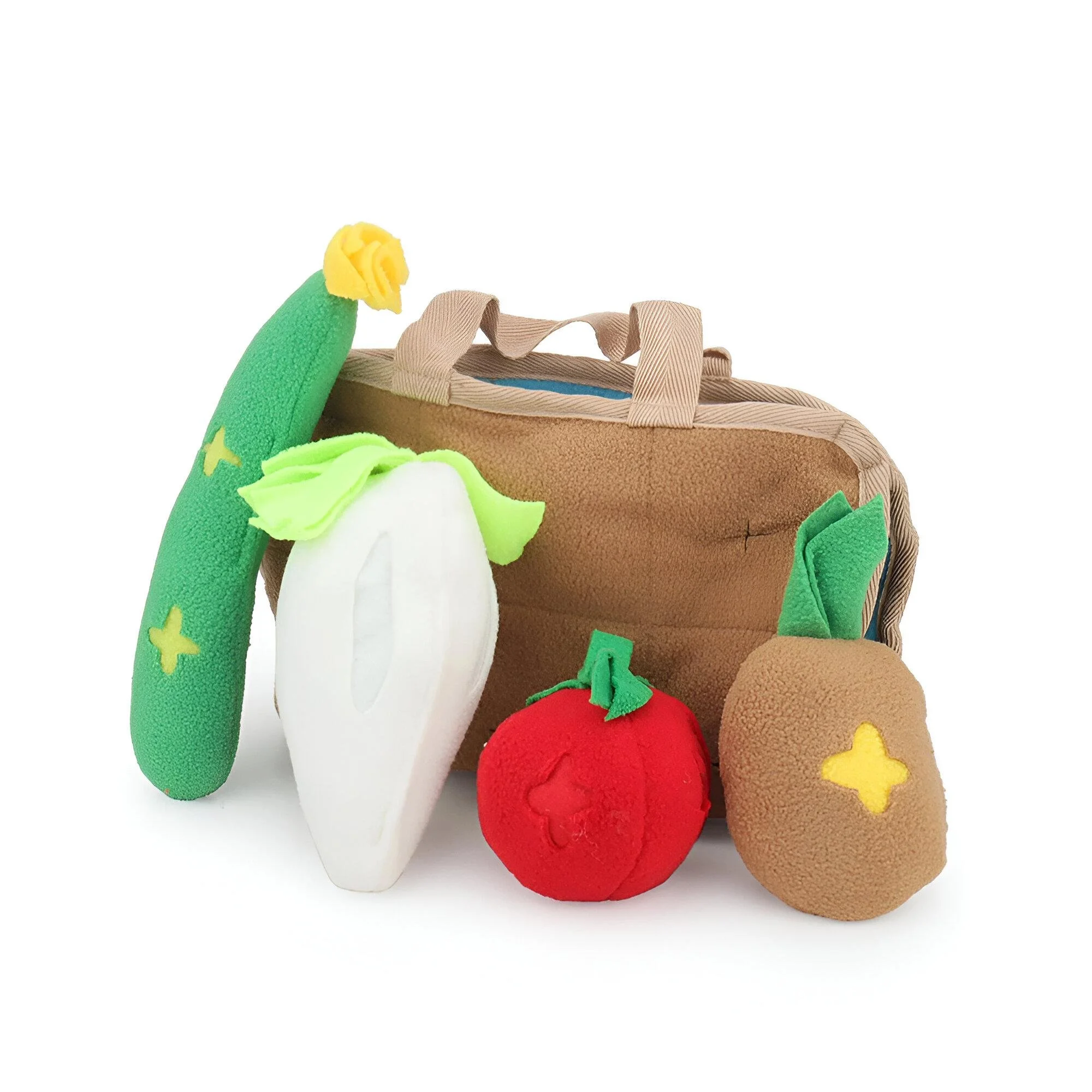
Snuffle mats use fabric strips or pockets to hide food. They are excellent for scent work and calmer eating. They are better for dogs that sniff patiently than for dogs that shred fabric. They need regular washing and should not be left out for heavy chewers.
Puzzle feeders use sliders, lids, compartments, levers, or removable pieces. They can be great mental exercise, but difficulty must be introduced gradually. If the dog has never used a puzzle, start with the easiest setting. A difficult puzzle does not make the dog smarter if the dog becomes angry or quits.
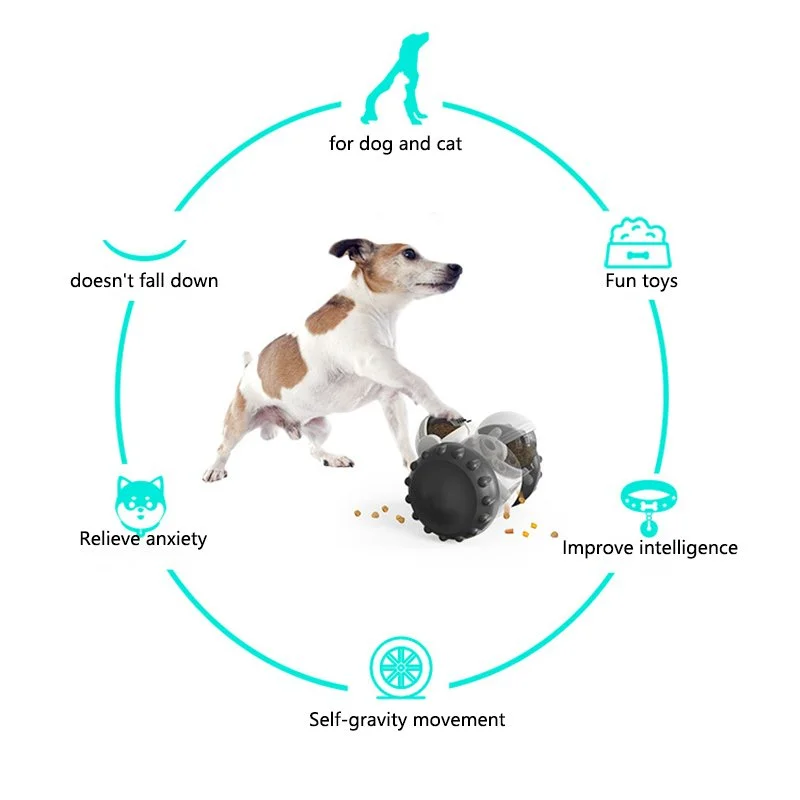
Rolling treat dispensers release food when the dog pushes, rolls, or tips the toy. They are useful for dogs that need movement with meals. The #1761916 slow feeder belongs here. Its tumbler design releases treats through motion, which can stretch mealtime and add coordination. Use it in a clear space so it does not roll under furniture.
Soft treat-hiding toys combine slow feeding with sniffing and gentle mouth use. They work well for puppies, seniors, small dogs, and calmer dogs, but not for fabric destroyers.
Hand feeding during training is also a slow feeder method. Using part of breakfast for cues, recall, leash work, or calm behavior can slow the meal and build skills. It does require owner time, but it can be the most targeted option.
The best homes often use two or three formats instead of one. A bowl for rushed mornings, a rolling toy for active days, and a snuffle game for calm evenings can cover different needs.
How To Introduce A Slow Feeder Without Frustration
The first session should be easy. Many owners make the mistake of filling a puzzle to maximum difficulty and expecting the dog to solve it. The dog may bark, scratch, chew, flip the toy, or walk away. That is not stubbornness. It is poor setup.
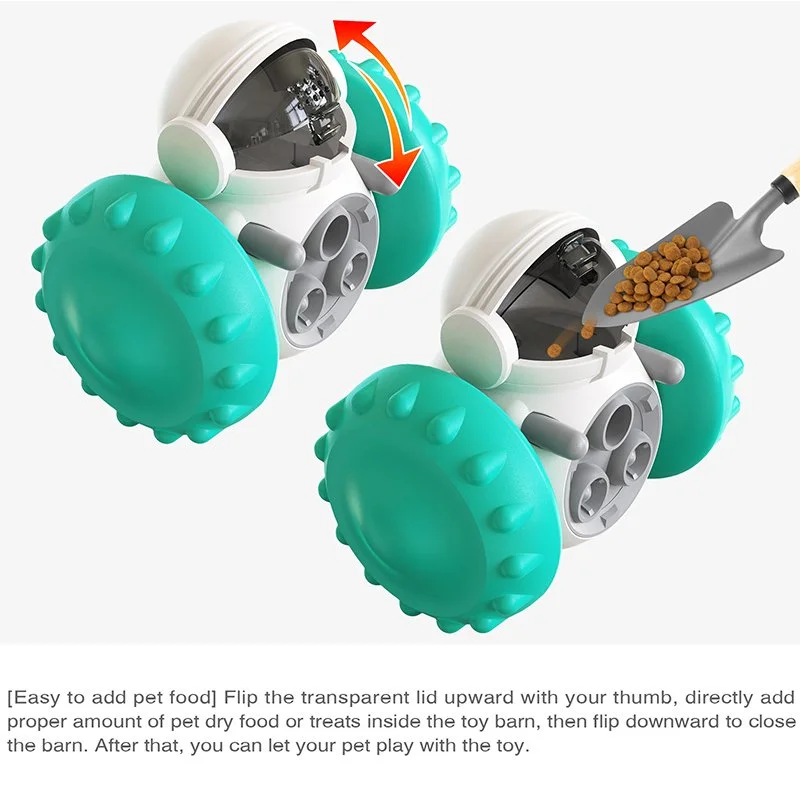
Start with a small amount of food. Let the dog see you put food into the feeder. If using a rolling dispenser like #1761916, place a few pieces where they can fall out quickly. Roll the toy once so the dog understands movement creates food. Then step back and let the dog try.
Keep the first session short. One or two minutes of success is better than ten minutes of confusion. You can feed the rest of the meal from a normal bowl if needed. The goal is to build the concept.
Use easy food first. Dry kibble works well in many rolling toys. Sticky wet food may clog openings or make cleaning harder unless the feeder is designed for it. Treats should fit through the opening without jamming.
Use a non-slip surface. If the feeder slides too fast, the dog may chase and become frustrated. A rug or mat can keep the activity controlled. For rolling toys, use a safe open area away from stairs, breakable items, and furniture gaps.
Praise calm problem solving. Do not hover, grab the toy repeatedly, or scold the dog for mistakes. If the dog starts chewing the feeder, interrupt calmly and make the task easier next time.
Increase difficulty only after the dog understands the game. Slow feeding should feel like work the dog can win.
Cleaning Matters More Than Owners Think
A slow feeder touches saliva, food dust, crumbs, oils, and sometimes wet food. If it is not cleaned, it can smell bad and become unpleasant or unhygienic. The more complex the feeder, the more cleaning matters.
Bowls with ridges need careful washing between grooves. Snuffle mats need drying and laundering. Puzzle feeders need compartments opened and checked. Rolling dispensers need lids removed and interiors cleaned. A toy that looks clean from the outside may still hold crumbs inside.
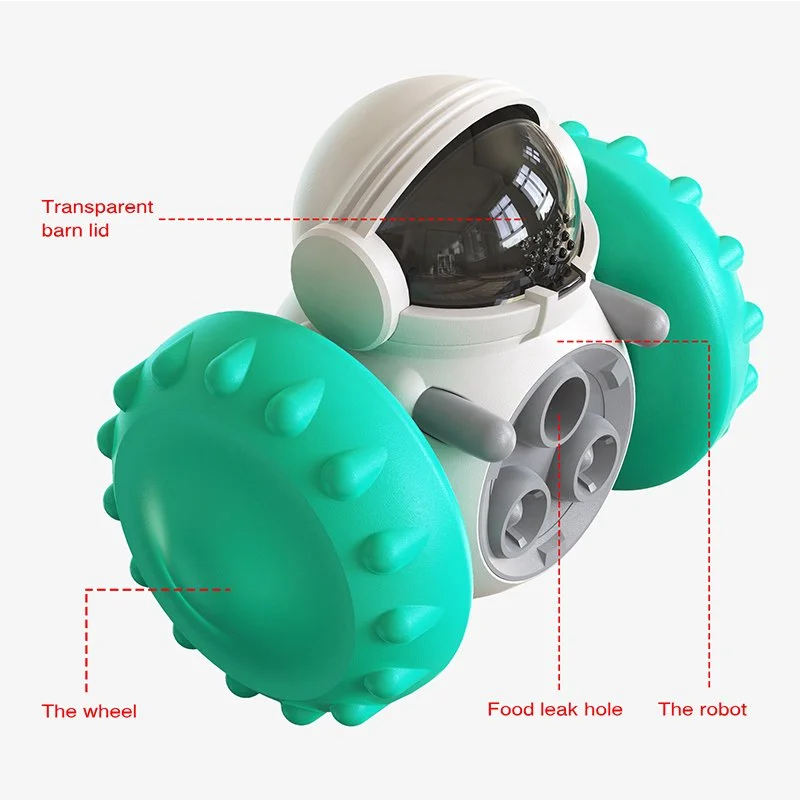
The #1761916 product has a removable lid, which is useful because treat-dispensing toys should be easy to fill and clean. After each use, check for trapped kibble, moisture, cracks, and bite marks. Let the toy dry fully before storing.
Avoid leaving food in a feeder all day. Old food can attract insects, create odor, or encourage the dog to chew the toy when the meal is over. Slow feeders should be part of a routine: fill, use, clean, dry, store.
Inspect materials often. Plastic can crack. Rubber can split. Fabric can fray. Small pieces are a swallowing risk. If a feeder becomes damaged, retire it rather than trying to stretch its life.
Cleaning is not a side detail. It determines whether the feeder remains safe and appealing over time.
When Slow Feeders Can Backfire
Slow feeders are useful, but they are not perfect for every dog in every situation. They can backfire if the challenge is too hard, the dog guards food, the material is wrong, or the owner uses the feeder as a substitute for supervision.
Frustration is the most common problem. If the dog barks at the feeder, paws violently, flips it across the room, or chews the plastic, the setup needs adjustment. Make the food easier to access or switch to a different style.
Food guarding can increase around puzzles because the food is spread out and takes longer to obtain. In multi-dog homes, feed dogs separately. Do not let one dog hover over another dog's slow feeder. Do not allow children to take food toys away during use.
Noise can bother some dogs. Hard plastic tumblers on tile floors can be loud. If the sound makes the dog nervous, use a rug or choose a quieter feeder.
Flat-faced dogs may struggle with deep ridges or narrow openings. Choose shallow designs and watch breathing comfort. Dogs with dental pain may avoid hard feeders. Seniors may need softer or elevated options.
Some dogs become too obsessed. If a treat dispenser remains on the floor after it is empty, the dog may chew it or keep searching. Put the feeder away when the meal is done.
The solution is not to avoid slow feeders. The solution is to choose the right one and manage it like a feeding tool, not a random toy.
Using Slow Feeders For Training And Behavior
Slow feeders can support behavior goals when used thoughtfully. They can help dogs settle after walks, reduce evening boredom, create a predictable meal routine, and give busy dogs a task during human mealtimes.
For dogs that beg at the table, use a slow feeder before or during the family meal in a separate place. The dog has its own job and is less likely to stare at people. This works only if the feeder is safe for that dog and the dog is not guarding it.
For dogs that become wild in the evening, use part of dinner in a puzzle or rolling dispenser. Mental work can help create a calmer transition into rest. Do not make the puzzle so exciting that it becomes a chase game on slippery floors.
For puppies, slow feeding can teach patience and problem solving. Keep it easy, clean, and supervised. Puppies chew everything, so the feeder should be removed after use.
For anxious dogs, slow feeders can give predictable structure. Food appears through a known process. The dog works, succeeds, and rests. Avoid noisy or difficult feeders for anxious dogs at first.
For high-energy dogs, a slow feeder is not a replacement for exercise, training, and walks. It is an additional outlet. A working breed that gets one puzzle feeder but no real activity may still be frustrated.
Food enrichment is powerful because it happens every day. Used well, it turns feeding into a small training and behavior opportunity.
How To Choose The Right Difficulty
Difficulty should increase slowly. A good feeder is challenging enough to extend the meal but easy enough that the dog stays calm. The dog should look engaged, not defeated.
Level one is visible food with minor obstacles. This includes shallow slow bowls, open snuffle mats, scatter feeding, or a rolling toy with a generous opening. Most beginners should start here.
Level two adds movement or simple searching. The dog may need to roll a toy, push food from pockets, or move around a mat. The #1761916 tumbler can fit this level once the dog understands that rolling releases food.
Level three adds problem solving. Compartments, sliders, lids, and smaller openings require patience. This is better for dogs that already understand food puzzles.
Level four is not necessary for most dogs. Very hard puzzles can impress owners but frustrate dogs. The goal is a better meal, not a test. If the dog is tired, old, anxious, or hungry, easier may be better.
Adjust difficulty by changing food size, opening size, portion amount, surface, and location. A rolling toy on a rug is easier than on tile. Larger kibble may release differently than small kibble. A small portion is less overwhelming than a full meal.
Success is the signal to continue. Frustration is the signal to simplify.
Size, Muzzle Shape, And Food Type Matter
Slow feeder choice should start with the dog's body. A tiny dog, a flat-faced dog, a deep-chested large dog, and a strong-jawed chewer should not all use the same feeder in the same way.
Small dogs need lightweight tools, but the tool still has to be large enough not to become a mouth object. A toy that is too small may be carried away and chewed instead of used for feeding. For small dogs, a rolling dispenser should move easily but not disappear under furniture every few seconds. Use a clear space and a mat border if needed.
Medium dogs often have the widest range of options. They may do well with slow bowls, rolling dispensers, snuffle mats, puzzle trays, and training meals. The main issue is personality. A calm medium dog may enjoy a puzzle. A high-drive medium dog may need a tougher product and more supervision.
Large dogs need size and stability. A feeder that slides around too much can create frustration. A small treat opening may release food too slowly and cause pawing or chewing. For large dogs, check that the toy cannot fit too deeply in the mouth and that the dog is not forced into awkward neck posture for the whole meal.
Flat-faced dogs need special care. Deep ridges, narrow channels, and small treat holes can be hard to access. Choose shallower designs and watch breathing. A feeder should slow eating without making the dog struggle to breathe comfortably.
Food type changes the experience too. Small round kibble rolls and falls differently from large flat kibble. Crumbly treats can leave residue. Soft food can clog a dispenser unless the product is designed for it. Before using a full meal, test a few pieces and see how they move through the feeder.
The #1761916 toy can be useful because it dispenses food gradually through motion, but that also means food size matters. If pieces are too large, they may jam. If pieces are too small, they may release too quickly. The owner should test and adjust rather than assume one setting works for every dog.
Dogs That May Need A Different Slow Feeding Format
Some dogs should not start with a rolling tumbler. A rolling feeder is active and interactive, which is useful for many dogs, but not ideal for every situation.
A dog recovering from surgery, injury, or illness may need a stable bowl or hand feeding instead. Rolling after food could create too much movement. During recovery, follow veterinary guidance and keep meals easy.
A dog with severe resource guarding may need a simpler and more controlled feeding setup. Food toys extend the time the dog spends guarding food. That can increase tension if people or pets are nearby. Feed separately and consider professional behavior help if guarding is intense.
A dog that destroys plastic should not be left with a plastic treat dispenser. If the dog bites pieces off, the risk outweighs the benefit. Use supervised feeding, a metal or ceramic slow bowl, or a different material.
A dog that becomes frantic around food may need training before puzzle feeding. Start with scatter feeding, hand feeding, or a very easy slow bowl. The goal is to teach calm access first.
A senior dog with arthritis may prefer a soft snuffle mat or raised slow bowl to a toy that moves away. Movement can be good, but not if it forces repeated bending, turning, or chasing.
A multi-pet household needs location management. Even a gentle dog may rush if another pet approaches. Use separate rooms, gates, crates, or closed doors during slow feeding. Slow feeding should reduce stress, not create competition.
Choosing a different format is not a failure. It is accurate matching. The best feeder is the one the dog can use calmly, safely, and repeatedly.
A Practical Slow Feeder Routine
Start with one slow-fed meal per day. Breakfast is often best because the dog is hungry and alert. Use a measured portion of regular food. Do not add extra calories just because the feeder has more space.
On day one, use the easiest version. Help the dog understand the tool. On day two, repeat the same setup rather than increasing difficulty immediately. On day three, make one small change if the dog is calm and successful.
Keep a normal bowl available as a backup. If the dog is sick, very tired, recovering from surgery, or stressed by household changes, an easy meal may be more appropriate. Slow feeding is beneficial only when the dog is comfortable enough to eat normally.
Rotate formats during the week. Use a slow bowl on busy mornings, #1761916 for controlled rolling enrichment, a snuffle mat on calmer days, and hand feeding during training. Rotation keeps meals interesting without making every meal complicated.
Clean after each use. Store the feeder away when empty. Inspect for damage. These small steps prevent most problems.
Track the dog's response. Is mealtime calmer? Does vomiting after meals decrease? Does begging reduce? Does the dog seem satisfied longer? Does the dog chew the feeder? The answers tell you whether the setup is working.
The right slow feeder routine should feel sustainable. If it is too messy, too hard, or too time-consuming, simplify it.
Final Recommendation
Slow feeder dog toys are useful because they turn a fast meal into structured enrichment. They can slow gulping, stretch mealtime, support better pacing, reduce boredom, and give the dog a daily mental task. The key is choosing a format that matches the dog's size, mouth, confidence, mobility, and eating style.
The best matched product for this article is the Interactive Dog Treat Leaking Toy and Slow Feeder (#1761916). It has five product images and fits the topic directly because its battery-free tumbler design releases food gradually as the dog rolls or shakes it. It is best for supervised slow feeding, treat dispensing, mental stimulation, and boredom reduction, especially when introduced at an easy difficulty first.
Do not replace every bowl overnight. Start with one easy slow-fed meal, watch the dog, clean the feeder properly, and adjust based on behavior. A good slow feeder should make mealtime calmer, longer, and more satisfying without turning food into a fight.