Article
Your Dog Is Smarter Than You Think: Why Mental Stimulation Beats Physical Exercise
Quick Answer
Your Dog Is Smarter Than You Think: Why Mental Stimulation Beats Physical Exercise: quick answer
A lot of owners know this dog: two walks, a game of fetch, maybe even a run, and the dog still comes home ready to chew the table leg, bark at the...
- Topic: Dog Enrichment.
- Related product category: pet-toys.
- This article keeps the main answer in the article copy and places relevant product context inside the guide.
The Dog Is Tired, But Still Not Satisfied
A lot of owners know this dog: two walks, a game of fetch, maybe even a run, and the dog still comes home ready to chew the table leg, bark at the window, follow everyone room to room, or pace like something is missing.
Something probably is missing. Not more miles. More mental work.
Physical exercise uses the body. Mental stimulation uses the nose, memory, impulse control, problem-solving, learning, and decision-making. Dogs need both. A dog can be physically tired and mentally under-employed at the same time, just like a person can be exhausted after a long commute and still feel restless from a day with no meaningful work.
The phrase "mental stimulation beats physical exercise" is a little too neat. A dog still needs movement, sunlight, social contact, and normal physical outlets. But for many modern household dogs, the missing piece is not another lap around the block. It is a chance to sniff properly, search, solve, wait, choose, learn, and finish a task.
Mental work does not have to be complicated. It can be five minutes of "find it," breakfast in a puzzle toy, a sniff walk where the dog is allowed to investigate, a new trick, a cardboard box game, or a structured tug session with rules. The difference is that the dog has to think instead of only burn energy.
If your dog gets enough exercise but still seems unsettled, enrichment is the place to look next.
What Counts as Mental Stimulation?
Mental stimulation is any safe activity that makes the dog process information and make choices. It is not just puzzle toys. Puzzle toys are one tool.
Sniffing counts because the dog is reading the environment. Training counts because the dog is learning patterns and responding to cues. Food puzzles count because the dog has to work out how to access the reward. Search games count because the dog uses scent, memory, and persistence. Calm settling can count too, because some dogs have to learn how to do nothing without becoming frustrated.
Good enrichment usually includes one or more of these jobs:
- use the nose
- solve a simple problem
- control impulses
- move the body with purpose
- make a choice
- earn food or play
- settle after activity
The best activities are not necessarily the hardest. A dog who has never used a puzzle feeder does not need an advanced maze. A dog who pulls through every walk does not need a more intense route. Start where the dog can succeed, then raise difficulty slowly.
Enrichment should leave the dog more regulated, not more frantic. If an activity creates barking, frustration, guarding, or obsessive behavior, it may be too hard, too exciting, or wrong for that dog.
Signs Your Dog Needs More Brain Work
Mental under-stimulation can look like "bad behavior," but the pattern matters.
A dog may need more enrichment if it:
- destroys household items after normal walks
- barks at small sounds because nothing else is happening
- paces or whines after physical exercise
- constantly steals objects to start a chase game
- follows people from room to room without settling
- digs indoors or tears bedding
- eats too quickly and then looks for trouble
- becomes demanding at the same times each day
- loses interest in ordinary toys quickly
These signs do not prove boredom by themselves. Pain, anxiety, medical issues, lack of sleep, separation-related distress, poor training history, and household stress can look similar. If behavior changes suddenly or seems severe, involve a veterinarian or qualified trainer.
For normal boredom and under-use, though, enrichment can change the day quickly. Dogs like having jobs. The job does not need to be heroic. It needs to be real enough that the dog has to engage.
1. Let the Walk Become a Sniff Walk
Many dogs go on walks but are not allowed to use the walk properly. They are hurried past every interesting smell, corrected for stopping, and marched through the neighborhood like the goal is distance only.
Distance matters for some dogs. Sniffing matters for almost all dogs.
A sniff walk is not a free-for-all. It is a walk where the dog is given time to investigate safe smells. The pace is slower. The route may be shorter. The dog is allowed to stop, scan, sniff grass, check posts, and gather information.
This can be surprisingly tiring because the dog is doing cognitive work. Smell is not decoration to dogs. It is information: who passed, how long ago, what direction, what changed, what is familiar, what is new.
To start, choose a low-pressure route. Use a comfortable harness or collar setup. Let the dog sniff for several seconds before moving on. Reward check-ins. Avoid dragging the dog away from every smell unless there is a safety reason.
For dogs who pull hard, use structured sniff breaks. Walk politely for a short distance, then release with a cue like "go sniff." The sniff becomes a reward and a job.
For senior dogs, reactive dogs, and high-energy dogs, sniff walks can be especially useful because they provide enrichment without requiring constant speed. A 20-minute sniff walk can be more satisfying than a 20-minute sidewalk march.
2. Stop Feeding Every Meal From a Bowl
A bowl is efficient. That is the problem. A dog can finish a meal in under a minute and then have the same empty day it had before.
Puzzle feeding turns food into work. It can be as simple as scattering kibble in grass, using a snuffle mat, putting food in a rolled towel, using a treat ball, or offering a beginner puzzle tray. The dog has to search, push, lick, paw, sniff, or manipulate something.
Start easy. If the puzzle is too hard, the dog may bark, chew the puzzle, flip it aggressively, or give up. The first goal is confidence. Let the dog win. Once the dog understands the game, increase difficulty by hiding food more deeply, using fewer openings, adding distance, or asking for calm before release.
Use measured meals, not endless treats. Enrichment should not accidentally add a second breakfast. If your dog eats kibble, use part of the normal meal. If your dog eats wet food, consider a lick mat or stuffable toy that can be cleaned thoroughly.
Food puzzles are especially useful for dogs who inhale meals, get restless after eating, or need a quiet activity while the household is busy. They are also helpful for rainy days, recovery periods, and dogs who cannot do heavy exercise.
Inspect food toys. Cracks, chewed plastic, loose parts, and dirty grooves can create safety and hygiene problems. Wash them often.
3. Teach "Find It"
"Find it" is one of the best enrichment games because it costs almost nothing and scales with the dog.
Start with the dog watching. Drop one treat on the floor and say "find it." Let the dog eat it. Repeat several times. Then place the treat slightly farther away. Then hide it behind a chair leg, under the edge of a towel, or beside a box. The dog learns that the cue means search with the nose.
Keep early sessions easy. The dog should feel successful. If the dog wanders away, the hiding place is too hard or the reward is not worth the effort.
Once the dog understands, build difficulty:
- hide treats in another room
- use multiple small piles
- place food at nose height on safe surfaces
- hide a favorite toy instead of food
- ask the dog to wait while you hide the reward
- use boxes or paper bags with safe openings
"Find it" works for young dogs, adult dogs, seniors, small spaces, bad weather, and low-budget households. It can also redirect energy. A dog who wants to bark out the window may settle after five minutes of searching.
Use safe foods and avoid hiding treats in places you do not want the dog investigating later. Do not teach the dog to dig through laundry, trash, shoes, or children's bags unless you want that behavior repeated.
4. Use Puzzle Toys Without Creating Frustration
Puzzle toys are useful, but owners often make them too hard too fast. A dog does not become smarter by failing for twenty minutes. It becomes frustrated.
Choose the first puzzle based on your dog's confidence, not your ambition. A beginner puzzle should have visible food and easy movement. The dog should learn that paws, nose, and mouth can change the object and release rewards.
Watch the dog's body language. Healthy problem-solving looks focused but flexible. The dog sniffs, tries, pauses, changes strategy, and returns. Frustration looks louder and rougher: barking, biting the puzzle, pawing frantically, throwing it, or walking away in stress.
If frustration appears, lower the difficulty immediately. Open compartments, use higher-value rewards, show the dog the movement, or switch to a simpler game. Enrichment is supposed to build skill.
Rotate puzzle types:
- rolling dispensers for movement
- snuffle mats for scent work
- lick mats for calming
- slider puzzles for paw/nose problem-solving
- stuffed rubber toys for longer chewing work
- cardboard box games for novelty
Different puzzles use different skills. That variety is more valuable than buying the hardest toy in the store.
5. Train Tiny Tricks
Training is mental enrichment when it is short, clear, and rewarding. The trick itself is not the point. The learning process is.
You can teach useful cues like hand target, go to mat, spin, back up, chin rest, find your toy, drop, wait, or put toys in a basket. Keep sessions short: three to five minutes is enough for many dogs.
Use small rewards and clear criteria. Ask for one piece of behavior, reward, repeat, and stop before the dog gets tired. A dog who ends training wanting more will learn faster than a dog drilled until it disengages.
Old dogs can learn. Senior dogs may need slower pacing, softer surfaces, clearer hand signals, and shorter sessions, but learning can still be enriching. Avoid tricks that stress joints or require uncomfortable positions.
Training also helps dogs who are physically active but mentally scattered. A dog who can run for an hour but cannot wait for two seconds may need impulse-control games more than another sprint.
Simple exercises like "wait while I place the toy," "touch my hand," or "drop and restart tug" turn play into thinking.
6. Make Play Rule-Based
Fetch, tug, and toy play become more mentally useful when they include rules. Without rules, they may only build arousal. With rules, the dog has to listen, control impulses, and switch between action and calm.
For fetch, ask for a sit or brief wait before the throw. Release the dog. Reward return. Trade for the toy. Throw again. The game now includes patience, chase, retrieve, release, and restart.
For tug, teach take it, drop, and wait. Tug for a few seconds, go still, cue drop, reward, then restart. Letting the dog win sometimes keeps the game fun. The point is not domination. It is communication.
For ball play, hide the ball instead of throwing it every time. Ask the dog to search. Use a plush handle or textured part to vary how the dog grips and carries. A game that combines movement and searching is more mentally complete than endless high-speed throws.
If play makes your dog wild, lower the intensity. Use shorter rounds, more sniff breaks, or calmer toys. Mental stimulation should improve self-control, not remove it.
Match Enrichment to the Dog
Different dogs need different kinds of brain work. A good enrichment plan starts with the dog you have, not the dog on social media solving a twelve-step puzzle.
A puppy needs short, easy wins. Scatter a few pieces of food, teach a hand target, use a beginner puzzle, and practice calm handling. Puppies do not need complicated brain games as much as they need safe exploration and good habits.
An adolescent dog often needs structure. This is the dog who may have energy, confidence, and poor impulse control all at once. Use sniff walks, rule-based tug, food puzzles, short training sessions, and settle practice. Alternate action with calm so the dog learns to come down after excitement.
A high-drive adult dog may need layered work. A normal walk may not be enough because the dog wants a task. Combine sniffing, training, toy search, food work, and controlled play. Do not rely only on fetch. Endless fetch can build stamina without teaching thoughtfulness.
A nervous dog needs predictable enrichment. Avoid loud puzzle toys, sudden motion, or games that create pressure. Use sniffing, licking, simple food searches, and choice-based exploration. Confidence is the goal.
A senior dog may need lower-impact options. Snuffle mats, scent games, gentle trick review, easy puzzles, and slow walks can keep the mind engaged without stressing joints. If the dog suddenly loses interest in activities it used to enjoy, check comfort and health.
A dog recovering from injury may need mental work more than ever. Food puzzles, scent games, calm training, and chew routines can help fill the gap when physical exercise is limited. Keep everything within veterinary restrictions.
The best plan respects both ability and mood. Some days the dog needs a challenge. Some days the dog needs an easy win.
Common Mental Stimulation Mistakes
The first mistake is making everything too hard. Owners buy advanced puzzles because they look impressive, then the dog barks, bites the toy, or walks away. Start at the beginner level even if your dog is smart. Smart dogs still need to learn the rules of a new game.
The second mistake is turning enrichment into constant excitement. Not every brain game should raise arousal. A day full of fetch, squeaky toys, and frantic puzzle work may leave the dog more wired. Mix active games with calming work: sniffing, licking, chewing, mat training, and slow searches.
The third mistake is overusing food without measuring it. Food is a useful reinforcer, but enrichment should fit the dog's diet. Use part of meals, small rewards, or non-food rewards when appropriate. For dogs with medical diet needs, choose activities that do not depend on extra treats.
The fourth mistake is skipping safety. Puzzle toys can be chewed apart. Towels can be swallowed. Cardboard can be eaten. Balls can be too small. Snuffle mats can become shred toys. Test new activities while you are present before leaving the dog alone with them.
The fifth mistake is ignoring rest. Dogs need sleep. A restless dog is not always asking for another game. Sometimes the dog needs help settling, a quieter environment, or a routine that does not keep restarting arousal all evening.
The sixth mistake is changing everything at once. If you add four new toys, a new walking route, a new feeding schedule, and a new training plan in one day, you will not know what helped. Add one change, watch the result, then adjust.
Enrichment should make the household calmer over time. If it makes the dog louder, rougher, or more demanding, the plan needs refining.
Product Spotlight
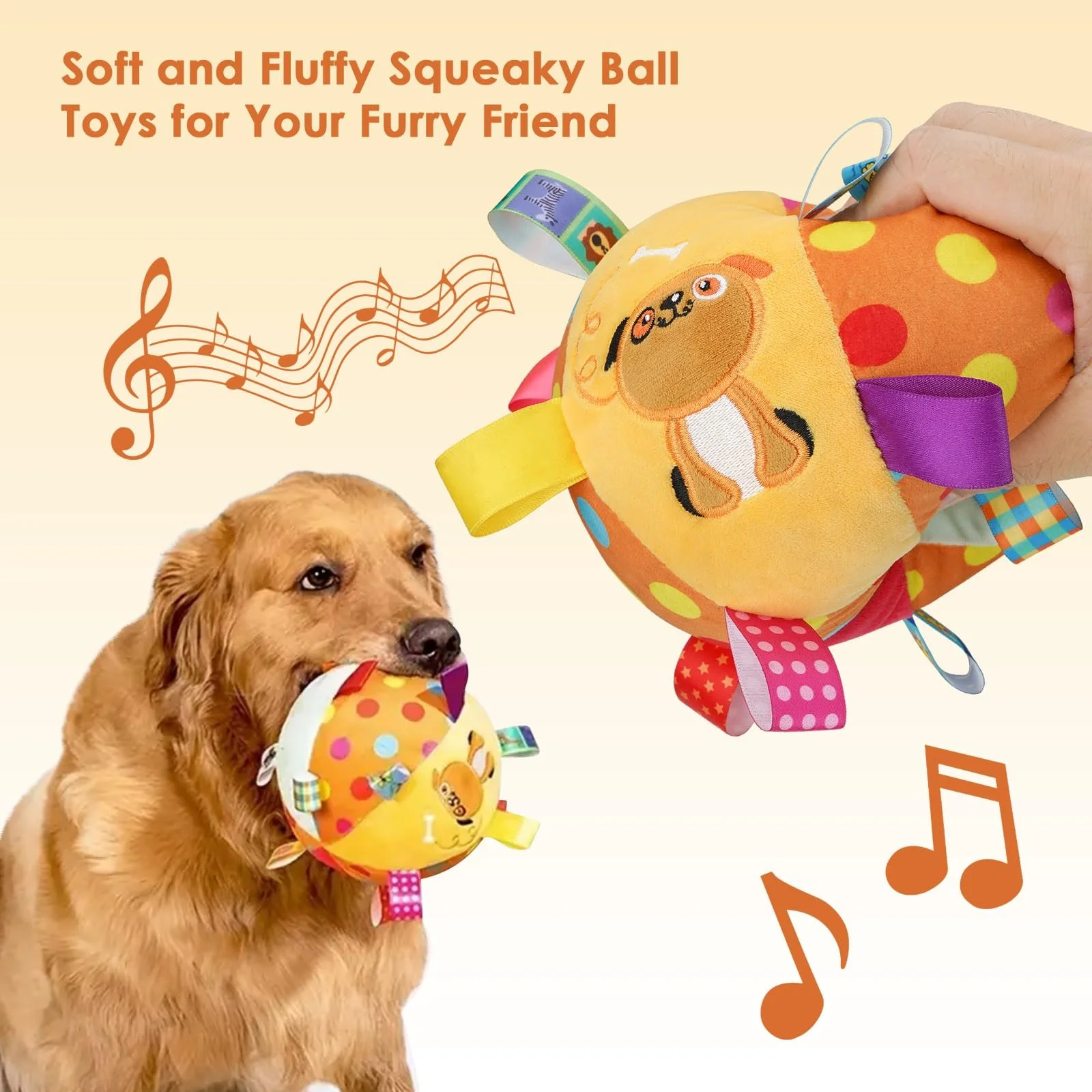
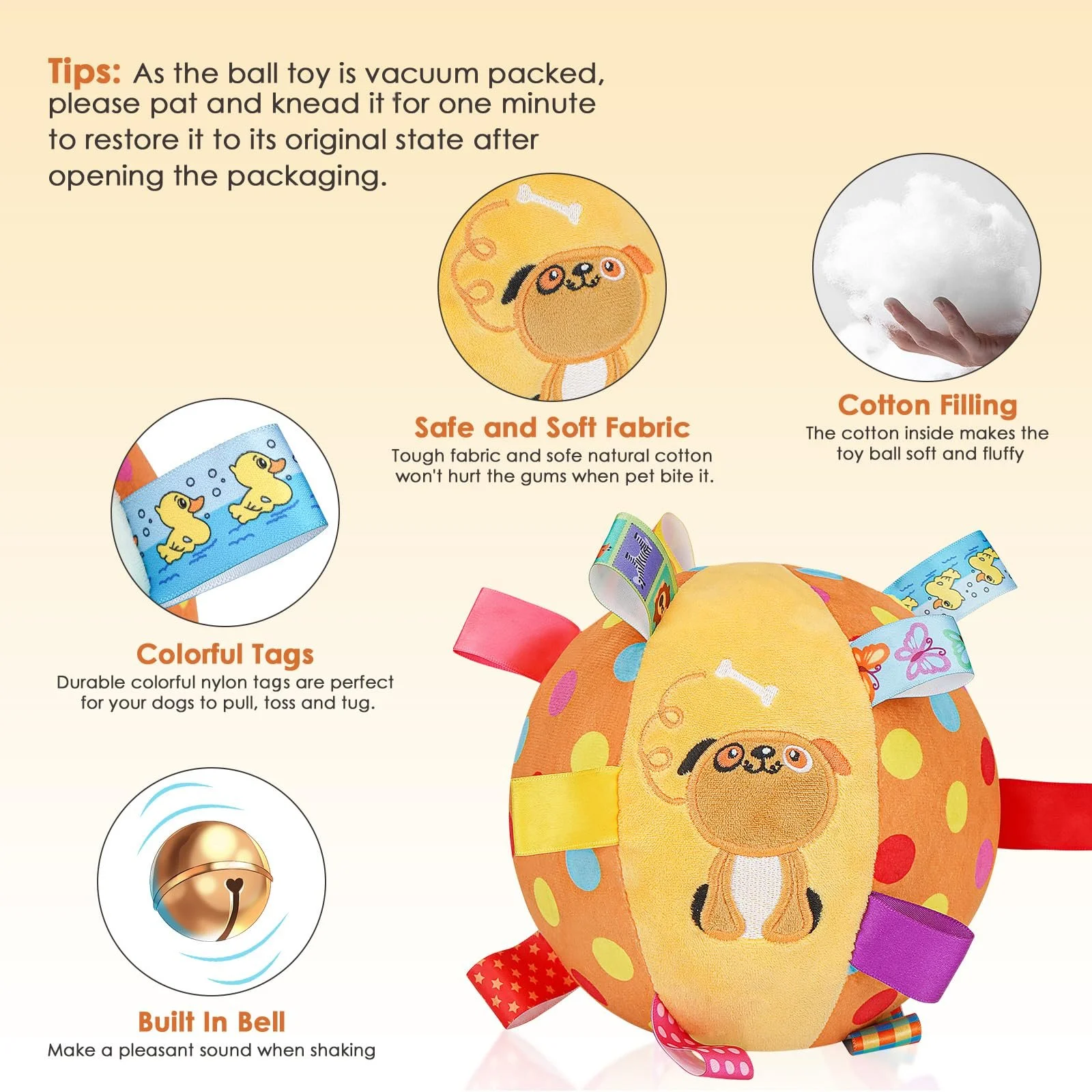
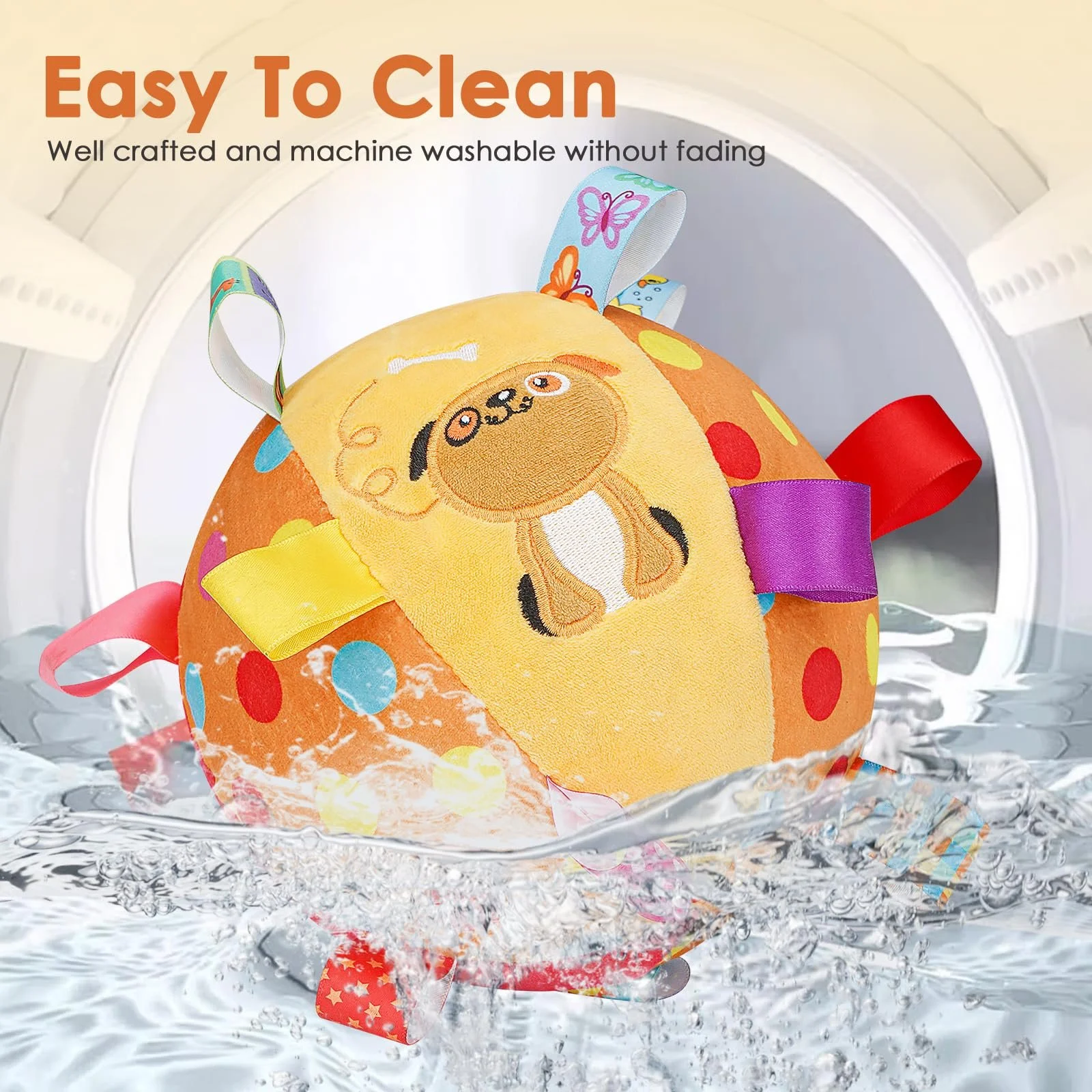
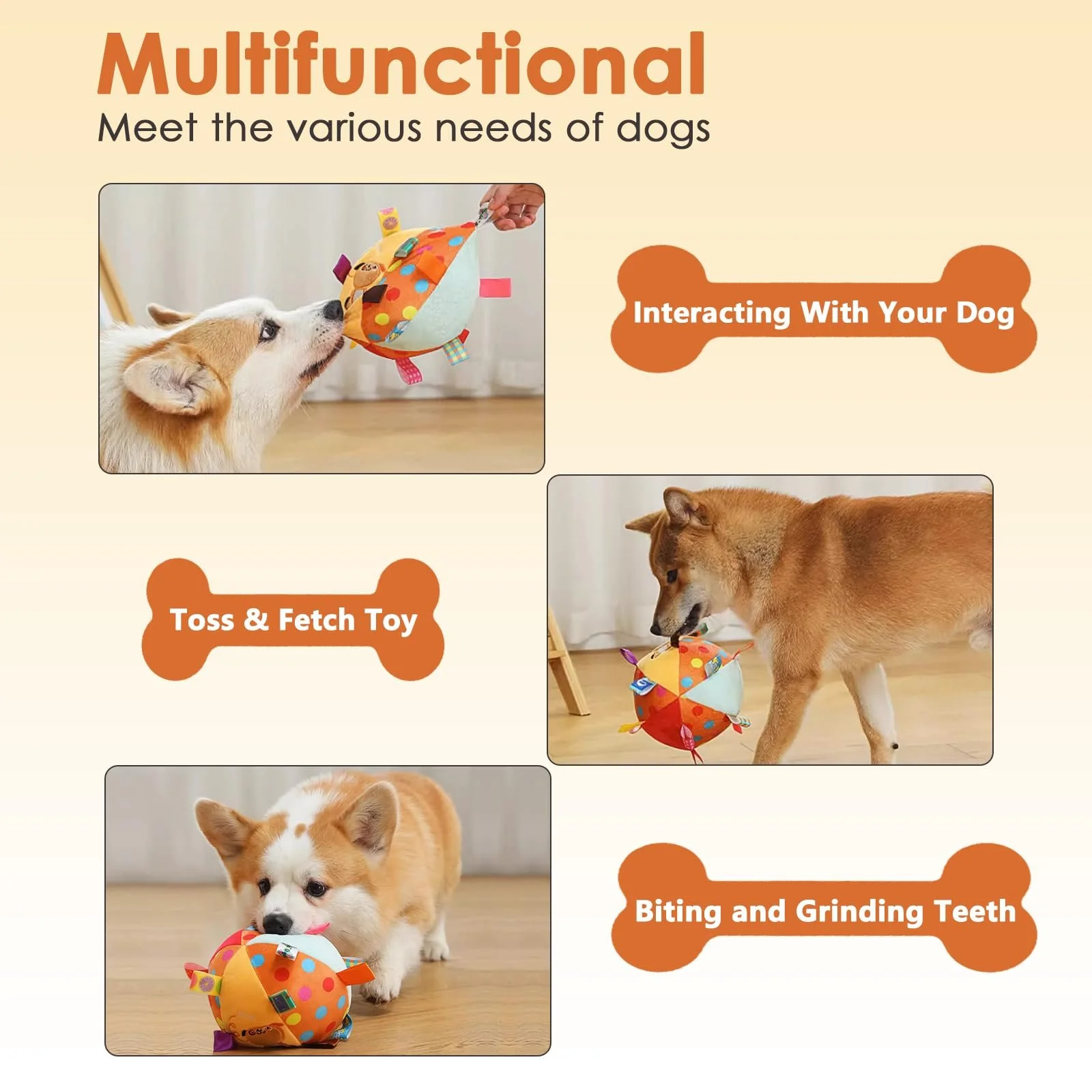
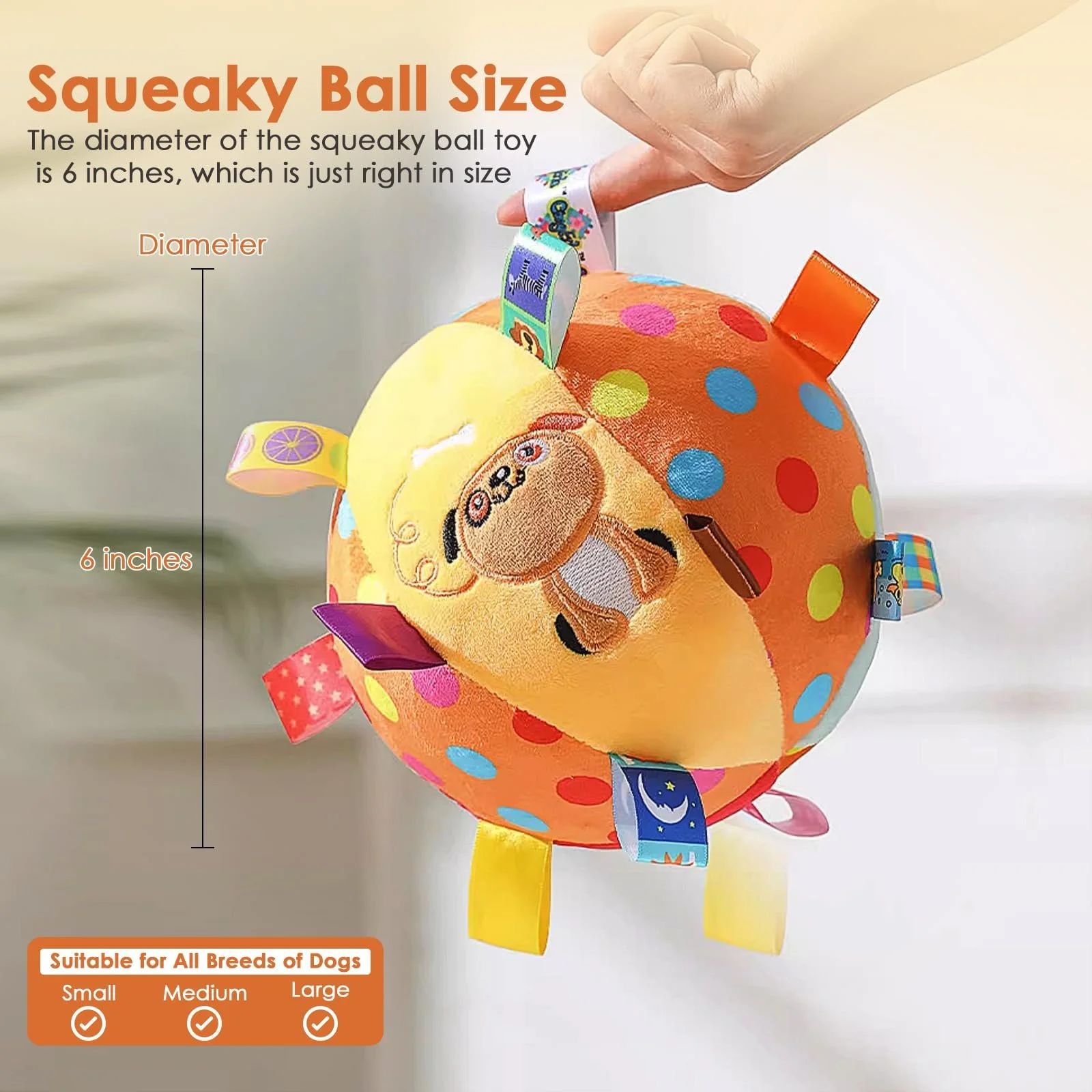
Interactive Dog Ball Toy with Plush Handle (#1801413)
This toy fits best as a bridge between movement and problem-solving. The ball shape can support chase and carrying, while the plush handle gives the dog a different grip point for fetch, hide-and-seek, or structured play. It should be used as part of a rotation, not as the only enrichment object.
Best use: teach a simple search game. Let the dog sniff the toy, hide it in an easy place, say "find it," and reward when the dog locates it. Then use it for short fetch or trade practice. If your dog chews the plush handle aggressively or tries to remove parts, keep it as a supervised toy only.
For dogs who need more mental work, pair this toy with food puzzles, sniff walks, and short training sessions. The toy starts the game; the routine creates the enrichment.
A Weekly Mental Stimulation Plan
You do not need a complicated schedule. You need variety across the week.
Monday: breakfast in a puzzle feeder and a slow sniff walk.
Tuesday: five minutes of trick training and a short game of find it.
Wednesday: stuffed food toy during a quiet household period.
Thursday: rule-based tug or fetch with wait, take it, and drop.
Friday: cardboard box search game with treats or a favorite toy.
Saturday: new walking route with extra sniff time.
Sunday: lower-intensity day with a chew, lick mat, or gentle training review.
Repeat what works. Change what does not. The schedule is a starting point, not a rulebook.
For busy households, even one enrichment slot per day can help. Use breakfast, before work, after dinner, or the time when the dog usually gets restless. Predictable enrichment is better than occasional huge efforts.
Three 10-Minute Templates
When you are tired, use a template instead of inventing a new plan.
The before-work reset
Spend two minutes on a calm cue your dog knows, such as hand target or sit. Then scatter part of breakfast in a snuffle mat or safe search area for five minutes. Finish with three quiet minutes on a mat, chew, or lick mat. This works for dogs who get restless when people leave.
The rainy-day brain break
Use three cardboard boxes or cups. Hide a treat in one while the dog watches. Say "find it." Repeat several times, then make the hiding place slightly less obvious. Add a short toy search at the end. The dog gets scent work, memory, and problem-solving without needing outdoor space.
The evening downshift
Start with five minutes of rule-based tug or fetch: take it, play, drop, wait, restart. Then switch to a slower food puzzle or chew. End before the dog gets wild. This template is useful for dogs who become demanding after dinner.
These templates are not magic. They are repeatable. That is the point. A dog who gets small, predictable jobs every day often behaves better than a dog who gets one huge enrichment effort once a week.
Keep notes for a few days. Which template made the dog calmer? Which one made the dog more excited? Which one was too easy? Adjust the next session based on the answer.
How to Raise Difficulty Safely
Enrichment should progress like training. Make one thing harder at a time.
For sniff games, increase distance before hiding difficulty. For puzzles, add one closed compartment before locking every compartment. For training, add duration before distraction. For fetch or tug, add a short wait before asking for a long one.
If the dog fails twice in a row, help. Lower the difficulty. Show the movement. Move the treat closer. Use a simpler cue. The goal is not to test the dog; it is to build the dog's ability to solve.
End sessions while the dog is still interested. A few successful repetitions are better than pushing until the dog is tired, frustrated, or bored.
Mental stimulation is not about making life harder for the dog. It is about giving the dog solvable work.
How to Tell It Is Working
Good enrichment usually changes the hours after the activity. The dog may drink water, groom, nap, chew calmly, or settle near the family without demanding constant attention. You may see fewer stolen objects, less pacing, and less window barking at predictable times.
Do not judge only by visible exhaustion. A dog does not need to collapse for enrichment to be useful. Calm recovery is a better sign than dramatic tiredness.
If the dog becomes more demanding, the activity may be too exciting or too inconsistent. If the dog barks at the puzzle, it may be too hard. If the dog finishes instantly and looks for trouble, it may be too easy. If the dog guards the toy or food, the setup needs management and possibly professional help.
Track one behavior for a week. For example: evening pacing, shoe stealing, demand barking, or settling after dinner. Add one enrichment routine and watch whether that behavior changes. This keeps you from guessing.
When Enrichment Is Not Enough
If your dog remains destructive, panicked, aggressive, or unable to settle despite appropriate exercise and enrichment, look deeper. The issue may be separation distress, pain, fear, medical discomfort, lack of sleep, or a training gap.
Watch for warning signs:
- sudden behavior changes
- destruction focused on exits
- drooling or panic when alone
- self-injury
- appetite changes
- house soiling in a trained dog
- aggression around food or toys
- excessive panting or pacing
Toys and games are not substitutes for veterinary care or behavior support. They are part of a healthy daily structure.
For most bored dogs, though, a little brain work changes everything. Let the dog sniff. Make food take effort. Teach something small. Hide a toy. Add rules to play. Give the mind a job, and the body often becomes much easier to live with.
Browse Dog Enrichment products