Article
Small Kitchen Upgrades for Apartments (6 Compact Picks That Earn Their Space)
Quick Answer
Small Kitchen Upgrades for Apartments (6 Compact Picks That Earn Their Space): quick answer
The average apartment kitchen is a math problem with no good answers. A studio or one-bedroom unit usually squeezes the whole kitchen into 50 to 100 square feet: one short stretch of counter, two to four drawers, a two-burner rang
- Topic: Kitchen Dining.
- Related product category: kitchen-dining.
- This article keeps the main answer in the article copy and places relevant product context inside the guide.
Editorial note: Product references, prices, and listed features were checked in the PickByU catalog on August 7, 2026. These are space-first recommendations for small kitchens, not hands-on test results; every claim below is based on design and specifications.
Why Apartment Kitchens Need Their Own Rulebook
The average apartment kitchen is a math problem with no good answers. A studio or one-bedroom unit usually squeezes the whole kitchen into 50 to 100 square feet: one short stretch of counter, two to four drawers, a two-burner range 鈥?or in older buildings, a single burner and a hot plate. There is no pantry, no mug cabinet, no dishwasher. And because you rent, there is no renovation either: no new cabinets, no built-in shelving, no fixtures that require a landlord's blessing and a patch kit on move-out. The typical renter stays only a few years, so most of us live under those rules 鈥?and the standard "small kitchen" advice quietly assumes you own the place.
That's why the upgrades in this guide work differently. Every pick below has to pass what we call the earn-your-space test: it must do a job no other item in your kitchen already does, in a footprint you can actually spare, without drilling, wiring, or asking permission. Nothing here changes your kitchen's layout. A stackable mug, a nesting measuring set, a sauce dish that doubles as decor: upgrades you carry into a rental with one hand and carry out when you move. They don't fight the apartment; they work around it.
We kept the list to six because small kitchens fail on quantity, not selection 鈥?buying six more organizers to hold the organizers you already have is the classic trap. Each item here earns its slot by replacing something: a tangled drawer, a mug tower, a second pot you lack room for. We're the editors behind the PickByU home catalog; every product below is a real listing, price checked August 7, 2026, and each section ends with the honest limit, because an upgrade you resent is the opposite of an upgrade.
The 6 Compact Upgrades That Earn Their Space
Each section follows the same shape: the compact-kitchen problem the item solves, what you're getting from the specs, who it's for, why it earns its space, and the honest limit 鈥?then a link to the product page.
1. Glass Coffee Mug with Walnut Handle 鈥?$18.95
The compact-kitchen problem it solves: the mug question. In a small kitchen the problem was never choosing a mug 鈥?it's where mugs live. Counters are for prep, cabinets are full of plates and pans, so the average apartment mug ends up on a windowsill, a shelf, or a counter corner next to the toaster. And the mug itself is usually oversized: the standard 12-ounce mug assumes a drip-coffee life with room to spare. In a kitchen where every inch is spoken for, a full-size mug is counter space you're paying for twice.
What you're getting: a small glass coffee cup with a walnut wood handle, listed at 3 ounces. The key spec is the capacity: 3 ounces is espresso territory 鈥?a proper double shot, a strong moka-pot pour, a small-brew cup for concentrated coffee. The glass is listed as heat-resistant, so it's built for hot drinks despite its size, and the walnut handle makes it feel like an intentional cup rather than a measuring glass. Small enough to tuck between the kettle and the spice rack, narrow enough for a windowsill.
Who it's for: espresso and small-brew drinkers first 鈥?the moka-pot crowd, the AeroPress crowd, anyone whose daily coffee is strong and short. Beyond that, any small kitchen where the only free spots are the awkward gaps nothing else fits 鈥?it also works as a serving cup for a small dessert.
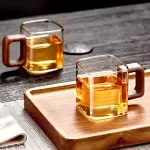
Why it earns its space: the math is the message: a 3-ounce cup fits in gaps where nothing else fits. It's the difference between maintaining a mug collection and owning the one cup you drink from daily.
Honest limits: 3 ounces is espresso territory, full stop. If you drink 12-ounce drip coffees, this cup will frustrate you twice a day 鈥?it's not a replacement for your regular mug, it's a replacement for the oversized ones you don't need. Glass breaks when dropped. And the walnut handle is wood: it's the delicate point of the design, so don't leave it soaking, and check care guidance before assuming it can take a dishwasher cycle.
2. Cute Ceramic Cat Face Sauce Dish 鈥?$27.49
The compact-kitchen problem it solves: condiment chaos. Life in a small kitchen runs on bowl-and-dip meals 鈥?dumplings, spring rolls, wraps, grain bowls 鈥?because they're one-burner friendly and one-pot clean. But sauces need a vessel, and the apartment's answer is usually a cereal bowl ten times too big, or a puddle of sauce on the plate where it migrates into everything. There's no drawer space for a rack of ramekins. A small condiment plate solves the daily problem: a properly sized home for one portion of sauce, small enough for the corner of a plate or a tiny tray.
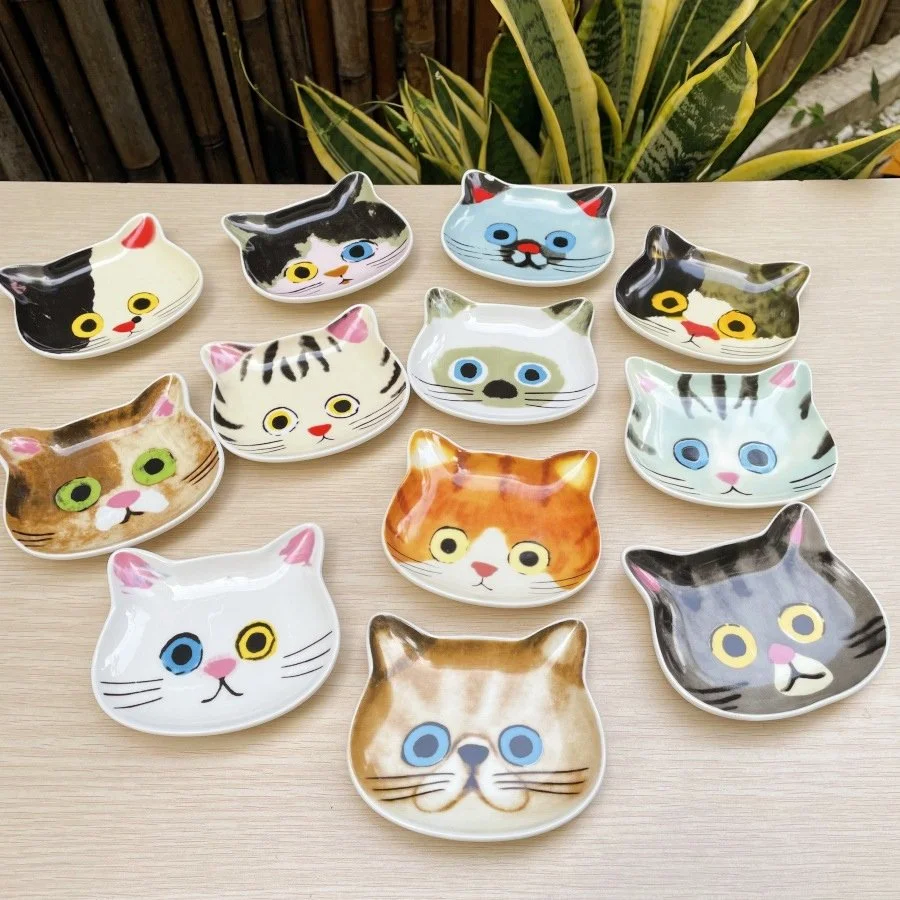
What you're getting: a ceramic sauce dish with a cat face design, positioned as a creative small condiment plate. The specs are in the name: it's a sauce dish 鈥?sized for one portion of dipping sauce, soy, chili oil, or ketchup 鈥?and it's ceramic, which means it's heavy enough to stay planted on a counter corner. The cat face design matters more than it sounds: it turns a utility object into something you're happy to leave out, which in a kitchen with no room for decor is a real feature. The shallow dish shape also corrals sauce so it doesn't spill over the edge mid-dip.
Who it's for: the single-burner cook whose meals are dip-heavy; people who eat at the counter and want the meal to look like a meal; cat lovers decorating one object at a time; anyone who has accepted that every dish must double as the decor.
Why it earns its space: it's a sauce dish that also decorates. In a kitchen with no shelf space for ornaments, a functional object that looks good is the only kind of decor that earns its place.
Honest limits: this is a sauce dish, not a serving piece. A few tablespoons of capacity means it fails at cereal, salad, and side portions 鈥?if you need it to do a second job, it'll do neither well. Ceramic chips when dropped, and a small dish on a counter edge is easy to knock off. And at $27.49 you're paying gift-quality pricing for a function a $2 ramekin performs identically. Buy it because the design is something you want to look at every day 鈥?if efficiency is the goal, buy the ramekin.
3. Mini Ceramic Chocolate & Cheese Melting Mug with Fork 鈥?$29.49
The compact-kitchen problem it solves: the second burner you don't have. In a one-burner kitchen, dinner occupies the burner and dessert gets skipped, because melting chocolate or cheese the traditional way needs a pan, a bowl, a whisk, and a second heat source 鈥?four objects and one countertop you don't own. The microwave is the apartment kitchen's real second burner, but microwaving in a random bowl means washing a bowl you could have eaten out of. A dedicated melting mug with its own fork collapses the whole operation into one object that lives in a mug slot you already have.
What you're getting: a mini ceramic melting mug with a fork included, listed at 4.4 fluid ounces. The size is the spec that makes it work: 4.4 ounces is a single portion 鈥?melted chocolate for a dipping dessert, cheese for nachos, butter for a sauce 鈥?exactly right for a one-person household. The mug is microwave-safe ceramic and the fork is the built-in stirrer, so the process is: add chocolate, microwave in short bursts, stir with the fork, eat from the mug. Cleanup is one item instead of a pan, a bowl, and a whisk 鈥?a genuine upgrade in a kitchen with no dishwasher and one sink.
Who it's for: microwave cooks 鈥?students in dorms, renters in studios, anyone whose "range" is two burners at best; dessert people who want a nightly treat without a second pot; and small kitchens where every drawer slot is precious.
Why it earns its space: it replaces three objects 鈥?a saucepan, a mixing bowl, a whisk 鈥?with one that lives in an existing mug slot.
Honest limits: 4.4 ounces is a serving, not a batch. If you melt chocolate for baking projects or cook for more than one person, this is the wrong size and you'll fight it every time. It's a microwave tool 鈥?it won't replace stovetop tempering for serious chocolate work, and it can't go on the burner. And the fork is for stirring, not eating with. It's a specialist that does one thing well, and the moment you need it to do a second thing, you've found its limit.
4. Stainless Steel Stackable Measuring Cups & Spoons Set 鈥?$34.65
The compact-kitchen problem it solves: the measuring drawer. In a small kitchen, measuring cups and spoons are the most-lost drawer occupants. Loose spoon rings tangle, cups never nest, and the drawer that holds them is one of the only two drawers you own 鈥?so the set gets dumped into a mug on the counter, and suddenly you're measuring by eye because finding the half-teaspoon isn't worth the excavation. Recipes fail at the measuring step more than any other in a tiny kitchen, and it's not a skill problem 鈥?it's a storage problem.
What you're getting: a 10-piece stainless steel measuring set spanning cups and spoons, with stacking as the design premise. The cups nest inside each other and the spoons nest inside each other, so the entire set occupies one compact stack in a drawer instead of a tangle 鈥?the difference between a drawer that closes and one that doesn't. Stainless steel is the right material for the job: it doesn't crack like plastic, it won't absorb odors, and metal measures are easy to level off with the back of a knife. Ten pieces covers the standard range of sizes across cups and spoons.
Who it's for: anyone who follows recipes in a kitchen where drawer space is measured in inches 鈥?which is most apartment cooks; bakers, who need the set findable mid-recipe; and anyone who has ever accepted "about a teaspoon" because the drawer was a tangle.
Why it earns its space: one nested stack in the back of a drawer is less than the loose cups and spoons it replaces, and it's findable 鈥?and a measuring set that's findable actually gets used.

Honest limits: stacking saves depth, not always height 鈥?a nested stack of cups is tall, so measure your drawer before you buy, or the set will live on the counter and the point is lost. Ten pieces is more than a minimalist cook needs: if you only measure two or three things, a two-piece set beats a ten-piece one. And stackable is not a synonym for self-storing 鈥?the set still needs a home, so fix the storage problem first and buy the set second.
5. Elegant Japanese Round Ceramic Sauce Dish 鈥?$40.99
The compact-kitchen problem it solves: the dining room that isn't. In an apartment, the dining room is a stretch of counter, a coffee table, or a lap, and meals are single-bowl affairs. The problem isn't the food 鈥?it's that every meal ends up in the same two bowls, and dinner starts to feel like a snack eaten over a sink. A small seasoning bowl gives the everyday meal a proper second vessel: a real side portion of rice, pickles, or a dipping sauce, served in something that looks considered rather than borrowed. It's also the renter-friendly version of a kitchen makeover: upgrading the objects you see daily is the cheapest way to make a kitchen feel better without touching a cabinet.
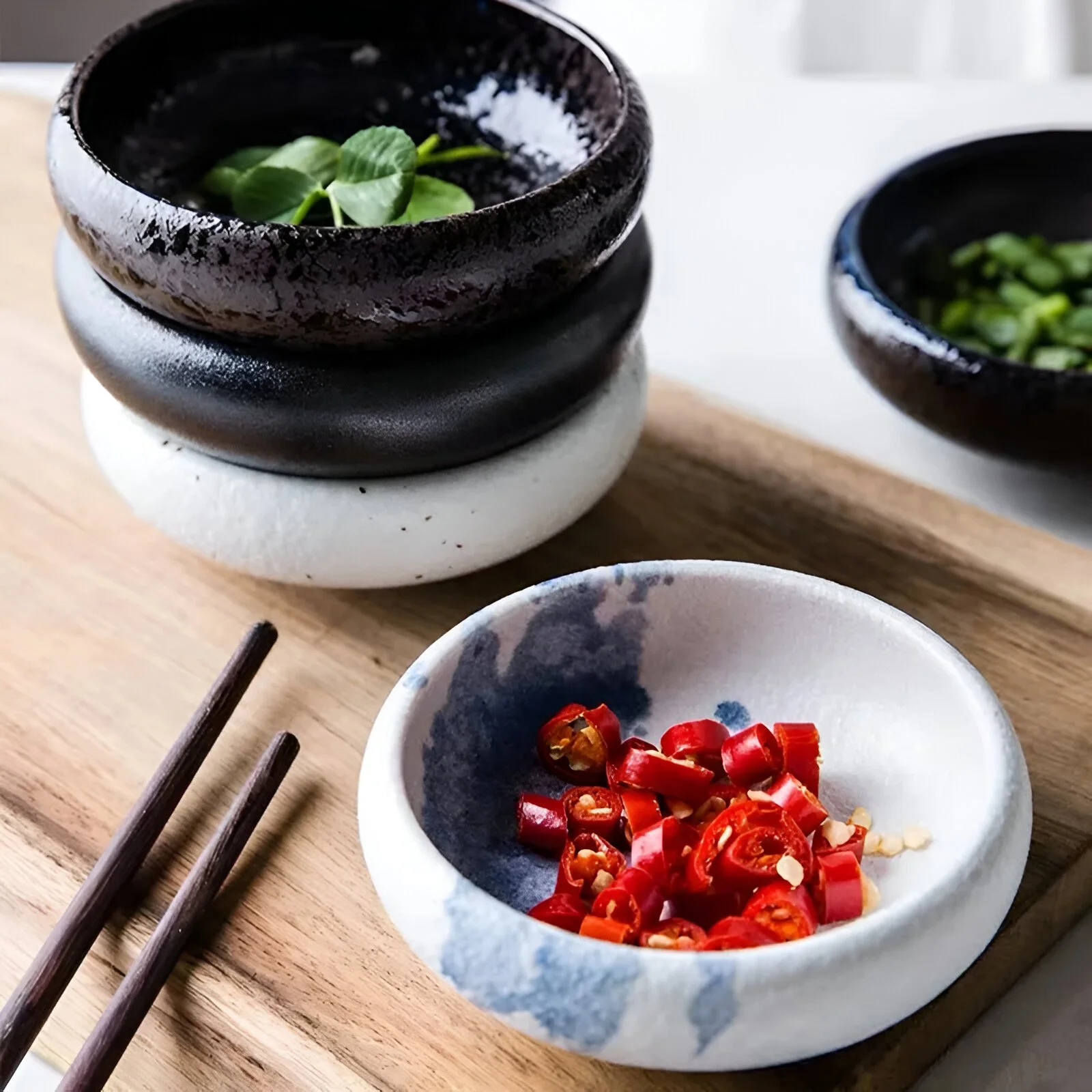
What you're getting: a Japanese-style round ceramic sauce dish, positioned as a small seasoning bowl. The design language is the spec that matters: a low, round bowl with a glaze that reads as intentional tableware rather than a leftover ramekin. It's sized for individual portions and condiments 鈥?rice for a bowl meal, a side of pickles, a dipping sauce, a soft egg 鈥?and the ceramic body is heavy enough to stay put on a counter corner. For a small portion, ceramic also holds temperature better than plastic or melamine.
Who it's for: countertop diners who want the meal to feel like a meal; minimalist decor lovers upgrading one object at a time; rice-and-bowl eaters; and anyone whose dinnerware is one plate and one bowl, ready for a third piece that earns its slot daily.
Why it earns its space: it upgrades the everyday meal in the footprint of a saucer. In a kitchen with no room for a decor shelf, tableware is the decor 鈥?a dish you use daily beats an ornament you dust twice a year.
Honest limits: this is the second-most-expensive item on this list and it holds a few tablespoons. If you're comparing it to a $5 bowl from a big-box store, you're not the buyer 鈥?the price pays for the design and finish, not the function, and you should be honest about whether that's what you want. Ceramic is fragile, and a dish this small sits close to counter edges. And it's a sauce dish: if you need a cereal or salad bowl, buy that instead 鈥?stretching this one into jobs it can't do is how small kitchens end up with a cabinet of almost-useful things.
6. Vintage Handmade Ceramic Stackable Mug 鈥?$67.95
The compact-kitchen problem it solves: the mug cabinet that doesn't exist. Apartment kitchens rarely have one 鈥?mugs end up stacked on the counter or the fridge, and a collection of mismatched promotional mugs turns that surface into clutter. The upgrade direction for a small kitchen is the opposite of collection: fewer mugs, each earning its vertical space. A stackable mug means the counter footprint stays the same whether you own one or four 鈥?the stack grows up, not out 鈥?and a handmade, vintage-styled mug turns the stack itself into the kitchen's one deliberate decorative object.

What you're getting: a vintage-style handmade ceramic mug, designed to stack, marketed for coffee and everyday home use. Handmade ceramic gives each piece individual character 鈥?glaze variation, subtle irregularities 鈥?and the vintage styling reads as intentional decor instead of another logo mug. Stacking is the space feature: the same mug in multiples stacks into a single column, so a two- or three-mug household keeps its morning setup in the footprint of one.
Who it's for: the daily home coffee drinker tired of a six-mug jumble and ready to own one beautiful mug instead; renters with zero cabinet space who have resorted to mug towers; and gift-buyers shopping for someone who treats coffee seriously.
Why it earns its space: a stack of two earns the footprint of one, and the handmade design doubles as the kitchen's decorative piece 鈥?the "buy one good thing" philosophy applied to the most-used object in the room.
Honest limits: $67.95 makes this the most expensive item here by a wide margin 鈥?this is a conscious single purchase, not an impulse add-on, and it only makes sense if you actually drink coffee at home daily. Handmade means variation: your piece's glaze and shape will differ from the photos, which is the nature of the category 鈥?if uniformity matters to you, that's a reason to skip. And stackability works when you own multiples of the same mug; a single lone mug doesn't stack with anything, so the space-saving feature is dormant until you buy its siblings. If you drink coffee twice a month, this is an expensive art object, not an upgrade.
How the Six Upgrades Compare
| Product | Price | Compact-kitchen problem it solves | Best for | Watch out for |
|---|---|---|---|---|
| Glass Coffee Mug with Walnut Handle | $18.95 | Fits the cup you actually use into a gap nothing else fits | Espresso and small-brew drinkers | 3 oz is tiny; glass and wood need care |
| Cute Ceramic Cat Face Sauce Dish | $27.49 | Gives one-burner dipping meals a proper sauce vessel | Dip-heavy eaters, cat lovers | Holds tablespoons; decor pricing |
| Mini Ceramic Melting Mug with Fork | $29.49 | Replaces pot, bowl, and stirrer for microwave melting | Microwave cooks, dorm and studio kitchens | One serving only; microwave tool |
| Stainless Steel Stackable Measuring Set | $34.65 | Kills the tangled measuring drawer with one nested stack | Recipe cooks with tiny drawers | Stack is tall; check drawer depth |
| Japanese Round Ceramic Sauce Dish | $40.99 | Upgrades countertop meals in a saucer's footprint | Countertop diners, minimalists | Small capacity; fragile; design premium |
| Vintage Handmade Stackable Mug | $67.95 | Turns the mug tower into one decorative stack | Daily coffee drinkers with no mug cabinet | Pricey; handmade means variation |
Read the table like the sections: cheap picks earn their keep fastest; expensive ones pay off only when they solve a specific, named problem. If a row's "watch out for" column describes you, skip it 鈥?in a small kitchen, not buying is also an upgrade.
The Three-Part Test for Apartment Kitchen Upgrades
Before buying anything for a small kitchen, run it through three questions: frequency, footprint, and friction.
Frequency asks how often you will touch it. A tiny mug you use every morning can justify space because it becomes part of the daily rhythm. A novelty dish used twice a year cannot. In a small kitchen, "useful sometimes" is usually not enough; the object should either be used weekly or solve a recurring annoyance you feel every time you cook.
Footprint asks where the item lives when it is not being used. This is the question most product pages skip. A compact tool can still be a bad buy if it needs a dedicated shelf. The measuring set works because it nests. The stackable mug works only if you own matching pieces. The melting mug works because it replaces a pot, bowl, and fork for one small task.
Friction asks whether the upgrade adds work. Fragile glass, hand-wash materials, awkward shapes, and hard-to-clean grooves all matter more in an apartment kitchen because there is less drying space and less storage patience. The best compact kitchen upgrades reduce steps. The worst ones create a tiny ritual you will abandon after two uses.
If a product passes all three, it has a real chance to earn its space. If it fails one, the honest move is to skip it, even if it looks perfect in the photo.
FAQ
What are the best renter-friendly upgrades for a small apartment kitchen?
The ones that don't touch the walls, the cabinets, or the lease: under-cabinet lights, peel-and-stick backsplash, and 鈥?the theme of this guide 鈥?objects that stack, nest, or multi-task. The rule that separates an upgrade from an expense: it has to survive the move. A stackable mug packs into a box; a pot rack you drilled into the ceiling does not. Start with the objects you touch daily, because daily contact is what makes an upgrade feel like one.
How do I tell if a kitchen item "earns its space"?
Apply the three-part test. One: does it do a job no other item in your kitchen already does? Two: can it do that job in a footprint you can spare? Three: would you notice it gone within a week? Pass all three and it earns its space; pass one and it's clutter with a receipt. The honest follow-up: am I solving a problem, or just feeling like I'm fixing one?
Is it realistic to cook well with one burner?
Yes, if you plan for it. One-burner cooking works best with meals that cook in a single pot or pan 鈥?stir-fries, one-pan rice bowls, pasta finished in the same pot. Treat the microwave as your second burner 鈥?where a melting mug earns its place: melting, reheating, and small portions without a second pot. Batch-cook rice in advance so the burner does one job at a time. The honest limit: you won't be roasting a chicken or running three pans at once.
Should I buy small dishes, or just use fewer full-size ones?
Both 鈥?but small dishes earn their keep for single-person portions. A 3-ounce mug and a sauce dish beat a 12-ounce mug and a dinner plate when the actual portion is a double espresso and a side of dumpling sauce: the small pieces hold the real portion and get used daily. The trap is buying small versions of everything 鈥?you need one small cup and one or two sauce dishes, not a miniature dinnerware set.
What's the best way to store mugs and dishes when there's no cabinet space?
Stack, nest, and display. Stackable mugs go up instead of out, nested measuring sets collapse a whole drawer into one stack, and a single attractive dish on a counter corner is decor, not clutter. If your kitchen allows a small wall shelf, that's the one mounting exception worth asking your landlord about. The rule that keeps it honest: never buy storage that needs its own storage 鈥?stacking organizers on organizers means you own more than the kitchen can hold.
Are stackable and nesting sets really worth the premium?
For drawers and shelves measured in inches, yes 鈥?nesting is the difference between a drawer that closes and one that doesn't, and stacking is the difference between a mug tower and one mug's footprint. But the premium is only justified when the feature gets used: a stacking mug set pays off if you own multiples of the same mug; a measuring set pays off if you cook from recipes. The honest version: does this set solve the specific storage problem I have? If yes, the premium is the cheapest fix available.
Sources
- Apartment Therapy 鈥?"More Than 80 Quick Rental Fixes for the Kitchen": renter-friendly fixes without permanent changes. https://www.apartmenttherapy.com/more-than-80-quick-rental-fixes-for-the-kitchen-220720
- Emily Henderson 鈥?"Small Kitchen Ideas To Steal (For Renters and Renovators)": color and light strategies for small kitchens. https://stylebyemilyhenderson.com/small-kitchen-ideas-to-steal-for-renter-and-renovators
- The Harper Living 鈥?"Renter-Friendly Ways to Upgrade Your Apartment Kitchen": reversible upgrades like under-cabinet lighting. https://www.theharperliving.com/blog/2025/11/05/renterfriendly-ways-to-upgrade-your-apartment-kitchen/
- HGTV 鈥?"20+ Small Kitchen Renovations You Won't Believe": small-kitchen layout principles (background). https://www.hgtv.com/decorating/kitchens/20-kitchen-makeovers-youll-have-to-see-to-believe-pictures
- @handyman.graham (YouTube) 鈥?"Renter-Friendly TINY Kitchen Makeover": a budget renter makeover. https://www.youtube.com/watch?v=JGqua0C2Gd4
- National Multifamily Housing Council 鈥?renter tenure data (background). https://www.nmhc.org/research-insight/
Prices and product details from the PickByU catalog, checked August 7, 2026. Product claims are based on design and specifications, not independent testing.
Browse Kitchen Dining products