Article
The 6 Best Combs and Brushes for Shedding Pets (2026 Buyer's Guide)
Quick Answer
The 6 Best Combs and Brushes for Shedding Pets (2026 Buyer's Guide): quick answer
The best shedding brush for dogs and cats depends on coat type: slicker brushes help with loose surface hair and light tangles, long stainless teeth...
- Topic: Grooming.
- Related product category: grooming.
- This article keeps the main answer in the article copy and places relevant product context inside the guide.
Editorial note: Product references, prices, and listed features were checked in the PickByU catalog on 2026-08-09.
Recommendations are based on product specifications and typical use, not hands-on test results.
Quick Answer: Best Brush for Pet Shedding
The best shedding brush for dogs and cats depends on coat type: slicker brushes help with loose surface hair and light tangles, long stainless teeth reach thicker coats, dual-sided tools work for mixed grooming jobs, and gentler wooden brushes suit pets that dislike stiff pins. No brush fixes patchy hair loss, skin irritation, parasites, or allergy-driven shedding; those are vet questions first.
The Problem: Every Fur Parent Knows This Scene
You pet your dog and a small cloud of fur lifts off. You sit on the couch in dark pants and stand up decorated in cat hair. You vacuum, and three hours later the baseboards are furry again. If you share a home with a shedding pet, none of this is news — but the two problems behind all that fur need different fixes.
First, normal shedding. All furred animals shed — it is the slow replacement of old hairs with new ones. Double-coated dogs (Huskies, German Shepherds, Labs) blow their undercoats twice a year, in spring and fall, and for a few weeks the fur is relentless. Cats shed on a seasonal cycle too, peaking in spring as daylight lengthens. This is biology, not a malfunction — the right brush just collects the loose hair before it collects on your furniture.
Then there is problem shedding: fur loss that is heavier, patchier, or year-round. Allergies, parasites, stress, and poor nutrition all show up in the coat. Here is the honest part most product pages skip: no brush fixes a medical problem. If your pet is losing hair in patches or shedding far beyond the breed norm, the answer is a vet visit, not a new brush. A brush removes loose hair that is already dead; it cannot stop hair from dying in the first place.
Once medical causes are ruled out, the next reality sets in: there is no universal brush. Coat type decides tool type. A short single coat, a double-coated Husky, a long silky Golden, and a curly Poodle mix each need a different tool. Pin length, pin spacing, bristle stiffness, and whether the tool reaches the undercoat at all — these separate a brush that works from one that just slides over the topcoat.
Below are six combs and brushes from the PickByU catalog, matched to coat types and shedding patterns, with mechanisms and honest limits explained. After the picks: a coat-type matching table and a six-question FAQ on how often to brush, de-shedding versus brushing, and when to call a groomer. If you know your pet's coat, you can pick the right tool in two minutes.
1. Dog Grooming Brush with Long Stainless Steel Teeth for Shedding & Massage — $15.49
The job it does: This is the undercoat tool. Long stainless steel teeth are the whole point — they are designed to reach through the topcoat of a double-coated dog and lift the loose undercoat that sits underneath, which is exactly the hair that ends up on your floor. If you own a Lab, Husky, German Shepherd, Collie, or any dense two-layer coat, this is the class of tool that wins the battle against the seasonal coat blow.
What you're getting: A brush built around a bed of long, rounded stainless steel pins rather than the short bent wires of a slicker. The length matters: on a double coat, a short-toothed brush skims the surface and leaves the undercoat in place, which is why so many people brush their heavy-shedding dog daily and see no difference. Long teeth push through the guard hairs and pull the dead undercoat up and out. The pins are spaced to glide through fur rather than snag, and the same sweeping motion doubles as a light massage — the listing markets it for shedding and massage both.
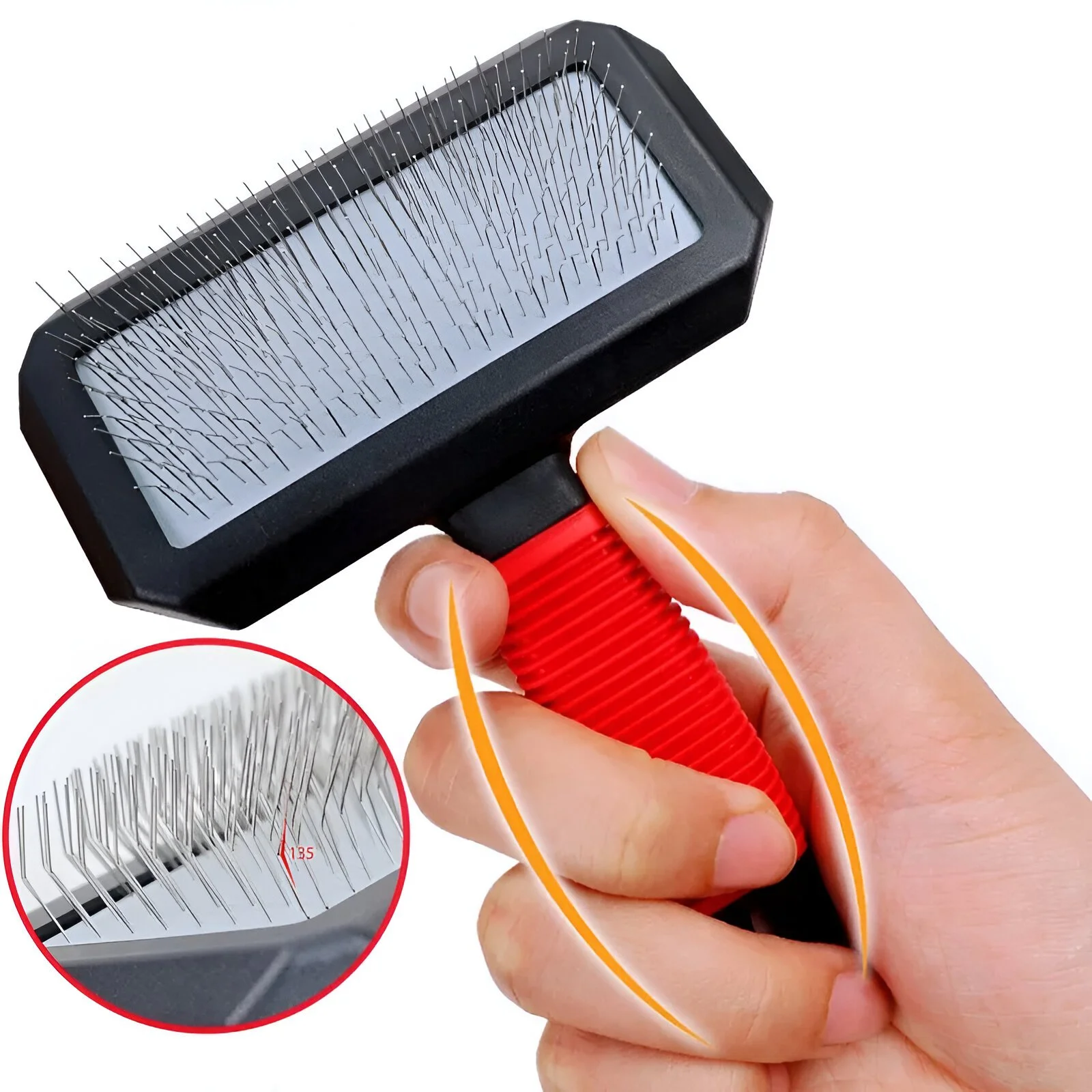
When it earns its place: During the twice-yearly coat blow, this is the workhorse. Used two or three times a week through the heavy weeks, it pulls out handfuls of undercoat that would otherwise end up on the furniture. It also suits long silky coats, where long pins track through more cleanly. At $15.49 it is the most affordable pick here — a low-risk first de-shedding tool.
Honest limits: Long teeth are for loose hair, not knots. If your dog's coat is matted — behind the ears, in the armpits, or along the back legs — this brush will not detangle it, and forcing it through a mat pulls on the skin and hurts the dog. It is also wrong for short single coats: on a Beagle or a Boxer the teeth are simply too long and the tool has nothing to grip. And like every pin tool, use light pressure — the pins are metal and skin is skin. For mats, you need a dematting comb or a groomer, not this.
The pick: Dog Grooming Brush with Long Stainless Steel Teeth for Shedding & Massage — $15.49
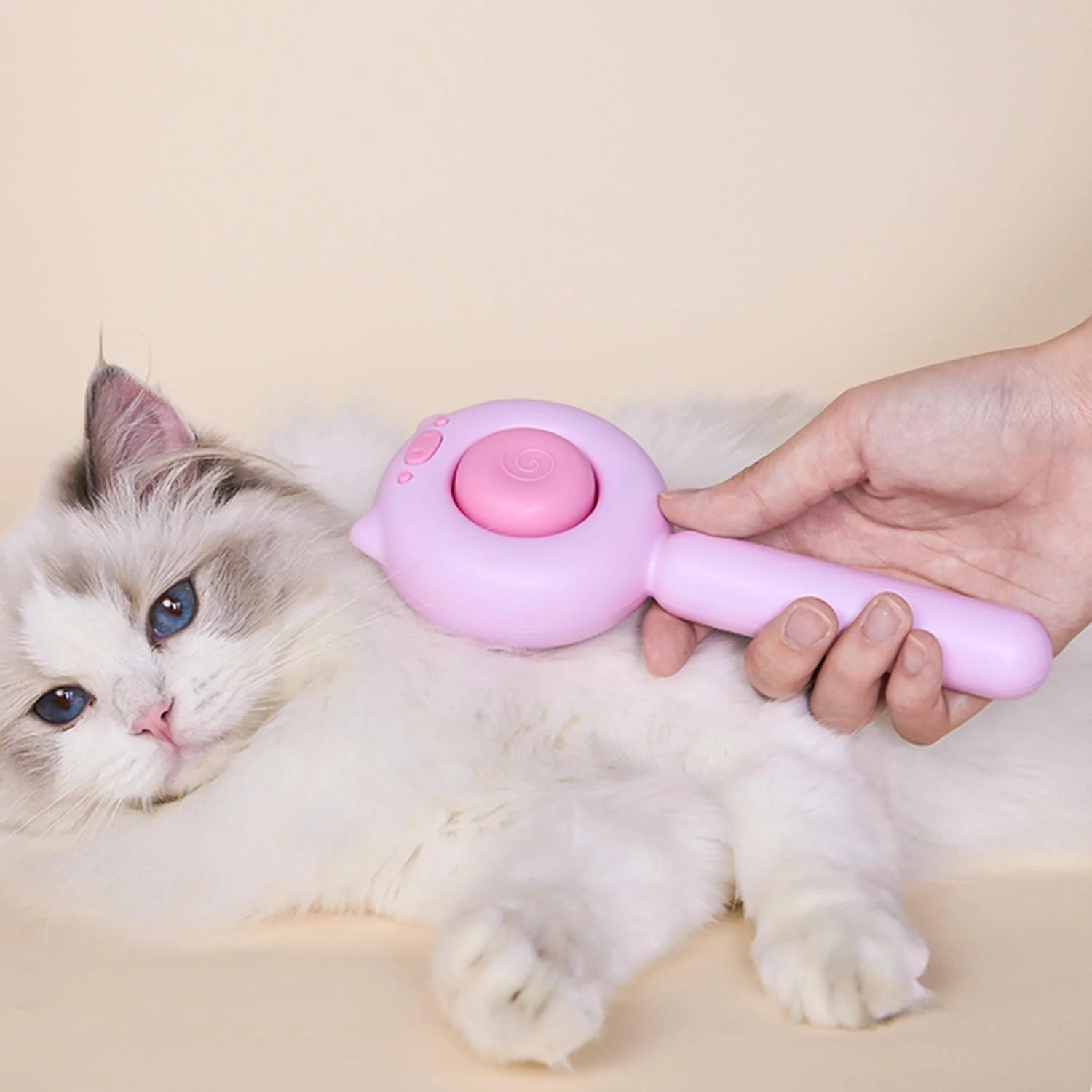
2. Self Cleaning Slicker Brush for Dogs and Cats – Pet Grooming Tool for Shedding & Mats — $16.95
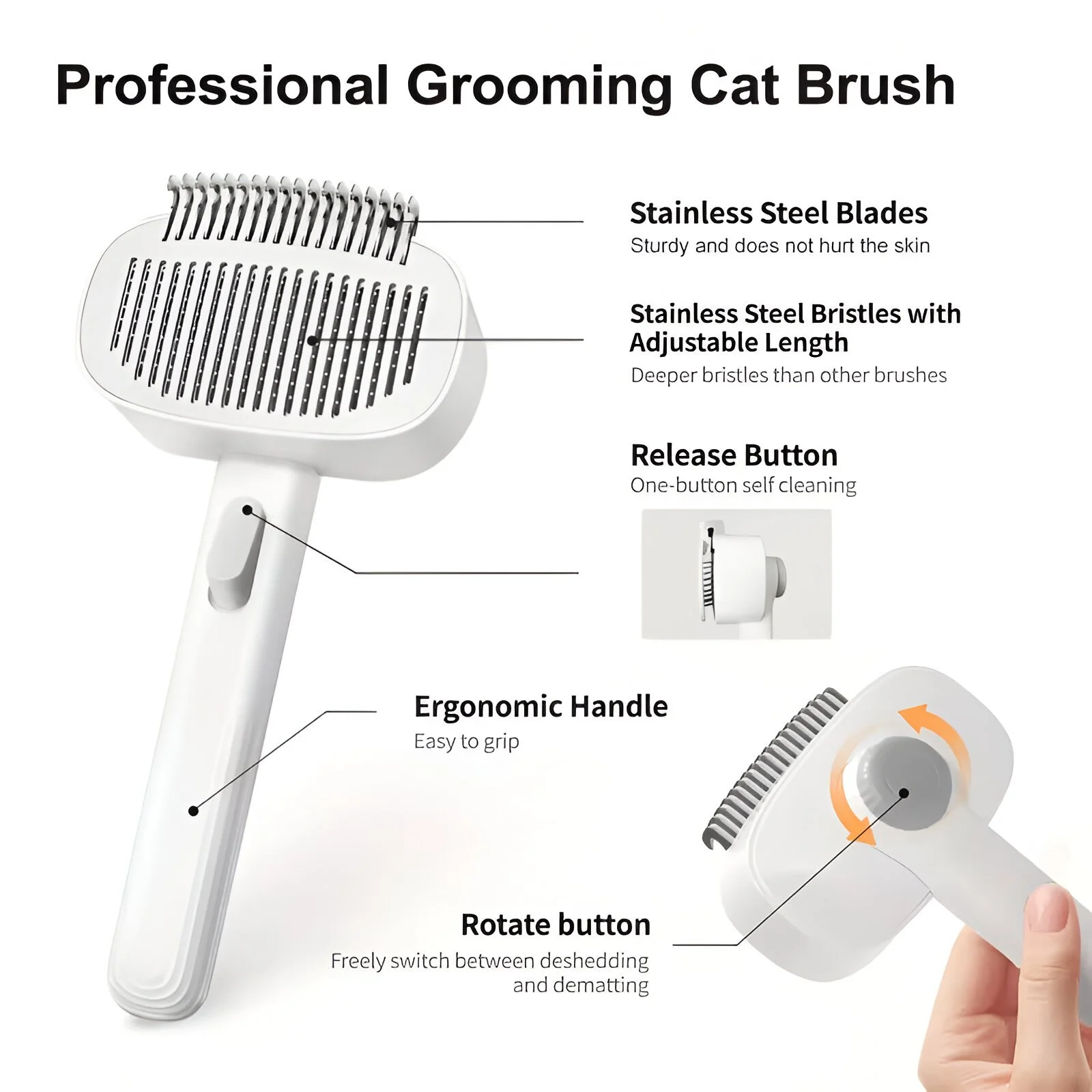
The job it does: The slicker brush is the daily-finish tool for short and medium coats, and this one is the self-cleaning kind — the design that solves the classic slicker complaint. A slicker's job is to catch the fine, loose hair sitting in the top layer of the coat and pull out light surface tangles, and its fine bent wire pins do that well on dogs and cats alike. The self-cleaning mechanism makes it tolerable to use daily.
What you're getting: A head of fine, closely spaced, slightly bent wire pins — the bend catches loose hair and the light beginnings of tangles. The pins sit on a retractable backing plate: a button pulls the plate forward, retracting the pins and pushing all the collected hair off in a single sheet. A standard slicker needs its teeth picked clean by hand after every pass or two; the self-cleaning version turns cleanup into a one-second click. The same mechanism makes it easy to handle — you never fight a clogged brush.
When it earns its place: This is the right everyday brush for short-haired dogs (Beagles, Boxers, Pugs), medium coats, and almost any cat — the fine pins feel like a scratch rather than a comb, and many cats tolerate it well. Used two or three times a week, it keeps surface shedding under control. At $16.95 it is the cheapest slicker here — a sensible first grooming tool.
Honest limits: "For shedding & mats" in the title needs a reality check: a slicker handles light tangles, not real mats. A true mat — the dense, felted clump behind ears or on a long-haired belly — will defeat these fine pins, and working a mat with a slicker just pulls skin. Fine pins are also for the surface: this brush does not reach the undercoat of a double-coated dog; for that you need the long-teeth tool above. Finally, the pins are thin metal — a heavy hand can scratch sensitive skin, especially on cats. Gentle, short strokes, and let the tool do the work.
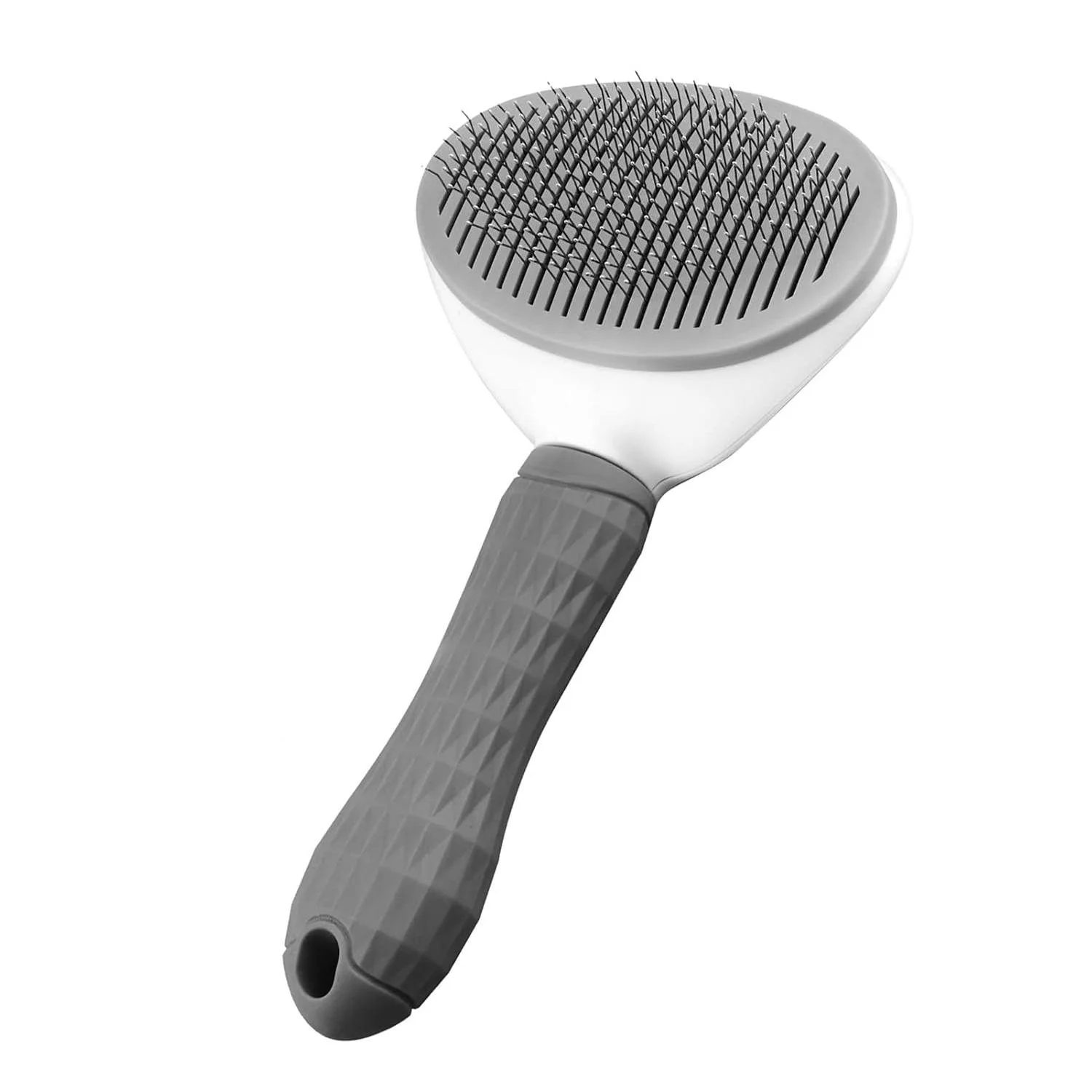
The pick: Self Cleaning Slicker Brush for Dogs and Cats – Pet Grooming Tool for Shedding & Mats — $16.95
3. Double-Sided Dog Comb and Brush – Pet Grooming & Hair Remover with Comfortable Handle — $20.49
The job it does: This is the two-in-one that covers the basics of daily grooming in a single tool: one side works like a comb to loosen surface hair and check the coat, the other side works like a brush to lift and collect it. For a dog with an uncomplicated medium coat, one tool covers both halves of the job.
What you're getting: A comb-and-brush head on one handle — one face carries the teeth of a comb, the other carries the bristles or pins of a brush. The comfortable handle matters more than it sounds: a handle you can grip for ten minutes changes whether you groom daily or skip it. The two sides are not redundant. The comb side lifts and separates hair — good for working section by section, spotting tangles early, and pulling loose hair free. The brush side then follows up to collect the loosened hair and smooth the coat back down.
When it earns its place: For medium-coated dogs — Beagles with extra fluff, Spaniels, many mixed breeds — this is a genuinely useful everyday tool that travels well because it replaces two tools. It is also a sensible choice for a dog-and-cat household on similar coats, since neither side is breed-specific. At $20.49 it sits mid-range: one tool that does many jobs acceptably.
Honest limits: Versatility is the trade, and specialization is what you give up. The comb side does not rake out the deep undercoat of a double-coated dog the way long teeth will, and the brush side does not finish a coat the way a slicker's fine pins do. If your pet has a demanding coat — heavy undercoat, long silky hair, or a tendency to mat — this will be your second brush, not your only one. And a double-sided tool has a practical quirk: the side not in use has nothing to protect it when the tool is dropped or tossed in a drawer, so the head takes extra wear. It is a great everyday tool for an easy coat, and a compromise for everything else.
The pick: Double-Sided Dog Comb and Brush – Pet Grooming & Hair Remover with Comfortable Handle — $20.49
4. Self-Cleaning Slicker Brush for Dogs & Cats – Easy Hair Removal Grooming Tool — $23.80
The job it does: The second self-cleaning slicker in this guide, and yes, on purpose — it is not quite the same tool as the first. This is the step-up version: the fine bent pins and retractable cleaning plate of a slicker, positioned for heavier shedding loads — double-coated breeds between coat blows, long-haired cats, multiple pets. When the first is the starter tool, this is the one you graduate to.
What you're getting: The same core mechanism as the $16.95 slicker — fine wire pins that catch loose hair and light tangles, with a button-operated backing plate that retracts the pins so collected hair lifts off in one piece. The differences are in the details that matter over months of daily use: build, head size, handle feel — where the extra dollars go. The "easy hair removal" in the title refers to both halves of the experience — hair comes off the pet easily, and hair comes off the brush easily. That second half decides whether grooming stays a daily habit or becomes a chore.
When it earns its place: This is the daily-maintenance slicker for the serious shedder. If your dog blows coat twice a year and sheds in between, or your long-haired cat leaves fur on everything you own, you will reach for this several times a week — the self-cleaning mechanism makes that sustainable. For short- and medium-coated dogs and most cats, it handles the top-layer job completely. At $23.80 it is a modest step up in price for a real step up in daily comfort.
Honest limits: Be direct about overlap: if you already own the $16.95 slicker, this is largely redundant for a single-pet household with an easy coat. The honest case for buying it is volume of use, not a fundamentally different function. And everything said about slickers applies — fine pins are surface tools, they do not reach the undercoat of a double coat, and they are not mat removers. A heavily matted coat needs clippers or a professional; pressing a slicker into a mat is how you end up with a scratched, resentful pet. Buy this one for daily maintenance, not rescue missions.
5. Pet Hair Removal Comb Dual-Sided Dog Cat Grooming Brush — $29.99
The job it does: A dual-sided comb for the pet whose coat is short, smooth, and single-layered — the dogs and cats for whom rakes and slickers are overkill. On a short single coat there is no undercoat to reach; the job is to sweep up loose surface hairs before they fall, checking the skin as you go. This comb does that with two different tooth spacings on one tool, so it covers a small cat or a medium dog.
What you're getting: A comb with two working faces. One side uses wider-spaced teeth, which lift and separate the hair, pull loose fur free, and work through a thicker patch of coat. The other side uses finer teeth, which catch the smaller, lighter hairs that wide teeth miss and give the coat a final smooth pass. That two-spacing design is the trick of the category: coarse pass to lift, fine pass to finish, and the pet ends up cleaner than either side alone would manage. It also doubles as a useful check — running a comb through short fur is how owners find fleas, ticks, and skin bumps early.
When it earns its place: For short single coats — Boxers, Dalmatians, Greyhounds, Beagles, shorthair cats — this is close to the ideal everyday tool. It is gentle, quick, and easy to clean — and short-coated pets shed continuously, so they need frequent light passes. At $29.99 it is the most expensive comb in this guide, but it is also the most specialized to the short-coat job, and for that job it is the right buy.
Honest limits: The limits are the mirror of its specialization. This comb cannot reach the undercoat of a double-coated dog — no dual-sided comb has pins long enough, and you should not use it as an undercoat rake. On heavy seasonal shedders, combing is slower than raking, so a Husky owner will find it frustrating. And on long or curly coats it is simply the wrong tool: it will skim the surface and leave mats untouched. One more note: these combs reward slow, section-by-section passes far more than quick swipes. If your pet has a double or long coat, scroll back up to the long-teeth brush.
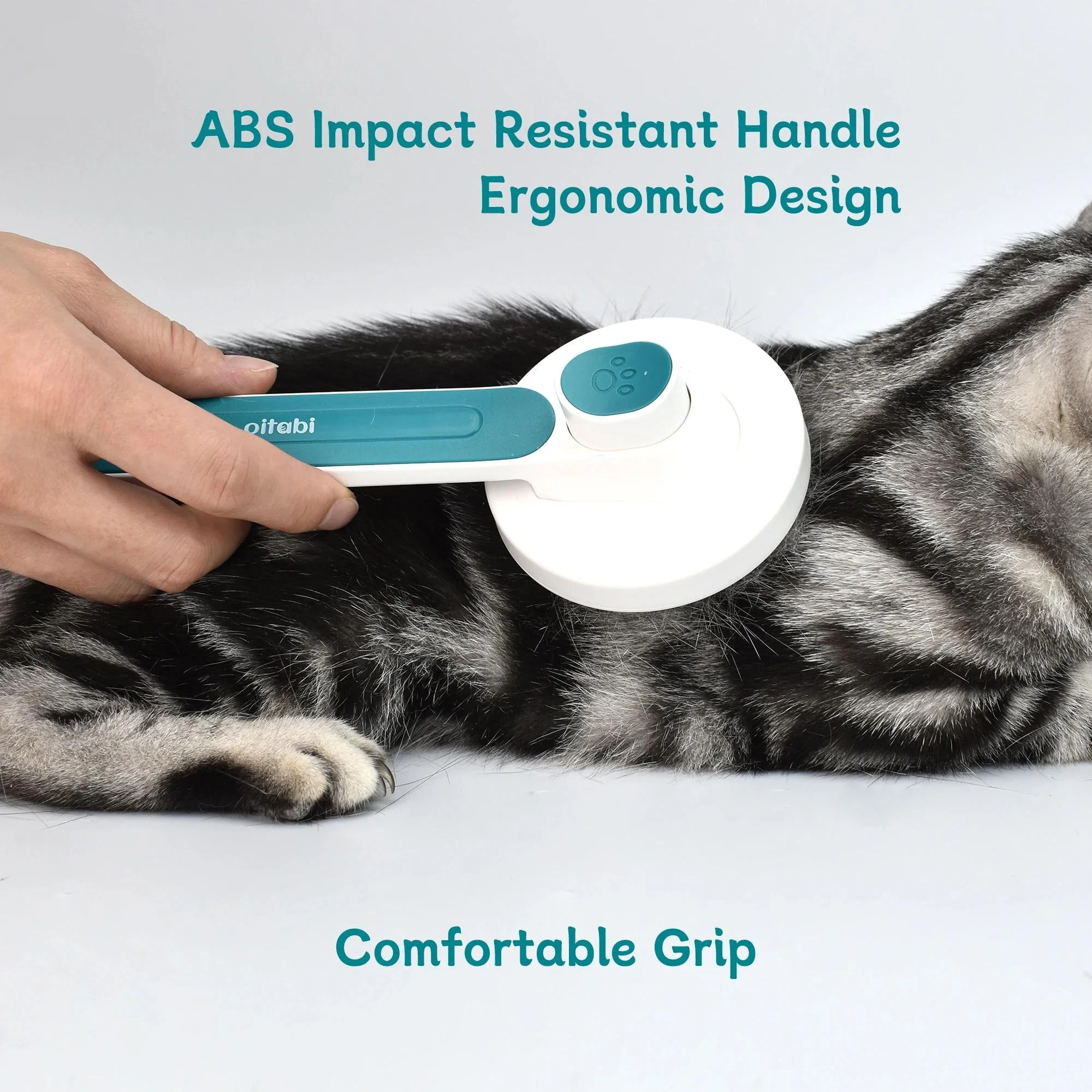
The pick: Pet Hair Removal Comb Dual-Sided Dog Cat Grooming Brush — $29.99
6. Wooden Pet Grooming Brush – Gentle Hair Remover & Massage Comb for Dogs & Cats — $38.49
The job it does: The gentle option, for when a pet's skin is the constraint rather than the coat. Some pets have sensitive skin, some are seniors with thinning skin, some are puppies learning grooming is not a threat — some simply hate the feel of metal. A wooden brush trades maximum hair removal for a softer, warmer, less startling experience, and for the right pet that trade is worth every dollar.
What you're getting: A brush built from wood — wooden head, wood-set pins with rounded tips — designed to feel nothing like metal. Wood has genuine physical advantages beyond aesthetics. Rounded wooden pins spread pressure across a larger area, reading as massage rather than scratching, and wood does not conduct heat or cold the way metal does. Wood also generates far less static than synthetic bristles or metal pins — static is what makes groomed fur fly back onto furniture. The listing calls it a gentle hair remover and massage comb — honestly, this is the brush for the pet who needs reassurance, not extraction.
When it earns its place: For short-coated pets with sensitive skin, seniors, anxious pets, and cats — who often tolerate wood far better than a slicker. It also finishes well after a deeper de-shedding session, smoothing the coat and working natural oils through the fur. The massage function is real — many pets lean into it, and a five-minute session doubles as bonding time. At $38.49 it is the most expensive tool here — you are paying for gentleness, not maximum hair removal.
Honest limits: Gentleness has a cost, and the cost is extraction power. A wooden brush removes surface loose hair and does light massage; it does not pull deep undercoat, work through mats, or reduce a heavy shed the way a rake will. If your goal is maximum fur removal from a heavy shedder, this is the wrong tool — buy the long-teeth brush instead. Wood also needs more care than metal: wipe it down after use and keep it dry so it does not crack or swell. Buy it for the pet, not for the shedding problem, and it will be the right purchase.
Which Brush Matches Your Pet's Coat?
Coat type is the most reliable guide. Here is how the six picks line up:
| Coat Type | Examples | Best Tools from This Guide | How Often | What to Avoid |
|---|---|---|---|---|
| Short single coat | Beagle, Boxer, Dalmatian, shorthair cat | Dual-sided comb, wooden brush | 2–3 times a week | Undercoat rakes — nothing to rake |
| Double coat | Husky, German Shepherd, Lab | Long teeth brush, slicker brush | Daily during coat blow, 2–3×/week otherwise | Fine combs as the only tool — they skim |
| Long silky coat | Collie, Yorkie, longhair cat | Long teeth brush, comb for tangles | 3–4 times a week | Leaving mats to any brush — see a groomer |
| Curly coat | Poodle, Bichon, Doodle mixes | Self-cleaning slicker, comb for checks | Daily to every other day | Long-tooth rakes — they pull and break curls |
Two takeaways. First, most households need two tools — a deeper one (long teeth) plus a surface one (slicker or comb) — because no single brush reaches the undercoat and finishes the top layer. Second, "how often" depends more on coat than season: double coats need daily work during coat blows and weekly maintenance otherwise; short single coats need frequent light passes — every loose hair falls straight off them.
FAQ
Q: How often should I brush a shedding pet? A: For a double-coated dog, brush daily during the two seasonal coat blows and two to three times a week otherwise — a few minutes a day beats one long weekly session. Short-coated dogs and shorthair cats shed continuously — two or three short passes a week keep the fur off your furniture. Long and curly coats need three to four sessions a week to stop tangles becoming mats. If you can see fur on the floor, you are brushing too rarely.
Q: What is the difference between a de-shedding tool and a regular brush? A: A de-shedding tool (the long-teeth brush and undercoat rakes here) is built to reach the undercoat — the dense second layer under the guard hairs of double-coated breeds. Regular brushes like slickers and combs work the top layer: catching loose surface hair and light tangles. They are complementary: the de-shedding tool removes the bulk of the undercoat during a coat blow; the slicker or comb finishes the surface. If you only own one and your pet has a double coat, buy the de-shedding tool first.
Q: Can I use the same brush on a cat and a dog? A: Yes, with two conditions. First, the coats must be similar — a brush for a shorthair cat will work on a short-coated dog, but not on a double-coated Husky. Second, the cat has to accept it: cats are more sensitive to the feel of grooming tools, and many prefer a wooden brush or fine slicker over long metal pins. In a multi-pet household, use one deeper tool for the dog's coat and one gentler surface tool both pets tolerate. Clean brushes between pets; never share one with a pet with a skin condition.
Q: Why does my pet shed more in some seasons? A: Daylight, not temperature, drives the big sheds: in spring pets shed the winter undercoat; in fall they shed the summer coat to grow the winter one in. Indoor pets shed more evenly year-round because artificial light blurs the seasons — many owners swear their pet "sheds all year." The seasonal blow is normal and passes in two to six weeks; daily brushing then is the most effective use of any de-shedding tool. A seasonal blow is symmetrical and predictable; patchy or year-round heavy loss is worth a vet check.
Q: When does brushing not work — what won't these tools fix? A: Three things. Mats: a true mat is felted, compacted fur that no comb or slicker will pull apart without hurting the pet — it needs a dematting comb, clippers, or a groomer. Medical shedding: hair loss from allergies, parasites, or infections continues no matter how often you brush — that needs a vet. And impossible expectations: no brush stops shedding, because shedding is how fur is replaced — a good tool reduces the hair that reaches your floor, it does not eliminate it. If shedding still seems excessive with the right tool, the problem is upstream.
Q: When should I book a groomer instead of brushing at home? A: Book a groomer when the coat is beyond home tools: mats close to the skin (behind ears, in armpits, on bellies), a felted undercoat compacted after weeks without brushing, or tangles that have reached the skin. Groomers also handle what home tools should not — shaving mats, trimming sanitary areas, nail care. For routine shedding, a consistent home routine with the right tool is enough. If unsure whether a tangle is a mat, have a groomer look before buying a "dematting" tool.
Sources
- The Spruce Pets, "The 11 Best Dog Brushes of 2026" — de-shedding tool categories and testing context (https://www.thesprucepets.com/best-dog-brushes-4172609)
- Chewy, "Dog Brushes & Combs" — de-shedding vs. tangle-prevention tool roles (https://www.chewy.com/b/dog-brush-356)
- Reddit r/doggrooming, "Official Brush Recommendation Post (pro groomers only)" — groomer consensus on coat types and tool matching (https://www.reddit.com/r/doggrooming/comments/170sj9t/official_brush_recommendation_post_pro_groomers/)
- The Fun Times Guide, "Best Furminator Pet Brush" — long-term owner perspective (https://dogs.thefuntimesguide.com/best-furminator-pet-brush/)
- girlwiththedogs, "Brushes and Combs" — professional grooming reference (https://girlwiththedogs.com/collections/brushes-and-combs)
- PickByU catalog: product titles, prices, and URLs checked 2026-08-09
Prices and availability are from the PickByU catalog as of 2026-08-09 and may change. Recommendations are based on product specifications and how this class of tool is typically used, not hands-on test results.
— Maya Porter, Editor-in-Chief, PickByU