Article
The 6 Best Space-Saving Organizers for Small Apartments (2026)
Quick Answer
The 6 Best Space-Saving Organizers for Small Apartments (2026): quick answer
The best space-saving organizer is the one that converts unused vertical or hidden space into a repeatable storage system. Under-bed bags handle bulky...
- Topic: Storage Organization 2.
- Related product category: storage-organization-2.
- This article keeps the main answer in the article copy and places relevant product context inside the guide.
Editorial note: Product references, prices, and listed features were checked in the PickByU catalog on 2026-08-09. These are recommendations based on product specifications and how this class of organizer is typically used in small apartments, not hands-on test results.
Quick Answer: Best Space-Saving Organizer for Small Apartments
The best space-saving organizer is the one that converts unused vertical or hidden space into a repeatable storage system. Under-bed bags handle bulky seasonal items, closet organizers use hanging air, baskets create portable zones, and clear pantry containers stop shelf waste. Measure first, then buy for the exact storage failure you have.
The Reality: No Basement, No Attic, and the Square-Footage Math
The median American studio apartment is roughly 500 square feet, and a one-bedroom comes in around 750. That number is the whole problem in a single figure, because apartments are the only housing type where the storage math is fixed at move-in: no basement, no attic, no garage, no shed. Everything you own — the winter coats, the holiday decorations, the luggage, the spare bedding, the tools — has to live inside the same square footage you sleep in. A house absorbs overflow in a basement you visit twice a season; an apartment has no overflow valve. When the storage runs out, the clutter spreads onto the surfaces you actually use, and the place starts to feel smaller than it is.
The geometry helps if you actually look at it. A 750-square-foot apartment with eight-foot ceilings holds roughly 6,000 cubic feet of air, but almost all of that volume sits above head height — the air column above the closet rod, the dead zone under the bed, the six inches of nothing above every pantry shelf. Consider the bed: a queen mattress covers about 33 square feet of floor, and the space beneath it is the largest unused footprint in most apartments. Hanging clothes occupy the top two-thirds of the closet rod while the air below them sits empty. Pantry bags and boxes refuse to stack, so every shelf wastes its upper third. None of this is a cleaning problem — it is a space-allocation problem, solvable without buying furniture, drilling a wall, or asking the landlord for anything.
Every organizer on this list works on the same principle: it converts dead air into usable storage. They do not rearrange your apartment — they make the apartment you already have hold more. All six are install-free, rent-safe, and cheap enough that a first pass costs less than a month of takeout. Prices were checked in the PickByU catalog on 2026-08-09.
1. Large Capacity Multi-Functional Clothing & Blanket Storage Bag — $16.49
The space problem it solves: in an apartment with no basement and no attic, seasonal textiles are the first thing to overrun the place. The winter comforter has nowhere to go in July; the summer duvet has nowhere to go in January; guest bedding and off-season sweaters drift into the closet, onto the top shelf, or into a garbage bag behind the door. The bed is the answer hiding in plain sight: a queen frame sits on roughly 33 square feet of floor, and the air column beneath it — typically six to eight inches under a standard frame — is pure dead space. A flat, soft-sided storage bag is the lowest-effort way to harvest that column.
What you're getting: a large-capacity, multi-functional clothing and blanket storage bag. "Multi-functional" is the honest part of the name: the same bag handles folded clothing, comforters, blankets, and pillows — it is not a specialty garment bag or a single-purpose bin. "Large capacity" means it takes a whole stack of bedding, not one throw blanket. Because it is soft-sided, it is also self-storing: when the season turns and the bag empties, it collapses flat and tucks between the mattress and the wall instead of becoming a rigid box you have to find a home for.
Who it's for: anyone whose seasonal rotation lives in trash bags or on the top shelf; households with guest bedding; dorm and studio dwellers whose entire wardrobe fits in one room; and anyone with a bed that has under-bed clearance, which is most of us.
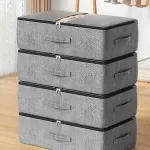
Honest limits: "large capacity" is a descriptor, not a measurement — check the listing dimensions against your under-bed clearance before buying, because a bag that is too tall for your frame is just a bag on the floor. It is soft-sided, so it bulges rather than stacking neatly, and it contains volume rather than shrinking it: this is a storage bag, not a vacuum-compression system, so do not expect the dramatic size reduction that vacuum bags advertise. The zipper is the long-term failure point under heavy loads, so pack it full but not bulging. And only store clean, fully dry items — anything damp will mildew in a sealed bag by next season, no matter how good the fabric.
The pick: Large Capacity Multi-Functional Clothing & Blanket Storage Bag — $16.49
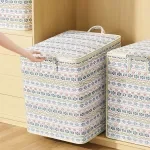
2. Bohemian Large-Capacity Zippered Storage Bag — $24.49
The space problem it solves: the storage that fixes a small apartment usually has to live in plain sight. Closet shelves in rentals rarely have doors, bedroom corners are visible from the door, and the shelf above the entryway bench is on display to everyone who walks in. Most storage products look like utility — beige canvas, clear plastic, gray bins — which is why they end up hidden behind furniture, doing nothing. A storage bag with a real pattern changes the equation: it sits on an open shelf or at the foot of the bed and reads as part of the room. When the only available storage is visible storage, the design of the container is a functional feature, not a luxury.
What you're getting: a large-capacity storage bag in a bohemian print with a zippered closure. The zip is the structural detail that matters: unlike an open basket, it keeps dust off the contents and keeps everything contained. "Large capacity" points at a full stack of textiles — blankets, off-season clothing, pillows — rather than a single item. The bohemian pattern is the point: this is the organizer you leave out, on a shelf, in a corner, or at the end of the bed, without apologizing for it.
Who it's for: visible-storage situations — open shelving, bedroom corners, entryway benches, studio layouts where every container is on display; dorm dwellers whose room is also their closet; and anyone who has ever hidden a functional but ugly storage bin inside a closet and then forgotten what was in it.
Honest limits: be clear about what a zipper is and is not: it is a closure, not a seal. The bag keeps dust and lint off the contents and keeps them from spilling, but it is not airtight or waterproof, so damp items should never go in. Capacity is "large" but unquantified in the title — check the listing for dimensions if you are planning to move a whole comforter set. A bohemian print is a style bet that will not match every room. And visible storage still rewards tidy contents — the bag hides the clutter, not the fact that the clutter exists.
The pick: Bohemian Large-Capacity Zippered Storage Bag — $24.49
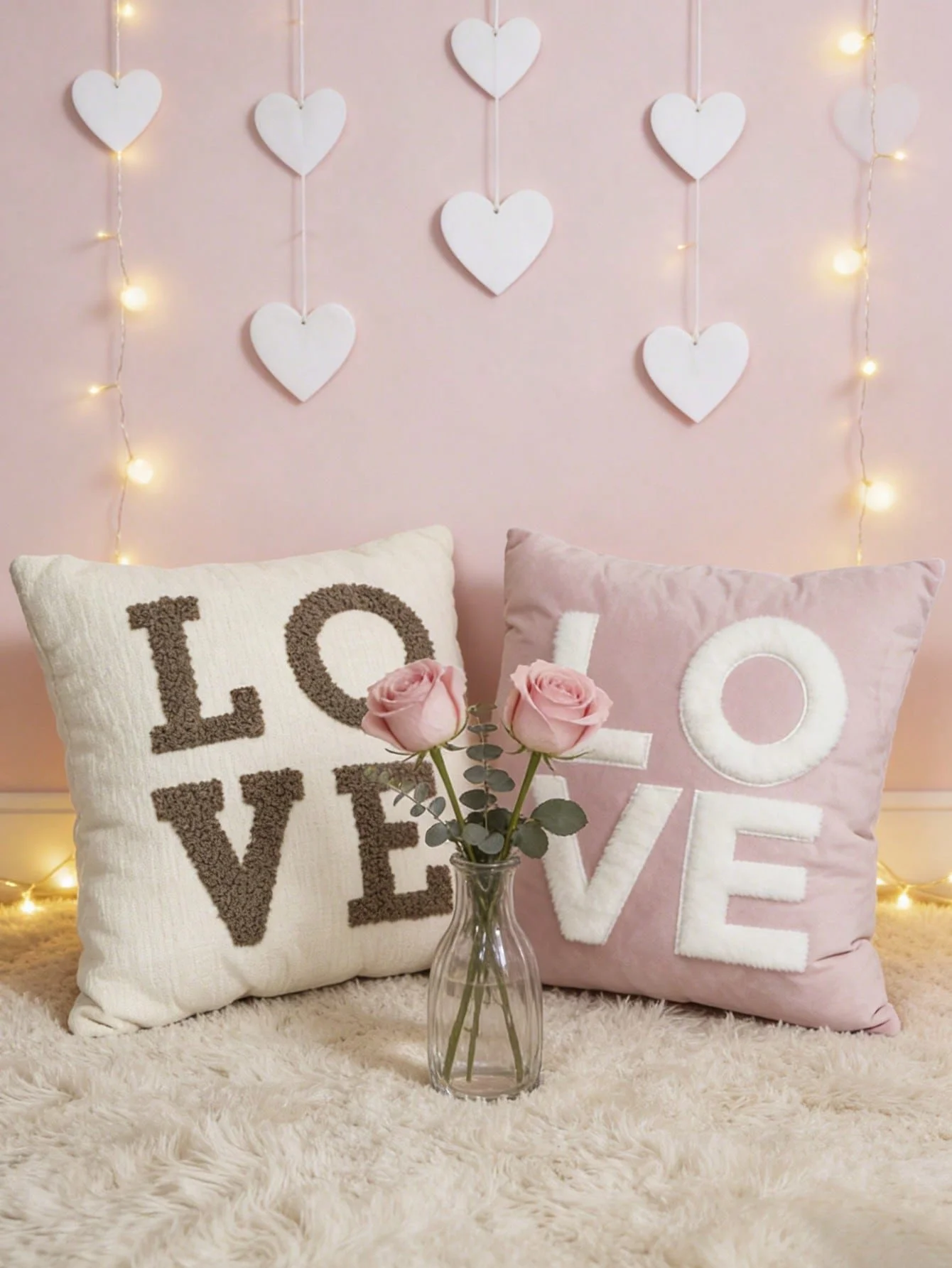
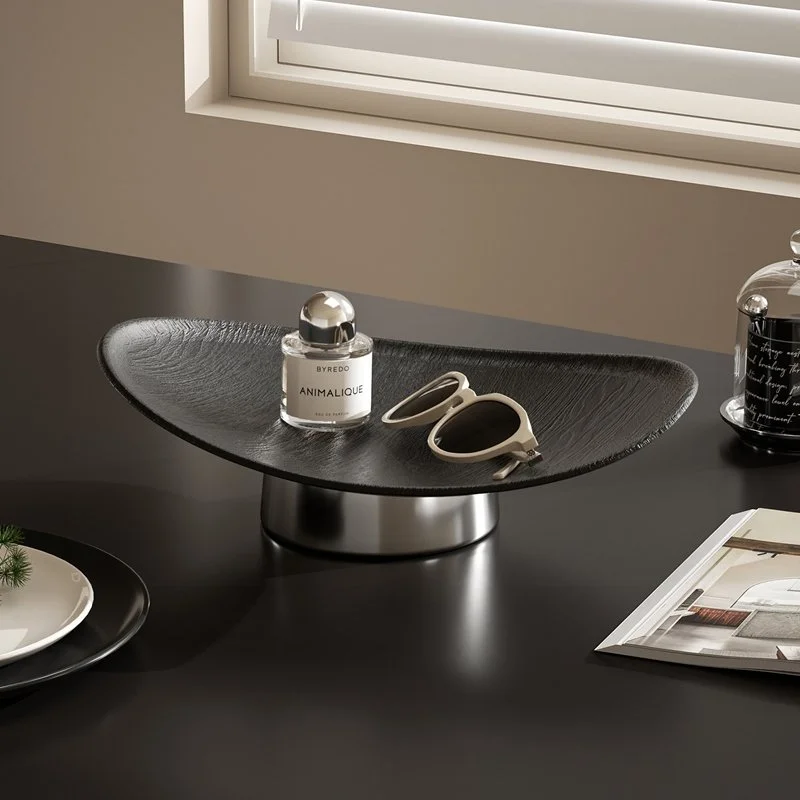
3. Modern Oval Decorative Storage Tray for Coffee Table & Entryway — $29.49
The space problem it solves: the true clutter engine of a small apartment is not the closet — it is the flat surfaces. The coffee table, the entryway console, the nightstand: every one is a landing zone for keys, remotes, mail, glasses, and the miscellany that has no other address. In a bigger home this clutter disperses and nobody notices. In a small apartment, one coffee table is the entire front line, and when it is covered, the apartment reads as messy even when every closet is perfect. The fix is not more storage — it is a boundary. A tray gives the clutter a defined zone: everything on the tray is in its place, and everything off it is out of place — the same trick as a doormat, which defines the territory and keeps it contained.
What you're getting: a modern oval decorative storage tray designed for the two highest-traffic surfaces in an apartment: the coffee table and the entryway. It is a designed object rather than a utility bin — the "modern" and "decorative" in the name are doing real work, because this tray is meant to be seen. The oval shape is the practical detail: no hard corners for the tray itself to get knocked, and it fits comfortably on consoles and side tables where a rectangular bin would overhang.
Who it's for: the entryway landing strip, so keys and mail stop migrating across the console; coffee-table households where the remote has no home and the coasters are a rumor; nightstand catch-alls for glasses, phone, and a book; and anyone who has discovered that daily clutter needs a daily home, not a weekly purge.
Honest limits: the depth of a tray is the honest limit here — this is a tray, not a bin. It holds flat and low objects: keys, remotes, mail, glasses, small tech, jewelry trays. Tall items — bottles, mugs, a stack of books — will not fit, and forcing them just makes the tray look cluttered. It organizes a surface; it does not add cubic storage, so it will not absorb a household's overflow. It is one zone, not a system — you may want one for the coffee table and one for the entryway. And because it is a decorative piece, check the material if durability matters to you: a design-forward tray can prioritize looks over armor.
The pick: Modern Oval Decorative Storage Tray for Coffee Table & Entryway — $29.49
4. Foldable Multi-Pocket Closet Organizer for Clothing & Accessories — $43.80
The space problem it solves: the rental closet comes with one rod and zero imagination. Shirts and jackets hang from the top of the rod, and the two to three feet of air between the hanging clothes and the closet floor sits completely unused. That air column is real storage real estate: in a closet only two feet deep, it is the difference between a closet that fits a wardrobe and one that overflows onto the floor. A hanging multi-pocket organizer harvests that dead column, converting it into a vertical stack of pockets where scarves, belts, folded tees, and accessories live at eye level and below. It uses air you already pay rent on, at zero cost in floor space.
What you're getting: a foldable, multi-pocket closet organizer built for clothing and accessories. The "multi-pocket" design is the whole point: instead of one big cavity, it is a grid of individual cells, so every belt has a pocket and every folded tee has an address instead of a shared pile. It hangs from the existing rod — no drilling, no installation — and "foldable" means it collapses flat when you move or when the season does not need it. For a shared closet, the pocket grid also has a second job: it draws territory lines without anyone having to negotiate.
Who it's for: accessory-heavy wardrobes where scarves, belts, and bags live in a drawer or on a chair; couples sharing one rod, where pockets give each person a defined zone; renters whose closet has one rod and no shelving; and anyone whose folded pile is a tower that collapses every time the door opens.
Honest limits: this organizer is for clothing only — it hangs from a rod and is sized for fabric goods, so keep shoes, tools, pantry items, and anything heavy out of it. The weight math is the real ceiling: everything in the pockets hangs from the rod, so in a closet where the rod is already at capacity, this trades hanging space for pocket space rather than adding to it. Overload the pockets and the organizer sags. And the pocket sizes are fixed: bulky sweaters may not fit their cells, so it works best for folded basics and accessories rather than puffy winter layers.
The pick: Foldable Multi-Pocket Closet Organizer for Clothing & Accessories — $43.80
5. Handwoven Cotton Rope Storage Basket with Handles, Black & White, 10L — $55.49
The space problem it solves: open shelves and floor corners are where loose items go to claim scattered square footage. A throw blanket drapes over the sofa arm, a second blanket folds on the shelf, a bag of toys takes up a corner, and each one occupies its own patch of the apartment without ever forming what you could call storage. The fix is grouping: one basket collects the loose items into a single visual unit and a single grab point. In a small apartment, where tidy versus chaotic is measured in square feet, consolidation is the cheapest way to reclaim space — and handles add a bonus that shelving cannot: it travels.
What you're getting: a handwoven cotton rope storage basket in black and white with handles, in a 10-liter capacity. Ten liters is a real number — roughly 2.6 US gallons — and it tells you exactly what this basket is: a small-to-medium catch-all for a folded throw blanket, a few rolled towels, a pile of toys, or a rotation of handbags. The handles separate it from a static bin: grab it and carry the blankets to the couch for movie night, or the towels to the bathroom. The cotton rope construction keeps it soft-sided and light, and the black-and-white weave does the "visible storage" job without apologizing.
Who it's for: throw-blanket households where the blanket lives on the sofa until it gets folded, and then lives on the chair; toy corrals that need to move between rooms; shelf-top grouping for towels, linens, or handbags; and anyone who has discovered that a basket they can carry gets used, while a bin that stays put gets filled and forgotten.
Honest limits: 10L is a small capacity, and it is the number you should respect — this basket will not hold a comforter, a week of laundry, or a standing stack of books. The soft cotton rope sides are flexible: comfortable to carry, but the basket does not hold rigid shapes, so it is for soft contents, not cans or upright files. Handwoven cotton is a natural fiber, so check the listing's care instructions — most are spot-clean rather than machine-washable, and none are waterproof, so keep them off damp floors. And black-and-white is a specific aesthetic: a designed look that either fits your room or not.
The pick: Handwoven Cotton Rope Storage Basket with Handles, Black & White, 10L — $55.49
6. 8-Piece Clear Pantry Storage Containers with Snap Lock Lids & Labels — $58.49
The space problem it solves: the pantry shelf is the most wasteful storage in a small apartment, because bags and boxes refuse to stack. A bag of flour is a lump, a box of pasta is a rectangle, an open bag of rice is a hazard — and the result is that every shelf carries one chaotic layer with six to eight inches of dead air above it. Transfer dry goods into uniform, stackable containers and the same shelf becomes a grid: containers stack to the shelf's height, contents are visible at a glance, and the air column finally gets used. In a small kitchen this is the biggest cubic win available, because it multiplies storage instead of adding a shelf you do not have.
What you're getting: an eight-piece set of clear pantry containers with snap-lock lids and labels. Eight pieces is a full staple pass — flour, sugar, rice, pasta, coffee, cereal, snacks, and a spare — which means one order re-equips the pantry rather than starting a collection you will have to match later. Clear walls do the visibility work: you can see at a glance that the rice is low without opening anything. Snap-lock lids keep contents sealed between uses, and the included labels mean there is no mystery container in the back of the shelf.
Who it's for: dry-good households where the pantry is a shelf of half-open bags; bulk buyers who repackage Costco-sized staples; anyone tired of pouring the same bag of flour twice because it is unidentifiable from above; and small kitchens where one cabinet has to do the work of a walk-in.
Honest limits: the system only works if it is maintained — transferring everything is a one-time project, but the containers stay organized only if refills go back into the right labeled container, and no product can enforce that habit. The set's eight containers likely mix sizes rather than being uniform (check the listing for each capacity). Snap-lock lids are a closure, not a vacuum seal: they keep contents fresh and bugs out, but they are not the long-term storage of a sealed jar. And eight pieces may not cover every staple category in a big household — budget for a second set. One honest aesthetic note: clear containers reveal half-empty shelves, so the system looks best when the pantry is actually stocked.
The pick: 8-Piece Clear Pantry Storage Containers with Snap Lock Lids & Labels — $58.49
The Space Math: Before and After
Here is the arithmetic that matters — what each dead zone costs before an organizer claims it, and what it returns after. These are typical figures for this class of organizer, not measurements of the specific units here; check each listing's dimensions if exact fit matters.
| Dead zone | The before math | The after math | What you gain |
|---|---|---|---|
| Under the bed | A queen frame covers ~33 sq ft of floor; the air column beneath it is unused | Flat storage bags slide into the air column, touching no floor you stand on | The largest unused footprint in the apartment becomes seasonal storage |
| Closet air below the rod | 2-3 ft of dead air between hanging clothes and the floor | A multi-pocket organizer turns that column into shelf-equivalent cells | Vertical storage without a single new shelf or wall mount |
| Pantry shelf air | Bags and boxes refuse to stack; 6-8 inches of nothing above every shelf | Uniform containers stack to the shelf's height | The same shelf holds a second layer of dry goods |
| Coffee table / entryway surface | Clutter spreads across the entire surface, so the room reads as messy | A tray concentrates it into one defined zone | One clear surface reads as one clean surface |
| Shelf and floor corners | Loose blankets, toys, and bags each claim their own scattered patch | One 10L basket groups them into a single unit | A corner becomes one object instead of three messes |
Read the table as a decision map, not a ranking. The bags harvest the biggest dead zone — under the bed; the closet organizer and pantry containers convert vertical air into tiers; the tray and basket fix the surfaces and corners that make a small apartment feel small. Start with the zone that annoys you most: a first pass — the blanket bag, the zippered bag, and the tray — runs about $70, and every pick installs in under a minute and moves with you.

FAQ
Q: Is vertical or horizontal storage better in a small apartment? A: Vertical wins, because the air column is the only extra space an apartment has. Horizontal storage — rod length, shelf depth, floor footprint — is finite; vertical storage — above the rod, under the bed, above the pantry shelf — is dead air you already pay rent on. One rule: daily-use items at waist-to-eye height, seasonal items in the extremes, or you will forget them.
Q: What are the best under-bed options for storage? A: Flat, low-profile, soft-sided bags — exactly what the clothing and blanket bag and the bohemian zippered bag are. Check clearance first: standard frames give roughly 6-8 inches, platform beds less, bed risers more. Use the space for seasonal textiles, spare bedding, and out-of-season clothing. Two rules: only clean, dry items, and nothing you need weekly.
Q: How much can a small-apartment closet realistically hold? A: A typical reach-in closet gives roughly 5-6 linear feet of rod — about 30-40 hanging garments at two inches per hanger — and then the air below the rod, which most closets waste. That is what the multi-pocket organizer captures: it turns the dead column under hanging clothes into shelf-equivalent pockets. The real ceiling is weight: everything hangs from the same rod.
Q: What should I store where? A: Frequency of use is the whole rule. Daily items — keys, remotes, glasses — live on the tray at the point of use. Weekly items — accessories, folded basics — live in the closet organizer at eye level. Seasonal items — comforters, coats, holiday decor — live under the bed and on the top shelf. Dry goods live in the pantry containers; blankets, toys, and towels live in the basket, which travels.
Q: Are these organizers moving-friendly? A: That is the point of this list. None of it is built in: the bags collapse flat, the closet organizer folds into a drawer, the basket carries by its handles, the containers stack into one box, the tray is a single object. A move is where soft organizers beat furniture — everything packs into boxes you already own, and nothing gets left behind or billed for at move-out.
Q: What is the first organizer I should buy? A: The one for the zone that actually annoys you. Seasonal stuff in your way? Start with the clothing and blanket storage bag — at $16.49 it is the cheapest cubic win, and the under-bed air column is the largest dead zone in the apartment. Surfaces the problem? The tray is the cheapest daily-visibility win at $29.49. Pantry the problem? The containers are the biggest single-shelf upgrade. Buy for one zone, live with it two weeks, then decide.
Sources
- Serper research: "space saving organizers small apartment" — Apartment Therapy, Architectural Digest ("9 Genius Storage Ideas for Small Spaces in 2026"), IKEA ("Storage ideas to maximize a small space"), Reddit r/Apartmentliving ("small apartment storage tips that actually work"), Pinterest (190 Apartment Storage ideas)
- PickByU catalog: product titles, prices, and product URLs checked 2026-08-09
Prices and availability from the PickByU catalog, checked 2026-08-09. Product descriptions are spec-based from listing information; none of these picks reflect hands-on testing.
— Maya Porter, Editor-in-Chief, PickByU
Browse Storage Organization 2 products