Featured Buying Guide
Essential Pet Grooming Tools for Beginners (Under $35)
Quick Answer
Pet Grooming Tools for Beginners: quick answer
A beginner-first pet grooming guide that explains the three-tool minimum, coat-type decisions, dog vs. cat routines, nail-trimming fear, mat prevention, tear-stain cleanup, and six budget grooming tools under $35.
- This guide starts with the three-tool beginner minimum: brush, nail clipper, and comb.
- The comparison covers shedding, mats, bath-time de-shedding, tear stains, nail fear, and daily maintenance.
- 6 catalog-backed pet grooming picks are placed inside the guide as examples.
Product references, prices, and listed features were checked in the PickByU catalog on 2026-08-20. These are beginner grooming tool recommendations for first-time pet owners, not hands-on test results. Every pick is chosen to solve one specific first-time-groomer problem: the fur that’s everywhere, the matted coat that’s out of control, the nails you’re scared to cut, the tear stains you don’t know how to handle, and the shedding that never ends.
Quick Answer: What Should a Beginner Buy First?
If you are new to pet grooming, start with the boring kit before you buy the exciting tools. The best beginner grooming kit is not a salon wall, a clipper set, a dryer, a grooming table, or a giant bundle of brushes you cannot name. It is three tools used consistently: a slicker brush for loose coat, a nail clipper for feet, and a comb for tangles, sensitive zones, and coat checks. That three-tool setup handles the problems most first-time owners actually face in the first year.
For most dog and cat owners, the starter kit from this list is:
| Starter need | Best pick | Price | Why it comes first |
|---|---|---|---|
| Loose fur and shedding | Self-Cleaning Slicker Brush | $16.95 | It removes the coat that ends up on furniture and clothing |
| Nail maintenance | Stainless Steel Pet Nail Clippers | $17.95 | Nails are health maintenance, not a cosmetic extra |
| Tangles and trouble spots | Foldable Knot-Remover Comb | $33.49 | It catches mats behind ears, under legs, and around collars |
That kit costs about $68.39 if you choose the higher-priced knot-remover comb, or about $45.85 if you pair the slicker brush and nail clippers with the lower-cost tear-stain comb as a small trouble-spot tool. The exact mix depends on the pet. A short-haired dog may need the slicker brush and clippers first. A long-haired cat may need the knot-remover comb before anything else. A white-faced small dog may need the tear-stain comb early because eye-area cleanup becomes a daily habit.
The full six-tool kit in this guide costs about $125.94 based on the listed prices checked on 2026-08-20. That full kit makes sense for a new owner who wants to cover shedding, mat prevention, bath-time de-shedding, tear-stain cleanup, nail trimming, and daily maintenance from the beginning. But the full kit is not mandatory. The honest beginner move is to buy the tools that match the first three jobs your pet creates, then add the optional pieces once you know what your pet tolerates.
Here is the short version by pet type:
| Pet or coat situation | Buy first | Add later |
|---|---|---|
| Short-haired dog | Slicker brush + nail clippers | Massage comb for daily touch-ups |
| Long-haired dog | Slicker brush + knot-remover comb + nail clippers | Steamer brush if bath de-shedding is hard |
| Double-coated dog | Slicker brush + steamer brush + nail clippers | Knot-remover comb for friction zones |
| Indoor cat | Slicker brush or massage comb + nail clippers | Knot-remover comb for long coats |
| White-faced dog | Slicker brush + nail clippers + tear-stain comb | Knot-remover comb if the coat mats |
| Nervous pet | Massage comb + nail clippers used slowly | Slicker brush after tolerance improves |
The priority is not owning the most tools. The priority is reducing the number of grooming problems that become painful, expensive, or stressful later. Loose coat becomes hair everywhere. Tangles become mats. Long nails change posture and can curl into the paw. Tear debris can irritate the eye area. A simple routine prevents those problems better than a complicated kit used once.
Beginner Grooming Is About Three Tools, Not Thirty
Ask a first-time pet owner what’s in their grooming kit and the honest answer is usually: nothing, plus a hope. Grooming feels intimidating because professional groomers have a wall of tools — brushes, combs, clippers, dryers, tables, shears. But the beginner doesn’t need the wall. The beginner needs three categories covered: a brush for the coat, a nail tool for the feet, and a comb for the trouble spots. Everything else is optional.
Here’s the practical truth: 90% of at-home grooming problems fall into three buckets — shedding fur, matted or tangled coats, and nails that need trimming. Each bucket needs one tool used consistently, not ten tools used once. A slicker brush used twice a week beats a grooming table you never set up. This guide covers the beginner’s essential kit, organized by the three grooming jobs that actually matter.
Why This Guide Exists
Search results for “pet grooming tools for beginners” are more confusing than they should be. Many pages list professional tools in broad categories: clippers, shears, grooming tables, shampoos, dryers, rakes, blades, nail grinders, slicker brushes, combs, ear cleaners, toothbrushes, and coat sprays. That format is useful for a trainee groomer or a buyer stocking a salon, but it leaves a first-time owner with a worse question: “Which of these do I actually need this week?”
The beginner’s problem is not a lack of product names. It is a lack of order. If a new owner buys a clipper before learning how to brush, the coat can still mat. If they buy shampoo before nail clippers, the nails still click and snag. If they buy five brushes without knowing the coat type, two may work, three may sit in a drawer, and the pet may learn that grooming means confusion. A good beginner guide has to sort tools by job, not by the professional category wall.
The SERP gap is especially clear around timid owners. Nail trimming is the most emotionally charged beginner task because people are afraid of cutting the quick. Mats are the most misunderstood coat task because beginners often brush the top of the coat while tangles tighten closer to the skin. Tear stains are treated as cosmetic even though persistent staining can point to irritation, anatomy, diet, or health issues that deserve attention. These are not solved by a generic “top grooming tools” list. They need step-by-step expectations and honest limits.
This guide is built around beginner jobs:
| Job | Beginner fear | Tool logic |
|---|---|---|
| Remove loose fur | “My house is covered in hair” | Use a slicker or maintenance comb before shedding builds up |
| Prevent mats | “I found a hard knot near the skin” | Use a comb on friction zones before tangles tighten |
| Trim nails | “I might cut too far” | Use clean clippers, tiny cuts, and a one-nail-at-a-time routine |
| Clean eye area | “The stains keep coming back” | Use a gentle dedicated comb and watch for medical signs |
| Make grooming tolerable | “My pet hates being brushed” | Use short sessions and tools that feel pleasant first |
The result is a buying guide that does not pretend every owner needs every tool. It explains when a tool belongs in the first purchase, when it is an upgrade, and when a professional groomer is the better answer.
The Beginner Decision Tree
Before buying anything, answer three questions in order.
First: what is the problem you can see right now? If the answer is loose hair on furniture, start with a slicker brush. If the answer is hard tangles, start with the knot-remover comb and consider a groomer if the mats are tight against the skin. If the answer is clicking nails, start with clippers and a conservative trimming plan. If the answer is reddish staining under the eyes, add the tear-stain comb and monitor whether discharge, odor, redness, or rubbing is present.
Second: what will your pet tolerate? A confident dog may accept a slicker brush immediately. A nervous cat may only accept the massage comb for thirty seconds. A puppy may think the nail clipper is a toy one day and a threat the next. Tool quality matters, but tolerance matters more. The best brush is the one you can use regularly without turning grooming into a fight.
Third: what is your maintenance schedule? A long-haired pet brushed once a month is not maintained. A short-haired pet brushed for five minutes twice a week may be perfectly managed. A double-coated dog during shedding season may need frequent sessions even if the rest of the year is easy. The tool should match the schedule you will actually keep.
Use this rule: buy for the next seven days, not the fantasy version of your grooming routine. If you are not brushing yet, do not start with six tools. Buy the tool that solves the current issue, use it for a week, then decide whether the next issue needs its own tool.
What Beginners Should Not Buy First
Clippers should usually wait. They are useful for some coats and some owners, but they are also the tool most likely to create regret when used without training. Cutting into a mat, shaving too close to skin, creating uneven patches, or using clippers on a coat type that should not be shaved can create bigger problems. Beginners should learn brushing, combing, and nail care before treating clipping as routine maintenance.
Grooming tables should also wait. A table can help if you already have a stable routine, a medium or large dog, and a safe restraint method. But a table does not teach brushing technique. It does not solve fear. It does not prevent mats by itself. For many apartment owners, a towel on the floor, a bathroom mat, or a non-slip surface is enough for early sessions.
Professional shears should wait unless you have specific instruction. Eye-area trimming, paw-pad trimming, and sanitary trimming look simple in videos, but moving pets and sharp scissors are a risky combination. A beginner can do a lot with brushing, combing, cleaning, and conservative nail trims before bringing scissors into the routine.
Expensive dryers, specialty shampoos, and coat sprays are not first-week purchases either. They may be useful later, but they do not replace the core habit. The most valuable beginner grooming tool is the one used often enough to prevent a problem. That is why this guide stays focused on brushes, combs, and clippers under $35.
How to Choose Pet Grooming Tools as a Beginner
The right beginner grooming tool has four qualities: it solves a specific problem, it is simple enough to use correctly, it feels acceptable to the pet, and it has clear limits. A tool that promises to do everything often teaches the beginner nothing. A tool that solves one job teaches the routine.
For shedding, look for a brush or comb that removes loose coat without requiring advanced technique. A self-cleaning slicker brush is beginner-friendly because the workflow is obvious: brush with light pressure, collect loose fur, press the button, discard the hair. That matters because beginners quit routines that feel messy. If cleaning the brush is annoying, the brush gets used less. If the brush gets used less, the pet sheds more indoors.
For mat prevention, look for a comb that reaches the problem zones. Mats often form where friction happens: behind the ears, under the front legs, inside the rear legs, around the collar, around the harness, under the tail, and where a cat curls and compresses the coat while sleeping. A surface brush can make the top coat look neat while hidden tangles remain underneath. A comb gives feedback. If it glides through, the coat is clear. If it catches, you found a trouble spot early.
For nails, look for control rather than speed. Beginners should not choose a nail tool because it promises to finish fast. Fast is useful after skill develops. Early on, the safer approach is tiny cuts, clear positioning, and stopping before either the owner or the pet gets overwhelmed. A clean stainless clipper is useful because crushing, splitting, or ragged cuts make the process worse.
For sensitive areas, choose dedicated tools. The eye area does not need the same brush used on the back. The face, paws, armpits, and tail base all require gentler handling because the pet is more likely to flinch. This is why the tear-stain comb has its own role. It is not a full grooming comb. It is a targeted tool for an area where regular brush teeth do not belong.
For nervous pets, choose the tool that builds trust first. The maintenance comb or massage brush may not remove as much coat as a slicker brush, but it can teach the pet that grooming feels good. That is valuable. Once the pet accepts touch, the owner can introduce the slicker brush, knot-remover comb, or nail clippers in short sessions.
The mistake is buying based on the product photo. Grooming photos show clean pets, perfect coats, and calm hands. Real beginner grooming happens on a towel, in a bathroom, beside a treat pouch, with a pet who may sit for one minute and leave. Choose tools for that reality.
Coat Types: Which Tool Matters Most?
Short-haired pets still shed. A short coat can fool beginners because it rarely forms dramatic mats, but the loose hair can be relentless. For short-haired dogs and cats, the slicker brush or maintenance comb is the main tool. Nail clippers are the second. A knot-remover comb may be optional unless the pet has dense areas, feathering, or a mixed coat.
Long-haired pets need combing more than beginners expect. The problem is not only visible fluff. It is the hidden tangle under the top layer. Long hair mats when it rubs, gets damp, or is compressed. Behind the ears and under the legs should be checked several times a week. For these pets, the knot-remover comb is not an upgrade; it is part of the core kit. The slicker brush handles loose hair, while the comb verifies that the coat is clear down toward the skin.
Double-coated pets need consistency. Breeds with a dense undercoat can release shocking amounts of fur during seasonal sheds. A slicker brush helps remove loose coat, and the steamer brush can make bath-time de-shedding more efficient for owners who already have a routine. The risk is overworking the coat or using pressure to force results. Beginners should use repeated light sessions rather than one intense session that irritates skin.
Curly-coated pets are different. Poodles, doodles, bichons, and similar coats can mat even when they do not shed heavily around the house. The absence of fur on furniture does not mean the coat is maintenance-free. Loose hair can stay trapped in the curls, creating tangles. These pets need comb checks and professional grooming at appropriate intervals. A beginner kit helps between appointments, but it does not replace full coat maintenance.
Wire-coated pets may need breed-specific advice. Some wire coats are stripped rather than clipped, and general brushing guidance can be incomplete. A beginner can still maintain nails, clean the face gently, and use basic combing for comfort, but coat-specific grooming should be learned from a groomer or breed source.
Cats deserve their own note. Many cats groom themselves, but that does not mean they need no help. Indoor cats can still shed heavily. Older cats, overweight cats, long-haired cats, and cats with limited mobility may struggle to keep their coats clear. The beginner cat routine should be short and respectful: a few passes, a reward, then stop. Cats often tolerate grooming better when sessions end before irritation starts.
Dog vs. Cat Grooming: Same Tools, Different Rhythm
Dogs often accept routine through repetition and reward. A dog may learn that the grooming mat means treats, brushing, and release. The owner can build a predictable sequence: brush shoulders, treat; brush back, treat; touch paws, treat; clip one nail, jackpot reward. The routine becomes the training.
Cats often need more negotiation. A cat may accept the comb near the cheeks but reject the belly. A cat may allow three strokes today and ten next week. For cats, the goal is not finishing the whole coat in one sitting. It is preserving cooperation. A half-finished session that ends calmly is better than a complete session that teaches the cat to hide when the brush appears.
Nail trimming also differs. Dog nails may be thicker and more visible when the dog stands. Cat nails are retractable and usually trimmed by gently pressing the paw to extend the claw. The same stainless clipper can be listed for dogs, cats, and small animals, but the handling is different. Beginners should learn the species-specific grip before cutting.
Bath tools differ too. Many dogs can be bathed at home with preparation. Many cats do not need baths unless there is a medical, contamination, or mobility reason. A steamer brush may be a useful grooming enhancement for dogs that tolerate it, while some cats may reject the sensation or sound. The listing may be suitable for dogs and hair removal, but the routine still needs to respect the individual animal.
The shared principle is pressure. Beginners usually press too hard because they want visible results. Light pressure, repeated often, is safer. The tool should move through the coat, not scrape the skin. If the pet flinches, turns, vocalizes, snaps, swats, or tries to leave, stop and reset the session.
The Three-Tool Minimum Explained
The three-tool minimum is not a marketing shortcut. It is a behavioral strategy. A new owner can learn three tools. A pet can learn three sensations. The household can build three habits. More than that can become noise.
The slicker brush is the coat habit. It teaches the owner to look at the coat regularly and notice changes: shedding, flakes, irritation, fleas, burrs, scabs, hot spots, and tender areas. Even if the brush was bought for loose fur, it becomes a weekly inspection tool. That is why it belongs first for most owners.
The nail clipper is the health habit. Long nails are not only ugly. They can affect how a pet stands and moves. They can snag on fabric, scratch people, split painfully, and in severe cases curl into the pad. Beginners avoid nails because they fear mistakes, but avoiding the task can create the very problem they wanted to prevent. The beginner answer is not bravery. It is tiny cuts, short sessions, and stopping early.
The comb is the truth tool. A coat can look brushed and still hide mats. A comb reveals what the eye misses. It also works around problem zones where a larger brush is clumsy. This is why many professional groomers talk about “line brushing” and comb checking: the brush loosens and smooths, but the comb confirms.
Together, these three tools create a routine:
| Day | Task | Time |
|---|---|---|
| Monday | Slicker brush body coat | 5 minutes |
| Wednesday | Comb behind ears, collar, armpits, tail area | 5 minutes |
| Friday | Slicker brush or maintenance comb | 5 minutes |
| Weekend | Nail check; trim one or two nails if needed | 2-5 minutes |
That schedule is intentionally modest. It is easier to keep than a full grooming day. It also prevents the emergency cycle where the owner ignores grooming for weeks, then tries to fix everything in one stressful session.
Budget Tiers: What You Get Under $15, $25, and $35
Under $15, expect targeted tools rather than full-routine tools. The tear-stain comb at $10.95 fits this tier. It solves a specific visible issue but does not replace a brush, comb, or nail clipper. This tier is useful for breed-specific needs, sensitive-area cleanup, or adding a tool after the core kit is handled.
Under $25, the best value is usually a core tool. The self-cleaning slicker brush at $16.95, the stainless nail clippers at $17.95, the electric steamer brush at $22.95, and the self-cleaning massage comb at $23.65 all sit in this practical zone. This is where a beginner can build most of the kit without overspending.
Under $35, you can add a more specialized comb or multi-use tool. The foldable knot-remover comb at $33.49 is the highest-priced pick here, and it earns that slot only if mat prevention matters for your pet. For a long-haired dog or cat, the cost is easier to justify because one prevented mat can save pain, stress, and professional grooming expense. For a short-haired pet, the same money may be better spent on the slicker brush and clippers first.
The best budget strategy is not “buy the cheapest version of every category.” It is “spend on the category that prevents the biggest problem for this pet.” A $33.49 comb is a smart buy for a long-haired cat. It is less urgent for a smooth-coated dog. A $10.95 tear-stain comb is essential for some white-faced dogs and unnecessary for many dark-faced pets. Budget should follow the pet, not the category.
Ranking Criteria: How These Picks Were Chosen
The first ranking criterion is beginner usefulness. A tool had to solve a problem a first-time owner can recognize without professional diagnosis: shedding, tangles, nails, tear staining, bath-time de-shedding, or daily maintenance. Tools that require advanced handling were not the focus.
The second criterion is price discipline. Every listed product is under $35 based on the PickByU catalog check on 2026-08-20. Beginner grooming can become expensive quickly when buyers copy salon kits. This guide keeps the entry point realistic.
The third criterion is task clarity. Each tool gets one main job. The slicker brush is for shedding. The knot-remover comb is for mats and tangles. The steamer brush is for bath-time de-shedding. The tear-stain comb is for eye-area cleanup. The nail clippers are for nails. The massage comb is for daily maintenance and tolerance building.
The fourth criterion is honest limits. A beginner guide should be clear about what a tool cannot do. A brush cannot fix a painful skin condition. A comb cannot safely remove a severe mat tight against the skin. Nail clippers do not replace technique. A tear-stain comb does not diagnose why staining happens. An electric steamer brush needs careful use around water.
The fifth criterion is routine fit. A tool that looks impressive but adds friction is less useful than a simpler tool that gets used twice a week. Self-cleaning mechanisms, foldable storage, massage feel, and targeted shapes matter because they reduce the reasons a beginner stops.
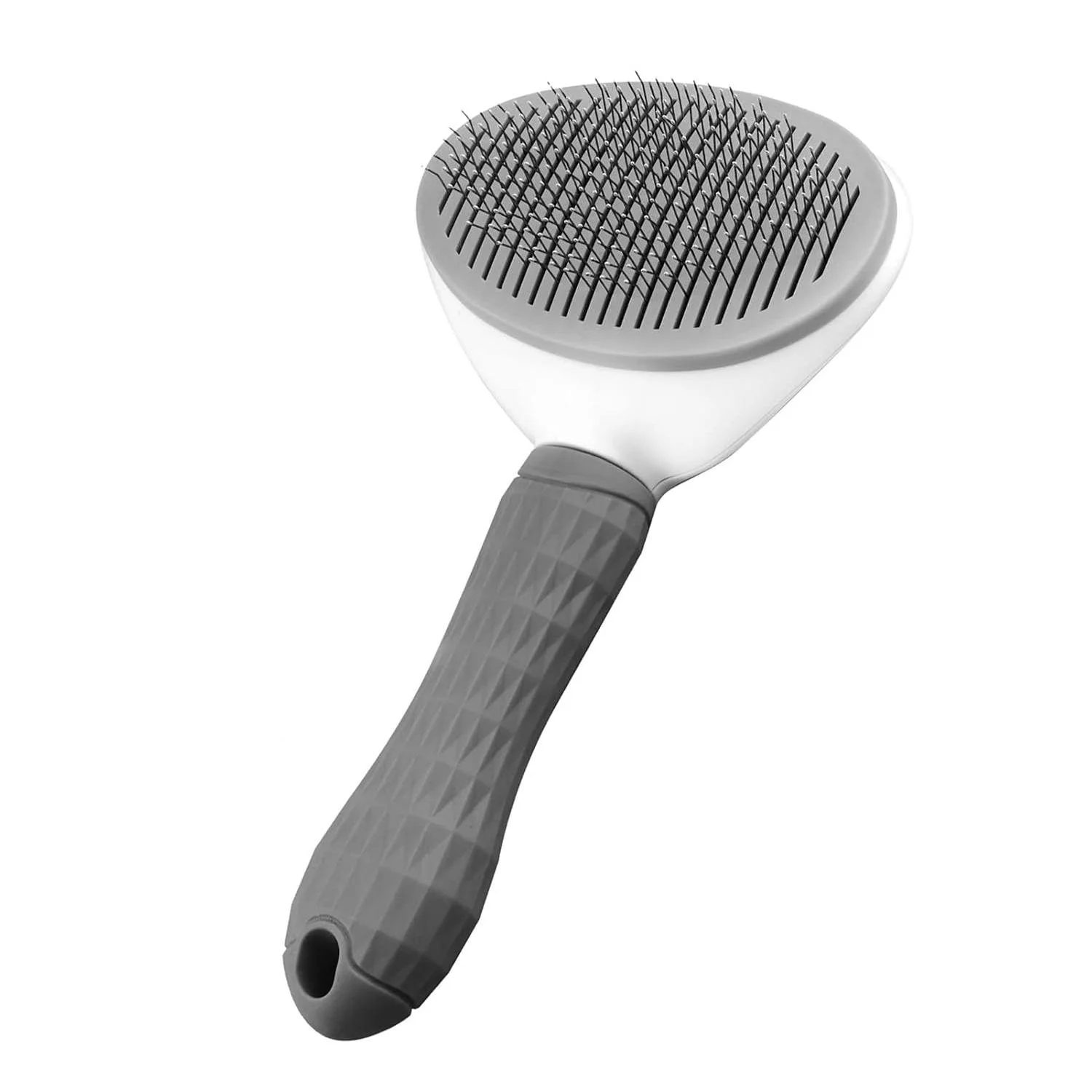
1. The Shedding Fix: Self Cleaning Slicker Brush for Dogs and Cats – Pet Grooming Tool — $16.95
The problem it solves: The fur — on the couch, the clothes, the floor, everywhere. Shedding is the #1 grooming complaint, and a slicker brush is the tool that actually handles it. The self-cleaning mechanism is the beginner’s secret weapon: it removes the fur from the brush with one button instead of picking it out by hand.
Self Cleaning Slicker Brush for Dogs and Cats – Pet Grooming Tool ($16.95) — a self-cleaning slicker brush designed for dogs and cats. The self-cleaning feature is the value: brush, press the button, and the fur releases into a clump for easy disposal.
What you’re getting: The one brush that handles the daily fur problem. Slicker brushes catch the loose undercoat that other brushes miss — that’s the fur that ends up on your clothes. The self-cleaning button keeps the brush working (a fur-clogged brush stops brushing effectively). For the beginner, it’s the tool that makes grooming feel easy instead of tedious.
Who it’s for: Every first-time dog or cat owner, double-coated breeds that shed heavily (the undercoat is the problem), and anyone whose furniture is currently 40% pet hair.
Honest limits: Slicker brushes are for the coat — not the face, not sensitive areas (use a soft brush for those). Regular brushing is required — it works when used, not when owned. And heavy shedders need consistency (2-3 times a week), not a single heroic session.
How beginners should use it: Start on the back and shoulders, where pets are most tolerant, then move gradually toward the sides and chest. Use short strokes with light pressure. If the brush catches, do not yank. Lift, reset, and work through the coat in smaller sections. For long coats, brush in layers instead of just brushing the top.
When to skip it: If the pet has painful mats close to the skin, a slicker brush is not the first tool. If the pet has very short, sleek fur and barely sheds, a maintenance comb may be enough. If the skin is irritated, raw, or flaky in a way that looks medical, the brush should wait until a vet has seen the problem.
Why beginners like it: The self-cleaning button makes the tool feel less gross. That sounds small, but small annoyances destroy habits. The easier the cleanup, the more likely the brush becomes part of routine life.
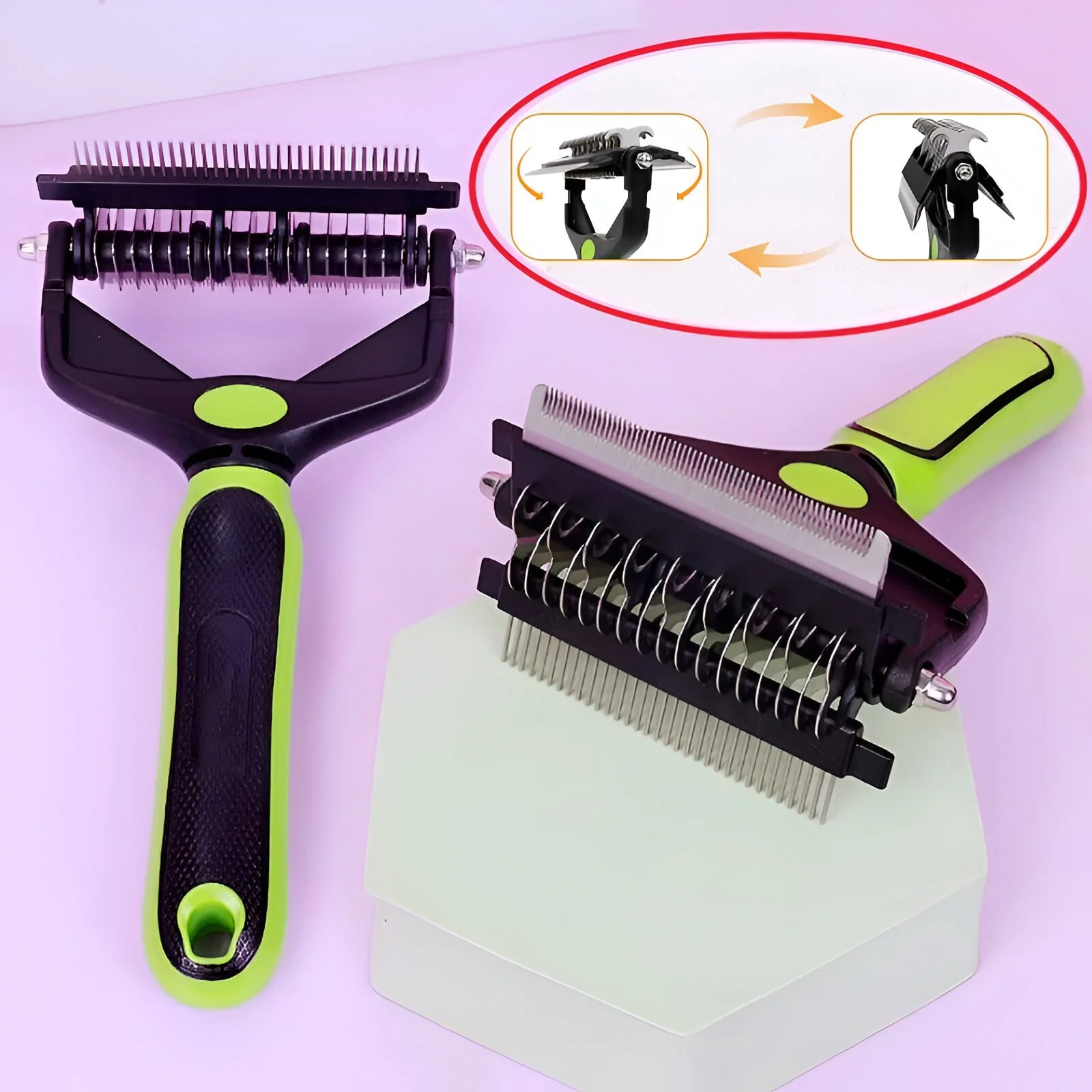
2. The Matted-Coat Fix: Foldable Pet Grooming Comb – Dog & Cat Hair Knot Remover Brush — $33.49
The problem it solves: The matted coat — the tangles behind the ears, under the legs, where the collar sits. Mats don’t fix themselves; they tighten and become painful. A grooming comb with knot-removing teeth handles the tangles before they become a vet visit.
Foldable Pet Grooming Comb – Dog and Cat Hair Knot Remover Brush ($33.49) — a foldable grooming comb designed as a knot remover for dog and cat hair. The folding design is the travel bonus; the knot-removing teeth are the function.
What you’re getting: The tool for the trouble spots. The comb’s teeth work through tangles that a brush can’t handle — behind the ears, under the armpits, around the collar. Used regularly, it prevents mats from forming (prevention is the real game); used on existing mats, it works them out gently. The foldable design means it lives in the bag, not the drawer.
Who it’s for: Long-haired and double-coated breeds that mat easily, owners of pets that hate brushing (combs feel different than brushes — some pets accept them better), and travelers who groom on the go.
Honest limits: Combs work on tangles, not on full mats that have tightened against the skin — those need a groomer or careful shaving (never yank a mat). Regular use prevents; it can’t undo neglect overnight. And combing mats out takes patience — short sessions beat one long struggle.
How beginners should use it: Use the comb as a check after brushing. If the comb slides through a zone, that area is clear. If it stops, slow down and work the small knot apart from the tips outward. Keep the pet on a non-slip surface and reward after each successful patch so the comb does not become the enemy.
When to skip it: If the coat is already packed into a dense mat against the skin, do not force the comb through it. If the pet is extremely sensitive in a zone, use the comb around the area first and return later. If the pet is short-haired and not prone to tangles, the comb may be a secondary tool rather than the main one.
Why beginners like it: It gives a visible answer to the question “Is the coat actually clear?” A brush can make the coat look neat. A comb tells the truth. Beginners need truth more than they need fluff.
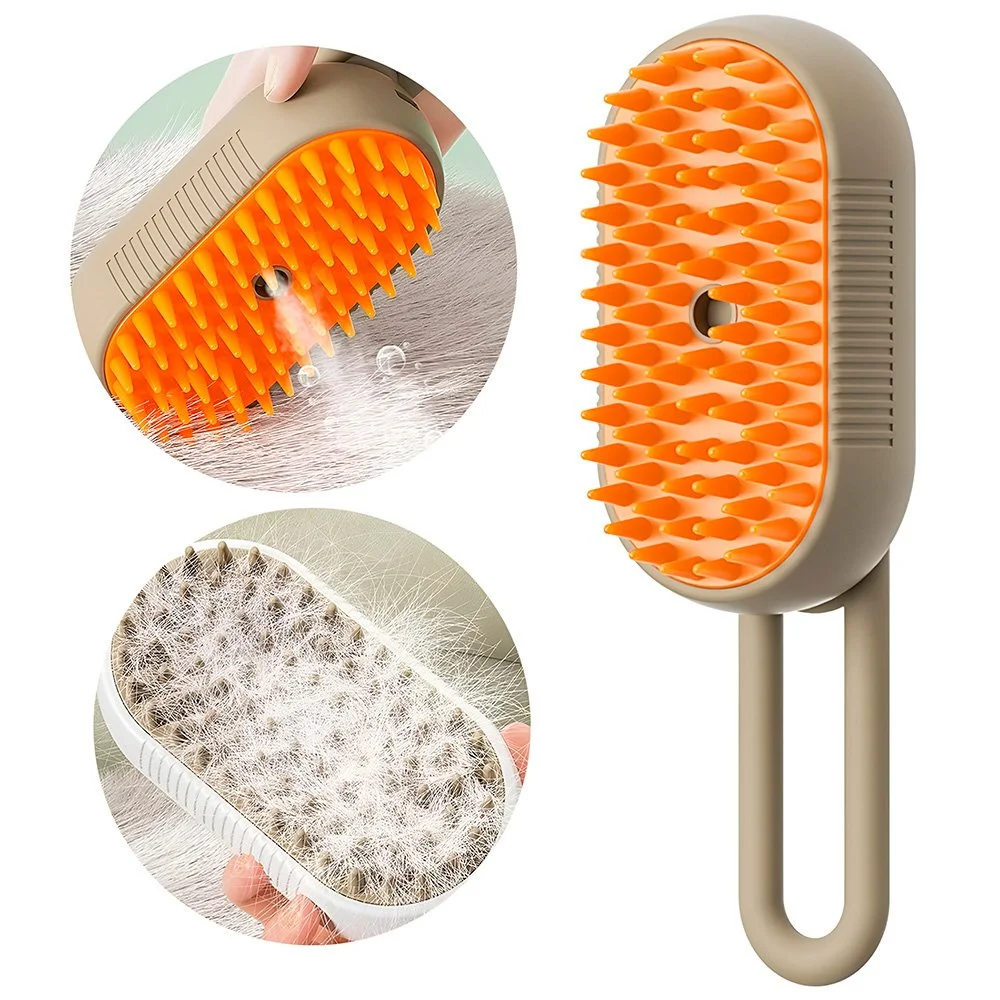
3. The Bath-Time Fix: 3-in-1 Electric Dog Steamer Brush for Grooming, Massage, and Hair Removal — $22.95
The problem it solves: The bath and de-shedding routine that’s a whole production. An electric steamer brush combines grooming, massage, and hair removal in one tool — the steam loosens dirt and loose hair, making the bath-and-brush cycle faster and more effective.
3-in-1 Electric Dog Steamer Brush for Grooming, Massage, and Hair Removal ($22.95) — an electric steamer brush that combines grooming, massage, and hair removal. The steam function is the feature: it loosens loose fur and dirt so brushing removes more with less effort.
What you’re getting: The multi-function upgrade for the grooming routine. Steam loosens the loose coat (more fur removed per session), the massage function makes the experience pleasant for the pet (easier sessions), and the hair removal does the de-shedding job. It’s the tool for owners who want the professional feel at home.
Who it’s for: Owners of heavy shedders who want more effective de-shedding, pets that resist brushing (the massage element helps), and anyone who wants the at-home version of the salon de-shed treatment.
Honest limits: It’s an electric tool — water and electricity need care (check the fill/use instructions). The steam function adds time to the session (heat-up, refill). And it’s an enhancement, not a replacement — the slicker brush still does the primary de-shedding job.
How beginners should use it: Treat it as a softening step before brushing, not as the entire grooming session. Let the tool loosen the coat, then follow with the slicker brush or comb. Keep sessions short until you know the pet tolerates the sound, heat, and sensation.
When to skip it: If the pet is nervous around noise or moisture, the steamer can backfire. If you want the simplest possible routine, the regular slicker brush is easier. If the coat is already manageable with brushing alone, the steam function may be unnecessary complexity.
Why beginners like it: It makes de-shedding feel like a full grooming experience instead of a chore. For some owners, that increase in perceived care is enough to keep the routine alive.
4. The Tear-Stain Fix: Pet Tear Stain Remover Comb - Gentle Eye Cleaning Brush for Dogs — $10.95
The problem it solves: The tear stains — the reddish-brown marks under the eyes that make white-faced dogs and cats look permanently sad. Tear stains are a common cosmetic issue, and a dedicated eye-cleaning comb handles the area gently and regularly.
Pet Tear Stain Remover Comb - Gentle Eye Cleaning Brush for Dogs ($10.95) — a gentle eye-cleaning comb designed to remove tear stains from dogs. The gentle design targets the eye area without the risk of a regular brush’s teeth.
What you’re getting: The targeted tool for the most delicate grooming zone. The gentle comb cleans the eye area daily or weekly, removing the discharge that causes staining before it sets. Regular gentle cleaning is the actual treatment for tear stains — not the harsh chemicals that some products use. At $10.95, it’s the cheapest pick on this list.
Who it’s for: White-faced and light-coated breeds (Maltese, Bichon, Poodles, white cats), any pet with visible tear staining, and owners who want to handle the issue gently instead of with stain-removal chemicals.
Honest limits: Tear stains have multiple causes — genetics, tear production, diet, and sometimes medical issues. The comb treats the cosmetic symptom; persistent or worsening staining warrants a vet check. And the eye area is delicate — use gentle pressure and follow the intended method.
How beginners should use it: Clean the eye area only with very light pressure and no rushing. Work from the outside of the stain toward the center of the cleanup area so you are not dragging debris into the eye. If the eye area looks red, swollen, painful, or produces discharge, stop and get advice.
When to skip it: If the pet has crusting, discharge, or obvious discomfort, a grooming tool is not the answer by itself. If the stain is mild and the pet does not mind face cleaning, this can be a very low-cost maintenance item. If the pet hates face handling, build trust slowly with touch before using any eye-area tool.
Why beginners like it: It turns a vague cosmetic problem into a simple routine. Instead of wondering what to do about staining, the owner gets a dedicated task with a dedicated tool.
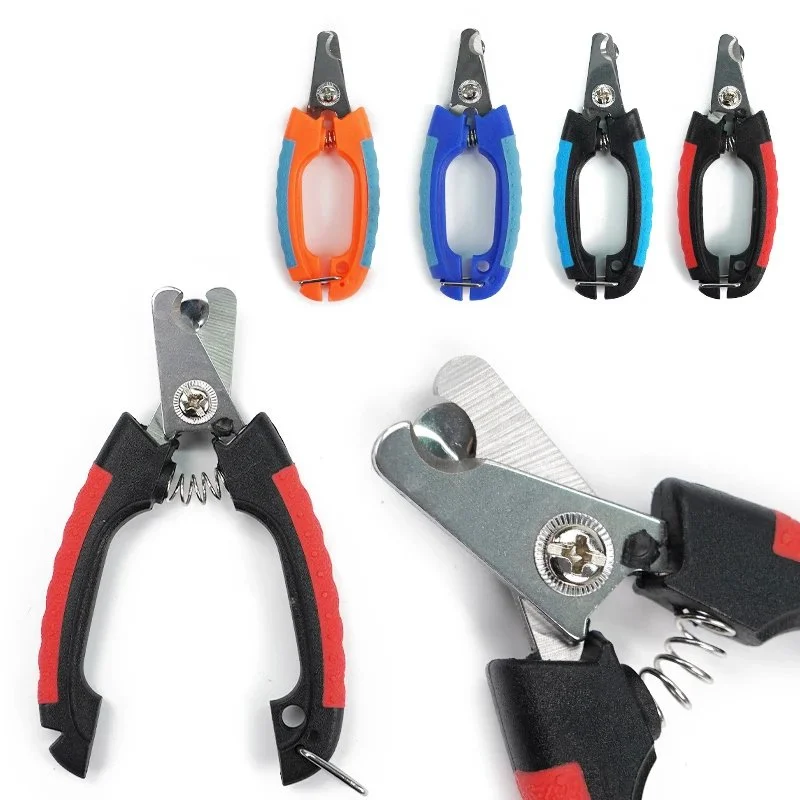
5. The Nail-Fear Fix: Professional Stainless Steel Pet Nail Clippers for Dogs, Cats & Small Animals — $17.95
The problem it solves: The nails — the grooming job everyone dreads. Overgrown nails click on the floor, snag on fabric, and can curl into the paw. The fear is hitting the quick (the blood vessel inside the nail); the fix is a proper tool with a design that makes the cut controlled.
Professional Stainless Steel Pet Nail Clippers for Dogs, Cats & Small Animals ($17.95) — professional stainless steel nail clippers designed for dogs, cats, and small animals. The stainless build and professional design give the controlled cut that prevents the quick-hit.
What you’re getting: The tool that makes nail trims doable. Good clippers cut cleanly in one motion (ragged cuts hurt and cause splitting); the grip and blade design give the control that beginners need. Start with one nail a session, reward generously, and the fear fades for both of you.
Who it’s for: Every pet owner — nails are non-negotiable maintenance. First-time groomers who are scared of the quick, owners of pets whose nails click on the floor, and anyone currently paying the groomer extra for a job they could do at home.
Honest limits: Nail trimming is the skill-based grooming task — learn the technique (where the quick is, especially on dark nails) before committing. Styptic powder for accidental nicks is a recommended companion. And clippers are for nails, not for beaks or other uses.
How beginners should use it: Trim in tiny increments. If the nail is clear or light-colored, stop before the pink quick area. If the nail is dark, remove very small amounts and stop as soon as the cross-section starts to look different. Reward after every successful nail or every paw, not only at the end. The goal is not speed. The goal is trust plus safe length reduction.
When to skip it: If the pet is panicked, a calmer session later is better. If the nails are severely overgrown or the pet has never had trims before, a groomer may be the right first step to show the baseline. If you cannot identify the cut point confidently, do not guess aggressively.
Why beginners like it: Nails are scary until the routine exists. The right clipper does not remove the fear entirely, but it makes the actual cut more controlled and less awkward.
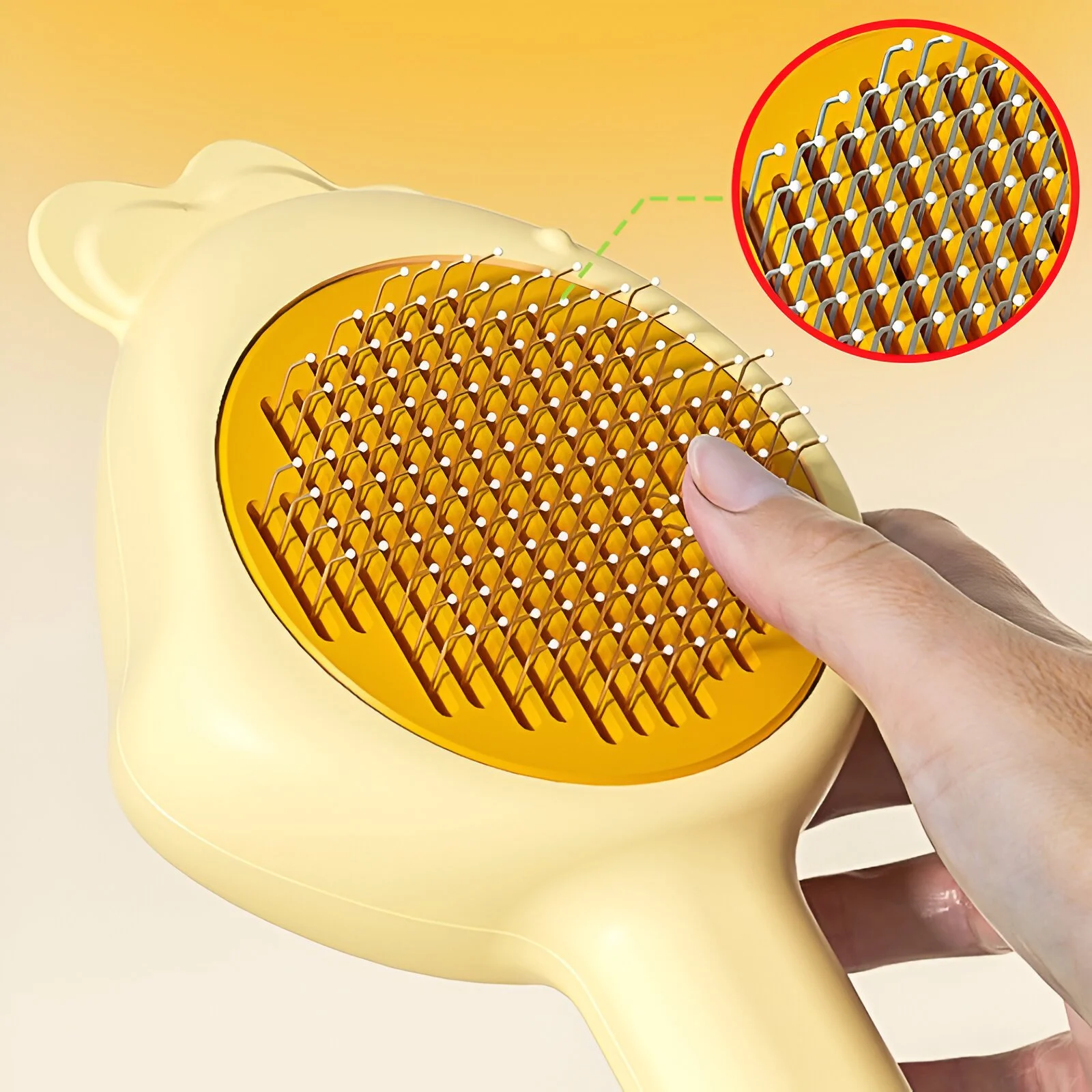
6. The Maintenance Fix: Self-Cleaning Dog & Cat Grooming Comb – Pet Hair Remover & Massage Brush — $23.65
The problem it solves: The between-brush-sessions fur — the daily touch-up that keeps the coat healthy and the furniture wearable. A self-cleaning grooming comb handles the daily maintenance and doubles as a massage tool the pet actually enjoys.
Self-Cleaning Dog and Cat Grooming Comb – Pet Hair Remover & Massage Brush ($23.65) — a self-cleaning grooming comb that removes pet hair and massages. The self-cleaning mechanism plus the massage function make it the daily-maintenance tool pets accept willingly.
What you’re getting: The daily grooming habit in one tool. The massage function makes the session pleasant (pets that resist grooming often accept this), the hair removal keeps the fur situation under control between deep brushes, and the self-cleaning keeps the tool itself ready. It’s the “every day” tool that prevents the “fur everywhere” problem from building up.
Who it’s for: Owners who groom daily or want to build the habit, pets that resist traditional brushing (the massage helps), and multi-pet households where one tool serves the rotation.
Honest limits: Daily maintenance tools are supplements, not replacements — the slicker brush still does the deep de-shedding. The massage function is a pleasant addition, not a medical massage. And like all self-cleaning tools, the mechanism needs occasional clearing to keep working.
How beginners should use it: Use it as the first touch tool when a pet is suspicious of grooming. Start with short, calm sessions in low-risk areas. If the pet relaxes, you can turn the same session into a longer brush-out later. This tool is valuable because it lowers resistance, not because it removes the most fur.
When to skip it: If the pet already accepts brushing, the slicker brush may be more efficient. If the session is getting more about comfort than coat maintenance, that may be fine for the day, but you still need a deeper brush later.
Why beginners like it: It makes grooming feel less like enforcement. Many new owners need one low-friction tool to build the habit, and this is the calmest one in the list.
The Grooming-Tool Comparison
| Pick | Price | Beginner problem it solves | Best for | Watch out for |
|---|---|---|---|---|
| Self-Cleaning Slicker Brush | $16.95 | Shedding fur everywhere | First-time owners | Coat only, not face |
| Foldable Knot-Remover Comb | $33.49 | Matted coats out of control | Long-haired breeds | Prevention not neglect-fix |
| 3-in-1 Steamer Brush | $22.95 | Bath + de-shed production | Heavy shedders | Electric tool care |
| Tear-Stain Remover Comb | $10.95 | Staining under the eyes | White-faced breeds | Symptom not cause |
| Stainless Nail Clippers | $17.95 | Scared to cut nails | Every owner | Skill required |
| Self-Cleaning Massage Comb | $23.65 | Daily maintenance habit | Pets that resist brushing | Supplement not replace |
Editor’s Buying Notes: The Three-Tool Minimum
Beginner grooming is three jobs, not thirty tools: the coat (shedding and mats), the nails, and the trouble spots. Every additional tool is optional until the basics are handled. The honest minimum kit is a slicker brush, nail clippers, and a comb — about $45-70 total — and that covers 90% of at-home grooming.
The coat job is the daily one. The slicker brush handles the shedding that ends up on your furniture; the knot-remover comb handles the tangles that become mats. Used consistently — a few minutes, a few times a week — they prevent the two coat problems that lead to vet visits. The steamer brush is the enhancement for heavy shedders, not the starting point.
The nails are the skill job. Everyone is scared of the quick — that’s normal — and the fix is technique plus the right tool. Good clippers cut cleanly in one motion, which is safer than ragged cuts. Start with one nail a session, reward generously, and keep styptic powder ready. The fear fades with practice; the clippers make the practice possible.
The trouble spots are the breed-specific jobs. Tear stains need a gentle eye-area comb and regular cleaning — and an honest note that persistent staining can have medical causes worth a vet check. Mats behind the ears need the comb and prevention. These are the “second-tier” tools that make sense once the basics are in place.
The buying mistake that creates the grooming graveyard: buying the professional wall before building the habit. The steamer brush and the high-end combs are upgrades, not starting points. Begin with the three essentials, build the routine (short positive sessions, treats, consistency), then add tools as the routine stabilizes.
The full beginner kit from this list runs about $126. The essential three-tool kit is $45-70. Both are defensible; the essential kit is the honest starting point for any first-time owner.
Your First 30 Days of At-Home Grooming
The first month should be about habit, not perfection. A beginner who tries to complete every grooming job on day one often teaches the pet to dislike the process. A beginner who uses tiny sessions for a month usually ends up with a pet that tolerates grooming better and an owner who understands the coat.
Week 1: Touch and brush tolerance. Put the grooming tools where the pet can see them without being forced to interact. Let the pet sniff the slicker brush or massage comb. Touch the brush to the shoulder, reward, then stop. Do a few light strokes on the back and stop before the pet pulls away. The goal is not removing a full pile of fur. The goal is making the tool ordinary.
Week 2: Coat zones. Add structure. Brush the back, sides, chest, and tail area in separate mini-sessions. Use the comb to check behind the ears and around the collar. If you find tangles, work on tiny sections. If you find a tight mat, do not turn the session into a battle. Mark the area mentally and consider professional help if it is close to the skin.
Week 3: Nail desensitization. Bring out the nail clippers without cutting. Touch paws, reward, release. Tap the clipper near the nail, reward, release. Clip one tiny nail tip only if the pet stays calm and you can see what you are doing. One nail is a successful session. Beginners often fail because they define success as finishing all four paws.
Week 4: Build the real routine. Decide what the pet needs weekly. Short-haired pets may need brushing twice a week and nail checks every week or two. Long-haired pets may need comb checks several times a week. Tear-stain-prone pets may need eye-area cleanup daily or every few days. The routine should fit the actual coat, not a generic calendar.
At the end of 30 days, ask three questions. Is the pet calmer around the tools? Is the coat easier to check? Are nails being monitored before they become a crisis? If the answer is yes, the beginner kit is working even if the grooming still looks imperfect.
Match the Tool to the Problem
| If you notice this | Start with this tool | What to do next |
|---|---|---|
| Fur on clothes and furniture | Self-cleaning slicker brush | Brush 2-3 times a week and clean the brush after each session |
| Tiny tangles behind ears | Knot-remover comb | Work from the ends, not the skin, and keep sessions short |
| Hard mat close to skin | Professional groomer | Do not yank, cut blindly, or force a comb through |
| Nails clicking on floor | Stainless nail clippers | Trim tiny amounts and reward after each nail |
| Brown staining below eyes | Tear-stain comb | Clean gently and watch for redness or discharge |
| Pet runs from the brush | Self-cleaning massage comb | Build tolerance before using stronger tools |
| Shedding gets worse after bath | Steamer brush + slicker brush | Loosen coat, then brush out gently |
| Cat coughs up hairballs often | Slicker brush or maintenance comb | Use short sessions and ask a vet if hairballs are frequent or severe |
This table matters because beginners often buy the wrong tool for the visible symptom. A mat is not just “more shedding.” Tear staining is not a whole-body grooming problem. Nail clicking is not solved by brushing more. Matching the tool to the problem keeps the kit small and the routine sane.
Safety Rules Beginners Should Memorize
Never pull a mat hard. Mats are not loose knots sitting on top of the coat. They can tighten close to the skin and pull painfully with every movement. If the mat is loose and small, work slowly from the outside. If it is dense, flat, close to skin, or causing redness, stop.
Never cut into a mat blindly. Skin can fold into the mat, especially around armpits, ears, and belly areas. Scissors can cause serious injuries when used by beginners on tight mats. A groomer has the tools and handling experience for that job.
Never chase a pet with a grooming tool. The chase teaches the pet that tools mean loss of control. Instead, choose a smaller session, a calmer room, better rewards, and a non-slip surface. A pet that leaves calmly can try again later. A pet that is trapped may panic next time.
Never punish resistance. Resistance is information. It can mean fear, pain, fatigue, skin sensitivity, tool pressure, or a session that lasted too long. Punishment may suppress the signal, but it does not solve the cause.
Never ignore skin changes. Grooming is a chance to find lumps, scabs, fleas, ticks, hot spots, redness, odor, and irritation. A brush can reveal a problem, but it does not diagnose it. If grooming uncovers something abnormal, pause the routine and get proper advice.
Never assume cats are being difficult for no reason. Cats may resist because the sensation is too intense, the session is too long, the belly is sensitive, or they are not used to being restrained. Cat grooming works best when consent is built gradually.
Common Beginner Grooming Mistakes to Avoid
The first mistake is buying the professional wall before building the habit. The steamer brush and the high-end combs are upgrades, not starting points. Begin with the three essentials — slicker brush, nail clippers, comb — build the routine, then add tools as the routine stabilizes.
The second mistake is treating grooming as a marathon instead of a habit. A forced 30-minute session twice a month is worse than five gentle minutes daily. Short positive sessions with treats build tolerance faster than long struggles.
The third mistake is skipping the nail-trimming skill development. Everyone is scared of the quick — that’s normal — but avoiding the task entirely means overgrown nails that click, snag, and curl. Start with one nail a session, cut small amounts, keep styptic powder ready. The fear fades with practice.
The fourth mistake is ignoring the breed-specific jobs. White-faced breeds need the tear-stain routine; long-haired breeds need the mat-prevention comb. The generic brush-and-clippers kit doesn’t cover the trouble spots that matter for your pet’s coat.
The fifth mistake is treating grooming tools as permanent. Brush heads wear, clippers dull, and self-cleaning mechanisms clog. Inspect tools regularly, clean after use, and replace what’s worn — a dull blade or a fur-clogged brush works against you.
The sixth mistake is brushing only where the pet looks fluffy. Problem zones are often hidden. Behind ears, under collars, under legs, belly edges, tail base, and friction points matter more than the center of the back. Beginners like brushing the easy zones because the pet tolerates them. The coat problems usually live in the less convenient zones.
The seventh mistake is using grooming as cleanup instead of prevention. Brushing after the couch is covered in hair feels reactive. Combing after mats form feels stressful. Nail trimming after nails are long feels scary. The routine works best before the problem is dramatic.
The eighth mistake is assuming more pressure means better grooming. Pressure can irritate skin, make pets resist, and turn a useful tool into a painful one. Most beginner grooming should feel like repeated light passes, not scraping.
The ninth mistake is failing to clean the tools. A fur-clogged slicker brush does not grip new loose coat well. A dirty comb can drag debris through the coat. Dull clippers crush instead of cutting cleanly. Tool maintenance is part of pet maintenance.
The tenth mistake is skipping professional help out of pride. At-home grooming is maintenance. Professional grooming is still valuable for full coat resets, severe mats, breed-specific cuts, sanitary trims, and teaching owners what normal should look like. A beginner kit should reduce avoidable appointments, not replace expertise in every situation.
FAQ
Q: What’s the absolute minimum grooming kit for a first-time pet owner? A: Three tools: a slicker brush ($16.95) for shedding, nail clippers ($17.95) for feet, and a comb ($10.95-$33.49) for trouble spots. Total: about $45-70. That covers the 90% case.
Q: How often should I brush my pet? A: Daily for long-haired/double-coated breeds (5 minutes a day prevents mats), 2-3 times a week for short coats, more during shedding seasons. Consistency beats marathon sessions.
Q: How do I trim nails without hitting the quick? A: Start with one nail a session, cut small amounts, and look for the pink area in the nail (harder to see on dark nails — cut tiny increments). Have styptic powder ready for accidents. When in doubt, a groomer can show you once.
Q: My pet hates grooming. What do I do? A: Use the tools with the gentlest feel (the massage comb, pick #6), go slow, pair sessions with treats, and stop before the pet gets overwhelmed. Short positive sessions build tolerance faster than forced marathons.
Q: Can these tools work for cats and small animals too? A: Yes — the brush, comb, and clippers are designed for dogs and cats (the clippers list small animals too). Adjust technique for size and coat type; cats need gentler, shorter sessions.
Q: What’s the total cost of the full beginner kit from this list? A: About $126 for all six. The essential three-tool kit is about $45-70; the complete kit adds the steamer brush, tear-stain comb, and daily maintenance comb.
How long does it take for a pet to accept grooming? Most pets adapt within a few weeks of short, consistent, treat-paired sessions. Start with the least-threatening tool (the massage comb), progress to the brush, and leave the clippers for last — nail trims are the most stressful and should be the most rewarded.
When should I see a professional groomer instead? For full grooming (baths, cuts, full coat work), for severe mats that have tightened against the skin, and for the first nail trim if you’re too nervous to try. The at-home kit handles maintenance; the groomer handles the transformations.
Do beginners need dog clippers? Usually not at first. Clippers are useful for some coats and some maintenance tasks, but they require technique and coat knowledge. Beginners should learn brushing, combing, mat prevention, and nail care first. If your pet needs regular haircuts, schedule a groomer and use the at-home kit between appointments.
Is a slicker brush safe for cats? It can be, if used gently and briefly. Cats have different tolerance levels, and some dislike the feel of slicker pins. Start with light pressure on the back or shoulders, stop early, and switch to a massage comb if the cat resists. Avoid the belly until the cat clearly trusts the routine.
What if my pet has already developed mats? Small loose tangles can sometimes be worked apart with a comb, patience, and very short sessions. Tight mats close to the skin should go to a professional groomer. Do not pull hard and do not cut blindly with scissors.
Should I brush before or after a bath? Brush before the bath whenever possible. Water can tighten existing tangles, making mats worse. For shedding coats, a bath-time tool like the steamer brush can help loosen hair, but the coat should still be checked before and after.
How do I know if nails are too long? Clicking on hard floors is a common sign. Nails that touch the ground strongly while the pet stands, snag on fabric, or change how the paw sits should be addressed. If nails are very overgrown, trim gradually over multiple sessions or get professional help.
Are nail grinders better than clippers? Grinders can smooth nails and reduce sharp edges, but they add vibration and sound that some pets hate. Clippers are simpler for many beginners. The best tool is the one you can use calmly and safely.
Can I use human nail clippers on pets? For very small animals, some owners do, but a pet nail clipper is usually easier and more appropriate because pet nails are shaped differently. For dogs especially, use a proper pet nail tool.
How often should I clean tear stains? For pets prone to staining, gentle daily or every-few-days cleanup is better than waiting for heavy buildup. Persistent staining, odor, redness, squinting, or discharge should be checked rather than treated as purely cosmetic.
What grooming tool should I buy for a puppy or kitten? Start with the gentlest tolerance-building tool and nail handling. A massage comb, light brushing, paw touching, and rewards matter more than removing lots of fur. The goal is to teach that grooming is normal before adult coat and nail maintenance becomes harder.
What if my pet bites or scratches during grooming? Stop the session. Do not escalate. Shorten the task, use better rewards, change the tool, and consider asking a groomer, trainer, or vet for help if the reaction is intense. Biting and scratching mean the current plan is too much.
Can grooming reduce allergies? Regular brushing can reduce loose hair and dander in the home, but it does not eliminate allergens. Allergies are complex and may involve dander, saliva, urine proteins, and household cleaning routines. Grooming is one useful habit, not a cure.
How should I store grooming tools? Keep them dry, clean, and in one predictable place. A small pouch or bin works better than scattering tools across drawers. If tools are easy to find, the routine happens more often.
How do I know when a tool needs replacing? Replace or repair tools when pins bend, clippers dull, self-cleaning buttons stick, comb teeth warp, or the tool starts pulling instead of gliding. Grooming should not feel harder as the tool ages.
Final Verdict
The best beginner grooming kit is the smallest kit that solves the real problems your pet creates. For most owners, that means a slicker brush, nail clippers, and a comb. Add the steamer brush if bath-time de-shedding is a recurring challenge. Add the tear-stain comb if your pet has a light face and visible staining. Add the massage comb if the pet needs a gentler bridge into grooming.
The mistake is trying to buy confidence. Tools help, but routine creates confidence. Five calm minutes twice a week will teach you more than a drawer full of unused equipment. Start with the coat, learn the nails slowly, check the trouble spots, and let the kit grow only when the pet’s actual needs justify the next tool.
- Serper Google SERP analysis (gl=us) 2026-08-20: “pet grooming tools for beginners”, “essential dog grooming tools”, “grooming tools for cats”
- The Groom Haus — Essential Dog Grooming Tools for Beginners (content gap reference)
- Reddit r/doggrooming — beginner tool questions thread
- Andis — professional grooming tools category
- PickByU catalog (products-combined-20000.csv, grooming) — all six products verified with exact prices and product IDs on 2026-08-20
Sources
- Catalog prices and product details verified from PickByU product pages, 2026-08-20
- Beginner pet grooming guidance informed by common veterinary and professional groomer recommendations
— Maya Porter, Editor-in-Chief, PickByU