Featured Buying Guide
Best Dinnerware Sets for Apartments: Budget-Tier Picks That Survive Real Life
Quick Answer
Best Dinnerware Sets for Apartments: quick answer
An apartment-focused dinnerware guide that explains when to buy a full set, when to build a modular table, and how to choose budget plates, bowls, cutlery, cups, sauce dishes, and saucer sets for small cabinets and real daily meals.
- This guide is built around apartment storage, daily use, and partial-set buying logic.
- The comparison covers ceramic, stainless steel, wood-accented, and cutlery-based table upgrades.
- 6 catalog-backed dinnerware picks are placed inside the guide as examples.
Best Dinnerware Sets for Apartments: Budget-Tier Picks That Survive Real Life
Product references, prices, and listed features were checked in the PickByU catalog on 2026-08-13. These are apartment-minded dinnerware picks, not hands-on test results. Every piece is chosen for the specific way small-space living actually uses plates, bowls, and cups — stackable storage, everyday durability, and a table that feels intentional without a full 16-piece investment.
Quick Answer: What Should You Buy?
If you live in an apartment and want dinnerware that looks deliberate without buying a full matching set, here’s the short version: start with one distinctive bowl-and-plate pair for the meals that matter, add cutlery that matches, and finish with cups you actually like holding. You don’t need a 16-piece set — apartment kitchens rarely have the cabinet space, and a full set of plain white plates reads as “default,” not “chosen.” The picks below cover the six pieces an apartment table actually uses, each under $40.
Why This Guide Exists (and What Most Dinnerware Guides Miss)
Search “best dinnerware sets” and you’ll find the same format everywhere: a giant ranking of 16-to-20-piece sets, tested by editors with full kitchens, in houses with dining rooms. The winner is always a $200+ stoneware set that “will last generations.” None of that answers the actual apartment question: I have one small cabinet, I eat at a two-seat table, and I want my dishes to feel like mine without a renovation or a china budget.
That’s the gap this guide fills. The SERP for “best dinnerware sets” is dominated by testing sites (Bon Appétit, The New York Times, Food & Wine) that rank complete sets for traditional households, plus e-commerce giants (Amazon, Mikasa, Wayfair) showing their own catalogs. What’s missing is the apartment layer: budget-tier pieces, stackable storage considerations, the “buy a pair instead of a set” logic, and honest limits on ceramic in small kitchens. That’s exactly what this guide covers.
The research behind the picks is simple: apartment dwellers don’t need a service for twelve. They need four things that work together — a plate and bowl that make a meal feel intentional, cutlery that matches, and cups they’re happy to hold every morning. Each pick below solves one of those four jobs.
SERP Intent Map: What “Best Dinnerware Sets” Really Means
The phrase “best dinnerware sets” looks simple, but the search intent behind it is split. One shopper is furnishing a first apartment and needs the basics without spending much. Another is replacing chipped plates in a small kitchen. Another wants something that looks good for hosting but does not have room for a full service. Another is comparing ceramic, stoneware, porcelain, melamine, glass, and stainless accents without knowing which material makes sense for daily use.
Most broad dinnerware guides collapse all those users into one ranking. That produces a list of complete sets: four dinner plates, four salad plates, four bowls, four mugs, sometimes with serving pieces. A complete set is useful for a house with cabinet space, a dining table, and predictable hosting needs. It is less useful for the renter with one upper cabinet, two people in the household, and a table that also becomes a desk. For that shopper, the “best set” may not be a set at all. It may be a small group of pieces that cover the real meals they eat.
This is the apartment gap. Apartment dinnerware has to answer different questions. Does it stack? Does it mix with existing white plates? Does it make takeout look less sad? Does it survive a crowded sink? Does it fit in a dishwasher rack? Does it make breakfast and coffee feel better without requiring a china cabinet? A product can win a general dinnerware test and still be wrong for an apartment if it needs too much storage, weighs too much, chips too easily, or creates a matching-set obligation the buyer cannot finish.
Budget also changes the question. A $200 dinnerware set may be reasonable for a long-term household, but many apartment shoppers are in transition: first lease, shared space, temporary city apartment, student housing, post-move reset, or a small rental kitchen that may not be permanent. They want improvement without commitment. Under $40 pieces are easier to buy one at a time, replace if chipped, and mix with what they already own. That is why this guide focuses on budget-tier pieces and partial-set logic rather than one large boxed dinnerware set.
The best answer for this search, then, is not “buy this one complete service.” It is “build the table around the pieces you actually use.” For many apartment households, that means one or two plate-and-bowl pairs, one matched cutlery set, one daily cup, and a few small dishes for sauces or desserts. That gives the table a finished look while keeping the cabinet practical.

What Counts as Dinnerware in a Small Apartment?
Dinnerware is usually defined as plates, bowls, mugs, and sometimes serving pieces. In an apartment, the working definition is narrower: the objects that turn food into a meal at the table. That can include cutlery, sauce dishes, coffee cups, and accent bowls because those are the pieces that shape how the meal feels. If you eat dumplings from takeout containers but put soy sauce in a small dish, use matched cutlery, and drink tea from a cup you like, the meal already feels more deliberate than eating straight from packaging.
This matters because apartment dining is often improvisational. The same table may handle breakfast, remote work, mail sorting, dinner, and guests. A full dinnerware set assumes a dedicated dining routine. Apartment dinnerware needs to create that routine quickly and then disappear into a small cabinet. The pieces have to work hard: one bowl for cereal, soup, noodles, fruit, and dessert; one plate for toast, rice bowls, reheated leftovers, and a guest’s serving; one cup for morning coffee and evening tea.
That is why this guide includes pieces outside the classic boxed-set format. The cutlery set is not technically dinnerware, but it is part of the table signal. The sauce dish is small, but it changes how takeout, condiments, dips, and side seasonings are served. The cup-and-saucer set is not necessary for hydration, but it creates a sit-down ritual. Apartment dinnerware is not about owning every category. It is about owning enough of the right categories to make a small meal feel complete.
The better question is not “How many pieces are in the set?” It is “How many of these pieces will I touch in a normal week?” A twelve-piece set where six pieces sit unused is not better than a four-piece setup that gets used every day. In a small space, inactive pieces are not neutral. They take cabinet space, make stacking harder, and make the kitchen feel more full than it is.
Full Sets vs. Modular Dinnerware
Full dinnerware sets have one obvious advantage: everything matches. If you want visual uniformity and have the space, a full set can make a table look pulled together immediately. It also simplifies hosting because every place setting is already coordinated. The problem is that many apartment shoppers do not need four identical salad plates, four identical mugs, and four identical bowls. They need a flexible setup that handles one or two people most nights and still looks acceptable when a friend comes over.
Modular dinnerware solves that by letting you buy for the actual household first. Start with the pieces that handle daily meals. Add accent pieces for the meals that feel special. Add extras only when repeated use proves you need them. This approach is less symmetrical, but it is often more functional. It also leaves room for personality: one flower-shaped bowl-and-plate pair, one black dessert bowl, one retro cup, and one stainless sauce dish can look curated if the colors and materials are balanced.
The risk of modular buying is randomness. If every piece has a different color, finish, rim shape, and material, the table can look accidental. The fix is to repeat one or two design cues. Gold cutlery can repeat with warm wood. Black ceramic can repeat with stainless steel or neutral plates. A flower-shaped plate can work beside plain white dishes because the white dishes act as visual background. Modular does not mean chaotic. It means selected.
For first apartments, modular buying is usually the better path. You can start with a cutlery set and a plate-bowl pair, then add cups once you know how much cabinet space remains. For settled households, a full set may still make sense if storage is easy and the table needs to serve four people often. But if the apartment table seats two and the cabinet holds one stack of plates, a boxed set is often an overbuy.
How Many Pieces Do You Actually Need?
For one person, the minimum useful setup is two plates, two bowls, one or two cups, and one matched cutlery set. Two of each gives you a clean backup without forcing dishes after every meal. If you host occasionally, add two more plates or use accent pieces only for the guest meal. The goal is not to own the fewest possible dishes; it is to own enough that the kitchen works without turning into a sink full of emergency washing.
For two people, four plates and four bowls are usually enough for daily life if you run the dishwasher or wash by hand regularly. Apartment kitchens rarely need eight-place settings unless hosting is frequent. If you cook most nights, prioritize bowls. Bowls handle more meals than plates in modern apartment eating: grain bowls, noodles, soups, salads, leftovers, fruit, oatmeal, and snacks. A good bowl is often more useful than a second small plate size.
For occasional hosting, build a “visible set” rather than a full cabinet set. That means the pieces on the table should coordinate, even if the storage cabinet is mixed. Matched cutlery and consistent cups do a lot of visual work. Plain existing plates can sit under distinctive bowls. Sauce dishes can make shared food feel more intentional. Guests do not inspect whether your cabinet is a complete set. They experience the table in front of them.
For tiny kitchens, the best piece count is the one you can store neatly. If the cabinet requires rearranging every time you put a bowl away, you own too much or the shapes are wrong. Stackability, nesting, and shelf height matter more than the number printed on a box. A scalloped flower plate may be worth its extra space if it is the piece you love, but six unusual shapes can make storage miserable.
Material Rules for Apartment Dinnerware
Ceramic is the default apartment choice because it looks good, feels substantial, and works for most meals. It holds heat better than thin plastic, feels more grown-up than melamine, and comes in enough colors and shapes to create personality. The trade-off is chipping. Ceramic is not fragile in normal use, but it can chip when knocked against a sink, dropped on tile, or stacked aggressively in a crowded cabinet.
Porcelain is usually thinner and more refined than everyday ceramic, though product listings often use the terms loosely. It can feel more elegant and may stack neatly if the shapes are simple. It can also be more delicate. For an apartment, porcelain is best when the piece is an accent rather than the entire daily set. A special cup or small plate can elevate the table without making every dish feel precious.
Stoneware is heavier and often more rustic. It can look beautiful, but weight matters in small kitchens. Heavy dishes are harder to stack, harder to lift from high cabinets, and more punishing if they slip. Stoneware also tends to take up more vertical space because the pieces are thicker. It is a strong choice if durability and earthy styling matter, but not always the most storage-friendly apartment material.
Melamine and plastic are light and hard to break, but they do not create the same table feeling. They are useful for outdoor meals, kids, patios, or households where breakage is the main concern. They are less satisfying for the shopper trying to make apartment dining feel like an actual dining setup. They also may have microwave limits depending on material. For this guide, ceramic and stainless pieces make more sense because the goal is daily table improvement, not picnic durability.
Stainless steel earns a place through small dishes and utility pieces. It is nearly impossible to chip, easy to stack, and resistant to sauce stains. A stainless sauce dish is not as warm-looking as ceramic, but it is practical. In apartments, where one small dish may be used for soy sauce, ketchup, dressing, nuts, condiments, and prep ingredients, stainless can be the low-maintenance choice.
Wood is best as an accent, not the main dinnerware material. The wood saucer in this guide adds warmth and a cafe-like feeling, but wood needs hand-washing and should not sit wet. That makes it great for a coffee ritual and less ideal for messy everyday meals. Wood can make a small table feel softer and more designed, but it adds care requirements that not every household wants.
Shape, Stackability, and Cabinet Reality
The most beautiful dinnerware can become annoying if it stacks badly. Apartment cabinets often have fixed shelf heights, narrow doors, and awkward corners. A plate with a high rim, a bowl with a foot, or a cup with a large handle may take more space than expected. That does not mean you should only buy flat white plates. It means every special shape should earn the space it takes.
Round plates and bowls are the easiest to stack. Scalloped, flower-shaped, footed, or handled pieces add visual interest but reduce storage efficiency. The practical compromise is to use distinctive shapes as accent pieces and keep the baseline pieces simple. One flower-shaped plate can make a meal feel special. A whole cabinet of irregular shapes may create friction every time you unload the dishwasher.
Footed bowls are especially storage-sensitive. They look elegant because they lift the food visually, but the foot adds height and limits nesting. They are best used for desserts, fruit, yogurt, or small composed servings rather than as the main everyday bowl. If cabinet space is tight, own one or two footed pieces, not a stack of six.
Cups create a different problem: handles. A cup may stack poorly or not at all if the handle is large or the shape is tapered. Cup-and-saucer sets add a second piece that needs a home. That can be worth it for a daily ritual, but it should be intentional. If you already struggle with mug storage, buy one special cup rather than a pair or set.
Before buying any apartment dinnerware, measure the shelf where it will live. Check shelf height, not just width. Ask whether the piece will stack with what you own or need its own space. If it needs its own space, decide whether it will be used often enough to deserve that space. This is the apartment version of a durability test: not “Can it survive a lab drop?” but “Can it survive my cabinet?”

Color and Table Style: How to Mix Without Looking Random
Apartment dinnerware looks intentional when the table has a repeated visual language. That can be color, material, shape, or finish. Gold cutlery repeats warmth. A wood saucer repeats natural texture. Black ceramic repeats contrast. White plates create background. Stainless sauce dishes add utility without shouting. The key is choosing one or two anchors and letting the rest stay quiet.
If your existing dishes are plain white, almost every pick in this guide can work. White is the easiest base because it lets accent pieces stand out. A flower-shaped bowl and plate become the focal point. Gold cutlery adds warmth. A black dessert bowl adds contrast. Retro cups create a coffee moment. Plain white dishes are not a problem; they are the neutral system that lets a few selected upgrades do the work.
If your kitchen is modern and minimal, be careful with too many decorative motifs. The flower-shaped plate, retro cup, and wood saucer can all be charming, but together they may feel busy unless the rest of the table is simple. Choose one expressive piece and support it with quiet pieces. For example: flower-shaped plate, gold cutlery, plain napkin, and stainless sauce dish. Or retro cup, wood saucer, and white plate.
If your kitchen is warm, vintage, cottage, or eclectic, the decorative pieces can work together more easily. A flower silhouette, retro cup, and wood accent all belong in a softer table style. The risk is not mismatch; it is clutter. Small tables have less visual breathing room. Even in an eclectic apartment, leave space between objects and keep the place setting functional.
If your style is dark, industrial, or high-contrast, the black dessert bowl and stainless sauce dish may fit best. Gold cutlery can work as a warm counterpoint, but the flower-shaped plate may feel softer than the rest of the room. That is not automatically bad. A small table often benefits from one softer object. Just avoid mixing every finish at once.
Budget Tiers: What You Get Under $20, $30, and $40
Under $20, the best dinnerware-adjacent upgrade is usually cutlery. It changes the table immediately, stores easily, and affects every meal. In this guide, the gold mirror cutlery is the clear low-cost transformation. It will not solve plate storage or coffee rituals, but it changes the first thing your hand touches at the table. For first apartments, that matters.
Under $30, you can usually find useful accent pieces: a plate-and-bowl pair, sauce dishes, small bowls, or simple cups. This is the sweet spot for apartment dinnerware because the risk stays low. You can buy one piece, live with it, and decide whether to add another. The flower-shaped bowl-and-plate pair fits this logic because it gives you a small table upgrade without requiring a whole cabinet reset.
Under $40, the category opens into more design-specific pieces: retro cups, saucer sets, footed bowls, and more distinctive ceramics. These are not necessarily more useful than the under-$30 picks. They are more mood-driven. The extra money often buys form, material detail, or a stronger table presence. That can be worth it if the piece matches a ritual you already have, like coffee every morning or dessert after dinner.
The trap is assuming that a higher price means a better apartment fit. A $37 cup-and-saucer set can be wonderful for someone who sits down with coffee. It can be wasteful for someone who drinks from a travel mug while leaving the house. A $15 cutlery set can be more transformative than a $38 cup if mismatched forks are the thing making your table feel unfinished. Price should follow use frequency.
Ranking Criteria: How These Picks Were Chosen
The ranking is built around apartment-specific criteria, not traditional dinnerware scoring. The first criterion is storage efficiency. Pieces that solve a daily table problem without demanding too much cabinet space score higher. The second is use frequency. A piece used every morning or every dinner matters more than a decorative piece used once a month. The third is visual impact. Apartment dining often needs small objects that make the table feel intentional quickly.
The fourth criterion is replacement risk. Budget-tier dinnerware should not feel catastrophic if a piece chips or breaks. That is why this guide avoids pretending that a single ceramic object is an heirloom. The goal is practical improvement at a price where replacement is manageable. The fifth criterion is compatibility with existing dishes. Pieces that can mix with plain white plates, simple bowls, or inherited mugs are more useful than pieces that demand a complete matching set.
The sixth criterion is honesty about limits. A footed dessert bowl is not an everyday soup bowl. A wood saucer set needs care. Gold mirror cutlery shows fingerprints. A stainless sauce dish is practical but small. The guide’s job is not to make every product sound perfect. It is to help the right buyer choose the right piece and help the wrong buyer skip it.
1. The Plate-and-Bowl Pair: Elegant Flower-Shaped Ceramic Bowl & Plate — $27.49
The pick: Elegant Flower-Shaped Ceramic Bowl & Plate for Everyday Dining ($27.49) — a ceramic bowl and plate pair with a flower-shaped silhouette.
Why it works for apartments: The pair is the single best “dinnerware upgrade” for a small household. You get the two pieces that see the most action — a plate for mains, a bowl for soups, pasta, and breakfast — and the flower shape gives the table a personality without needing a full matching set. One distinctive pair reads as intentional; a half-finished 16-piece set reads as incomplete. The scalloped silhouette stands out against the plain white dishes most apartments inherit.
The honest trade-off: It’s ceramic, so it can chip if dropped, and the flower shape stacks less neatly than round plates — in a packed cabinet, the scalloped edge eats a little extra room. It’s a pair, not a full set, so plan to mix it with existing plates. But for the meals that matter — date night, a friend over, a Sunday that deserves better than a bowl of cereal — this pair changes how the table feels.
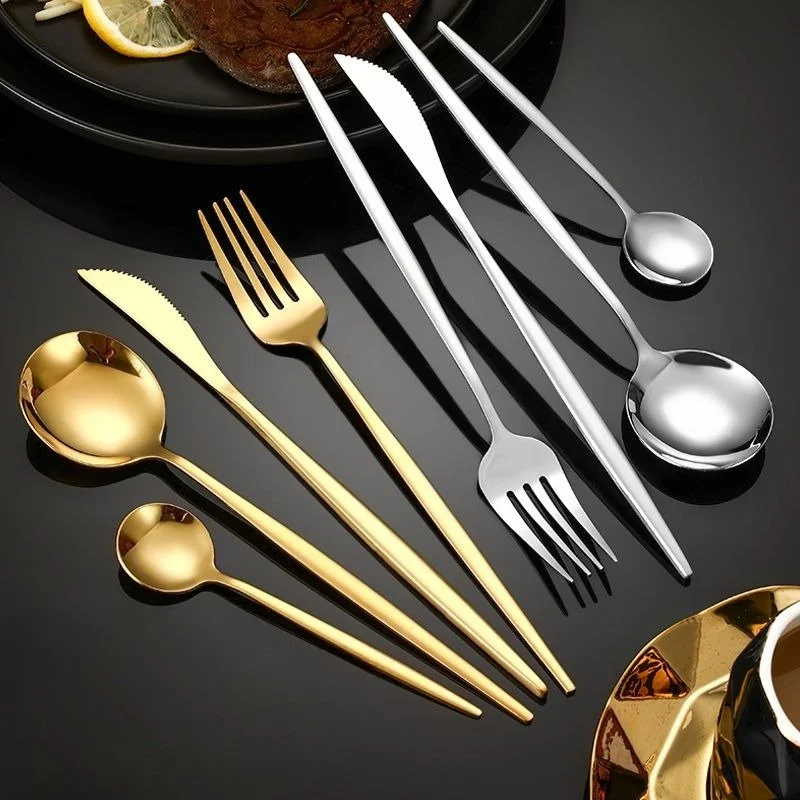
2. The Cutlery That Matches: Luxury Gold Mirror Stainless Steel Cutlery Set — $15.95
The pick: Luxury Gold Mirror Stainless Steel Cutlery Set ($15.95) — a gold mirror-finish cutlery set for everyday meals.
Why it works for apartments: The cheapest upgrade on this list and arguably the most visible. Mismatched drawer cutlery — three forks from one set, two knives from another — signals “utility kitchen” to anyone who sits down. A matched set flips that signal for less than a delivered pizza. The gold mirror finish catches the light on a small table, which is exactly what a compact dining space needs: small surfaces benefit from objects that draw the eye.
The honest trade-off: Mirror finish shows fingerprints and water spots — dry it promptly after washing. The gold tone is a statement; in an all-black industrial kitchen it may clash. And the mirror coating can scratch if stacked carelessly with other metal. For the price, it’s the fastest dinner-table transformation available.
3. The Every-Meal Bowl: Elegant Black Ceramic Dessert Bowl — $32.49
The pick: Elegant Black Ceramic Dessert Bowl – High Footed Ice Cream & Pudding Dish ($32.49) — a footed black ceramic bowl with a high design.
Why it works for apartments: A footed dessert bowl is the “extra” piece that makes small meals feel like occasions. Ice cream, pudding, yogurt parfaits, a handful of berries — served in a proper footed bowl, it reads as dessert, not as “a snack in a cereal bowl.” The black finish contrasts beautifully against the white and ceramic tones most apartment tables have, adding depth without clutter. It’s the piece that makes a Tuesday feel slightly special.
The honest trade-off: It’s a single bowl with a specific use — you won’t use it for pasta or soup. The footed design is less stackable than a flat bowl, so it claims a little more cabinet space. And black ceramic shows water spots and fingerprints more readily than white. But as the “dessert moment” piece, it earns its single slot.
4. The Hot-Drink Cup: Exquisite Retro Ceramic Coffee & Tea Cup — $30.49
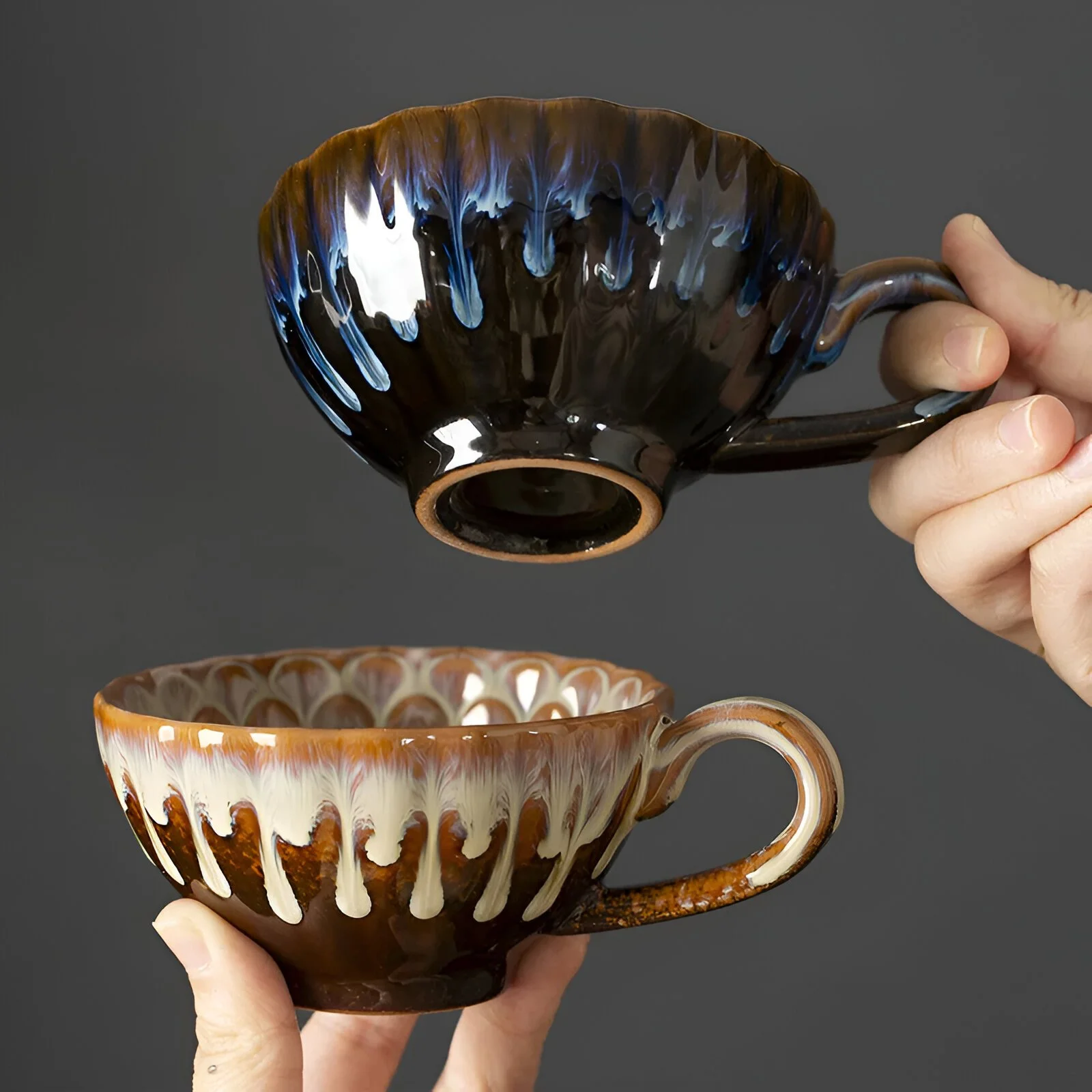
The pick: Exquisite Retro Ceramic Coffee & Tea Cup - Elegant Household Mug ($30.49) — a retro-styled ceramic cup for coffee and tea.
Why it works for apartments: The highest-frequency dining moment in an apartment is the morning cup — and the most neglected. A chunky diner mug does the job, but a cup with a considered design changes the daily ritual: it’s the thing you hold every single day, so it’s the piece that pays for its upgrade cost fastest. The retro style gives the cup personality, and ceramic holds heat well for a slow morning coffee.
The honest trade-off: It’s a single cup — if you entertain, you’ll want more than one. The retro styling is specific; if your kitchen is all minimalist and modern, it may not fit. And ceramic cups are heavier than travel mugs, so it’s a sit-down piece, not a commute piece. But for the daily ritual, it’s the right upgrade.
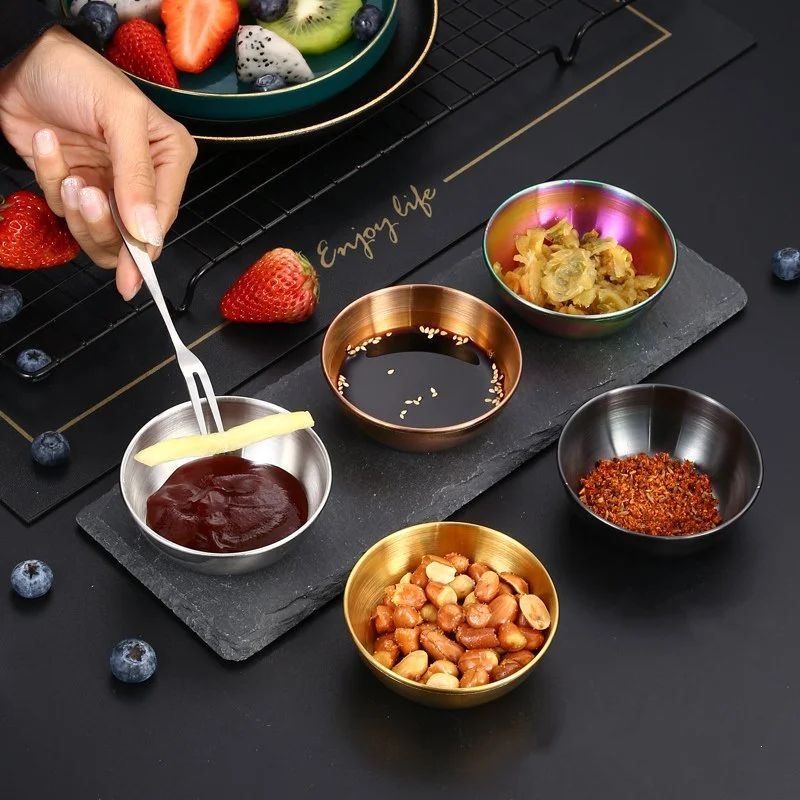
5. The Multi-Use Dish: Stainless Steel Round Sauce & Seasoning Dish — $28.49
The pick: Stainless Steel Round Sauce & Seasoning Dish ($28.49) — a stainless steel dish for sauces, dips, and seasonings.
Why it works for apartments: The unsung workhorse of the apartment table. Sauce dishes earn their place across every meal — soy sauce with dumplings, ketchup with fries, dressing with salad, salt and pepper for a steak. The stainless steel construction is virtually indestructible (unlike ceramic), stacks easily, and doesn’t absorb stains. It’s the piece that makes takeout feel like a table setting instead of a paper bag situation.
The honest trade-off: Stainless shows fingerprints and can scratch over time. It’s a small dish, not a serving bowl — it’s for condiments, not a family-size salad. And it’s a single dish, so a dinner for four means buying a few. But for everyday meals, it’s the most-used small piece on this list.
6. The Saucer Moment: Retro Ceramic Coffee Cup & Solid Wood Saucer Set — $37.65
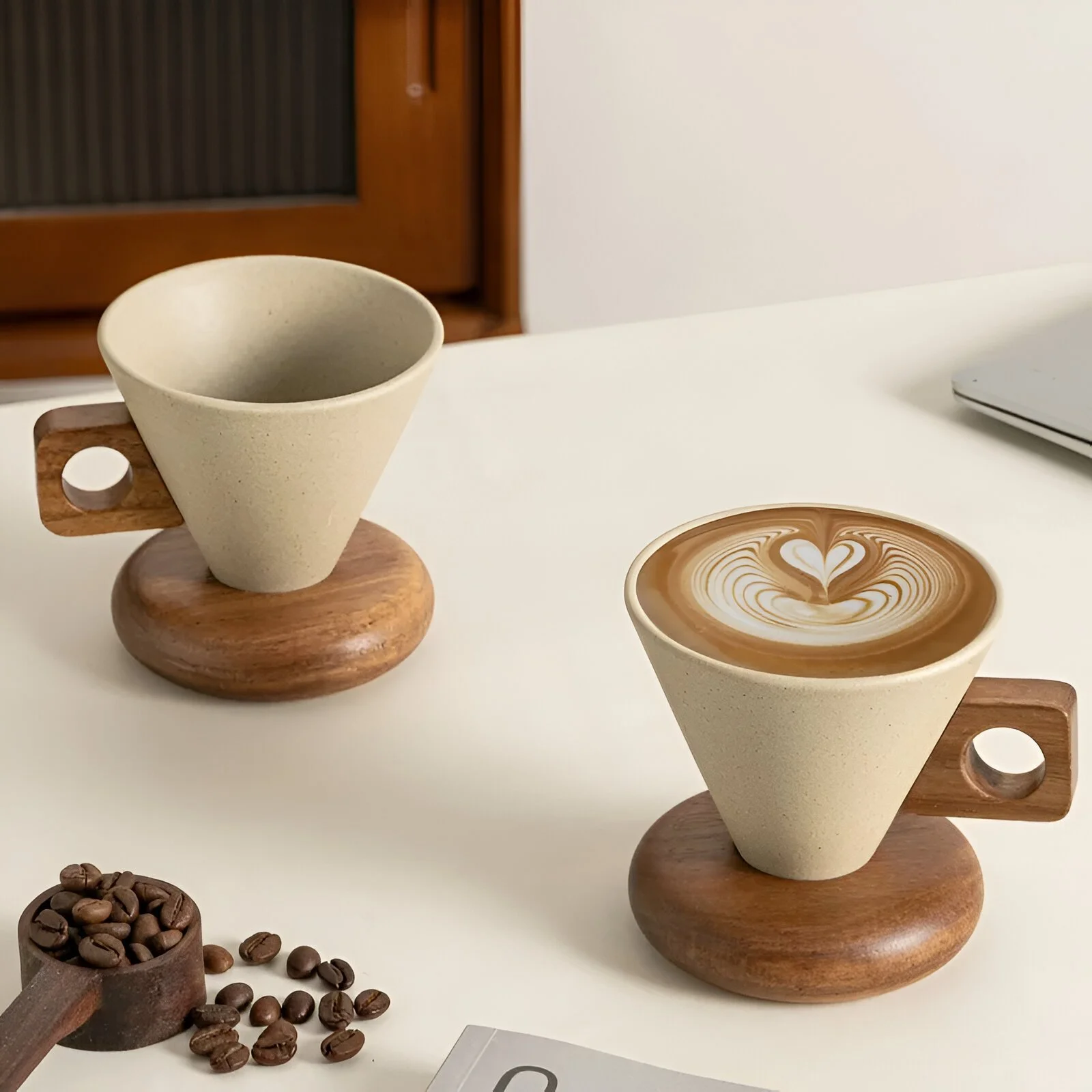
The pick: Retro Ceramic Coffee Cup & Solid Wood Saucer Set with Wooden Handle – 250ml ($37.65) — a ceramic cup with a solid wood saucer and wooden handle.
Why it works for apartments: A cup-and-saucer set is the most “dining room” thing you can own on a small scale. The saucer turns a cup of coffee into a place setting — it gives the cup a home, catches drips, and reads as deliberate rather than grabbed. The solid wood handle and saucer add warmth that plain ceramic doesn’t, and 250ml is the classic coffee-cup size for a proper sit-down cup.
The honest trade-off: 250ml is small by modern mug standards — if you drink a 500ml bowl of coffee, this will feel dainty. Wood needs care: hand-wash, don’t soak, and it shouldn’t go in a dishwasher. And it’s a single set, so it’s for the solo morning ritual or the guest cup, not a full table service.
The Apartment Dinnerware Comparison
| Pick | Price | The job it does | Best for | Watch out for |
|---|---|---|---|---|
| Flower-Shaped Bowl & Plate | $27.49 | The intentional meal | Date nights & guests | Ceramic can chip |
| Gold Mirror Cutlery | $15.95 | Matching the table | Fastest visible upgrade | Mirror shows prints |
| Black Dessert Bowl | $32.49 | The dessert moment | Ice cream & parfaits | Single-use piece |
| Retro Coffee Cup | $30.49 | The daily morning cup | Coffee ritual | Single cup |
| Stainless Sauce Dish | $28.49 | The condiment workhorse | Every meal | Small, single dish |
| Wood Saucer Set | $37.65 | The sit-down moment | Slow coffee | Wood needs care |
Editor’s Buying Notes: Build an Apartment Set in Layers
The best apartment dinnerware strategy is layered buying. Start with the piece that fixes the most visible weakness, then add pieces only when the next weakness becomes obvious. This avoids the common mistake of buying a boxed set because it feels efficient, then discovering that half the pieces do not fit the cabinet or the mug shape is wrong for your morning routine.
Layer one is the table signal: cutlery and one plate-bowl setup. If the goal is to make meals feel more grown-up immediately, this is where the money goes first. Matched cutlery changes every place setting. A distinctive plate or bowl changes the way the food looks. Together, they do more than a full set of average plates because they affect the table’s first impression.
Layer two is the daily ritual: the cup you actually use. Apartment dining is not only dinner. It is coffee at the table, tea at the desk, yogurt before work, dessert after a long day, and a small snack when a friend comes over. If the daily cup feels good in the hand, the upgrade gets used. If it is too small, too heavy, too delicate, or too visually specific, it becomes shelf decor. That is why cup capacity and care matter more than the product photo.
Layer three is the supporting piece: sauce dish, dessert bowl, or saucer set. These are not essential for survival, but they make a small table feel finished. They are also the easiest pieces to overbuy. One sauce dish can be useful every week. Six sauce dishes are unnecessary unless you frequently serve shared meals. One footed dessert bowl can be charming. Four may be storage clutter if you rarely serve dessert.
The layered approach also lets the apartment evolve. A first apartment may start with cutlery and one plate-bowl pair. A couple’s apartment may add extra bowls and matching cups. A host’s apartment may add small dishes and more consistent place settings. A studio may prioritize stackability above all else. The best set is the one that grows from actual meals rather than from a box count.
Best Choice by Apartment Type
For a studio apartment, choose the most compact and versatile pieces first. The gold cutlery and flower-shaped bowl-and-plate pair are the strongest starting point because they store in a drawer or a single cabinet stack and change the table immediately. The stainless sauce dish can also work because it stacks small and handles condiments, dips, and prep. The footed dessert bowl and cup-and-saucer set are more optional because they need their own storage space.
For a first apartment, the gold cutlery set is the most practical first purchase. It fixes the mismatched drawer problem, works with whatever plates you inherited, and costs less than most individual ceramics. Add the plate-and-bowl pair next if the table still feels unfinished. A first apartment does not need to look perfect. It needs a few signals that say the space is yours.
For a couple’s apartment, think in pairs. Two plate-and-bowl pieces, two cups, and a matched cutlery set create a complete everyday setup without requiring a full service. The sauce dish becomes useful because shared meals often need dips, seasonings, or small sides. If both people drink coffee or tea, the cup decision matters more because it affects daily use for both.
For a shared apartment, durability and ownership clarity matter. Shared kitchens are hard on dinnerware because pieces move between rooms, sinks, cabinets, and roommates. Stainless sauce dishes and matched cutlery are easier to manage than delicate cups or wood saucers. If you buy ceramics for a shared space, choose pieces you are comfortable using and replacing, not pieces so precious that you hide them.
For a small apartment that hosts often, do not chase a full formal set. Build a small hosting kit: matched cutlery, a few distinctive plates or bowls, sauce dishes, and cups that look intentional. Guests notice the table composition more than the cabinet inventory. A two-seat table with coherent pieces feels better than a crowded table covered with mismatched extras.
Best Choice by Eating Habit
If you cook most dinners at home, start with bowls and cutlery. Apartment meals often land in bowls: rice, noodles, pasta, soup, salad, leftovers, stir-fry, oatmeal, and fruit. A bowl that feels good to eat from may matter more than a dinner plate. The flower-shaped bowl-and-plate pair is useful because it covers both formats, while the cutlery set keeps the table from feeling improvised.
If you order takeout often, small serving pieces matter more than you think. A sauce dish can make takeout feel like a meal rather than a delivery event. Put dumpling sauce, chili crisp, ketchup, dressing, or pickles in a real dish, move the food onto a plate, and use matched cutlery. That small transfer changes the experience. The point is not pretending takeout is home cooking. It is giving the meal a table.
If breakfast is the main meal you eat at home, cups and bowls should come first. A retro ceramic cup or wood saucer set can make the morning routine feel more deliberate. The black dessert bowl can double as a yogurt, fruit, or granola bowl if the size works. For breakfast-focused apartments, a classic dinner plate may matter less than the objects used before work.
If you entertain with snacks, choose pieces that support sharing. The sauce dish and dessert bowl become more useful because small snacks need small vessels. Nuts, olives, dips, sauces, fruit, sweets, and condiments all look better when they have a dish. A small apartment cannot always host a full dinner, but it can host drinks, dessert, coffee, and snacks well.
If you rarely sit at the table, be honest before buying. Dinnerware can encourage a better routine, but it cannot create one by itself. If meals happen at a desk or on the couch, choose pieces that travel safely and do not require a formal setup. A sturdy bowl, matched cutlery, and one good cup may be better than a saucer set or footed dessert bowl.
Who Should Buy a Full Dinnerware Set Instead?
This guide is deliberately partial-set oriented, but a full dinnerware set can still be the right answer for some households. If you host four or more people every week, a complete set may reduce friction. Matching plates and bowls make table setting faster, and you will actually use the duplicates. In that case, choose a set with simple shapes, stackable pieces, and a neutral base.
A full set can also make sense if you are replacing everything after a move, divorce, renovation, or major kitchen reset. Starting from zero is different from upgrading an existing cabinet. If every plate is chipped and every bowl is random, buying a full set may be simpler than assembling accent pieces over time. The key is to choose a set that fits your storage, not just your table fantasy.
Families with children may also prefer complete sets, though not always ceramic. Durable, dishwasher-friendly pieces may matter more than style. Melamine, tempered glass, or simple stoneware may beat delicate decorative ceramics if the table is high traffic. Apartment does not always mean single or couple. A family apartment needs different trade-offs.
Finally, full sets work for people who dislike visual mixing. Some shoppers enjoy a curated, collected table. Others find mixed pieces stressful. If you know you want everything to match, buy the set. The point of this guide is not to make modular buying morally better. It is to explain why modular buying is often more practical for small apartment dining.
Who Should Skip These Picks?
Skip the flower-shaped ceramic pair if cabinet efficiency matters more than table personality. Scalloped shapes are beautiful, but they are not the easiest to stack. If every inch of cabinet height is already spoken for, simple round plates and bowls may be smarter.
Skip the gold cutlery if you hate visible fingerprints or prefer brushed, matte, or silver finishes. Gold mirror cutlery is intentionally noticeable. That is why it works as a fast table upgrade. It is also why it can clash in kitchens where everything else is cool-toned and minimal.
Skip the black dessert bowl if you need an all-purpose everyday bowl. It is a dessert and presentation piece, not a soup-and-noodle workhorse. It earns space through mood, not versatility. If you only have room for one bowl type, choose a deeper everyday bowl first.
Skip the retro ceramic cup if you already have a cup you love and do not want another single mug. Coffee cups multiply quickly in small apartments. A new cup is only worth buying if it replaces a daily object or creates a ritual you will actually use.
Skip the stainless sauce dish if you dislike metal tableware or never use condiments, dips, sauces, or small sides. It is practical, but it is not warm-looking. Some tables need ceramic softness more than stainless utility.
Skip the wood saucer set if you want dishwasher convenience. Wood accents need care. If you know you will soak it, microwave it, or toss it in the dishwasher with everything else, choose a fully ceramic or stainless piece instead.
Common Apartment Dinnerware Mistakes
The first mistake is buying too many pieces at once. A full set feels efficient, but it can overwhelm a small cabinet. Buy the first layer, use it for two weeks, then decide what is still missing. The waiting period reveals whether you actually need more plates, more bowls, or just better cutlery.
The second mistake is ignoring bowl depth. Shallow bowls look elegant, but they are less useful for soup, cereal, noodles, rice bowls, and leftovers. Deep bowls can handle more meals. If you eat bowl-based meals often, bowl depth matters more than plate diameter.
The third mistake is choosing color without considering food. Very dark dishes create dramatic contrast, but they can show water spots and may make some foods less appetizing. Very patterned dishes can make the table lively, but they can visually fight with colorful meals. White and neutral dishes remain popular because food looks clear against them.
The fourth mistake is buying special pieces for a routine you do not have. A cup-and-saucer set is lovely if you sit down with coffee. It is wasted if you drink while commuting. A dessert bowl is charming if dessert, fruit, or yogurt is part of your week. It is clutter if it is used twice a year.
The fifth mistake is forgetting dishwasher and microwave habits. If you microwave leftovers directly in bowls, avoid metallic trim. If you rely on the dishwasher, be careful with gold finishes and wood. If you hand-wash often, more delicate pieces are easier to justify.
The sixth mistake is mixing too many statement pieces on one small table. A tiny table gives every object more visual weight. One expressive plate, one warm metal finish, or one sculptural cup can look curated. Six expressive pieces at once can look crowded.
Care Guide for Budget Dinnerware
Budget dinnerware lasts longer when treated consistently. Ceramic should be stacked gently, not dropped into the cabinet. Place heavier plates at the bottom and more delicate shapes on top. If a plate has a scalloped or flower edge, avoid forcing it into a stack of flat plates where the edge takes pressure.
Gold mirror cutlery should be rinsed and dried promptly if you care about shine. Hard water spots show quickly on mirror finishes. Dishwasher use may be possible depending on the listing, but hand-washing or prompt drying preserves the look longer. Store gold cutlery away from rough metal tools that can scratch the finish.
Black ceramic should be wiped dry if water spots bother you. Dark finishes can show residue more clearly than white. That does not make them high maintenance, but it changes expectations. If you want a piece that always looks clean without effort, white or speckled ceramic may be easier.
Wood saucers and handles should not soak. Wash quickly, dry promptly, and avoid dishwashers unless the listing says otherwise. Wood expands and contracts with moisture, and repeated soaking can damage finish or fit. The benefit is warmth and texture; the cost is care.
Stainless sauce dishes are the lowest-maintenance pieces here. They can scratch, but scratches are usually cosmetic. Rinse sticky sauces before they dry, especially sugary sauces or thick dressings. Stainless is useful in small kitchens because it tolerates the kind of rough handling that ceramic may not.
A Practical Apartment Table Setup
For a solo weeknight dinner, use the flower-shaped plate or bowl, the gold cutlery, and one small sauce dish. That setup is enough to make a simple meal feel set without covering the whole table. Add a cup only if the drink is part of the meal. Keep the rest of the surface clear, especially if the table is small.
For a two-person dinner, repeat the strongest visual cue. If you only own one flower-shaped pair, use it as the shared serving or accent piece and keep the other plates plain. Matched cutlery makes the table feel consistent even when dishes are mixed. Add sauce dishes if the meal has dips, condiments, or shared sides.
For breakfast, the cup decision matters most. A retro cup or wood saucer set creates the strongest ritual signal. Use a small bowl for fruit, yogurt, or oatmeal. Avoid setting out too many pieces just to make breakfast feel styled. Apartment breakfast should be easy to reset.
For takeout, move at least one item out of packaging. That might be the sauce, a side, or the main food. Use real cutlery. Put drinks in real cups. This is where small dinnerware upgrades matter most because the food itself did not require cooking effort. The tableware creates the meal boundary.
For guests, avoid apologizing for not having a full set. Mixed dinnerware can look intentional when arranged with confidence. Keep the table clean, repeat one material or color, and serve small sides in proper dishes. A small table with thoughtful pieces is better than a crowded table trying to imitate a formal dining room.
SERP Match Notes: Why Apartment Dinnerware Deserves Its Own Guide
The broad SERP for dinnerware is built around completeness. The strongest results often ask which full set is best overall, best stoneware, best porcelain, best budget, best splurge, or best for families. That structure is useful, but it misses the apartment shopper who is not trying to buy a forever set. The apartment shopper is often trying to make an incomplete kitchen feel intentional without using all the storage.
This article intentionally competes on a different angle: small-space fit. It answers questions that general dinnerware pages often treat as secondary. Should you buy a full set or a few pieces? Which pieces matter first? How do you mix accent dishes with inherited plates? Which shapes create cabinet problems? Which pieces are daily-use and which are mood pieces? How do you make a two-seat table look finished?
The “budget-tier” angle also matters. Low price does not automatically mean low quality, but it does mean expectations should be honest. These picks are catalog-based recommendations under $40. They are not presented as lab-tested heirlooms. They are selected because they map to apartment needs: visible table upgrade, daily ritual, small serving, storage discipline, and replacement-friendly pricing.
That honesty is part of the SERP value. A shopper comparing high-end stoneware sets may not need this page. A shopper furnishing a small rental, trying to make a tiny dining table feel real, or replacing random inherited dishes does. The guide is not trying to crown the most prestigious dinnerware. It is trying to help the apartment buyer avoid overbuying.
Final Recommendation
If you only buy one thing, buy the cutlery set. It is the cheapest and most visible table change. If you buy two things, add the flower-shaped bowl-and-plate pair because it gives meals a focal point. If you drink coffee or tea at home every day, make the third purchase a cup you actually enjoy holding. Those three choices cover the highest-frequency apartment dining moments.
After that, choose based on habit. Add the stainless sauce dish if you use dips, condiments, takeout sauces, or small sides often. Add the black dessert bowl if you want one dramatic serving piece for sweets, fruit, or composed snacks. Add the wood saucer set if the sit-down coffee ritual is part of your day and you are willing to hand-wash.
The best apartment dinnerware set is not necessarily sold as a set. It is the group of pieces that makes your real meals feel more deliberate while still fitting in the cabinet. Buy for the table you have, the meals you eat, and the storage you can live with.
FAQ
Do I really need a full dinnerware set for an apartment? No. Apartment kitchens rarely have the cabinet space for a 16-piece set, and a full set of plain plates reads as default, not chosen. The more effective approach is buying the four or five pieces you actually use — a plate-and-bowl pair, matching cutlery, a cup you love — and mixing them with what you have. One distinctive pair changes the table more than a complete set of generic dishes.
Is ceramic too fragile for everyday apartment use? Ceramic is durable enough for daily use if you treat it normally — it’s what most people eat off every day. It can chip if dropped, and it’s heavier than melamine or bamboo, but it holds heat better and feels more substantial. The real rule for apartments: hand-wash the delicate pieces (especially anything with gold detailing) and stack carefully. Ceramic isn’t fragile; it’s just not indestructible.
Can I mix and match these pieces with my existing dishes? Absolutely — and that’s the point. The flower-shaped bowl and plate, the black dessert bowl, and the cups all work as accent pieces alongside plain white dishes. The “intentional” look comes from having a few distinctive pieces, not from matching everything. One gold cutlery set plus one flower-shaped pair changes the whole table without replacing your entire cabinet.
What’s the most important purchase for a first apartment? The gold mirror cutlery set at $15.95. It’s the cheapest, the most visible, and it fixes the most universal apartment problem — mismatched drawer cutlery. Guests register it immediately without knowing why, and it flips the “utility kitchen” signal in one move. Everything else on this list improves comfort; the cutlery changes perception.
Why do most dinnerware guides miss the apartment angle? Because they’re written by and for traditional households — full kitchens, dining rooms, and the assumption that you want one complete set for all occasions. The apartment reality is different: small cabinets, a two-seat table, and the need for a few distinctive pieces rather than a full service. That gap is exactly what this guide fills.
Are these microwave and dishwasher safe? The ceramic pieces are generally microwave-safe (check each listing for glaze specifics), but the pieces with gold detailing — like the gold-striped cups — are not microwave-safe because metallic trim can spark. Hand-washing is the safe default for anything with decorative finish. The stainless steel pieces are dishwasher-safe, but gold mirror finishes hold up longer with prompt drying.
Should I buy plates or bowls first? For most apartments, bowls come first unless you regularly cook plated meals. Bowls handle cereal, oatmeal, soup, noodles, rice, salads, leftovers, fruit, and snacks. Plates matter for sandwiches, toast, mains, and hosting. The flower-shaped bowl-and-plate pair is useful because it gives you both, but if you are choosing one category separately, buy the one that matches your weekly meals.
What is the best dinnerware strategy for one cabinet? Keep the baseline simple and let only a few pieces be expressive. Store plain round plates and bowls in the main stack, then add one or two accent pieces that live on top or in their own small slot. Avoid buying several different footed, scalloped, or handled pieces if the cabinet is already tight. The best one-cabinet setup is functional first, styled second.
Can mixed dinnerware look good for guests? Yes. Mixed dinnerware looks intentional when there is one repeated cue: matching cutlery, repeated color, similar material, or a consistent napkin/table mat. Guests are more likely to notice whether the table feels clean and deliberate than whether every bowl came from the same box. A small apartment table can look better with a few chosen accents than with a crowded full set.
What should I buy first after moving into a new apartment? Start with matched cutlery, then a plate-and-bowl pair, then a daily cup. That order covers dinner, breakfast, coffee, and guests without overfilling the cabinet. Add sauce dishes, dessert bowls, or saucer sets only after you know how you actually eat in the space.
Sources
- DataForSEO live SERP analysis (gl=us) 2026-08-13: “best dinnerware sets” — Top10 dominated by testing sites (Bon Appétit, The New York Times, Food & Wine) + e-commerce giants (Amazon, Mikasa, Wayfair); content gap identified: apartment/budget-tier/partial-set angle absent from Top10
- Content gap: no Top10 result addresses small-space storage, buy-a-pair-not-a-set logic, or sub-$40 tiering
- PickByU catalog (products-combined-20000.csv, kitchen-dining category) — all six products verified with exact prices and product IDs on 2026-08-13
- SERP findings recorded in serp-optimized/README.md (2026-08-13 entry)
Product references, prices, and listed features were checked in the PickByU catalog on 2026-08-13.
— Maya Porter, Editor-in-Chief, PickByU