Article
Home Workout Accessories That Protect Your Grip (Under $35)
Quick Answer
Home Workout Accessories That Protect Your Grip (Under $35): quick answer
When you start working out at home, you buy the basics: dumbbells or bands, maybe a bench, a mat. Nobody tells you that within a month, your hands will be the first thing to quit. The bar...
- Topic: Sport Outdoors.
- Related product category: sports-fitness.
- This article keeps the main answer in the article copy and places relevant product context inside the guide.
Product references, prices, and listed features were checked in the PickByU catalog on 2026-08-13. These are grip-focused recommendations for home training, not hands-on test results. Every pick solves one specific home-workout problem — sweaty hands, slipping bars, wrist strain, or a deadlift that tears up your palms.
The Grip Problem Nobody Warns You About
When you start working out at home, you buy the basics: dumbbells or bands, maybe a bench, a mat. Nobody tells you that within a month, your hands will be the first thing to quit. The bar slips when your palms sweat. The deadlift grip gives out before your legs do. Your wrists ache the day after because they were doing the work your forearms should have. The dumbbell handle digs into your palm at an angle it was never meant to take.
This is the gap between "I have home gym equipment" and "I can actually train hard at home" — and it's a cheap gap to close. A set of grip gloves costs less than a month of gym membership. A pair of lifting straps costs less than one personal training session. These small accessories don't add exercises to your routine; they make the exercises you already do safer, heavier, and more comfortable. That's the real return: every rep you can hold onto is a rep you actually completed.
The research supports the "grip is the bottleneck" view. In strength training, grip strength is consistently the first limiting factor in pulling movements — rows, deadlifts, pull-ups, carries. Improve the grip (with straps, hooks, or gloves) and you don't just hold the bar longer; you recruit the target muscles harder because your forearms stop bailing you out. For home lifters training alone, without a spotter or a coach watching your form, that support matters even more — the equipment is your spotter.
So this guide is six grip-focused upgrades, each solving one specific failure point: sweaty palms, slipping straps, wrist strain, grip endurance, hooking onto heavy bars, and leather durability for the dedicated lifter. All under $35. All small enough to live in a gym bag.
1. The Sweaty-Palms Fix: Breathable Anti-Slip Four-Finger Sports Gloves — $14.49
The problem it solves: Sweaty palms are the number-one grip killer in home workouts. You're mid-set, your hands are slick, and the dumbbell starts turning in your grip — so you grip harder, your forearm burns, and the exercise quality falls apart. Gloves with anti-slip palms and breathable backs fix exactly that: they give your hand something to hold onto even when it's wet.
Breathable Anti-Slip Four-Finger Sports Gloves – Grip Gloves for Workout ($14.49) — a four-finger glove design with an anti-slip palm and breathable backing, built for general workout use. The four-finger cut (thumb free) keeps dexterity for gripping bars and adjusting weights while still covering the palm where the friction happens.
What you're getting: A pair of workout gloves with anti-slip palm coverage and breathable material. The breathable back matters more than it sounds — in a home gym without air conditioning, a non-breathable glove turns into a swamp inside twenty minutes. The anti-slip palm keeps the bar in place when your hands get slick, and the open-finger design means you can still feel the bar's knurling.
Who it's for: Anyone doing dumbbell, barbell, or kettlebell work at home who finds their grip failing when palms sweat. Also good for pull-ups — the gloves protect against calluses while the anti-slip palm keeps the bar from rotating. If you only train in a cold basement and never sweat, you may not need these; if you sweat at all, they're the first upgrade to make.
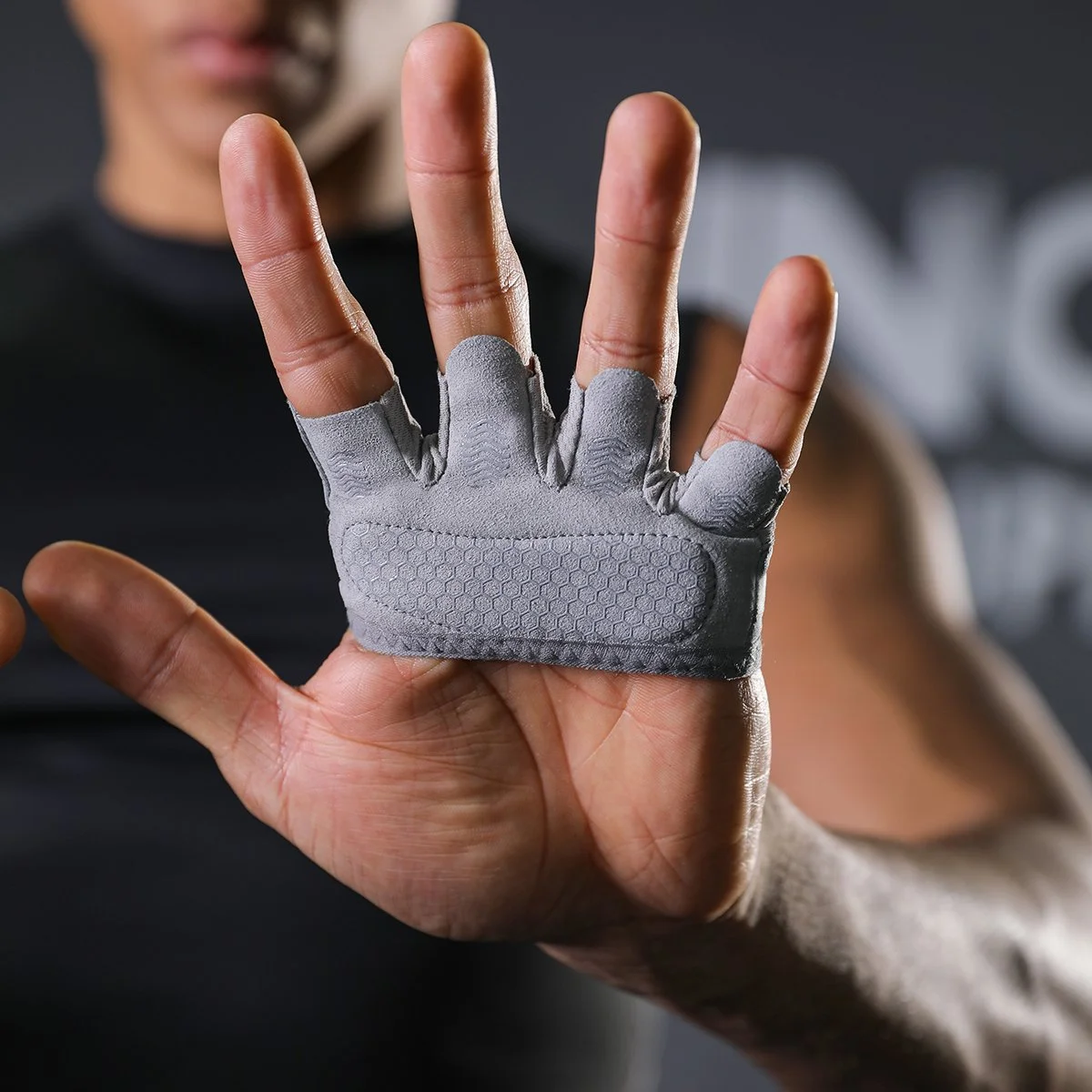
Honest limits: Gloves add a thin layer between your hand and the bar, which some lifters hate — they want to feel the knurling directly. The four-finger design still leaves the thumb exposed, so thumb grip is unprotected. And as with any glove, they'll wear out eventually — the anti-slip coating degrades with heavy use. For the price, they're a low-risk experiment.
2. The Wrist-Support Fix: Wrist Straps for Weightlifting with PVC Anti-Slip Gym Gloves — $23.49
The problem it solves: Wrist pain after pressing or pushing movements is almost always a support problem, not a strength problem. When your wrist bends backward under a loaded bar, the joint takes the strain your forearms should be sharing. A strap that wraps and stabilizes the wrist changes the angle and spreads the load — the difference between a session that aches tomorrow and one that doesn't.
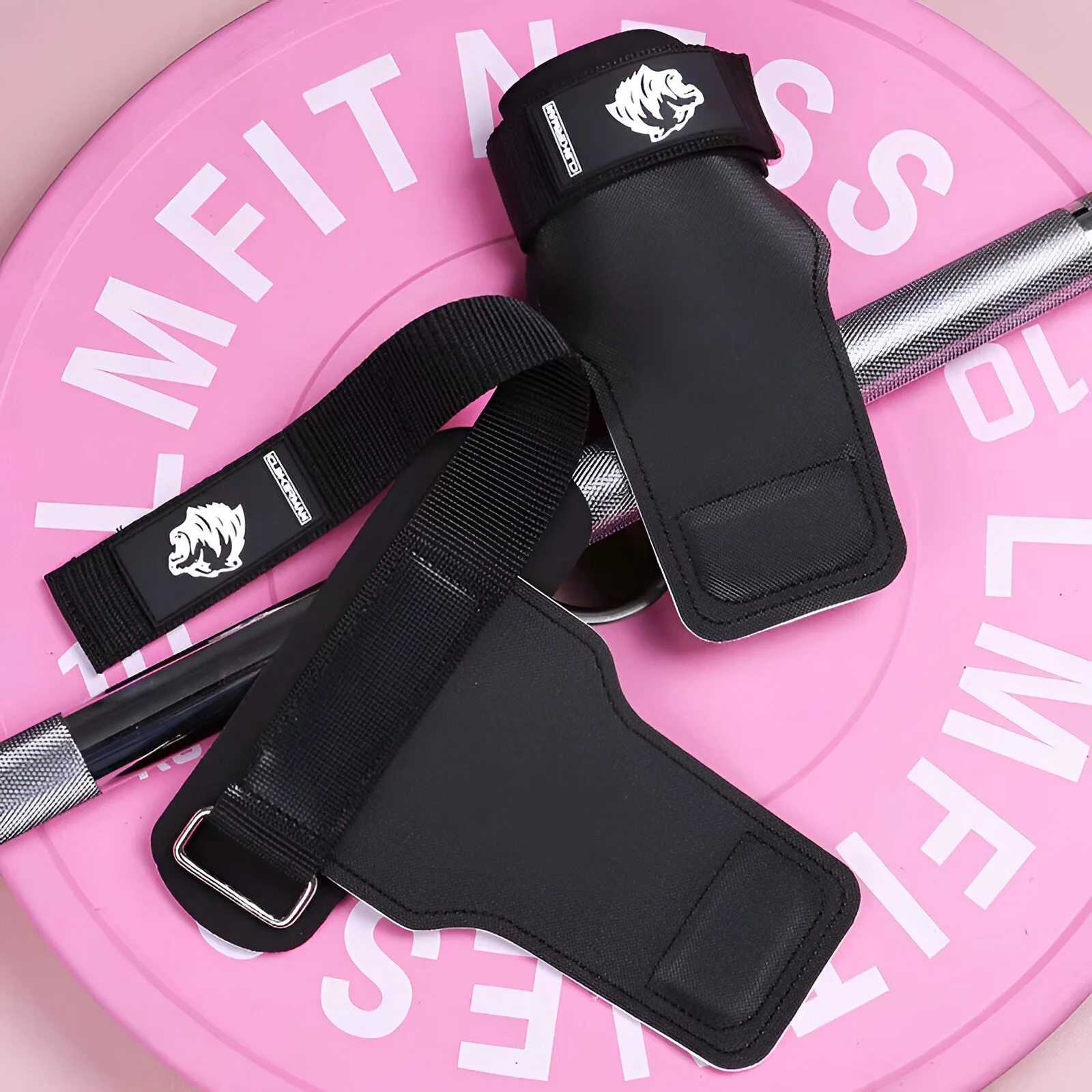
Wrist Straps for Weightlifting - PVC Anti-Slip Gym Gloves with Palm Pad ($23.49) — wrist straps paired with PVC anti-slip palm padding, giving you both wrist support and grip help in one piece. The palm pad adds cushioning where the bar rests, and the strap wraps around the wrist to keep it in a neutral position.
What you're getting: A combination of wrist strap and padded glove. The strap is the main event — it stabilizes the wrist during pressing and overhead work, which is where most home lifters feel wrist strain first (push-ups on fists, overhead presses, bench presses without a spotter). The palm pad reduces the pressure point where a heavy bar sits. It's two fixes in one product.
Who it's for: Lifters who feel wrist discomfort during presses, push-ups, or overhead work. Also good for anyone whose wrists are naturally weak or have had past injuries — the strap lets you keep training while protecting the joint. If you never feel wrist strain, you may not need the strap, but the palm pad alone is still useful for heavy pressing.
Honest limits: A strap adds bulk around the wrist, which changes the feel of exercises like cleans or snatches — it's best for pressing and pushing, not explosive movements. The glove element means you give up some bar feel. And it's not a medical brace; if you have a diagnosed wrist injury, see a professional rather than relying on a strap.
3. The Grip-Endurance Fix: Heavy Duty 8-Shaped Anti-Slip Weightlifting Straps for Deadlifts — $26.49
The problem it solves: In deadlifts and rows, grip endurance is almost always the first thing to fail — not your back, not your legs, but your hands letting go. The fix is a pulling strap: it wraps around the bar and your wrist, so the weight hangs off the strap instead of your fingers. Your grip stops being the limiting factor, and your back and legs finally get to do their full job.
Heavy Duty 8-Shaped Anti-Slip Weightlifting Straps for Deadlifts ($26.49) — figure-8 style lifting straps with anti-slip material, designed for pulling movements. The 8-shape loops around both bar and wrist, creating a secure connection that doesn't slip even under heavy loads.
What you're getting: A pair of figure-8 straps. Unlike traditional long straps that require a wrapping technique, figure-8 straps are simpler — you loop them around the bar, slip your wrist through, and the weight is mechanically connected to your hand. That's a meaningful advantage for home lifters: no YouTube tutorial needed to use them correctly on the first try.
Who it's for: Deadlifters and rowers whose grip fails before their target muscles. Also anyone doing heavy carries, farmer's walks, or trap-bar work. If you're pulling near your bodyweight or beyond, straps are the difference between finishing the set and dropping the bar at rep four. Beginners can use them too, but it's smart to train raw grip at lighter weights first.
Honest limits: Straps remove the grip training stimulus — if you always use them, your hand strength won't develop. They also change the mechanics slightly, so they shouldn't be used for every single set; save them for heavy work. And figure-8 straps are a bit stiffer than traditional straps, which some people find less comfortable on the wrist until they break in.
4. The Versatility Fix: Ergonomic Dual Exercise Handles for Strength & Resistance Training — $30.80
The problem it solves: Resistance bands are the most common home-gym tool, but the standard handles that come with band sets are cheap plastic — they slip, they dig into your hand, and they limit what you can do. Upgrading to ergonomic handles turns your bands into a full training system: rows, presses, curls, and lat work all become comfortable and secure.
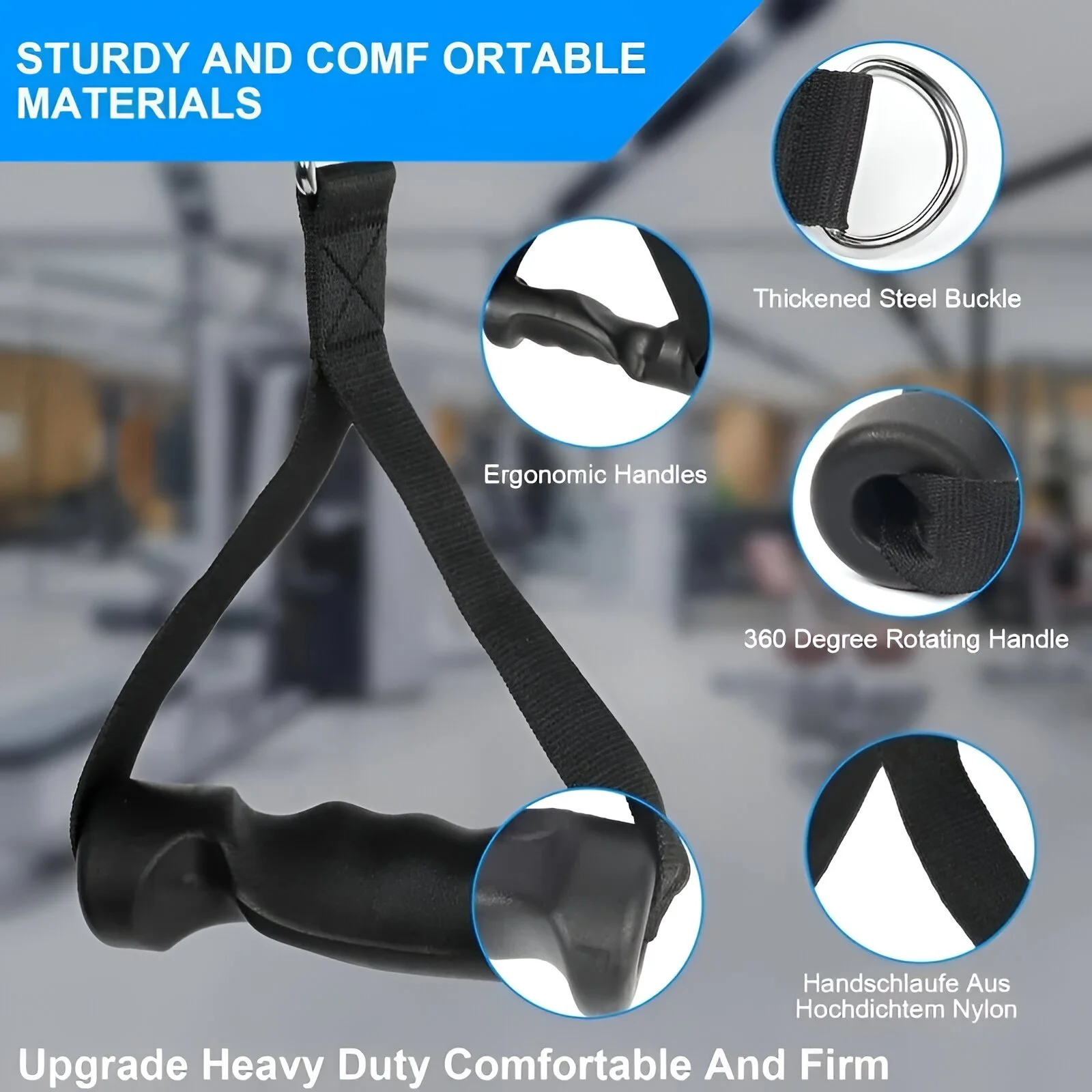
Ergonomic Dual Exercise Handles for Strength & Resistance Training ($30.80) — a pair of ergonomic handles designed to attach to resistance bands, giving you a comfortable, non-slip grip for band-based exercises. The dual-handle setup means you can do bilateral work — both arms at once — like a cable machine without the machine.
What you're getting: Two ergonomic handles with attachment points for bands. The ergonomic grip shape spreads pressure across the palm instead of concentrating it in a thin plastic line, which makes longer sets dramatically more comfortable. The dual setup replicates cable-machine movements — band rows, band presses, band curls — which is the closest thing to gym equipment most apartments can fit.
Who it's for: Anyone training with resistance bands who's outgrown the flimsy included handles. Also good for travel — these handles pack flat and turn a single band into a full gym. If you have a cable machine or full dumbbell set, you may not need them, but for the band-based home lifter they're the highest-impact upgrade available.
Honest limits: Handles are only as good as the bands you attach — cheap bands with poor attachment clips will still fail. They don't add resistance themselves; they make the resistance you have more usable. And if you do mostly bodyweight or dumbbell work, these are solving a problem you don't have.
5. The Heavy-Bar Fix: Heavy Duty Weightlifting Hooks with Neoprene Padded Wrist Straps — $34.49
The problem it solves: When the weight gets genuinely heavy, neither gloves nor straps may be enough — your fingers physically can't close around a bar loaded past a certain point. Lifting hooks take the fingers entirely out of the equation: the hook carries the weight, your wrist and arm do the lifting. This is the tool for heavy deadlifts, shrugs, and rack pulls where grip is simply not the point.
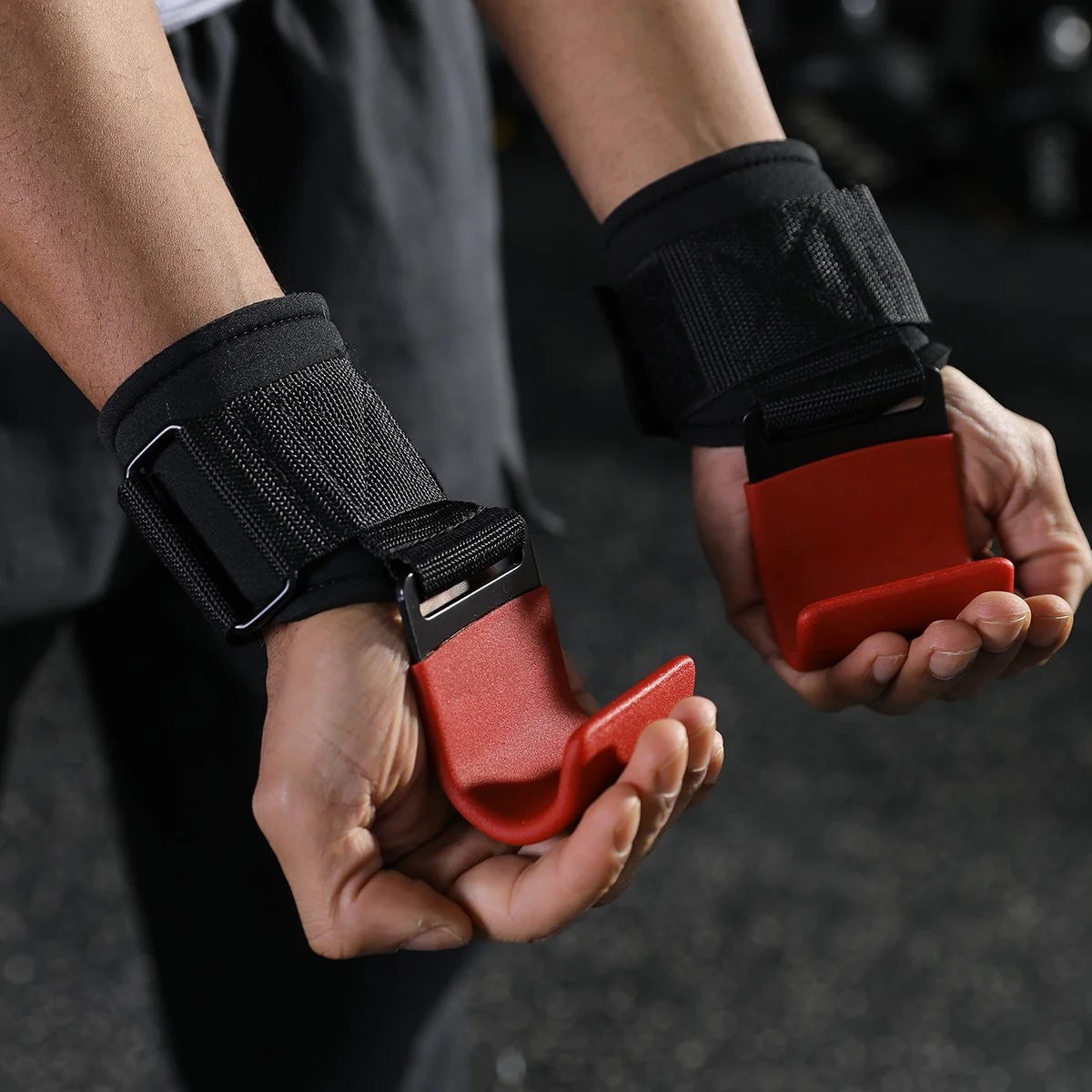
Heavy Duty Weightlifting Hooks with Neoprene Padded Wrist Straps ($34.49) — lifting hooks with neoprene-padded wrist straps, designed to carry heavy loads by hooking around the bar. The neoprene padding keeps the wrist comfortable even when the load is at its heaviest.
What you're getting: A pair of lifting hooks. The hook rests over the bar, the strap secures around your wrist, and your hand essentially goes along for the ride — you can hold far more weight than your fingers could ever clamp. The neoprene padding is the detail that matters: unpadded hooks dig into the wrist under heavy loads, and padded ones let you hold the bar for the full set without pain.
Who it's for: Lifters pulling near or beyond their grip capacity — heavy deadlifts, shrugs, trap-bar work, rack pulls. Also great for people with arthritis or hand issues who want to keep lifting heavy without finger pain. If you're still in the "grip is developing" stage, hooks can mask that and stall your hand strength — save them for genuinely heavy work.
Honest limits: Hooks are the most specialized tool on this list — they do one job (heavy pulling) and nothing else. They remove all grip stimulus, so they should never be your everyday strap. And they add height at the bottom of a deadlift, which changes the range of motion slightly — some lifters notice a small difference in starting position.
6. The Durability Fix: 1 Pair Leather Lifting Straps Gym Support Fitness Gloves with Anti-Slip — $34.99
The problem it solves: If you train heavy multiple times a week, nylon straps and thin gloves wear out in months — the stitching pulls, the padding flattens, and the anti-slip coating peels. Leather lifting straps are the durable endgame: they break in like a baseball glove, mold to your hand, and last for years instead of months. For the dedicated home lifter, they're the last pair you'll buy for a long time.
1 Pair Leather Lifting Straps Gym Support Fitness Gloves with Anti-Slip ($34.99) — a pair of leather lifting straps with anti-slip grip and built-in support, designed for serious training. The leather construction is the durability story: it strengthens with use instead of degrading.
What you're getting: Leather lifting straps that double as grip gloves. The leather provides the anti-slip surface — once broken in, it grips the bar better than most synthetic materials, especially under load. The strap design supports the wrist while the leather protects the palm. This is the "buy it once" option for someone who's already burned through a pair of cheap straps.
Who it's for: Regular heavy lifters who train two to three times a week and want gear that keeps up. Also good for anyone who's found that nylon straps slide on sweaty bars — leather, once broken in, holds better. If you lift occasionally and lightly, the cheaper options on this list are better value; if you're consistent and heavy, the leather pays for itself.
Honest limits: Leather needs a break-in period — the first few sessions feel stiff before it molds to your hand. It's also heavier and bulkier than nylon, so it's less ideal for travel or quick sessions. And leather requires a little care: don't soak it, let it dry after sweaty sessions, and it'll last. If you don't want any maintenance in your gym gear, this isn't the pick.
The Grip Comparison
| Pick | Price | The failure it fixes | Best for | Watch out for |
|---|---|---|---|---|
| Breathable Gloves | $14.49 | Sweaty palms | General workout comfort | Thumb still exposed |
| Wrist Straps + Palm Pad | $23.49 | Wrist strain in presses | Pressing & push-ups | Bulky for fast moves |
| Figure-8 Straps | $26.49 | Grip fails in pulls | Deadlifts & rows | Kills grip training stimulus |
| Ergonomic Handles | $30.80 | Flimsy band handles | Band-based training | Only as good as your bands |
| Lifting Hooks | $34.49 | Fingers can't hold heavy | Heavy deadlifts & shrugs | Specialized, one job |
| Leather Straps | $34.99 | Nylon wears out | Consistent heavy lifters | Needs break-in |
Editor's Buying Notes: Match the Tool to the Training Problem
Grip accessories are easy to buy for the wrong reason. A product can look more "serious" because it has straps, hooks, padding, and leather, but serious-looking gear is not automatically the right gear for a home workout. The best choice depends on what is actually failing first: skin comfort, palm traction, wrist position, band control, or raw finger strength. If you buy the most supportive option too early, you may solve the short-term annoyance while hiding the weakness you should be training.
For beginners, the safest starting point is usually gloves or wrist support, not hooks. Gloves help with sweat, friction, and calluses while still forcing your fingers to hold the weight. Wrist straps with palm padding help when pressing movements make the wrist bend backward. Both accessories make training more comfortable without fully removing grip from the exercise. That matters in the first few months, because your hands, forearms, and connective tissue need time under load just like your legs and back do.
For intermediate lifters, the decision is more specific. If rows and deadlifts are limited by your fingers opening before your back is tired, figure-8 straps are the cleanest upgrade. Use them for the heaviest working sets, not every warm-up set. That way, your raw grip still gets practice while your bigger pulling muscles get enough load to progress. If you train mostly with resistance bands, straps will not solve the real issue; ergonomic handles will. Band handles improve the contact point and make pressing, rowing, and curling feel closer to cable-machine work.
Hooks are the most tempting product to overbuy. They are useful, but they are not a general fitness accessory. They make sense when you are pulling enough weight that finger fatigue is completely unrelated to the muscle you are trying to train. Heavy shrugs, rack pulls, and high-load deadlifts are the right context. Light dumbbell rows, beginner kettlebell swings, or band workouts are not. If your main goal is general strength, keep hooks as a specialty tool. If your main goal is hand strength, skip hooks until grip is no longer the skill you are trying to build.
Leather straps are also not automatically better for everyone. They are better for the lifter who trains often enough to break them in and care for them. If you work out twice a month, leather may feel stiff every time you use it. If you train two or three times a week, the break-in period is worth it because the material molds to your hand and holds up better than thin synthetics. Buy leather when you have already proven the habit, not when you are still trying to build one.
The biggest buying mistake is stacking too many grip aids in one routine. Gloves plus straps plus hooks can make every pulling exercise feel easier, but it can also make your hands less involved than they should be. A better home-gym rule is to keep one comfort tool and one performance tool. For example: breathable gloves for normal dumbbell work, figure-8 straps for heavy deadlifts. Or wrist-support gloves for presses, ergonomic handles for bands. That covers the weak points without turning every movement into an equipment workaround.
Fit and maintenance matter more than they seem. Gloves should feel snug without cutting circulation; loose gloves bunch up and create new pressure points. Wrist straps should support a neutral wrist, not clamp so tightly that your hand tingles. Straps and hooks should be checked for stitching, padding, and attachment wear before heavy sets. Anything that connects your body to a loaded bar has to be treated like safety gear, even when it costs under $35.
For apartment training, storage is part of the decision too. Gloves, straps, and band handles can live in a drawer or gym bag; hooks and leather straps take up more space and make more sense if you already have a dedicated workout shelf. Small gear is only useful if you can find it before the set starts.
If you want the simple ranking: start with breathable gloves for sweaty home workouts, wrist-support gloves if pressing hurts, ergonomic handles if bands are your main equipment, figure-8 straps once pulling weight outpaces grip endurance, leather straps once training frequency justifies durability, and hooks only when heavy pulling is the clear goal. That order keeps the purchase tied to the workout instead of the other way around.
FAQ
Do I need all six of these? No. Pick the one that matches your actual failure point. If you sweat and your grip slips, start with the $14.49 gloves. If your wrists ache after pressing, the wrist straps. If your deadlift grip gives out at rep four, the figure-8 straps. Each solves a different problem, and most home lifters need two at most.
Can I use straps and hooks on every exercise? You can, but you shouldn't. Straps and hooks remove the grip stimulus — your hand strength will stall if you rely on them for everything. The common pattern is: train raw grip on light-to-moderate sets, then add straps or hooks only for the heaviest working sets. Your grip is a muscle like any other; it needs training too.
Will gloves make my grip weaker? No — gloves don't weaken grip, they just protect the palm and improve traction. The "gloves make you weak" myth comes from the fact that some lifters over-rely on gloves and skip raw-grip training. Use gloves for comfort and protection, keep doing some bare-handed work, and your grip will be fine.
Are these okay for a complete beginner? Yes, with one note: beginners should spend their first months building raw grip strength without straps or hooks, so their hands develop naturally. Gloves and wrist straps are fine from day one. The figure-8 straps and hooks are better saved for when you're pulling serious weight — that's when they earn their place.
How do I know my wrist pain is a support issue? If the pain happens during pressing or pushing (push-ups, overhead press, bench) and feels like strain at the joint, a wrist strap will likely help. If the pain is sharp, persistent, or in the bones rather than the joint, see a professional first. Straps are training support, not medical treatment.
What's the single best value on this list? The $14.49 breathable gloves, by a wide margin. Sweaty-palm slippage is the most common home-workout failure, and it's fixed by the cheapest product here. If you only buy one thing, start there and see if your grip problem is solved before spending more.
Sources
- Serper Google SERP analysis (gl=us) 2026-08-13: "home workout accessories", "home gym accessories", "fitness accessories home"
- Marcy / Life Fitness / REI product pages (home gym accessory categories, market context)
- Strength-training references on grip as the limiting factor in pulling movements (conventional deadlift and row mechanics)
- PickByU catalog (products-combined-20000.csv, sports-fitness category) — all six products verified with exact prices and product IDs on 2026-08-13
Product references, prices, and listed features were checked in the PickByU catalog on 2026-08-13.
— Maya Porter, Editor-in-Chief, PickByU
Browse Sport Outdoors products